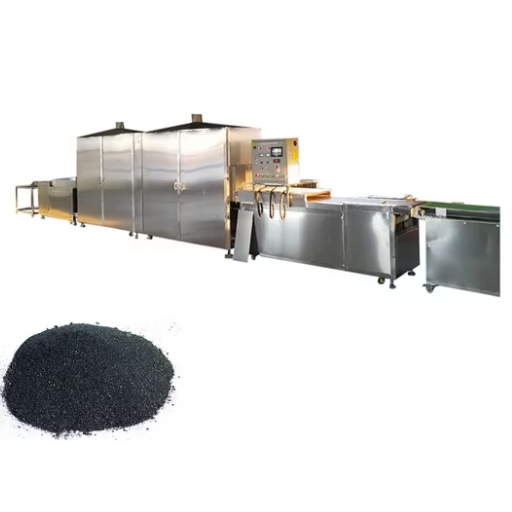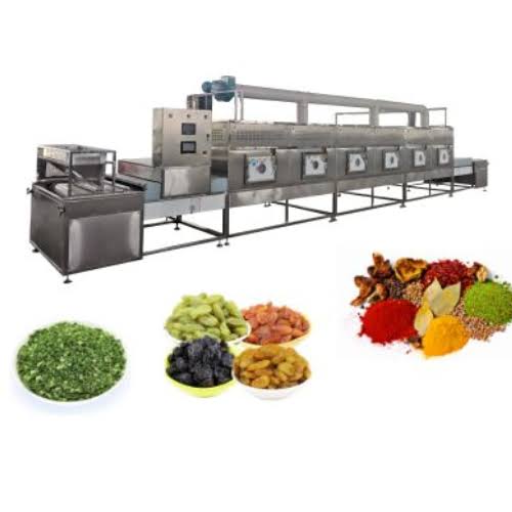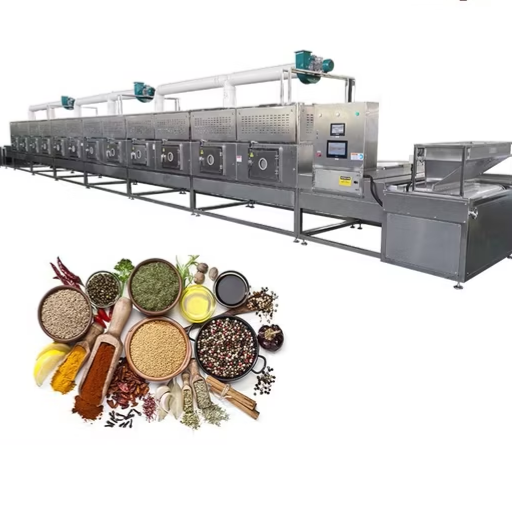
A microwave spice sterilization machine is a continuous industrial microwave tunnel that dries and decontaminates spices in a single pass at 75–100°C, without adding steam, moisture, or chemicals. It is the clean-label alternative that spice processors use to meet FDA, EU, and FSSAI export standards while protecting the essential oils, color, and aroma that make spices valuable.
Last year, a chili powder exporter in India watched customs reject three consecutive shipments because of Salmonella levels. The company had tried air-drying and short steam treatments, but the steam made the powder clump and the color faded. After switching to a microwave spice sterilization machine, the same product reached total plate counts under 500 CFU/g and passed EU inspection on the first try. The story is becoming common in spice processing plants worldwide.
In this guide, you will learn exactly how microwave sterilization works for spices, why it is replacing batch autoclaves and steam mixers, and what to look for when you choose a machine for your own line. We will also share real-world capacity data, price ranges, and a checklist that helps you avoid the most common buying mistakes.
Key Takeaways
- A microwave spice sterilization machine uses electromagnetic heat and a non-thermal cell-wall effect to kill pathogens in 3–5 minutes while keeping spices dry and free-flowing.
- It preserves volatile oils, color, and aroma better than steam sterilization, and it avoids the consumer resistance and labeling limits tied to irradiation.
- Typical throughput is 6–8 kg/h per kW of microwave power; the right machine depends on your spice type, target log reduction, and export market.
- Entry-level systems start near 12,000,whilelarge−scaletunnelscanreach12,000,whilelarge−scaletunnelscanreach250,000+, but most spice exporters see a payback within 12–18 months.
- Shandong Loyal offers free lab testing and model sizing from 10 kW to 100 kW so you can validate the process before you buy.
What Is a Microwave Spice Sterilization Machine?
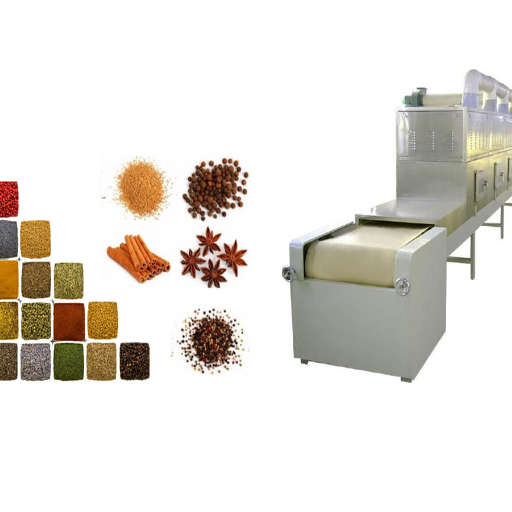
A microwave spice sterilization machine is an industrial microwave tunnel that moves spices through a controlled electromagnetic field on a conveyor belt. The field vibrates water and polar molecules inside the spice particles, creating volumetric heat that raises the product temperature to the microbial kill zone. The result is a dry, decontaminated powder that can move directly to packaging.
Unlike a conventional dryer that only removes moisture, these systems are designed to achieve a measurable log reduction in bacteria, yeasts, molds, and pathogens such as Salmonella and E. coli. Some manufacturers, including Shandong Loyal, also engineer a dual mechanism: the heat weakens microbes, and the alternating microwave field disrupts cell membrane permeability, causing cell walls to rupture. This allows effective pasteurization at lower temperatures than traditional thermal methods.
The standard frequency for a microwave spice sterilizer in industrial use is 2450 MHz, because the smaller wavelength couples well with powders and thin spice layers. The product is spread in a thin, controlled layer on a food-grade PTFE belt, passes through one or more microwave cavities, and exits through a cooling zone. Infrared sensors monitor temperature in real time, and a PLC adjusts power and belt speed to keep the process within the target 75–100°C window.
Learn more about the working principles in our microwave sterilization machine guide.
How It Differs from a Standard Dryer
A standard spice dryer is built to remove water. A microwave spice sterilization machine is built to remove water and kill microbes. That distinction changes almost everything: belt speed, layer depth, temperature control, and validation requirements for microwave sterilization for spices.
Because the machine must prove pathogen reduction, the controls must be precise enough to document that every particle reached the required temperature for the required time. A simple dryer can tolerate hot spots. A sterilizer cannot.
Why Microwave Sterilization Is Ideal for Spices
Spices are some of the most difficult food ingredients to sterilize safely. They are often dry, low-moisture powders that carry heat-resistant bacteria and molds. They are also economically valued for their sensory qualities: flavor, aroma, and color. Any sterilization method that damages those qualities hurts the finished product price.
A microwave spice sterilization machine fits this challenge because it solves five problems at once:
- Low-temperature process. Most spice runs are held at 75–100°C. Steam and autoclave methods often reach 120–130°C. The lower thermal load protects volatile essential oils.
- Dry process. No steam is injected, so powders remain loose and free-flowing. There is no secondary drying step and no clumping or caking.
- Speed. A full pass through the tunnel takes 3–5 minutes, compared to 20–60 minutes in batch steam or autoclave systems.
- Chemical-free. There is no irradiation, ethylene oxide (EtO), or ozone residue. Clean-label and natural markets accept the process without special packaging claims.
- Uniform control. Modern systems use multiple magnetrons, mode stirrers, and infrared sensors to maintain even heating across the belt width.
These benefits are why food safety experts in the EU and U.S. have increasingly accepted microwave pasteurization and sterilization for heat-sensitive, low-moisture products. According to the European Commission’s RASFF portal, spices and herbs accounted for over 3,700 notifications between 2000 and 2022, with Salmonella listed as the top hazard. A microwave sterilization step directly addresses that risk at the processing stage.
The Spices That Benefit Most
Microwave sterilization works well for the most common commercial spice formats:
- Powders: chili powder, paprika, cumin, coriander, turmeric, ginger, garlic, onion, black pepper, white pepper, curry powder.
- Whole seeds and granules: black pepper, mustard seed, cumin seed, fennel, sesame, and quinoa.
- Blends and seasonings: five-spice powder, chicken/beef flavorings, yeast extracts, and soup bases.
- Fragile herbs: dried basil, thyme, oregano, and bay leaves where fast, low-temperature treatment is critical.
Mini-story: Maria runs a seasoning company in São Paulo. Her five-spice blend kept failing microbiological tests in the spring because humidity caused mold growth during sea freight. After adding a 30 kW microwave tunnel before her packaging line, her reject rate fell by 94% and her blend kept its aroma through six months of storage. The machine paid for itself in 14 months.
Microwave vs. Steam vs. Irradiation: A Comparison
Choosing the right sterilization method depends on your product, target market, and brand positioning. Microwave sterilization is not the only option, but it is increasingly the best fit for spice processors who need both safety and sensory quality.
| Factor | Microwave Sterilization | Steam Sterilization | Irradiation |
|---|---|---|---|
| Temperature | 75–100°C | 102–130°C | Ambient |
| Moisture added | No | Yes | No |
| Typical processing time | 3–5 minutes | 20–60 minutes | Hours |
| Flavor/aroma impact | Low | Moderate to high | Low to moderate |
| Color impact | Low | Moderate | Low |
| Pathogen log reduction | 3–5 log (validated) | 5+ log | 5+ log |
| Process type | Continuous tunnel | Batch or continuous | Batch |
| Chemical residue | None | None | None |
| Consumer perception | Positive / neutral | Positive | Mixed / negative in many markets |
| Labeling requirements | None | None | Required in many jurisdictions; limited in EU |
| Best for | Heat-sensitive, dry powders | Robust spices, large batches | Large commodity volumes where permitted |
Steam sterilization is a strong, widely accepted method, but it adds moisture and can strip volatile oils. That means many spice processors must dry the product again after sterilization. Irradiation is effective but faces labeling restrictions, import limits, and consumer resistance in Europe and parts of Asia. A microwave spice sterilization machine offers a middle path: dry, fast, and widely accepted, with no special consumer disclosure. That is why many buyers now treat it as their preferred spice pasteurization machine for heat-sensitive powders.
Peer-reviewed studies support the microwave option. Research on turmeric powder published in SpringerPlus reported 1.57–2.39 log reductions in total mesophilic bacteria, while other literature reports up to 3.5 log reduction in cinnamon. A study in Food Science & Nutrition found that microwave treatment of paprika powder achieved 4.8 log reduction of aerobic mesophilic bacteria and 3.2 log reduction of bacterial spores, outperforming infrared heating. Read the turmeric study.
How to Choose the Right Microwave Spice Sterilization Machine
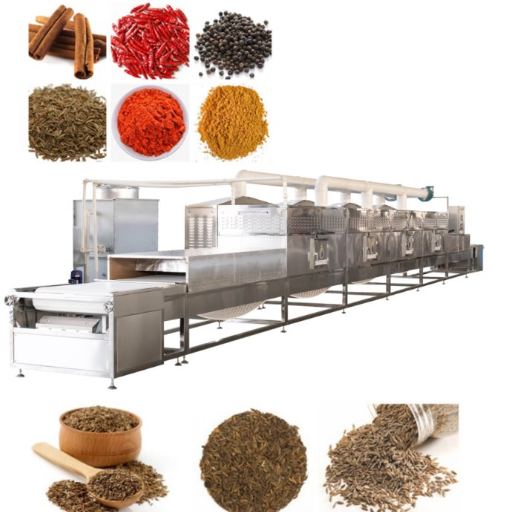
Selecting the right industrial microwave sterilizer means matching the technology to your product, your throughput, and your regulatory market. Here is a six-step framework for choosing a microwave spice sterilization machine that works in real buying cycles.
1. Match Microwave Power to Throughput
A useful rule of thumb for spice powders is 6–8 kg/h of sterilized product per kW of microwave output power. The exact figure depends on the initial moisture, bulk density, and the target log reduction. Use the table below as a starting point.
| Model Power | Typical Sterilization Capacity | Approximate Footprint | Typical Use Case |
|---|---|---|---|
| 10 kW | 60–80 kg/h | 5–7 m long | Small processors, R&D, niche spices |
| 30 kW | 200–250 kg/h | 8–11 m long | Mid-size spice exporters |
| 60 kW | 500–600 kg/h | 14–15 m long | Large seasoning plants |
| 100 kW | 900–1000 kg/h | 18–19 m long | Industrial-scale spice mills |
If you are currently drying 200 kg/h and expect to double in two years, a 30 kW unit gives you room to grow without requiring an immediate 60 kW investment.
Mini-story: A turmeric processor in Gujarat chose a 30 kW tunnel for an existing 150 kg/h line. He planned to expand to 250 kg/h within 18 months. The machine covered both stages without a second capital purchase, and the infrared control system kept the same color specification from 10,000 to 250,000 kg produced.
2. Choose the Right Frequency
- 2450 MHz is the standard for spices and powders. It penetrates thin layers well and is ideal for the typical 5–20 mm bed depth used in spice tunnels.
- 915 MHz is better suited to dense, high-throughput applications such as packaged meals or thick grain beds. For most spices, 2450 MHz is the more cost-effective and controllable choice.
3. Demand Uniform Heating and Real-Time Control
Spices are easy to over-heat on the edges and under-heat in the center. Ask any supplier for these specifics:
- Multi-source microwave feed: magnetrons placed from the top and bottom, or staggered in multiple cavities.
- Mode stirrers or rotating trays: these prevent standing waves that create hot and cold spots.
- Infrared temperature sensors: non-contact sensors that feed real-time data to the PLC.
- PID auto-adjustment: the system should raise or lower power within seconds based on the actual product temperature.
Shandong Loyal’s systems use water-cooled Samsung or Panasonic magnetrons and PLC-driven PID control to keep temperature stability within the desired range. If you are comparing suppliers, ask for a temperature-mapping report on your product.
4. Verify Food-Grade Materials and Compliance
For spice processing, the minimum standard is SUS304 stainless steel construction and a food-grade PTFE belt. You should also check:
- CE marking for machinery safety;
- Microwave leakage compliance (below 5 mW/cm²);
- FDA or EU suitability documentation for the intended food contact;
- Sanitary design with easy cleaning access.
These factors are not optional if your product is destined for regulated export markets like the EU, the United States, or Singapore.
5. Request Pilot Testing and Validation Support
The most expensive mistake is buying a machine that cannot hit your microbial specification on your actual product. A reputable manufacturer should offer:
- Free lab testing with your spice sample;
- Log-reduction data against Salmonella, E. coli, yeast, and mold;
- Temperature mapping across the belt width;
- Reference customers running similar spices at similar scale;
- Installation, training, and spare parts support in your region.
At Shandong Loyal, we provide free lab validation before purchase. You send your product. We run it through our test tunnel and return microbial, moisture, and sensory data so that you know exactly what you are buying.
Get a free sterilization test for your spice line →
What Does a Microwave Spice Sterilization Machine Cost?
Pricing for spice sterilization equipment depends on power, throughput, materials, and automation. Based on current market listings and manufacturer data, the following ranges are typical for a microwave spice sterilization machine:
- 10–30 kW entry to mid-range systems: 12,000–12,000–25,000
- 50–80 kW systems for medium-scale exporters: 45,000–45,000–72,000
- 100–150 kW large-scale industrial tunnels: 120,000–120,000–250,000+
- 300 kW+ custom or integrated lines: $250,000 and above
Factors that move the price upward include larger magnetron count, longer tunnel length, higher-grade stainless steel (316 vs. 304), advanced PLC/HMI systems, remote monitoring, and full installation services.
Cost tip: The cheapest microwave spice sterilizer is not always the least expensive. If an under-powered system cannot reach your required log reduction, you will pay for reprocessing, rejected shipments, and lost customer confidence. Always size the spice sterilization equipment for the microbial target first, not just for kg/h.
Industrial Specifications and Shandong Loyal Model Lineup
The table below shows the Shandong Loyal LY-series microwave sterilization models commonly used in spice processing. This is the same microwave spice sterilizer line that processors use for chili, turmeric, and seasoning blends. All models use a dry, continuous tunnel design and are available for pilot testing.
| Model | Microwave Power | Sterilization Capacity | Target Temperature | Tunnel Length |
|---|---|---|---|---|
| LY-10S | 10 kW | 60–80 kg/h | 70–100°C | ~7.5 m |
| LY-30S | 30 kW | 200–250 kg/h | 70–100°C | ~11.5 m |
| LY-60S | 60 kW | 500–600 kg/h | 70–100°C | ~14.5 m |
| LY-100S | 100 kW | 900–1000 kg/h | 70–100°C | ~19.0 m |
All models are built with SUS304 stainless steel, food-grade PTFE belts, water-cooled magnetrons, and PID temperature control. The cooling zone prevents thermal degradation after treatment, and the sealed infeed minimizes external contamination.
Compare these systems to our full range of industrial microwave ovens.
Real-World Applications: Where Microwave Sterilization Wins
Chili Powder Export Lines
Chili powder is one of the highest-risk spices for Salmonella. Several exporters in India and Vietnam have reported that microwave sterilization reduced their total plate counts from 10⁶ CFU/g to under 500 CFU/g while preserving the vibrant red color that buyers expect. The dry process also means the chili powder flows freely into pouches and bulk containers without clumping.
Turmeric and Pigmented Spices
Turmeric is heat-sensitive. Curcumin and the bright yellow color degrade easily during long steam or hot-air treatments. Microwave tunnels can bring turmeric powder to the kill temperature in under five minutes, with a rapid cooling section that locks in color. Research published in SpringerPlus documents 1.57–2.39 log reduction of total bacteria in turmeric using microwave treatment. See the paprika comparison data.
Black Pepper and Paprika
Paprika processors face tight microbial limits in the EU and the United States. The 4.8 log reduction reported in peer-reviewed microwave studies gives processors a strong validation argument for their HACCP plans and customer audits.
Spice Blends and Seasonings
Mixed seasonings often contain ingredients with different bulk densities and moisture levels. A microwave spice sterilization machine can handle these blends because the electromagnetic energy couples with moisture and polar molecules across the product layer, not just with surface heat. The result is a uniform, safe blend from microwave sterilization for spices that does not require re-mixing or drying after sterilization.
Learn how our broader food processing machines support full production lines.
Maintenance and Safety Best Practices
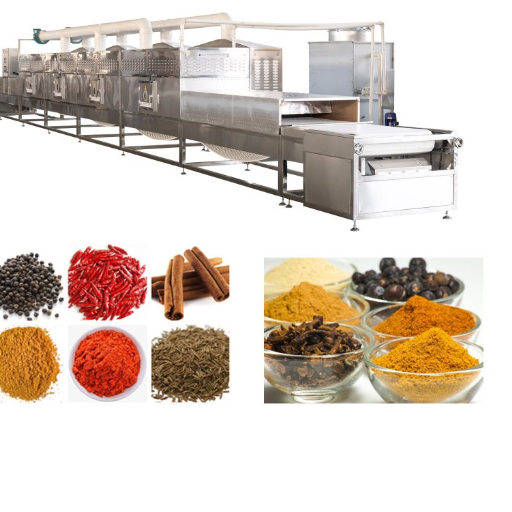
A microwave spice sterilization machine is a rugged piece of equipment, but consistent performance requires a simple maintenance routine. Most operators follow this schedule:
Daily checklist:
- Inspect the PTFE belt for tears, tracking issues, or product buildup.
- Verify that the water-cooling loop is flowing and at the correct temperature.
- Clean the infeed hopper and discharge chute to prevent cross-contamination.
- Check the microwave leakage monitor is reading below the safety limit.
Weekly checklist:
- Test the infrared temperature sensor against a calibrated reference.
- Lubricate bearings and inspect drive motors.
- Review PLC data logs for temperature spikes or power anomalies.
- Check waveguide ports and gaskets for wear.
Monthly checklist:
- Calibrate the PLC temperature control loop.
- Inspect magnetron cooling connections and replace filters if water-cooled.
- Run a validation batch with a known microbial load to confirm log reduction.
- Review operator logs and update SOPs if any parameter drifted.
Safety: Microwave leakage should remain below 5 mW/cm² at the operator position under normal operation. The system should have an interlock that stops the power if the door is opened during a test. Workers should receive training on the difference between the machine’s external surface temperature and the internal electromagnetic field.
Frequently Asked Questions
What is the best temperature for microwave spice sterilization?
Most spice processors target 75–85°C for a balance of microbial kill and sensory preservation. Higher temperatures may be used for more resistant spices or seeds, but always stay within the range validated for your specific product.
How long does the process take?
A typical pass through a microwave spice sterilizer takes 3–5 minutes, including the cooling zone at the end. This is far shorter than batch autoclaves, which often require 30–60 minutes plus loading and unloading time.
Can microwave sterilization replace irradiation for spices?
Yes, in many markets. Microwave sterilization is a chemical-free, thermal process that does not require irradiation labeling. It is widely accepted for export to the EU and the United States, provided the process is validated for the target microbial load.
Is microwave sterilization safe for employees?
Yes, when the equipment is properly shielded and maintained. Industrial systems are required to keep microwave leakage below safety limits, and modern machines include interlocks, alarms, and continuous monitoring.
Conclusion
A microwave spice sterilization machine gives spice processors a fast, dry, and validated way to meet modern food safety standards without sacrificing the flavor, color, and aroma that define their products. With throughput options from 60 kg/h to over 1,000 kg/h, and with log reductions supported by peer-reviewed research, this type of industrial microwave sterilizer is now a practical choice for small and large spice operations alike.
The key to success is matching the microwave spice sterilization machine to your product, your market, and your microbial target. Steam and irradiation still have roles, but microwave sterilization for spices is uniquely positioned for heat-sensitive, dry powders such as chili, turmeric, cumin, and paprika.
Shandong Loyal provides industrial microwave sterilization systems from 10 kW to 100 kW, with free lab testing, installation support, and after-sales service. Contact us today to validate your spice process and get a tailored capacity recommendation for your production line.