Custom food processing solutions are production lines and machinery designed around your exact product, capacity, and facility, rather than forcing your product to fit a standard machine. Most manufacturers overlook a simple truth: off-the-shelf equipment is often the more expensive decision in the long run.
Think about it. You’ve spent months perfecting a recipe. The last thing you want is a machine that limits what you can make.
Priya, a snack founder in Mumbai, learned this the hard way. Her signature ridged puff kept breaking on a standard extruder’s cutting plate. She spent two months reformulating her recipe to fit the machine. A custom die plate solved it in three weeks, and a national retail chain finally accepted the product.
We agree that buying new equipment feels risky, and going “custom” sounds like it should cost more. This guide promises to show you when custom is actually cheaper, how the process works step by step, and how to choose a manufacturer you won’t regret. You’ll leave with real cost ranges, realistic timelines, and a clear decision framework.
Key Takeaways
- Custom food processing solutions are built around your product, not the other way around, and often cost less than retrofitting standard equipment.
- The process follows five stages: needs assessment, design, prototyping, manufacturing, and commissioning.
- A custom line typically runs 14 to 36 weeks to build, plus 4 to 12 weeks for shipping and installation.
- Budget by four buckets: engineering, mechanical equipment, controls, and commissioning.
- Ask any manufacturer about certifications, after-sales support, and lead time before you sign.
What Are Custom Food Processing Solutions?
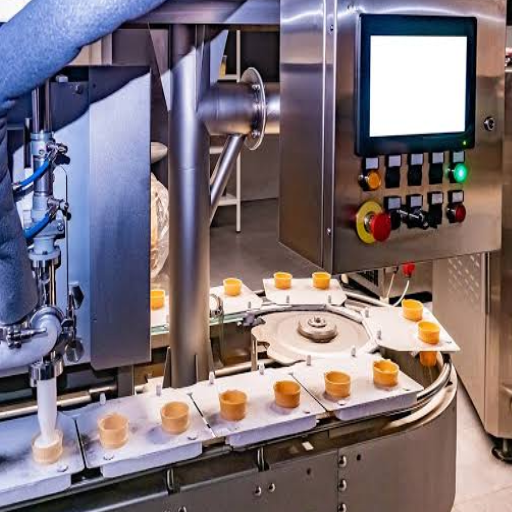
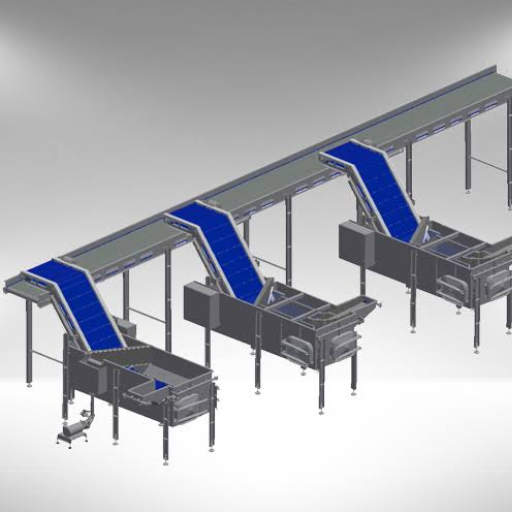
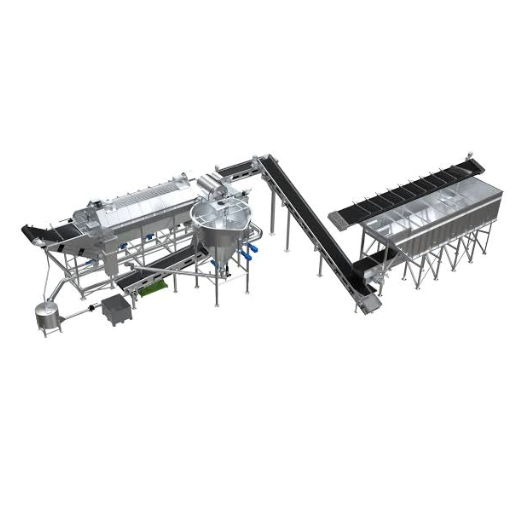
Custom food processing solutions are bespoke production systems engineered to meet a specific product’s requirements. That covers everything from a single customized machine to a complete turnkey line that takes raw ingredients to finished, packaged goods.
Custom vs. Standard Production Lines
A standard production line is built to a fixed specification. You adapt your recipe, throughput, and packaging to whatever the machine does. A custom line flips that relationship. The equipment is designed around your ingredients, your desired output, your facility’s footprint, and your compliance requirements.
The difference matters most in three areas:
- Throughput. Standard lines come in fixed capacities, and you often pay for output you don’t need or under-buy and bottleneck your growth.
- Product flexibility. A custom snack food production line can switch die shapes and formulations without expensive retrofits.
- Hygiene and compliance. Custom designs can incorporate cleanroom features, allergen segregation, or specific material standards from day one.
Want to see how a custom line differs in practice? Explore our food processing machines →
When Custom Makes Sense (and When It Doesn’t)
Custom is worth it when your product has a unique shape, texture, or process requirement that standard machines can’t handle. It’s also the right call when you need specific capacity, have an unusual facility layout, or must meet strict certifications.
Custom isn’t always necessary. If you’re making a commodity product on a proven, standard process, an off-the-shelf line will serve you fine and cost less upfront. The key is being honest about whether your differentiator is in the product or just in the process.
The Custom Food Processing Process, Step by Step
Building a custom line is more structured than most people expect. It follows five clear stages, and understanding them helps you plan your budget and timeline accurately.
Step 1: Needs Assessment and Product Specification
Everything starts with a detailed brief. You define your product, target output per hour or shift, raw material characteristics, packaging format, and any certifications you need, such as HACCP or CE. A good manufacturer will push back and ask hard questions here. That’s a sign they’re thinking about your actual production, not just quoting a machine.
For example, a pet food producer must specify kibble shapes, moisture targets, and whether the line needs to handle multiple protein types. Skipping detail at this stage is the number one cause of cost overruns later.
Step 2: Production Line Design and Engineering
Next, engineers translate the brief into a line layout. They determine the sequence of machines, from mixing and extrusion through drying, seasoning, and packaging. This is where capacity planning, energy use, and floor space get locked in.
A good design stage produces drawings, a machine list, and a firm quote. It’s also where you’ll see the four cost buckets take shape, which we’ll cover shortly.
Step 3: Prototyping and Trial Runs
Before committing to full production, most projects run small trial batches. You test whether the actual machine produces your product to specification. For a snack brand, this means running your recipe through the extruder and confirming shape, texture, and expansion rate.
Trial runs catch problems early, when they’re cheap to fix. A formulation that behaves differently at scale is far easier to adjust now than after the line is installed in your facility.
Step 4: Manufacturing and Factory Acceptance
With the design approved, the manufacturer builds the line. During this stage, a Factory Acceptance Test, or FAT, verifies the equipment works before it ships. You or a third-party inspector can attend to confirm performance meets the agreed specification.
Step 5: Installation, Commissioning, and Training
Finally, the line ships, gets installed at your site, and is commissioned. Commissioning means calibrating the equipment to your real ingredients and environment. The manufacturer should also train your operators and hand over documentation and maintenance schedules.
This stage is where after-sales support proves its value. A partner who sends engineers for on-site installation and training will get you producing faster than one who just delivers a crate.
Ready to see what your process would look like? Contact our engineering team for a tailored design →
What Does a Custom Food Production Line Cost?
This is the question everyone asks first, and the honest answer is “it depends.” But you can plan with confidence once you understand the structure.
The Four Cost Buckets
Custom processing lines are typically quoted across four categories:
- Engineering: 10 to 15 percent of the total.
- Mechanical equipment: the largest share at 50 to 60 percent.
- Controls and electrical: 15 to 25 percent.
- Commissioning: 5 to 10 percent.
Understanding this breakdown helps you see where savings are real and where they’re an illusion. A vendor who cuts the engineering budget to lower the quote usually shifts those costs into expensive change orders later.
Realistic Ranges by Line Type
Cost varies enormously by product category. Here’s what you can expect at a high level:
| Line Type | Indicative CapEx Range |
|---|---|
| Snack extrusion | 180,000to180,000to1.2M |
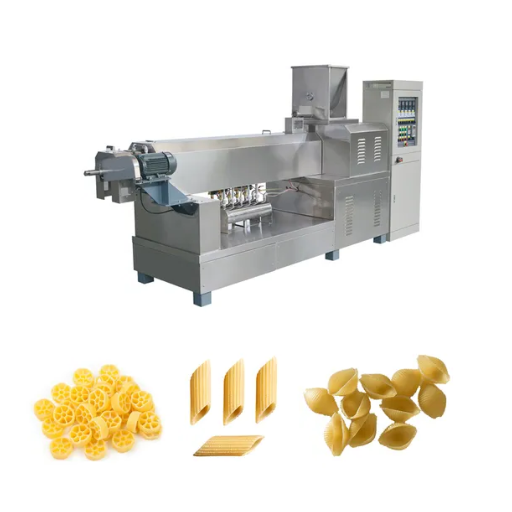
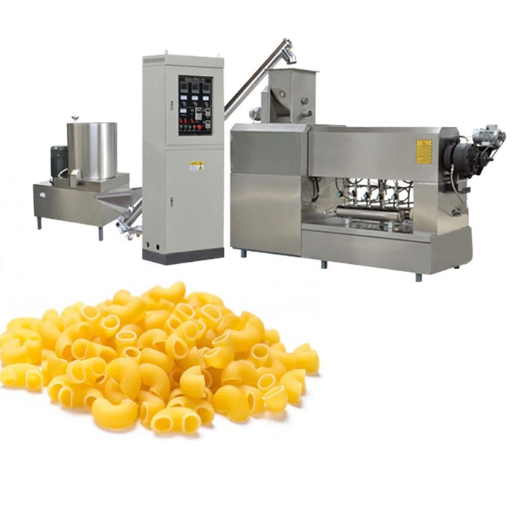
| Pasta and macaroni | 250,000to250,000to2M |
| Cereal and protein bars | 150,000to150,000to900,000 |
| Full biscuit line | 300,000to300,000to2.5M |
These are ranges before freight and installation. They’re useful for budgeting, but your exact figure depends on capacity, automation level, and customization depth.
Hidden Costs to Budget For
The quoted price is rarely the final price. Budget for freight and customs, which add real money on international projects. Installation and commissioning may be separate line items. Then there are spare parts, operator training, and any facility modifications, like electrical or floor reinforcement.
Marcus at GreenPaw Pet Foods learned this lesson the expensive way. To save about 40,000upfront,heboughtastandardlineandplannedtoretrofititforhiskibbleshapes.Theretrofitendedupcosting40,000upfront,heboughtastandardlineandplannedtoretrofititforhiskibbleshapes.Theretrofitendedupcosting90,000 and delayed his launch by four months. The custom line would have been cheaper on day one.
Not sure what your line would cost? Get a tailored quote based on your actual product →
Customizing by Product Category
Custom food processing solutions look very different depending on what you make. Here’s how customization plays out across the categories Shandong Loyal Industrial supports.
Snack Food and Extruded Products
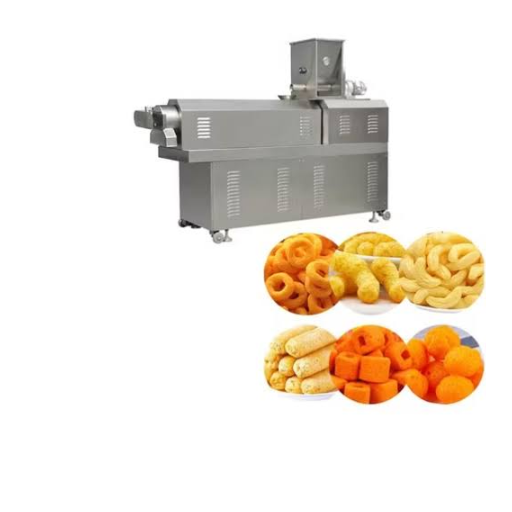
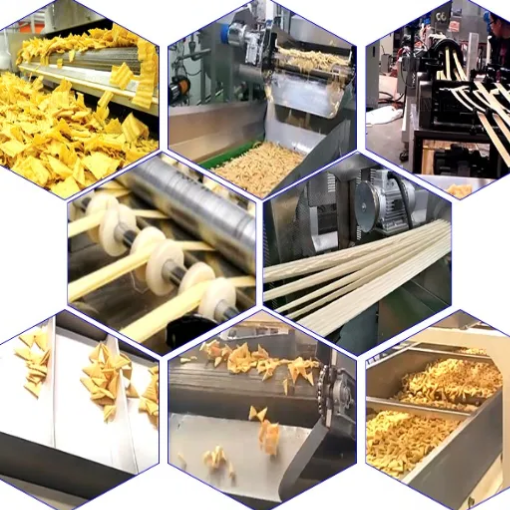
Extruded snacks are the most customizable category. The die plate determines your snack’s shape, from simple puffs to complex ridged and hollow forms. Custom die design is what let Priya finally launch her signature shape.
Beyond the die, you can customize cooking, seasoning, and cooling stages to hit exact texture and flavor targets. See our snack food production line and puff snacks processing line for specifics.
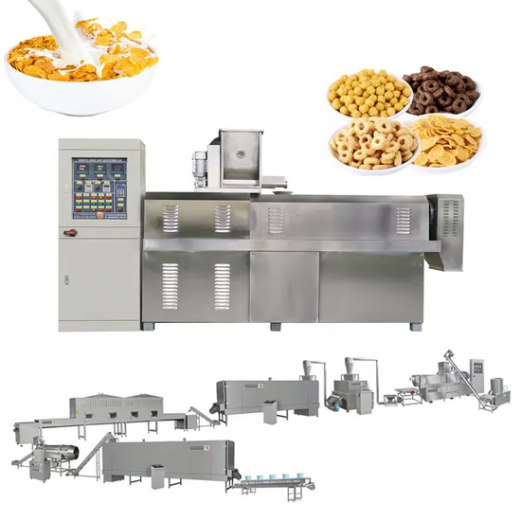
Cereal, Biscuit, and Bar Lines
These lines need precision control over thickness, baking time, and cutting. Customization often focuses on output capacity and the ability to switch between product variants quickly. A cereal bar manufacturer producing multiple flavors on one line benefits from changeover-friendly design that standard equipment rarely offers.
Microwave Drying and Sterilization Systems
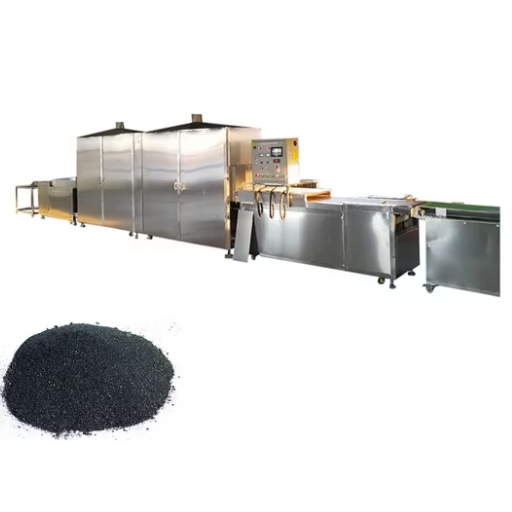
Microwave drying is one of the strongest arguments for custom design. Parameters like power density and belt speed change dramatically depending on what you’re drying. A custom microwave drying machine can combine drying and sterilization in a single pass, cutting both time and energy use. Learn more in our guide to microwave drying for food manufacturers.
Pet Food and Specialty Lines
Pet food producers face demanding variety, from kibble to treats to specialty diets. A custom pet food line can produce diverse shapes and sizes while maintaining nutritional quality. Baby food and plant-based protein lines add cleanroom and hygiene requirements that are far easier to design in from the start than to add later.
How to Choose a Custom Food Processing Manufacturer
The manufacturer you pick matters as much as the equipment itself. Here’s how to evaluate them.
Eight Questions to Ask Before You Sign
- What certifications do you hold, and can you provide references in my product category?
- Can I visit your factory or attend the Factory Acceptance Test?
- What’s the total lead time, including shipping and installation?
- Do you provide on-site installation and operator training?
- What does your after-sales and spare parts support look like?
- Who owns the design and any custom tooling if I want to expand later?
- How do you handle change requests once the design is approved?
- What warranty do you offer, and what exactly does it cover?
These questions separate genuine partners from box-movers. A manufacturer who answers them clearly is signaling they’ll be there after the sale.
Why Manufacturer Experience Matters
Experience in your specific product category is worth more than the lowest price. A team that has built dozens of snack lines understands extrusion physics in a way a generalist never will. Look for a track record, verifiable references, and longevity.
Daniel, a food startup co-founder, chose his first vendor purely on price. When a critical sensor failed three months in, the vendor had no local support and quoted a six-week lead time on the replacement part. His line sat idle for three weeks. He now says the after-sales question is the first one he asks, not the last.
That’s the difference between buying a machine and building a partnership. At Shandong Loyal Industrial, we’ve supported more than 650 customers worldwide since 2005, with a focus on staying with you after the line is running.
Frequently Asked Questions
What is the difference between custom and standard food processing equipment?
Standard equipment is built to a fixed specification, and you adapt your product to fit it. Custom food processing equipment is engineered around your product’s shape, capacity, and facility requirements, so it meets your needs without retrofitting.
How much does a custom food production line cost?
Costs vary widely by category. Snack extrusion lines run from 180,000to180,000to1.2M, while pasta lines range from 250,000to250,000to2M. Your final figure depends on capacity, automation, and customization depth.
How long does it take to build a custom food processing line?
Most custom lines take 14 to 36 weeks to manufacture, plus 4 to 12 weeks for shipping and installation. Highly customized projects at the top end of the range can extend further.
Can you customize a snack food production line?
Yes. Snack lines are among the most customizable, especially the die plate that determines shape and the cooking and seasoning stages. Custom die design lets you produce unique shapes standard extruders can’t handle.
Conclusion
Custom food processing solutions aren’t a luxury reserved for giant manufacturers. They’re a practical way to build a line around your product, scale efficiently, and avoid the hidden cost of retrofitting standard equipment.
Here’s what to remember. Custom means the machine fits your product, not the reverse. The process follows five stages, from needs assessment through commissioning.
Budget by the four cost buckets, and expect 14 to 36 weeks of lead time. Most importantly, choose a manufacturer who answers your questions about after-sales support before you sign.
The food processing equipment market is projected to grow past $77 billion in 2026, according to Meticulous Research, with Asia-Pacific leading the growth, per Fortune Business Insights. The manufacturers who win will be the ones with equipment built for their exact product.
Ready to design a line around your product instead of the other way around? Contact Shandong Loyal Industrial for a tailored quote → Our engineering team will walk you through the process, answer your cost questions, and help you decide whether custom is right for you.