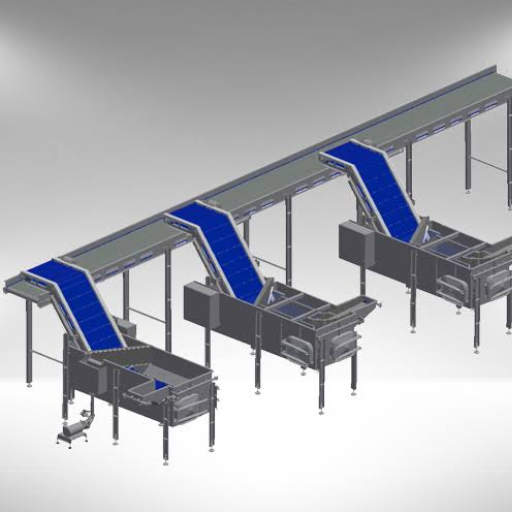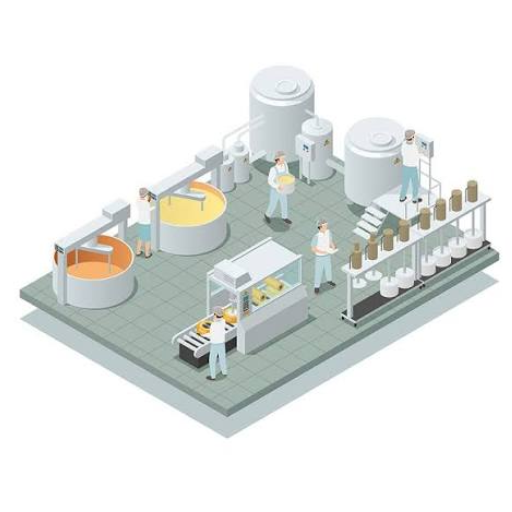
A custom food production line is designed in six phases: requirements and product specification, process flow and equipment selection, layout and capacity planning, hygienic and compliance engineering, prototyping and factory testing, then installation and commissioning. Each phase turns your product, your plant, and your growth goals into a physical line, rather than forcing a standard machine to fit your process.
Here’s the part most buyers miss: the design phase decides roughly 80% of your line’s lifetime cost. Change a layout after fabrication and you pay for it twice. Get the capacity wrong at the drawing stage and you’ll live with a bottleneck for a decade.
You already know standard equipment rarely fits. A machine built for “a general snack” doesn’t care that your recipe runs wetter, your ceiling is low, or your floor plan has a support column in the wrong place. In this guide, you’ll learn exactly how custom food production line design works, what each phase involves, and how to avoid the mistakes that quietly inflate budgets and lead times.
Key Takeaways
- Custom food production line design follows six phases, from requirements and product spec through commissioning, and the design stage locks in roughly 80% of lifetime cost.
- Capacity planning is the single biggest lever: under-specify throughput and you buy a permanent bottleneck, over-specify and you pay for idle steel.
- Hygienic design choices, like 304 versus 316 stainless steel, affect cleanability, compliance, and cost by 30% to 50%.
- Custom lines run 150,000to150,000to2.5 million depending on line type, with 14 to 36 weeks of manufacturing before shipping.
- Choosing a manufacturer with real engineering ownership, not just a reseller, is the strongest safeguard against a design that doesn’t work.
What Is Custom Food Production Line Design?
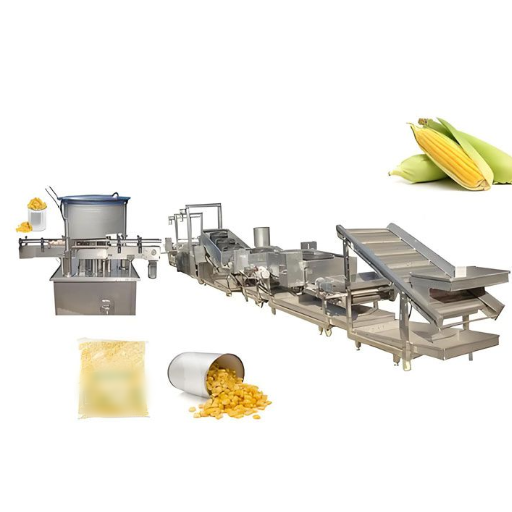
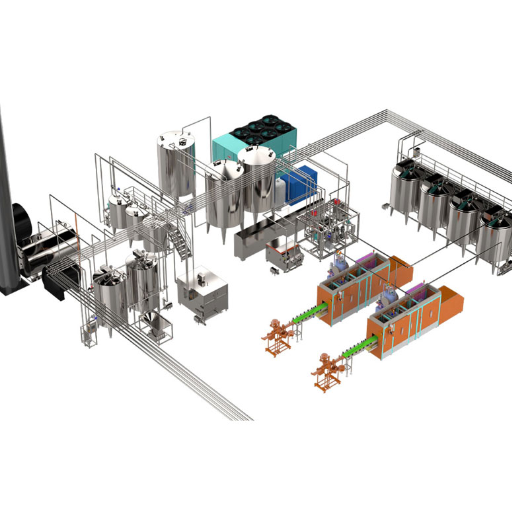
Custom food production line design is the engineering process of planning and specifying a production line around a specific product, throughput target, facility, and budget. It covers process flow, machine selection, layout, capacity, hygienic construction, controls, and integration into one coordinated system.
That’s the definition. In practice, the design is the difference between buying machines and buying a working line. A line is more than a row of equipment. Raw material handling, cooking, cooling, and packaging all connect. Change the viscosity in one stage and the downstream conveyors and filling speeds have to change too.
Think of it as three levels of customization, and know which one you’re buying:
- Standard equipment, configured. A catalog machine with your settings and your tooling. Fast and cheap, but the machine still dictates the process.
- Semi-custom. Standard modules rearranged around your product and plant. A good middle ground for many growing manufacturers.
- Full custom engineering. The line is designed from your product outward. Slower and more expensive, but it removes the compromises.
Most growing food manufacturers end up somewhere between level two and three. The design work in food production line equipment is what lets a line scale with you instead of against you.
See what’s possible: Explore how food processing machines range from single units to complete, purpose-built lines.
The Six Phases of Custom Food Production Line Design
Every credible design process follows the same arc. Here it is in the order it actually happens, so you know what to expect and where to push back.
1. Requirements and Product Specification
Everything starts with the product, not the machine. A good design partner asks about your recipe, your target throughput in kilograms per hour, your packaging format, your hygiene requirements, and your plant’s real constraints: floor space, ceiling height, power, water, and steam.
Priya runs a cereal bar startup in Hyderabad. When she sat down with an engineer, the first hour wasn’t about machines. It was about her recipe’s stickiness, her 400 kg/hour target, and the fact that her facility only had a single 63-amp feed. Those answers shaped every choice that followed, and they saved her from buying a line her building couldn’t even power.
2. Process Flow and Equipment Selection
The engineer maps the process flow, the ordered sequence of operations from raw material to finished product. This becomes a diagram: mixing, forming, cooking, drying, cooling, seasoning, packaging. Each step gets a machine, but the machines are chosen to work together.
This is where whole-system thinking matters. A dryer that’s 10% faster than the extruder feeding it doesn’t add capacity. It just starves for material. Good industrial food processing equipment is specified as a chain, not a shopping list.
3. Layout and Capacity Planning
Layout is where floor space, product flow, and hygiene zoning come together. You design the physical arrangement of machines so product flows in one direction, operators don’t cross contamination zones, and there’s room to clean and maintain each machine.
Capacity planning is the make-or-break step. It’s a calculation, and it’s worth getting right. The next section covers the math, but the short version is this: design for the throughput you need in three years, not the throughput you need today, and leave room to add a module rather than rebuild.
4. Hygienic and Compliance Engineering
The line has to be cleanable and certifiable. That means food-grade stainless steel, sloped surfaces for drainage, no dead zones where product can collect, and design that meets the standards your market requires, whether that’s CE, FDA, ISO, HACCP, or EHEDG. We’ll dig into this shortly.
5. Prototyping, Fabrication, and Factory Acceptance Testing
Before the line ships, the manufacturer builds and tests it at the factory. A factory acceptance test, or FAT, runs your product through the line and verifies throughput, quality, and safety. This is your chance to catch problems before they cross an ocean.
6. Installation, Commissioning, and Ramp-Up
Finally, the line is installed, wired, and commissioned at your plant. Operators get trained, the line ramps to full speed, and the manufacturer should stay involved through the first production runs. Design work that ignored installation access or operator ergonomics shows up here, as delays.
Layout and Capacity Planning: The Foundation of Good Design
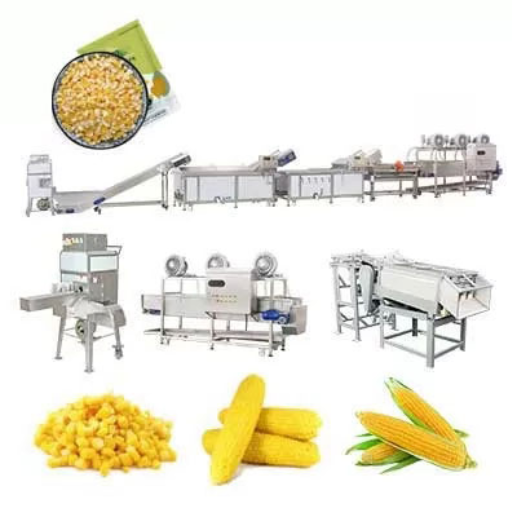
If you remember one thing from this guide, make it this: capacity and layout are where custom food production line design earns its price.
How to Calculate Throughput and Capacity
Capacity planning starts with one number: required output in kilograms per hour, or in finished units per minute. From there you work backward to size each machine.
Here’s a simple framework:
- Fix your target output. State it as finished product per hour, not “I want to grow.”
- Account for yield loss. Drying, frying, and cutting all lose material. A line targeting 400 kg/hour of finished bars may need 470 kg/hour of raw input.
- Size each stage to the bottleneck. The slowest machine sets the pace. Every other machine gets sized to feed it, with a small buffer.
- Add changeover time. If you run three recipes, the line’s effective capacity drops with every switch. Design changeover out, or plan for it honestly.
- Build in headroom. Leave 15% to 20% beyond today’s target so growth is a matter of running more hours, not buying a new line.
Marcus sized his corn puff line to his current orders in March 2025 and congratulated himself on saving money. Eighteen months later, a regional retail chain tripled his volume, and his “right-sized” line became the bottleneck that cost him the contract. The retrofit cost more than the original headroom would have.
Layout Logic: Product Flow, Hygiene Zoning, and Buffer Space
A strong production line layout follows a few rules. Product moves in one direction, raw to cooked, with no back-tracking. High-care areas stay physically separated from low-care areas. Operators have clear walkways, and each machine has enough clearance for cleaning and maintenance.
Buffer space is the part beginners skip. Between stages, you need a little room for product to accumulate, so a 30-second stoppage upstream doesn’t stop the whole line. Without buffers, every hiccup cascades.
Designing for Scalability and Modularity
A modular line is one you can extend without replacing. Buy a core process now, and leave space and connections for a second dryer or a packaging upgrade later. This is where custom food processing solutions pay off for growing manufacturers: you start lean and add modules as demand proves itself.
Hygienic Design and Compliance
Food safety isn’t a feature you bolt on at the end. It’s built into the geometry of the line.
Food-Grade Materials: 304 vs. 316 Stainless Steel
Both are food-grade, but they differ where it matters. 304 stainless is the workhorse for dry and low-acid products. 316 adds molybdenum, which resists salt and acid corrosion, so it’s the choice for brines, acidic sauces, and aggressive cleaning chemicals. The upgrade typically adds 30% to 50% to material cost.
The rule: match the material to your product and your cleaning regimen, not to the cheapest quote. A 304 line that pits from salt spray becomes a contamination risk and a replacement expense.
Cleanability, Drainage, and Contamination Control
Good hygienic design means sloped surfaces that drain completely, rounded corners instead of sharp crevices, and no dead zones where product can sit. It means equipment you can clean in place or strip down quickly. If you can’t reach a surface to clean it, bacteria eventually will.
Meeting Global Standards
Your market decides your standards. Exporting to Europe means CE marking and, for many products, EHEDG hygienic design. Selling in North America means FDA-compliant materials and, often, HACCP or SQF certification. A manufacturer with export experience designs to these from the first drawing, which is far cheaper than retrofitting compliance later. Our microwave drying machine lines, for example, are engineered to meet the hygiene standards import markets demand.
Designing by Product Category
The design questions change with the product. Here’s how custom food production line design plays out across the categories we build most.
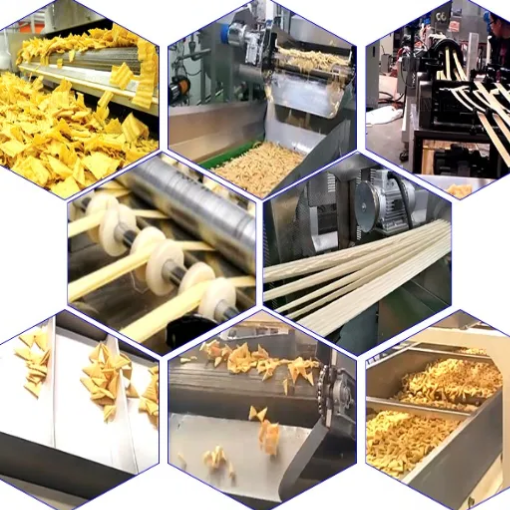
Snack Food and Extruded Products
Extruded snacks turn on the die, the barrel configuration, and precise temperature control. Design decisions here are about die shapes for unique products, screw profiles for texture, and how quickly you can swap dies for new SKUs. A snack food production line that changes dies in 20 minutes beats one that takes two hours, every single day.
Cereal, Biscuit, and Bar Lines
Biscuit and bar lines are about forming precision, consistent baking or cooling, and gentle handling so product doesn’t crack. Capacity is usually high, so layout and buffer design carry more weight. Downtime is expensive at these speeds.
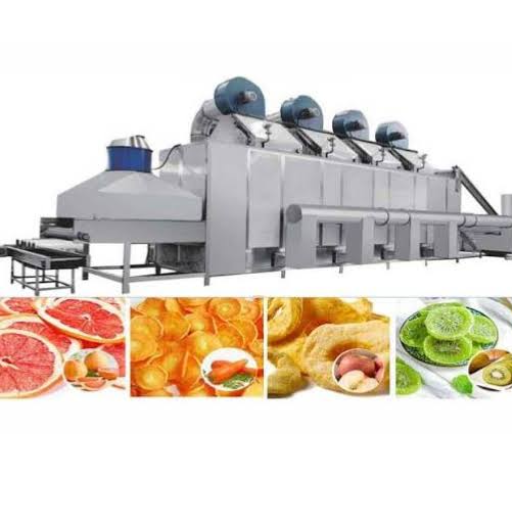
Microwave Drying and Sterilization Systems
Drying and sterilization often decide shelf life. Microwave drying heats the product directly, which cuts drying time and energy use compared to hot-air methods. The design decision here is matching power, belt speed, and chamber layout to your product’s moisture and microbial load, so you dry or sterilize without overcooking the surface.
Pet Food and Specialty Lines
Pet food and specialty products demand versatility: different shapes, sizes, and nutritional profiles on one line. Customization here means quick-change tooling and a line that handles everything from kibble shapes to plant-based alternatives without a full rebuild.
What Does Custom Production Line Design Cost?
Custom line costs split into four buckets you should see on any quote: engineering, mechanical equipment, controls and electrical, and commissioning.
| Line Type | Custom CapEx Range | Typical Manufacturing Lead Time |
|---|---|---|
| Snack extrusion (puffs, pellets) | 180,000–180,000–1.2M | 18–26 weeks |
| Pasta and macaroni | 250,000–250,000–2M | 22–32 weeks |
| Protein and cereal bars | 150,000–150,000–900,000 | 16–24 weeks |
| Biscuit (full line) | 300,000–300,000–2.5M | 24–36 weeks |
Roughly, engineering runs 10% to 15% of the total, mechanical equipment 50% to 60%, controls and electrical 15% to 25%, and commissioning 5% to 10%. These splits come from the 2026 buyer’s guide that outlines how custom food machinery is priced.
The broader market explains why these numbers keep climbing. Mordor Intelligence projects the food processing and handling equipment market to grow from about 133billionin2026tonearly133billionin2026tonearly180 billion by 2031. Asia-Pacific is the fastest-growing region at over 8% annually. More demand means more manufacturers, more quotes, and more variance in what you’ll pay.
Ready to see the difference? Request a custom line design consultation and we’ll map the process flow, layout, and cost for your specific product.
How to Choose a Custom Production Line Designer
The manufacturer matters as much as the machines. Here are the questions that separate a real engineering partner from a reseller with a catalog.
- Who owns the engineering? A manufacturer with in-house design can be held accountable. A reseller just forwards your problem to someone else.
- Can they show you a similar line they’ve built? Ask for references in your product category.
- What standards do they design to? CE, FDA, ISO, HACCP, and EHEDG should be routine, not an upsell.
- What’s the factory acceptance test process? You want your product run on the line before it ships.
- What’s the real lead time? Get manufacturing, shipping, and commissioning separately.
- What does after-sales look like? Spare parts, remote support, and on-site engineers matter long after installation.
- How do they handle the cost buckets? A transparent vendor breaks out engineering, mechanical, controls, and commissioning.
- What’s their export track record? If they’ve installed lines across markets, they’ve already solved the compliance puzzles you’re about to face.
Shandong Loyal Industrial Co., Ltd. has designed and built custom lines for over 650 food manufacturers worldwide, with $90 million in annual sales and a reputation for quality since 2005. As a standing director of the China Food and Drying Equipment Industry Association, we’re accountable to the standards we set.
Frequently Asked Questions
What is custom food production line design?
Custom food production line design is the engineering process of planning and specifying a production line around a specific product, throughput, facility, and budget. It covers process flow, machine selection, layout, capacity, hygienic construction, controls, and integration into one coordinated system.
How much does a custom food production line cost?
A custom food production line typically costs 150,000to150,000to2.5 million depending on the line type. Snack extrusion runs 180,000to180,000to1.2 million, pasta 250,000to250,000to2 million, and full biscuit lines 300,000to300,000to2.5 million, with 14 to 36 weeks of manufacturing lead time.
How do you calculate production line capacity?
Start with your target output in kilograms per hour or units per minute, then account for yield loss, size each machine to the slowest stage, add changeover time, and build in 15% to 20% headroom beyond today’s target.
What is the difference between 304 and 316 stainless steel in food equipment?
304 stainless is the standard food-grade workhorse for dry and low-acid products. 316 stainless adds molybdenum for resistance to salt, acid, and aggressive cleaning chemicals, making it the choice for brines and acidic sauces at a 30% to 50% material cost premium.
How long does custom line design take?
Design and manufacturing typically take 14 to 36 weeks, plus shipping and installation. Full custom engineering adds time at the front end, but it removes compromises that would otherwise surface as delays and rework later.
Conclusion
Custom food production line design is the quiet engine behind every reliable line. Get the six phases right, and you buy a system that fits your product, your plant, and your growth. Get them wrong, and you buy a bottleneck you’ll live with for years.
Remember the essentials: the design stage locks in most of your lifetime cost, capacity planning is the biggest lever, hygienic design is geometry not decoration, and your manufacturer’s engineering ownership is your strongest safeguard.
Don’t let a standard machine dictate your process. Shandong Loyal Industrial Co., Ltd. has helped over 650 food manufacturers worldwide design and build lines that scale with them.
Contact us today to start your custom food production line design with a free engineering consultation.