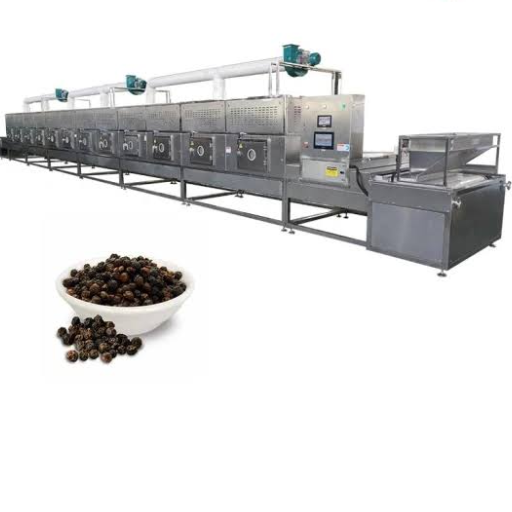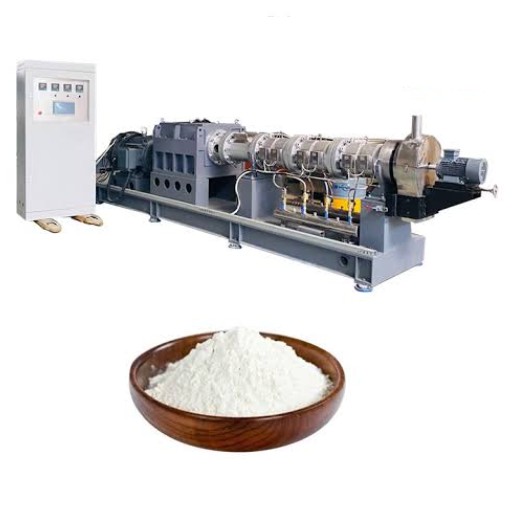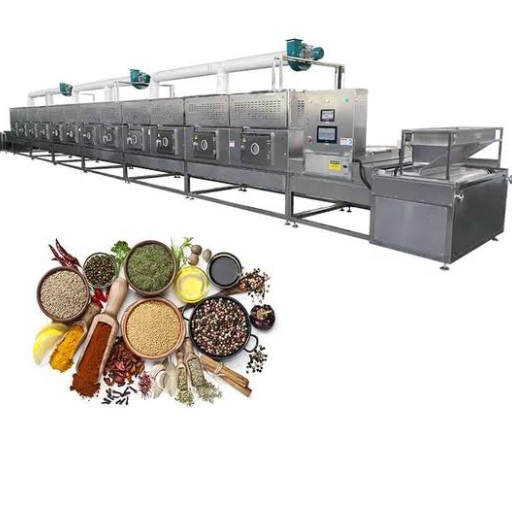
A microwave sterilization machine is an industrial system that uses electromagnetic waves to kill pathogens, reduce microbial load, and extend shelf life while preserving color, flavor, and nutrients better than traditional steam or retort methods. For food manufacturers struggling with slow cycle times, high water bills, or heat-damaged products, switching to a microwave sterilization machine can cut processing time by up to 72% and energy use by 30–50%.
Last year, a spice processor in Gujarat named Priya watched a $200,000 export order sit in quarantine. The steam-sterilized chili powder had failed a routine microbiology check, and the second treatment darkened the color so badly the buyer rejected the lot. After switching to a continuous tunnel microwave sterilization machine, her plant reduced total plate count from 10⁶ CFU/g to under 500 CFU/g in 4.5 minutes, kept the vibrant red color intact, and won a three-year supply contract.
That is the practical promise of microwave sterilization. In this guide, you will learn exactly how these machines work, how they compare to retort and autoclave systems, what they cost, and how to choose the right configuration for your product.
Key Takeaways
- A microwave sterilization machine uses 915 MHz or 2.45 GHz electromagnetic waves to heat products volumetrically, killing microbes in minutes instead of hours.
- Industrial microwave sterilizers typically cut energy use by 30–50% and water use by over 90% compared with steam retort systems.
- Continuous tunnel systems suit spices, grains, nuts, tea, and powders; batch cabinets work for R&D; vacuum microwave dryers protect heat-sensitive ingredients.
- Most food manufacturers see ROI payback in 18–26 months through energy, labor, water, and yield savings.
- Shandong Loyal Industrial offers free 5 kg sample testing, food-grade SUS304 construction, and 48-hour global spare-part support.
What Is a Microwave Sterilization Machine?
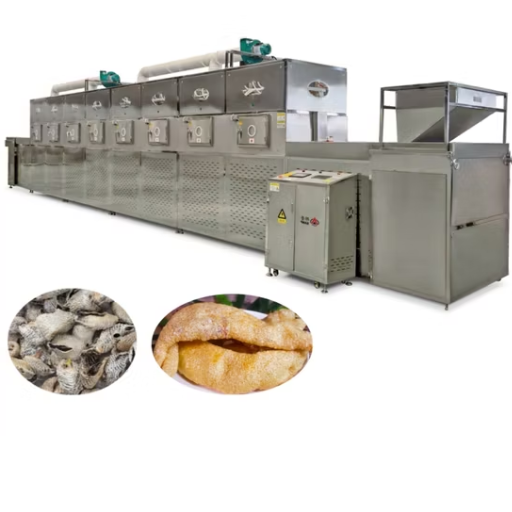
A microwave sterilization machine is industrial equipment that generates electromagnetic radiation at 915 MHz or 2.45 GHz to heat water molecules and other polar compounds inside a food product. The oscillating waves make these molecules vibrate, creating friction and heat from the inside out. This volumetric heating raises the product temperature quickly enough to inactivate bacteria, molds, yeasts, viruses, and even resilient spores.
The process relies on two effects. The thermal effect raises the internal temperature to a microbe-killing level, often between 70°C and 95°C. The non-thermal effect occurs when the alternating electric field disrupts microbial cell membranes and genetic material, improving kill rates at lower temperatures than conventional heat alone.
Three common machine formats dominate the market:
- Batch cabinet systems, compact units for small volumes, pilot testing, or R&D labs.
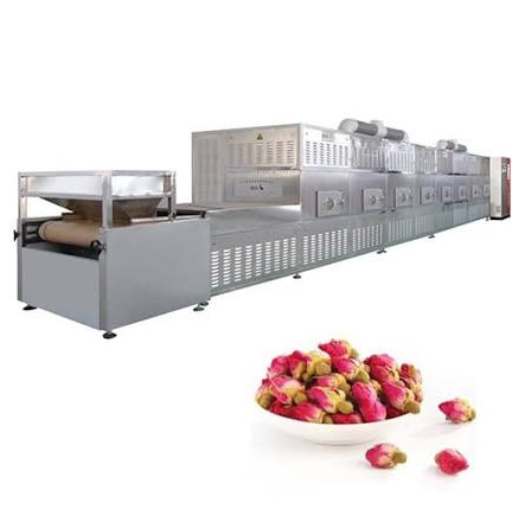
- Continuous tunnel systems, conveyor-belt machines for high-throughput production lines.
- Vacuum microwave dryers, low-temperature systems for heat-sensitive powders, herbs, and pharmaceuticals.
Because the energy penetrates the product directly, microwave sterilization avoids the long come-up times and surface-to-core gradients that plague hot-air or steam systems. The result is faster processing, better nutrient retention, and more consistent quality.
How Microwave Sterilization Works
Understanding the process helps you evaluate specifications and troubleshoot issues later. A typical continuous microwave sterilization machine follows five stages:
- Feeding, Product spreads evenly on a PTFE or ceramic conveyor belt at a controlled bed depth, usually 20–80 mm.
- Microwave exposure, Magnetrons emit 915 MHz or 2.45 GHz waves into a sealed tunnel. Water molecules and polar compounds absorb the energy and heat throughout the product.
- Temperature control, Infrared sensors and fiber-optic probes feed real-time data to a PLC or HMI. The system adjusts power and belt speed to hold the target temperature within ±1.5°C.
- Holding and validation, The product stays at temperature long enough to achieve the required log reduction. Biological indicators such as Geobacillus stearothermophilus spores validate the kill step.
- Cooling and discharge, Treated product moves to a cooling zone before packaging, preventing post-process condensation or recontamination.
Modern machines include safety interlocks, quarter-wave choke doors, and leakage suppression systems to keep operator exposure well below the IEC 60519-6 limit of 1 mW/cm² at 5 cm. Food-grade SUS304 stainless steel construction, water-cooled magnetrons, and PLC recipe storage for 50 or more SKUs are now standard on industrial units.
A nut roaster in California, for example, runs almonds through a 55 kW tunnel for 130 seconds. The system delivers a 5-log reduction of Salmonella while keeping peroxide values under 1.5 meq O2/kg, a key freshness metric. That level of speed and consistency is difficult to replicate with conventional roasting and steam pasteurization.
Microwave Sterilization vs Traditional Methods
Food manufacturers often compare microwave sterilization equipment against retort, autoclave, and hot-air systems. Each method has strengths, but microwave technology wins on speed, efficiency, and quality for many dry and semi-moist products.
| Factor | Microwave Sterilization | Retort / Steam | Autoclave | Hot Air |
|---|---|---|---|---|
| Heating method | Volumetric, electromagnetic | External steam under pressure | Pressurized steam | External convection |
| Typical temperature | 70–95°C | 120–130°C | 121°C+ | 80–200°C |
| Cycle time | 2–45 minutes | 60–120 minutes | 30–90 minutes | 30 minutes–hours |
| Energy use | 30–50% lower | Baseline | High | Moderate to high |
| Water use | ~800 mL/cycle | 20–50 gallons/cycle | High | Low |
| Product quality | High color/flavor retention | Can darken, soften texture | Can degrade nutrients | Surface case hardening |
| Best for | Powders, spices, grains, meals | Low-acid canned goods, metal cans | Medical, lab, some foods | Dry snacks, some grains |
Research published in Sustainable Food Technology by the Royal Society of Chemistry notes that microwave-assisted thermal sterilization can achieve an F₀ value of 3 minutes with only 2.5–4 minutes of microwave heating. Separate studies on duck meat and imitation crab found microwave-treated samples retained better texture and up to 9.14% more unsaturated fatty acids than retort-treated samples.
However, microwave sterilization is not universal. It cannot process products in metal packaging. It also requires careful load arrangement and uniform electromagnetic fields to avoid cold spots. For low-acid canned goods in metal containers, traditional retort remains the safer, proven choice.
Top Applications in Food Processing
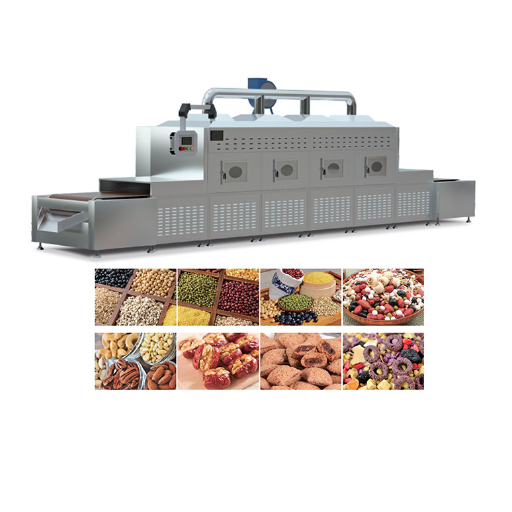
Microwave sterilization machines serve a wide range of food and ingredient categories. The right configuration depends on moisture content, particle size, heat sensitivity, and throughput targets.
Spices, Seasonings, and Powdered Foods
Spices and powdered seasonings are ideal candidates. A turmeric processor, for example, can run 400 kg/h through an 80 kW tunnel with a 4.5-minute residence time. The result: total plate count drops from 10⁶ CFU/g to under 500 CFU/g, moisture falls to 2.1%, and curcumin loss stays below 3.5%. Chili powder, black pepper, wasabi, and spice blends benefit from the same gentle, rapid treatment.
Tea, Herbs, and Botanicals
Green tea fixation and sterilization in one step reduce enzymatic browning and lock in color. Herbal medicines, flower teas, and botanical extracts also respond well because microwave energy dries and sterilizes simultaneously without the long exposure times that degrade volatile oils.
Nuts, Grains, and Seeds
Almonds, walnuts, sesame, jujube, and grains need consistent roasting color plus pathogen control. Microwave tunnels deliver both. A 55 kW system can process almonds with a 35 mm bed depth and achieve validated 5-log Salmonella reduction.
Prepared Meals and Packaged Foods
Airline meals, fast-food trays, and vacuum-packed ready-to-eat products use microwave heating and sterilization in a single pass. This approach shortens lead times, reduces water use, and improves texture compared with long retort cycles.
Pet Food and Animal Feed
Dog food, pet feed, and insect protein such as black soldier fly larvae dry and sterilize efficiently in microwave tunnels. The fast process preserves nutritional value while controlling microbes and insect eggs.
Liquid Foods and Nutritional Supplements
Nutritional oral liquids, functional beverages, and herbal extracts move through specialized continuous microwave sterilization equipment. Nitrogen-purged runs can preserve more than 98.5% API potency in pharmaceutical granules, according to vendor case data.
Key Technical Parameters to Evaluate
When comparing industrial microwave sterilizers, focus on these specifications before price.
Microwave frequency. Most food systems use 2.45 GHz, which works well for smaller particles and thinner beds. The 915 MHz frequency penetrates deeper and suits larger volumes or dense products, but the magnetrons are larger and more expensive.
Power output. Rule of thumb: 1 kW of microwave power evaporates roughly 0.8–1.0 kg of water per hour. A 10 kW unit handles about 10 kg/h; a 100 kW tunnel processes closer to 100 kg/h. Match power to your target throughput and moisture load.
Temperature control and uniformity. Look for closed-loop IR or fiber-optic feedback, PLC recipe storage, and mode stirrers or multi-magnetron arrays to prevent cold spots. Uniformity matters more than peak power.
Conveyor and bed depth. Belt speeds of 0.1–5 m/min and bed depths of 20–80 mm are typical. The manufacturer should size these for your specific product.
Construction and safety. Food-grade SUS304 stainless steel, microwave leakage suppression below 1 mW/cm², interlocked doors, and emergency stops are non-negotiable.
Certifications. CE marking is standard for export. Depending on your market, you may also need FDA, ISO, or GMP compliance documentation.
How Much Does a Microwave Sterilization Machine Cost?
Price ranges depend on capacity, automation, frequency, and construction quality. In 2026, typical industrial categories look like this:
- Small batch or cabinet units: 5,000–5,000–15,000
- Mid-range continuous tunnel systems: 15,000–15,000–50,000
- Large industrial lines: 50,000–50,000–120,000
- Heavy-duty or custom systems: 120,000–120,000–250,000+
Hidden costs can add 15–30% to the purchase price. Factor in shipping, installation, magnetron spares, training, service contracts, and any integration with upstream or downstream equipment.
The real financial story is total cost of ownership. A 400 kg/h microwave line might cost 245,000installedversus245,000installedversus190,000 for a steam system, but vendor case studies show energy consumption of 610 kWh/ton versus 980 kWh/ton for steam. At 0.12/kWh,thatsavesroughly0.12/kWh,thatsavesroughly19,900 per year in energy alone. Maintenance runs about 6,000/yearversus6,000/yearversus14,000 for steam, and a 2–5% yield gain can add 30,000–30,000–75,000 annually. Most continuous operations recover the extra investment in 18–26 months.
Want to see how much you could save? Contact our team for a free sample test and a tailored ROI estimate based on your product, throughput, and local energy rates.
How to Choose the Right Machine for Your Operation
Selecting the right microwave sterilization equipment comes down to matching the machine to your product and production goals. Use this framework:
- Define your product. Note moisture content, bulk density, heat sensitivity, and target log reduction. Powders and spices need different handling than liquid supplements or packaged meals.
- Set throughput targets. Calculate current and projected kg/hour. Buy for future capacity, not just today’s volume.
- Choose the configuration. Batch cabinets suit R&D and small runs. Continuous tunnels handle high-volume spices, grains, nuts, and meals. Vacuum microwave dryers protect heat-sensitive, high-value ingredients.
- Verify uniformity and control. Ask for temperature mapping data and ask how the supplier prevents cold spots.
- Check supplier support. Pilot testing, installation, training, spare-part availability, and warranty terms matter as much as the machine itself.
- Request references. Speak to operators running similar products at similar scale.
A baby food manufacturer in Europe followed this process and chose a nitrogen-purged continuous system. The unit preserved amino acid profiles, passed third-party microbiology audits, and slashed water discharge compliance costs. The procurement manager later said the pilot test was the single most valuable step in the decision.
Common Challenges and How to Solve Them
No technology is perfect. Here are the main issues buyers face and how to avoid them.
Uneven heating and cold spots. Poor load arrangement or weak chamber design can leave some areas under-processed. Solve this with mode stirrers, multi-magnetron arrays, rotating turntables for batch units, and real-time temperature feedback.
Packaging constraints. Metal containers and aluminum foil cannot go into a microwave tunnel. Use microwave-compatible, high-barrier packaging for ready-to-eat meals and liquids.
High upfront capital cost. Microwave systems often cost more than steam units initially. Offset this with lower energy, water, labor, and yield-loss costs over a 5-year TCO analysis. Leasing or phased upgrades can help smaller businesses.
Maintenance and magnetron replacement. Magnetrons wear out over time. Choose a supplier with fast spare-part logistics and train an in-house technician on routine inspections.
Regulatory validation. Some markets require documented kill-step validation. Work with a supplier that provides biological indicator studies, temperature mapping reports, and compliance certificates.
Conclusion
A microwave sterilization machine offers food manufacturers a faster, cleaner, and more quality-friendly alternative to traditional retort and autoclave systems. For spices, tea, nuts, grains, prepared meals, pet food, and liquid supplements, the technology can cut cycle times by up to 72%, reduce energy use by 30–50%, and preserve the color, flavor, and nutrition that buyers expect.
The key is choosing the right configuration for your product and running the numbers on total cost of ownership. Most continuous operations recover their investment in 18–26 months. With proper validation, maintenance, and supplier support, a microwave sterilization machine becomes a long-term competitive advantage rather than just another capital expense.
At Shandong Loyal Industrial, we design industrial microwave sterilization machines for global food processors. We offer free 5 kg sample testing, food-grade SUS304 construction, PLC/HMI smart controls, and 48-hour global spare-part shipping. If you are evaluating a microwave sterilization machine for your line, contact us today for a customized quote and ROI analysis.