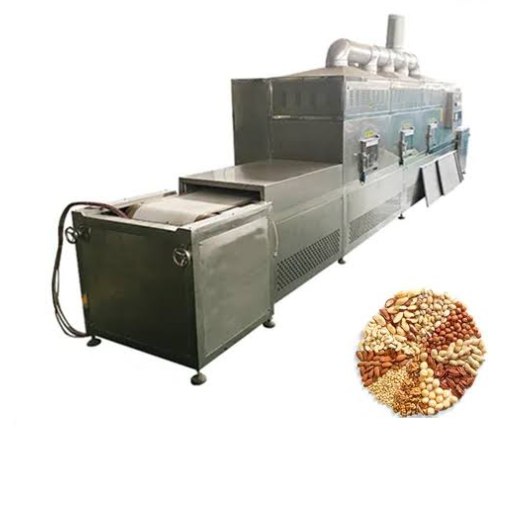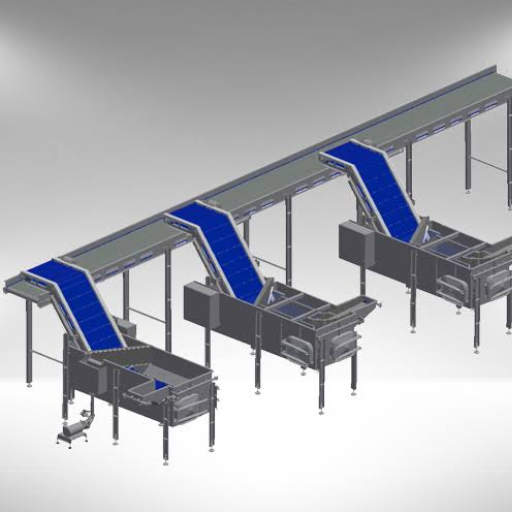
The right custom food processing equipment manufacturer is one that matches your product, facility, compliance needs, and growth plans while offering transparent engineering, quality control, and after-sales support. Choosing poorly can lead to machinery that never fits your line, missed deadlines, and compliance headaches that cost far more than the original invoice.
Last year, a snack producer in Southeast Asia signed with a low-cost equipment broker who promised a “fully custom” extrusion line. Six months later, the controls would not integrate with their existing conveyor, spare parts took eight weeks to arrive, and the stainless steel framing failed a third-party hygiene audit. The line sat idle for 11 weeks while they found a second manufacturer to rebuild it.
That story is more common than it should be. This guide will help you evaluate any custom food processing equipment manufacturer with confidence, spot red flags early, and choose a partner that can scale with your business.
Key Takeaways
- The best custom food processing equipment manufacturers combine deep engineering expertise, relevant certifications, and strong after-sales support, not just low prices.
- Always verify industry experience in your specific product category, factory acceptance testing processes, and spare-parts availability before signing a contract.
- Certifications like CE, FDA, NSF/ANSI, 3-A, EHEDG, ISO 9001, and HACCP matter differently depending on your target export market.
- Custom equipment typically costs more upfront and has longer lead times, but it often pays back through higher throughput, lower waste, and longer service life.
- Request documentation, reference projects, and a clear warranty in writing; vague answers during the inquiry phase are a warning sign.
What Is a Custom Food Processing Equipment Manufacturer?
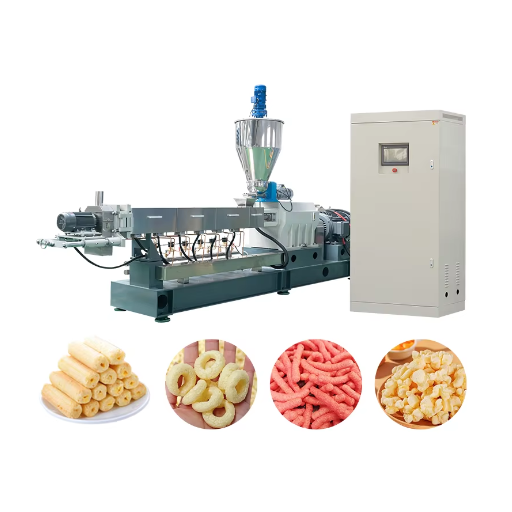
A custom food processing equipment manufacturer designs, engineers, fabricates, and supports machinery built around a buyer’s specific product, facility layout, and production goals. An industrial food processing equipment manufacturer typically serves larger-scale operations with heavy-duty machinery, while boutique shops may focus on niche applications. Unlike catalog suppliers that sell standardized machines, these manufacturers treat each project as an engineering engagement.
Most custom manufacturers offer a continuum of services:
- Full custom design: Equipment engineered from scratch for a unique product or process.
- Semi-custom configuration: Standard platforms modified for capacity, layout, or controls.
- OEM food processing equipment: Private-label or white-label equipment adapted to your branding and specifications, often used by distributors and co-manufacturers.
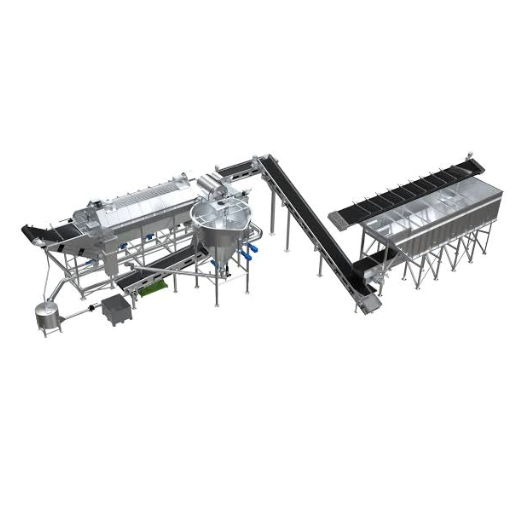
- Turnkey systems integration: Complete production lines that combine multiple machines, controls, and material handling.
When you work with a custom food processing equipment manufacturer, you are not just buying stainless steel and motors. You are buying fit, machinery that matches your recipe, your floor space, your hygiene standards, and your future scaling plans.
For a broader look at how tailored machinery fits into your overall operation, see our guide to custom food processing solutions. If you are new to production-line equipment, start with our overview of food processing machines.
Why Work with a Custom Manufacturer?
Off-the-shelf equipment works well for high-volume commodity products with few variations. But it becomes a bottleneck when your product, facility, or market demands something specific.
Equipment Engineered for Your Exact Product
Standard machines are designed for average use cases. A custom manufacturer can tune screw profiles, heat zones, conveyor speeds, and control logic to your exact recipe and texture targets.
Better Fit for Facility Layout and Existing Lines
Every factory floor is different. Custom equipment can be fabricated to match your ceiling height, utility locations, infeed and outfeed heights, and existing line controls.
Scalability and Future-Proofing
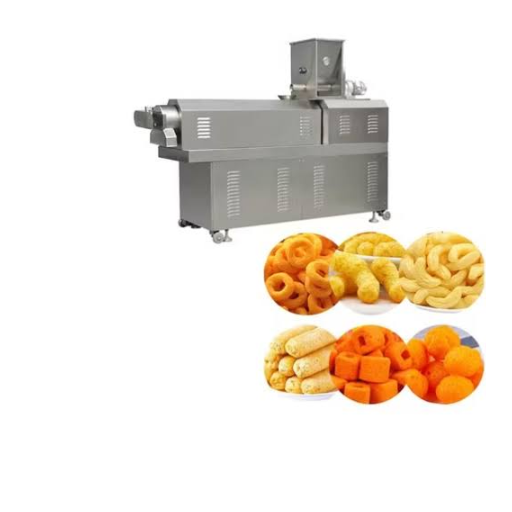
Modular custom designs let you start with a smaller investment and add automation, capacity, or new product modules later. For snack producers, a modular approach means you can launch with a core extrusion and drying line, then add flavoring, seasoning, and packaging modules as demand grows. Learn more in our guide to snack food production line equipment.
Compliance Built In from Day One
A qualified manufacturer can design for CE, FDA, NSF/ANSI, 3-A, EHEDG, ISO 9001, or HACCP requirements from the start, saving you from expensive retrofits.
Long-Term Total Cost of Ownership
Custom equipment usually has a higher purchase price, but lower waste, faster changeovers, and longer service life often produce a faster payback. According to supplier case studies, tailored automation can cut labor costs by 30–40% and reduce material waste by around 15% ().
Maria, a procurement manager at a mid-sized pet food company in Latin America, learned this the hard way. Her first purchase was a budget extruder from a general machinery trader. It worked for six months, then began producing inconsistent kibble sizes. When she switched to a custom pet food production line designed for her specific formulation, downtime dropped by 60% and her reject rate fell below 2%. The new line cost 35% more upfront but paid for itself in 14 months.
Want to see how custom engineering could improve your line? Explore our industrial food processing equipment and request a tailored consultation.
How to Evaluate a Custom Food Processing Equipment Manufacturer
Treat manufacturer selection like hiring a senior engineer. Price matters, but capability, communication, and commitment matter more.
Step 1: Verify Industry Experience and Specialization
Ask for reference projects in your exact product category. A manufacturer strong in dairy equipment may not be the right partner for extruded snacks. Review case studies, photos, videos, and ideally a site visit or factory tour.
Step 2: Review Engineering and Fabrication Capabilities
Look for in-house design teams, CNC fabrication, welding qualifications, and cleanroom assembly practices. Ask who owns the engineering drawings and whether you receive copies.
Step 3: Check Certifications and Market Compliance
Confirm which certifications the manufacturer holds and which third parties audit them. The requirements for selling into the EU differ from those for North America, the Middle East, or Southeast Asia.
Step 4: Assess Customization Process and Communication
A reliable manufacturer will ask detailed questions about your product, target capacity, facility constraints, and budget before quoting. Vague proposals are a red flag.
Step 5: Inspect Quality Control and Factory Acceptance Testing
Request a Factory Acceptance Test (FAT) plan. This should cover performance runs, safety checks, documentation review, and operator training before shipment.
Step 6: Confirm Installation, Training, and After-Sales Support
Ask about on-site commissioning, operator training, spare-parts availability, remote diagnostics, and warranty terms. Equipment without support is a liability.
Step 7: Compare Lead Times, Pricing, and Payment Terms
Get a detailed breakdown of design, fabrication, testing, shipping, installation, and training costs. Be wary of quotes that are significantly lower than competitors without a clear scope.
If you are comparing different types of machinery partners, our article on industrial food processing equipment explains how to match equipment scale to your production goals.
Certifications and Standards That Matter
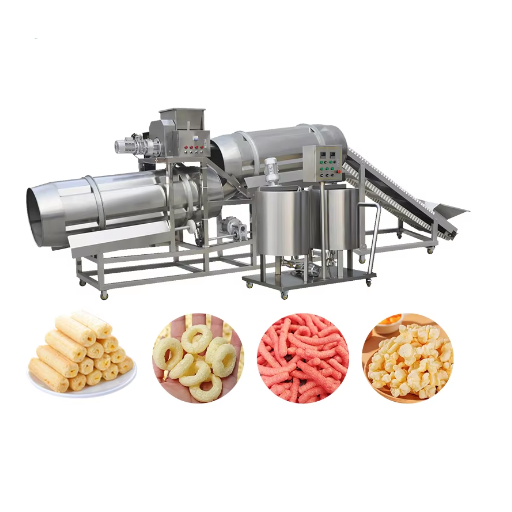
Certifications are not paperwork for paperwork’s sake. They are proof that a manufacturer can meet the hygiene, safety, and quality standards of your target market.
CE Marking (EU)
CE marking confirms that equipment meets European health, safety, and environmental protection standards. It is mandatory for most machinery sold in the European Economic Area.
FDA and NSF/ANSI Standards (North America)
FDA compliance applies to materials and surfaces that contact food. NSF/ANSI standards cover equipment design, cleanability, and material safety for the North American market.
3-A Sanitary Standards and EHEDG (Hygienic Design)
3-A Sanitary Standards and the European Hygienic Engineering & Design Group (EHEDG) guidelines focus on cleanability and contamination prevention. These are critical for dairy, beverage, meat, and ready-meal equipment.
ISO 9001 and ISO 22000 / HACCP
ISO 9001 is a quality management standard. ISO 22000 and Hazard Analysis Critical Control Point (HACCP) systems demonstrate food-safety management competence.
ASME and UL Where Applicable
Pressure vessels, boilers, and electrical panels may require ASME or UL certification depending on local regulations.
| Certification | Primary Market | What It Covers |
|---|---|---|
| CE | European Union | Safety, health, environmental compliance |
| FDA | United States | Food-contact materials and surfaces |
| NSF/ANSI | North America | Equipment design and cleanability |
| 3-A Sanitary | North America | Hygienic design for food equipment |
| EHEDG | Europe | Hygienic engineering and design |
| ISO 9001 | Global | Quality management systems |
| ISO 22000 / HACCP | Global | Food safety management |
| ASME / UL | Region-specific | Pressure vessels and electrical safety |
Custom Manufacturer vs Standard Supplier: Which Do You Need?
Not every project needs a full custom build. Sometimes a standard machine from a reputable catalog supplier is the smarter choice.
| Factor | Custom Manufacturer | Standard Supplier |
|---|---|---|
| Customization | High, engineered to your spec | Low, limited to available options |
| Lead time | Longer (weeks to months) | Shorter (often in stock) |
| Upfront cost | Higher | Lower |
| Support | Dedicated project support | Standard warranty, limited customization |
| Best for | Unique products, complex layouts, scaling | Commodity products, tight budgets, fast startup |
Choose a custom food processing equipment manufacturer when your product recipe, facility layout, or compliance needs cannot be met by catalog equipment. Choose a standard supplier when you are producing a well-established commodity with no special hygiene or integration requirements.
Red Flags to Avoid When Choosing a Custom Food Processing Equipment Manufacturer
The inquiry phase reveals a lot. Watch for these warning signs:
Vague or Missing Certifications
If a manufacturer cannot produce current certification documents or claims certifications “are not important for your market,” walk away.
No Reference Projects in Your Product Category
A company that has never built equipment for your product type is learning on your dime.
Unwillingness to Share Quality-Control Documentation
Factory Acceptance Test plans, material certificates, and welding records should be available on request.
Unclear Warranty, Spare-Parts, or Support Terms
If warranty coverage, spare-parts pricing, and response times are not in writing, they do not exist.
Significantly Lower Prices Without Transparent Scope
A 40% lower quote often means corners are being cut on materials, controls, or support.
Poor Communication During the Inquiry Phase
Slow, evasive, or generic responses before you are a customer usually get worse after you pay.
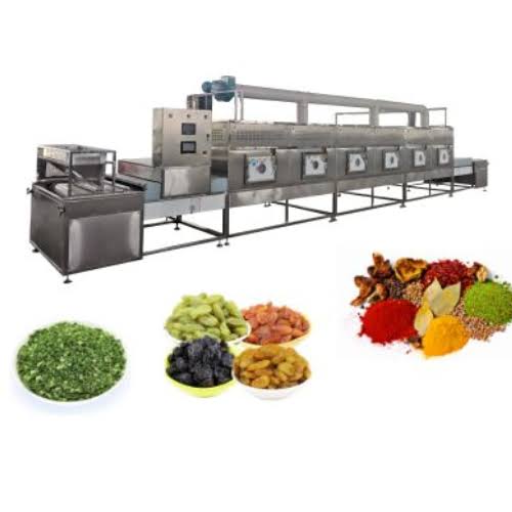
Ahmed, an operations director at a spice company in the Middle East, ignored these red flags. He chose a manufacturer that replied to technical questions with one-line emails and refused a video factory tour. The delivered dryer had the wrong voltage, undocumented controls, and no CE paperwork. The line was unusable for export, and he spent another $45,000 fixing compliance issues.
Ready to compare manufacturers with a clear checklist? Download our buyer’s guide or contact our team for a no-obligation consultation.
What to Expect During the Custom Equipment Process
A well-run custom project follows a clear sequence:
Needs Assessment and Site/Line Review
The manufacturer reviews your product sample, production targets, facility drawings, and compliance requirements.
Concept Design and Quotation
You receive preliminary layouts, equipment specifications, timelines, and a detailed quote.
Engineering Approval and Fabrication
After you approve drawings, the manufacturer procures materials, fabricates components, and assembles the machine.
Factory Acceptance Testing (FAT)
The equipment is run at the factory with your product or a representative sample. Performance, safety, and documentation are verified before shipment.
Shipping, Installation, and Commissioning
The machine is delivered, installed, connected to utilities, and brought up to operating conditions.
Operator Training and Handover
Your team is trained on operation, cleaning, maintenance, and troubleshooting. Full documentation is handed over.
For more on how complete production lines come together, read our overview of food production line equipment.
Cost, Lead Time, and ROI Considerations
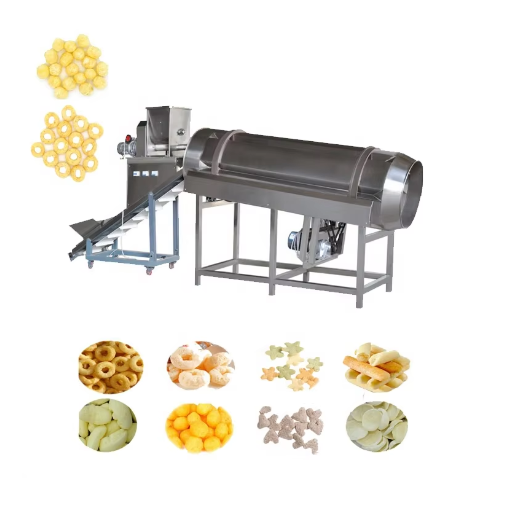
Custom equipment is an investment, not an expense. Understanding the full picture helps you justify the project internally.
Factors That Influence Custom Equipment Pricing
- Complexity of the product and process
- Materials (304 vs 316 stainless steel, for example)
- Degree of automation and controls integration
- Certification and documentation requirements
- Shipping distance and installation scope
Typical Lead-Time Ranges
Small custom machines may take 8–12 weeks. Complete turnkey lines can take 20–30 weeks or more, depending on complexity and certification needs.
Calculating Payback Through Efficiency and Waste Reduction
Look at labor savings, throughput gains, waste reduction, and energy efficiency. A gluten-free bar manufacturer increased daily output from roughly 500 lbs to 15,000 lbs after installing custom extrusion and conveying equipment ().
Hidden Costs to Plan For
Include shipping, import duties, installation, commissioning, training, spare parts, and ongoing maintenance in your budget. The purchase price is rarely the final cost.
Conclusion
Choosing the right custom food processing equipment manufacturer comes down to fit, technical fit, cultural fit, and long-term support fit. Start by verifying experience in your product category, then inspect certifications, quality-control processes, and after-sales support. Compare total cost of ownership, not just purchase price. And pay close attention to how the manufacturer communicates before the sale; it is usually a reliable preview of how they will behave after delivery.
The global food processing equipment market is projected to grow from approximately USD 59 billion in 2026 to USD 78.7 billion by 2033 (Grand View Research). Manufacturers that invest in the right custom partners now will be better positioned to capture that growth.
If you are evaluating food machinery manufacturers for your next project, start with a clear requirements list and use the framework above to score each candidate. The right partner will not just sell you a machine, they will help you build a more efficient, compliant, and scalable operation.
Get started today. Request a consultation with Shandong Loyal Industrial Co., Ltd. and let our engineers design a solution that fits your product, your facility, and your goals.