The right starch drying equipment for most food manufacturers is a flash dryer system that reduces wet starch cake from 35–45% moisture down to 10–13% in seconds, protecting product quality while keeping energy costs under control. The exact dryer type you need depends on your starch source, production capacity, and whether you are processing native starch, modified starch, or by-products like cassava or potato dregs.
What if your current drying setup is quietly costing you more than it should? Maria, a procurement manager at a cassava starch plant in Southeast Asia, discovered that her old rotary dryer was over-drying fine starch, causing color darkening and viscosity loss. After switching to a continuous flash dryer with automated temperature control, her final product moisture stabilized at 12%, rejection rates dropped, and energy consumption fell by nearly 20%.
This guide will show you how starch drying equipment works, which dryer type fits each application, and what to evaluate before investing. You will leave with a clear framework for choosing equipment that matches your product, capacity, and budget.
Key Takeaways
- Flash dryers are the dominant choice for native cassava, potato, and corn starch because they dry in 1–3 seconds and prevent gelatinization.
- Rotary and drum dryers handle wetter, bulkier materials such as starch residues and pre-gelatinized starch slurries.
- Match the dryer to your starch source, target moisture, capacity, and heat sensitivity rather than choosing by price alone.
- Industrial starch dryer prices range from roughly 12,000forsmallunitstoover12,000forsmallunitstoover1 million for large custom systems.
- Regular maintenance, precise temperature control, and heat recovery systems protect product quality and reduce operating costs.
What Is Starch Drying Equipment?
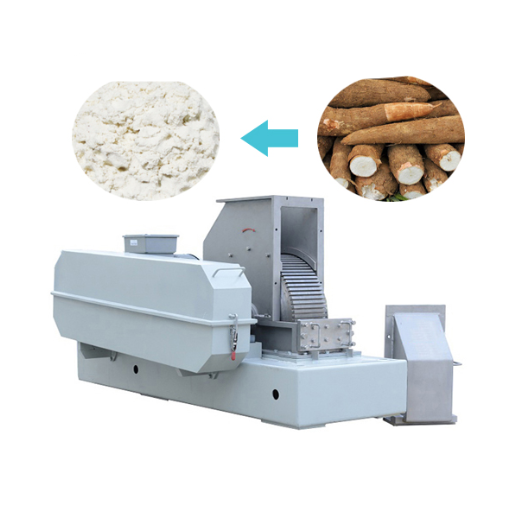
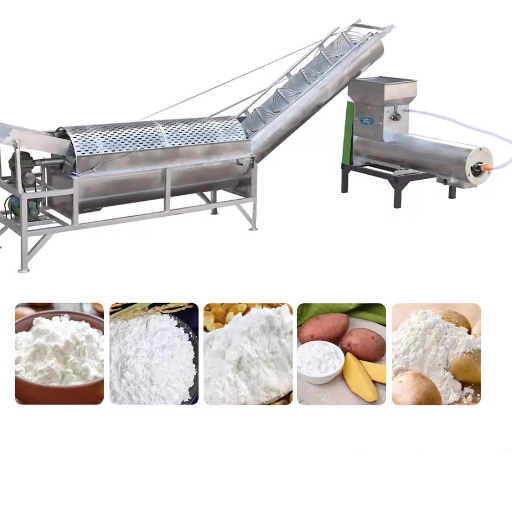
Starch drying equipment is the machinery used to remove moisture from starch after extraction, washing, and mechanical dewatering. It turns wet starch cake or slurry into a stable, free-flowing powder that can be stored, transported, and sold.
Drying is one of the most critical steps in starch processing. If moisture remains too high, the product clumps, molds, or loses shelf life. If starch is over-heated, it gelatinizes, browns, or loses the viscosity that food manufacturers depend on. The right equipment controls both moisture and temperature precisely.
Food processors use starch drying equipment for:
- Native starches from cassava, potato, corn, wheat, and tapioca
- Modified starches for thickeners, binders, and stabilizers
- Pre-gelatinized starches for instant foods
- Starch residues and by-products such as cassava pulp or potato dregs
Because starch is heat-sensitive, dryers must remove water quickly without pushing the material past its gelatinization threshold. This is why flash drying has become the default technology for most refined starch powders.
How Starch Drying Equipment Works
The basic starch drying process follows a clear path. Wet starch enters the system, meets heated air or a heated surface, loses moisture, and is separated from the drying medium before cooling and packaging.
In a typical flash dryer for starch, the process looks like this:
- Feeding. Wet starch cake, usually 35–45% moisture after dewatering, is fed into the dryer through a screw or sling feeder.
- Hot air generation. Clean air is heated by a burner, steam heat exchanger, or thermic fluid heater.
- Pneumatic conveying and dispersion. The wet starch is introduced into a high-velocity hot air stream. The air breaks the cake into fine particles and carries them through a drying duct.
- Rapid evaporation. Because the particles are small and exposed to hot air over a large surface area, moisture evaporates in 1–3 seconds.
- Separation. A cyclone separator or bag filter collects the dried starch.
- Cooling and packaging. The starch is cooled to room temperature and sent to storage or packaging.
The short residence time is the key advantage. Starch spends only seconds at elevated temperature, so the granules do not gelatinize or degrade. This preserves whiteness, viscosity, and functional properties that buyers expect.
Modern systems also add sensors and automation. Temperature, airflow, feed rate, and final moisture can be monitored continuously. Some plants use heat recovery units to capture energy from exhaust air and reduce fuel consumption.
Types of Starch Drying Equipment
Not every starch product needs the same dryer. The best equipment depends on the starting material, the final product, and your production scale.
Flash Dryers
Flash dryers, also called pneumatic or airflow dryers, are the most common starch drying machines for native starch. They handle wet cake with 35–45% moisture and produce a fine, dry powder with 10–13% moisture in a single pass.
Best for: Cassava starch, potato starch, corn starch, wheat starch, tapioca starch, and some modified starches.
Advantages: Fast drying, compact footprint, continuous operation, good energy efficiency with heat recovery, and low risk of heat damage.
Spin Flash Dryers
Spin flash dryers add a high-speed rotating agitator at the feed point. This makes them better at breaking up sticky or pasty materials that would otherwise clump in a standard flash dryer.
Best for: Modified starch, filter cakes, and high-viscosity pastes.
Advantages: Handles sticky feeds, uniform particle size, short drying time, and scalable capacity.
Rotary Dryers
Rotary dryers tumble material inside a rotating drum while hot air flows through. They are less common for refined starch powder but widely used for wet, bulky by-products.
Best for: Cassava pulp, potato dregs, tapioca slag, and starch residues with 60–85% moisture.
Advantages: High capacity, robust mechanical handling, suitable for sticky and fibrous materials.
Drum Dryers
Drum dryers apply starch slurry to a heated rotating cylinder. The dried film is scraped off as flakes or powder. This method almost completely gelatinizes the starch.
Best for: Pre-gelatinized starch, cold-water-soluble starch, and specialty modified starches.
Advantages: Produces pre-cooked starch in one step, controlled flake thickness, hygienic design.
Spray Dryers
Spray dryers atomize liquid starch slurry into a hot chamber. The droplets dry almost instantly into fine powder.
Best for: Liquid starch derivatives, maltodextrin, glucose syrups, and refined starch slurries.
Advantages: Produces very fine, uniform powder; excellent for heat-sensitive liquids; hygienic and continuous.
Fluidized Bed Dryers
Fluidized bed dryers pass hot air up through a bed of starch granules, suspending them like a fluid. They are often used for final moisture adjustment and cooling after flash drying.
Best for: Granular starch, final conditioning, and gentle final drying.
Advantages: Uniform moisture, precise temperature control, gentle handling.
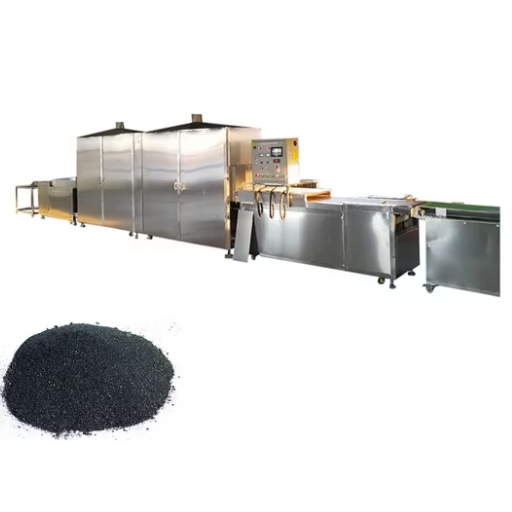
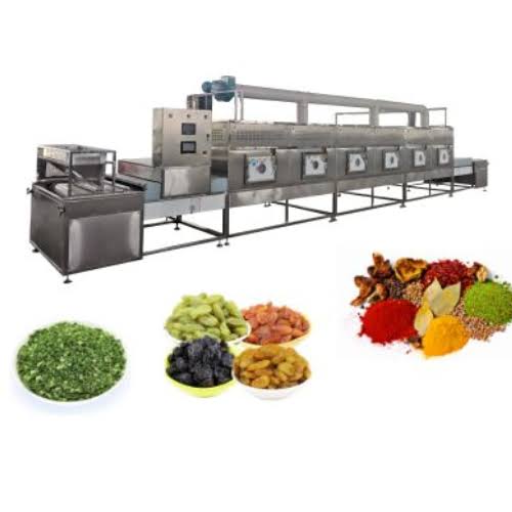
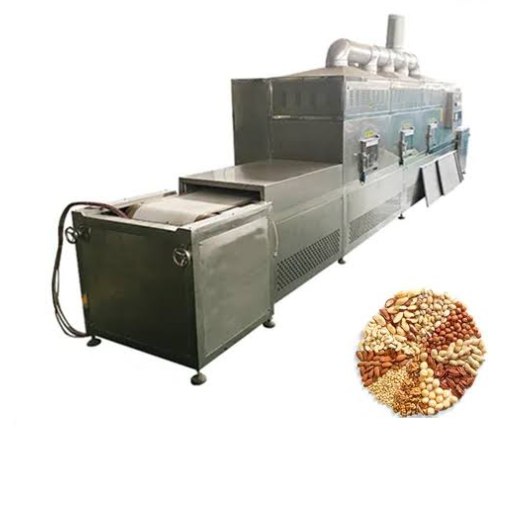
Microwave Dryers
Microwave dryers use electromagnetic energy to heat water molecules inside the starch. They are typically used for final drying, sterilization, or low-temperature applications.
Best for: Final drying of starch powder, sterilization, and heat-sensitive specialty products.
Advantages: Fast, uniform, low thermal degradation, can reduce microbial load.
| Dryer Type | Best For | Typical Moisture In | Typical Moisture Out | Residence Time |
|---|---|---|---|---|
| Flash dryer | Native starch powders | 35–45% | 10–13% | 1–3 seconds |
| Spin flash dryer | Modified starch, pastes | 30–50% | 10–14% | Seconds |
| Rotary dryer | Starch residues, pulp | 60–85% | 10–15% | Minutes |
| Drum dryer | Pre-gelatinized starch | Slurry | Dry film/flakes | Seconds to minutes |
| Spray dryer | Liquid starch derivatives | Liquid slurry | Fine powder | Seconds |
| Fluidized bed dryer | Final conditioning | 12–15% | 10–12% | Minutes |
| Microwave dryer | Final drying/sterilization | 10–15% | 8–12% | Minutes |
Matching Dryer Type to Your Starch Source
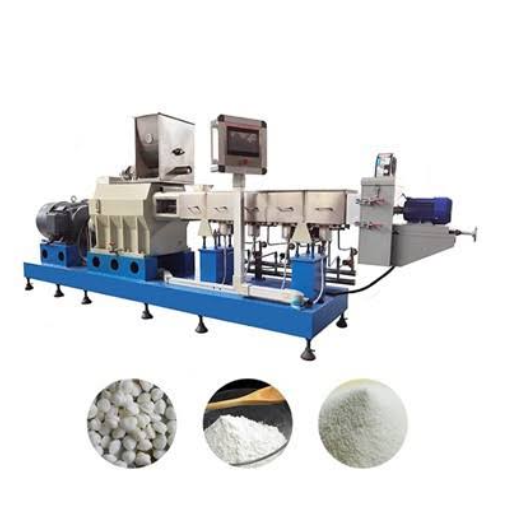
Choosing the wrong dryer for your raw material is one of the fastest ways to waste capital and produce off-spec product. Here is how the most common starch sources map to equipment.
Cassava Starch Dryer Selection
Cassava starch is highly heat-sensitive. Gelatinization begins around 59–69°C, so temperature control is critical. Most cassava processors choose a cassava starch dryer with a flash drying system, negative pressure operation, and stainless-steel contact parts to prevent contamination.
A well-specified cassava flash dryer typically handles 500 kg/hour to several tonnes per hour. It should include cyclone separation and dust collection to meet hygiene and environmental standards.
Potato Starch Drying Machine Selection
Potato starch has larger granules than cassava and slightly different viscosity behavior. A potato starch drying machine is usually a flash dryer or a flash dryer paired with a fluidized bed conditioner.
Some potato processors also need a separate residue dryer for potato pulp. In that case, a rotary drum dryer with dewatering pre-treatment is the more practical choice.
Corn and Maize Starch Dryer Selection
Corn starch is often part of a complete wet-milling line that includes steeping, grinding, separation, and drying. The dryer must fit into a high-capacity continuous process. Flash dryers and spin flash dryers are both common, depending on whether the feed is wet cake or a more paste-like modified starch.
Wheat and Tapioca Starch
Wheat starch is frequently used in food and paper applications and may require spray drying or flash drying depending on whether it is sold as powder or slurry. Tapioca starch follows similar principles to cassava starch and usually uses flash drying.
Modified and Pre-gelatinized Starch
Modified starches often start as pastes or filter cakes. A spin flash dryer or fluidized bed dryer is usually the best fit. Pre-gelatinized starch requires a drum dryer because the goal is to cook the starch while drying it.
Want to see how a complete starch processing line fits together? Explore our food production line equipment to learn how dryers integrate with extraction, dewatering, and packaging systems.
Key Selection Criteria for Starch Drying Equipment
When buyers request quotes without a clear specification, they often receive incompatible proposals. Use these criteria to narrow your options before contacting suppliers.
Feed Material Characteristics
- Form: Wet cake, slurry, granules, or powder
- Initial moisture content
- Starch source and gelatinization temperature
- Particle size and stickiness
- Required final moisture and quality standards
Production Requirements
- Capacity: Match the dryer to your hourly or daily throughput, not just your peak demand.
- Operation mode: Continuous systems dominate commodity starch because they are more efficient. Batch systems suit specialty or pharmaceutical starches that need frequent changeovers.
- Integration: The dryer must connect cleanly with your upstream dewatering and downstream cooling/packaging equipment.
Energy Efficiency and Operating Costs
Drying is one of the most energy-intensive steps in starch processing. Look for:
- Heat recovery from exhaust air
- Efficient burners or steam heat exchangers
- Insulated drying ducts and drums
- Variable speed drives on fans and feeders
- Automated controls that prevent over-drying
A more efficient dryer often pays for itself through lower fuel and electricity bills, especially at high volumes.
Construction and Hygiene
Food-grade starch dryers should use stainless steel contact surfaces, sealed bearings, dust-tight construction, and easy clean-in-place access. If you export to regulated markets, confirm compliance with relevant food safety standards.
Automation and Support
Modern starch drying systems should include PLC or HMI controls, real-time temperature and moisture monitoring, and alarms for out-of-range conditions. Also evaluate the supplier’s after-sales support, spare parts availability, and installation services.
Starch Drying Equipment Pricing Overview
Pricing varies widely based on capacity, materials of construction, automation, and customization. Based on current B2B listings and manufacturer data, here are realistic ranges:
| Equipment Scale | Typical Price Range | Notes |
|---|---|---|
| Small / entry-level flash dryer | 12,000–12,000–40,000 | 100–500 kg/h, basic controls |
| Mid-range industrial flash dryer | 40,000–40,000–120,000 | 500–2,000 kg/h, PLC control, stainless steel |
| Large custom drying system | 100,000–100,000–1,000,000+ | Turnkey lines, heat recovery, full automation |
| Rotary residue dryer | 20,000–20,000–150,000+ | Depends on evaporative load and material |
| Drum dryer for pre-gelatinized starch | 50,000–50,000–300,000+ | Specialized applications |
The cheapest quote is rarely the best value. A lower-priced dryer without heat recovery, proper controls, or local support can cost far more over its lifetime through wasted energy, downtime, and off-spec product.
Ready to compare options for your plant? Contact our team for a tailored quote based on your starch type, capacity, and budget.
Maintenance and Troubleshooting Tips
Reliable starch drying equipment depends on consistent maintenance. Neglect leads to blockages, uneven moisture, and unexpected downtime.
Daily Maintenance
- Inspect the dryer for leaks, abnormal noise, and vibration.
- Check lubricant levels on bearings, gearboxes, and motors.
- Clean feed points and discharge areas to prevent starch buildup.
- Verify that temperature, airflow, and moisture sensors read normally.
Weekly Maintenance
- Clean or replace air filters.
- Inspect belts, chains, and couplings for wear or misalignment.
- Check cyclones and dust collectors for blockages.
- Tighten loose fasteners and inspect seals.
Monthly and Quarterly Maintenance
- Lubricate all rotating parts according to the manufacturer schedule.
- Inspect the hot air generator, burners, and heat exchangers.
- Check electrical connections and control panel components.
- Recalibrate temperature and moisture sensors.
- Review dryer performance data and adjust setpoints if quality drifts.
Common Problems and Solutions
| Problem | Likely Cause | Solution |
|---|---|---|
| High discharge moisture | Excessive feed rate, low air temperature, short residence time | Reduce feed rate, increase inlet temperature, or adjust duct length/angle |
| Overheating or browning | Air temperature too high, feed interruption | Lower temperature, check feeder consistency, add interlocks |
| Low output | Low steam or fuel supply, worn blower, blockage | Check utilities, inspect blower, clear blockages |
| Excessive dust | Worn seals, poor cyclone performance, overloaded system | Replace seals, clean cyclone, reduce feed rate |
| Vibration or noise | Worn bearings, misalignment, material buildup | Lubricate or replace bearings, realign, clean internals |
Training your operators to recognize early warning signs is one of the most cost-effective investments you can make. A well-trained team catches problems before they become expensive failures.
Future Trends in Starch Drying Technology
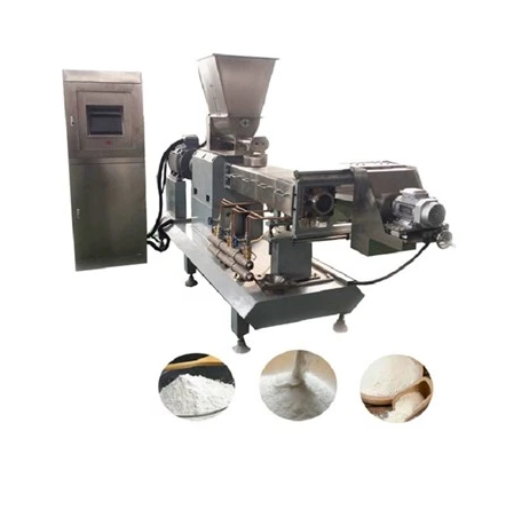
The starch processing industry is moving toward equipment that is more efficient, more automated, and easier to validate.
Energy Efficiency and Sustainability
Rising energy costs and environmental regulations are pushing manufacturers toward heat recovery, waste heat utilization, and lower-emission burners. Some modern flash dryers now recover enough heat from exhaust air to cut fuel use by 15% or more.
Automation and IoT Integration
Sensors for temperature, humidity, vibration, and power consumption are becoming standard. Cloud-connected dryers allow remote monitoring, predictive maintenance, and automatic recipe adjustments based on incoming moisture.
Quality Control Sensors
Inline near-infrared moisture meters and vision systems help maintain consistent final moisture and detect color or contamination issues in real time. This reduces rework and improves batch-to-batch consistency.
Flexible and Modular Designs
More suppliers now offer modular dryers that can be expanded as production grows. This is especially valuable for startups and growing processors that need to scale without replacing equipment every few years.
Conclusion
Choosing the right starch drying equipment comes down to matching the dryer technology to your starch source, capacity, and quality goals. Flash dryers remain the workhorse for native starches like cassava, potato, and corn because they dry quickly without damaging heat-sensitive granules. Rotary and drum dryers fill important roles for residues and pre-gelatinized products. Spray, fluidized bed, and microwave dryers handle specialized applications where particle size, uniformity, or sterilization matters.
The best buying decision balances purchase price, operating cost, product quality, and supplier support. Energy efficiency, automation, and maintenance accessibility often matter more over five years than the initial invoice.
At Shandong Loyal Industrial Co., Ltd., we design and supply starch drying systems for processors around the world. Whether you need a compact unit for a startup or a turnkey line for large-scale production, our team can help you select equipment that fits your process and your budget.
Ready to upgrade your starch drying process? Contact us today for a customized quote and expert guidance on the right dryer for your plant.