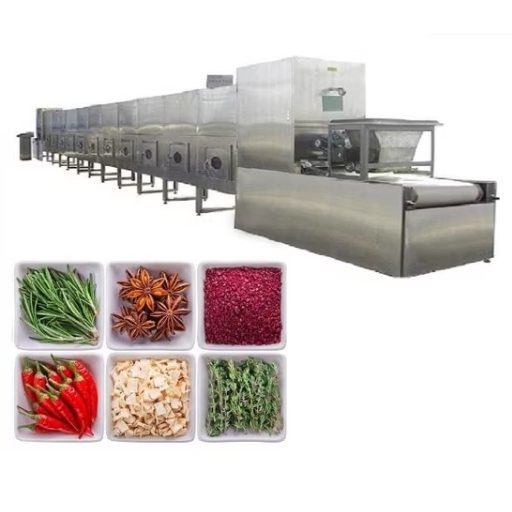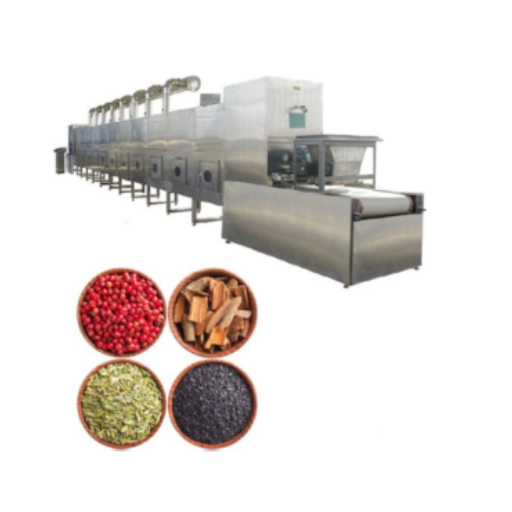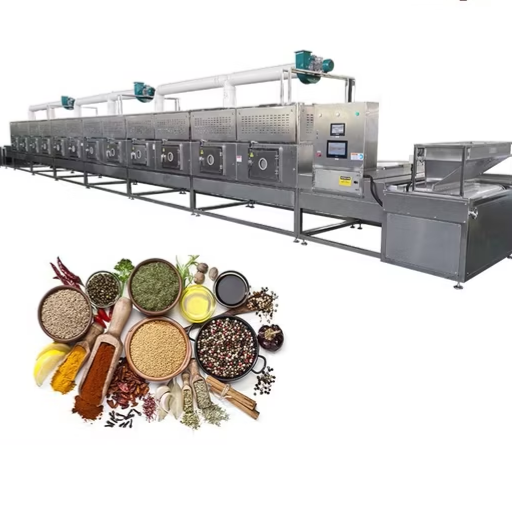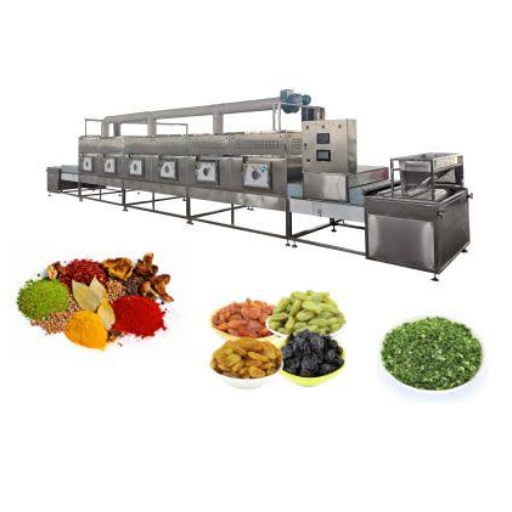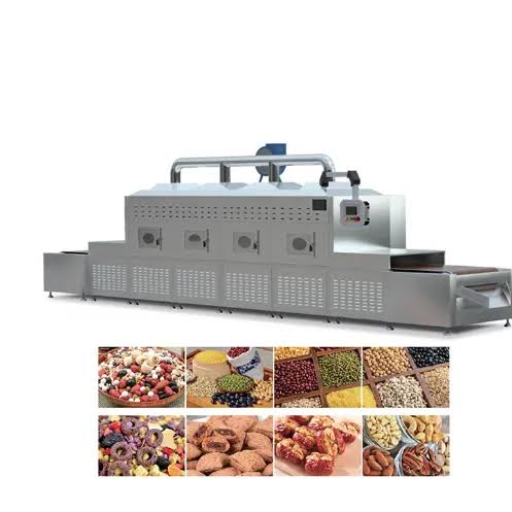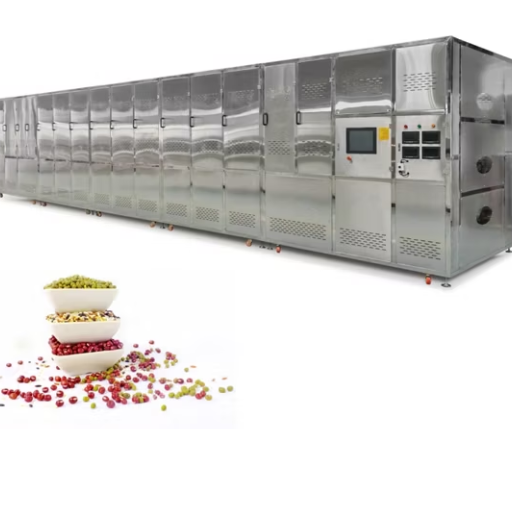
Microwave sterilization equipment specifications are the technical parameters that determine how effectively an industrial sterilizer treats your product. They also define whether the machine meets food safety standards and fits your production line.
The most important specifications include microwave frequency (915 MHz or 2450 MHz), power output in kW, throughput capacity in kg/h, and temperature control accuracy. Materials of construction, control system capabilities, and compliance certifications such as CE, FDA 21 CFR, and HACCP also matter.
The specification sheet for an industrial microwave sterilizer can look like a wall of numbers. You will see kW, MHz, kg/h, mW/cm², SUS304, PLC, and HMI. Only a handful of those numbers determine whether the machine solves your problem or becomes an expensive mistake.
When Ravi Sharma, a spice processor in Mumbai, ordered his first tunnel sterilizer in 2023, he focused only on the lowest price per kilowatt. He missed that his chili powder needed 2450 MHz for thin-layer uniformity, not 915 MHz. Six months later, he was retrofitting the line at twice the original cost. Stories like Ravi’s are why we wrote this guide.
In this article, you will learn which microwave sterilization equipment specifications matter for your application, how to read manufacturer spec sheets, and how to choose a system that delivers throughput, safety, and ROI.
Key Takeaways
- Microwave frequency (915 MHz vs. 2450 MHz) is the first specification to get right because it controls penetration depth and product uniformity.
- Power output, belt dimensions, and throughput must be matched to your product’s moisture content, bulk density, and target microbial reduction.
- Validation-ready controls with PLC, HMI, and data logging are essential for FDA, HACCP, and ISO 22000 compliance.
- Industrial microwave sterilizers typically process food in 3–6 minutes and use 30–50% less energy than steam retort systems.
- Matching specifications to your product reduces rework, avoids compliance failures, and usually pays back in 18–26 months.
What Are Microwave Sterilization Equipment Specifications?
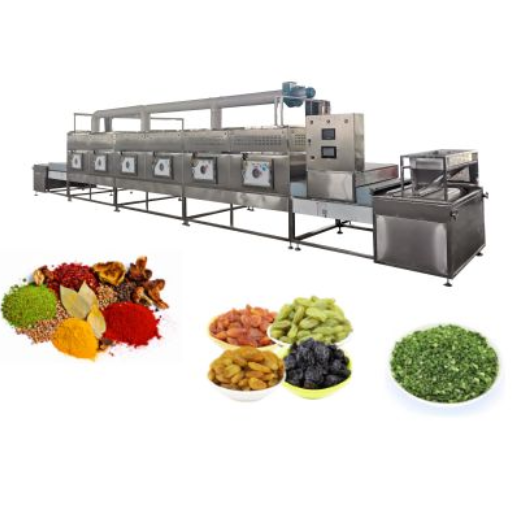
Microwave sterilization equipment specifications are the measurable design and performance characteristics that define what a machine can do. They appear on manufacturer data sheets, quotation documents, and technical drawings. These numbers tell you whether a unit can handle your product, your volume, and your regulatory environment.
Catalog specifications are only a starting point. However, application-specific requirements come from your actual process. A spice powder with 8% moisture behaves differently from pet food kibble with 12% moisture. Walnut kernels with 4% moisture behave differently still. Therefore, the same microwave power can produce very different results depending on layer thickness, belt speed, and target temperature.
This is why experienced buyers treat spec sheets as a conversation, not a conclusion. They ask how the manufacturer validated the capacity numbers. They ask what product was tested. They also ask whether the quoted throughput includes a safety margin for daily variation.
7 Critical Microwave Sterilization Equipment Specifications
The following microwave sterilization machine technical parameters are the ones most buyers should verify before requesting a quote.
1. Microwave Frequency: 915 MHz vs. 2450 MHz
Microwave sterilization equipment power frequency is the first specification to get right. Industrial systems use either 915 MHz or 2450 MHz.
2450 MHz is the most common choice for food processing. It offers higher power density and lower equipment cost. Its penetration depth is typically 2–5 cm in moist foods, which makes it ideal for thin layers of spices, powders, herbs, and small nuts.
915 MHz penetrates deeper, usually 8–12 cm, but the generators and applicators are more expensive. It is the better choice for thicker product beds, larger packages, ready meals, or bulk liquids where uniform heating through the full depth matters.
A practical rule from microwave engineering is to keep product layer depth at or below twice the penetration depth. For a 2450 MHz system, that means layers under 10 cm. For 915 MHz, you can go up to 20–24 cm. Choosing the wrong frequency is one of the fastest ways to create cold spots and fail microbial validation.
2. Microwave Power Output (kW)
Power output ranges from 10 kW for small batch units to 400 kW or more for heavy-duty continuous tunnels. The useful relationship to remember is roughly 6–10 kg of sterilized product per hour for each kilowatt of microwave power, depending on the starting moisture and target temperature rise.
For a broader look at microwave heating systems, see our overview of industrial microwave oven equipment and how it relates to sterilizer design.
Power density is just as important as total power. For example, a good design targets 5–15 kW per cubic meter of treatment zone. Too little power density creates uneven heating. Conversely, too much can scorch surfaces before the core reaches temperature. Mode stirrers, multiple magnetron feeds, and conveyor motion all help distribute energy evenly.
When comparing quotes, ask whether the kW rating is microwave output power or electrical input power. Output power is what heats the product. Input power can be 30–50% higher because magnetrons are not 100% efficient. The difference affects both operating cost and real throughput.
3. Processing Capacity and Belt Dimensions
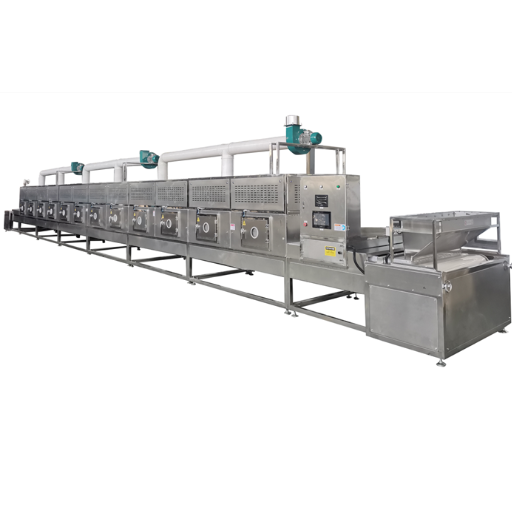
Continuous tunnel microwave sterilizers dominate industrial food processing. Typical belt widths range from 0.6 m to 2.0 m. Tunnel lengths range from 4 m for compact units to 20 m or more for high-capacity lines. Belt speed is usually adjustable from 0.1 to 6 m per minute. These tunnel microwave sterilizer specifications directly determine how much product can move through the line per hour.
Capacity should always be matched to your real production schedule. A line rated at 1,000 kg/h may achieve that only under ideal conditions. It also depends on the specific product being tested. Ask the supplier for a guaranteed throughput range. Ask for the list of products used to validate it. Commercial microwave sterilizer capacity figures should always include the product, moisture level, and target temperature used during testing.
Batch cabinet units are still useful for R&D, pilot plants, and small-scale production. Typical batch chamber volumes are 0.5–5 m³. Each cycle handles 50–500 kg. Cycle times run 15–45 minutes. If your volume is below 200 kg/day, a batch system may be more economical than a tunnel.
4. Temperature Range and Control Accuracy
Microwave sterilization can operate at lower temperatures than retort or autoclave methods. Pasteurization and low-temperature short-time (LTST) processes often run at 60–95°C. Sporicidal sterilization typically needs 90–130°C. Sometimes it requires pressure.
Temperature control accuracy depends on sensor technology. However, standard thermocouples can interfere with microwave fields. Industrial systems use fiber-optic or fluoroptic probes instead. These sensors can achieve ±0.3°C accuracy. As a result, maintaining the product within ±2°C of the setpoint is a common process requirement.
The control system should log temperature, belt speed, and power level at short intervals, typically one second, for validation records. This data becomes critical during audits and when customers request proof of process control.
5. Materials and Sanitary Design
Food-grade stainless steel is standard. SUS304 is the most common choice for contact surfaces. It resists corrosion, is easy to clean, and meets most food safety requirements. 316L stainless steel is used when the product is acidic, salty, or corrosive. Examples include certain spice blends or pharmaceutical intermediates.
The machine frame, conveyor belt, and internal supports should also be reviewed. Teflon-coated fiberglass belts are common for low-temperature drying and sterilization. Stainless steel mesh belts are used for higher temperatures or heavier products.
Sanitary design details matter. Look for sloped surfaces for drainage, removable panels for cleaning, smooth welds, and no dead spaces where product can accumulate. These details affect HACCP plans and daily sanitation routines.
6. Control System and Data Logging
Modern microwave sterilizers use a programmable logic controller (PLC) with a human-machine interface (HMI) touchscreen. The interface lets operators set recipes, adjust power levels, and change belt speed. It also monitors temperatures in real time.
For regulated industries, look for systems that support 21 CFR Part 11 requirements. Specifically, that means user access controls, electronic signatures, audit trails, and tamper-evident data records. These features are not just for pharmaceutical companies. In fact, many large food retailers now expect similar documentation from their suppliers.
Recipe storage is another valuable feature. If you run multiple products on the same line, being able to recall validated settings instantly reduces setup time. It also lowers the risk of operator error.
7. Safety and Compliance Standards
Industrial microwave equipment must contain electromagnetic energy safely. International standards limit microwave leakage. The common limit is less than 5 mW/cm² at 5 cm from the equipment surface. Better systems operate well below this limit.
Key standards and certifications to look for include:
- IEC 60519-6: Safety in industrial microwave heating equipment
- FDA 21 CFR 1030.10: Performance standards for microwave ovens and similar products
- FDA 21 CFR Part 113: Thermally processed low-acid foods packaged in hermetically sealed containers
- CE marking: Required for equipment sold in the European Economic Area
- HACCP and ISO 22000: Food safety management frameworks
Safety features should include dual door interlocks, automatic shutdown on door opening, emergency stop buttons, leakage monitoring, and warning lights. These are not optional extras. They protect workers and help pass third-party audits.
Microwave Sterilization Equipment Specifications Comparison
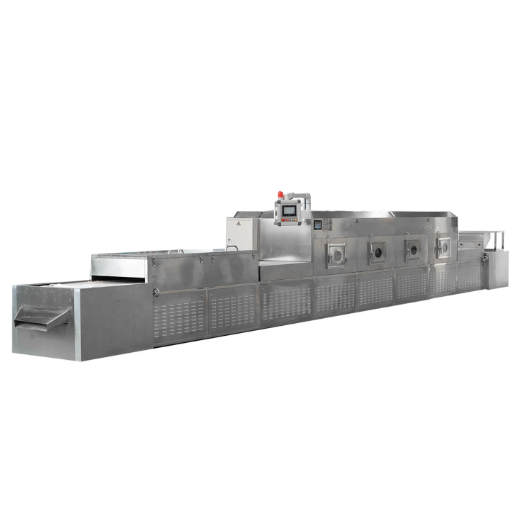
The table below compares common industrial microwave sterilizer configurations. Capacity and dimensions vary by manufacturer and product, so use these figures as a planning reference for industrial microwave sterilizer specifications.
| Model Class | Microwave Power | Typical Capacity | Frequency | Belt Width | Approximate Dimensions (L × W × H) |
|---|---|---|---|---|---|
| Small batch | 6–20 kW | 50–300 kg/cycle | 2450 MHz | N/A (chamber) | 2–4 m × 1.5 m × 1.8 m |
| Entry tunnel | 20–30 kW | 100–300 kg/h | 2450 MHz | 0.6–0.8 m | 9–13 m × 0.8–1.0 m × 1.75 m |
| Mid-range tunnel | 50–100 kW | 300–1,000 kg/h | 2450 MHz | 1.0–1.2 m | 13–20 m × 1.2–1.5 m × 1.85 m |
| Large tunnel | 150–200 kW | 1,000–2,000 kg/h | 2450 / 915 MHz | 1.5–1.7 m | 24–30 m × 1.7–2.0 m × 1.85 m |
| Heavy-duty tunnel | 300–400 kW | 2,000–4,000 kg/h | 915 MHz | 1.8–2.0 m | 32–52 m × 2.0 m × 1.85 m |
At Shandong Loyal Industrial Co., Ltd., our LY-series microwave sterilization machines include the LY-10S, LY-30S, LY-60S, and LY-100S. These units cover 10 kW to 100 kW. They are designed for spices, powders, grains, nuts, and pet food.
Each model can be customized for voltage, frequency, belt width, and control options. This flexibility matches local regulations and product requirements.
When you review a specification table, do not compare models on kW alone. A well-engineered 60 kW unit with good field distribution can outperform a poorly designed 100 kW unit. Ask for test data on your specific product before making a final decision.
Recommended Microwave Sterilization Equipment Specifications by Product
Use this quick-reference table to match common food products to the right microwave sterilization equipment specifications. Actual requirements depend on moisture, layer depth, and target microbial reduction.
| Product | Recommended Frequency | Typical Power Range | Target Temperature | Belt/Configuration | Key Consideration |
|---|---|---|---|---|---|
| Spices and seasonings | 2450 MHz | 20–100 kW | 70–85°C | Continuous tunnel, thin layer | Uniform power distribution |
| Nuts and seeds | 2450 or 915 MHz | 30–150 kW | 75–95°C | Continuous tunnel | Oil content and bed depth |
| Pet food and feed | 2450 MHz | 60–100 kW | 75–85°C | Continuous tunnel | Vitamin retention validation |
| Nutritional powders | 2450 MHz | 30–100 kW | 70–90°C | Continuous tunnel or batch | Sanitary design, 316L optional |
| Botanical extracts | 2450 MHz | 20–60 kW | 70–85°C | Batch or continuous | Documentation for regulated markets |
| Ready-to-eat meals | 915 MHz | 100–300 kW | 90–130°C | Pressurized MATS system | FDA 21 CFR Part 113 compliance |
This table is a starting point for quoting. Always validate final specifications with product testing.
How to Match Specifications to Your Product
Spices, Powders, and Seasonings
Spices and seasonings are usually low-moisture, low-density products. They heat quickly in microwave fields and are prone to overheating if power density is too high. Most spice applications use 2450 MHz with a thin layer on a wide belt. Target temperatures are typically 70–85°C for pasteurization-level reduction of Salmonella, E. coli, and mold.
For a real-world example, see how our curry powder microwave drying sterilization machine handles spice sterilization.
The key specification here is uniform power distribution. Look for mode stirrers or multiple magnetron feeds. A coefficient of variation below 20% across the belt width is a good target.
Nuts, Seeds, and Grains
Nuts and seeds vary in oil content, size, and shape. Walnuts and almonds behave differently than sesame or flaxseed. For thicker product beds, 915 MHz may give better uniformity. For thinner layers, 2450 MHz is usually sufficient and more economical.
Many nut processors want a combined drying and sterilization step. In that case, the specification must account for both moisture removal and microbial reduction. Belt speed, exhaust airflow, and power zoning become critical.
Pet Food and Animal Feed
Pet food manufacturers often need to preserve heat-sensitive vitamins while achieving a 3-log to 5-log reduction in pathogens. Maria Lopez, operations manager at a pet food co-packer in Mexico, learned this the hard way. Her first sterilizer ran at 110°C. It destroyed nearly half the vitamin payload.
After switching to a low-temperature short-time microwave system running at 75–85°C, she retained over 90% of the vitamins. She still met microbial targets. For pet food, specify temperature accuracy, recipe control, and validation support. Moisture levels are typically higher than spices, so capacity calculations must use the actual product.
For more guidance on this application, read our pet food microwave sterilization equipment buyer’s guide.
Nutritional Powders and Botanicals
Protein powders, starches, botanical extracts, and baby food ingredients demand sanitary design and documentation. Specify 316L contact surfaces if the product is acidic or corrosive. Require IQ/OQ/PQ documentation and 21 CFR Part 11 data logging if you supply regulated markets.
These products often replace ethylene oxide or irradiation treatments. Microwave sterilization offers a clean-label alternative, but only if the equipment is validated for the specific microbial reduction claimed.
Ready-to-Eat Meals and Packaged Foods
Microwave-assisted thermal sterilization (MATS) for packaged meals typically uses 915 MHz combined with pressurized hot water. This is a specialized application governed by FDA 21 CFR Part 113. Equipment specifications must include pressure-rated chambers, precise temperature profiling, and validation using biological indicators such as Geobacillus stearothermophilus spore strips.
Validation, Compliance, and Documentation Requirements
Validation turns a specification into a trusted process. Most food manufacturers need three stages of qualification.
Installation Qualification (IQ) confirms the equipment is installed correctly and matches the design specifications.
Operational Qualification (OQ) verifies the equipment operates within defined limits under expected conditions.
Performance Qualification (PQ) demonstrates the process consistently produces safe product using actual production parameters.
Biological indicators are used to prove microbial reduction. A common target is a 5-log or 6-log reduction of pathogens such as Salmonella or E. coli. For sporicidal claims, Geobacillus stearothermophilus spore strips at 10^6 population are standard.
Temperature mapping is also required. Place sensors at the coldest known locations. These are usually the geometric center of the load and the corners of the belt. Document that every point reaches the target temperature for the required time.
For more detail, see our food microwave sterilization validation protocol guide.
Total Cost of Ownership: From Specs to Savings
Specifications directly affect operating cost. The right choices can save money for years after purchase.
Energy is the most visible savings. Industrial microwave sterilization typically uses 30–50% less electricity than steam retort or hot-air systems. Additionally, some applications report energy use of 0.3–0.6 kWh per kg. That compares to 1.2–2.0 kWh for retort.
Water and chemicals are also reduced. Microwave systems do not need boilers, steam piping, or chemical fumigants. Therefore, for a facility replacing ethylene oxide, the elimination of chemical handling and ventilation alone can justify the investment.
Maintenance is predictable. Magnetrons usually need replacement after about 8,000 operating hours. Belts, bearings, and sensors follow normal wear schedules. Avoid suppliers who cannot quote spare parts availability and lead times.
Chen Wei, a nut processor in Jiangsu, calculated his ROI before buying a 60 kW continuous tunnel. Energy savings, reduced labor, and the elimination of a chemical treatment step gave him full payback in 22 months. After that, the line added an estimated $7,000 per month to his margin.
For a deeper cost breakdown, read our industrial microwave sterilizer cost guide.
Common Mistakes When Specifying Microwave Sterilization Equipment
Buying on kW Alone
More power does not always mean better results. Power density, field distribution, and matching the frequency to the product matter more. A 100 kW unit with poor uniformity can leave cold spots and fail validation.
Ignoring Dielectric Properties
Every product has a dielectric constant and loss factor that determine how it absorbs microwave energy. A supplier should test your sample or explain how they will adjust power and belt speed for your material.
Neglecting Validation Support
Some buyers assume validation is their own problem. It is not. The equipment design must support validation with sensors, data logging, and documentation. Clarify what the supplier includes before signing a contract.
Choosing the Wrong Frequency
Thick, dense products need 915 MHz. Thin powders and small items usually work best with 2450 MHz. Guessing here leads to rework.
Undersizing the Control System
A basic on/off control may be cheaper, but it cannot deliver the repeatability and documentation required by modern food safety programs. Invest in PLC + HMI with recipe storage and data logging.
Frequently Asked Questions
What are the most important microwave sterilization equipment specifications?
The most important specifications are microwave frequency, power output, throughput capacity, temperature range and control accuracy, materials of construction, control system, and compliance certifications. These determine whether the machine matches your product and regulatory needs.
How do I choose between 915 MHz and 2450 MHz?
Choose 2450 MHz for thin layers, powders, spices, and small products where high power density and lower cost matter. Choose 915 MHz for thicker product beds, larger packages, and applications requiring deeper penetration.
What capacity can I expect from an industrial microwave sterilizer?
A useful rule of thumb is 6–10 kg of sterilized product per hour per kW of microwave power. Actual capacity depends on moisture content, starting temperature, target microbial reduction, and belt loading.
Do microwave sterilizers require validation?
Yes. Food safety regulations and customer audits typically require validation using temperature mapping and biological indicators. Validation documentation should include IQ, OQ, and PQ protocols.
How much does industrial microwave sterilization equipment cost?
Small batch units start around 5,000–5,000–15,000. Mid-range continuous tunnels range from 15,000–15,000–50,000. Large custom lines can exceed $120,000. Total cost depends on power, frequency, automation, compliance requirements, and shipping.
Conclusion
Microwave sterilization equipment specifications are more than numbers on a data sheet. They define how your product will be treated. They determine how safe it will be. They also set how much the process will cost over time.
The right specifications reduce energy use. They also protect product quality. Finally, they keep you compliant with food safety standards.
Start by matching frequency to product thickness. Then size power, belt dimensions, and capacity to your real production needs. Finally, demand validation-ready controls and documentation from your supplier.
At Shandong Loyal Industrial Co., Ltd., we engineer microwave drying and sterilization technology for food manufacturers worldwide. Our LY-series microwave sterilization machines are built with customizable power, frequency, and control options. Contact us today for a free specification review or lab test. We will help you choose the right microwave sterilization equipment specifications for your line.