The most effective energy-efficient food processing machines reduce energy consumption by 30-50% while maintaining or improving product quality. The machines utilize advanced technologies which include microwave drying and variable frequency drives and smart automation to reduce operational expenses while increasing production capacity across snack and pet food and pasta and specialty manufacturing.
Rising energy prices are squeezing margins for food manufacturers worldwide. Most facilities use energy as their second most expensive production cost which accounts for 15-20% of total expenses. The right equipment choices can turn that cost center into a competitive advantage.
The guide demonstrates how energy-efficient food processing equipment operates while showing which types of equipment provide the highest savings and detailing the process for implementing upgrades that generate self-sustaining financial returns. The guide provides cost-saving methods which will enhance results for both small startups and large global businesses.
Key Takeaways
- Energy-efficient food processing machines cut operational costs by 30-50% through advanced drying, automation, and heat recovery technologies.
- Microwave drying machines deliver the highest energy savings, reducing consumption by 50-70% compared to conventional hot-air drying methods.
- Most manufacturers see full ROI on energy-efficient upgrades within 18-36 months through energy savings alone.
- Smart controls and IoT-enabled monitoring systems optimize energy use in real time and prevent costly downtime.
- Phased upgrades let small and medium businesses capture savings without massive upfront capital investment.
What Makes Food Processing Machines Energy-Efficient?
Understanding Energy Consumption in Food Manufacturing
Food manufacturing consumes energy across multiple stages. Drying, heating, cooling, and packaging each demand significant power. Drying alone can account for up to 40% of total energy use in facilities that produce snacks, cereals, and dehydrated products.
An energy-efficient machine delivers the same or better output using less power. The metric that matters is kilowatt-hours per unit produced. A conventional hot-air dryer might use 1.5 kWh per kilogram of product. An advanced microwave drying machine can cut that to 0.5 kWh per kilogram. That difference multiplies across thousands of production hours every year.
Key Efficiency Technologies
Modern energy-efficient food processing machines rely on several core technologies:
- Variable frequency drives (VFDs): These adjust motor speed to match actual demand. Instead of running at full power continuously, motors ramp up or down based on load. This alone can cut motor energy use by 20-30%.
- Heat recovery systems: Waste heat from ovens, dryers, and fryers gets captured and reused for preheating, water heating, or space conditioning. Facilities with heat recovery can reclaim 60-80% of otherwise lost thermal energy.
- Optimized motor designs: Premium-efficiency motors meet or exceed IE3 and IE4 standards. They convert more electrical energy into mechanical work with less waste heat.
- Smart automation and controls: Programmable logic controllers (PLCs) and IoT sensors monitor energy use in real time. They adjust parameters automatically to maintain quality at the lowest possible power draw.
- Advanced drying technologies: Microwave and radio-frequency drying heat moisture directly rather than heating the entire air volume. This targeted approach slashes energy waste.
When Chen opened his snack factory in Southeast Asia in 2022, his conventional hot-air dryers were eating up 38% of his monthly utility bill. After upgrading to microwave drying technology, his energy consumption for drying dropped by 62%. His payback period was just 22 months. Chen now runs three shifts without worrying about power costs eating his margins.
Types of Energy-Efficient Food Processing Equipment
Energy-Efficient Drying and Sterilization Equipment
Most food processing facilities use more energy for their drying operations than any other process. The implementation of efficient drying technology enables organizations to achieve their most substantial and immediate operational benefits.
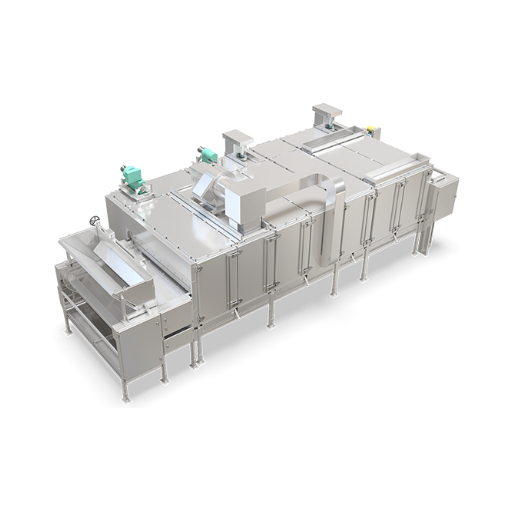
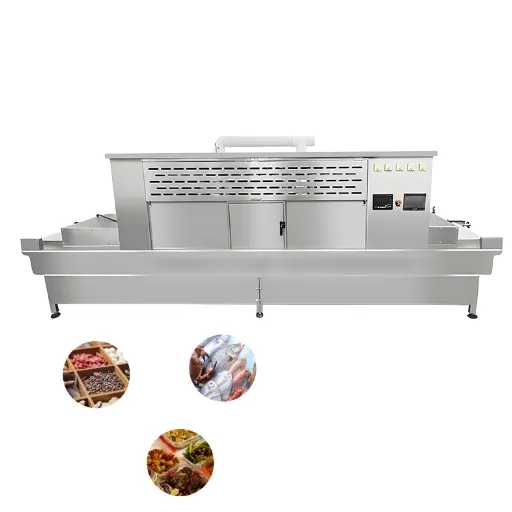
The leading position in microwave drying machines technology. The machines create electromagnetic waves which make water molecules inside the product become active. The internal moisture of the material gets heated up and then it transforms into vapor. The method requires 50-70% less energy consumption when compared to traditional hot-air drying methods. The process achieves faster results by 40-60% which enables more work to be done without requiring extra shift schedules.
Industrial microwave ovens for sterilization offer similar benefits. The equipment heats products throughout their entire volume which results in reduced energy requirements and shorter processing durations. The solution enables spice herb and packaged snack manufacturers to achieve reduced expenses while extending product freshness.
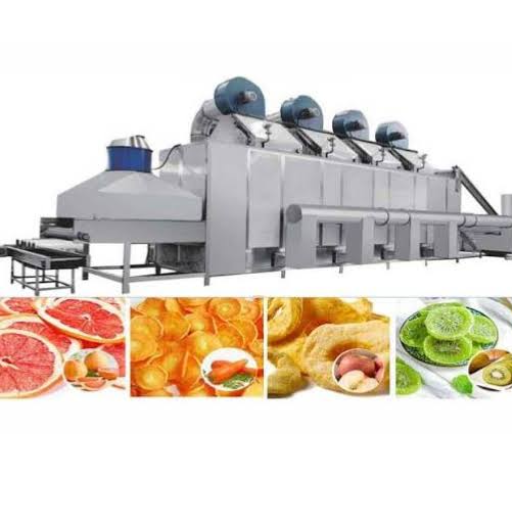
Heat pump drying systems operate effectively to dry temperature-sensitive materials which include fruits and vegetables. The systems work by using lower temperature operations and they create a heat recycling system which operates through a closed loop. The energy savings result in 30-50% less energy consumption when compared to traditional drying methods.
Want to see how microwave drying technology could transform your operation? Explore our microwave drying machine solutions to learn more about energy savings tailored to your products.
Efficient Snack Food Production Lines
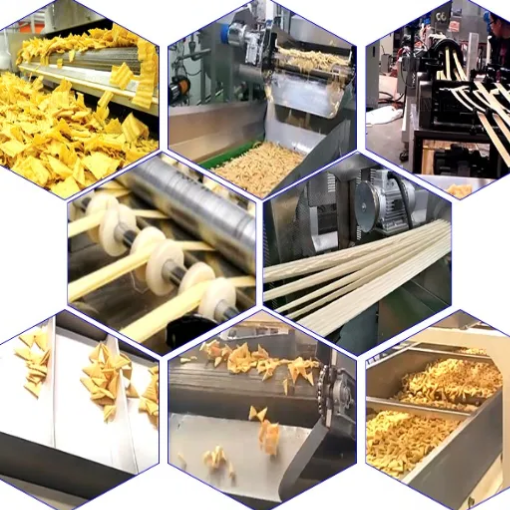
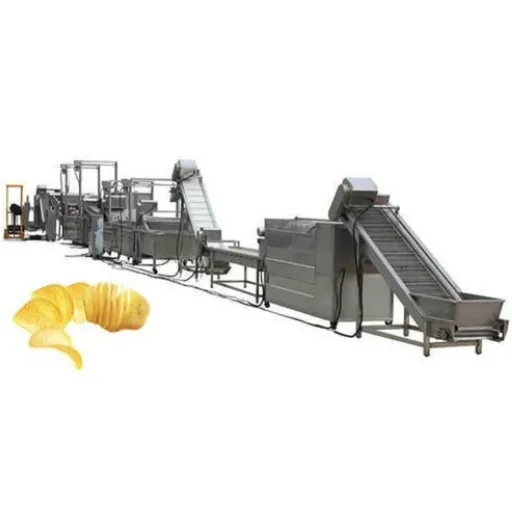
Modern snack food production lines integrate energy-saving features at every stage. Extrusion equipment with optimized screw profiles and barrel heating zones reduces power draw while maintaining product expansion and texture.
Automated frying and baking systems use precise temperature controls and rapid heat recovery. Continuous production lines run more efficiently than batch systems because they eliminate the energy waste of repeated heating and cooling cycles.
A biscuit manufacturer in Eastern Europe recently replaced three aging batch ovens with a continuous automated baking line. Energy consumption per ton of product fell by 28%. The line also reduced labor costs and improved product consistency. After 30 months, the upgrade had paid for itself entirely through operational savings.
Key equipment types for efficient snack production:
- Twin-screw extruders with variable-speed drives
- Continuous fryers with oil filtration and heat recovery
- Automated seasoning and coating systems with minimal waste
- Continuous baking ovens with zoned temperature control
- High-speed packaging lines with servo-driven motors
Smart Packaging and Material Handling
Packaging and material handling might seem like minor energy users, but they add up across large operations. Automated packaging lines with servo-driven motors use 30-40% less energy than pneumatic or older mechanical systems. They also run faster and produce less waste.
Conveyors with regenerative braking capture energy during deceleration and feed it back into the system. This technology is common in elevator and crane applications but increasingly appears in food processing material handling.
The Business Case: ROI and Cost Savings
Quantifying Energy Savings
Energy-efficient food processing machines deliver measurable financial returns. The exact numbers depend on your current equipment, local energy prices, and production volume. Here are typical benchmarks based on industry data:
| Equipment Upgrade | Energy Reduction | Typical Payback Period |
|---|---|---|
| Microwave drying vs. hot-air drying | 50-70% | 18-30 months |
| VFDs on motors and pumps | 20-30% | 12-24 months |
| Heat recovery systems | 30-50% of waste heat | 24-48 months |
| Continuous vs. batch processing | 20-35% | 24-36 months |
| Smart automation and controls | 10-20% | 12-18 months |
A mid-size snack manufacturer processing 500 tons annually might spend 120,000peryearondryingenergyalone.Cuttingthatby60120,000peryearondryingenergyalone.Cuttingthatby6072,000 annually. A $150,000 microwave drying upgrade pays for itself in just over two years. After that, the savings go straight to the bottom line.
Beyond Energy: Additional Benefits
The benefits of energy-efficient equipment extend beyond its impact on utility expenses. The lower heat output of the system decreases component degradation which results in maintenance cost reductions between 15 and 25 percent. The system achieves higher operational efficiency through faster processing which enables increased output without requiring additional work shifts or workforce expansion.
The equipment achieves longer operational life through its ability to run at lower temperatures and higher efficiency. The system components which include motors and bearings and heating elements sustain less thermal damage. The extended equipment lifespan results in decreased need for replacements and reduced financial investment required for spare components.
Another element that needs consideration is environmental compliance. Multiple regions currently enforce carbon taxes together with emissions restrictions. The use of energy-efficient machinery enables manufacturers to achieve compliance with these regulations while avoiding penalties and maintaining operational flexibility.
Key Features to Look for in Energy-Efficient Machinery
Efficiency Certifications and Standards
Not all “energy-efficient” claims are equal. Look for equipment that meets recognized standards:
- ISO 50001: This energy management standard ensures manufacturers have systems to monitor, measure, and improve energy performance continuously.
- IE3/IE4 motor efficiency classes: Premium-efficiency motors carry these designations. IE4 motors are the most efficient commercially available.
- CE marking with efficiency ratings: European-certified equipment includes verified efficiency data.
- Energy performance certificates: Some manufacturers provide third-party test results showing actual energy consumption at rated capacity.
Smart Controls and Automation
Modern energy-efficient food processing machines include automatic performance optimization through their intelligent control systems. The energy monitoring system which uses Internet of Things technology enables real-time consumption tracking while detecting problems before they result in major expenses.
The predictive maintenance system uses vibration sensors and temperature monitors and current draw analysis to identify equipment wear at an early stage. The solution helps to prevent unplanned operational halts which result in higher expenses compared to scheduled maintenance.
The system adjusts process parameters in real time according to product moisture content and ambient temperature and production speed. The system develops its learning capacity to optimize operations which achieve maximum quality while consuming minimal energy.
Build Quality and Design
Efficiency of equipment begins with its initial design stage. Proper insulation on ovens, dryers, and heating zones minimizes heat loss to the environment. Well-sealed chambers maintain temperature with less energy input.
Modular designs enable production growth through partial system upgrades instead of full system replacements. You can add capacity incrementally as demand grows. This system suits businesses because it provides necessary flexibility to both startups and developing companies.
The system requires compatibility with renewable energy sources for its operation. Equipment that runs efficiently on grid power will perform even better when paired with on-site solar or other renewable generation.
Implementation: Upgrading Your Production Line
Assessing Your Current Energy Profile
Before purchasing additional equipment, you need to investigate your energy consumption patterns. A professional energy audit studies all production phases to find the most valuable energy-saving possibilities.
Start by collecting utility bills and production records for the past 12 months. The next step requires you to measure energy consumption for each major process and calculate its output. You need to evaluate your results by comparing them to established industry standards. Your most suitable upgrade candidates will be those processes which consume energy at levels that exceed the standard operational limit.
You need to observe equipment functions during both peak times and off-peak times. Machines that consume excessive power while not operating possess either inadequate control systems or obsolete drive technologies. These elements provide immediate advantages.
Phased vs. Full-Line Upgrades
Not every manufacturer can afford a complete line replacement. Phased upgrades let you capture savings incrementally while spreading costs over time.
Priority order for maximum impact:
- Drying equipment: Biggest energy user, fastest payback
- Motors and drives: Lowest cost per unit of savings
- Heat recovery systems: Moderate cost, strong long-term returns
- Automation and controls: Improves efficiency of existing equipment
- Full line replacement: When equipment is near end of life anyway
A small pet food producer in South America started with one microwave dryer to replace an aging hot-air unit. The 55% energy savings on that single machine funded the next upgrade within 18 months. Five years later, the facility runs entirely on modern, efficient equipment. The owner never took a loan.
Partnering with the Right Equipment Manufacturer
The process of selecting equipment represents only 50 percent of the task. Your manufacturing partner needs to maintain your equipment according to your needed upgrades because that will provide you with verified cost reductions.
Manufacturers should deliver hardware solutions together with additional service offerings. The complete support package includes installation field supervision, operator training services, process optimization consulting, and continuous technical support. A partner who understands your specific products and production goals can fine-tune equipment for maximum efficiency.
Global service networks matter for international operations. Your facility requires 24/7 operation because you need immediate access to spare parts and technical support. The manufacturer operates regional service centers which help to reduce downtime during times when customers need assistance.
At Shandong Loyal Industrial Co., Ltd., we design food production line equipment with energy efficiency built in from the ground up. Our engineers work with you to configure machines for your specific products, capacity targets, and local energy conditions. From initial consultation through commissioning and beyond, we focus on delivering measurable operational improvements.
Industry Trends and Future Outlook
The food processing industry is moving rapidly toward greater energy efficiency. Several trends are shaping the future:
Electrification of heat processes: Traditional gas-fired ovens and dryers are giving way to electric systems powered by renewable energy. Electric heating offers precise control and eliminates onsite combustion emissions.
Integration with renewable energy: Forward-thinking manufacturers are pairing efficient equipment with on-site solar or wind generation. When your machines use less power, renewable systems can cover a larger share of total demand.
AI-driven process optimization: Machine learning algorithms analyze production data to identify efficiency opportunities humans might miss. These systems continuously adjust parameters for optimal energy use without sacrificing quality.
Regulatory pressure is increasing: The European Union, China, and several other markets are tightening energy efficiency requirements for industrial equipment. Manufacturers who upgrade proactively will avoid compliance costs and operational disruptions.
Circular economy principles: Waste heat, water, and byproducts are being recovered and reused. Energy-efficient equipment is a foundational enabler of closed-loop manufacturing systems.
According to industry analysis, the global food processing equipment market is projected to reach $75 billion by 2027. Energy-efficient equipment represents the fastest-growing segment. Manufacturers who invest now will establish operational advantages that competitors struggle to match later.
Conclusion
Energy-efficient food processing machines are essential equipment for food manufacturers who need to maintain their operational efficiency. The right equipment upgrades deliver 30-50% reductions in energy costs, which also enhance product quality and extend equipment lifespan while your business prepares for upcoming regulations.
You should begin with the most important opportunities that will provide the greatest benefits to your organization. The quickest financial return on investment occurs with drying equipment. Microwave drying technology can achieve energy usage reductions exceeding 50% while simultaneously boosting production rates. The smart controls and automation system improve production efficiency at all stages without needing to replace entire production lines.
Phased upgrades allow all types of businesses to achieve savings while avoiding major expenses for their projects. A small enhancement will continuously add value to your project. A single efficient machine can fund the next upgrade, creating a virtuous cycle of operational improvement.
Manufacturers who want to succeed in the next decade must start implementing energy-efficient solutions today. The businesses will achieve better operational results because they spend less money while producing higher quality products and maintaining stability during energy price fluctuations.
Ready to cut your energy costs and boost production output? Contact our team today to discuss tailored, energy-efficient solutions for your specific food processing needs. We will help you identify the highest-impact upgrades and design a phased implementation plan that fits your budget and production goals.
At Shandong Loyal Industrial Co., Ltd., we have been designing and manufacturing advanced food processing equipment since 2005. Our machines power production lines across Asia, Europe, Africa, and the Americas. We combine cutting-edge technology with reliable engineering and global support to help food manufacturers of every size succeed.