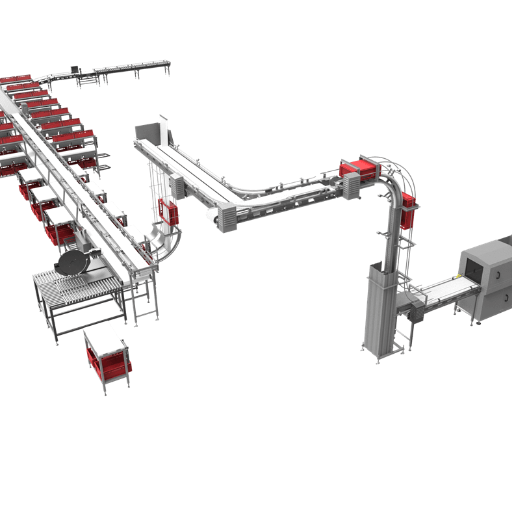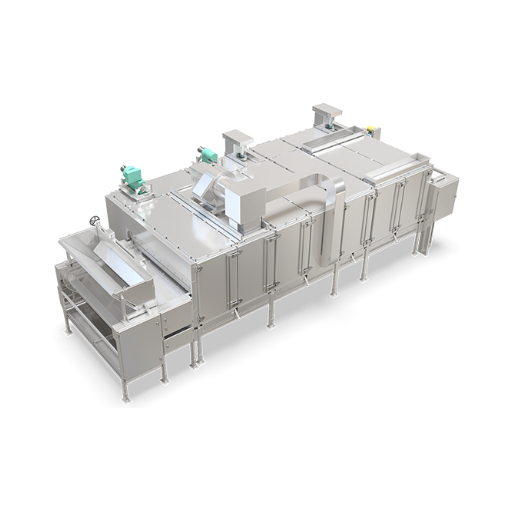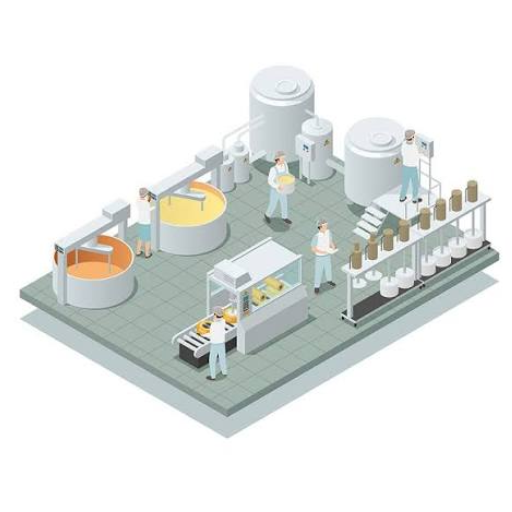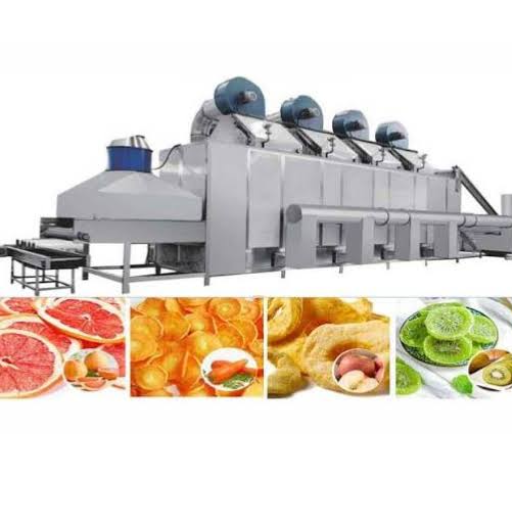
The top food machinery producers in 2026 create equipment that lasts for decades through their combination of engineering expertise and quality certification systems and international customer support services. The incorrect selection of business partner for your requirements between single microwave drying machine and entire snack production line will result in your company losing both operational time and financial assets worth hundreds of thousands.
Raj Patel expected to discover a good deal when he decided to expand his Mumbai snack production facility in 2025. The unknown company sold a puff snack processing system which costs 40 percent less than its market value.
The machines arrived on schedule. The extruder gearbox stopped working after three months. The delivery of replacement components required six weeks. Raj lost his $200000 deal with a major retailer because production only started after the extended delay. He discovered through experience that the lowest price quotation actually contains the most expensive unrecognized expenses.
You can avoid learning this lesson through actual experience. This guide provides a detailed process which you can use to assess food machinery makers through their certification checklists and the identification of warning signs that indicate upcoming problems. You will learn how to evaluate various aspects which involve your questions and required documentation and the identification process for long-term business partners versus temporary service providers at the conclusion of the course.
Key Takeaways
- The global food processing machinery market will reach $68.27 billion in 2026, making supplier selection more critical than ever.
- Top food machinery manufacturers hold certifications like CE, FDA, HACCP, and ISO 22000, and they willingly share documentation.
- Turnkey solution providers reduce integration risk but cost more upfront; standalone machines suit targeted upgrades.
- Energy efficiency, customization flexibility, and after-sales support separate reliable partners from commodity suppliers.
- Red flags include missing certifications, no verifiable references, and prices that seem unrealistically low.
What Is a Food Machinery Manufacturer?
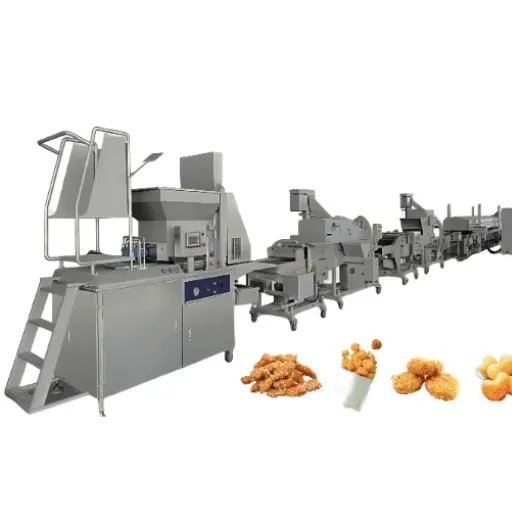
A food machinery manufacturer designs, fabricates, assembles, and tests equipment used to process, package, or handle food products. These companies range from niche specialists building single machines to full-service engineering firms delivering complete industrial food processing equipment systems.
The range of services offered by different service providers shows major differences. Some manufacturers handle only production, leaving installation and training to third parties. Others handle all stages of their operations from initial design work to final delivery and training programs and continuous assistance.
The process of understanding these differences holds significant importance. Your operational complexity and internal capabilities determine which model fits your business.
Most manufacturers divide their operations into four main categories.
OEM manufacturers design and build proprietary equipment under their own brand. Turnkey solution providers deliver integrated production lines with multiple machines, conveyors, and control systems ready to operate.
Distributors and resellers sell third-party equipment, often adding local service and warranty support. Contract manufacturers build equipment to your exact specifications, typically for unique products or specialized processes.
Types of Food Machinery Manufacturers Explained
Choosing the right type of manufacturer is the first major decision in your procurement process. Each category offers distinct advantages and trade-offs. The table below summarizes what to expect.
| Type | What They Do | Best For | Key Advantage | Main Risk |
|---|---|---|---|---|
| OEM Manufacturers | Design and build proprietary machines | Buyers wanting proven, standardized technology | Deep expertise in specific machine types | Limited customization flexibility |
| Turnkey Providers | Deliver complete integrated production lines | New facilities or complex multi-step products | Single-point accountability, reduced integration risk | Higher upfront investment |
| Distributors | Resell third-party equipment with local support | Buyers needing fast delivery and local service | Local availability and faster response | Less engineering depth, markup on pricing |
| Contract Manufacturers | Build to your exact specifications | Unique products, specialized processes | Fully tailored to your needs | Longer lead times, higher development costs |
OEM Manufacturers
OEM manufacturers invest heavily in research and development. They refine their machines over generations, which produces reliable, well-documented equipment. If you need a microwave drying machine or a standard extruder, an OEM typically delivers faster and at lower cost than a custom build. The trade-off comes when your process requires modifications the OEM does not support.
Turnkey Solution Providers
Turnkey providers specialize in food production line equipment. They engineer entire workflows, from raw material intake through packaging. This approach eliminates the risk of incompatible machines or control systems that refuse to communicate. For new facilities or product launches, turnkey solutions often reach stable production faster than assembling equipment from multiple vendors.
Distributors and Resellers
Distributors add value through local inventory, regional service teams, and faster spare parts delivery. They suit buyers who prioritize speed and convenience over direct manufacturer relationships. However, distributors rarely possess deep engineering knowledge. When a complex failure occurs, you may wait days while they relay information between your floor and the original factory.
Contract Manufacturers
Contract manufacturers build exactly what you specify. This option shines when your product is genuinely novel or when standard machines cannot achieve your required output, hygiene level, or footprint. The downside is longer development timelines and the need for your team to provide detailed technical specifications.
Want to see how turnkey solutions compare to standalone machines in real production scenarios? Explore our integrated food production line solutions to understand which approach matches your current growth stage.
7 Essential Criteria for Evaluating a Food Machinery Manufacturer
When you evaluate food machinery manufacturers, you need a structured framework rather than gut instinct. These seven criteria separate reliable partners from risky bets.
Manufacturing Capability and Scale
Start with the basics. Does the manufacturer operate its own fabrication facilities, or do they outsource production? In-house manufacturing generally means better quality control and faster problem resolution.
Ask about their production capacity, workforce size, and typical order volumes. A factory built for 50 machines per month may struggle to maintain quality if you demand 500.
Inspect their quality control processes. Reputable manufacturers conduct material certification checks, dimensional inspections, weld quality testing, and full machine run-off trials before shipment. Request documentation from recent orders. If they hesitate, consider it a warning sign.
R&D and Innovation Investment
The food processing industry evolves constantly. Automation, IoT integration, and energy-efficient designs now separate market leaders from laggards. Ask manufacturers about their recent product launches, patent portfolio, and investment in new technology. A company that has not updated its core machine designs in five years may not help you stay competitive.
Certifications and Compliance
Certifications prove that a manufacturer meets internationally recognized standards for safety, hygiene, and quality management. The most important certifications include:
- CE Marking: Required for equipment sold in the European Economic Area; indicates conformity with health, safety, and environmental standards.
- FDA Compliance: Essential for equipment processing food sold in the United States; verifies materials and design meet food-contact regulations.
- HACCP (Hazard Analysis Critical Control Points): Demonstrates the manufacturer understands food safety risks and builds equipment that supports safe production.
- ISO 22000: A comprehensive food safety management system standard covering the entire supply chain.
- ISO 9001: Quality management certification indicating consistent processes and continuous improvement.
Always verify certifications directly with the issuing body rather than accepting a PDF at face value. Fake certificates circulate more often than buyers expect.
Customization Flexibility
Your production needs are unique. Even within the same product category, differences in raw materials, target texture, packaging format, and local regulations demand adaptable equipment. Ask potential manufacturers about their customization process. Can they modify hopper sizes, heating profiles, conveyor configurations, or control interfaces? Do they offer prototyping or pilot trials before full production?
A manufacturer that treats every order as identical is a manufacturer that will force your process to fit their machine. The right partner designs the machine to fit your process.
Energy Efficiency and Sustainability
The food processing industry requires substantial funding for energy expenses which dominate its operational budgets. Contemporary machinery operates with intelligent drive systems and thermal efficiency systems and advanced control systems which maintain production levels while decreasing energy consumption. Energy-efficient designs can reduce utility bills by 20-30% over the life of the machine.
Sustainability also matters for market positioning. Major retailers and consumers increasingly favor suppliers with documented environmental commitments. Ask manufacturers about their carbon footprint reduction initiatives and recyclable material usage and equipment design for circular economy principles.
Export and Global Support Experience
Equipment importation from other countries depends on two factors: your importer needs and the manufacturer’s export experience. Have they shipped to your country before? Do they understand your import documentation requirements and voltage standards and local safety regulations?
The company provides global support services which go beyond its delivery process. Can they provide installation supervision in your facility? The company operates spare parts facilities in your area which allows them to serve you better than shipping components from international locations. Remote diagnostic capabilities which now include IoT machine connections enable maintenance staff to resolve technical issues within hours instead of requiring complete system shutdowns.
After-Sales Service and Training
The manufacturer relationship starts at delivery and continues throughout the partnership. The company provides complete after-sales support which includes warranty terms and maintenance contracts and operator training programs and technical documentation quality. Customers who have used the equipment for two or more years should provide you with references about their experience with the product. Their experience predicts yours.
Linh Nguyen established her cereal bar factory in Ho Chi Minh City in 2024 because she considered after-sales support to have more value than product cost. The manufacturer she selected provided technicians who worked at her facility for two weeks to complete installation and staff training while offering video support calls for six months. Her line reached target output three weeks faster than a competitor who chose a cheaper vendor and self-installed. The production advantage from early work operations generated enough value to recover the cost difference within two months.
Turnkey Solutions vs. Standalone Machines: Which Do You Need?
Your biggest decision is whether to buy a complete integrated line or individual machines. The right choice depends on your facility status, budget, technical skills, and risk tolerance.
When Turnkey Solutions Make Sense
Turnkey solutions suit new facilities, complex products requiring multiple processing steps, and teams with limited engineering integration experience. A turnkey provider assumes responsibility for making every machine work together. If the line fails to meet agreed performance targets, you have one party to hold accountable.
The disadvantages are higher upfront cost and less flexibility to swap individual components later. You also become dependent on that provider for future upgrades.
When Standalone Machines Make Sense
Standalone machines work well for facility upgrades, budget-constrained projects, and highly specialized processes where no turnkey provider offers exactly what you need. Buying individual machines lets you select the best extruder from one manufacturer and the best oven from another.
The risk is integration complexity. Control systems may use different protocols. Mechanical interfaces may require custom adapters. When performance issues arise, each vendor may blame the others.
A Practical Decision Framework
Consider these questions:
- Is this a greenfield facility with no existing equipment? If yes, turnkey reduces risk.
- Do you have in-house engineers capable of integrating multiple machines? If yes, standalone offers more flexibility.
- Is your product standard enough that turnkey providers offer proven configurations? If yes, turnkey accelerates timeline.
- Do you need one specialized machine that outperforms anything in turnkey packages? If yes, standalone may be unavoidable.
- Is budget your tightest constraint? If yes, standalone may offer lower total cost if you manage integration internally.
Ready to compare turnkey and standalone options for your specific product? Browse our complete range of food processing machines to see configurations that match different operational needs.
Top Global Food Machinery Manufacturers: A 2026 Market Overview
The global food processing machinery market is projected to grow from 68.27billionin2026to68.27billionin2026to87.14 billion by 2030, according to Research and Markets. This growth reflects rising demand for processed foods, automation, and sustainable production methods across both developed and emerging economies.
Tier 1: Global Leaders
These companies operate in virtually every region and serve the world’s largest food producers.
GEA Group (Germany) specializes in dairy, meat, and sustainable protein processing. The company processes roughly one-third of all chicken nuggets globally and maintains a 15.8% EBITDA margin. GEA leads in circular economy equipment design, helping customers reduce waste and water consumption.
Buhler Group (Switzerland) dominates grain, chocolate, and dry-food processing. Their “Africa First” sustainability strategy aims to reduce CO2 equivalent emissions by 50% across eleven of fifteen value chains. Buhler holds approximately 14.2% market share in food processing equipment.
Tetra Laval Group (Switzerland) focuses on liquid food, dairy, and beverage packaging. They operate the world’s fastest carton filling machine at 40,000 packs per hour and are pioneering paper-based barrier technology to replace plastic laminates.
Krones AG (Germany) engineers complete beverage bottling, filling, and packaging systems. Their strength lies in high-speed lines for carbonated drinks, water, and alcoholic beverages.
Alfa Laval (Sweden) builds energy-efficient heat transfer, separation, and fluid handling systems primarily for dairy and beverage applications.
Tier 2: Specialized and Regional Players
This tier includes companies like JBT Corporation (USA, poultry and citrus), Marel (Iceland, meat and fish automation), and IMA Group (Italy, filling and packaging). These firms offer deep expertise in specific product categories or regions.
Where Shandong Loyal Fits
Shandong Loyal Industrial Co., Ltd. operates as a mid-tier global exporter. We specialize in customization and emerging market support. With over 650 global customers and $90 million in annual sales, we hold a distinct position in the industry.
We do not compete with Tier 1 giants on scale. Instead, we offer shorter lead times, deeper customization, and accessible pricing. This approach serves small-to-medium producers who are scaling their operations.
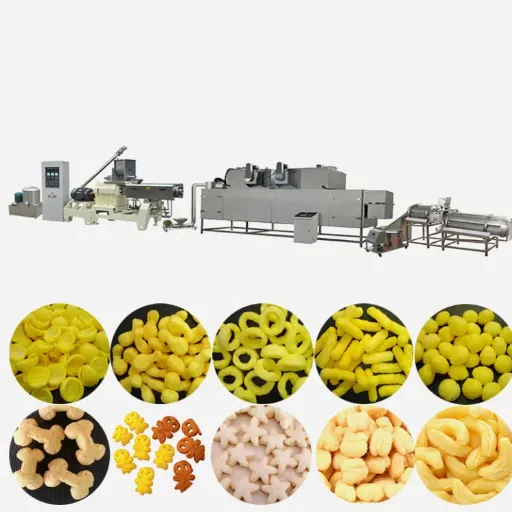
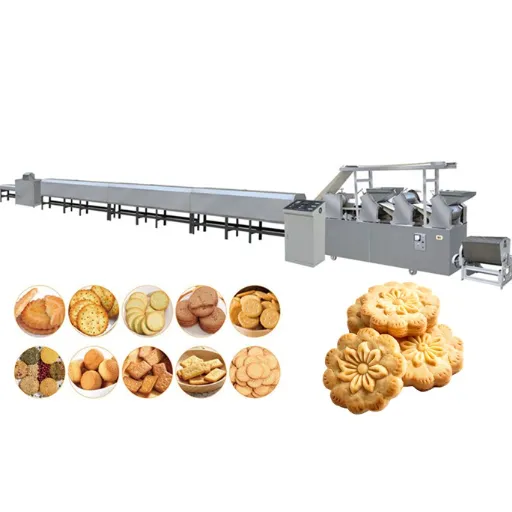
Our product range spans microwave drying machines, snack food production lines, instant noodle lines, biscuit production systems, and pet food equipment. For buyers who need tailored solutions rather than off-the-shelf configurations, this flexibility often matters more than brand recognition.
Red Flags to Watch for When Choosing a Manufacturer
Experienced buyers learn to spot warning signs early. These red flags suggest a manufacturer may deliver disappointment rather than value.
Unrealistically Low Pricing
If a quote comes in 30-50% below comparable offers, investigate before celebrating. Corners get cut somewhere. Common shortcuts include thinner gauge steel, generic electrical components, skipped testing phases, or undocumented used parts. Request a detailed bill of materials and compare component brands against industry standards.
Missing or Vague Certifications
Any legitimate food machinery manufacturer should provide current certification documents upon request. Hesitation, excuses about “pending renewal,” or certificates that cannot be verified with issuing bodies indicate potential problems. Never accept equipment for food contact surfaces without material safety documentation.
No Verifiable Customer References
Ask for three references from customers in your region or product category. Contact them directly. If a manufacturer cannot provide references, or if the references report poor communication, frequent breakdowns, or abandoned support requests, walk away.
Poor After-Sales Planning
Discuss spare parts availability, warranty terms, and response time commitments before signing any contract. A manufacturer focused only on the sale with no plan for ongoing support will leave you stranded when problems arise. Request a written service level agreement defining response times for critical failures.
Inability to Customize or Adapt
Rigid standard configurations signal a manufacturer optimized for volume, not partnership. If your product requires even modest modifications and the manufacturer resists or charges excessive change fees, they may not suit your growth trajectory.
No Factory Visit or Virtual Audit Option
Reputable manufacturers welcome facility visits. If travel is impractical, request a live virtual tour via video call. Pre-recorded videos can hide operational realities. A live walkthrough lets you observe cleanliness, organization, workforce skill level, and equipment condition in real time.
When Andreas Schmidt evaluated Chinese manufacturers for his German bakery upgrade in 2023, one supplier refused a video call. They sent only heavily edited footage instead.
Andreas eliminated them immediately. He eventually selected a manufacturer who conducted a two-hour live virtual tour. They answered every technical question on camera and introduced their quality control team by name. That transparency built trust. It carried them through a successful three-year working relationship.
Why the Right Manufacturer Is a Long-Term Partner, Not Just a Supplier
The best food producers treat their equipment suppliers as strategic partners. This mindset changes how you evaluate, negotiate, and work with manufacturers.
Scaling Together
Your production volume today is not your production volume in five years. A partner manufacturer designs equipment with upgrade paths. They offer modular systems that expand capacity without complete replacement. They advise on new technologies before your competitors adopt them.
Proactive Innovation
Transactional suppliers react to your requests. Partners anticipate your needs. They share industry trends, suggest process improvements, and develop new features based on customer feedback. This proactive approach keeps your operation competitive without requiring you to become a machinery expert yourself.
Lifecycle Support
Food processing equipment operates for 15-20 years or more. Over that lifespan, you need spare parts, maintenance guidance, software updates, and occasional retrofits. A partner commits to supporting equipment for its full lifecycle, not just the warranty period.
At Shandong Loyal, we have serviced customers who first purchased from us in 2008. Their original extruders still run, upgraded with modern control systems and energy-efficient motors we developed years after the initial sale. That continuity matters when your production schedule leaves no margin for extended downtime.
Looking for a food machinery manufacturer who treats your success as a shared goal? Contact Shandong Loyal Industrial Co., Ltd. to discuss tailored solutions that match your production goals and growth plans.
Frequently Asked Questions
What certifications should a food machinery manufacturer have?
Essential certifications include CE marking for European markets and FDA compliance for U.S. food contact. HACCP proves the manufacturer understands food safety risks. ISO 22000 covers comprehensive safety management, while ISO 9001 certifies quality management processes.
Additional certifications may apply based on your product and target markets. Examples include HALAL, KOSHER, or ATEX for explosive atmospheres.
How much does food processing equipment cost?
The cost of machines depends on three factors which are machine type and machine capacity and machine customization options. Small standalone units may start at 10,000−10,000−30,000. The cost of mid-range production lines starts at 100000 and reaches 500000. The cost of large turnkey installations for major facilities starts at 1 million dollars. The total cost of ownership should be assessed through installation expenses training expenses spare parts expenses and energy usage costs instead of considering only the purchase price.
Can food processing machines be customized?
Yes, most reputable manufacturers offer customization ranging from minor configuration adjustments to fully bespoke designs. Common modifications include capacity changes, material upgrades, control system customization, and integration with existing facility infrastructure. Discuss your specific needs early in the procurement process to determine feasibility and timeline impact.
How do I verify a Chinese food machinery manufacturer?
Request business registration documents, factory audit reports, and certification verification. Conduct a live video factory tour. Ask for customer references who work in your area or use your product type. Use third-party inspection services like SGS or Bureau Veritas for pre-shipment quality checks. The organization has ties to industry associations which include the China Food and Drying Equipment Industry Association.
What is the difference between an OEM and a turnkey provider?
An OEM designs and builds specific machines under its own brand. A turnkey provider delivers complete integrated production lines including multiple machines, conveyors, controls, and installation. OEMs suit buyers needing individual machines or replacements. Turnkey providers suit new facilities or buyers wanting single-point accountability for complex lines.
How long does it take to receive food machinery after ordering?
Standard machines from inventory may ship within 2-4 weeks. The delivery period for custom-built equipment lies between 8 and 16 weeks based on the degree of complexity. The installation of turnkey production lines needs a construction period between 12 weeks and 24 weeks.
Conclusion
The selection of food processing equipment producers represents a critical choice which food manufacturers need to make. The correct business partner delivers three advantages which include better business growth, decreased operational dangers, and equipment maintenance across multiple decades. The incorrect selection of a vendor results in resource losses and production interruptions which lead to expensive hardware replacement intervals.
Essential information must be remembered. You should check certifications through independent methods. You should request references and make actual contact with them. The assessment should consider total cost of ownership instead of only showing purchase costs. You should evaluate the customization capabilities of the system by testing it with your actual manufacturing requirements. You need to receive documented evidence which shows your after-sales support commitments. Your manufacturer needs to function as a partner who will assist your business growth instead of acting as a vendor who provides only machinery.
The food processing machinery market currently presents its widest range of products because international leading companies and specialized exporters for niche markets exist. Your mission involves finding the manufacturer who matches your particular needs through their capabilities and values and their customer service approach.
At Shandong Loyal Industrial Co., Ltd., we have spent nearly two decades building equipment and relationships across six continents. Every factory floor has unique constraints. Every product has specific requirements. And every buyer deserves honest guidance, not a sales pitch. We can support your needs whether you require a single machine or an entire production line through our tailored solutions.
Ready to find the right food machinery partner? Contact our team today for a free consultation and customized equipment proposal tailored to your production needs.