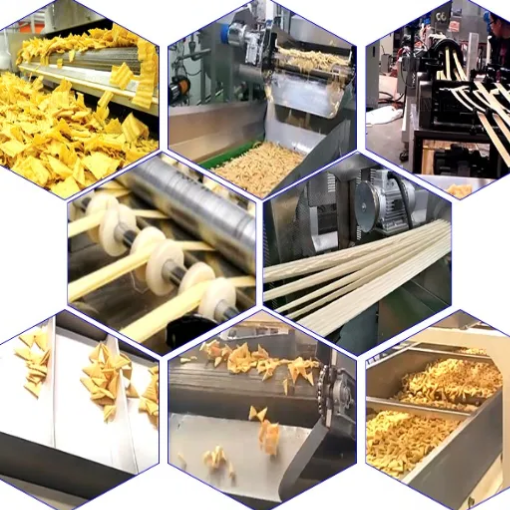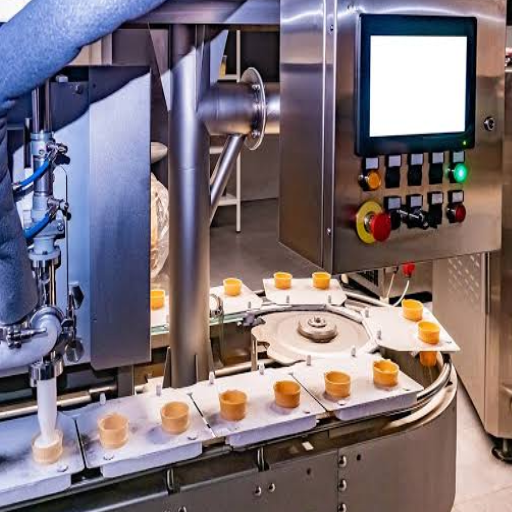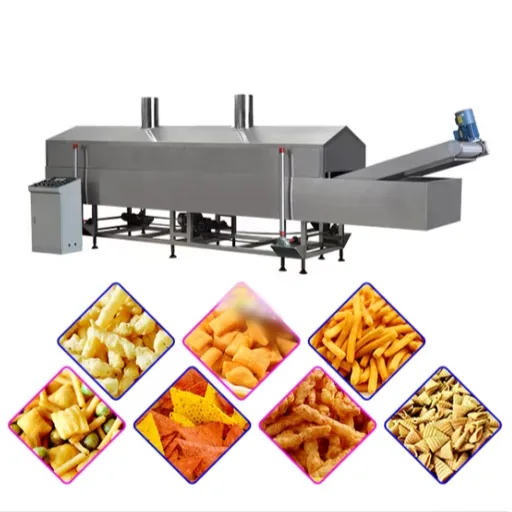
Small business owners often use food processing machines such as washers, cuttings tools, bread makers, and other units depending on needs and the stage of production. In this regard, I delegate the selecting of these machines to you based on the information regarding the cottage industry’s settings.
The conclusion may surprise you, but most of these new food services businesses begin with equipment worth less than $2,000; however, an impressive figure of almost half of such businesses has outgrown the equipment within a year and a half. Which leads us to the central problem of many entrepreneurs: how many machines to buy while avoiding being reckless and filling up the cash flow with expenses and on the other hand, how to avoid being strategic and releasing only half of the demand to the market.
creating a food business is among the thrilling experiences, decision making on equipment may become difficult, with this writing, you learn the equipment the moment you start with 500 dollars up to the production line equipment. One will understand the machines at each particular point, how best to use money, as well as the blunders that most small business firms are trying to do. In the year 2005, hundreds of small-scale food business producers have been assisted by us into going beyond startup business and becoming producers. The strategy indicated below has been crafted based on entrepreneurs’ real practices from over 80 countries.
Key Takeaways
- Match your equipment to your production stage: cottage kitchen, shared commercial space, or dedicated facility.
- Budget in four tiers: under 2,000foressentials,2,000foressentials,2,000-10,000forsemi−automaticgrowth,10,000forsemi−automaticgrowth,10,000-50,000forautomation,and50,000forautomation,and50,000-plus for integrated lines.
- Start with modular, multi-function machines that can expand as your volume increases.
- Calculate total cost of ownership, not just purchase price: energy, maintenance, and downtime add up fast.
- Verify certifications, request video demonstrations, and confirm after-sales support before buying from any supplier.
Understanding Your Production Stage Before You Buy
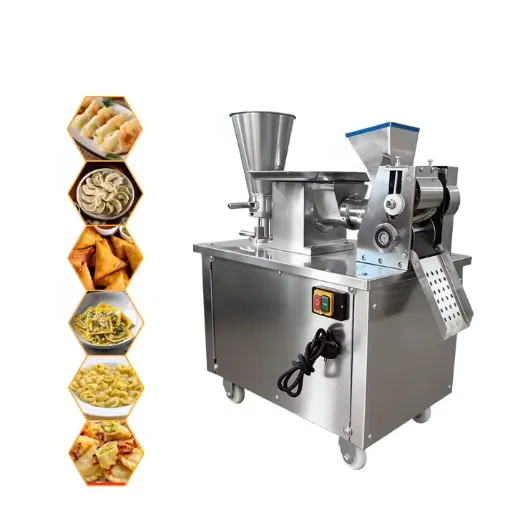
Buying the wrong machine at the wrong time is the single most expensive mistake a small food business can make. Before you request a single quote, map your current stage honestly.
Cottage Food and Home Kitchen Startups
As of now, cottage food laws are effective across all 50 United States. So, if you plan to start your business at home, you will not need to deal with significant expenses before you legalize your activity. Place on your table instead machine lines. Most probably, you need only a few basic items, such as commercial mixer or hand cutting machine and a cheap vacuum sealer to perform the task.
The provision that relates to the volume that you can sell is the most prohibitive. There is always a limit that you can do under cottage food law and it varies from fifty thousand to one hundred and fifty thousand dollars. Design your equipment for this figure. Do not buy a line that costs 15,000 for example, when the company is limited to 15,000 in sales per year.
Small Commercial Kitchen Operations
In a situation where you operate in a common commercial kitchen or a leased small space, your production will increase automatically. You can prepare anywhere between 100 units and 500 units a day. At this point, you must have semi-automatic food processing machines for small businesses. It helps to have a vegetable bubble washer, multifunction cutter, and semi-automatic weighter-filler — this equipment greatly assists in labor hours and product consistency.
Space availability is essential in this situation. Before purchasing, be sure to check the square footage, ceiling clearance, and existing services. Standard plugs cannot supply the three-phase electrical requirement of a machine. Many small to medium enterprises have failed to launch only because of this technicality.
Scaling to a Dedicated Facility
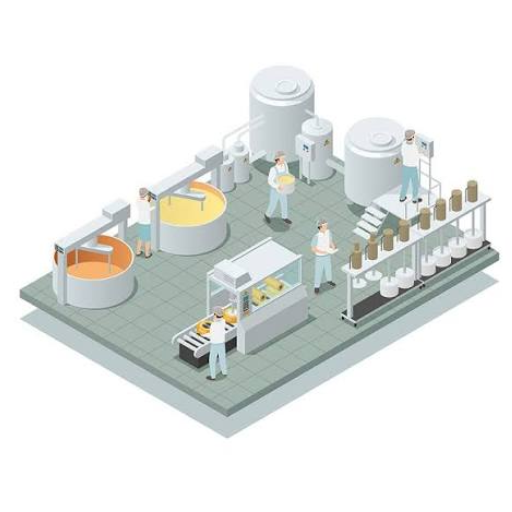
More than 500 units daily, manual provisions, and semi-provision of these processes reaches their limits. The cost of hiring employees increases. Deviations in the standards arise. And now is the time to install automatic food processing machines or extremely small scale line productions.
It is probably so useful that it might even seem dangerous, this step. Because one is required to pump in a considerable amount of money. On the other hand, modular machines allow the assimilation of automation, first only at one station and not at all of them.
Essential Food Processing Machines Every Small Business Needs
Most small food operations need seven core machine categories. The exact model and capacity depend on your product, but the categories stay consistent across snacks, sauces, baked goods, and beverages.
Washing and Cleaning Equipment
Clean raw materials are the foundation of food safety. Bubble washers remove soil and debris from vegetables and fruits. Air knife dryers remove surface moisture before cutting or packaging. For small operations, a compact tabletop washer handles 50 to 100 kilograms per hour.
Cutting and Size Reduction
Uniform cuts mean uniform cooking times and consistent portion sizes. Multi-function cutters handle slicing, dicing, and shredding in one unit. For small businesses, a single versatile cutter replaces three separate machines and saves both space and capital.
Mixing and Processing
Commercial mixers and grinders form the backbone of sauce, dough, and paste production. Planetary mixers handle batters and doughs. Colloid mills grind nuts, seeds, and spices into smooth pastes. A $400 colloid mill can produce peanut butter or tahini at volumes that would take a worker hours by hand.
Cooking and Heat Treatment
Fryers, steamers, pasteurizers, and ovens transform raw product into finished goods. At small scale, batch equipment makes more sense than continuous systems. A batch fryer handles 20 to 50 kilograms per cycle. That is enough for most startups and lets you test recipes without committing to continuous production.
Drying and Dehydrating
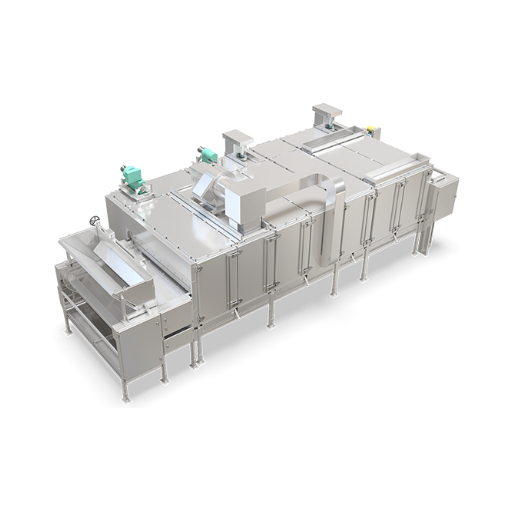
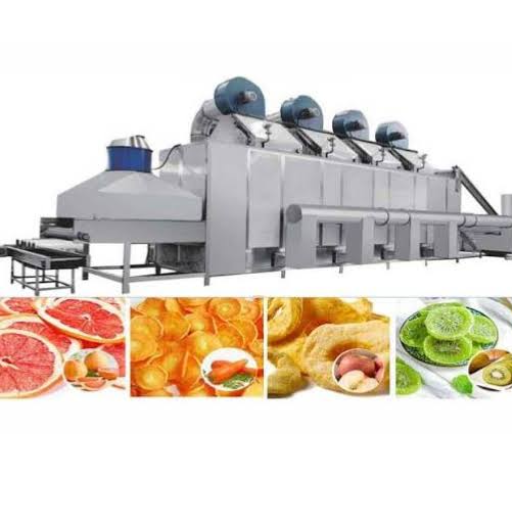
Drying extends shelf life and creates value-added products like fruit chips, spice powders, and jerky. Tray dryers work for most small operations. For faster drying with better energy efficiency, a microwave drying machine reduces drying time by 50% or more while preserving color and nutrients.
Packaging and Sealing
Packaging is where many small businesses first feel real pain. Hand-sealing 200 bags per day is manageable. Hand-sealing 2,000 bags is not. A semi-automatic weighing and sealing machine in the 4,000to4,000to6,000 range typically delivers the highest customer satisfaction for small businesses making the jump from manual to automated packing.
Material Handling
Stainless steel work tables, belt conveyors, and storage racks connect every stage of your line. These seem basic, but poor material handling creates bottlenecks and hygiene risks. Budget 200to200to600 per work table and plan your layout before you buy machines.
Equipment by Budget Tier: From Startup to Scale-Up
The global food processing machinery market is projected to reach $68.27 billion in 2026, according to Research and Markets. Within that massive market, small businesses occupy a critical niche. Here is how to navigate it by budget.
Under $2,000: The Essentials Phase
At this step of the production process, it is advisable to invest more in food processing machines for small businesses that will enhance the prototype. These include a portable house hold electric dehumidifier (60to60to210), a portable house hold electric food slicer (90to90to170), a portable house hold electric mixer (300to300to800), and basic food packaging implements.
It is with no wonder that the things that drove Maria’s interest in the idea include the fact that it was possible for her to do it from her house with minimum resources. She poured $1400 in equipment. In less than 8 months, it was clear she was selling at least 300 bags every single weekend in local farmer’s markets. It took her 3 months to return the investment in equipment.
2,000to2,000to10,000: The Growth Phase
At this stage, the use of semi-automatic devices changes the production capacity. A fruit washer (800to800to1,500), fruit cutter (600to600to1,200), semi-automatic sealing machine (3,000to3,000to6,500), and a bigger sized commercial mixer will help you transition from the artisan table to a small-scale production in a factory setting.
Within the automation and packaging range 4,000 to 6,000, satisfaction indicators reach a peak of 4.7/5. This is because it addresses the first substantial restraint every small business faces: the packaging time.
10,000to10,000to50,000: The Automation Phase
At this level, you are buying automatic single machines or compact production lines. A small snack extruder, an automatic filling and sealing line, or a compact microwave drying system falls in this range. You are no longer a startup. You are a small-scale producer with regional distribution.
$50,000 Plus: The Full Production Phase
Integrated lines for established small businesses ready for national or export markets. A complete snack production line, an instant noodle line, or a biscuit production line with mixing, forming, baking, and packaging in one continuous system.
Want to see which industrial food processing equipment fits your scaling plan? Explore our range of machines designed for operations at every stage.
Manual vs. Semi-Automatic vs. Automatic: Choosing the Right Level
| Feature | Manual | Semi-Automatic | Fully Automatic |
|---|---|---|---|
| Typical cost | Under $2,000 | 2,000−2,000−10,000 | 10,000−10,000−100,000+ |
| Daily output | 50-200 units | 200-1,000 units | 1,000+ units |
| Labor needed | High | Medium | Low |
| Training required | Minimal | Moderate | Significant |
| Best for | Cottage food, testing | Growing small business | Established producer |
| Flexibility | High | Medium | Lower (dedicated) |
If you are experimenting on recipes and catering to a narrow customer base, then it is best to select the manuals. The semi-automatic is appropriate when there is a certain level of establishment, and to ensure consistent productivity without excessive investment. The automatic one works better when there is enough production volume per day and firm recipes and clientele are already in place.
James used to run a hot sauce manufacturing business on a small scale in Portland city. In the initial stages, he capitalized on a single manually operated filler and capped each bottle individually. With 150 bottles a day, it functioned fine. Once a local grocery store placed an order for 2,000 units, he managed to procure a semi-automatic bottling line within 48 hours. He reduced his cost per unit by 70% and still managed to complete the task within two days.
How to Scale Your Equipment as Your Business Grows
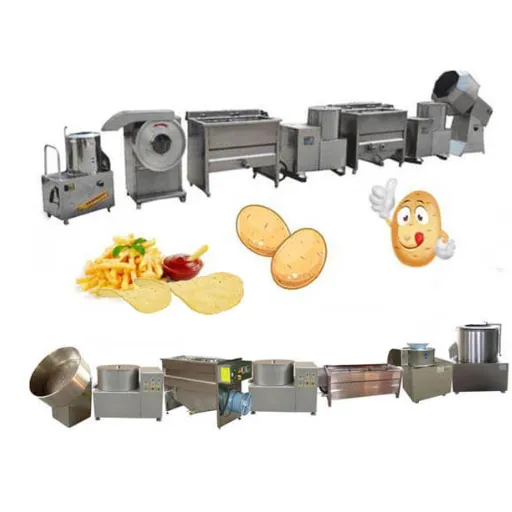
Scaling food production is not about buying the biggest machine you can afford. It is about building a system that grows with you.
Start with Modular Machines
Modular food processing systems let you add stations instead of replacing entire lines. A mixer that connects to a conveyor. A dryer that feeds directly into a packaging station. Look for equipment with standard interfaces and expandable frames.
Plan for 1.5x Capacity
Size your equipment for 150% of your current peak demand, not your average. If you process 300 units on your busiest day, buy for 450. This buffer absorbs seasonal spikes and gives you room to grow before the next upgrade.
Prioritize Multi-Function Equipment Early
A multi-function cutter that slices, dices, and shreds costs more than a single-purpose slicer. However, it replaces three machines and saves floor space. For small businesses, flexibility often matters more than raw speed.
Know When to Upgrade vs. Replace
Three signs tell you it is time to move up. First, you are running your equipment at maximum capacity more than 80% of the time. Second, your labor cost per unit is rising because manual steps cannot keep pace. Third, you are turning down orders because you cannot produce fast enough. When two of those three appear, start planning your next tier.
Energy Efficiency and Total Cost of Ownership for Small Operations
Buying the least expensive machine usually turns out to be more expensive. This is because the cost of purchasing an equipment is only one element of the total cost of ownership. Other costs not included in the purchase price are: installation and training costs; energy consumption; maintenance; spare parts; and downtime.
While energy effectiveness is often viewed as an issue within industries on a national scale, it also makes sense to introduce it even on the scale of a small enterprise. For example, a microwave drying machine uses 30 to 50 percent less energy compared to a self-contained hot-air dryer. In many cases, the reduction in 3-year energy costs pays for the price of the machine.
A very easy TCO formula that small business buyers can apply for their purposes consists in multiplying the purchase price by 1.5. The clutch is this figure that, in general, pays for the cost of shipping, installation, initial training and the first spare parts ware. If this amount stays within the possible expenses, the food processing machines for small businesses may be considered as economically feasible. Otherwise, there is a need to go for less costlier and of best quality models.
The demand for certified hygienic design machinery skyrocketed by 142 percent in just one year compared to the previous one. This number is significant because hygienic equipment can save cleaning time, water consumption, and risk of contamination. Each of these factors is related to your production expenses.
How to Evaluate Suppliers When Buying on a Budget
Finding the right supplier is as important as finding the right machine. A great machine with no support becomes an expensive paperweight.
Verify Certifications
Even for small machines, insist on CE, FDA compliance, HACCP documentation, and ISO 22000 where applicable. Request material mill certificates for stainless steel components. Food-grade 304 or 316 stainless steel is non-negotiable for any surface that contacts product.
Request Video Demonstrations
If you cannot visit the factory in person, demand a live video demonstration with your actual product or a close substitute. Watch the machine run for at least 15 minutes. Ask to see the cleaning process. A supplier who refuses a video demo is a supplier to avoid.
Check Minimum Order Quantities
Some manufacturers require large minimum orders that lock out small buyers. Look for suppliers with flexible MOQs or small-business programs. Many Chinese manufacturers now offer single-unit purchases with the same warranty and support as bulk orders.
Understand Lead Times and Shipping
Manufacturing time plus shipping plus customs clearance plus delivery to your facility can stretch from six weeks to four months. Build that timeline into your launch plan. Ask for a written delivery schedule with penalties for delays.
Confirm After-Sales Support
Warranty terms, spare parts availability, and remote troubleshooting separate professional suppliers from resellers. Ask for references from customers in your region. Call two of them. A 10-minute phone call reveals more than a dozen glossy brochures.
Need help evaluating food machinery manufacturers? Our team has supplied equipment to over 650 businesses worldwide. Contact us for tailored recommendations.
Common Mistakes Small Businesses Make When Buying Equipment
Learning from others saves money and time. Here are the errors we see most often.
- Buying for current volume instead of projected volume. A machine that fits today will choke tomorrow. Plan 12 months ahead.
- Choosing non-food-grade materials to save money. Mild steel corrodes. Aluminum reacts with acidic foods. Only food-grade stainless steel belongs in your production area.
- Ignoring utility requirements. Three-phase power, drainage, ventilation, and water pressure must match the machine specs.
- Overlooking cleaning and maintenance access. A machine that takes 45 minutes to disassemble for daily sanitation will cost you labor and compliance headaches.
- Skipping the training budget. A 30-minute demo is not training. Budget two to four hours of hands-on instruction for every operator.
- Buying isolated machines that do not integrate. That bargain mixer might have a non-standard outlet that never connects to your future conveyor. Think system, not单品.
FAQ
How much does food processing equipment cost for a small business?
Entry-level equipment starts under 2,000formanualandtabletopmachines.Semi−automaticsystemsrangefrom2,000formanualandtabletopmachines.Semi−automaticsystemsrangefrom2,000 to 10,000.Automaticmachinesandcompactlinesrun10,000.Automaticmachinesandcompactlinesrun10,000 to 50,000.Integratedproductionlinesforestablishedsmallbusinessestypicallystartat50,000.Integratedproductionlinesforestablishedsmallbusinessestypicallystartat50,000.
Can I start a food processing business from home?
Yes, in all 50 U.S. states, cottage food laws allow home-based food production within defined revenue and product limits. Check your state regulations for specific caps and permitted food types. Most cottage businesses start with basic equipment under $2,000.
What certifications should food processing machines have?
Look for CE marking, FDA compliance for U.S. markets, HACCP documentation, and ISO 22000 where available. All food-contact surfaces should use food-grade 304 or 316 stainless steel with material certificates.
Is it better to buy new or used equipment for a startup?
New equipment offers known condition, full warranty, and guaranteed compliance. Used equipment can cut costs by 30% to 50% but carries hidden risks: worn parts, outdated safety features, and no support. For core production machines, buy new. For tables, racks, and non-contact items, used is often fine.
How do I choose the right capacity for my small business?
Calculate your peak daily demand, then multiply by 1.5. If your busiest day requires 300 kilograms of output, size your equipment for 450 kilograms. This buffer handles growth, seasonal spikes, and equipment maintenance windows without stopping production.
Are Chinese food processing machines reliable for small businesses?
Yes, when sourced from established manufacturers with proper certifications. China produces a significant share of global food processing equipment. The key is verification: request factory audits, video demonstrations, material certificates, and reference checks. Avoid resellers who cannot show you the factory or explain their quality control process.
Conclusion
It is not always an easy task to pick up food processing machines for small businesses. Begin with identifying the steps in your production process. Then combine the total four levels with your constraints: necessities below two thousand, extension at two thousand, extension of two thousand to ten thousand, automation of ten thousand, automation of ten thousand to fifty thousand, and finally the full integrated lines in excess of fifty thousand. Opt for flexible equipment, which basically grows with you, and is fairly compact, but most of all is totally architected towards different functions. Then consider all TCO aspects, not all posting prices. Also, make sure you have checked the supplier’s certification, availability of support, and their recommendations, if any, before purchasing.
The food equipment market is certainly gaining momentum with small businesses accounting for much of the growth. People prefer small, niche brands to big, generic ones. There is chance. Only whether the misspent funds will disappoint or kill hope is in question concerning the new products.
Would you like some help on how to choose food processing machines for small businesses? Please, kindly contact the Shandong Loyal Industrial Co., Ltd. where sales advisors are experts, and can meet your budget and perfect growth plans. With over 650 customers around the world doing business with us and generating $90 million every year, we have assisted companies at all levels to grow from zero to hero. Therefore, allow us to assist in building the success of your partnership.