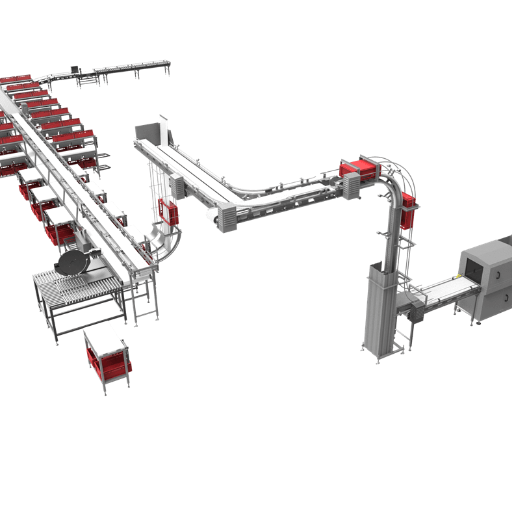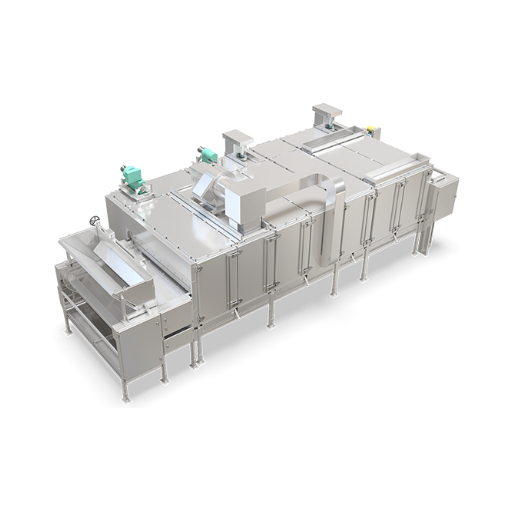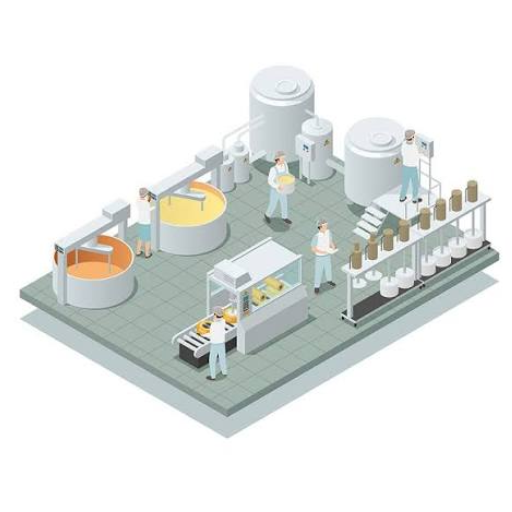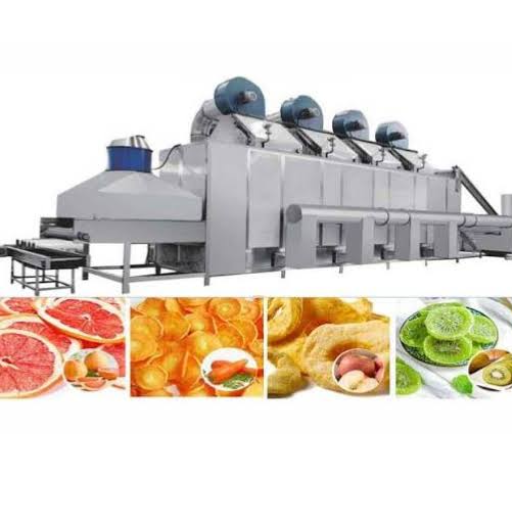
The most dependable automatic food processing machines of 2026 are the ones that come with servo-motor based design, allow AI-quality inspection or improvement and can be broken down into applicable parts for when mass production is needed and also for small scale uses. Equipment such as extruders, packagers, or ovens with PLC control, robotics, or thermal processes that use the Internet of things, provide consistent quality with throughput rates that even five years ago seemed impossible.
However, the dilemma that most of the customers face is saturated market with plenty of offers and scanty information in spec sheets. While this machine is given a quota of 500 units per hour, it can actually pull out such figures from a 5 minutes demo, and end up jamming every 12 minutes in an actual challenging work cycle lasting 8 hours.
It is understood that automation will change the way you do business. There is a difference though, and the need here is well articulated: a marketing promise needs to be separated from output, while making a selection of a device that will work within one’s means, sanitary conditions, and vision. This guide is handy in settling deceptions or clearing the air and providing the construction of an 8 Dimensional Matrix as used, later in this matrix both cons and pros, and the inner works of these machines are used, plus users attached will be required to put kānissis of their certifications to the components, in terms upon development of such products. Also, this guide will detail the automatic food processing machines advantages, a seven step process of selecting a machine as utilized by plant managers, and the technology innovation wave expected in nations from Asia, Europe and Africa in the year 2026.
Key Takeaways
- Automatic food processing machines can boost productivity by up to 30% while reducing labor costs by as much as 30% in high-volume segments.
- The global food processing machinery market is approaching $88 billion in 2026, with automation sub-segments growing at nearly double the overall rate.
- Buyers should calculate true capacity needs using the “peak 90-minute demand multiplied by 1.33” rule, not manufacturer burst-test numbers.
- Modern systems use recipe-based, tool-less changeovers that let one line produce multiple SKUs without mechanical overhaul.
- Asia-Pacific leads global supply and innovation, making it a strategic sourcing region for cost-efficient, technologically advanced equipment.
What Are Automatic Food Processing Machines?
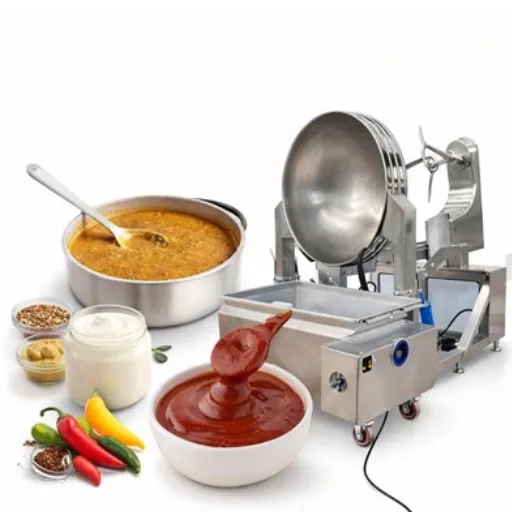
Automatic food processing machines consist of various components, including mechanisms or instruments that are engaged in the manufacture of food without excessive use of labor by partially or completely incorporating the use of PLCs, sensors, and various types of servo drives in carrying out operations such as ingredient handling, manufacturing, and even packaging.
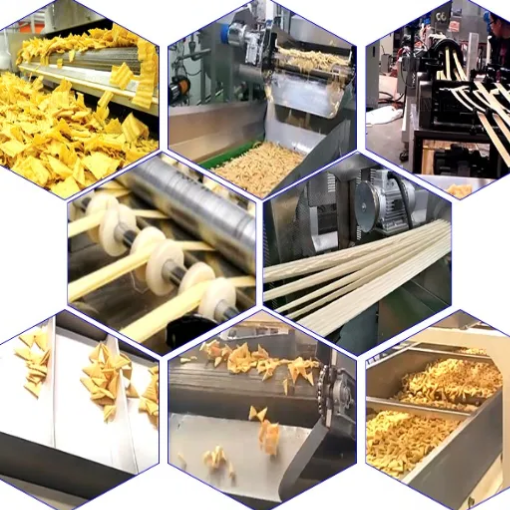
Fully automatic systems enable continuous production using recipes without the necessity of an operator loading the material or activating the system for every cycle as applies to semi-automatic machines. The same line can perform ready dough mixing, shape forming snack extrusion, drying or baking the product, topping application, and retail bag packaging, while continuously changing the settings responding to the sensor und data.
Automatic food processing machines are divided into three categories. The simplest machines perform medium – intense work utilizing mechanical and camshaft control. More advanced machines have PLCs, which gives the flexibility to modify programs and work recipes from a control screen or from a remote unit. The most advanced machines have AI and other innovations, machine vision assists with ingredient variations, equipment compensation for wear and tear and changes in humidity.
Learn more about our complete range of food processing machines designed for every stage of production.
8 Key Benefits of Automatic Food Processing Machines
1. Dramatically Increased Throughput
Automated systems do not get tired, require stops or work at a slower pace by the end of a working period. Robotic pick-and-place systems manipulate fragile products such as fish fillets with speeds over 100 parts every 60 seconds. Automation done on a scale of a whole facility improves the productivity by almost 30% when compared to corresponding manual processing.
An entrepreneur called Chen Wei operates a food business in Jinan, China. Half a year ago, eight employees were able to produce 800 kilograms of puffed snacks a day. The same plant has replaced most of its workers with a completely automatic food processing machines and now achieves a daily production of 2100 kilos with four people controlling and observing how quality assessments and evaluations take place.
2. Enhanced Product Consistency
Machines measure ingredients by weight, not estimation. They maintain cooking temperatures within one degree Celsius and execute cuts with tolerances as tight as ±1.5 millimeters. Advanced systems use machine vision cameras to inspect every product, rejecting outliers before they reach packaging. The result is uniform quality across batches, shifts, and seasons.
3. Improved Food Safety and Hygiene
Every human touch point is a potential contamination risk. Automatic food processing machines minimize direct contact between workers and product. Equipment designed for meat, dairy, and ready-to-eat applications carries IP69K ratings, meaning it withstands high-pressure, high-temperature washdowns without water ingress. Smooth, self-draining surfaces and sanitary welding eliminate crevices where bacteria harbor.
4. Significant Labor Cost Reduction
Automation replaces repetitive, physically demanding tasks like palletizing, sorting, and manual packaging. In segments with high labor turnover or rising wage costs, automation reduces labor expenditures by up to 30%. More importantly, it frees workers for higher-value roles in quality assurance, maintenance, and process improvement.
5. Reduced Waste and Improved Yield
Precision cutting guided by 3D imaging and x-ray scanning eliminates the over-trimming that wastes raw material in manual butchery. Accurate sorting removes damaged produce early in the process before it contaminates a good batch. Automated portioning eliminates the giveaway that costs food manufacturers millions annually.
6. Real-Time Traceability and Compliance
Modern automatic systems digitally log every step, from raw material lot numbers to processing temperatures to packaging timestamps. When a regulator or retail partner asks for documentation, you generate a complete batch report in seconds rather than hours. This level of traceability is becoming a requirement for supplying major retailers and export markets.
7. Flexible, Recipe-Based Production
The old assumption that automation equals rigidity no longer holds. Servo-driven systems allow tool-less changeovers between SKUs in minutes, not hours. One extrusion line can produce cheese puffs in the morning, vegetable crisps in the afternoon, and cereal balls in the evening, all from recipe selections on a touchscreen.
Explore our flexible food production line equipment built for multi-product facilities.
8. Data-Driven Optimization
IoT sensors embedded in automatic food processing machines collect performance data continuously. Plant managers monitor Overall Equipment Effectiveness (OEE) from a smartphone, receive predictive maintenance alerts before a bearing fails, and adjust recipes remotely. Production shifts from reactive firefighting to proactive management.
Types of Automatic Food Processing Machines
Understanding the categories helps you build a complete mental map of what your facility needs.
Mixing, Blending, and Homogenization Systems handle everything from dry powder blending to high-shear liquid mixing. Inline mixers integrate directly into production lines with real-time viscosity and temperature monitoring.
Cutting, Slicing, and Dicing Systems use ultrasonic blades, water jets, or high-speed rotary cutters. 3D vision guides robotic cutting arms to optimize yield on irregular products like meat or fish.
Extrusion and Forming Equipment shapes dough, batter, or paste into consistent forms. Twin-screw extruders cook and shape products simultaneously, making them essential for snacks, cereals, and pet food.
Drying and Thermal Processing removes moisture or applies heat. Microwave drying machines reduce drying time while preserving nutritional quality and color. See how microwave drying technology works for heat-sensitive products.
Filling, Packaging, and Sealing Lines automate the final stage. Flow wrappers, vacuum packers, and aseptic fillers handle everything from bakery items to retort pouches.
Inspection, Sorting, and Quality Control systems use X-ray, metal detection, and optical sorting to ensure only compliant product leaves the facility.
Material Handling and Conveying includes automated guided vehicles (AGVs), robotic palletizers, and smart conveyor systems that route products based on real-time order data.
How to Choose the Right Automatic Food Processing Machine
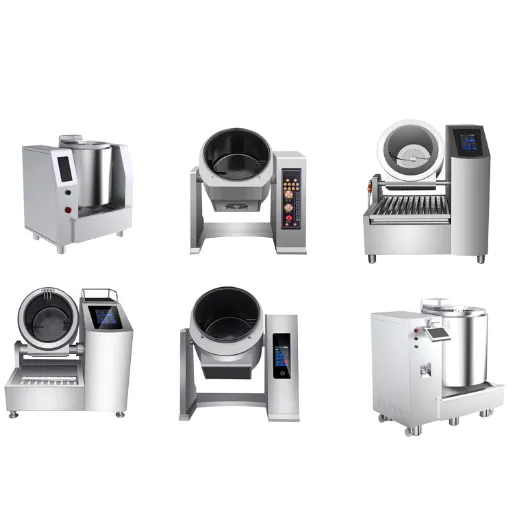
Selecting equipment requires moving beyond spec sheets to a structured evaluation. Here is the seven-step method experienced plant managers use.
Step 1: Calculate Your True Capacity Needs
Manufacturers quote burst-test numbers. You need sustained production figures. Calculate your highest sustained demand over a 90-minute window, then multiply by 1.33 to create a realistic buffer for ingredient variation, temperature drift, and residue buildup.
Step 2: Define Your Product Range and Changeover Frequency
If you run one product year-round, a dedicated line makes sense. If you switch SKUs daily, prioritize servo-driven systems with recipe-based, tool-less changeovers. Ask manufacturers for a live demo using your actual product mix, and run it for at least 20 minutes, not 90 seconds.
Step 3: Prioritize Material Integrity and Hygiene Standards
Verify construction in writing. Full 304 or 316 stainless steel construction, not just exterior panels. Sanitary welding. Self-draining surfaces with no hollow tubing. For meat and dairy, insist on IP69K protection and compliance with HACCP, ISO, CE, and FDA standards.
Step 4: Evaluate Motor and Control Intelligence
Brushless DC (BLDC) motors with closed-loop feedback have replaced induction motors as the standard. They adjust speed and torque in milliseconds based on real-time resistance. Servo drives enable precise position control for cutting and forming. Avoid proprietary control systems that lock you into one supplier for programming changes.
Step 5: Assess Integration and Scalability
Can the machine communicate with your existing PLC or SCADA system? Does it offer an open API for ERP integration? Choose modular designs that let you add feeders, inspection stations, or packaging modules as volume grows, without replacing the entire line.
Step 6: Calculate Total Cost of Ownership
Purchase price is just the starting point. Factor in energy consumption, where BLDC systems cut power use by 38-45% compared to induction motors. Review maintenance schedules, grease port accessibility, and expected bearing life. Confirm that critical spare parts are available within five business days.
Step 7: Vet After-Sales Support Infrastructure
A machine is only as good as the service behind it. Prioritize manufacturers offering installation assistance, maintenance training, remote diagnostics, and local authorized technicians within a reasonable distance of your facility.
Browse our industrial food processing equipment with full documentation and global support coverage.
Automatic Food Processing Machines for Small Businesses and Startups
The use of automation is not a phenomenon prevalent only in global companies. By 2026, small-sized automatic food processing machines will emerge and prove financial sense to smaller firms.
Small businesses have been mushrooming, and Elena Marquez and her high-quality boutique granola line in Barcelona is one. She had no extensive funds with which to attain full automation. Her equipment was limited to a semi-automatic mixer as well as manually packing her products. When the monthly sale orders expanded to over 3,000 units, the cost of labor for packing the granolas weighed on her business. Her situation improved when she purchased a compact automatic filling and sealing line, which only occupies around 12 square meters. Packaging a batch has come down from 4 hours to 45 minutes, and her products are now stocked in three countries.
Traditionally, automating a packaging process begins at a threshold of 3,000 units per day. Below this number, these machines are semi-automatic or manual with added improvements in the precision of the feed. Above that, they put a lot of pressure on the labor costs and therefore warrant the use of fully automatic systems.
Contemporary entry-level devices have features that were available only in top-of-the-line models a couple of years ago, such as ai assisted quality control, diagnostics via the cloud, or servo control of changeovers. Vertical space utilizations of ceiling space help boost the capacity of a kitchen without needing a lot of space. As your volume increases, you can simply add another forming station or an additional lane for packaging, thanks to modular designs.
2026 Technology Trends Shaping Food Automation
The demand for automatic food processing machines is predicted to increase by thirteen billion dollars within ten years or from 8.08 billion dollars in 2025 out of which none is expected to grow any further till 2025 to 21.2 billion dollars in 2035 in accordance with the growth in multi-disciplinary technologies.
The Cutting Edge Of Artificial Intelligence. In-line Inspection Process. All defects or anomalies of a certain seal including higher formation of bacteria can be detected by machine vision systems and this leads to contamination of such defective or abnormal seals to a higher degree of 98 percent. Some systems memorize populations and behave better than the newcomers even when the operator preserves the procedure and does not take any action.
SaaS Telemetry with Digital Twin-based Production Line Management Platforms. Integrating sensors that connect to the cloud makes it possible for a performance performance monitoring manager to sit on any of the measures. A byproduct of digital twins is to produce simple template elements such as production lines that allow recipe and line changes where there is no hardware involved. Pilot users have been noted to implement with 25% less time for commissioning.
Collaborative Robotics (Cobots). Traditional industrial robots operate in cages, separated from human workers. Cobots, on the other hand, work and interact with people. They perform mundane jobs such as packaging boxes and sorting allowing a worker to perform intricate tasks. Installation is a simple task and does not necessarily involve the redesigning of the whole set up.
Sustainable Processing. New generation buildings use, among others, energy and water efficient manufacturing process equipment and as such cuts in excess of 8-10% of GHG emissions. Ultrasonic sealing technique that allows treating compostables without burning type material.
Structural Flexibility And Scalability. Instead of building long production lines, manufacturers now shift to modular designs, enabling the construction of products starting with the essential part – for instance, scaling up the product range may only necessitate providing for a basic extruder or mixer and additional drying, coating or packaging station.
Manual vs. Automatic Food Processing: A Quick Comparison
| Factor | Manual Processing | Automatic Processing |
|---|---|---|
| Throughput | Limited by worker speed and fatigue | Continuous, consistent high output |
| Product Consistency | Variable across shifts and operators | Uniform within tight tolerances |
| Labor Requirements | High headcount for repetitive tasks | Low headcount, higher skill focus |
| Initial Investment | Lower equipment cost | Higher upfront, faster payback |
| Food Safety Risk | Higher due to human contact | Lower, with sealed, washdown-ready design |
| Flexibility | High for small batches | High with recipe-based servo systems |
| Maintenance | Minimal equipment, high labor turnover | Scheduled, predictive, lower labor churn |
| Data and Traceability | Paper-based, error-prone | Digital, real-time, audit-ready |
Maintenance Tips for Automatic Food Processing Equipment
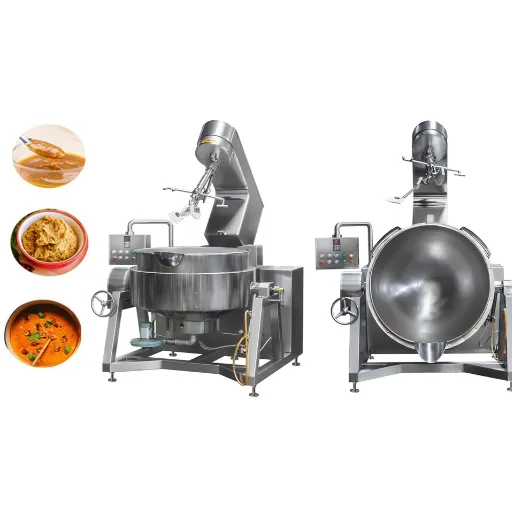
The newest, high-tech automatic food processing machines need proper handling from time to time. Otherwise, the machinery issues become unmanageable and may lead to serious repairs.
Once per shift: Examine seals, gaskets and knife sharpening edges for damages and wear and tear. Clean up all components from any product before it dries out. Check if all the safety interlocks work as they should.
Once a week: As directed in the manufacturer’s instructions lubricate all the bearings, as well as all the chains. Inspect all pneumatic hoses for any air leaks. Ensure that all the sensors and calibrated scales are functional.
Monthly: Examine the IoT dashboard to see if there are any developments in vibration, temperature, or current that may cause any problems in the future. Under no circumstances, replace blades, belts, slits and other wearing items only after they become ineffective.
Prognostic Maintenance: Apply the machine generated information. The bearing overheated to 5 degrees than the normal temperature during three successive days and it needs proper attention now. Take care of it in a planned downtime and not in a crisis.
Conclusion
Owing to the desire to control costs, explore the economies of scale, and the increasing legislations on traceability that manufacturers face, automatic food processing machines are no longer a competitive advantage but rather an operational necessity. The technology accessed in 2026 will be even more sophisticated, more modular, and has a lower barrier to entry for small scale businesses.
The first step in determinable investment is choosing an appropriate machine that reflects the actual production demands rather than the ones claimed in brochures. Capacity should be determined accurately. Respectively a thorough check should be performed on the material, its quality and certificates. The other side that needs to be examined is the overall cost of the machine, such as the energy expenditures and the servicing costs. Support should also be available post-installation in which case selecting a partner with the proper infrastructure is paramount.
Contact Shandong Loyal Industrial today to discuss automatic food processing machines tailored to your production goals. Whether you are launching a new product line or upgrading an existing facility, we deliver the innovative, reliable equipment and global support you need to succeed.
Frequently Asked Questions
What are automatic food processing machines?
Automatic food processing machines are integrated manufacturing systems that use PLCs, sensors, and servo drives to perform food production tasks with minimal human intervention. They handle mixing, forming, cooking, drying, packaging, and quality control in continuous or batch operations.
How much do automatic food processing machines cost?
Costs vary widely based on capacity, complexity, and automation level. Small-scale semi-automatic units may start in the low tens of thousands of dollars, while fully integrated industrial lines can reach several hundred thousand. Total cost of ownership, including energy savings and labor reduction, often delivers payback within 18 to 36 months.
Can small businesses afford automatic food processing machines?
Yes. In 2026, compact and modular systems make automation accessible to small businesses. Semi-automatic entry points allow scaling up gradually. Many operations find that automatic packaging or forming equipment pays for itself once daily volume exceeds approximately 3,000 units.
What certifications should automatic food processing equipment have?
At minimum, verify HACCP, ISO, and CE compliance. For meat, dairy, and baby food, look for FDA or NSF certification and 3-A Sanitary Standards. IP69K washdown protection is essential for high-risk categories.
How does automation improve food safety?
Automation reduces direct human contact with food, minimizing contamination risk. Sealed stainless-steel construction withstands aggressive sanitation. Digital traceability logs every production parameter, creating audit-ready documentation and enabling rapid, targeted recalls if needed.
Should I automate my entire line at once or step by step?
Step-by-step automation is often the smarter approach. Start with the bottleneck that costs you the most in labor or quality inconsistency, typically packaging or forming. Once that module delivers ROI, reinvest the savings into the next stage.