The right answer in the manual vs automatic food processing debate depends on three numbers: your daily output, your local labor cost, and your hygiene requirements. Manual processing wins below ~80 kg/hr or for specialty products. Fully automatic processing pays back fastest above ~300 kg/hr or in high-labor-cost regions. Semi-automatic is the sweet spot for most growing manufacturers in between.
That single sentence is the whole article in 40 words. The rest is the math, the trade-offs, and the framework you can defend to your finance team.
Here’s why this decision matters more than ever. Last March, a snack producer in Vietnam, Linh Foods, ran two parallel lines for the same puffed corn product: one fully manual at 60 kg/hr, one semi-automatic at 220 kg/hr. After six months, the semi-automatic line wasn’t just faster, it produced 38% less product weight variance and reduced labor cost per ton by 71%. But here’s the twist: a competitor across town tried to jump straight to fully automatic and ended up running their $340,000 line at 40% capacity for a year. Same industry, opposite outcomes.
In this guide, you’ll learn what manual and automatic food processing actually mean in 2026, how they compare on cost and quality, when to pick each (including the often-overlooked semi-automatic middle path), and a 5-question framework to make the call. Drawing on Shandong Loyal’s two decades of engineering food processing machines for 650+ global customers, we’ll keep the recommendations honest, not push you toward the priciest option.
Key Takeaways
- Manual food processing typically costs less upfront but 3-5x more per ton produced once you exceed ~80 kg/hr of throughput.
- Fully automatic lines reduce manual handling contamination risk by 40-60% and improve OEE by 15-25%, but require 18-36 months to pay back.
- Semi-automatic configurations are the right answer for most SME food manufacturers scaling from artisan to industrial.
- Regional labor costs flip the ROI math: a line that pays back in 22 months in Germany may take 48 months in India.
- Use the 5-question framework at the end of this article (output, growth, hygiene, labor, capital) to make the decision in under an hour.
What Is Manual Food Processing?
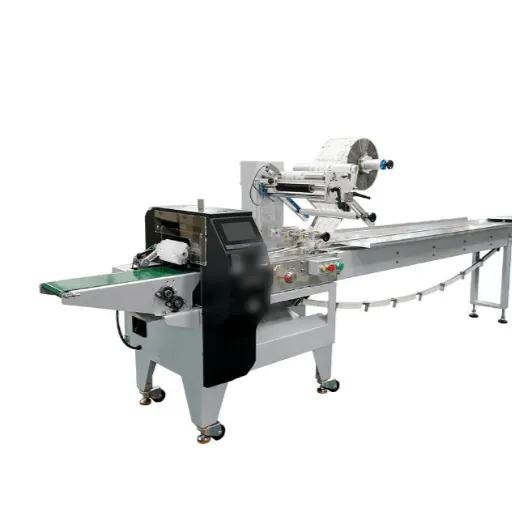
Manual food processing is exactly what it sounds like: human operators handle most or all production steps using simple tools, basic machines, or single-station equipment. A typical manual setup might include a mixer, a hand-operated extruder, a tray dryer, and a manual packaging station, with workers transferring product between each stage.
This isn’t “low tech” in a dismissive sense. Plenty of premium specialty products, think artisan biscuits, regional snacks, organic baby food, rely on manual processing for exactly the reasons it works: low capital outlay, recipe flexibility, and the ability to handle small batches without expensive changeovers.
Where Manual Processing Still Makes Sense
Manual operations remain the rational choice in three scenarios:
- Startups and pilot production running under 50-80 kg/hr, where capital is tight and demand is still being proven.
- Specialty or artisan brands where small batches, frequent recipe changes, and hand-finished quality are part of the value proposition.
- Low-labor-cost regions where wage rates make automation payback periods stretch past five years.
The hidden cost of manual? Variance. Product weight, cook time, and quality drift batch to batch. Customer complaints rise, retailer audits get harder to pass, and as orders grow, you hit a ceiling where adding more workers just adds more inconsistency.
What Is Automatic Food Processing?
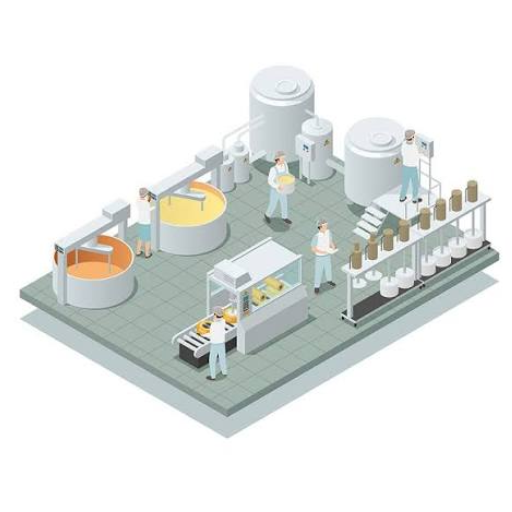
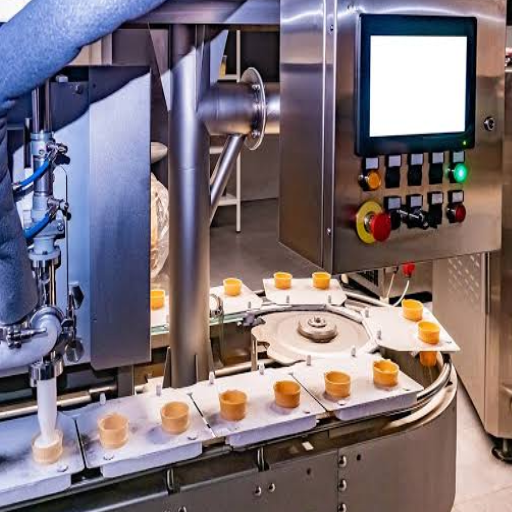
Automatic food processing uses integrated lines of machinery, controlled by PLCs (programmable logic controllers), sensors, and HMI (human-machine interface) panels, to move raw ingredients through every production stage with minimal human contact. Operators monitor screens and handle exceptions rather than touch the product.
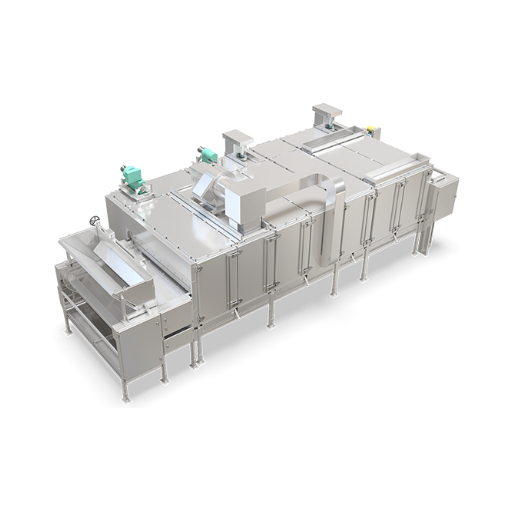
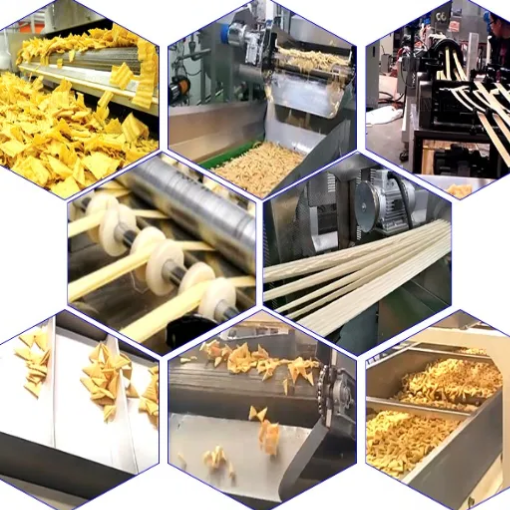
A fully automatic line for a snack food, for example, links a continuous feeder, twin-screw extruder, drying tunnel, flavor coater, and form-fill-seal packaging machine through conveyors and weighing systems. The product moves from raw flour to sealed bag without a human hand touching it.
Key Components of a Modern Automatic Line
- PLC and SCADA control: centralized recipe management, alarms, and data logging.
- Inline sensors: weight, moisture, temperature, and pH monitoring for real-time quality control.
- Sanitary stainless steel design: smooth welds, CIP (clean-in-place) systems, and FDA/CE-compliant materials.
- Servo-driven actuators: precise dosing and consistent product geometry across millions of units.
- Integrated traceability: batch codes, lot tracking, and HACCP documentation generated automatically.
Loyal’s industrial food processing equipment follows this architecture, with custom modules tailored to specific product categories. The result: a 24/7 production capability where one shift of 3-5 operators replaces what used to take 25-40 people.
Manual vs Automatic Food Processing: Side-by-Side Comparison
Here’s how the two systems stack up across the metrics that actually drive purchasing decisions:
| Factor | Manual Processing | Semi-Automatic | Fully Automatic |
|---|---|---|---|
| Throughput | 20-100 kg/hr | 100-400 kg/hr | 300-2,000+ kg/hr |
| Labor required | 15-40 operators per shift | 5-12 operators per shift | 2-5 operators per shift |
| Capital cost | 5K−5K−50K | 50K−50K−300K | 300K−300K−2M+ |
| Operating cost / ton | High (labor-driven) | Medium | Low (energy + maintenance) |
| Product consistency | ±5-10% variance | ±2-3% variance | ±0.5-1% variance |
| Hygiene risk | Higher (more contact) | Moderate | Lower (40-60% reduction) |
| Recipe flexibility | Very high | High | Moderate (changeover time) |
| Operator skill needed | Low-medium per role | Medium | Higher (PLC literacy) |
| Payback period | N/A (low CapEx) | 12-24 months typical | 18-36 months typical |
Throughput and Output Capacity
The throughput gap is the most obvious driver. A skilled team running manual stations might produce 80 kg of puffed snacks per hour on a good day. A modest semi-automatic puff snacks processing line handles 200-400 kg/hr without breaking a sweat. Fully automatic lines push 800 kg/hr or more, running three shifts with the same headcount.
Labor Requirements
Labor is where the cost curves cross. A manual line at 80 kg/hr might need 20 operators per shift; a fully automatic line at 800 kg/hr needs 4. Run the math: even at $300/month labor (typical in parts of South and Southeast Asia), the manual line costs 5x more in wages per ton produced.
Cost: CapEx, OpEx, and Total Cost of Ownership
Manual setups win on capital cost, often by an order of magnitude. But total cost of ownership tells a different story over five years, once you factor in wages, training, turnover, batch variability waste, and missed orders from capacity limits. Most growing producers find their breakeven point at 18-30 months after switching to semi-automatic or automatic.
Hygiene, HACCP, and Food Safety
Less human contact means fewer contamination pathways. FAO data on food safety shows automated lines reduce manual-handling contamination risk by 40-60% in typical snack and bakery operations. For HACCP audits, retailer compliance, and export-grade certifications, that gap is the difference between getting on shelf or getting rejected.
Ready to see what automation actually looks like for your product? Loyal’s engineering team has built lines for 650+ manufacturers worldwide. Browse our food processing machines to see configurations by product type.
The Semi-Automatic Middle Ground
Most competitor articles treat semi-automatic as a footnote. We think it’s the right answer for the majority of growing food manufacturers, and here’s why.
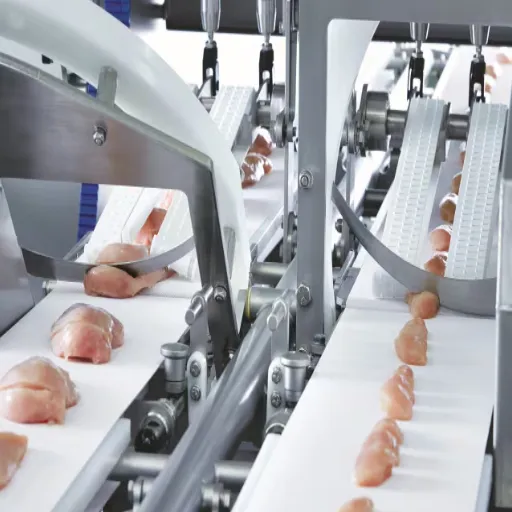
Semi-automatic lines automate the high-skill, high-variance steps (extrusion, drying, cooking) while keeping humans in the loop for low-cost, flexible tasks (feeding, packing, inspection). You get most of the consistency and throughput benefits at one-third to one-half the capital cost of full automation.
A semi-automatic cereal bar production line, for instance, might automate mixing, forming, and cooling but use manual flow-wrap packaging. The operator team drops from 18 to 6, throughput triples, and the capital outlay stays under 150Kinsteadof150Kinsteadof400K.
When Semi-Automatic Beats Both Extremes
Picture Anya, plant manager at a mid-size Polish cereal bar startup. Her team hit 300 kg/hr demand from a new retail contract in late 2024, but her manual line topped out at 90 kg/hr. Going fully automatic would have required 480Kanda4−monthinstallationthathertimelinecouldn′taccommodate.Instead,herteamspecifiedasemi−automaticconfiguration:automatedmixingandforming,manualpackaging.Totalcost:480Kanda4−monthinstallationthathertimelinecouldn′taccommodate.Instead,herteamspecifiedasemi−automaticconfiguration:automatedmixingandforming,manualpackaging.Totalcost:160K, installed in 11 weeks. Result: she hit the contract milestone with 18 months of payback on the equipment, then upgraded packaging to automatic the following year once cash flow allowed.
The lesson: semi-automatic is rarely “good enough as a compromise.” It’s the smart staging strategy that protects capital while you build scale.
ROI: When Does Automatic Food Processing Pay Off?
Let’s run real numbers on a representative case: a snack producer scaling from 100 kg/hr manual to 400 kg/hr semi-automatic.
Manual baseline (100 kg/hr, single shift):
- Annual output: ~250 tons
- Labor: 18 operators × 800/month=800/month=172,800/year
- Equipment: $30,000 (already owned)
Semi-automatic upgrade (400 kg/hr, single shift):
- Annual output: ~1,000 tons (4x capacity)
- Labor: 6 operators × 900/month=900/month=64,800/year
- Equipment cost: $180,000
- Additional revenue from 4x output: 400,000+(at400,000+(at400/ton gross margin)
Payback calculation: Labor savings of 108,000/year+newgrossmarginof108,000/year+newgrossmarginof400,000/year = 508,000/yearbenefitagainst508,000/yearbenefitagainst180,000 investment. Payback under 5 months on incremental revenue, or 20 months counting labor savings alone.
These numbers are illustrative, but the structure holds: when you can sell the extra output, automatic pays back fast. When you can’t, don’t buy capacity you won’t use.
Regional Labor Cost Considerations
The math flips with geography. In Germany, where food production labor runs 35−50/hourfullyloaded,anautomaticlinemightpaybackin18−22months.InIndiaorBangladeshat35−50/hourfullyloaded,anautomaticlinemightpaybackin18−22months.InIndiaorBangladeshat2-4/hour, the same line could take 48-60 months on labor savings alone. That doesn’t mean automation is wrong in low-wage regions, but the justification has to come from quality, consistency, and export-grade hygiene rather than wage replacement.
Hidden Costs of Staying Manual
Manual lines carry costs that rarely show up in spreadsheets: 15-25% annual operator turnover, 2-3 weeks of training per new hire, batch rework from variance, missed orders during peak demand, and the slow erosion of margins as retailer compliance costs rise. Add these up and the “cheap” manual option often costs more per ton than a properly sized semi-automatic line.
Industry Scenarios: Which System Fits Your Product?
Different food categories have different inflection points. Here’s what we’ve seen across Loyal’s customer base.
Snack Food and Puffed Products
The snack category has the clearest automation case. Demand is volume-driven, margins are thin per unit, and retailers demand consistent product geometry. Most snack producers hit the automation tipping point around 150-200 kg/hr. Below that, manual or semi-automatic works. Above it, the variance and labor costs of manual setups eat margins faster than the capital saved.
Cereal Bars and Bakery
Cereal bars and bakery products often justify semi-automatic at lower volumes because forming and portioning consistency matters so much for both consumer experience and packaging. A semi-automatic forming station eliminates the ±10% weight variance that drives both giveaway losses and underweight rejections.
Microwave Drying and Sterilization
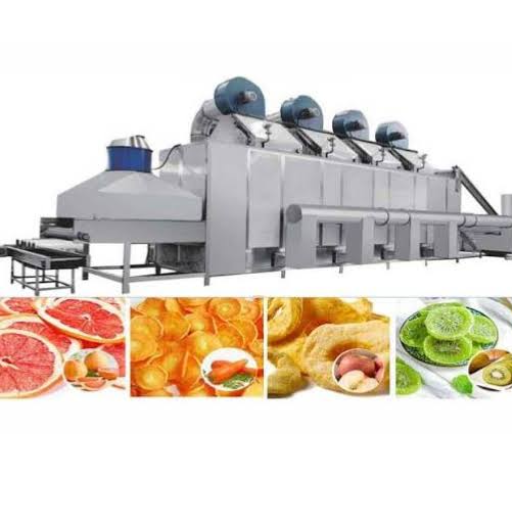
For high-value products like herbs, fruits, and pharmaceuticals, automation isn’t just about throughput, it’s about quality. Loyal’s microwave drying machine lines preserve color, flavor, and nutritional content far better than traditional tray drying, while reducing drying time by 60-80%. For these products, automatic is often the only option that meets buyer specifications.
Specialty and Artisan Products
For genuinely artisan products, premium chocolate, regional specialties, fermented goods, manual or minimally automated processes remain the right answer. Customer expectations align with hand-craft methods, batch sizes stay small, and recipe flexibility outweighs throughput.
How to Choose: A 5-Question Decision Framework
When evaluating manual vs automatic food processing for your operation, work through these five questions in order. Each answer narrows your options.
- What’s your current and projected output in 24 months? Under 80 kg/hr stay manual or pilot semi-auto. 80-300 kg/hr: semi-automatic. 300+ kg/hr: full automation likely justified.
- What’s your local fully-loaded labor cost per hour? Above 15/hr,automationpaybackaccelerates.Under15/hr,automationpaybackaccelerates.Under5/hr, justify automation on quality and consistency, not wages.
- What hygiene standard must you hit? HACCP-light: manual works. HACCP-certified retail or export-grade: semi-automatic minimum. Pharma-grade: full automation with CIP.
- How often do you change recipes or products? Daily changeovers: keep flexibility (manual/semi-auto). Monthly or less: full automation is fine.
- What’s your capital availability and payback tolerance? Under 50K:manual.50K:manual.50K-300Kwith18−24monthpaybackneed:semi−automatic.300Kwith18−24monthpaybackneed:semi−automatic.300K+ with 30+ month tolerance: full automation.
Want a tailored answer for your specific product and volume? Loyal’s engineering team builds custom configurations across 30+ product categories. Talk to our team for a no-obligation production assessment.
Frequently Asked Questions
Is automatic food processing always more hygienic than manual?
Generally yes, but not automatically. A poorly maintained automatic line with neglected CIP cycles can be dirtier than a well-run manual operation with disciplined sanitation. The hygiene advantage comes from reduced human contact AND consistent cleaning protocols, not just the equipment itself. Industry data from food engineering studies suggests automation reduces contamination incidents by 40-60% on average when sanitation is properly managed.
Can I start manual and upgrade to automatic later?
Yes, and for most startups this is the smart path. Plan your facility layout to accommodate future automation from day one: ceiling height, floor drainage, utility access, and product flow paths matter. Many of Loyal’s customers start with manual or semi-automatic and upgrade modules (drying first, then packaging, then mixing) over 2-4 years as cash flow allows.
What’s the minimum output to justify full automation?
A rough rule: 300 kg/hr sustained demand makes full automation financially viable in most markets. Below that, semi-automatic almost always wins on payback. Above 500 kg/hr, full automation is usually the only practical option, since manual labor at that scale becomes a coordination nightmare and quality control bottleneck.
How long does an automatic food processing line take to install?
Standard semi-automatic lines: 8-12 weeks from order to commissioning. Custom fully automatic lines: 16-24 weeks. Add 2-4 weeks for installation, calibration, and operator training. Loyal’s standardized configurations can compress timelines significantly compared to fully custom builds.
Bringing It Together
The manual vs automatic food processing question doesn’t have one right answer, it has the right answer for your specific output, labor cost, hygiene requirement, and capital position. Here’s what to remember:
- Manual processing wins at low volumes (<80 kg/hr), specialty products, and capital-constrained startups.
- Semi-automatic is the sweet spot for most growing manufacturers between 100-400 kg/hr.
- Full automation pays back fastest at 300+ kg/hr in mid-to-high labor cost regions or where hygiene and consistency demands are strict.
- Don’t skip levels. Most failed automation projects come from jumping from manual straight to full auto without proving demand first.
- Plan for the upgrade path from day one, even if you’re starting manual.
The biggest mistake we see isn’t choosing manual over automatic or vice versa. It’s choosing in isolation, without running the labor, throughput, and quality math against actual demand. Make the decision quantitatively, stage the investment, and you’ll protect both your capital and your growth.
Ready to map the right system to your production goals? Loyal Industrial has helped 650+ food manufacturers across 80+ countries build production lines that match their stage, not just their ambitions. Explore our food processing machines or get a custom production assessment from our engineering team today.