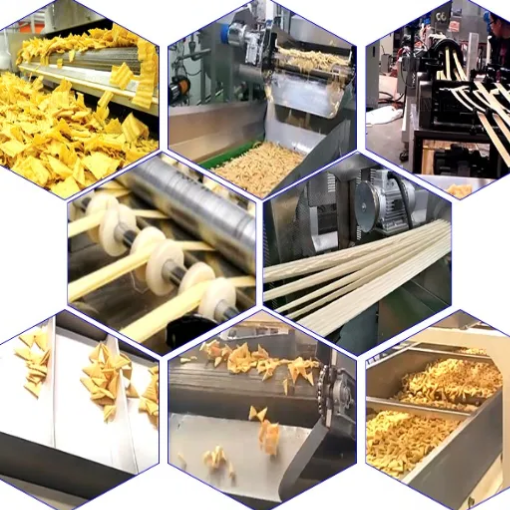
The best food processing machines for small businesses include washing systems, cutting equipment, mixers, dryers, and packaging machines matched to your budget and production stage. Whether you’re launching from a home kitchen or scaling a dedicated facility, the right equipment roadmap protects your investment and sets you up for sustainable growth.
Here’s a surprising truth: 68% of new food businesses start with equipment under 2,000,yetthe2,000,yetthe4,000-$6,000 range shows the highest customer satisfaction at 4.7 out of 5. That gap exists because most entrepreneurs buy for today’s volume instead of tomorrow’s demand. You don’t need the biggest machines on day one. You need the right machines that can grow with you.
We understand that challenge. At Shandong Loyal Industrial Co., Ltd., we’ve partnered with hundreds of small businesses across the globe, helping them scale from startup experiments to full production lines. In this guide, you’ll discover exactly which food processing machines for small businesses fit your current stage, how to budget smartly across four tiers, and how to avoid the costly mistakes that trip up first-time buyers.
Key Takeaways
- Budget-tiered framework: Under 2K(essentials),2K(essentials),2K-10K(growth),10K(growth),10K-50K(automation),50K(automation),50K+ (integrated lines).
- Seven essential machine categories every small food business needs: washing, cutting, mixing, cooking, drying, packaging, and material handling.
- Manual machines suit testing and cottage food; semi-automatic bridges the gap; automatic machines pay off at 500+ units per day.
- Modular equipment that integrates into future production lines saves 30-40% versus full replacement later.
- Energy-efficient food processing machines can reduce operating costs by 20-30% within two years, even at small scale.
Understanding Your Production Stage Before You Buy
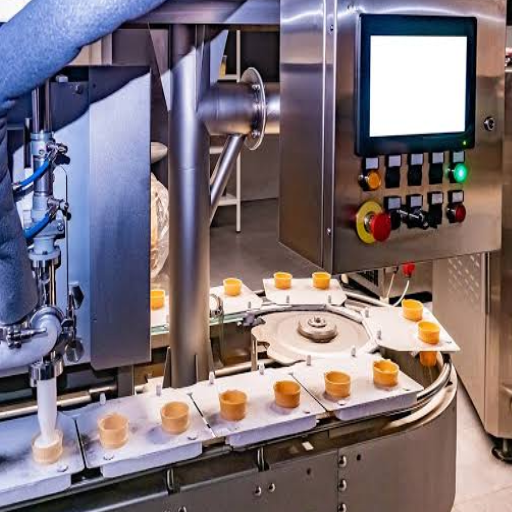
Before you start comparing specs, take an honest look at where your business stands. The equipment needs of a cottage food baker differ dramatically from a small commercial kitchen preparing for retail distribution. Getting this stage right prevents both under-investment and over-investment.
Cottage Food and Home Kitchen Startups
Cottage food laws now exist in all 50 U. S. states, and 2026 has been dubbed the “Food Freedom Revolution.” These laws let you launch with minimal overhead, but they cap your revenue and restrict where you can sell. At this stage, you need tabletop and manual food processing machines for small businesses that fit residential power and space limits.
Think compact vegetable washers, hand-operated cutters, and countertop mixers. Your goal is testing recipes and building a customer base, not maximizing throughput. When Maria launched her artisanal sauce brand from her kitchen in Austin, she started with a $1,200 setup: a small bubble washer, a manual bottle filler, and a handheld heat sealer. Eighteen months later, she had validated three flavors and built a wholesale list that justified moving to a commercial facility. Starting lean didn’t limit her. It gave her proof before she scaled.
Small Commercial Kitchen Operations
Once you move into a shared or dedicated commercial kitchen, your daily output jumps. You’re likely serving restaurants, farmers markets, or local retailers. This is where semi-automatic food processing machines for small businesses start making sense. You’ll want machines that cut prep time without requiring a full automation budget.
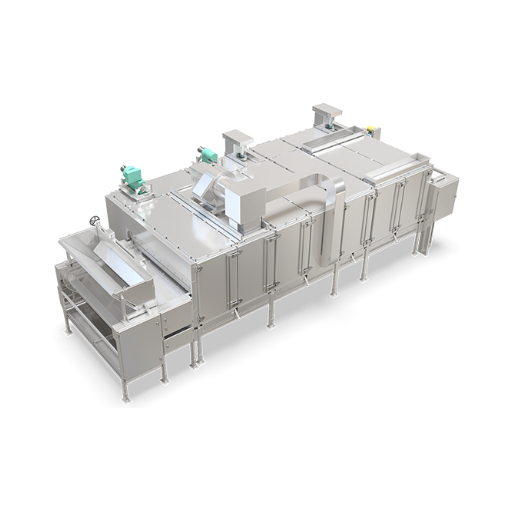
At this stage, consider electric slicers, batch mixers with timers, and small tunnel dryers. Power requirements matter here. Most commercial kitchens offer 220V three-phase power, but verify this before ordering. Also check drainage and ventilation compatibility. A machine that doesn’t fit your infrastructure becomes an expensive paperweight.
Scaling to a Dedicated Facility
When daily production crosses 500 units consistently, manual and semi-automatic processes become bottlenecks. Labor costs rise, consistency drops, and your growth hits a ceiling. This is the transition point where automatic food processing machines and mini production lines deliver ROI.
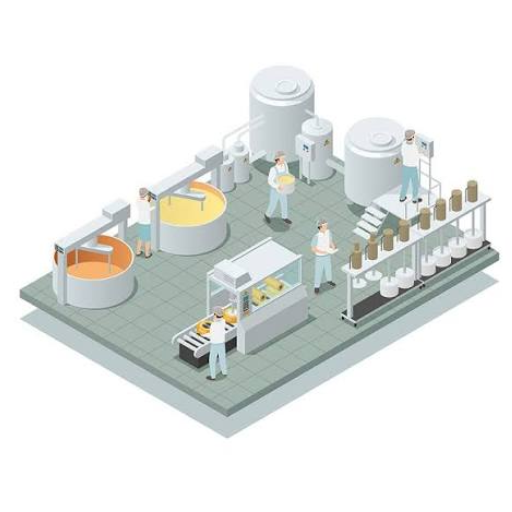
At this stage, you’re not just buying individual machines. You’re designing a workflow. Conveyor connections between stations, synchronized speeds, and integrated quality checks matter as much as the machines themselves. Planning this layout early, even if you can’t afford full automation yet, saves thousands in retrofitting later.
Essential Food Processing Machines Every Small Business Needs
Regardless of your product, most small food operations need equipment across seven core categories. Here’s what to prioritize when shopping for food processing machines for small businesses.
Washing and Cleaning Equipment
Clean raw ingredients form the foundation of food safety. Bubble washers, rotary drum cleaners, and air-knife dryers remove soil, debris, and surface contaminants. Even at small scale, manual washing is labor-intensive and inconsistent. A compact bubble washer handling 100-200 kg per hour typically costs 800−800−2,500 and pays for itself in saved labor within months.
Cutting and Size Reduction
Uniform sizing ensures even cooking, consistent drying, and professional presentation. Options range from manual slicers (150−150−400) to automatic dicers and shredders (2,000−2,000−8,000). For startups, a multi-function cutter that handles slicing, dicing, and shredding offers excellent flexibility. As volume grows, dedicated machines for each operation boost speed.
Mixing and Processing
Commercial mixers, blenders, and grinders transform ingredients into your final recipe. Planetary mixers work well for doughs and batters, while high-shear blenders suit sauces and purees. Grinder capacities range from 50 kg/hour tabletop units to 500 kg/hour floor models. Match motor power to your toughest ingredient. A mixer that stalls on dense dough costs more in downtime than a slightly larger model upfront.
Cooking and Heat Treatment
Fryers, ovens, steamers, and pasteurizers deliver the thermal processing your product requires. Batch fryers suit small snack producers, while tunnel ovens serve bakeries scaling toward continuous production. If you process sauces or beverages, a small pasteurizer (3,000−3,000−7,000) extends shelf life dramatically and opens retail distribution channels.
Drying and Dehydrating
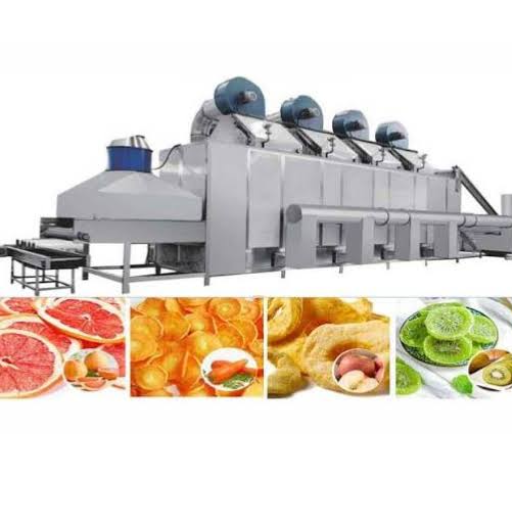
Drying preserves ingredients, extends shelf life, and creates entirely new product categories like dried fruits, jerky, and snack chips. Tray dryers offer an affordable entry point at 1,000−1,000−3,000. For businesses focused on speed and energy efficiency, microwave drying machines reduce drying time by 50-75% compared to conventional hot-air systems while maintaining color, flavor, and nutritional value. Explore our microwave drying solutions to see how compact units fit small operations.
Packaging and Sealing
First impressions matter on retail shelves. Weighers, fillers, sealers, and labelers protect your product and communicate your brand. At entry level, manual impulse sealers and handheld labelers suffice. For growth-stage businesses, automatic pouch fillers and vacuum sealers (3,000−3,000−10,000) boost speed and extend shelf life. Always check packaging material compatibility. A sealing machine designed for polyethylene won’t work with compostable films.
Material Handling
Conveyors, work tables, and storage racks complete your production floor. Even a 3-meter belt conveyor (800−800−1,500) eliminates repetitive lifting and speeds transfer between stations. Stainless steel work tables with undershelves maximize limited floor space. At this stage, ergonomics and hygiene access matter as much as throughput.
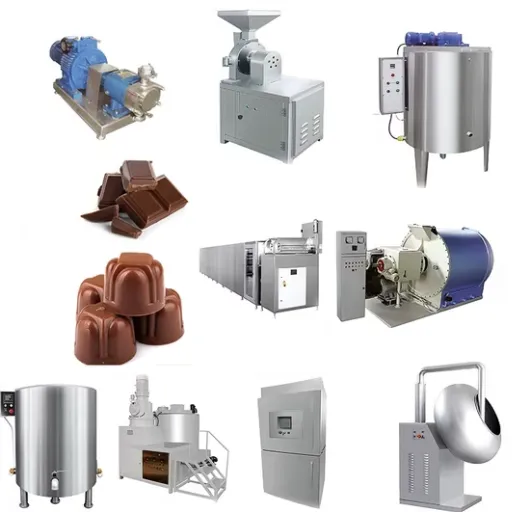
Want to see how these categories fit together in a complete setup? Browse our full range of food processing machines to explore configurations matched to different production types.
Equipment by Budget Tier: From Startup to Scale-Up
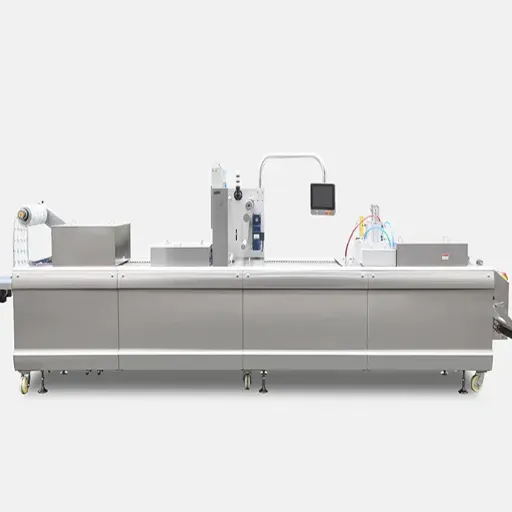
One of the biggest gaps in current buying guides is a clear budget framework. Here’s exactly what food processing machines for small businesses look like at four investment levels.
| Budget Tier | Machine Types | Typical Daily Output | Best For |
|---|---|---|---|
| Under $2,000 | Manual cutters, tabletop mixers, hand sealers, small washers | 50-200 units | Cottage food, recipe testing, market validation |
| 2,000−2,000−10,000 | Semi-automatic slicers, batch dryers, electric fillers, vacuum sealers | 200-800 units | Commercial kitchens, local retail, growing wholesale |
| 10,000−10,000−50,000 | Automatic cutters, continuous dryers, packaging lines, conveyor systems | 800-3,000 units | Dedicated facilities, regional distribution |
| $50,000+ | Integrated production lines, full automation, custom configurations | 3,000+ units | Established brands scaling nationally or exporting |
Under $2,000, The Essentials Phase
At this tier, focus on versatility and portability. A multi-function cutter, a 20-liter planetary mixer, a small tray dryer, and a handheld sealing kit covers surprising ground. Buy stainless steel construction even at this price. Food-grade materials aren’t optional. They’re a legal requirement and a brand protection strategy.
2,000to2,000to10,000, The Growth Phase
This is where semi-automatic food processing equipment for small businesses delivers the strongest satisfaction. Electric machines with timers, sensors, and batch consistency replace guesswork. A $4,500 automated packing machine, for instance, typically improves output by 3x while reducing waste from inconsistent seals. This tier also lets you add specialized equipment like a small pasteurizer or a dedicated meat grinder.
10,000to10,000to50,000, The Automation Phase
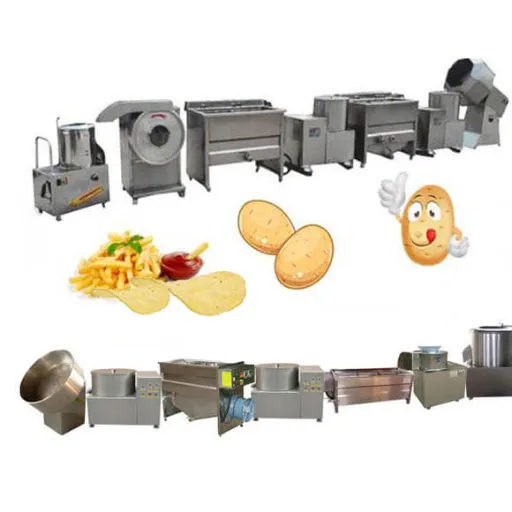
Here you’re buying capacity and consistency, not just tools. Automatic vegetable cutting lines, continuous fryers, and form-fill-seal packaging machines dominate this range. Think in terms of production lines rather than individual machines. A mini snack processing line at 25,000−25,000−35,000 handles washing, extruding, cutting, frying, seasoning, and packaging in a continuous flow. For snack startups eyeing regional growth, this is where efficiency gains compound rapidly.
$50,000+, The Full Production Phase
At this level, you’re integrating systems. Custom layouts, programmable logic controllers (PLCs), and quality control stations transform your facility into a professional manufacturing operation. You’re also buying reliability and support. Downtime at this scale costs hundreds or thousands per hour. Our industrial food processing equipment is engineered for exactly this transition.
Manual vs. Semi-Automatic vs. Automatic: Choosing the Right Level
The wrong automation level drains profits just as surely as the wrong machine type. Use this decision framework to match your operation to the right technology.
| Factor | Manual | Semi-Automatic | Automatic |
|---|---|---|---|
| Initial Investment | 500−500−2,000 | 2,000−2,000−10,000 | 10,000−10,000−100,000+ |
| Labor Required | High (1 operator per task) | Medium (1 operator per 2-3 tasks) | Low (1 operator per line) |
| Daily Output | 50-200 units | 200-1,000 units | 1,000-10,000+ units |
| Consistency | Variable | Good | Excellent |
| Training Needed | Minimal | Moderate | Moderate to High |
| Best For | Testing, cottage food, niche products | Growing local brands, multi-product lines | Single-product focus, high volume, export |
Manual machines suit testing and low-volume artisanal production. Semi-automatic strikes the sweet spot for most growing small businesses. It boosts speed without requiring specialized technicians. Automatic machines justify their cost when labor becomes your biggest constraint or when export markets demand certification-level consistency.
David learned this lesson the hard way. He runs a dried fruit operation in Oregon and bought a fully automatic slicing and drying line in his second year. The machine was beautiful. The problem? He only processed three days per week, and the complex cleaning protocol took four hours each session. His utilization rate was so low that the machine’s cost-per-unit dwarfed what semi-automatic equipment would have delivered. He eventually sold the automatic line at a loss and downgraded to a semi-automatic batch system. Match the machine to your actual production pattern, not your dream schedule.
How to Scale Your Equipment as Your Business Grows
Smart scaling isn’t about buying big early. It’s about buying expandable.
Start with Modular Machines
Modular equipment connects to other machines via standard interfaces. A standalone batch mixer becomes the first station in a continuous line when you add a conveyor and the next processing unit. Look for machines with standardized infeed and outfeed heights. Ask suppliers whether their equipment integrates with future upgrades. At Shandong Loyal, we design our food production line equipment with modularity in mind because we’ve watched too many entrepreneurs replace perfectly good machines that simply couldn’t connect to the next stage.
Plan for 1.5x Capacity
Size your equipment for demand 12-18 months out, not today’s orders. If you’re producing 300 units daily now, buy for 450. This buffer prevents you from maxing out machines during seasonal peaks or sudden growth spurts. It also gives you negotiating use. Suppliers respond better to customers who aren’t desperate for immediate delivery.
Prioritize Multi-Function Equipment Early
A cutter that slices, dices, and shreds replaces three dedicated machines during startup. A multi-head weigher handles snacks, grains, and frozen products. Versatility matters when every dollar counts. As volume justifies specialization, you can add dedicated units and redeploy the multi-function machine to new product trials.
Know When to Upgrade vs. Replace
Replace when repair costs exceed 50% of replacement value over a 12-month period. Upgrade when your bottleneck shifts. If your cutter keeps pace but your dryer can’t finish batches before the next shift, the dryer is your constraint. Fix the constraint first. That’s where ROI lives.
Energy Efficiency and Total Cost of Ownership for Small Operations
Small businesses often focus on purchase price and ignore operating costs. That’s a costly mistake. Energy typically represents 8-12% of operating expenses for small food manufacturers. Energy-efficient food processing machines can cut that by 20-30% within two years.
Consider total cost of ownership (TCO), not just sticker price. A 3,000dryerthatconsumes3,000dryerthatconsumes1,200 annually in electricity costs more over five years than a 4,500efficientmodelusing4,500efficientmodelusing700 yearly. The efficient unit pays back the 1,500premiuminunderthreeyears,thensaves1,500premiuminunderthreeyears,thensaves500 annually for the rest of its life.
Hidden costs extend beyond energy. Maintenance access matters enormously. A machine that’s hard to clean takes longer to sanitize, increasing labor and risking contamination. Downtime for part replacement kills small businesses that can’t afford backup capacity. Before buying, ask suppliers for maintenance schedules, spare parts prices, and remote troubleshooting capabilities.
Microwave drying machines exemplify energy efficiency at small scale. They target moisture directly rather than heating the entire air volume, which slashes energy use and processing time. For small businesses producing dried snacks, herbs, or prepared ingredients, this technology levels the playing field against larger competitors. Learn more about how energy-efficient microwave drying supports lean operations.
How to Evaluate Suppliers When Buying on a Budget
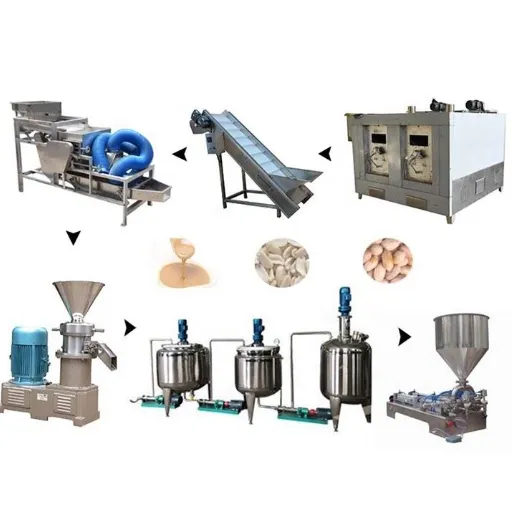
The right supplier is as important as the right machine. Here’s how to vet them without flying to every factory.
Verify Certifications
Even entry-level machines should carry CE marking for electrical safety and meet food-grade material standards like FDA or EU 1935/2004 compliance. If you plan to export, ask about additional certifications your target markets require. ISO 22000 or HACCP-aligned design features signal supplier maturity.
Request Video Demonstrations
Any reputable manufacturer can provide factory tour videos and machine testing footage with your actual ingredients. Watch for build quality details: weld finish, electrical enclosure ratings, and component brands. A video call where operators walk you through the control panel reveals usability issues that glossy brochures hide.
Check Minimum Order Quantities
Some suppliers prioritize large orders and treat small buyers as afterthoughts. Ask directly about minimum order quantities and whether they offer sample or trial machines. At Shandong Loyal, we support small businesses with flexible order sizes because we know today’s startup is tomorrow’s flagship customer. With 650+ global customers and $90M in annual sales, we’ve built our reputation on partnerships that start modestly and scale confidently.
Understand Lead Times and Shipping
Budget for freight, customs clearance, and import duties. A machine quoted at 5,000cancost5,000cancost6,500 landed. Lead times for custom configurations often run 30-60 days, while standard models ship faster. Plan your cash flow accordingly. Empty warehouse space costs money too.
Confirm After-Sales Support
Warranty length matters, but response speed matters more. Ask how spare parts are shipped, whether remote diagnostics are available, and what documentation comes with the machine. A supplier who answers these questions thoroughly before the sale usually supports you well after it.
Ready to find equipment that matches your budget and growth goals? Contact Shandong Loyal Industrial Co., Ltd. for tailored recommendations from experienced food machinery manufacturers.
Common Mistakes Small Businesses Make When Buying Equipment
Learning from others’ mistakes saves time, money, and frustration. Here are the six errors we see most often.
- Buying for current volume instead of projected volume. Your equipment should handle 150% of today’s output comfortably. Growth is the goal.
- Choosing non-food-grade materials to save money upfront. Aluminum or coated steel corrodes, contaminates product, and fails health inspections. Stainless steel 304 is the minimum standard for food contact surfaces.
- Ignoring utility requirements. Power phase, water pressure, drainage slope, and ventilation capacity must match the machine. A three-phase fryer won’t run on residential single-phase power.
- Overlooking cleaning and maintenance access. Machines with hidden corners, non-removable panels, or exposed wiring create sanitation nightmares. Demand hygienic design even at entry-level price points.
- Skipping the training budget. Even intuitive machines run better when operators understand optimal settings, troubleshooting basics, and safety protocols. Budget 200−200−500 for training materials or video sessions.
- Buying isolated machines that don’t integrate. That bargain cutter with a non-standard discharge height becomes a problem when you add a conveyor. Standardization today prevents incompatibility tomorrow.
Frequently Asked Questions
How much does food processing equipment cost for a small business?
Entry-level setups start around 1,000−1,000−2,000 for manual and tabletop machines. Growth-phase semi-automatic equipment typically runs 2,000−2,000−10,000. Small automatic lines range from 10,000−10,000−50,000. Your product type, daily volume, and automation level determine where you fall in these ranges.
Can I start a food processing business from home?
Yes, in most U. S. states cottage food laws allow home-based production of certain low-risk foods like baked goods, dried fruits, and some sauces. Revenue caps, labeling requirements, and allowed product categories vary by state. Always verify local regulations before investing in equipment.
What certifications should food processing machines have?
At minimum, look for CE marking for electrical safety and food-grade material compliance (FDA or EU standards). For export markets, additional certifications like ISO 22000, HACCP alignment, or country-specific approvals may be required.
Is it better to buy new or used equipment for a startup?
New equipment offers warranties, known maintenance history, and modern efficiency standards. Used equipment can save 30-50% upfront but carries hidden risks: worn components, obsolete parts, and unknown damage. For first-time buyers, new machines from reputable manufacturers usually deliver better long-term value.
How do I choose the right capacity for my small business?
Calculate your target daily output 12-18 months from now, then add a 50% buffer for peak periods. Divide by your planned operating hours to determine hourly throughput needs. Match machine specifications to that hourly rate, not an abstract daily total that ignores shift patterns.
Are Chinese food processing machines reliable for small businesses?
Chinese manufacturers produce equipment across the full quality spectrum. The key is supplier evaluation, not country of origin. Verify certifications, request video demonstrations, check references from buyers in similar markets, and confirm after-sales support capabilities. Reputable manufacturers with export experience, like Shandong Loyal, meet the same quality standards as European or American suppliers at competitive price points.
Conclusion
Choosing food processing machines for small businesses isn’t about finding the cheapest option or the most advanced technology. It’s about matching the right equipment to your current stage, your near-term growth trajectory, and your operational reality. Start lean with versatile, modular machines. Scale smartly by planning for 1.5x capacity and prioritizing energy efficiency. Evaluate suppliers on support and reliability, not just price.
The entrepreneurs who win in food manufacturing aren’t the ones who buy the most equipment. They’re the ones who buy strategically, scale systematically, and partner with manufacturers who understand their journey. From Asia to Europe, our machines power food production across the globe, and we’ve built our business on partnerships that start small and grow strong.
Ready to find the right food processing machines for your small business? Contact Shandong Loyal Industrial Co., Ltd. today for tailored recommendations that match your budget and growth goals. We’re not just providing equipment, we’re building partnerships for success.