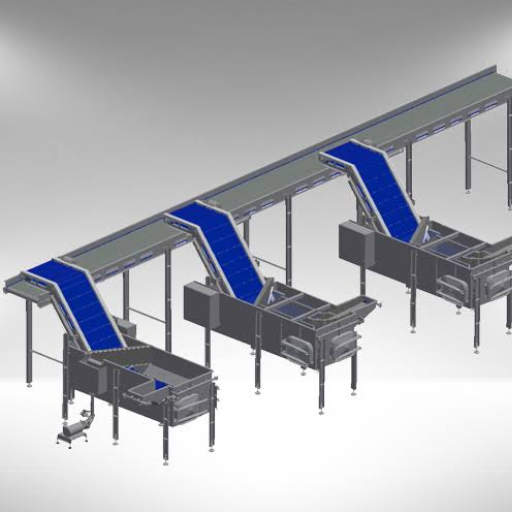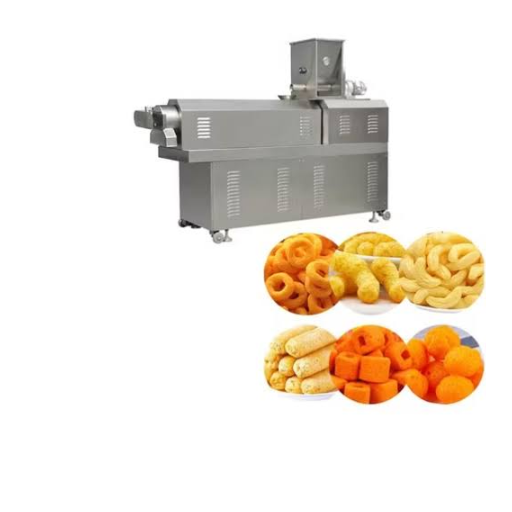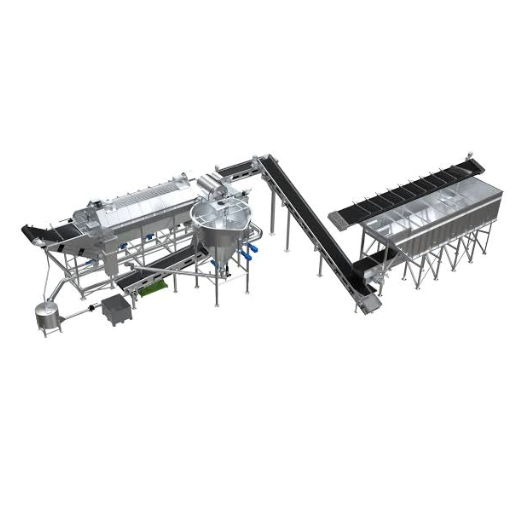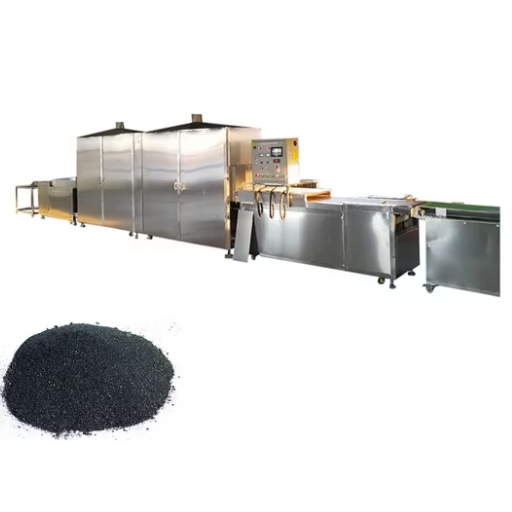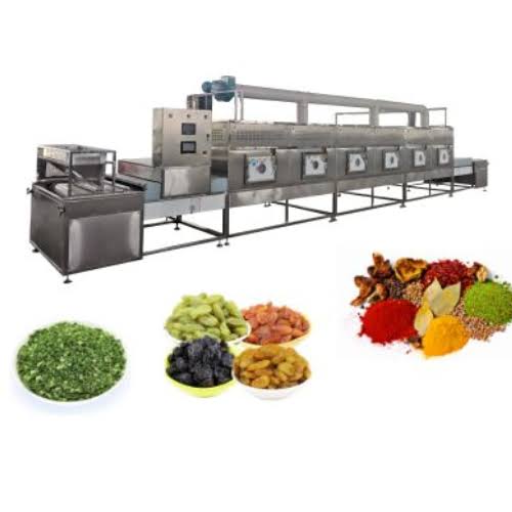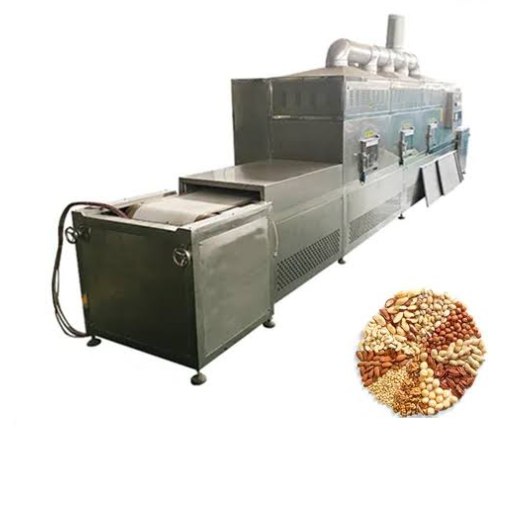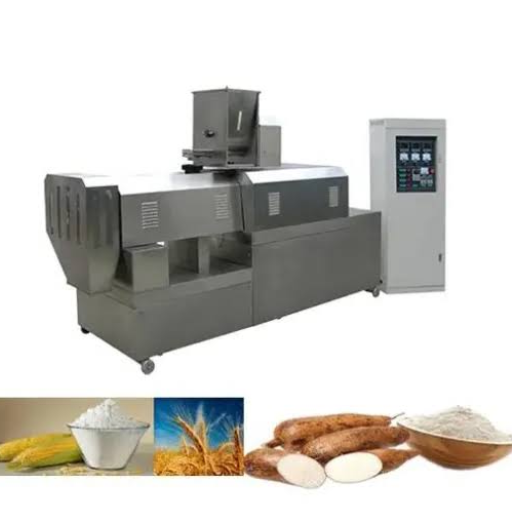
The pregelatinized starch production line takes native starch and turns it into cold-water soluble powder by processing it through heat and shear cooking, followed by drying and grinding. The most common industrial setup today uses a twin-screw extruder as the core gelatinization unit, paired with mixing, drying, grinding, and packaging equipment in one continuous flow.
But here is the problem most buyers face. Manufacturer catalog pages list machines without explaining which production method fits which product. Do you need drum drying for high-viscosity flakes, spray drying for instant solubility, or extrusion for continuous low-cost output? The wrong choice can mean poor product quality, higher energy bills, or equipment that never reaches rated capacity.
In this guide, you will learn how a pregelatinized starch production line works, how the three main manufacturing methods compare, and how to match equipment to your raw material and target market. We will also cover cost ranges, quality control parameters, and common production issues so you can make a confident investment decision.
Growing demand for pregelatinized starch exists all around the world. According to market.us, food and beverage alone accounts for 57.1% of global demand, pharmaceuticals for 20.2%, and cosmetics and personal care for 10.3%. According to Fortune Business Insights, the global market for pregelatinized starch is expected to touch USD 2.18 billion mark by the year 2026. This demand offers great prospects for companies which are capable of supplying high-quality food-grade and industrial-grade pregelatinized starch.
Key Takeaways
- Pregelatinized starch production line processes native starch into cold water soluble powder by heat and shear cooking, drying and grinding it.
- Twin-screw extrusion is the dominant method because it is continuous, energy-efficient, and handles corn, cassava, and potato starch in one line.
- Typical small-to-large extrusion lines cost USD 8,000 to 60,000+, while turnkey wet-chemical plants can exceed USD 500,000.
- Food & beverage dominates demand with 57.1% of the application market, followed by pharmaceuticals at 20.2%.
- Quality control focuses on cold-water solubility, viscosity, gelatinization degree, water absorption index (WAI), and water solubility index (WSI).
What Is Pregelatinized Starch?
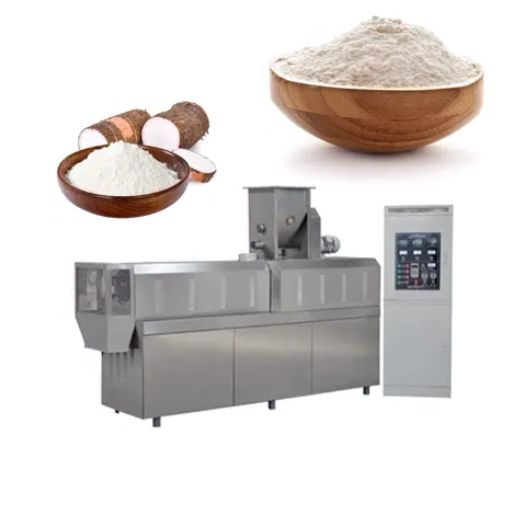
Pregelatinized starch is nothing but native starch that has been cooked, or gelatinized, and dried to form cold water soluble starch that can be dissolved without any further heating. The process destroys the crystalline structure of starch granules, turning them into an amorphous, highly absorbent powder.
Because pregelatinized starch is a physically modified starch, a versatile modified starch production line can often produce both pregelatinized and other physically modified starches with the right screw configuration and downstream equipment.
The result is a functional ingredient with several useful properties:
- Cold-water solubility: thickens or gels without cooking
- Instant viscosity: builds body quickly in liquid systems
- Binding and adhesion: holds particles together in tablets, briquettes, or mortars
- Stability: improves freeze-thaw behavior and shelf life in finished products
- Thickening and texturizing: provides mouthfeel in soups, sauces, and desserts
Common raw materials include corn starch, cassava or tapioca starch, potato starch, wheat starch, and waxy maize. Each source gives slightly different gel strength, clarity, and viscosity, which matters when you select both raw material and processing method.
How Is Pregelatinized Starch Produced?
The entire process of pregelatinized starch manufacturing involves heat and shear cooking of native starch, drying the gelatinized starch and grinding it into cold water soluble powder. Industrial producers use one of three methods: drum or roller drying, spray drying, or twin-screw extrusion cooking. Each method has its own equipment footprint, energy profile, and product characteristics.
Drum and Roller Drying
Drum drying is the oldest commercial method. A starch slurry is spread as a thin film onto steam-heated rotating drums. The heat gelatinizes the starch and evaporates water in one step. A doctor blade scrapes off the dried film, which is then crushed and milled into powder.
This method produces flake-like particles with high cold-water viscosity. It is still preferred when the final product must deliver strong thickening power or when manufacturers want a simple, well-understood process. However, drum dryers are batch or semi-continuous, require large floor space, and consume significant steam.
Spray Drying
In spray drying, a starch slurry is cooked and then atomized into a hot drying chamber. The droplets dry almost instantly into hollow spherical particles.
Spray-dried pregelatinized starch disperses quickly and dissolves with little agitation, making it ideal for instant beverages, baby food, and pharmaceutical excipients. The downside is high energy use and capital cost, which makes spray drying economical mainly for high-value, powder-focused products.
Extrusion Cooking
Twin-screw extrusion cooking has become the dominant pregelatinized starch manufacturing process for new lines. Moist starch is fed into a twin-screw extruder where mechanical shear, pressure, and barrel heat cook the starch in seconds. The extrudate is then conveyed to a dryer, milled, classified, and packaged.
Extrusion offers several advantages over traditional drying:
- Continuous operation with consistent product quality
- Smaller footprint than drum or spray drying plants
- Lower energy consumption per ton in many configurations
- Flexible raw material handling: corn, cassava, potato, wheat
- Easy adjustment of gelatinization degree by changing temperature, moisture, and screw speed
- Food-grade and industrial-grade products from the same line
Production Method Comparison
| Factor | Drum/Roller Drying | Spray Drying | Twin-Screw Extrusion |
|---|---|---|---|
| Process type | Semi-continuous | Continuous | Continuous |
| Typical capacity | 100–2,000 kg/h | 50–500 kg/h | 100–1,500+ kg/h |
| Product form | Flakes or coarse powder | Fine spherical powder | Granules or powder |
| Cold-water viscosity | High | Medium | Adjustable |
| Dispersibility | Moderate | Excellent | Good to excellent |
| Energy use | High steam demand | High thermal demand | Moderate electric + heat |
| Footprint | Large | Medium | Compact |
| Capital cost | Medium to high | High | Low to medium |
| Best for | High-viscosity thickeners | Instant beverages, pharma | Food, pharma, industrial bulk |
For most buyers entering the pregelatinized starch business, extrusion provides the best balance of throughput, flexibility, and investment cost. That is why most pregelatinized starch machine suppliers now lead with twin-screw extrusion lines.
Complete Pregelatinized Starch Production Line Flow
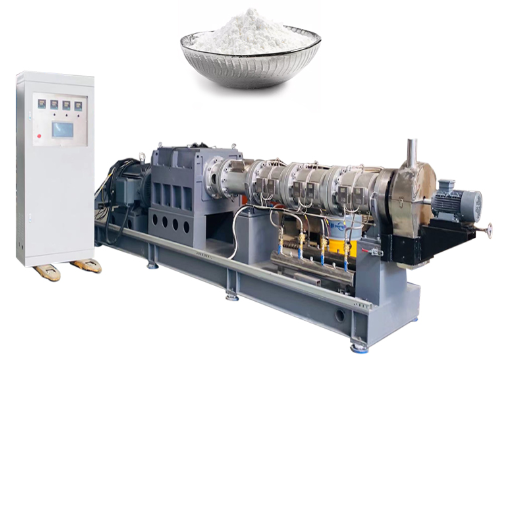
A standard extrusion-based pregelatinized starch production line follows a clear sequence:
- Raw material feeding and mixing. Native starch is weighed and blended with water and additives in a high-speed mixer.
- Pre-conditioning. The mixture rests or is gently heated to reach uniform moisture, usually 15–25%.
- Gelatinization. The conditioned starch enters the twin-screw extruder, where barrel temperatures of 120–220°C and pressure up to 10 MPa cook the starch.
- Conveying and cooling. Extruded granules are lifted by air conveyor and partially cooled.
- Drying. A multi-layer belt dryer reduces moisture from 20–30% down to 8–12%.
- Milling and classification. A grinder pulverizes dried flakes or granules, and a vibrating sifter controls particle size.
- Optional blending. Additives may be mixed in to adjust viscosity, color, or stability.
- Packaging. An automatic bagging or bulk packing system fills the final product.
When Marcus, a food ingredient buyer in Southeast Asia, visited three suppliers in 2024, he noticed that only one offered a fully integrated line with dust collection and sieving included. The other two quoted the extruder and dryer but treated milling and packaging as optional extras. That difference added roughly USD 12,000 to the final installed cost and delayed commissioning by two weeks. Integrated process design matters as much as the extruder itself.
Core Pregelatinized Starch Equipment Configuration
Every pregelatinized starch machine train, from pilot lines to industrial plants, includes the same functional blocks as other industrial food processing equipment, though model sizes and automation levels vary. A standard extrusion line contains eight core components:
- Raw material mixer and pre-conditioner
- Twin-screw extruder
- Air conveyor
- Multi-layer belt dryer or oven
- Cooling conveyor
- Pulverizer or grinder with dust collection
- Vibrating sifter or classifier
- Packaging system with PLC control
Raw Material Mixer and Pre-conditioner
The mixer blends starch with the correct amount of water and any additives. Uniform moisture at this stage is critical. Too little water leads to incomplete gelatinization; too much water creates sticky extrudate that clogs the dryer.
Pregelatinized Starch Extruder: Twin-Screw Design
The extruder is the heart of the line. A twin-screw extruder for starch modification provides self-wiping action, better heat transfer, and more consistent shear than single-screw units. A pregelatinized starch extruder must balance shear, temperature, and residence time to achieve the desired gelatinization degree without burning the product.
Barrel sections can be heated or cooled independently, and screw configurations can be changed to match different raw materials and products.
Typical operating parameters:
- Barrel temperature: 120–220°C
- Moisture content: 15–25%
- Screw speed: 200–600 rpm
- Residence time: 20–60 seconds
- Pressure: 0.5–10 MPa
Dryer / Cooling Conveyor
Most lines use a multi-layer mesh belt dryer with electric, gas, diesel, or steam heating. Dryer length and layer count depend on target capacity. After drying, a short cooling conveyor brings the product to ambient temperature before milling.
Pulverizer / Grinder with Dust Collection
Starch dust is explosive, so a closed grinding system with dust collection is essential. The grinder should allow adjustable particle size to meet different end-use specifications.
Sifter / Classifier
A vibrating sifter removes oversize particles and ensures consistent particle size distribution. Some lines include two-stage sieving for food-grade or pharma-grade products.
Packaging System
Automatic packing machines fill 5–50 kg bags or bulk containers. For food-grade lines, stainless steel contact parts and easy-clean design are standard.
PLC Control and Automation
Modern lines use PLC control with touchscreen HMI for temperature, screw speed, feeder rate, and dryer settings. Recipe storage, alarm logging, and remote diagnostics reduce operator error and downtime.
Process flow diagram: mixing → pre-conditioning → extrusion → drying → milling → sifting → packaging. Replace with a Loyal machine tour video or high-resolution diagram before publishing.
Shandong Loyal PGS Series Pregelatinized Starch Production Line
Shandong Loyal Industrial Co., Ltd. offers the PGS series pregelatinized starch production line. The line is built around a twin-screw extruder and is designed for continuous, energy-efficient production.
- Standard models: PGS65, PGS70, PGS75-2, PGS95-2, PGS120-3, PGS140-3
- Certifications: CE, ISO9001, SGS, BV
- Materials: Food-grade SUS304 stainless steel contact parts
- Capacity range: ~80–100 kg/h up to 1,000–1,200 kg/h, with custom lines reaching 2,000 kg/h
- Raw materials: Corn starch, cassava starch, potato starch
Process flow: Flour Mixer → Screw Conveyor → Twin-Screw Extruder → Air Conveyor → Three-Layer Oven → Automatic Grinding System → Packing Machine
Key advantages:
- High-temperature, high-pressure, short-time extrusion with low moisture input
- No sewage generation compared with wet-chemical modification
- Compact footprint and PLC-controlled automation
- Adjustable grinding fineness for different applications
- Overseas installation, commissioning, and operator training available
Typical applications:
- Food thickening and instant products
- Fish-feed binder (up to ~20% pregelatinized potato starch)
- Pharmaceutical tablet binder and disintegrant
- Cosmetics and personal care
- Textile sizing and papermaking
- Construction coatings, putty powder, and adhesives
- Oil-drilling mud and metal-casting sand binder
If you are comparing a modified starch production line with a dedicated pregelatinized starch line, note that many twin-screw extrusion systems can produce both physically modified and chemically modified starches with the right screw profile and downstream equipment. A complete modified starch production line can therefore serve as a flexible platform for multiple products.
Raw Material Selection for Pregelatinized Starch
The choice of raw material affects final product color, viscosity, gel strength, and cost.
| Raw Material | Gel Strength | Clarity | Viscosity | Best Applications |
|---|---|---|---|---|
| Corn starch | Medium | Opaque | Medium | Instant soups, sauces, bakery, adhesives |
| Cassava / tapioca starch | Low to medium | High | Low to medium | Transparent sauces, baby food, clean-label products |
| Potato starch | High | High | High | Premium thickeners, meat products, pharma |
| Wheat starch | Low | Opaque | Low | Baking, noodles, lower-cost applications |
| Waxy maize | Very low | High | Very low | High-clarity gels, frozen foods |
Corn starch is the most widely used source because of low cost and steady supply. Cassava and tapioca starches are growing in popularity for clean-label and gluten-free applications. Potato starch delivers the highest viscosity but at a higher raw material cost. Corn is the preferred feedstock for food-grade pregelatinized starch, while cassava and potato starches are common for both food and industrial pregelatinized starch products.
Pregelatinized Starch Applications Across Industries
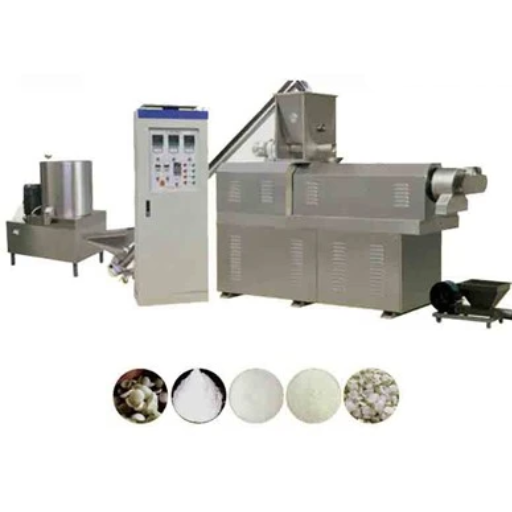
Pregelatinized starch is not a single product. It is a family of functional ingredients tailored to different industries. The sections below cover the most important pregelatinized starch applications and the grade requirements for each.
Food and Beverage
The food and beverage segment accounts for 57.1% of pregelatinized starch demand, according to market analysis by application. Uses include instant soups, sauces, gravies, puddings, bakery fillings, dairy desserts, and baby food. Loyal designs its lines as food processing machines that meet food-grade hygiene and certification standards. The key benefit is instant thickening without a separate cooking step.
Pharmaceuticals
Pharmaceuticals represent 20.2% of the market, based on the same market analysis by application. Pregelatinized starch works as a tablet binder, disintegrant, diluent, and capsule filler. It is bland, odorless, digestible, and compatible with most active pharmaceutical ingredients. For detailed excipient guidance, see pregelatinized maize starch in pharmaceuticals.
Cosmetics and Personal Care
This segment holds 10.3% of demand. Pregelatinized starch acts as a thickener, absorbent, and binder in powders, creams, and lotions.
Paper and Textile Sizing
Pregelatinized starch improves paper surface strength and printability. In textiles, it acts as a sizing agent to protect yarns during weaving.
Oil Drilling and Construction
In water-based drilling fluids, pregelatinized starch reduces fluid loss and builds a stable filter cake. In construction, it binds wall putty, mortar, and adhesives. These industrial grades prioritize cost and thermal stability over food-grade purity.
Sarah runs a pharmaceutical ingredient company in India. In 2023, her customers began asking for pregelatinized maize starch that met USP/NF standards for tablet binding. She initially tried a small extrusion line built for food use, but the product failed residue and microbial tests. After switching to a line with 304 stainless steel contact parts, enclosed conveying, and HACCP-compatible layout, she passed audits and doubled her pharma sales within 18 months. Grade-appropriate equipment is not optional for regulated markets.
Quality Control & Key Parameters
Consistent quality separates commodity starch from premium ingredients. The most important tests include:
Cold-Water Solubility and Viscosity
These measure how quickly the starch dissolves and how thick the resulting gel becomes. Target values depend on the end use.
Gelatinization Degree
Also called alpha-conversion, this indicates how completely the starch gelatinization reaction has progressed. Fully pregelatinized starch dissolves almost completely in cold water.
Water Absorption Index (WAI) and Water Solubility Index (WSI)
WAI measures how much water the starch absorbs. WSI measures how much material dissolves. Extrusion parameters strongly affect both values. Process research on starch modification shows WAI peaks around barrel temperatures of 180–200°C, while higher temperatures can increase WSI at the expense of WAI. For a deeper process background, see the NIIR guide to manufacturing of pregelatinized starch.
Moisture, Particle Size, and Color
Final moisture is usually 8–12%. Particle size is controlled by the grinder and sifter. Color should be uniform and free from burnt or dark particles.
Microbial and Safety Standards
Food-grade and pharma-grade production requires controlled environment design, regular cleaning, and microbial testing. Industrial-grade lines still need dust-explosion protection because airborne starch dust is combustible.
Investment and Scale Considerations
Choosing the right scale depends on your target market, available raw material, and capital budget. Below are realistic investment ranges for extrusion-based pregelatinized starch equipment.
| Scale | Capacity | Approximate Investment | Typical Use Case |
|---|---|---|---|
| Pilot / small | 100–200 kg/h | USD 8,000–20,000 | R&D, small food producer, market testing |
| Mid-size | 200–500 kg/h | USD 20,000–40,000 | Regional ingredient supplier, growing food company |
| Large industrial | 500–1,000+ kg/h | USD 40,000–60,000+ | Export-oriented producer, multi-product plant |
| Turnkey / wet-chemical | 1,000+ kg/h | USD 500,000+ | Large starch derivative manufacturer |
Remember that the quoted machine price is only part of the total investment. You should also budget for:
- Shipping and import duties
- Installation and commissioning
- Electrical and utility upgrades
- Raw material inventory
- Spare parts for 1–2 years of operation
- Operator training
In 2024, a construction adhesive producer in the Middle East bought a 500 kg/h extrusion line for roughly USD 35,000. After adding shipping, installation, and a small warehouse upgrade, the total project cost reached USD 52,000. The line paid back in 14 months because pregelatinized cassava starch replaced a more expensive synthetic polymer in their wall-putty formula. Matching the line to a specific cost-saving application accelerated ROI faster than chasing maximum capacity.
Common Production Issues and Troubleshooting
Even well-designed lines encounter problems. Here are the most common issues and their typical causes.
Agglomeration and Poor Dispersion
Cause: Over-gelatinization, excessive moisture, or incorrect particle size.
Fix: Reduce barrel temperature, adjust moisture, or use a finer grinder screen.
Viscosity Inconsistency
Cause: Variable raw material quality, uneven moisture, or unstable extruder temperature.
Fix: Implement incoming starch testing, tighten moisture control, and monitor barrel zones.
Off-Color or Burnt Particles
Cause: Hot spots in the extruder or dryer, or excessive residence time.
Fix: Clean barrels and dies, check temperature uniformity, and increase throughput or cooling.
Excessive Dust and Safety Hazards
Cause: Open conveying, leaks in grinding system, or missing dust collection.
Fix: Seal the line, install dust collectors, and follow NFPA or local dust-explosion standards.
Frequently Asked Questions
What is pregelatinized starch used for?
Pregelatinized starch is used as a thickener, binder, stabilizer, and disintegrant in food, pharmaceuticals, cosmetics, paper, textiles, construction, and oil drilling.
How is pregelatinized starch different from modified starch?
Pregelatinized starch is a type of physically modified starch produced by cooking and drying native starch. A broader modified starch manufacturing process also includes chemical and enzymatic treatments such as oxidation, cationization, and esterification.
What is the best production method for pregelatinized starch?
Twin-screw extrusion is the best choice for most new producers because it is continuous, flexible, and cost-effective. Drum drying suits high-viscosity flake products, while spray drying works best for premium instant powders.
How much does a pregelatinized starch production line cost?
Small extrusion lines start around USD 8,000–20,000. Mid-size lines range from USD 20,000–40,000. Large industrial lines cost USD 40,000–60,000 or more. The exact pregelatinized starch production line cost depends on capacity, automation level, materials, and customization. Turnkey wet-chemical plants can exceed USD 500,000.
What raw materials can be used?
Corn, cassava, tapioca, potato, wheat, and waxy maize starches are all suitable. Raw material choice affects viscosity, clarity, gel strength, and final cost.
Is pregelatinized starch food-grade safe?
Yes, when produced on equipment with food-grade stainless steel contact parts, proper cleaning protocols, and relevant certifications such as CE and ISO9001.
Conclusion
A well-designed pregelatinized starch production line gives manufacturers access to a growing global market for cold-water-soluble starch. Food, pharmaceutical, and industrial buyers all need reliable supply, and twin-screw extrusion has become the most practical pregelatinized starch manufacturing process at scale.
The five key points to remember are:
- Match the production method to your product, extrusion for flexibility, drum drying for high viscosity, spray drying for instant powders.
- Choose raw materials based on viscosity, clarity, and cost targets.
- Invest in quality control, WAI, WSI, viscosity, and moisture define product value.
- Plan for total project cost, not just the pregelatinized starch equipment price.
- Work with experienced pregelatinized starch manufacturers who understand your application and provide installation, training, and spare parts support.
For buyers who may expand later, starting with a versatile modified starch production line can protect future product flexibility.
If you are ready to explore a pregelatinized starch production line for your business, contact Shandong Loyal Industrial Co., Ltd. for a tailored quotation. Our team can recommend the right PGS model, process parameters, and layout for your raw material and target market.