To choose food processing equipment that delivers real value, match the machine’s capacity, automation level, and hygienic design to your specific production goals, facility constraints, and budget, then evaluate suppliers on total cost of ownership rather than sticker price alone. The wrong choice costs far more than the purchase price, it drains profits through downtime, inefficiency, and compliance failures for years.
The global food processing equipment market is projected to reach approximately $62.97 billion in 2026. That staggering number means thousands of machines, hundreds of manufacturers, and countless configurations compete for your attention. For buyers, more options do not always mean better decisions.
The proper machinery selection handles productivity improvements for all businesses. The hasty equipment selection process leads to operational difficulties which result from selecting devices that do not match needs and budget requirements. The food processing equipment buying guide provides essential information. The practical 7-factor framework will help you select food processing equipment which meets your needs and the expense calculation method will help you avoid common purchasing errors which even skilled buyers make.
The guide on food processing equipment selection will explain three main topics: how to determine proper equipment size and which seven selection criteria are most important and which decision framework helps users select their automation requirements and which total cost of ownership formula provides basic cost estimation and which supplier evaluation methods exist and which buying errors typically occur and which strategies help you protect your investment from future risks.
Key Takeaways
- Size equipment for 1.25 times your projected peak demand to avoid bottlenecks without wasting capital on underutilized capacity.
- The seven essential criteria are production capacity, hygienic design, automation level, energy efficiency, flexibility, ease of maintenance, and manufacturer support.
- Manual equipment suits output under 500 units per day; fully automatic lines become essential above 3,000 units per day.
- Real payback on automated equipment is typically 30% to 65% longer than simple labor-savings estimates once running costs are included.
- The cheapest machine often costs the most over its lifetime when you factor in energy, maintenance, spare parts, and downtime.
Start With Your Production Requirements
Before you compare a single specification sheet, get crystal clear on what you actually need. Spec-driven buying, where you chase features instead of outcomes, is the fastest route to buyer’s remorse.
Define Your Product and Output Goals
Start with the basics. What product will you process? What is your target daily or weekly output? How many SKUs will you run? Will you operate one shift or three?
When Maria opened her snack factory in Jakarta in early 2025, she estimated 200 kilograms of puff snacks per day based on her first two distributor contracts. She requested quotes for machines rated at exactly 200 kg per day. Within eight months, a third major retailer came on board, and her peak demand jumped to 340 kg per day. Her line became a bottleneck. She had to run overtime shifts and eventually upgrade to a dedicated snack food production line to handle her growing volume efficiently, doubling her capital outlay. Maria now tells every new buyer she mentors: size for where you are headed, not just where you are.
Match Capacity to Current and Future Demand
The best equipment sizing guideline requires you to plan for your highest demand which you expect to reach in the following two to three years. The buffer capacity will handle seasonal demand increases and new contract requirements and regular business growth without needing emergency system replacements.
The operation of oversized equipment creates hazards for businesses. A machine that operates at 30% of its maximum capacity produces excessive energy consumption and unbalanced equipment deterioration and requires financial resources that could support business development through marketing or hiring new staff. The equipment should be selected based on current operational needs which also provide a defined process for future system improvements.
Assess Your Facility Constraints
Measure twice, buy once. Confirm your available floor space, ceiling height, door widths for delivery, and utility capacity. Does your facility have three-phase power? Is your drainage adequate for washdown protocols? Does your HVAC system handle the heat load from cooking or drying equipment?
Explore our complete range of food processing machines to find options tailored to facilities of every size.
How to Choose Food Processing Equipment: 7 Essential Selection Criteria
Over two decades of manufacturing and exporting machinery, we have learned how to choose food processing equipment that delivers long-term value. The buyers who get the best results evaluate equipment through seven lenses. Skip any one, and you risk a costly mismatch.
1. Production Capacity and Throughput
The definition of capacity involves multiple components which create a connection between your desired output and the machine’s rated capacity and your work hours. The actual daily capacity of a 500 kg per hour machine which operates only one six-hour shift amounts to 3,000 kg instead of the theoretical 24-hour capacity.
Manufacturers should provide throughput data which corresponds to your specific product instead of using generic test materials. The actual performance of a material depends on its density and moisture content and particle size.
2. Hygienic Design and Food Safety Compliance
Hygienic design protects your brand through its ability to prevent contamination. The design of hygienic machines includes surfaces that can be easily cleaned, which lack small openings that can hide bacteria, and which use materials that will not corrode.
You should require 304 or 316 stainless steel for all food-contact surfaces. Sanitary areas should not have any aluminum or mild steel components. The design should include clean-in-place (CIP) functionality, which needs to support your cleaning schedule without causing significant operational interruptions. Food safety compliance requires mandatory adherence to all standards.
Certifications matter. The number of searches for certified hygienic design machinery showed a 142% growth during the past year because buyers became aware that compliance with regulations remained mandatory. The essential certifications which need verification include CE marking for European markets and NSF certification for North America and ISO 22000 or HACCP alignment for global food safety management.
3. Automation Level
The food industry has begun to implement automated production lines because these systems provide multiple advantages. Automation decreases labor expenses while enhancing product uniformity and enabling businesses to operate continuously throughout the day. Businesses should exercise caution because increased automation does not guarantee better results.
A startup producing 300 units per day does not need a fully automatic line. A mid-size manufacturer shipping to retail chains absolutely might. Your business needs will determine the appropriate automation level according to your production volume and labor expenses and product complexity and future growth plans. We will present a detailed explanation about this topic in the upcoming section.
4. Energy Efficiency and Operating Costs
Energy efficiency directly impacts your bottom line. Energy-efficient processing equipment minimizes power and water consumption, lowers utility bills, and positions your brand as environmentally responsible. According to Grand View Research, the automatic segment of the food processing equipment market holds the largest share and is growing fastest, driven largely by efficiency and labor reduction needs.
Ask suppliers for power consumption specifications in kilowatts per hour of operation and compare them across models. Factor utility costs into your total cost of ownership calculation.
5. Flexibility and Product Changeover
The market requirements experience changes which demand equipment to be able to handle seasonal flavors and product introductions and customer behavior changes without needing extensive system changes. The product needs to contain modular systems which permit tool replacement and fast equipment switching.
The system enables operators to perform product changes within minutes because it uses a system which does not require tools for equipment modifications. The system enables you to maintain profitability when your business needs to change direction.
6. Ease of Operation and Maintenance
Complex equipment needs costly operator training which results in increased mistakes. The system enables users to operate equipment efficiently because it has basic controls which users can easily understand. The evaluation process needs to assess maintenance requirements through realistic methods. The machine contains how many components which need replacement after specific periods. The spare parts distribution system exists within the local area or requires six weeks for overseas shipping from European locations.
James made his equipment purchase decision based on production capacity and equipment price when he upgraded his spice processing plant drying line in Nigeria. He forgot to inquire about the availability of replacement parts. The company had to wait eleven weeks for the European replacement to arrive after their main heating unit broke down four months into operation. His production equipment remained inactive. The total value of his production loss exceeded the initial expense of his production equipment. James first checks spare parts logistics now before he checks specifications.
7. Manufacturer Support and Warranty
The costs of equipment downtime amount to substantial expenses for businesses. The minimum requirement for products includes a strong warranty, but their actual worth comes from their ability to deliver prompt customer service after the purchase. The manufacturer needs to answer whether they can deliver remote diagnostic capabilities. The company needs to answer whether they provide on-site installation services and commissioning. What is the average duration for the company to respond to technical support requests?
Shandong Loyal Industrial Co., Ltd. has been helping more than 650 international clients since our establishment in 2005. Our research shows that successful buyers select manufacturers based on their support capabilities which they consider essential.
Manual vs. Semi-Automatic vs. Fully Automatic Equipment
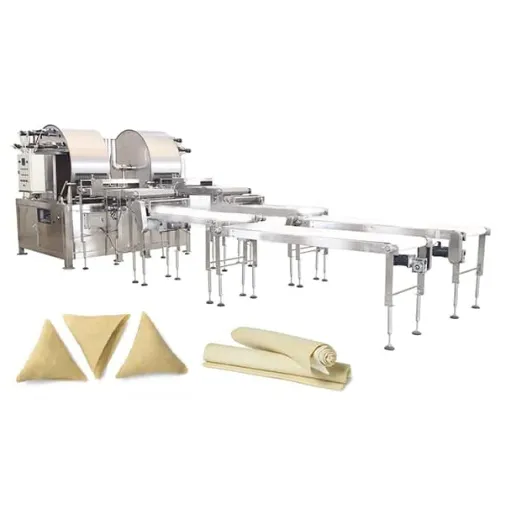
Choosing the right automation level is one of the most consequential decisions in the equipment buying process. The table below breaks down the trade-offs.
| Factor | Manual Equipment | Semi-Automatic | Fully Automatic |
|---|---|---|---|
| Initial Investment | 1,500−1,500−10,000 | 10,000−10,000−100,000 | 100,000−100,000−500,000+ |
| Daily Output Range | Under 500 units | 500 – 3,000 units | 3,000+ units |
| Labor Requirements | High | Moderate | Low |
| Training Needed | Minimal | Moderate | Significant |
| Consistency | Variable | Good | Excellent |
| Best For | Startups, low volume | Growing businesses | Large-scale, retail chains |
| Changeover Time | Fast | Moderate | Recipe-based, minutes |
Use this framework to guide your decision. If you pack fewer than 500 units per day, manual or semi-automatic equipment typically delivers the best return. For food processing machines for small businesses, semi-automatic systems often provide the ideal balance of capability and capital efficiency. Between 500 and 3,000 units, semi-automatic systems balance labor savings with manageable capital investment. Above 3,000 units per day, automatic food processing machines and fully automatic lines become essential to control labor costs and maintain the consistency that retail buyers demand.
Contact us for tailored recommendations on whether manual, semi-automatic, or fully automatic food processing machines match your production goals.
Calculate Total Cost of Ownership, Not Just Purchase Price
The sticker price on a quotation is rarely the true cost. Total cost of ownership, or TCO, includes every dollar you spend from acquisition through disposal.
The TCO Formula
A practical way to estimate TCO is:
TCO = Purchase Price + Installation + Training + (Annual Energy Cost x Years) + (Annual Maintenance x Years) + Downtime Cost + Disposal/Resale Value
Why the Cheapest Option Often Costs the Most
A machine priced 30% below competitors may use lower-grade materials, consume more energy, break down more frequently, or lack local spare parts support. Over five years, those hidden costs frequently exceed the initial savings.
Consider the payback reality. Research shows that real payback on automated equipment is typically 30% to 65% longer than simple labor-savings estimates once running costs and maintenance are factored in. Buyers who calculate only labor savings often face unpleasant surprises.
On the flip side, targeted automation can deliver exceptional returns. A 2,500commercialprocessorthatsaves2.5laborhoursperdayat2,500commercialprocessorthatsaves2.5laborhoursperdayat18 per hour yields roughly $16,425 per year in savings. That is over 600% ROI in year one.
Food processing industry ROI averages approximately 7.29%, with high performers reaching about 14.77%. Equipment selection directly determines where your operation lands on that spectrum. Request a custom TCO analysis for our industrial food processing equipment to see projected costs for your specific setup.
How to Evaluate and Compare Equipment Suppliers
Selecting the right machine is only half the battle. The supplier you choose, and their supplier after-sales support, determines whether that machine delivers value or becomes a liability.
Request Product Demonstrations
Never buy based on a brochure alone. Request a demonstration using your actual product or a close equivalent. Watch for throughput consistency, ease of operation, and cleaning access. If an overseas visit is impractical, ask for a live video demonstration with your specific material.
Verify Certifications and Documentation
Demand copies of relevant certifications before placing an order. CE marking, NSF registration, ISO 22000 compliance, and material mill certificates for stainless steel components should all be available. If a supplier hesitates to provide documentation, that is a red flag.
Check References and Case Studies
Speak with two or three existing customers who operate similar equipment in comparable conditions. Ask about reliability, support responsiveness, and whether the machine performs as quoted.
Understand Lead Times and Logistics
Manufacturing lead times for custom food processing equipment often range from six to sixteen weeks. Add shipping, customs clearance, and installation scheduling. Plan your procurement timeline so equipment arrives before you need it, not after production demand has already outpaced capacity.
Read our guide on how to choose the right food machinery manufacturer for a deeper dive into supplier evaluation.
Food Processing Equipment Checklist: 7 Common Mistakes to Avoid
Even experienced buyers make costly errors. Here are the seven mistakes we see most often, and how to avoid them.
Undersizing or oversizing capacity. Buyers who size for average demand create bottlenecks during peak seasons. Buyers who size for fantasy demand waste capital. Use the 1.25x peak demand rule.
Buying on price alone. The lowest quotation rarely delivers the lowest TCO. Evaluate energy, maintenance, spare parts, and downtime before you sign.
Ignoring utility and infrastructure requirements. Three-phase power, drainage, compressed air, and ventilation upgrades can add thousands to your project. Verify these costs before you commit.
Skipping the staff training budget. A sophisticated machine operated by untrained staff produces inconsistent output and breaks down faster. Budget for hands-on training and written standard operating procedures.
Overlooking spare parts and after-sales support. A machine is only as good as the support behind it. Confirm local technician availability and spare parts inventory before you buy.
Choosing non-food-grade materials to save money. Mild steel or improper alloys corrode, harbor bacteria, and violate food safety regulations. Choosing food-grade materials is essential for every contact surface. The cost of a recall or shutdown dwarfs any material savings.
Failing to plan for growth. Equipment should serve your needs for three to five years. If your business plan includes new products or expanded distribution, choose machines that scale with you. Browse our full catalog of food processing machines to compare capacities and find your fit.
Future-Proof Your Investment
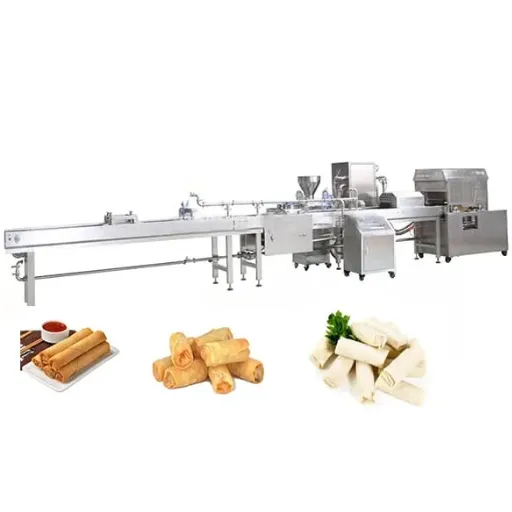
The food processing landscape evolves rapidly. Smart buyers choose equipment that stays relevant as technology and regulations advance.
Modular and Scalable Designs
Modular systems let you add capacity or capabilities without replacing entire lines. Scalability should be a core selection criterion for any growing operation. A modular extruder can start with one die configuration and expand to multiple product shapes. A scalable drying line can increase throughput with additional modules rather than a full replacement. See our food production line equipment solutions designed for scalable, high-volume operations.
IoT Connectivity and Data Analytics
Modern equipment with built-in sensors and connectivity provides real-time data on temperature, throughput, energy use, and wear. This visibility enables predictive maintenance, reduces unplanned downtime, and supports continuous improvement.
Energy Efficiency and Sustainability
Regulations tighten every year. Equipment that already meets high energy efficiency standards avoids future retrofit costs and appeals to sustainability-focused customers and retailers.
Explore energy-efficient microwave drying solutions that reduce power consumption while maintaining product quality.
Frequently Asked Questions
How much does food processing equipment cost?
Entry-level manual equipment ranges from 1,500to1,500to10,000. Mid-range semi-automatic systems typically cost 10,000to10,000to100,000. Premium fully automatic production lines start around 100,000andcanexceed100,000andcanexceed500,000 for complex integrated systems. Total cost of ownership, including installation, training, energy, and maintenance, often exceeds the purchase price by 50% to 150% over the equipment’s lifetime.
What certifications should food processing equipment have?
Essential certifications vary by market. CE marking indicates compliance with European health and safety standards. NSF certification validates suitability for food contact in North America. ISO 22000 and HACCP demonstrate food safety management system alignment. For materials, verify that stainless steel components carry mill certificates confirming AISI 304 or 316 grade.
Can food processing machines be customized for my product?
Yes, most reputable manufacturers offer equipment customization. Adjustments may include die shapes for extruded products, temperature profiles for drying applications, conveyor lengths for facility layouts, and control system integrations. Customization ensures the equipment matches your product characteristics rather than forcing your product to fit a generic machine. View customizable food production line equipment tailored to your product specifications.
How long does food processing equipment last?
Well-maintained industrial food processing equipment typically lasts 10 to 20 years. Lifespan depends on build quality, operating environment, maintenance discipline, and usage intensity. Machines with fewer wear parts, robust stainless steel construction, and accessible service points tend to achieve the upper end of that range.
Is it better to buy new or used food processing equipment?
New equipment offers full warranty coverage, modern efficiency standards, and manufacturer support. Used equipment can reduce initial investment by 20% to 50%, but carries risks around remaining lifespan, hidden wear, obsolete controls, and limited support. For first-time buyers and growing operations, new equipment usually delivers better long-term value and fewer surprises.
Conclusion
Food manufacturers face their most critical decision when they select food processing equipment. The appropriate equipment enables better operational performance while maintaining product standards and providing long-term business expansion support. The selection of an inappropriate machine results in budgetary waste and operational delays while generating difficulties with regulatory compliance issues.
The process of selecting food processing equipment requires you to begin with your production needs and then use seven required evaluation standards to determine optimal automation for your production capacity and proceed to assess total cost of ownership while conducting thorough evaluation of suppliers and inspecting common errors that people make when they need to buy products quickly. You should choose your investment because modularity and connectivity and energy efficiency will protect its value in the future.
Shandong Loyal Industrial Co Ltd has been manufacturing and exporting food processing equipment since 2005 to customers in 80 countries and more than 650 clients. We believe that every operation needs specialized equipment which will achieve their particular business objectives.
Ready to find the right food processing equipment for your operation? Contact our team today for tailored recommendations, product demonstrations, and expert guidance that helps you make a confident, informed investment.