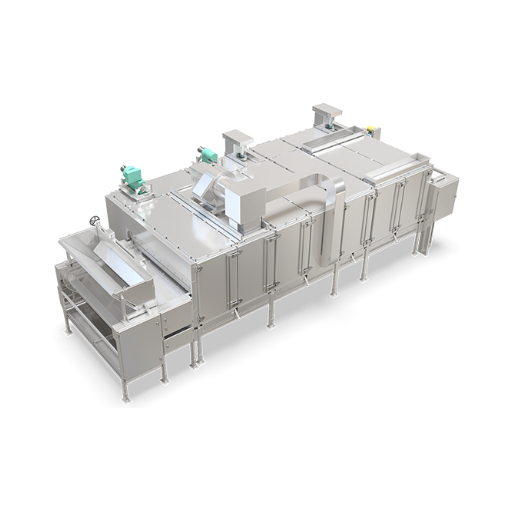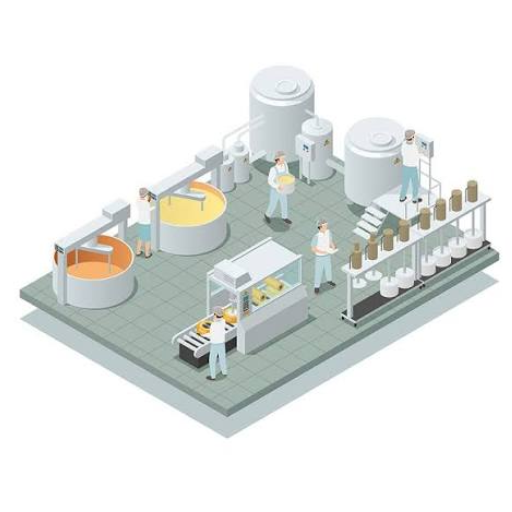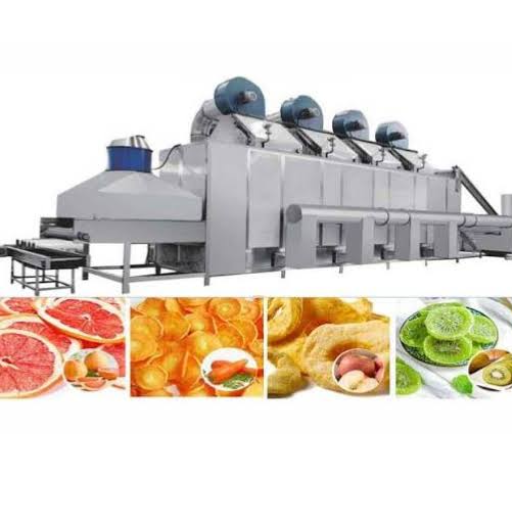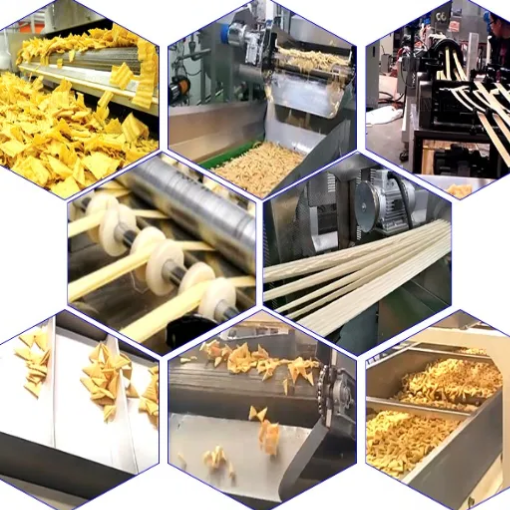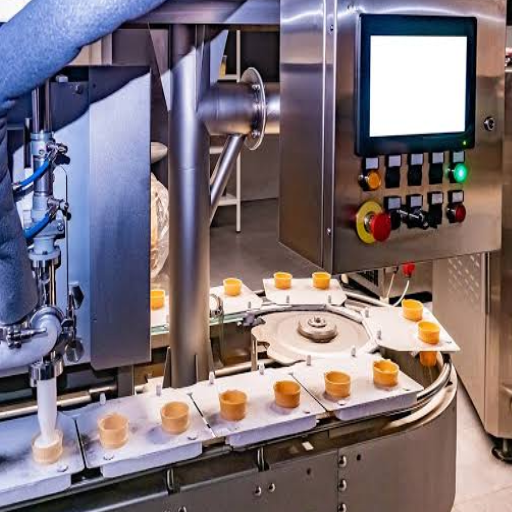
The food processing machines operate as automated systems which use motors and PLC technology to perform complete food production processes from mixing through extrusion to drying and packaging with little need for human work. The system increases production capacity by more than 22 percent while decreasing labor expenses by 16 percent and providing the necessary consistency for contemporary food production processes.
Manufacturers encounter their primary obstacle through this challenge. The automatic food processing equipment market generated 29billionin2025alone. Withthousandsofmachinetypes,pricepointsrangingfrom29billionin2025alone. Withthousandsofmachinetypes,pricepointsrangingfrom500 to $200,000+, and suppliers on every continent, finding the right equipment feels overwhelming.
You know automation is the future. The only requirement for you involves establishing an effective route which enables you to reach your destination point without exceeding your financial limits.
The guide delivers exactly what you need. The guide provides complete details about automatic food processing machines including their operational processes and their market prices and equipment selection methods for specific business needs. The presentation demonstrates actual business cases which show how companies similar to yours use automated systems to achieve business expansion.
Key Takeaways
- Automatic food processing machines are PLC-controlled systems that reduce labor costs by 16% and boost throughput by 22% on average.
- Entry-level machines start at 500,whilefullyautomaticintegratedlinesrangefrom500,whilefullyautomaticintegratedlinesrangefrom50,000 to $200,000+.
- Most mid-scale operations achieve ROI within 6 to 24 months through labor savings, waste reduction, and increased output.
- The 7-step selection framework matches your product type, capacity, automation level, and budget to the right equipment.
- Asia-Pacific leads global demand with 30-35% market share, driven by rapid industrialization in China and India.
What Are Automatic Food Processing Machines?
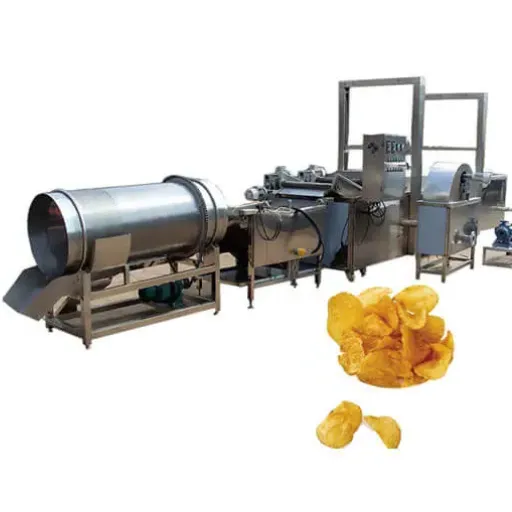
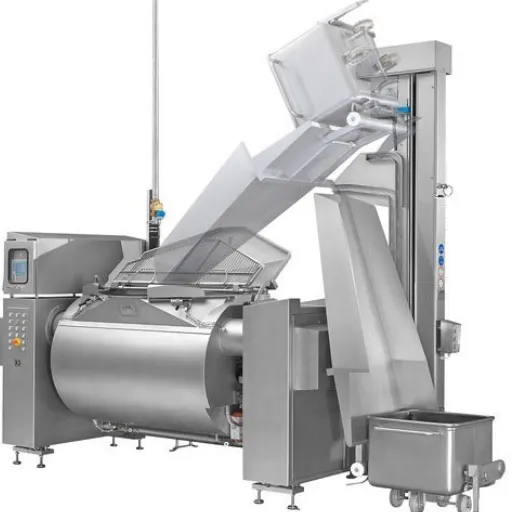
Automatic food processing machines operate as complete systems which need little human control for their food production function. The machines operate without needing human monitoring because they use programmable logic controllers together with sensors and human-machine interfaces to run recipes and check product quality and change system settings.
The process of cutting potatoes by hand requires more training than using an automated slicer which includes thickness sensors speed controls and self-diagnostic alerts. The first depends on operator skill and stamina. The second produces identical slices at 1,200 units per hour while flagging blade wear before it affects quality.
The machines operate in three different ways. The standalone units perform their operations using only one function, which includes either mixing or grinding or filling. The semi-automatic systems operate with multiple machines, which require operators to move products between different work areas. The fully automatic integrated lines connect every stage, from raw material intake through processing, packaging, and palletizing, into one continuous workflow controlled from a central dashboard.
The core components that make this possible include stainless steel frames and food-contact surfaces, electric or servo motors, conveyor systems, temperature and pressure sensors, weighing and portioning devices, and software that stores recipes and production data. The production environment achieves stable output through the coordinated operation of these components.
Want to see how specific machines fit into a complete production workflow? Explore our integrated food production line solutions to see how individual units connect into seamless automated systems.
8 Key Benefits of Automatic Food Processing Machines
Manufacturers don’t invest in automation because it’s trendy. They invest because the numbers work. Here are the eight benefits that drive purchasing decisions in 2026.
Enhanced Efficiency and Throughput
Automatic machines operate continuously. They don’t take breaks, call in sick, or slow down at the end of a shift. According to industry data from 2024, automation systems increased throughput by over 22% compared to semi-automatic or manual lines.
Large-scale U.S. meat processors using robotic sorting now achieve rates of up to 1,200 units per hour.
Superior Consistency and Quality Control
Every batch meets the same specifications when machines control the process. Automated systems precisely measure, dispense, mix, and portion ingredients. This repeatability guarantees uniform taste, texture, weight, and appearance across thousands of units. Defect reduction via automated quality control reaches up to 90% in facilities using AI-powered vision systems.
Improved Food Safety and Hygiene
Automation eliminates the need for people to handle food products. The process itself already eliminates two different types of contamination risks. Most automatic food processing machines operate with food-safe stainless steel materials that have polished surfaces which prevent corrosion. The built-in Clean-in-Place (CIP) systems enable equipment to achieve internal sanitation without requiring disassembly.
Significant Labor Cost Reduction
Dangerous work areas become safe because automation technology takes control of them. Machines now take responsibility for handling hot oil, boiling water, sharp blades, cryogenic freezing, and heavy lifting. This approach decreases workplace accidents and workers’ compensation claims and operational liabilities while your team can concentrate on their duties of monitoring and quality assurance.
Workplace Safety Improvements
Manufacturers can decrease product waste through their ability to manage ingredient quantities and equipment operation specifications. When companies produce less waste they save money on raw materials while increasing their profits from each production batch. Modern forming and depositing machines achieve weight deviations of less than 1%.
Waste Reduction and Better Yield
Precise control over ingredients and processing parameters means less over-portioning, fewer irregular pieces, and reduced product spoilage. Less waste directly translates to lower raw material costs and higher profitability per batch. Modern forming and depositing machines achieve weight deviations of less than 1%.
End-to-End Traceability and Compliance
Modern automated systems integrate tracking, labeling, and data collection from raw material intake through final packaging. This ensures regulatory compliance with standards like HACCP and FSMA 204. It also simplifies recalls if necessary and provides valuable production data for optimizing profitability.
Flexibility and Scalability
Advanced systems can be reprogrammed to handle different recipes, portion sizes, and packaging formats. Operators can switch between validated products with recipe management software by using a single button. The system allows production capacity increases and seasonal demand changes to occur without requiring companies to purchase brand new machinery.
Maria Chen operates a snack production facility in Malaysia. She managed three semi-automatic extruders together with twelve operators about two years ago. The production output changed according to the different work shifts. The product rejection rate stayed around 8 percent.
She reduced her team size to six operators who now monitor the process after upgrading to a fully automatic puff snack processing line which includes integrated cutting and seasoning. The output increased by 35 percent. The rejection rates decreased to 2 percent. Her payback period? Fourteen months.
Manual vs. Automatic Food Processing: A Detailed Comparison
Not every operation needs full automation. The right choice depends on your volume, budget, product complexity, and growth plans. This side-by-side comparison shows where each approach wins.
| Factor | Manual / Semi-Automatic | Fully Automatic |
|---|---|---|
| Initial Investment | 500–500–5,000 | 50,000–50,000–200,000+ |
| Labor Cost | Higher ongoing expense | Reduced by 16-80% |
| Output Speed | Limited by human pace | Continuous, high-speed |
| Consistency | Variable, operator-dependent | Highly uniform |
| Food Safety Risk | Higher contamination risk | Controlled, traceable |
| Scalability | Linear (add more workers) | Exponential (add modules) |
| Flexibility | Easy to switch small tasks | Reprogrammable for new recipes |
| Best For | Startups, artisan, low volume | High-volume, mass production |
Certain situations still need equipment that operates either through manual control or semi-automatic functions. Small-scale artisan producers require human expertise because their products contain special texture elements. Hand-operated machines serve rapid prototyping labs as they test new recipes through their flexible operational capabilities. Facilities producing under 500 kg per day may not generate enough volume to justify the capital expenditure of full automation.
The gap between the two sides begins to decrease. Entry-level automatic machines now start at prices comparable to high-end manual equipment. The actual decision-making process requires evaluation of automation implementation as an eventuality. The current decision requires assessment of automation implementation for either immediate execution or future execution.
Most experts recommend a phased approach unless you’re building a completely new facility. The first step via automation enables your organization to solve existing operational problems. The method enables you to control financial expenditures while assessing return on investment through gradual progress.
Start with the process that consumes the most labor or generates the most waste. Prove the return. Then expand.
Curious about how semi-automatic and fully automatic snack lines compare in practice? View our snack food production line options to see configurations for every automation level.
Investment and ROI: What Automatic Food Processing Machines Really Cost
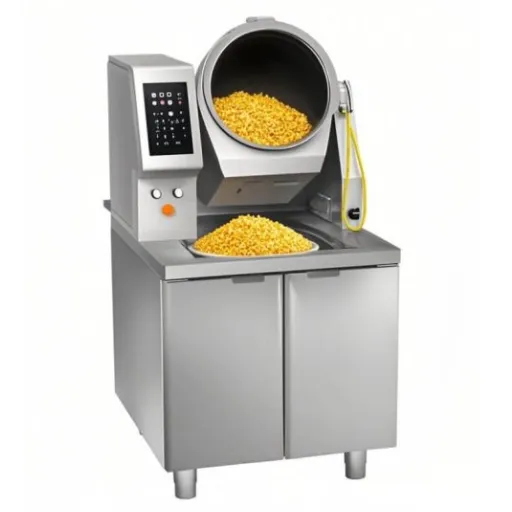
Price transparency is rare in this industry. Most suppliers hide behind “contact us for a quote” buttons. Here’s what automatic food processing machines actually cost in 2026, broken down by tier and application.
Price Ranges by Equipment Tier
Entry-level standalone machines (500–500–5,000) include small mixers, tabletop fillers, and compact cutters. These suit startups, test kitchens, and businesses producing under 500 kg daily. They’re often semi-automatic rather than fully automatic, but they introduce consistency that manual methods cannot match.
Mid-range systems (5,000–5,000–50,000) include semi-automatic production lines, industrial mixers, continuous fryers, and automated packaging units. This tier serves growing manufacturers ready to reduce labor dependence without committing to a fully integrated line. Many businesses at this level achieve ROI within 12 to 18 months.
Fully automatic integrated lines (50,000–50,000–200,000+) connect every production stage into one continuous workflow. These systems include PLCs, HMIs, conveyor networks, quality control stations, and automated packaging. They serve established manufacturers producing multiple tons daily and typically deliver ROI within 6 to 24 months.
Total Cost of Ownership Framework
The acquisition cost starts the total expense. Buyers who want to make informed decisions should assess their complete expenses which extend through a ten-year duration. The expense for maintenance work typically constitutes 20 to 30 percent of the complete equipment value. The energy consumption of equipment shows high variability while Variable Frequency Drive systems can decrease energy usage by up to 25 percent through their implementation.
The availability of spare parts and the expenses for shipping create greater significance for buyers than they realize especially concerning equipment that needs to be imported.
The greatest financial benefit results from saving on labor costs. The automation process will reduce employment needs by three operators who receive an annual salary of 35000 which creates total savings of 105000 per year. The $150000 production line generates enough financial savings through labor costs over five years to cover its investment before any savings from waste control and production improvements.
ROI Timeline and Calculation
Most mid-scale operations achieve ROI within 6 to 24 months. The specific period for completion depends on three factors which include existing labor expenses in your area and current waste and rejection ratios and total production output. The markets of North America and Western Europe experience shorter payback periods because they have elevated labor expenses. The fixed expenses of high-volume businesses decrease because they produce larger quantities.
James Okafor operates a plantain chip manufacturing facility in Nigeria. He lost 12% of his total product because his slicing process produced inconsistent results which led to overcooking. The costs for manual work increased at an annual rate of 8%.
He spent $28000 in 2024 to build an automatic slicing and frying production system. His waste production decreased to 3% after he operated the system for ten months. He assigned four workers to manage quality control and handle packaging tasks. The energy expenses for his facility decreased by 18% because he implemented accurate temperature management systems. The production line achieved its financial return within eleven months.
Financing and Leasing Options
Equipment-as-a-Service (EaaS) models are gaining traction in 2026. These arrangements let manufacturers lease automation equipment with maintenance included, converting large capital expenditures into predictable monthly operating costs. For SMEs with tight cash flow, this removes the biggest barrier to automation adoption.
Ready to calculate ROI for your specific operation? Contact our team for a tailored equipment assessment and transparent pricing based on your production goals.
How to Choose the Right Automatic Food Processing Machine
Selecting equipment without a framework leads to expensive mistakes. Either you buy too little and outgrow it in six months, or you buy too much and strain your cash flow. Follow this seven-step process to match the machine to your actual needs.
Step 1, Assess Your Production Scale and Growth Plans
Buy for where you’ll be in two years, not where you are today. A machine that perfectly matches current output becomes a bottleneck the moment you land a new contract. At the same time, don’t overestimate growth. A rule of thumb: size your equipment for 1.5x your current peak daily output.
Step 2, Define Your Automation Level
Standalone units work best when you need to automate one bottleneck, like mixing or filling. Semi-automatic systems suit manufacturers transitioning from manual to automated workflows. Fully integrated lines make sense for new facilities or complete overhauls where single-vendor accountability reduces integration risk.
Step 3, Match Equipment to Your Product Type
Different products demand different technologies. Extrusion dominates puff snacks and cereals. Thermal processing (drying, baking, frying) handles chips, biscuits, and ready-to-eat meals. Mixing and blending serves sauces, batters, and marinated products.
Forming and portioning manages meatballs, patties, and shaped snacks. Packaging lines seal, label, and prepare products for distribution. Each category has specialized machines with unique parameters.
Step 4, Evaluate Total Cost of Ownership
Look beyond the purchase price. Factor in installation, training, spare parts inventory, energy consumption, maintenance contracts, and potential downtime costs. A machine that’s 20% cheaper upfront but requires proprietary parts with eight-week shipping delays will cost more over its lifespan.
Step 5, Verify Factory Space and Utility Requirements
Share accurate facility information with suppliers before purchasing. Critical details include workshop dimensions, door widths, ceiling height, floor load limits, power supply (voltage, frequency, phase), water and drainage availability, and ventilation capacity. Nothing delays a project like discovering your new line won’t fit through the loading dock door.
Step 6, Prioritize Hygiene and Material Quality
Ensure all food-contact surfaces use food-grade stainless steel, typically SS304 or SS316. Look for smooth welds, minimal crevices, and designs that are easy to disassemble and clean. Machines with IP69K ratings withstand high-pressure wash-down, essential for meat, dairy, and ready-to-eat production.
Step 7, Select a Reliable Supplier with Global Support
Partner with a manufacturer that offers proven industry expertise, strong after-sales support, accessible spare parts, and operator training. For international buyers, verify that the supplier has experience with export documentation, shipping logistics, and overseas installation. A machine is only as good as the support behind it.
Need help matching equipment to your product? Browse our complete range of food processing machines to find systems designed for your specific application.
Types of Automatic Food Processing Machines Explained
Understanding equipment categories helps you identify exactly what your production line needs. Here’s how the major machine types function and where they fit.
Extruders and Forming Machines
Extruders use high pressure and heat to shape raw materials into specific forms. They’re essential for puff snacks, breakfast cereals, textured vegetable protein, and pet food. Twin-screw extruders offer precise control over temperature, moisture, and shear, enabling complex recipes with consistent expansion and texture. Forming machines shape dough or meat into uniform patties, balls, or filled products.
Drying and Thermal Processing Equipment
Drying removes moisture to extend shelf life and create crispy textures. Microwave drying machines use electromagnetic energy to heat water molecules directly, reducing drying time by 50-75% compared to conventional hot-air dryers while preserving color and nutrients. Ovens, fryers, pasteurizers, and sterilizers handle cooking and pathogen elimination. Our energy-efficient microwave drying technology serves manufacturers who need rapid, uniform drying with lower energy consumption.
Mixing and Blending Systems
Consistent mixing is critical for batters, sauces, seasonings, and doughs. Continuous mixers feed ingredients at controlled rates for nonstop production. Batch mixers with inverter motors handle sensitive products like coleslaw and sandwich fillings without damage. Planetary mixers serve bakery and confectionery applications requiring precise aeration.
Cutting, Slicing, and Size Reduction
Automated slicers, dicers, and grinders achieve precision that manual methods cannot match. Ultrasonic blades cut delicate products like cakes and cheeses without deformation. High-speed rotary slicers handle potatoes, plantains, and vegetables for chip production. Bowl cutters and emulsifiers create fine-textured sausages and pâtés.
Filling and Packaging Lines
Automatic fillers measure and deposit precise quantities into containers, pouches, or trays. Multi-head weighers achieve accuracy within 1-2 grams at speeds exceeding 100 weighments per minute. Form-fill-seal machines create bags from roll stock, fill them, and seal them in one continuous operation. Labeling and coding systems ensure regulatory compliance and traceability.
Sorting and Inspection Systems
AI-powered vision systems detect defects, foreign objects, and color variations at conveyor speeds. Metal detectors and X-ray inspection systems catch contaminants that human inspectors miss. Automatic weight checkers reject underfilled or overfilled packages before they reach retail shelves.
Maintenance and Longevity: Keeping Your Equipment Running
The best automatic food processing machines last 15 to 20 years with proper care. Neglect cuts that lifespan in half. A structured maintenance program prevents the downtime that erodes your ROI.
Daily Maintenance
Operators should clean all food-contact surfaces, check conveyor belt tension, inspect seals and gaskets for wear, verify temperature and pressure readings against setpoints, and lubricate moving parts per manufacturer specifications. These tasks take 15 to 30 minutes and catch most problems before they escalate.
Weekly Maintenance
Weekly tasks include deep cleaning of hard-to-reach areas, inspection of electrical connections and sensors, checking pneumatic and hydraulic systems for leaks, and reviewing production data logs for unusual patterns. Many modern machines flag maintenance needs automatically through their HMI interfaces.
Monthly and Quarterly Maintenance
Monthly maintenance covers drive belt replacement schedules, bearing inspections, and calibration of weighing and measuring devices. Quarterly tasks include motor testing, PLC software updates, and comprehensive safety system checks. Keep a spare parts inventory of items that wear predictably: belts, seals, blades, and bearings.
Common Issues and Troubleshooting
Inconsistent product weight usually indicates worn depositing nozzles or calibration drift. Unusual vibration often signals bearing wear or misaligned drives. Temperature fluctuations may mean failed heating elements or sensor issues. Most problems announce themselves through early warning signs that attentive operators catch during routine checks.
Energy Efficiency and Sustainability in Automated Food Processing
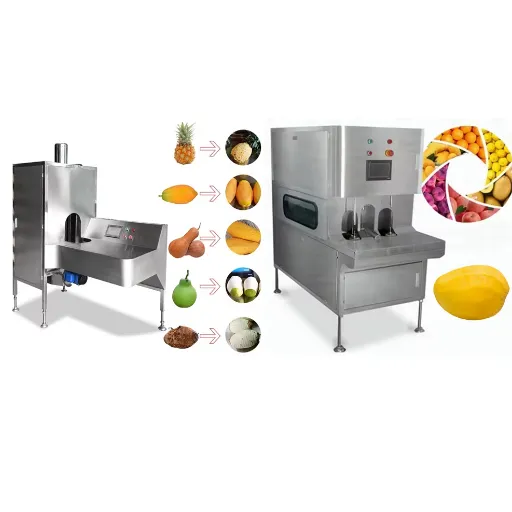
Food manufacturing operations incur energy expenses which account for 15-30 percent of their total operating expenses. The operational performance of automatic food processing machines depends on their design which determines whether they will increase or decrease production costs.
Variable Frequency Drives (VFDs) function as contemporary energy-efficient technologies that control motor speed according to current load requirements instead of operating at maximum capacity throughout the day. Systems for heat recovery extract thermal energy lost during frying and baking processes to utilize it for heating up incoming materials. Smart scheduling algorithms operate high-power equipment during times when electricity rates are lower than normal.
The financial impact shows measurable results. VFD retrofits on conveyor systems decrease energy consumption by up to 25%. Microwave drying requires 40-60% less energy than traditional hot-air drying methods to achieve the same level of moisture removal. Equipment owners can expect to attain savings that exceed their initial investment costs throughout the ten-year period of equipment operation.
Sustainability requirements create buyer behavior changes which influence purchasing decisions. European manufacturers increasingly select equipment based on CO2 reduction potential. Buhler Group estimates that 11 of 15 food value chains can achieve 50% CO2 emissions reductions through processing technology improvements. Buyers who export to EU markets should confirm that their equipment complies with upcoming sustainability reporting standards.
Food Safety, Hygiene, and Compliance Standards
Automation doesn’t eliminate food safety responsibilities. It changes them. Instead of managing direct human contact, you manage machine design, cleaning protocols, and data traceability.
Key Certifications to Verify
CE marking serves as proof that products meet European health and safety and environmental protection requirements. FDA registration applies to equipment used in food production throughout the United States. HACCP compliance requires the design to accommodate hazard analysis and critical control points. ISO 22000 and FSSC 22000 certify that the manufacturer’s quality management system meets international food safety standards. UL or ETL listings verify that electrical systems in North American locations meet safety requirements.
Sanitary Design Principles
Food-grade stainless steel (SS304 or SS316) resists corrosion and bacterial attachment. Smooth welds, rounded corners, and minimal crevices prevent debris accumulation. Easy disassembly without specialized tools enables thorough cleaning. Self-draining designs prevent standing water where bacteria multiply.
CIP and SIP Systems
Clean-in-Place (CIP) systems circulate cleaning and sanitizing solutions through internal piping and components without disassembly. Sterilize-in-Place (SIP) extends this concept with steam or hot water for pathogen elimination. These systems are essential for dairy, beverage, and ready-to-eat production where contamination risks are highest.
FSMA 204 and Traceability
The FDA’s Food Safety Modernization Act Section 204, effective January 2026, requires enhanced traceability for high-risk foods. Automatic food processing machines with integrated data logging simplify compliance by recording lot numbers, processing parameters, and timestamps at every production stage.
Scaling from Small Business to Enterprise
Organizations of all sizes can use automation technology. Small and mid-sized facilities achieve their quickest financial returns because they spend more on labor than their total operating costs.
Startups can purchase entry-level equipment through automatic mixers which require minimal space and provide tabletop fillers and small extruders that cost less than $5,000. The machines enable organizations to maintain standard operations with minimal financial requirements. Most machines which startups need will pay back their costs within 6 to 12 months.
Your business requires a modular equipment system which can expand according to your operational needs. A small extruder can connect to a larger dryer later. A standalone filler can integrate into a full packaging line as volume increases. This modular approach protects your initial investment while providing a clear upgrade path.
Your organization needs to follow this realistic path for growth. Stage one (5K–5K–25K) automates your biggest bottleneck with a standalone or semi-automatic machine. Stage two (25K–25K–75K) connects multiple processes into a semi-integrated line. The third stage (75K–75K–200K+) implements complete automation through centralized control and quality assessment systems.
Chen Wei established his business with a $3,800 automatic encrusting machine at a 500-square-meter facility in Qingdao. His filled snack business grew from 200 kg daily to 2,000 kg daily in three years. The organization grew through three stages of expansion which added three machines starting with a mixer and then entering the continuous fryer stage until they reached the automatic packaging line stage.
He had built a complete system with an $85,000 value by 2025. His monthly labor cost per kilogram of output dropped 62%. Chen achieved success by purchasing only the required automation equipment which matched his operational production needs.
The Future of Food Processing Automation
The next decade of food manufacturing belongs to intelligent systems that don’t just execute commands but optimize themselves.
AI-Driven Quality Control
AI-powered vision systems for food inspection surged 25% in 2026. These systems learn to recognize acceptable products and reject defects with greater accuracy than human inspectors. They improve over time as they process more data, meaning your quality control gets better the longer you run.
Collaborative Robots (Cobots)
Cobots designed to work safely alongside humans now represent approximately 11% of the food robotics market. Unlike traditional industrial robots confined to cages, cobots handle delicate sorting, packing, and palletizing tasks in mid-scale facilities where full robotics automation was previously uneconomical.
Digital Twins and IoT
Digital twins create virtual replicas of physical production lines. Manufacturers test recipe changes, schedule maintenance, and train operators in simulation before touching real equipment. IoT sensors enable predictive maintenance that boosts equipment uptime by up to 12%.
Sustainability-Focused Design
Energy-efficient motors, water-recycling systems, and biodegradable lubricants are becoming standard rather than optional. Manufacturers who adopt these technologies early gain advantages in markets where sustainability certifications influence buyer decisions.
Stay ahead of automation trends with equipment built for the future. Explore our industrial food processing equipment designed for scalability and smart manufacturing integration.
Frequently Asked Questions
What are automatic food processing machines?
Automatic food processing machines are motorized, sensor-equipped systems that perform food production tasks, such as mixing, extruding, drying, cutting, and packaging, with minimal human intervention. They use programmable controllers to execute recipes, monitor quality, and adjust operating parameters automatically.
How much do automatic food processing machines cost?
Entry-level standalone machines cost 500to500to5,000. Mid-range semi-automatic systems range from 5,000to5,000to50,000. Fully automatic integrated production lines start at 50,000andcanexceed50,000andcanexceed200,000 depending on capacity, complexity, and customization.
What are the main benefits of automatic food processing machines?
The primary benefits include increased throughput (22%+ gains), reduced labor costs (16% average savings), improved product consistency, enhanced food safety through reduced human contact, waste reduction, end-to-end traceability, and the flexibility to scale production without replacing equipment.
Can automatic food processing machines be customized?
Yes. Leading manufacturers offer customization for capacity, product dimensions, ingredient compatibility, automation level, and integration with existing lines. Custom solutions are particularly common for specialty products, unique package formats, and specific hygiene requirements.
How long does it take to achieve ROI on food processing automation?
Most mid-scale operations achieve ROI within 6 to 24 months. The timeline depends on labor costs in your region, current waste rates, production volume, and energy savings. High-labor-cost markets and high-volume operations typically see faster payback.
What certifications should automatic food processing equipment have?
Essential certifications include CE marking for European markets, FDA registration for U.S. production, HACCP compliance for hazard management, ISO 22000 or FSSC 22000 for quality management, and UL/ETL listings for electrical safety in North America.
Should I automate my entire production line at once or step-by-step?
Most experts recommend a phased approach unless you’re building a new facility. Step-by-step automation lets you address the biggest bottlenecks first, spread capital investment over time, and measure ROI incrementally before expanding to additional processes.
Conclusion
Automatic food processing machines have moved from competitive advantage to operational necessity. With automatic equipment now generating over half of all food machinery revenue and growing faster than the overall market, manufacturers who delay automation risk being outproduced and outsold by competitors who act.
Equipment selection requires correct timing to achieve optimal results. Start with a clear assessment of your current bottlenecks. You must determine total cost of ownership which includes all expenses beyond the initial purchase price. You should establish an investment size that allows your business to grow without putting your budget at risk of excessive spending.
Companies should select suppliers who recognize that equipment functions as only the initial step in their operations. The success of your automation project depends on your access to support services, replacement components, and specialized knowledge.
Our company Shandong Loyal Industrial Co., Ltd. has been producing and exporting food processing machinery since 2005. Our automated production systems operate in more than 80 countries to serve more than 650 clients who range from small baking businesses to international snack food companies. Our company provides more than just machine sales because we create customized solutions that develop together with your enterprise.
Ready to transform your food production with automatic processing machines? Contact our team today for a tailored consultation, transparent pricing, and equipment recommendations matched to your production goals.