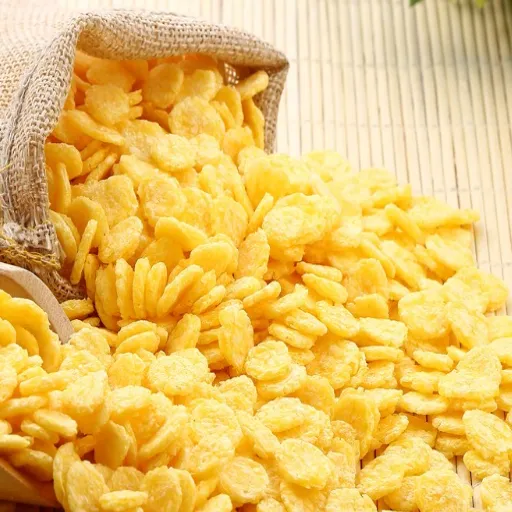
How corn flakes are made: whole corn kernels or corn flour are cleaned, cooked or extruded, pressed into thin flakes, toasted until golden and crisp, then cooled and sealed in moisture-proof packaging. Modern factories run this sequence continuously so that a single production line can turn raw corn into thousands of kilograms of cereal every hour.
That simple flake in your breakfast bowl hides a surprisingly precise journey. The corn must be cooked to exactly the right texture. The rollers must press each flake to a uniform thickness. The toaster must hit the perfect temperature to create crunch without burning.
One wrong setting, and you’ll get soggy, broken, or off-color cereal.
In this guide, you’ll learn exactly how corn flakes are made from raw ingredient to finished package. You’ll discover what goes into them, why toasting matters so much, and how factories scale the process to feed millions of breakfast bowls every day.
Key Takeaways
- Corn flakes start as whole corn or corn flour, then move through cleaning, cooking or extrusion, flaking, toasting, cooling, and packaging.
- There are two main production methods: the traditional cook-and-flake process and the faster modern extrusion process.
- Toasting at 200°C to 320°C creates the golden color, toasted flavor, and crispy texture that define corn flakes.
- Final moisture must drop to about 2–3% so the cereal stays crisp and shelf-stable.
- Industrial corn flakes production lines scale this process from 100 kg/h for small plants to 1,000 kg/h or more for large factories.
How Are Corn Flakes Made?
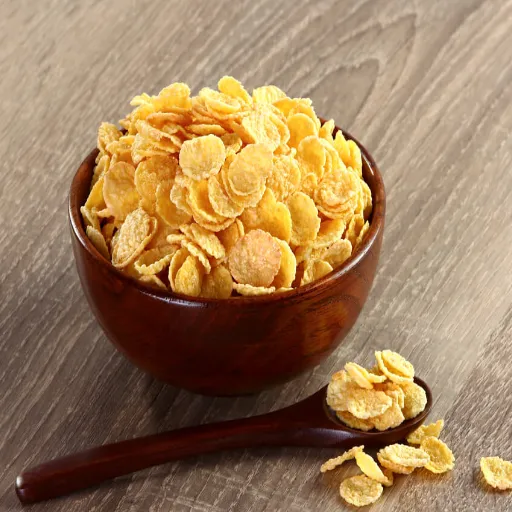
The corn flakes manufacturing process follows a clear sequence. Whether a factory uses the traditional method or modern extrusion, the goal is the same: turn corn into a thin, dry, crispy flake that stays crunchy in milk.
Here is the standard factory flow:
- Cleaning and selecting the corn to remove dust, stones, and damaged kernels.
- Conditioning or mixing the corn with water and additives.
- Cooking or extruding the corn until the starch gelatinizes.
- Cooling and tempering the cooked corn so moisture spreads evenly.
- Flaking the corn between large steel rollers.
- Toasting or baking the flakes to develop color and crunch.
- Coating, flavoring, or fortifying the flakes if needed.
- Cooling and packaging the finished cereal.
Each step depends on precise moisture and temperature control. Factories monitor these values continuously because small changes affect the final texture, taste, and shelf life. Understanding the full breakfast cereal production process helps manufacturers maintain consistency at every stage.
What Are Corn Flakes Made Of?
The ingredient list for plain corn flakes is short. The magic comes from how those ingredients are processed. Knowing how corn flakes are made starts with understanding what goes into them.
Main Ingredients
- Corn: Usually yellow maize, supplied as whole kernels, grits, or corn flour depending on the process.
- Sugar: Adds a touch of sweetness and helps browning during toasting.
- Salt: Enhances flavor.
- Malt extract: Adds the mild, toasted malt note many people associate with corn flakes.
Additives and Fortification
Many brands also include:
- Vitamins and minerals: Iron, B vitamins, folic acid, and zinc are common fortifications.
- Preservatives: Usually unnecessary because the low moisture content naturally inhibits spoilage.
- Flavor coatings: Frosted, honey, chocolate, or fruit-flavored variants receive a thin sugar or syrup coating after toasting.
In addition, some manufacturers add protein, fiber, or whole-grain blends to meet health-focused demand.
Ingredient Quality Standards
High-quality corn flakes begin with clean, sound corn. Broken kernels, foreign matter, and excess moisture cause defects later. Factories test incoming corn for moisture, protein, and damaged-grain percentage before it enters the production line.
If you’re curious how this ingredient list connects to large-scale production, our guide to the corn flakes manufacturing process breaks down each stage in technical detail.
The Two Ways Corn Flakes Are Made: Traditional vs. Extrusion
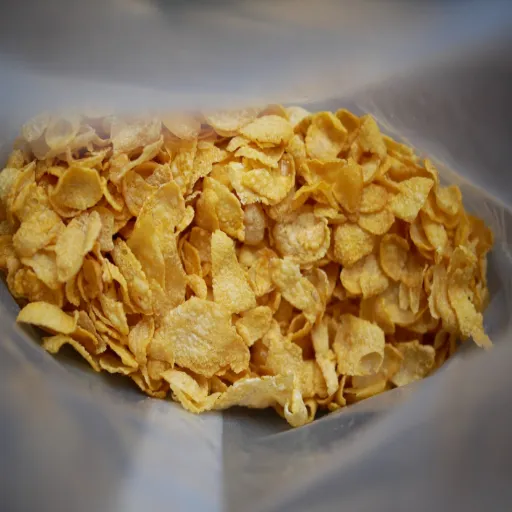
Not every factory makes corn flakes the same way. The two main methods for how corn flakes are made are the traditional cook-and-flake method and the modern extrusion method.
Traditional Cook-and-Flake Method
This is the older approach, closer to the original Kellogg’s process.
Whole corn grits or kernels are mixed with water, sugar, salt, and malt. The mixture is cooked in large pressure cookers for 30 to 60 minutes. The cooked corn is then dried to a semi-moist state and allowed to rest in a tempering bin for several hours. Finally, the tempered kernels are pressed between flaking rollers and toasted.
Advantages: Produces a flake with excellent “bloom” and texture. Preferred by some premium brands.
Disadvantages: However, the traditional route is slower, requires more floor space, needs longer batch times, and uses more labor.
Modern Extrusion Method
Today, most industrial lines use the extrusion corn flakes process. Corn flour is mixed with water and additives into a dough. The dough is fed into a twin-screw extruder that cooks the starch with heat, pressure, and mechanical shear. The extruded pellets are cooled slightly, flaked, and toasted.
Advantages: Faster, more consistent, easier to automate, and more flexible for different shapes and recipes.
Disadvantages: Some producers feel the texture is slightly different from traditional flakes, though most consumers can’t tell.
Side-by-Side Comparison
| Feature | Traditional Cook-and-Flake | Modern Extrusion |
|---|---|---|
| Starting material | Whole corn grits or kernels | Corn flour or grits |
| Cooking method | Pressure cookers | Twin-screw extruder |
| Batch or continuous | Usually batch | Usually continuous |
| Production speed | Slower | Faster |
| Labor requirement | Higher | Lower |
| Flexibility for shapes | Lower | Higher |
| Common use | Premium or niche brands | Mass-market production |
Thinking about scaling your own cereal production? A modern corn flakes production line can handle either process route, depending on your product goals and budget.
Step-by-Step: How Corn Flakes Are Made in a Factory
Let’s walk through a typical modern extrusion line. This is the process most large cereal manufacturers use today.
Step 1, Cleaning and Selecting the Corn
Incoming corn passes over vibrating screens, through magnetic separators, and past destoners. Dust, husks, metal fragments, and stones are removed. Only clean, uniform kernels or grits move forward.
Step 2, Mixing and Conditioning
The cleaned corn is mixed with water, sugar, salt, and malt extract. The target moisture is usually around 20–25%. Even mixing matters: dry pockets or wet clumps create uneven cooking and misshaped flakes.
Step 3, Cooking or Extruding
In the extrusion corn flakes process, the dough enters a twin-screw extruder. Inside the barrel, rotating screws generate heat and pressure. Temperatures reach roughly 90°C to 120°C. The starch cooks and softens, turning the corn into a pliable mass that can be shaped and flaked.
Step 4, Cooling and Tempering
The extruded pellets are cooled and allowed to rest. Tempering lets moisture redistribute evenly through each pellet. This step is essential for uniform flaking. Without it, some flakes end up too thick or too brittle.
Step 5, Flaking Between Steel Rollers
Tempered pellets pass between two large, counter-rotating steel rollers. The rollers press each pellet into a thin flake, usually 0.3 to 1 mm thick. Roller gap, pressure, and speed determine flake thickness, shape, and breakage rate.
Mini-story: The flake that wouldn’t flatten
At a cereal plant in Shandong, production engineer Li Wei noticed that morning batches kept producing broken flakes. The roller gap looked correct, but moisture readings were inconsistent. After investigating, he found that the tempering time had been shortened by 20 minutes to speed up output. Restoring the full resting period solved the problem. Unit waste dropped by 12%, and customer complaints about broken flakes disappeared within two weeks.
Step 6, Toasting for Crunch and Color
Flakes enter a high-temperature toaster or baking oven, usually set between 200°C and 320°C for 1 to 2 minutes. The heat drives off remaining moisture and triggers the Maillard reaction, which creates the golden-brown color and toasted flavor. As a result, final moisture typically falls to 2–3%.
Step 7, Coating, Flavoring, and Fortifying
Plain corn flakes skip this step. Frosted or flavored varieties pass through a coating drum or spray system. Sugar syrup, honey, chocolate, or savory seasonings are applied evenly. Vitamins and minerals may be sprayed on at this stage as well.
Step 8, Cooling and Packaging
Finished flakes are cooled to room temperature. Warm flakes sealed in packaging would create condensation and make the cereal soggy. Once cool, the flakes are weighed, nitrogen-flushed to prevent oxidation, and sealed into pouches, boxes, or bulk bags.
For a broader view of how extruded snacks and cereals share similar production principles, explore our snack food production line overview.
Why Corn Flakes Taste and Crunch the Way They Do
The texture of a corn flake is not an accident. Three factors determine how corn flakes are made so crispy and flavorful.
The Maillard Reaction and Toasting
When flakes are heated at high temperature, amino acids and sugars react on the surface. This Maillard reaction produces hundreds of flavor compounds and the golden-brown color. Too little toasting makes the flake pale and bland. Too much turns it dark and bitter.
Moisture Control and Shelf Life
A crisp corn flake must be dry. Final moisture of 2–3% keeps the flake crunchy and prevents microbial growth. However, if moisture rises during storage, the flake loses its snap. That’s why packaging is nitrogen-flushed and sealed against humidity.
How Thickness Affects Texture
Thinner flakes toast faster and feel lighter and crispier. Thicker flakes have more body and a stronger corn flavor. Manufacturers adjust roller gap to hit the target texture for their brand.
Looking for equipment that controls these variables precisely? Our food processing machines are designed to maintain tight moisture, temperature, and thickness standards across every batch.
How Industrial Production Lines Scale Corn Flake Manufacturing
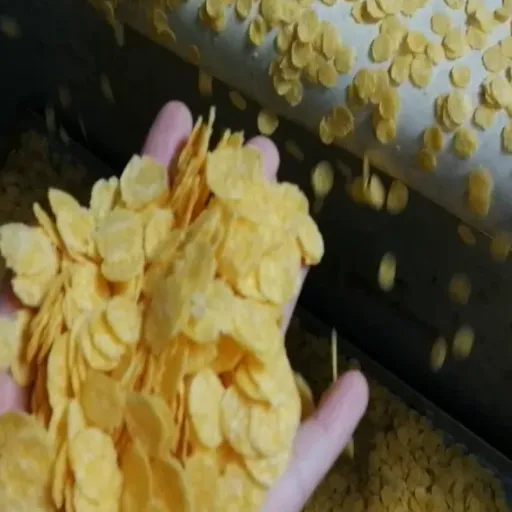
A home kitchen can make a handful of corn flakes. A factory must make thousands of kilograms per day. Industrial corn flakes production lines make this possible, turning the breakfast cereal production process into a continuous, high-output operation.
Key Machines in a Corn Flakes Production Line
A complete line typically includes:
- Raw material mixer
- Screw conveyor or bucket elevator
- Twin-screw extruder
- Cooling or vibrating conveyor
- Flaking machine
- Multi-layer dryer or pre-dryer
- High-temperature toaster or baking oven
- Sugar sprayer or coating drum
- Cooling conveyor
- Automatic packaging machine
Each machine is sized to match the target capacity. A 100 kg/h line is compact enough for a small plant. A 1,000 kg/h line may stretch 40 meters or more and require dedicated power, steam, and ventilation infrastructure. Shandong Loyal’s industrial food processing equipment is engineered for these exact demands.
Typical Production Capacities
| Capacity | Typical Use | Installed Power |
|---|---|---|
| 100–150 kg/h | Small business or pilot plant | 80–140 kW |
| 200–300 kg/h | Growing commercial producer | 120–200 kW |
| 300–500 kg/h | Medium commercial plant | 140–240 kW |
| 800–1,000+ kg/h | Large industrial plant | 180+ kW |
Quality and Safety Checks
Factories test flakes at multiple points:
- Moisture: Before drying, after toasting, and in the final package.
- Thickness and size: Sampled from the flaking line.
- Color: Monitored visually and with cameras.
- Texture: Crunch tests and breakage checks.
- Microbial safety: Laboratory sampling for pathogens and spoilage organisms.
Certifications such as HACCP, ISO 22000, and GMP guide these checks. Food-contact surfaces are usually SUS304 stainless steel or higher.
Mini-story: Scaling from kitchen to factory
When Adebayo started his cereal brand in Lagos, he made test batches in a small extruder. The flakes tasted great, but every batch was slightly different. After installing a fully automatic 200 kg/h line with PLC temperature control, his moisture variance dropped from ±4% to ±1%. Retailers stopped rejecting shipments for inconsistent color, and his reorder rate doubled within six months.
Frequently Asked Questions
Are corn flakes baked or fried?
Corn flakes are typically baked or toasted, not fried. The flakes are passed through a high-temperature oven or toaster, which removes moisture and creates crispness without oil.
What are corn flakes made of?
Plain corn flakes are made from corn, sugar, salt, and malt extract. Many brands also add vitamins and minerals. Flavored varieties include coatings such as sugar syrup, honey, or chocolate.
Why are corn flakes toasted?
Toasting creates the golden color, toasted flavor, and crispy texture. It also reduces moisture to a level that keeps the cereal shelf-stable.
How long does it take to make corn flakes in a factory?
The total time for how corn flakes are made depends on the process. Extrusion lines can move from raw corn to packaged cereal in a few hours. Traditional cook-and-flake methods take longer because of extended cooking and tempering times.
Can corn flakes be made without extrusion?
Yes. The traditional method for how corn flakes are made cooks whole corn grits in pressure cookers, then flakes and toasts them. Extrusion is simply the faster, more common modern approach.
What makes corn flakes crispy?
Low final moisture, typically 2–3%, combined with thin flaking and high-temperature toasting. Proper packaging then protects that crispness from humidity.
Conclusion
How corn flakes are made is a careful balance of cleaning, cooking, flaking, toasting, and packaging. Each step depends on precise moisture and temperature control. Therefore, when manufacturers get those conditions right, they produce the golden, crispy cereal that has filled breakfast bowls for more than a century.
For food manufacturers, the process scales beautifully. A well-designed corn flakes production line turns raw corn into a consistent retail product hour after hour. Whether you choose traditional cook-and-flake or modern extrusion, success comes from reliable equipment, tight process control, and a supplier who understands your market.
Ready to explore equipment for your cereal operation? Contact Shandong Loyal Industrial Co., Ltd. for a customized quote and production-line layout matched to your capacity goals. Our team can help you choose the right mixers, extruders, flaking machines, and toasters to bring your corn flakes from kernel to bowl.