Corn flaking grits are the degermed, coarse endosperm particles that serve as the primary raw material for corn flakes. When these grits are milled to the right size, cooked evenly, and flaked under controlled pressure, they become the crispy, golden flakes consumers expect. When they are inconsistent, the result is broken flakes, uneven toasting, and a shorter shelf life.
Last quarter, a plant manager in Nairobi watched a fresh batch of corn flakes tumble off the cooling conveyor. Half of the flakes were intact and golden. The other half had crumbled into meal. The problem was not the flaking rolls or the toaster. It was the grits. The supplier had delivered corn flaking grits with variable particle size and moisture content. By the time the flakes reached packaging, the damage was done.
That story repeats in cereal plants around the world. Manufacturers often focus on the flaking machine and the oven, but the real foundation of flake quality is built hours earlier at the degerming mill and the grits sifter. In this guide, you will learn what corn flaking grits are, how they are produced, why their specifications matter, and how the right equipment keeps every batch consistent from raw corn to finished cereal.
Key Takeaways
- Corn flaking grits are large, degermed maize endosperm particles, typically US mesh 3.5–6, with moisture below 13.5% and fat under 1%.
- Uniform particle size and moisture are the two biggest predictors of flake integrity, bowl life, and toasting color.
- A complete corn flakes production line controls every step, from cleaning and degerming to flaking and toasting.
- Modern extrusion systems can use corn flour instead of traditional grits, but each method demands different equipment and quality settings.
- Choosing a supplier with CE/ISO-certified equipment and turnkey support reduces waste, downtime, and rework.
What Are Corn Flaking Grits?
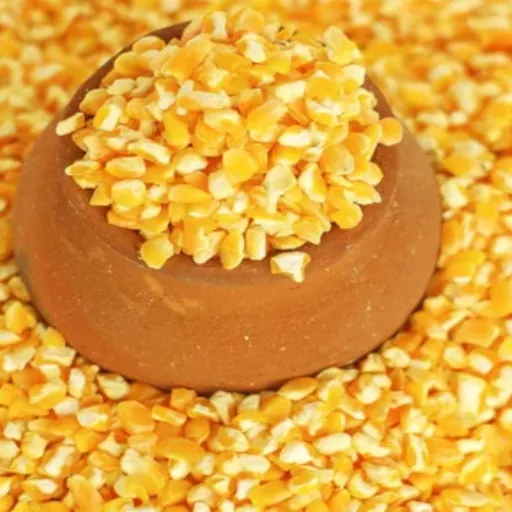
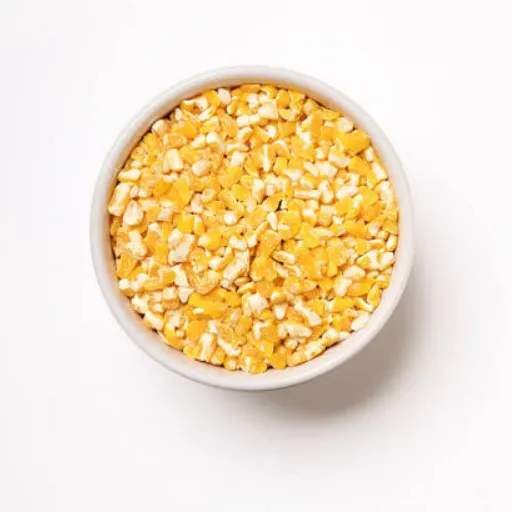
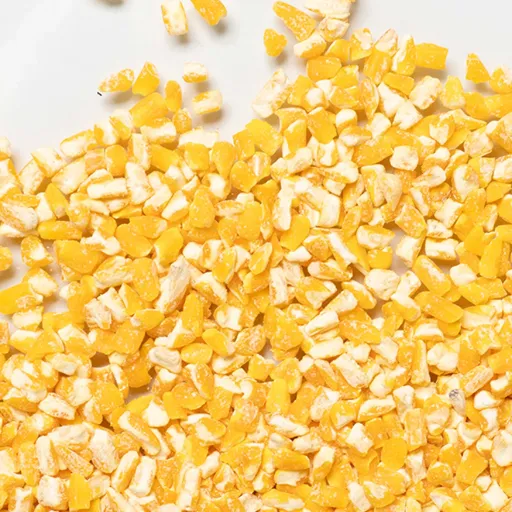
Corn flaking grits are specially processed, coarse fragments of maize endosperm used to make corn flakes and other flaked breakfast cereals. Unlike fine cornmeal or table grits, flaking grits are large enough to retain their structure through cooking and rolling, yet uniform enough to gelatinize and flake evenly.
According to FAO guidelines, traditional flaking grits typically fall in the US mesh 3.5–6 range, which corresponds to roughly 3.4–5.8 mm particles. Industry suppliers such as Limagrain further grade their hominies, with larger particles used for classic cornflakes and smaller particles used for puffed cakes or extruded snacks.
The key characteristics of high-quality corn flaking grits include:
- Low fat content, usually under 1%, because the oil-rich germ has been removed.
- Controlled moisture, typically 11.0–13.5%, which protects storage stability and processing behavior.
- Uniform particle size, minimal fines and oversized pieces, so every grit cooks and flakes the same way.
- High starch content, the endosperm provides the structure that gelatinizes during cooking and sets during toasting.
- Clean flavor and bright color, free from musty odors, mold, or foreign material.
Because the germ and bran are removed, flaking grits are naturally low in fiber and fat. This gives the finished cereal a mild flavor and a long shelf life, but it also means the starting corn must be selected and milled with care. The wrong raw material, or the wrong milling setup, will pass problems downstream to the cooker, the flaker, and the toaster.
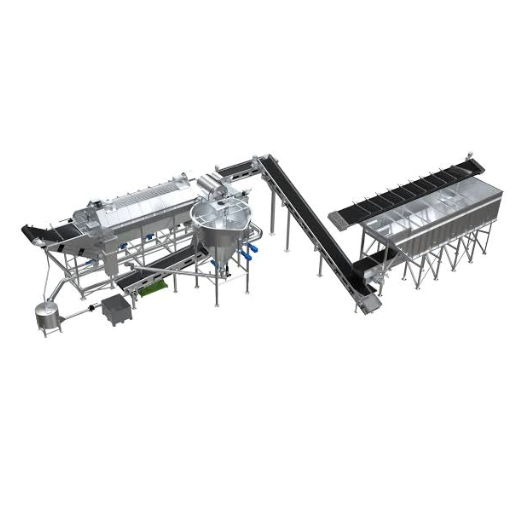
Want to see how the full process comes together? Our corn flakes production line is designed to handle every stage from raw corn intake to final packaging.
Why Flaking Grits Quality Determines Corn Flake Quality
Every flake starts as a single grit. If the grits vary in size, moisture, or starch damage, the flakes will vary too. Some will overcook. Some will undercook. Some will stick to the flaking rolls, while others shatter into fines.
A co-manufacturer in Southeast Asia learned this the hard way. The company had been buying corn flaking grits from three different local mills to keep costs down. Each mill delivered a slightly different particle distribution. When the grits reached the cooker, the small particles turned to mush while the large ones remained undercooked. After tempering, the flaking rolls produced a mix of paper-thin flakes and thick, chewy chunks. Rejects climbed to nearly 18%.
After switching to an integrated degerming and extrusion line, the co-manufacturer could control particle size and moisture from intake. Within three months, flake breakage dropped by roughly 15%, and the reject rate fell below 5%. The equipment investment paid for itself through reduced waste alone.
Three properties of corn flaking grits have the biggest impact on finished flake quality:
- Particle size uniformity. Grits that are all the same size absorb water and cook at the same rate. Mixed sizes create uneven gelatinization, which leads to uneven flaking and toasting.
- Moisture content and distribution. Grits that are too dry do not gelatinize fully. Grits that are too wet stick together and case-harden during drying. Tempering time allows moisture to equalize, but only if the starting moisture is in the right range.
- Fat content and freshness. Low fat is essential for shelf life. Even small amounts of residual germ oil can oxidize and create rancid off-flavors over time.
When these three factors are under control, the downstream process becomes predictable. The cooker runs at a steady temperature, the flaking rolls maintain a consistent gap, and the toaster produces an even golden color batch after batch.
How Corn Flaking Grits Are Produced: Step by Step
Producing corn flaking grits is a dry-milling process. The goal is to remove the germ and bran, break the endosperm into coarse particles, and grade those particles to a narrow size range.
1. Raw Corn Selection
Hard, mature yellow dent corn is the standard starting material for flaking grits. The kernels should have a high test weight, a vitreous endosperm, and minimal cracks or fissures. White corn can also be used, and some research trials report higher flaking grits yields from white corn than from yellow dent corn. The choice depends on regional availability, local consumer preference, and the final product color.
2. Cleaning and Conditioning
Incoming corn passes through sieves, destoners, magnets, and aspirators to remove dust, chaff, stones, metal, and broken kernels. After cleaning, the corn is tempered to 16–18% moisture for 6 to 24 hours. Conditioning softens the endosperm slightly while toughening the bran, which makes degermination cleaner and reduces starch damage.
3. Degermination
Degerming separates the germ and bran from the endosperm. The germ is rich in oil, and the bran is high in fiber. Both are removed because they interfere with cooking, flaking, and shelf life. The germ is usually diverted to corn oil extraction, and the bran becomes animal feed. What remains is pure endosperm, ready for milling.
4. Milling and Sizing
The endosperm is milled using roller mills or hammer mills to produce coarse particles. For flaking grits, the target is the largest grit size produced in a corn dry mill. The Cereals & Grains Association notes that these large grits are the most valuable dry-milled product because they command premium prices from cereal manufacturers.
5. Sieving and Grading
Vibrating sifters separate the milled material into fractions. Flaking grits are retained on the 3.5–6 mesh screens. Fines are sent to cornmeal or flour streams, and oversized pieces are returned for further milling. Grading is critical because even a small percentage of fines can create clumping during cooking.
6. Quality Control and Packaging
Before shipment or storage, the grits are tested for:
- Moisture content
- Fat content
- Particle-size distribution
- Ash and protein levels
- Microbiological safety, including aflatoxin screening
- Foreign material
Finished flaking grits are packed in food-grade, moisture-proof bags, often 25 kg or 50 kg, or in bulk containers for large manufacturers. Proper storage below 25°C and low humidity preserves quality for 9 to 12 months.
From Grits to Flakes: The Corn Flakes Production Line
Once the corn flaking grits meet specification, they enter the cereal production line. There are two main approaches: the traditional pressure-cooking method and the modern extrusion method.
Traditional Pressure-Cooking Method
In the classic process, grits are mixed with water, sugar, salt, and malt syrup in a rotating pressure cooker. Steam pressure of 44–67 kg/cm² cooks the grits for 1 to 2 hours. The starch gelatinizes, and the grits become translucent and pliable.
After cooking, the grits are dried to about 20% moisture and then tempered for 6 to 24 hours. Tempering lets moisture redistribute evenly through each grit. The tempered grits are then fed between large, counter-rotating flaking rolls that apply pressure up to 234 tons/cm². The rolls are hollow and water-cooled to keep the surface temperature stable.
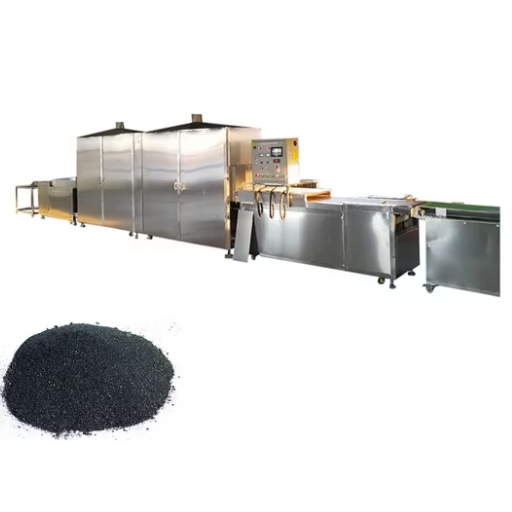
The raw flakes move into a high-temperature oven, where hot air at 288–302°C toasts them for 50 seconds to 3 minutes. The Maillard reaction develops the golden color and toasted flavor. Final moisture is driven below 2% to ensure crispness and long shelf life.
Modern Extrusion Method
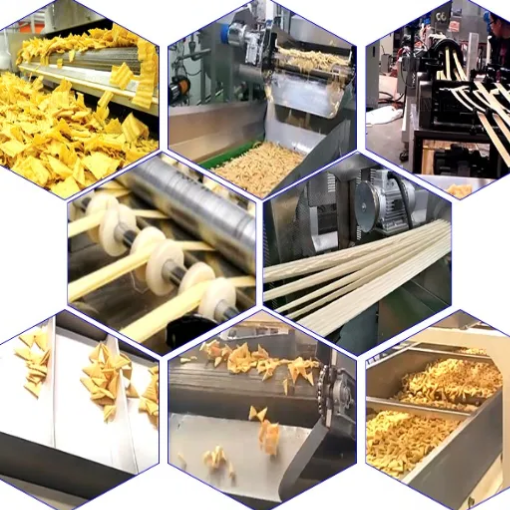
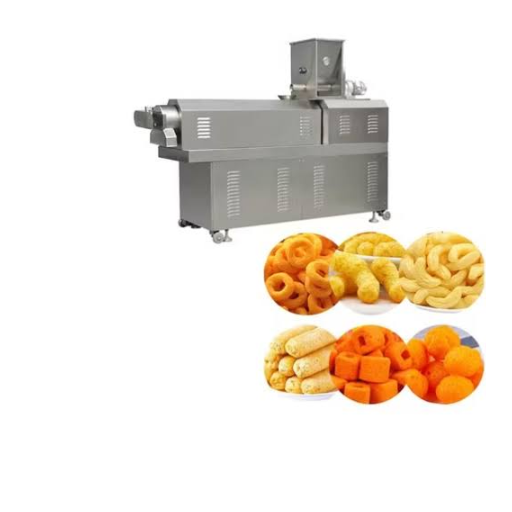
In the extrusion method, corn flour or grits are mixed with water and additives and fed into a twin-screw extruder. The extruder cooks the mixture under heat, pressure, and shear, then forms it into uniform pellets. The pellets are cooled, tempered briefly, and then flaked and toasted in much the same way as pressure-cooked grits.
Extrusion is faster and more compact than pressure cooking. It also allows manufacturers to use a wider range of raw materials, including corn flour and blended grains. However, the particle size and moisture of the incoming material still determine pellet quality, which in turn determines flake quality.
Why the Production Line Matters
Whether you use traditional grits or extruded pellets, the same rule applies: garbage in, garbage out. A breakfast cereal production line with precise temperature, pressure, and moisture control protects the investment you have made in raw-material quality.
Choosing Equipment for Corn Flaking Grits and Corn Flakes
The right equipment depends on your starting material, your target capacity, and the product range you want to produce. Most manufacturers fall into one of three categories.
Buying Pre-Milled Flaking Grits
If you purchase grits from a supplier, your line begins at the mixing or cooking stage. You need:
- A mixer with accurate water and additive dosing.
- A pressure cooker or twin-screw extruder.
- A dryer or tempering bin.
- A flaking machine with adjustable roll gap and hydraulic pressure.
- A high-temperature toaster and cooler.
- A coating line and packaging machine.
This approach requires less capital but gives you less control over raw-material consistency. You must audit your grits supplier carefully and test every batch.
Milling Your Own Flaking Grits
If you want to start from whole corn, you need a dry-milling line upstream of the cereal line. The typical setup includes:
- Corn cleaning and conditioning equipment.
- A degerminator or degerming mill.
- Roller mills and sifters for grading.
- A gravity table or optical sorter for final purification.
Milling your own grits reduces dependency on suppliers and can lower raw-material costs. It also lets you adjust particle size for different products, from standard corn flakes to specialty puffed cereals.
Integrated Corn Flakes Production Line
An integrated food processing machine setup handles cleaning, milling, extrusion, flaking, drying, toasting, and packaging in one continuous flow. These lines are ideal for manufacturers who want full traceability and tight quality control.
Shandong Loyal offers corn flakes production lines in capacities from 100 kg/h entry-level systems to 500 kg/h industrial configurations. Key features include:
- Food-grade 304 stainless steel contact surfaces.
- PLC control with touchscreen interfaces.
- Variable frequency drives for precise speed control.
- Electric, gas, or diesel heating options.
- CE and ISO-compliant construction.
If your plant also produces puffed snacks, a puff snacks processing line can share extrusion expertise and reduce cross-training time for operators.
Quality Control and Industry Standards
Consistent corn flaking grits do not happen by accident. They require documented procedures, calibrated instruments, and trained operators.
Incoming Material Testing
Before any corn enters the mill, check:
- Moisture content.
- Test weight and kernel size.
- Foreign material and broken kernels.
- Mycotoxin levels, especially aflatoxin.
In-Process Monitoring
During milling and cereal production, monitor:
- Particle-size distribution using sieves or inline sensors.
- Moisture using near-infrared (NIR) probes.
- Fat content by laboratory analysis.
- Roll gap and roll temperature on the flaking machine.
- Toaster temperature and airflow.
Certifications and Standards
Most export markets require one or more of the following:
- ISO 9001 for quality management.
- CE marking for machinery sold in Europe.
- FSSC 22000 or HACCP for food safety.
- Halal or Kosher certifications for specific markets.
A plant in Eastern Europe recently passed its FSSC 22000 audit by combining traceable grits intake, NIR moisture monitoring, and stainless-steel contact surfaces. The auditor specifically noted that the integrated production line made lot traceability straightforward, because every batch of corn could be linked to a specific production run.
Sustainability and Efficiency in Grits Production
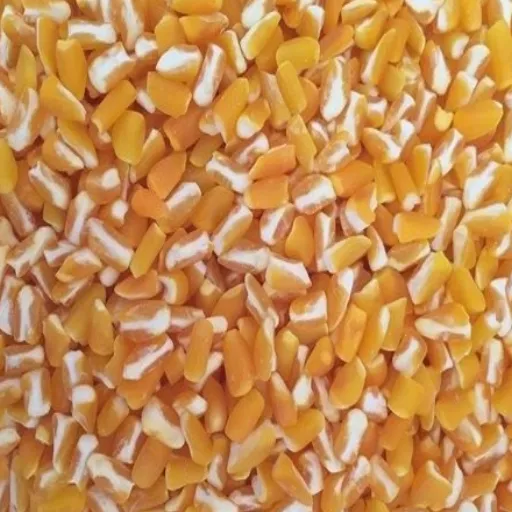
Dry milling is one of the most efficient ways to process corn because almost every fraction has a market. The endosperm becomes flaking grits, flour, or meal. The germ becomes corn oil. The bran becomes feed. Even the cleaner waste can be used for fermentation or animal nutrition.
Energy use is the biggest sustainability challenge. Drying and toasting are heat-intensive steps. Modern lines address this with:
- Heat recovery systems that preheat incoming air.
- Insulated ovens and dryers.
- Variable-speed fans that match airflow to product load.
- Efficient extruder designs that convert mechanical energy into cooking energy.
Reducing flake breakage also reduces waste. When fewer flakes break during flaking, cooling, and packaging, the plant uses less raw material per kilogram of finished product. That is both a cost saving and an environmental win.
Conclusion: Start with the Grits
Corn flaking grits may be invisible to the average breakfast shopper, but they are the hidden foundation of every corn flake. Their particle size, moisture, and fat content determine how evenly the grits cook, how cleanly they flake, and how crispy they stay in the box.
To recap:
- Corn flaking grits are large, degermed maize endosperm particles, typically US mesh 3.5–6.
- Uniform size and moisture are essential for flake integrity and shelf life.
- Dry milling, degerming, and sieving produce the grits; cooking, flaking, and toasting turn them into cereal.
- Modern extrusion lines offer flexibility, but raw-material quality still drives finished-product quality.
- CE/ISO-certified equipment with full process control reduces waste, downtime, and rework.
If you are planning a new corn flakes line or upgrading your current process, start by evaluating your grits quality and the equipment that produces it. The right setup pays for itself through higher yields, lower rejects, and a more consistent product.
Ready to build a corn flakes line that protects quality from intake to packaging? Contact us today to discuss your capacity, raw material, and certification requirements. Our team will help you choose a tailored solution that fits your market and your budget.