A corn flakes manufacturing plant cost can range from 30,000 for a compactsemi−automaticline to 30,000 for a compactsemi−automaticline to 10 million or more for a high-volume industrial facility. The exact figure depends on capacity, automation level, process choice, building requirements, and how well you budget for hidden expenses like shipping, commissioning, and working capital. Most first-time buyers focus only on the equipment quote and end up underfunded before production even starts.
What if the machinery price is only half the story? When Rajiv Patel planned his breakfast cereal startup in Pune, India, he set aside ₹25 lakhs for a production line. He soon discovered that civil works, electrical upgrades, and three months of working capital added another ₹18 lakhs.
His corn flakes manufacturing plant cost nearly doubled before the first batch was packed. Stories like Rajiv’s are common. The internet is full of equipment prices, but it’s short on total-project economics.
In this guide, you’ll learn how to build a realistic budget for a corn flakes manufacturing plant. We’ll break down capital costs, operating expenses, and profitability benchmarks by plant scale. You’ll also see how to avoid the hidden costs that blow up budgets and how to choose equipment that matches your market rather than oversizing your line.
Key Takeaways
- A small corn flakes plant starts around 30,000–30,000–100,000, a medium commercial plant runs 100,000–100,000–500,000, and an industrial facility can exceed 2–2–10 million.
- Machinery is the largest single CapEx item, but building, utilities, licensing, and working capital often add 40–70% on top of the equipment quote.
- Raw materials represent 70–80% of operating costs, while gross margins typically range from 30–40% and net margins from 15–25%.
- Modern extrusion-based lines usually cost less upfront and need less labor than traditional cook-and-flake plants.
- A well-planned project can break even at 19–20% capacity utilization and reach payback in roughly 2 years.
How Much Does a Corn Flakes Manufacturing Plant Cost?
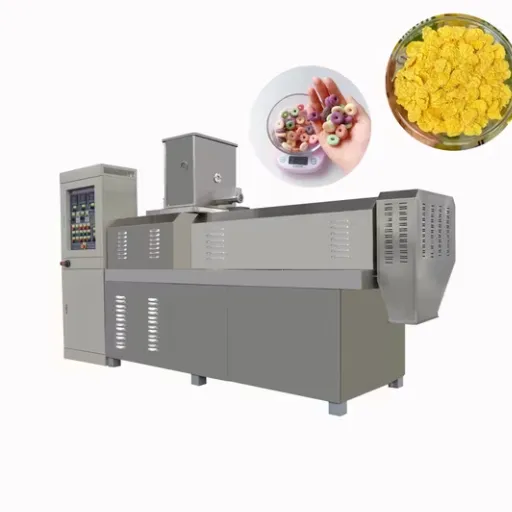
Setting up a corn flakes manufacturing plant involves far more than buying a production line. The total investment includes land, building, machinery, utilities, raw-material inventory, licenses, and cash reserves for the first few months of operation. The figures below focus on corn flakes, but the same logic applies to any breakfast cereal manufacturing plant cost analysis.
| Plant Scale | Typical Capacity | Total Investment Range | Best For |
|---|---|---|---|
| Small-scale | 100–150 kg/h | 30,000–30,000–100,000 | Startups, local brands, test markets |
| Medium commercial | 200–500 kg/h | 100,000–100,000–500,000 | Regional distributors, growing brands |
| Industrial | 800+ kg/h or 20,000+ MT/year | 2million–2million–10 million+ | National brands, export-oriented producers |
For perspective, an Ethiopian project profile for a 1,000-ton-per-year plant estimated a total investment of roughly Birr 8.01 million. That equals about 150,000–150,000–300,000 depending on exchange rates. The figure included land, building, machinery, vehicles, and working capital.
In India, small-scale plants are often quoted between ₹25–40 lakhs, or roughly 30,000–30,000–48,000, according to NPCS.
Equipment-only prices tell only part of the story. A 150–300 kg/h extrusion line may cost 28,000–28,000–48,000, while a 400–500 kg/h line can reach 60,000–60,000–70,000. Once you add building, electrical, water, steam, storage, and initial inventory, the corn flakes manufacturing plant cost can easily double.
Capital Expenditure Breakdown for Corn Flakes Manufacturing Plant Cost
Capital expenditure, or CapEx, covers every one-time cost required before you produce your first sellable kilogram of corn flakes. Understanding each bucket helps you negotiate better with suppliers and lenders.
Land, Building, and Civil Works
You will need space for raw-material storage, production, quality control, packaging, finished-goods warehousing, and offices. A small plant can fit into 2,000–5,000 square feet, while a medium plant may need 10,000–20,000 square feet. Costs vary widely by region.
- Rented/leased industrial space lowers upfront cost but adds monthly rent.
- Owned land with new construction requires civil works, flooring, drainage, ventilation, and fire-safety systems.
- Food-grade finishes such as epoxy floors, washable walls, and insect-proof doors add to the budget but are essential for audits.
In emerging markets, building and civil works can represent 20–35% of total CapEx. In high-cost regions, this share can be even larger.
Machinery and Equipment
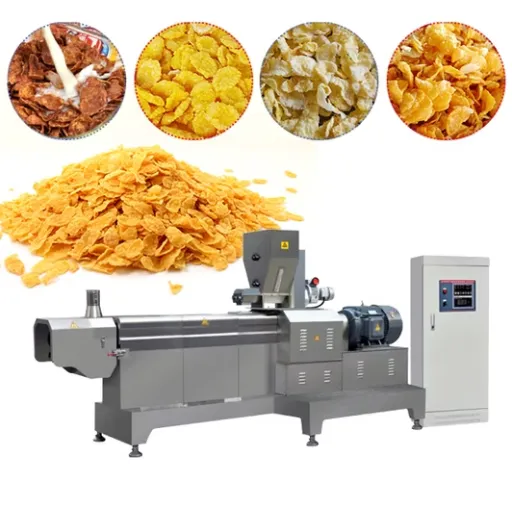
This is the largest single line item. A complete corn flakes production line typically includes:
- Raw-material mixer and screw conveyor
- Twin-screw extruder for cooking and forming
- Flaking machine or tablet press
- Pre-dryer and high-temperature toaster
- Sugar sprayer or coating drum
- Cooling conveyor
- Packaging machine with nitrogen flushing
For a deeper look at each machine and how the line works, see our guide to the complete corn flakes production line.
Utilities and Infrastructure
Corn flakes production needs reliable electricity, water, steam, and compressed air. Budget for:
- Electrical panel and transformer upgrades for motors totaling 140–240 kW installed power.
- Water treatment system for potable process water and boiler feed.
- Steam boiler if you choose traditional cooking or certain coating processes.
- Compressed-air station for pneumatic conveyors and packaging.
- Wastewater and dust-collection systems to meet environmental rules.
Utility infrastructure often adds 10,000–10,000–50,000 to a small or medium plant.
Quality Control Lab and Office Setup
Even a basic QC lab needs moisture analyzers, scales, metal detectors, and packaging-seal testers. A small office requires furniture, computers, and accounting software. Together, these items can add 5,000–5,000–25,000.
Pre-Production, Licensing, and Working Capital
Before launch, you’ll spend money on feasibility studies, legal registration, food-safety certifications, product testing, and marketing materials. You also need working capital for the first 2–4 months of raw materials, labor, packaging, and distribution. Working capital is often underestimated; for a medium plant, it can equal 20–30% of total investment.
Equipment Cost by Production Capacity
Equipment prices vary by capacity, automation level, material quality, and origin. The table below shows typical ranges for extrusion-based lines in 2026. Remember that corn flakes making machine price is only the starting point; total plant cost includes building, utilities, and working capital.
| Capacity Range | Equipment Price Range | Typical Use Case |
|---|---|---|
| 100–150 kg/h | 20,000–20,000–40,000 | Startups, small retail brands |
| 200–300 kg/h | 40,000–40,000–60,000 | Small distributors, co-packers |
| 300–500 kg/h | 60,000–60,000–100,000 | Regional brands, export begin |
| 800–1,000+ kg/h | 100,000–100,000–600,000+ | Large industrial producers |
Small-Scale Lines (100–150 kg/h)
Small lines are ideal for entrepreneurs entering the breakfast cereal market. They require less floor space, fewer operators, and lower utility demand. Semi-automatic versions keep the corn flakes manufacturing plant cost low, but they may need more labor for feeding, monitoring, and packaging.
Medium-Scale Lines (200–500 kg/h)
This is the sweet spot for many growing brands. A 300–400 kg/h line can produce enough output for regional distribution while still fitting into a modest facility. Fully automatic versions reduce labor from 10–15 workers down to 4–6.
Industrial Lines (800+ kg/h)
Industrial plants use multiple lines or very high-capacity single lines. They require dedicated buildings, professional engineering, and often a full quality-control laboratory. At this scale, the corn flakes manufacturing plant cost shifts from equipment-heavy to infrastructure-heavy. Buyers at this level usually source industrial food processing equipment as part of a turnkey facility design.
When choosing capacity, remember Rajiv’s lesson: bigger equipment means bigger building, bigger utility bills, and bigger raw-material inventory. Overcapacity can strain cash flow before sales catch up.
Operating Costs and Profitability
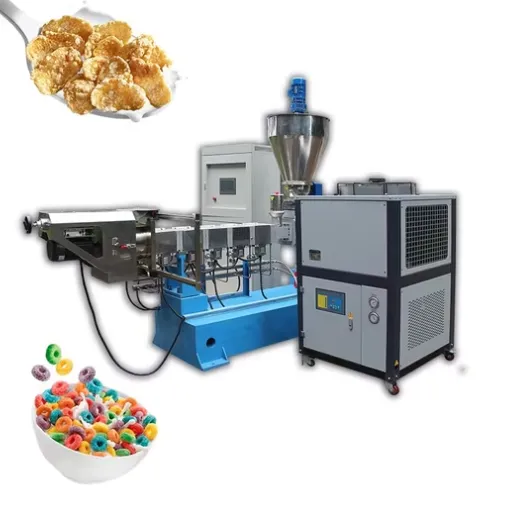
Once the plant is running, operating expenditure, or OpEx, determines whether you make money. Corn flakes manufacturing has attractive margins, but raw-material volatility can quickly squeeze profits. Many producers hedge this risk by diversifying into related products such as a snack food production line.
Raw Materials (70–80% of OpEx)
The main inputs are corn grits or corn flour, sugar or malt syrup, salt, vitamins, minerals, and packaging materials. Corn price fluctuations directly affect your margin. Locking in supplier contracts and monitoring inventory turnover are critical.
Utilities, Labor, and Packaging
Utilities usually account for 10–15% of operating costs. Labor depends heavily on automation: a semi-automatic line may need 10–15 workers, while a fully automatic line can run with 3–5. Packaging materials, including pouches, cartons, labels, and adhesives, are another significant recurring cost.
Typical Gross and Net Margins
According to industry project reports, corn flakes manufacturers commonly achieve:
- Gross profit margin: 30–40%
- Net profit margin: 15–25%
These figures assume steady sales, efficient production, and controlled waste. A plant running at low capacity utilization will see margins compressed by fixed costs.
Break-Even and Payback Period
A well-planned corn flakes plant can break even at around 19–20% capacity utilization. The Ethiopian project profile cited a 2-year payback period and an internal rate of return of roughly 34.5%. Real-world results depend on local market prices, distribution strength, and energy costs.
Key Factors That Affect Corn Flakes Manufacturing Plant Cost
Several decisions have an outsized impact on the final corn flakes manufacturing plant cost. Addressing them early prevents expensive surprises.
Production Capacity and Automation Level
Higher capacity raises not only equipment price but also building size, utility capacity, and working capital. Full automation reduces labor but adds PLC control systems, sensors, and higher initial investment. The right balance depends on your labor costs and production volume.
Extrusion vs. Traditional Cook-and-Flake Process
Most new plants use extrusion because it is compact, fast, and flexible. Traditional cook-and-flake lines can produce a different texture but require steam cookers, longer tempering times, and larger floorspace. Extrusion generally has a lower corn flakes manufacturing plant cost for the same output.
Material Quality, Certifications, and Brand Origin
Food-grade SUS304 stainless steel is the standard for contact surfaces. Machines built with lower-grade steel may cost less but can corrode and fail audits. Certifications such as CE, ISO 22000, and HACCP add cost but are often required for export and retail buyers.
Geographic Location and Import Logistics
Buying from Chinese manufacturers often offers the best equipment price, but you must budget for shipping, customs clearance, import duties, and local installation. European suppliers may charge more for the machine but include more local support. Always compare total landed cost, not just the invoice price.
Hidden Costs That Inflate Corn Flakes Manufacturing Plant Cost
Hidden costs are the main reason budgets overrun. Here are the most common traps.
Shipping, Customs, and Installation
A 40-foot container from China to Africa, South Asia, or Latin America can cost 3,000–3,000–8,000, plus insurance, port handling, and inland transport. Installation may require skilled welders, electricians, and pipe fitters for 1–3 weeks.
Commissioning, Training, and Recipe Development
Even the best line needs fine-tuning. Recipe trials, operator training, and process commissioning can add 5,000–5,000–20,000 in travel, raw materials, and consultant fees.
Maria Santos, a plant manager in Brazil, learned this the hard way. She budgeted 60,000forequipment.Shethenspentanother60,000forequipment.Shethenspentanother12,000 on flights, hotels, and two weeks of recipe trials. Her extruder finally produced flakes with the right crispness and color.
Spare Parts and Preventive Maintenance
Keep a stock of screws, dies, bearings, belts, and heating elements. A one-year spare-parts package typically costs 3–5% of the equipment value. Preventive maintenance contracts reduce unplanned downtime and protect ROI.
How to Finance a Corn Flakes Manufacturing Plant
Before you approach lenders, prepare a corn flakes manufacturing plant project report that includes capacity, equipment list, building plan, staffing, financial projections, and risk analysis. A solid report improves approval odds and helps you negotiate better terms.
Equipment Leasing vs. Purchase
Leasing reduces upfront cash outlay and may offer tax advantages, but the total cost over time is higher. Purchasing equipment outright gives full ownership and lower lifetime cost if you have the capital.
Government Subsidies and Grants
Many countries offer incentives for food processing, agribusiness, and export manufacturing. In India, for example, small food-processing units may qualify for subsidies under schemes like the PM Formalization of Micro Food Processing Enterprises (PMFME). Always check local agriculture and MSME departments.
Working-Capital Planning
Banks and trade finance providers can cover raw-material purchases against purchase orders. A common mistake is to spend all available cash on machinery and leave no reserve for the first production runs. Hold at least 3–6 months of operating expenses as a buffer.
Supplier Evaluation Checklist
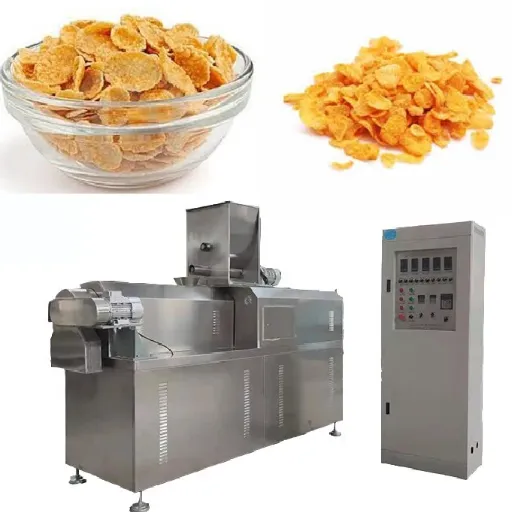
Choosing the right equipment supplier is as important as choosing the right capacity. The supplier you select directly affects your final corn flakes manufacturing plant cost, timeline, and long-term uptime. Use this checklist during vendor discussions.
Certifications to Verify
- CE or UL certification for electrical safety
- ISO 9001 for quality management
- ISO 22000 or HACCP for food safety
- FDA or local food-contact approvals where required
After-Sales Support and Spare-Parts Availability
Ask whether the supplier provides installation supervision, operator training, remote troubleshooting, and a local spare-parts depot. A lower machine price is not a bargain if a broken part shuts you down for weeks.
Factory Acceptance Testing and Warranty Terms
Request factory acceptance testing (FAT) before shipment. Standard warranties run 12–24 months. Clarify whether the warranty covers parts only or also labor and travel.
For buyers who need guidance matching capacity to budget, our food production line equipment team can review your product goals and recommend a configuration that avoids over- or under-investment.
Frequently Asked Questions
How much does a small corn flakes manufacturing plant cost?
A small plant with a 100–150 kg/h line typically costs 30,000–30,000–100,000 including equipment, basic building, utilities, and initial working capital. In lower-cost regions such as India, small-scale setups can start around ₹25–40 lakhs.
What is the most expensive part of a corn flakes plant?
Machinery and equipment are usually the largest single CapEx item, followed by building and civil works. Raw materials are the largest ongoing operating cost.
How long does it take to set up a corn flakes manufacturing plant?
A small plant can be ready in 3–6 months, while a medium or industrial plant typically takes 12–24 months including civil works, equipment delivery, installation, and commissioning.
Is corn flakes manufacturing profitable?
Yes, with typical gross margins of 30–40% and net margins of 15–25%. Break-even can occur at 19–20% capacity utilization, and well-planned projects often reach payback in about 2 years.
Should I choose extrusion or traditional flaking?
Extrusion is generally faster, more compact, and less labor-intensive, making it the lower-cost choice for most new plants. Traditional flaking can offer a different texture but requires more space, steam equipment, and labor.
What certifications do I need?
Requirements vary by country, but common ones include business registration, food manufacturing licenses such as FSSAI or FDA, HACCP or ISO 22000, environmental clearances, and fire-safety certifications.
Conclusion
Planning a corn flakes manufacturing plant cost means looking beyond the equipment quote. The real investment includes land, building, utilities, licenses, working capital, and the hidden costs of shipping, commissioning, and recipe development. Small plants can start near 30,000 ,mediumcommer cialfacilitie softenl and between 30,000 ,medium commercial facilities often and between 100,000 and 500,000 ,and industrial operations can exceed 500,000 ,and industrial operations can exceed 2 million.
The good news is that corn flakes manufacturing offers strong economics when the plant is sized correctly. Gross margins of 30–40%, break-even at under 20% utilization, and payback periods near 2 years make it an attractive segment within the broader breakfast cereal market.
If you are ready to budget accurately, start by matching capacity to your market demand. Then match automation level to your labor costs. Build a supplier shortlist based on certifications, after-sales support, and total landed cost.
Contact Shandong Loyal Industrial Co., Ltd. today for a customized corn flakes manufacturing plant cost estimate and ROI projection tailored to your market.