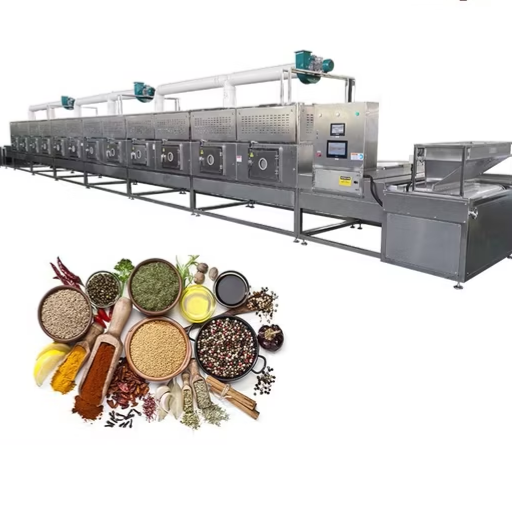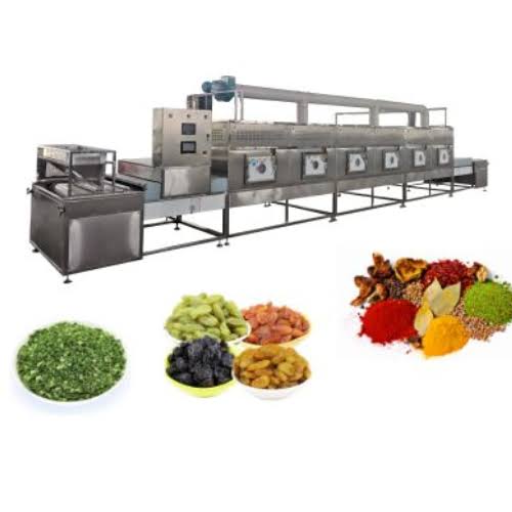
915 MHz microwave sterilization penetrates roughly 2.5 to 3 times deeper than 2450 MHz, making it the better choice for thick, dense, or high-throughput food products. For thin layers, powders, snacks, or operations that need universal global deployment, 2450 MHz is usually the more practical option. The right frequency for your operation depends on product geometry, moisture content, production volume, and regional regulations, not on which number looks more familiar.
When Maria, a process engineer at a ready-meal plant in Southeast Asia, was asked to specify a new sterilization line, she assumed 2450 MHz was the safe bet. After all, it is the same frequency every home microwave uses. But her product was a 6 cm-thick tray of rice and curry. The 2450 MHz pilot runs left cold centers where Bacillus spores could survive. A switch to 915 MHz delivered uniform core heating and cut the sterilization cycle from over an hour to under ten minutes. Maria’s story is more common than most buyers realize. 915 MHz vs 2450 MHz microwave sterilization is not a branding debate; it is a physics decision that directly affects food safety, throughput, and total cost of ownership.
In this guide, you will learn how frequency changes penetration depth, power density, energy efficiency, and regulatory compliance. You will see real data from a 2025 peer-reviewed study, understand when each frequency wins, and get a practical framework for choosing the right industrial microwave sterilizer for your product.
Key Takeaways
- 915 MHz penetrates 2.5–3× deeper than 2450 MHz in wet foods, so it is preferred for thick or dense products.
- A single 915 MHz generator can deliver up to 100 kW with 80–90% system efficiency, while 2450 MHz units typically top out at 1.5–6 kW and 55–70% efficiency.
- A 2025 study found 915 MHz achieved 3.73–4.95 log pathogen reduction in peanut butter in 90 seconds, versus 1.59–3.24 log at 2450 MHz in 160 seconds.
- 2450 MHz is permitted worldwide; 915 MHz is restricted in Germany and some other European markets.
- Choose 915 MHz for ready meals, bulk grains, meat blocks, and dense pastes; choose 2450 MHz for spices, powders, thin snacks, and lab-scale work.
What Are 915 MHz and 2450 MHz in Microwave Sterilization?
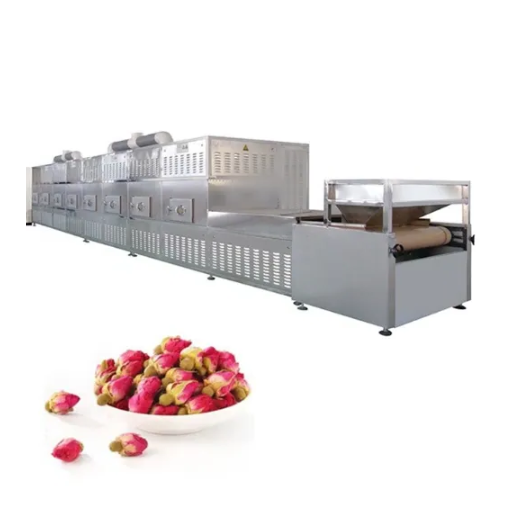
Both 915 MHz and 2450 MHz are frequencies in the industrial, scientific, and medical (ISM) radio bands reserved for microwave heating. They are the two frequencies most commonly used in commercial microwave sterilization equipment.
Frequency determines wavelength. At 915 MHz, the wavelength is approximately 32.8 cm. At 2450 MHz, it shrinks to about 12.2 cm. That difference matters because longer wavelengths penetrate deeper into food and water before their energy is fully absorbed. Lower frequencies also couple differently with moisture, salt, and fat, which changes how heat builds inside the product.
In plain terms, 915 MHz behaves like a deep-heating source, while 2450 MHz behaves like a fast surface heater. Neither is universally better. The best frequency is the one that matches your product’s physical properties and your production goals. If you are comparing industrial microwave oven options for sterilization, frequency is the first technical filter you should apply.
Penetration Depth: The Deciding Factor
Penetration depth is the distance microwave energy travels into a material before its power drops to about one-third of its surface value. In microwave sterilization, uneven penetration creates cold spots. Cold spots mean surviving pathogens, failed validation, and rejected batches.
In wet food materials, 915 MHz penetrates approximately 2.5 to 3 times deeper than 2450 MHz. Published equipment data shows penetration ranges of 8–12 cm for 915 MHz versus roughly 2–5 cm for 2450 MHz in typical foods. In high-temperature water used for Microwave-Assisted Thermal Sterilization (MATS), 915 MHz can reach penetration depths of 399 mm at 90°C and 457 mm at 120°C.
| Factor | 915 MHz | 2450 MHz |
|---|---|---|
| Wavelength | ~32.8 cm | ~12.2 cm |
| Penetration in wet foods | 8–12 cm | 2–5 cm |
| Single magnetron power | Up to 100 kW | 1.5–6 kW |
| Typical system efficiency | 80–90% | 55–70% |
| Best product thickness | >5 cm | <3 cm |
| Global regulatory status | Americas, China, select regions | Worldwide |
For thick packaged meals, dense nut butters, or bulk grain beds, 915 MHz is usually the safer engineering choice. The energy reaches the core before the surface overheats, which reduces edge burning and improves kill uniformity. For thin spice layers, snack seasonings, or lab samples, 2450 MHz provides enough penetration and is often cheaper to install.
Power, Efficiency, and Throughput
Power density and system efficiency translate directly into how much product you can process per hour and how much electricity you burn doing it.
A single 915 MHz magnetron can deliver up to 100 kW. A 2450 MHz magnetron typically delivers 1.5–6 kW. That means a high-throughput 915 MHz line may need one or two generators, while a comparable 2450 MHz line may need a bank of ten or more. More generators mean more maintenance points, more tuning complexity, and more potential failure modes.
System efficiency tells the same story. Industrial 915 MHz systems commonly reach 80–90% efficiency, while 2450 MHz systems usually run at 55–70%. The gap comes from generator design, waveguide losses, and how well the cavity couples energy into the load.
When Chen, a procurement manager at a grain-processing cooperative, compared two 60 kW proposals, the 915 MHz option had a higher purchase price. But its annual electricity bill was roughly 25% lower, and it needed half the magnetron replacements. Over five years, the 915 MHz system became the lower-cost choice by a wide margin. Chen’s experience is why total cost of ownership often favors 915 MHz at scale, even when the initial quote looks higher.
Want to see how frequency choice affects your production line? Contact our engineering team for a free sample test and tailored equipment recommendation.
Sterilization Efficacy and Product Quality
Frequency choice also affects how effectively you kill pathogens and how well your product retains color, flavor, and nutrition.
A 2025 study published in the Journal of the Science of Food and Agriculture compared 915 MHz and 2450 MHz heating for pasteurizing peanut butter, a dense, low-moisture product. The results were clear:
- 915 MHz for 90 seconds reduced E. coli O157:H7 and Salmonella Typhimurium by 3.73–4.95 log CFU/g, with no significant change in acid value, peroxide value, or color.
- 2450 MHz for 160 seconds achieved only 1.59–3.24 log reduction, and caused higher acid/peroxide values plus visible color changes.
The reason is heating uniformity. 915 MHz’s deeper penetration heated the peanut butter more evenly, so the entire mass reached lethal temperatures faster. The 2450 MHz runs overheated the outer regions while leaving cooler interior zones where pathogens survived.
This principle is why Washington State University’s Microwave-Assisted Thermal Sterilization (MATS) platform uses 915 MHz. Dr. Juming Tang, who led the WSU team, explained that they “always prefer 915 MHz because of its deeper penetration depth.” MATS systems can sterilize single-meal packages in 5–8 minutes at 121°C, reducing heating time by up to 80% compared with conventional retort. Continuous MATS lines can process 30–45 meals per minute, with industrial designs targeting up to 150 meals per minute.
The shorter time at high temperature also preserves quality. Microwave-sterilized meals can achieve shelf lives of 1–3 years while tasting closer to freshly prepared food than retort products.
See MATS in Action
The video below shows how Microwave-Assisted Thermal Sterilization combines 915 MHz microwaves with pressurized hot-water immersion to sterilize packaged meals in minutes while preserving quality.
Application Guide: Which Frequency for Which Product?
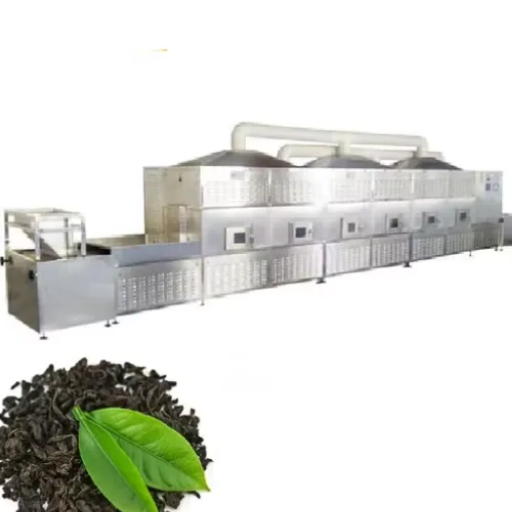
The simplest way to choose is to match frequency to your product and process.
Choose 915 MHz For
- Thick packaged meals and ready-to-eat trays, The deep penetration eliminates cold centers in multi-component meals.
- Bulk grains, rice, and legumes, Large bed depths need the longer wavelength to heat uniformly.
- Meat blocks and dense pastes, Nut butters, pet food, and emulsified products benefit from core heating.
- High-throughput continuous lines, Fewer high-power generators simplify maintenance and reduce energy cost per kilogram.
- Frozen product tempering and sterilization, 915 MHz penetrates frozen water more effectively than 2450 MHz.
Choose 2450 MHz For
- Thin-layer drying and sterilization, Spices, herbs, fruits, and vegetables in shallow beds heat quickly and evenly.
- Snack seasonings and powders, Small particles and low bulk density do not need deep penetration.
- Laboratory and pilot-scale development, Lower capital cost and smaller footprint make R&D affordable.
- Global deployments, If you ship equipment to multiple continents, 2450 MHz avoids regional licensing issues.
- Budget-conscious smaller installations, For low-volume operations, the lower upfront cost can be decisive.
If your product mix spans both categories, some suppliers offer configurable lines or hybrid systems. At Shandong Loyal, we engineer both 915 MHz and 2450 MHz microwave sterilization machines and can recommend the right frequency after sample testing.
Regulatory and Regional Considerations
Before you specify a frequency, confirm it is legal where the equipment will operate.
2450 MHz is a universally permitted ISM band. Almost every country allows it for industrial, scientific, and medical use. That is why domestic microwave ovens and most small industrial systems use it.
915 MHz is permitted in the Americas, China, and several other industrial markets. However, it is restricted in Germany and some other European countries for industrial microwave applications. If your facility is in the European Union, or if you plan to export equipment globally, 2450 MHz may be the safer regulatory choice.
Beyond frequency, you also need to consider food-safety regulations. Low-acid canned foods in the United States fall under FDA regulations, while meat and poultry products require USDA FSIS review. MATS systems have already received FDA acceptance for specific products, including mashed potatoes and salmon fillet in sauce, and a USDA non-objection for chicken dumplings. Any new sterilization process will need validation with biological indicators, typically Clostridium sporogenes PA 3769 as a surrogate for C. botulinum.
Capital Cost vs. Operating Cost
The cheapest quote on day one is rarely the cheapest system over five years.
2450 MHz equipment usually has a lower purchase price. Components are mass-produced, cavities are smaller, and installation is simpler. For a small batch cabinet or pilot unit, this can be the right entry point.
At industrial scale, the math shifts. A 915 MHz line may cost more upfront, but it typically uses fewer generators, consumes less electricity per kilogram, and requires less maintenance. When you model total cost of ownership across energy, spare parts, labor, and downtime, 915 MHz often wins for high-volume operations.
| Cost Factor | 915 MHz | 2450 MHz |
|---|---|---|
| Upfront equipment cost | Higher | Lower |
| Generators for 60 kW line | 1–2 | 10–15 |
| Energy efficiency | 80–90% | 55–70% |
| Maintenance points | Fewer | More |
| Best payback scenario | High-volume continuous lines | Low-volume batch or pilot systems |
The break-even point depends on throughput, local electricity prices, and product value. As a rule of thumb, if you plan to run continuous production above 30 kW total power, 915 MHz deserves serious consideration.
Common Mistakes When Selecting Microwave Frequency
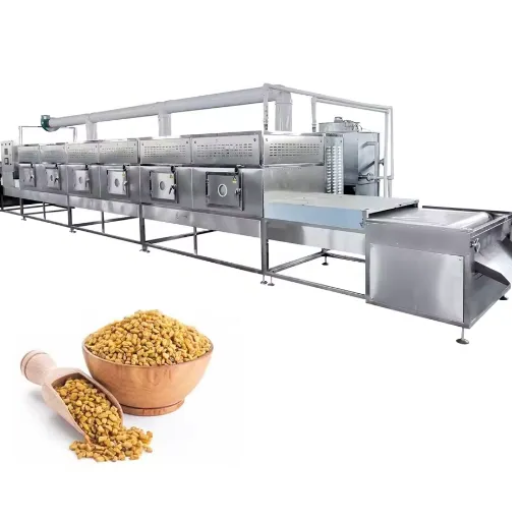
Even experienced buyers make these errors:
- Choosing based on familiarity. Because home ovens use 2450 MHz, buyers assume it is the industrial standard. It is not. Product physics should drive the decision.
- Ignoring regional restrictions. Ordering a 915 MHz system for a German facility can create expensive compliance problems.
- Underestimating penetration depth. A product thicker than 5 cm processed at 2450 MHz is likely to develop cold spots.
- Skipping validation planning. Frequency selection is only step one. You still need temperature mapping, biological indicators, and regulatory documentation.
- Neglecting facility power and footprint. High-power 915 MHz systems may need larger electrical feeds and water-cooling infrastructure.
Working with a supplier who understands both frequencies, and both the science and the regulations, helps you avoid these pitfalls.
Frequently Asked Questions
Which frequency penetrates deeper into food?
915 MHz penetrates roughly 2.5 to 3 times deeper than 2450 MHz in wet foods. This makes it better for thick or dense products where core heating is critical.
Is 915 MHz microwave sterilization legal everywhere?
No. 915 MHz is permitted in the Americas, China, and select regions, but it is restricted in Germany and some other European countries for industrial microwave use. Always verify local regulations before purchasing.
What is MATS?
Microwave-Assisted Thermal Sterilization (MATS) is a process developed at Washington State University that uses 915 MHz microwaves combined with pressurized hot-water immersion to sterilize packaged foods quickly while preserving quality.
Can 2450 MHz sterilize thick foods reliably?
It is harder. Thick products often develop cold centers and overheated edges at 2450 MHz, which can leave pathogens surviving. Mode stirrers, rotation, or thinner product layers can help, but 915 MHz is generally the better choice for thick foods.
Which frequency is more energy efficient?
Industrial 915 MHz systems are typically more efficient, reaching 80–90% system efficiency compared with 55–70% for 2450 MHz systems.
Conclusion
915 MHz vs 2450 MHz microwave sterilization comes down to a few practical questions. How thick is your product? How much throughput do you need? Where will the equipment operate? And what is your five-year cost target?
If you process thick packaged meals, dense pastes, bulk grains, or frozen blocks at high volume, 915 MHz usually delivers deeper penetration, faster kill rates, lower energy cost per kilogram, and better product quality. If you process thin layers, powders, snacks, or need universal global deployment, 2450 MHz is often the more flexible and cost-effective choice.
The best results come from matching the frequency to the application, not from assuming one frequency fits all. At Shandong Loyal Industrial Co., Ltd., we provide tailored food processing machines and food production line equipment for manufacturers worldwide. We offer free sample testing, customizable 915 MHz and 2450 MHz configurations, and engineering support to help you select the right microwave sterilization machine for your product.
Ready to choose the right frequency for your sterilization line? Contact us today for a free consultation and sample test report.