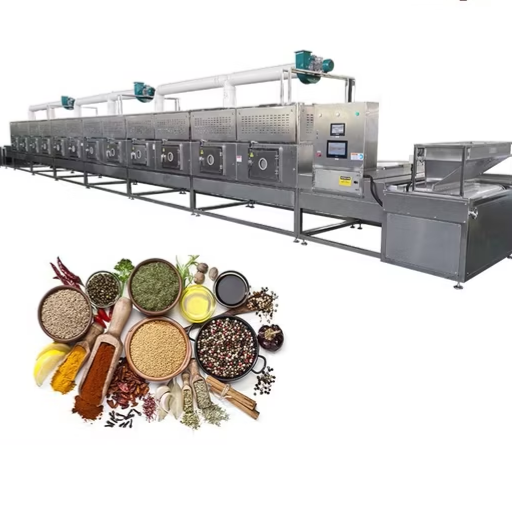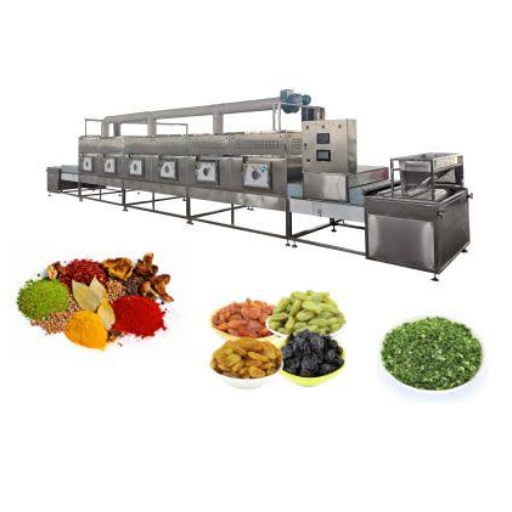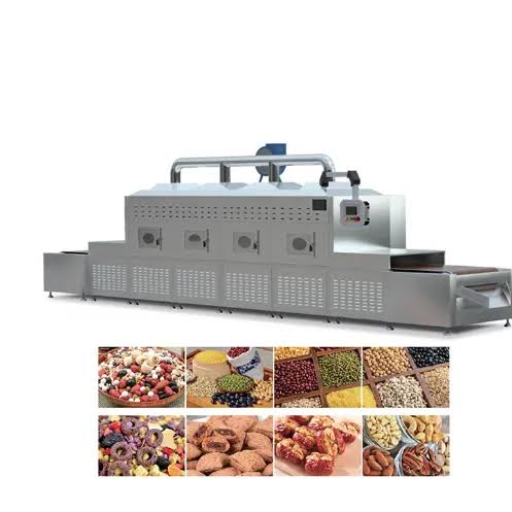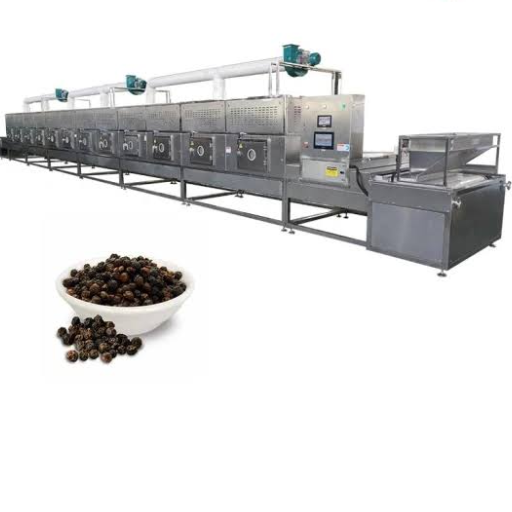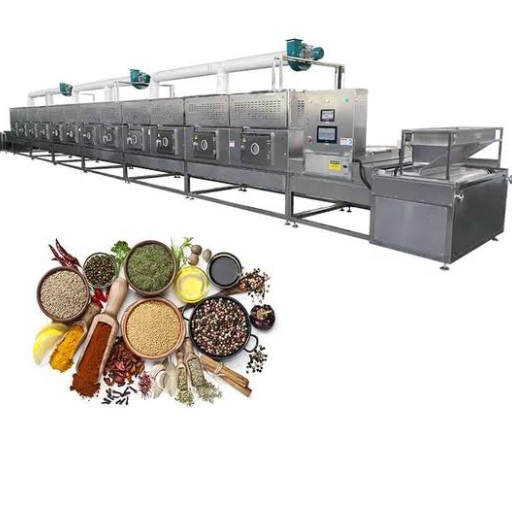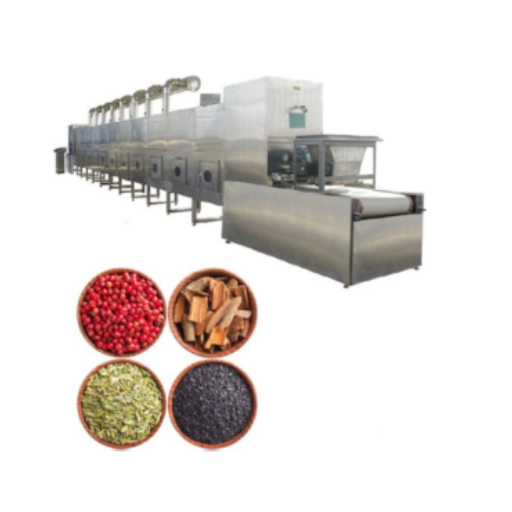
If you are asking how does a microwave sterilization machine work, the short answer is that it uses electromagnetic waves at 915 MHz or 2.45 GHz to heat food from the inside out. It kills bacteria, molds, yeasts, and viruses faster than steam or hot-air methods while preserving more color, flavor, and nutrients.
What if sterilization took minutes instead of hours? For many food manufacturers, that shift means meeting export deadlines instead of watching product quality fade inside a long retort cycle. This guide explains how a microwave sterilization machine works, what each component does, and why the process matters for your operation.
You already know sterilization is non-negotiable. By the end of this article, you will understand the full mechanism—from magnetron to cooling belt. You will also know how to evaluate whether this technology fits your product. We will cover the science, the key components, the step-by-step process flow, and how microwave sterilization compares to traditional methods.
Key Takeaways
- A microwave sterilization machine kills microbes through volumetric heating at 915 MHz or 2.45 GHz, typically completing cycles in 3–5 minutes.
- The process relies on a thermal effect (rapid heat denatures proteins) plus a supporting non-thermal effect (electromagnetic field disrupts cell membranes and genetic material).
- Core components include magnetrons, waveguides, a stainless-steel tunnel or chamber, a conveyor belt, sensors, and PLC/HMI control systems.
- Microwave sterilization uses 30–50% less energy than steam sterilization and preserves more nutrients, color, and flavor.
- The technology works best for spices, powders, nuts, grains, tea, herbs, pet food, snacks, and ready-to-eat meals—not for metal-packaged or very dense products.
What Is a Microwave Sterilization Machine?
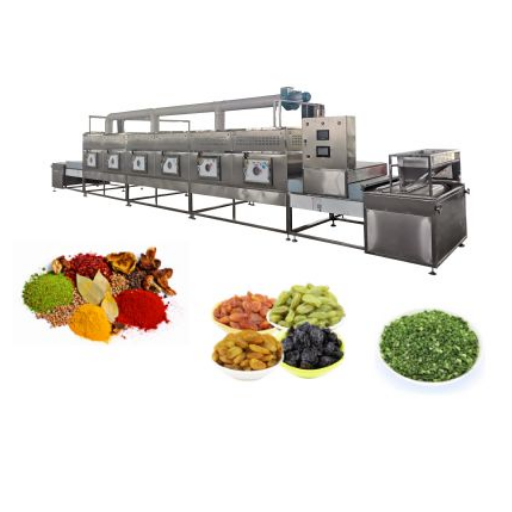
A microwave sterilization machine is industrial equipment that reduces microbial load in food, pharmaceutical, or agricultural products using microwave energy. Unlike a home microwave that simply reheats leftovers, these machines are engineered for continuous production, precise temperature control, and validated microbial kill.
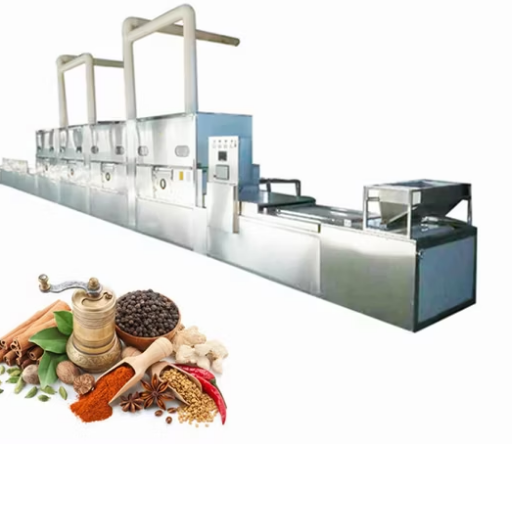
The most common industrial format is the continuous tunnel sterilizer. Product travels on a conveyor belt through a stainless-steel tunnel where magnetrons generate controlled electromagnetic waves. Batch cabinets and vacuum microwave dryers are also available for smaller volumes or heat-sensitive materials.
It is important to distinguish industrial microwave sterilization from two related but different technologies:
- Home microwave steam sterilizers heat a small amount of water to create steam for baby bottles or labware. They do not apply microwaves directly to the product.
- Autoclaves use high-pressure saturated steam, usually at 121–134°C, to destroy microorganisms through conduction from the outside in.
Industrial microwave sterilizers sit between these two extremes: they apply electromagnetic energy directly to the product, heat it from the inside out, and run at lower temperatures than autoclaves.
If you are exploring how microwave drying technology fits into your line, sterilization is often the next logical capability to evaluate.
The Science Behind Microwave Sterilization
Understanding the microwave drying and sterilization working principle starts with two simple ideas. First, microwaves generate heat. Second, that heat kills microorganisms.
Electromagnetic Waves and Volumetric Heating
Microwave sterilizers use one of two frequencies.
- 2.45 GHz (2,450 MHz): This is the most common frequency. It penetrates 2–5 cm into most food products. It works well for powders, spices, herbs, tea, nuts, and thin-layer products.
- 915 MHz: This frequency penetrates 8–12 cm. It is better for thicker products such as ready meals, pet food, and bulk materials.
When microwaves enter a product, they interact with polar molecules. Water is the main target. Salts, sugars, and fats also respond. The alternating electromagnetic field causes these molecules to rotate, vibrate, and collide millions of times per second. That friction turns electromagnetic energy into heat almost instantly.
The energy penetrates the material rather than sitting only at the surface. So the product heats from the inside out. This is called volumetric heating. It is the core reason microwave sterilization is so fast and uniform.
The Thermal Effect
The rapid temperature rise inside microbial cells is the main kill mechanism. As cells absorb microwave energy, their internal temperature climbs quickly. This causes four key problems:
- Proteins and enzymes denature and lose function.
- Cell membranes break down.
- Nucleic acids degrade.
- The cell loses metabolic activity. It dies or can no longer reproduce.
Most microwave sterilization cycles reach 70–120°C. The exact temperature depends on the product and target microorganisms. That range is lower than the 121–134°C typical of autoclaves. Even so, the speed of heating and the direct energy transfer still deliver effective microbial reduction.
Mini-story: When Chen, a spice processor in Sichuan, switched from steam sterilization to a tunnel microwave system, his chili powder reached target temperature in under four minutes instead of forty. The faster cycle preserved the bright red color and capsaicin heat level that his European buyers prized—and his rejection rate for off-color batches dropped by nearly half.
The Non-Thermal (Biological) Effect
Some researchers and manufacturers also describe a non-thermal effect. The idea is simple. The alternating electromagnetic field itself may disrupt microbial cells. It can alter the distribution of ions and electrons around cell membranes. It may change membrane permeability. It might even damage hydrogen bonds in RNA and DNA.
The scientific consensus is that this effect exists. However, it is generally secondary to heat. It may boost microbial inactivation at lower temperatures, according to Joyang Machine. It should not be relied on as a standalone guarantee of sterilization.
For food manufacturers, the practical takeaway is clear. Microwave sterilization works best when the process is validated for temperature, time, and microbial kill. Be wary of any claim that treats it as a magic non-thermal process.
Want to see how microwave energy interacts with different product densities? Explore our industrial microwave oven systems to compare 915 MHz and 2.45 GHz configurations.
Key Components of a Microwave Sterilization Machine
An industrial microwave sterilizer is more than a box with a magnetron. Each part has a specific job. Together they generate, distribute, control, and safely remove energy.
Magnetron Arrays
Magnetrons are the heart of the system. They convert electrical energy into microwave radiation. Industrial machines use arrays of magnetrons. Total power can scale from roughly 6 kW to 300 kW.
Common brands include Panasonic, Samsung, LG, and Toshiba. Power is adjustable. Operators can match energy output to product type, moisture content, and throughput.
Waveguides and Mode Stirrers
Waveguides direct microwave energy from the magnetrons into the treatment chamber. Mode stirrers rotate or oscillate to distribute the waves evenly and reduce cold spots. Without proper distribution, some areas of the product bed could receive too little energy, leaving surviving microbes.
Treatment Chamber or Tunnel
The chamber is typically built from food-grade SUS304 stainless steel for corrosion resistance and easy cleaning. In continuous systems, the tunnel is divided into zones: preheating, sterilization, and cooling. The chamber also includes microwave leakage suppressors to keep electromagnetic radiation well below safety limits.
Conveyor Belt System
Product moves through the tunnel on a conveyor belt made of heat-resistant material such as PTFE (Teflon) or ceramic mesh. Belt speed is adjustable, usually from 0.1 to 10 meters per minute, and is linked to the PLC. Slower speeds mean longer exposure and higher final temperatures; faster speeds are used for lighter microbial loads or heat-sensitive products.
Sensors and PLC/HMI Control
Because metal thermocouples can spark inside a microwave field, industrial systems use fiber-optic temperature sensors or infrared surface sensors. A programmable logic controller (PLC) with a touchscreen interface (HMI) manages the process. It controls:
- Microwave power output
- Belt speed
- Temperature setpoints
- Recipe storage
- Alarm thresholds
- Data logging for validation
Cooling and Exhaust Systems
Sterilization releases moisture and heat. Exhaust fans remove steam, while cooling sections bring the product back toward ambient temperature before packaging. Some systems also include dehumidification to prevent condensation inside the chamber.
Safety Systems
Industrial microwave sterilizers must meet strict electromagnetic leakage standards, typically less than 1 mW/cm² at 5 cm from the equipment surface, according to NASAN. Safety interlocks shut down magnetrons if doors open, and emergency stops are positioned along the operator side.
| Component | Function |
|---|---|
| Magnetron arrays | Generate microwave power (6–300 kW) |
| Waveguides / mode stirrers | Direct and distribute microwaves evenly |
| Stainless-steel tunnel | Food-grade enclosure with leakage suppression |
| Conveyor belt | Moves product continuously at controlled speed |
| Fiber-optic / IR sensors | Monitor temperature without distorting the field |
| PLC/HMI control | Automates power, speed, temperature, and recipes |
| Cooling / exhaust | Removes heat and moisture before packaging |
| Safety interlocks | Prevent microwave leakage and protect operators |
How Does a Microwave Sterilization Machine Work? A Step-by-Step Process
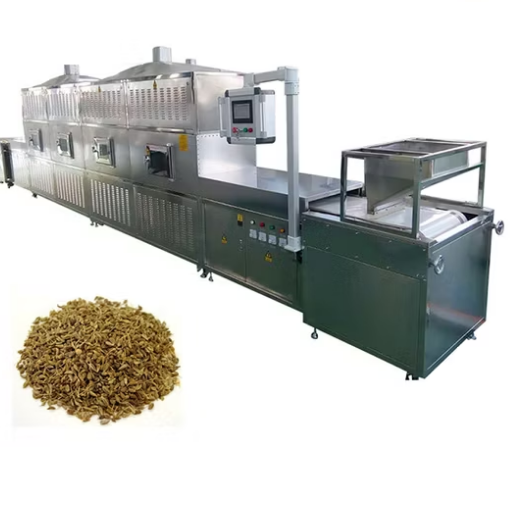
Now that we have covered the science and the components, here is the full microwave sterilization process for a typical continuous tunnel microwave sterilizer.
Step 1: Product Loading
Operators spread the product evenly on the conveyor belt. Bed depth matters: too thick, and the center may not reach target temperature; too thin, and throughput drops. Typical bed depths range from 20 to 80 mm, depending on frequency and product density.
Step 2: Recipe Selection
The operator selects a recipe on the HMI touchscreen. The recipe sets microwave power, belt speed, target temperature, and hold time. Modern PLCs can store dozens of recipes for different products, from chili powder to green tea to pet food kibble.
Step 3: Microwave Generation
Magnetrons energize and produce electromagnetic waves at the selected frequency. Waveguides channel the energy into the tunnel, and mode stirrers distribute it across the product bed.
Step 4: Volumetric Heating
Microwaves penetrate the product and excite polar molecules. Heat is generated throughout the material, not just at the surface. Internal sensors monitor temperature in real time and send feedback to the PLC.
Step 5: Microbial Inactivation
As the product reaches 70–120°C, the thermal effect denatures microbial proteins and damages cell membranes. The non-thermal effect may add extra disruption at lower temperatures. The combination achieves the target log reduction for bacteria, molds, yeasts, and insect eggs.
Step 6: Moisture and Heat Removal
Exhaust fans remove steam and hot air. In systems that combine drying with sterilization, this step also reduces moisture content. For products that must remain moist, the exhaust rate is tuned to remove only enough vapor to prevent condensation.
Step 7: Cooling and Discharge
The treated product exits the tunnel and passes through a cooling section. Once it reaches a safe packaging temperature, it moves to weighing, packaging, or storage. The entire cycle often takes 3–5 minutes, compared with 15–60 minutes for traditional steam sterilization.
Mini-story: At a nut-roasting facility in California, Maria’s team struggled with inconsistent Salmonella reduction. Their hot-air system created hot and cold zones, so some batches needed rework. After installing a continuous microwave sterilizer with fiber-optic temperature mapping, every lot hit a 5-log reduction on the first pass. The belt speed and power were locked into a validated recipe, and rework virtually disappeared.
Microwave Sterilization vs Traditional Methods
To appreciate why microwave sterilization matters, it helps to compare it with the alternatives.
| Factor | Microwave Sterilization | Retort / Autoclave | Hot-Air Sterilization |
|---|---|---|---|
| Heating method | Volumetric (inside-out) | Conduction/convection (outside-in) | Surface convection |
| Typical temperature | 70–120°C | 121–134°C | 160–180°C |
| Processing time | 3–5 minutes | 15–60+ minutes | 20–60 minutes |
| Energy use | 30–50% less than steam | High (heats water and vessel) | High |
| Water use | Minimal | 20–50 gallons per cycle | None |
| Product quality | High nutrient/color/flavor retention | More heat damage risk | Moderate to high damage |
| Best for | Powders, spices, nuts, grains, snacks, RTE meals | Canned goods, retort pouches, dense wet foods | Low-moisture dry products |
| Validation | Process-specific, emerging protocols | Well-established protocols | Established but slower |
Microwave sterilization is not a universal replacement. It excels for dry, semi-dry, and thin-layer products where speed and quality matter. It is less suitable for:
- Metal-packaged products (microwaves reflect off metal)
- Very dense, thick products where penetration is limited
- Low-acid canned goods requiring long ambient shelf life and retort validation
- Products where established autoclave documentation is mandatory
The right choice depends on your product, packaging, throughput, and regulatory environment. Many manufacturers use microwave sterilization as a fast, energy-efficient step for specific product lines while keeping retort capacity for others.
Common Applications in Food Processing
Microwave sterilization equipment is used across a wide range of food categories. Here are the most common applications.
Spices, Seasonings, and Powdered Foods
Spices and seasonings are ideal candidates. They are dry, high-value, and sensitive to heat damage. Microwave sterilization reduces microbial counts while preserving volatile oils, color, and flavor. Chili powder, turmeric, black pepper, garlic powder, and curry blends are common examples.
Tea, Herbs, and Botanicals
Green tea, oolong, herbs, and botanical ingredients benefit from gentle, fast heating. Microwave fixation and sterilization reduce enzymatic browning and extend shelf life for premium export markets.
Nuts, Grains, and Seeds
Almonds, peanuts, sunflower seeds, pumpkin seeds, and grains often require Salmonella or E. coli reduction. Microwave sterilization achieves consistent log reductions while maintaining crunch, color, and shelf stability.
Pet Food and Animal Feed
Pet food kibble, treats, and animal feed ingredients such as chicken bone meal or black soldier fly larvae can be sterilized continuously. The process helps producers meet microbiology standards without the long cycles of traditional dryers.
Ready-to-Eat Meals and Packaged Foods
Microwave-Assisted Thermal Sterilization (MATS) is used for ready meals in microwave-permeable packaging. The technology can deliver better texture and flavor than retort processing, though it requires FDA or USDA validation for low-acid products.
Snacks and Puffed Products
Puffed snacks, rice crackers, and extruded products can pass through a microwave tunnel for sterilization and final moisture adjustment in one step.
If your product falls into one of these categories, our food processing machines can be configured as standalone sterilizers or integrated into a complete production line.
Market Context: Why Manufacturers Are Adopting Microwave Sterilization
The industrial microwave sterilization equipment market was valued at approximately USD 86.5 million in 2024. It is projected to reach USD 101 million by 2032, growing at about 2.3% per year, according to Intel Market Research.
The broader industrial microwave heating market is larger. It reached USD 1.23 billion in 2023 and is projected to grow at 6.3% annually through 2030, according to Grand View Research.
Several forces are driving adoption:
- Food safety pressure: Stricter import and retail microbiology standards push processors toward validated sterilization.
- Energy costs: Microwave systems use 30–50% less energy than steam.
- Quality expectations: Buyers expect clean-label products with natural color, flavor, and nutrients.
- Sustainability goals: Reduced water and energy use support corporate targets.
- Throughput demands: Shorter cycles allow smaller footprints and higher output per square meter.
Mini-story: In 2024, a pet food manufacturer in Thailand faced a deadline: a major retailer required documented 5-log Salmonella reduction within six months. The company’s existing hot-air line could not reliably hit the target without overcooking the product. They installed a 50 kW continuous microwave sterilizer, validated the recipe with biological indicators, and passed the retail audit three months ahead of schedule. The energy savings alone covered a noticeable share of the monthly lease payment.
Is a Microwave Sterilization Machine Right for Your Operation?
Microwave sterilization is a strong fit if you answer yes to several of these questions:
- Do you process dry, semi-dry, or thin-layer products?
- Is product quality—color, flavor, texture, nutrients—a competitive advantage?
- Are energy and water costs a significant part of your operating budget?
- Do you need higher throughput in a limited floor space?
- Are your buyers asking for documented microbial reduction?
It is a weaker fit if you primarily process dense, wet, metal-packaged, or retort-dependent products. In those cases, autoclave or retort sterilization may still be the better documented choice.
The best way to know for sure is to run sample tests. Reputable suppliers will sterilize your actual product in their machine, measure temperature profiles, and provide microbiology results before you commit to a purchase.
Ready to validate microwave sterilization for your product? Contact our team to arrange sample testing and a tailored equipment quote.
Frequently Asked Questions
How long does microwave sterilization take?
Most industrial microwave sterilization cycles take 3–5 minutes. The exact time depends on product type, bed depth, target microorganisms, and machine power.
What frequency is best?
2.45 GHz is best for thin products like spices, powders, and nuts. 915 MHz penetrates deeper and works better for thick products like ready meals and pet food.
Does it use chemicals?
No. Microwave sterilization is a physical process. It uses electromagnetic energy and heat to inactivate microbes. No chemical preservatives or residues are added.
Is it as effective as autoclave sterilization?
For the right products, yes. Industrial microwave systems can achieve 5-log reductions of pathogens when validated properly. Autoclaves remain the gold standard for dense, wet, or metal-packaged products.
What products work best?
Dry and semi-dry products work best. Examples include spices, tea, nuts, grains, seeds, pet food, snacks, and powdered foods.
Can it replace retort sterilization?
Not always. Microwave sterilization excels for thin, dry, or moisture-containing products. Retort sterilization remains better for canned goods, retort pouches, and products requiring long ambient shelf life.
What is the main advantage?
Speed. Microwave sterilization heats product volumetrically, so cycles finish in minutes rather than the 15–60 minutes common with steam or hot-air methods. It also uses less energy and preserves product quality.
Conclusion
How does a microwave sterilization machine work? It generates electromagnetic waves that penetrate food products and excite polar molecules such as water. The resulting friction produces heat throughout the material.
That volumetric heating—combined with precise PLC control, even wave distribution, and validated temperature profiles—kills microorganisms in minutes. It also preserves the qualities that make your product valuable.
The key components are straightforward once you understand their roles. Magnetrons create energy. Waveguides and mode stirrers distribute it. Sensors and PLCs control the process. Conveyors move product safely through heating and cooling zones. Compared with retort or hot-air sterilization, microwave systems offer faster cycles, lower energy use, and better retention of color, flavor, and nutrients.
For food manufacturers processing spices, tea, nuts, grains, pet food, snacks, or ready-to-eat meals, microwave sterilization is worth serious evaluation. The technology is not universal. But where it fits, it can transform both operational efficiency and product quality.