Microwave drying machine maintenance is a scheduled program of cleaning, inspection, calibration, and component replacement that keeps industrial microwave dryers safe, efficient, and compliant. A well-run preventive plan can extend equipment life from a few years to 10–15 years while cutting unplanned downtime by up to 50%.
But here is the uncomfortable truth most food manufacturers learn too late: the real cost of a breakdown is rarely the repair bill.
When Marcus’s snack line lost its microwave dryer for 36 hours last March, the emergency magnetron replacement was only 1,400.Thespoiledbatch,idlelabor,missedcustomerdeadline,andovertimetocatchupcosthisplantnearly1,400.Thespoiledbatch,idlelabor,missedcustomerdeadline,andovertimetocatchupcosthisplantnearly38,000. That single failure convinced his team to treat microwave drying machine maintenance as a profit-protection strategy, not a chore.
You probably already agree that preventive maintenance matters. In this guide, you will get a complete microwave dryer maintenance program you can implement this week: daily cleaning routines, weekly inspections, monthly calibrations, annual service schedules, a troubleshooting matrix, and documentation templates that satisfy FDA and GMP auditors. We will also show you where Shandong Loyal Industrial microwave drying machines fit into a long-term reliability plan.
Key Takeaways
- A proactive microwave drying machine maintenance program delivers 3:1 to 5:1 ROI by preventing unplanned downtime that can cost food plants 1,800–1,800–100,000 per hour.
- Daily cleaning of the cavity, conveyor, and door seals takes 10–15 minutes but prevents residue buildup that reduces drying efficiency and creates food safety risks.
- Weekly waveguide, magnetron cooling, and belt inspections catch the wear patterns that cause 70–80% of preventable microwave dryer failures.
- Monthly calibration of temperature and moisture sensors, plus grounding checks (resistance ≤ 4Ω), keeps drying uniform and operators safe.
- Magnetrons should be tested regularly and replaced proactively at 5,000–6,000 operating hours to avoid 24–48 hour emergency shutdowns.
Why Microwave Drying Machine Maintenance Is a Business Priority

Industrial microwave dryers are high-value assets. They sit at the center of snack, spice, herb, fruit, vegetable, and ready-to-eat food lines where throughput and consistency directly affect revenue. Yet many plants still treat these machines with a “run until it fails” mindset. That approach is expensive.
According to industry research cited by Processing Magazine, equipment failure causes roughly 42% of unplanned downtime in manufacturing. In food processing, the true cost of that downtime ranges from 1,800to1,800to100,000 per hour once you account for lost production, spoiled inventory, labor inefficiency, customer penalties, and regulatory exposure. Reactive repairs are typically 3–5 times more expensive than planned preventive work.
By contrast, a structured preventive maintenance program typically delivers a 3:1 to 5:1 return on investment. The math is simple: a few hours of scheduled inspection and cleaning each month prevents the emergency breakdowns that erase weeks of profit.
Maintenance Also Protects Product Quality
A poorly maintained dryer does not just stop working. It quietly degrades product quality first. Worn door seals cause microwave leakage and uneven energy distribution. Dirty waveguides reduce power transfer. Misaligned conveyor belts create hot spots. The result is scorched edges, damp centers, inconsistent moisture content, and rejected batches.
For food manufacturers, that inconsistency is a direct hit on brand reputation and customer contracts.
Extending Equipment Lifespan
With proper care, industrial microwave dryers can operate reliably for 10–15 years. Without it, critical components like magnetrons, bearings, and seals fail prematurely. Magnetron lifespan is typically 5,000–8,000 hours, but proactive replacement at 5,000–6,000 hours prevents the sudden failures that sideline entire production lines.
Want to see how the right equipment design makes maintenance easier from day one? Explore our industrial microwave drying machines to learn how Shandong Loyal builds food-grade reliability into every unit.
Daily Microwave Drying Machine Maintenance Tasks
Daily maintenance is operator-level work. It should take 10–15 minutes at the end of each shift or production run. The goal is to remove residue, verify safety systems, and confirm that cooling and power systems are ready for the next run.
Clean the Drying Cavity and Conveyor
Food residue absorbs microwave energy, creates hot spots, and can burn onto chamber surfaces. After each run:
- Remove loose debris with a soft brush or food-grade scraper.
- Wipe interior walls, trays, and conveyor belts with a mild, non-corrosive cleaner approved for food-contact surfaces.
- Clean viewing windows and observation ports so operators can monitor the process.
- Never use abrasive pads or chlorinated cleaners on stainless steel, they damage finishes and can leave corrosive residue.
Inspect Door Seals and Safety Interlocks
The door seal is one of the most important safety components on any microwave dryer. A damaged seal allows microwave leakage and reduces drying efficiency.
- Inspect the seal visually for signs of cracking, hardening, embedded food, or warping.
- Ensure the door closes properly and locks effectively.
- Test safety interlocks and emergency stops to ensure the machine cannot run with an open or misaligned door.
Verify Cooling and Power Systems
Magnetrons generate intense heat and require reliable cooling.
- On air-cooled units, confirm cooling fans are running and air inlets are unobstructed.
- On water-cooled units, check flow rate, pressure, and temperature. Use deionized or softened water to reduce scale buildup.
- Inspect power plugs, sockets, and visible wiring for signs of overheating, corrosion, or loose connections.
Check Conveyor Tracking and Belt Tension
A belt that wanders or slips causes uneven product loading and premature wear.
- Run the conveyor briefly and watch for tracking issues.
- Listen for unusual noise from bearings, rollers, or chains.
- Note any vibration or jerky movement in the logbook.
When Elena took over as shift lead at a spice processing plant, she made daily cavity cleaning non-negotiable. Within one month, her team cut rejected batches by 22% simply because residue was no longer causing hot spots and cross-contamination between product runs.
Weekly Microwave Drying Machine Maintenance Tasks
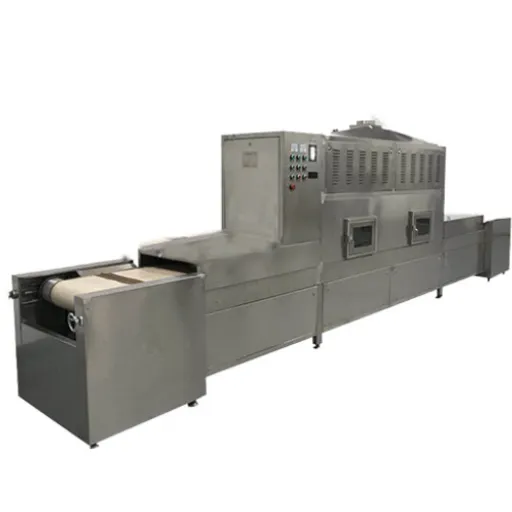
Weekly tasks move from surface cleaning to deeper inspection. These are usually performed by maintenance technicians or trained operators.
Inspect Waveguides and Magnetron Cooling
Waveguides direct microwave energy from the magnetron into the drying chamber. Any obstruction, corrosion, or arcing mark disrupts energy distribution.
- Clean waveguide ports and covers with a dry, lint-free cloth.
- Look for arcing, burning, or discoloration inside the waveguide.
- Confirm magnetron cooling fans or water jackets are free of dust and debris.
- Check that cooling air paths are not blocked by product dust or packaging materials.
Deep Clean Conveyor Components
- Remove and soak removable conveyor parts in a food-safe cleaning solution.
- Inspect rollers, bearings, and chains for wear or stiffness.
- Apply manufacturer-recommended food-grade lubricant to moving parts.
- Check belt splice condition and edge wear.
Examine Door Hardware and Sealing Surfaces
- Tighten door hinge screws and latch mechanisms.
- Check the door frame for dents or warping that could prevent proper sealing.
- Replace gaskets immediately if you find cracks, permanent compression, or tears.
Clean Electrical Enclosures
Dust and moisture are the enemies of control electronics.
- Blow dust from the control cabinet using low-pressure dry air.
- Inspect contactors, relays, and terminals for oxidation or loose connections.
- In humid environments, check for condensation inside the enclosure.
Monthly and Quarterly Maintenance Tasks
Monthly and quarterly work focuses on calibration, electrical safety, and component wear. These tasks require trained technicians and proper documentation.
Calibrate Temperature and Moisture Sensors
Accurate sensors are essential for uniform drying. Drifting sensors cause overheating, under-drying, and wasted energy.
- Compare cavity temperature readings against a calibrated reference thermometer.
- Verify moisture sensor accuracy using samples with known moisture content.
- Check PLC setpoints and alarm thresholds.
- Recalibrate power output controls if your machine has adjustable microwave power.
Verify Grounding and Electrical Safety
Microwave dryers operate at high voltage. Proper grounding protects operators and equipment.
- Test grounding resistance. Industry guidance specifies ≤ 4Ω for safety.
- Inspect main power cables, terminals, and bus bars for looseness or overheating.
- Check insulation resistance on high-voltage components where manufacturer procedures allow.
- Confirm that overload protection, fuses, and circuit breakers are correctly sized and functional.
Inspect Wear Components
Replace parts before they fail. During monthly inspections, evaluate:
- Conveyor belts and splices
- Bearings, rollers, chains, and sprockets
- Door gaskets and sealing strips
- Cooling fans and filters
- Fuses and electrical contacts
Perform Microwave Leakage Testing
OSHA and most local regulations require periodic microwave leakage testing. Use a calibrated leakage detector.
- Test around door seals, waveguide covers, viewing windows, and panel joints.
- The safety limit is typically less than 5 mW per square centimeter at 5 centimeters from the surface.
- Document results and tag the equipment with the test date and next due date.
Annual and Long-Term Maintenance Planning
Some maintenance should only be performed by qualified technicians or the original equipment manufacturer.
Schedule Professional OEM Servicing
At least once a year, arrange a comprehensive inspection that includes:
- High-voltage component testing and magnetron performance measurement.
- Complete seal evaluation and replacement of degraded gaskets.
- Control system diagnostics and software or firmware updates.
- Full system validation with dummy load testing.
- Review of maintenance records and recommendations for the coming year.
If you are operating a Shandong Loyal Industrial microwave drying machine, our service team can provide scheduled OEM inspections, spare parts recommendations, and operator training tailored to your production line.
Build a Smart Spare Parts Inventory
Stocking the right parts prevents long waits when components wear out. Recommended on-hand inventory includes:
- Magnetron (the most common high-value failure point)
- Door gaskets and sealing strips
- Conveyor belt sections or splices
- Bearings, rollers, and chain links
- Temperature sensors and fuses
- Cooling fans and air filters
Plan for Long-Term Storage
If a microwave dryer will sit idle for an extended period:
- Store it in a dry, dust-free environment away from strong magnetic fields.
- Power on the machine for about 10 minutes each month to prevent moisture buildup in electrical components.
- Cover inlets and outlets to keep insects and debris out.
- Disconnect power and lock out the machine per your facility’s procedures.
Microwave Dryer Troubleshooting Guide
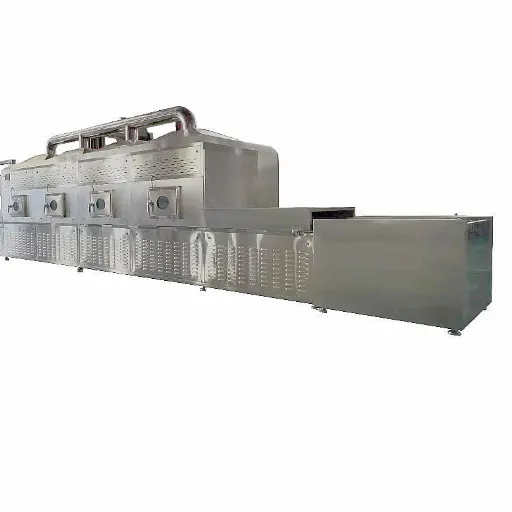
Even with excellent maintenance, operators occasionally see performance issues. Use this symptom-based guide to diagnose common problems quickly.
| Symptom | Likely Cause | Recommended Action |
|---|---|---|
| Uneven drying or wet centers | Overloading, uneven product spread, weak magnetron, or obstructed waveguide | Reduce load, spread product uniformly, inspect magnetron output, clean waveguide |
| Overheating or scorched product | Power set too high, blocked ventilation, faulty temperature sensor, or slow conveyor speed | Lower power, clean vents and filters, calibrate sensors, adjust belt speed |
| Arcing or sparks inside chamber | Metal debris, damaged waveguide cover, or conductive contamination | Stop machine immediately, remove metal, inspect and replace waveguide cover |
| Sudden shutdown during operation | Overheating protection, faulty interlock, or electrical fault | Allow cooldown, test interlocks, check fuses and connections |
| Excessive energy consumption | Worn door seals, failing magnetron, poor insulation, or overloaded chamber | Replace seals, test magnetron, reduce load, inspect insulation |
| Unusual noise or vibration | Worn bearings, misaligned conveyor, loose chain, or damaged roller | Inspect and lubricate mechanical components, realign belt |
| Moisture readings do not match product | Drifting moisture sensor or incorrect calibration | Calibrate sensor against known samples, check probe condition |
When to Call the Manufacturer
Never attempt internal repairs on high-voltage microwave components without proper training. Capacitors can retain lethal charges even after power is disconnected. Call your OEM or a qualified service provider for:
- Magnetron replacement or high-voltage circuit work.
- Control system faults or PLC programming issues.
- Persistent microwave leakage above safe limits.
- Repeated unexplained shutdowns or alarms.
Need expert support for your microwave dryer? Contact the Shandong Loyal Industrial service team for maintenance assessments, spare parts, and OEM-trained technicians.
Compliance, Safety, and Documentation
Maintenance in food processing is not only an operational issue. It is a regulatory one.
FDA and GMP Requirements
Under FDA 21 CFR Part 117, food facilities must maintain equipment in clean, sanitary condition and keep it in repair to prevent food adulteration. Specific sections require:
- 21 CFR 117.35: Facilities kept in clean and sanitary condition.
- 21 CFR 117.40: Equipment maintained to protect against allergen cross-contact and contamination.
- 21 CFR 117.80: Equipment maintained through appropriate cleaning and sanitizing.
- 21 CFR 117.315: Maintenance records retained for at least 2 years.
HACCP and Preventive Controls
Maintenance activities must not introduce hazards. Follow these HACCP-aligned practices:
- Use tool control and count procedures in open product areas.
- Wear sanitary attire and sanitize tools before maintenance in production zones.
- Perform lockout/tagout (LOTO) before any internal work.
- Complete post-maintenance sanitation before restarting production.
Maintain an Equipment Maintenance Log
A good log is your best defense in an audit. Record:
- Date and time of maintenance.
- Technician name and ID.
- Tasks performed and parts replaced (with lot numbers where applicable).
- Calibration results and leakage test readings.
- Abnormal findings and follow-up actions.
Digital maintenance management systems make this easier, but paper logs are acceptable if they are complete, legible, and retained for the required period.
The Future of Microwave Dryer Maintenance
The most forward-thinking food manufacturers are moving beyond scheduled maintenance to predictive maintenance. By monitoring vibration, temperature, power consumption, and magnetron performance in real time, plants can predict failures before they happen.
Predictive maintenance programs can reduce unplanned downtime by up to 50% and extend machine life by up to 40%, according to manufacturing reliability research. Technologies like IoT sensors and cloud-based CMMS platforms make this accessible even for mid-sized operations.
At Shandong Loyal Industrial, we design food processing machines with modern control architecture that supports sensor integration and remote monitoring. Whether you run a single batch dryer or a full continuous production line, the right maintenance strategy turns your microwave dryer from a reliability risk into a competitive advantage.
Conclusion
Microwave drying machine maintenance is not a list of optional tasks. It is the discipline that protects product quality, operator safety, regulatory compliance, and plant profitability. The manufacturers who treat it seriously gain a measurable edge: lower downtime, longer equipment life, fewer rejected batches, and stronger customer relationships.
Start with the basics. Implement daily cleaning and visual inspections this week. Add weekly waveguide and seal checks. Schedule monthly calibrations and quarterly leakage tests. Build an annual OEM service plan. Document everything. Then, as your data grows, move toward predictive maintenance.
Ready to build a maintenance plan around equipment designed for reliability? Contact Shandong Loyal Industrial for a customized maintenance assessment, spare parts quote, or operator training program. Our team supports food manufacturers worldwide with tailored solutions that keep production lines running.
FAQ
How often should I clean my microwave drying machine?
Clean the cavity, conveyor, and door seals after every production run or at the end of each shift. Deep cleaning of removable conveyor components should happen weekly.
What is the most common cause of microwave dryer failure?
Worn magnetrons, degraded door seals, and neglected cooling systems cause the majority of preventable failures. These components should be inspected on a weekly or monthly schedule.
Can I replace a magnetron myself?
No. Magnetrons are high-voltage components. Only qualified technicians or OEM service personnel should perform replacement and testing.
How long does an industrial microwave dryer last?
With proper preventive maintenance, industrial microwave dryers typically last 10–15 years. Magnetrons usually require replacement after 5,000–8,000 operating hours.
What records do I need for FDA compliance?
Maintain records of cleaning, inspections, calibrations, repairs, part replacements, and microwave leakage tests. FDA 21 CFR Part 117 requires retention for at least 2 years.
Want a printable version of this checklist? Contact our team and ask for the Shandong Loyal Industrial Microwave Dryer Maintenance Checklist.