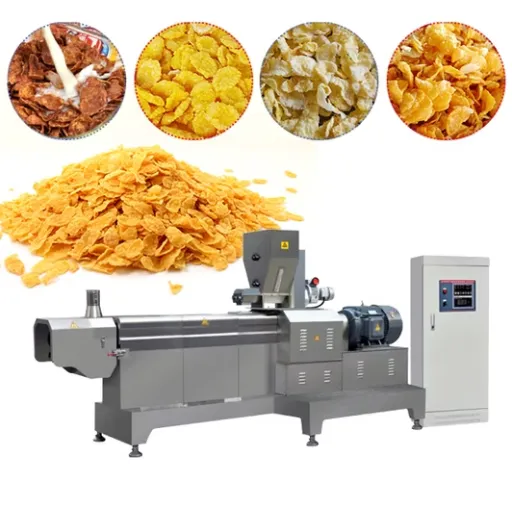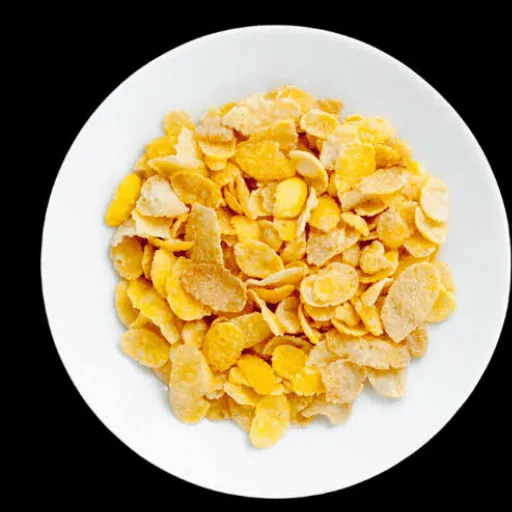
Corn flakes quality control is the system of testing, monitoring, and correcting every stage of production, from raw corn intake to final packaging, to ensure each flake is safe, consistent, crunchy, and shelf-stable. A strong QC program checks moisture, thickness, color, texture, microbial safety, and packaging integrity against set standards.
One batch of corn flakes can look perfect and still fail. The color may be golden, the shape uniform, and the bag sealed tight, yet hidden moisture or a single metal fragment can turn a profitable run into a recall nightmare. That is why corn flakes quality control is not a final inspection step. It is the thread that runs through every machine, every sensor, and every decision on the production floor.
If you run a cereal plant, manage cereal quality control, or are planning to invest in a corn flakes production line, this guide will show you exactly what to measure, when to measure it, and how modern automation makes consistency easier to achieve. You will learn the critical quality parameters, the right testing methods, HACCP critical control points, common defects and their fixes, and the breakfast cereal manufacturing standards buyers expect.
Key Takeaways
- Final corn flakes moisture should stay between 1.5% and 3.0%; anything above ~4% risks sogginess, mold, and shortened shelf life.
- The seven core quality parameters are moisture, flake thickness/size, color, texture, flavor, nutrition, and microbial/chemical safety.
- HACCP critical control points for corn flakes include raw material acceptance, cooking/extrusion temperature and time, metal detection, and final microbiological safety.
- Inline NIR moisture sensors, texture analyzers, and machine vision systems can cut human error by ~30% and manufacturing waste by ~15%.
- The global corn flakes market is projected to grow at ~12.9% CAGR, making quality consistency a direct competitive advantage.
What Is Corn Flakes Quality Control?
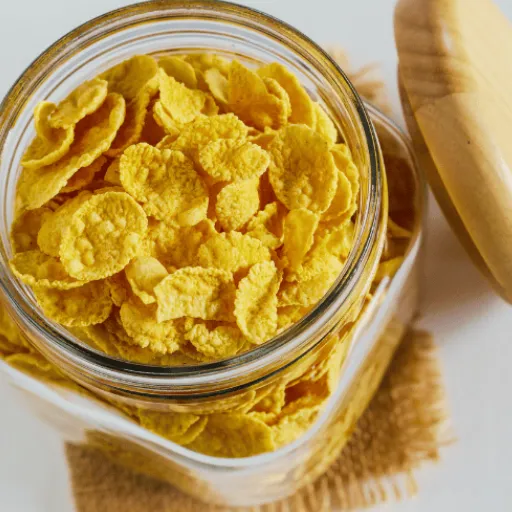
Corn flakes quality control is the structured set of checks and balances that keeps every batch within specification. It covers raw materials, in-process monitoring, finished product testing, and packaging verification. The goal is simple: deliver a product that is safe to eat, pleasant to chew, and stable from factory to breakfast bowl.
A complete QC system for corn flakes usually follows this flow:
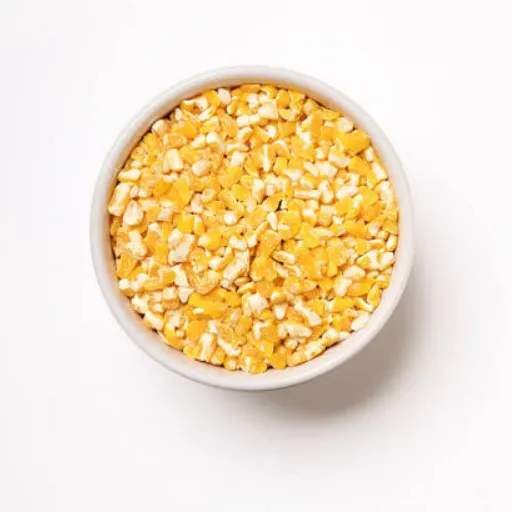
- Incoming raw material inspection, test corn grits for moisture, purity, and contaminants.
- In-process monitoring, track temperature, pressure, moisture, and thickness during cooking, drying, flaking, and toasting.
- Finished product testing, verify moisture, color, texture, flavor, nutrition, and microbial limits.
- Packaging and shelf-life checks, confirm seal integrity, fill weight, and barrier performance.
- Traceability records, document every batch so problems can be traced back to their source.
In the absence of this procedure, even the most sophisticated machines used to process foods are unable to provide consistent products.
Why Quality Control Matters in Corn Flakes Production
Consumer Expectations
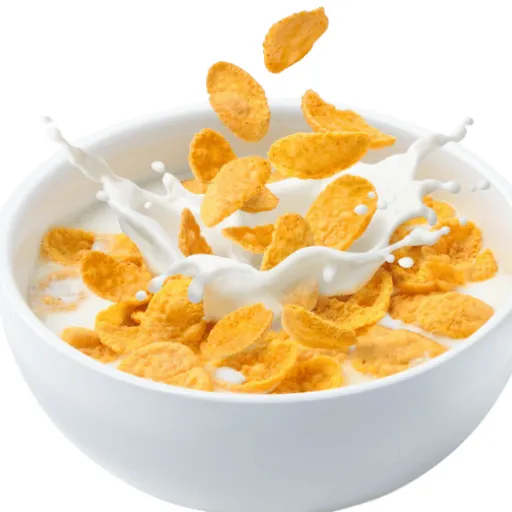
Corn flakes are judged in seconds. A consumer pours them into a bowl, adds milk, and expects a crisp texture, a mild toasted flavor, and a consistent golden color. A single soft or burnt flake can damage brand trust. According to industry research, texture and crunch are the top drivers of repeat purchases for ready-to-eat cereals.
Food Safety and Regulatory Compliance
Corn flakes are a low-moisture, shelf-stable product, but they are not risk-free. Mycotoxins from moldy corn, metal fragments from equipment wear, and pathogens from inadequate cooking can all create serious hazards. Regulators in the United States, European Union, India, and other major markets require documented food safety systems. Compliance failures can lead to recalls, fines, or lost export licenses.
Cost Control and Waste Reduction
Poor quality is expensive. Rejected batches, rework, customer returns, and recalls eat into margins. A well-designed QC program catches problems early, when they are still cheap to fix. For example, catching high moisture at the dryer exit is far less costly than repackaging soggy flakes after they have cooled.
Mini-story: Maria, a QA manager at a mid-sized cereal plant in Southeast Asia, noticed her team was rejecting nearly 8% of finished bags due to broken flakes. After mapping the process, she traced the problem to uneven roller pressure on the flaking mill. A simple calibration schedule and an inline thickness sensor dropped breakage to under 2% within three weeks. The line saved more than $40,000 in rework costs in the first quarter alone.
Critical Quality Parameters for Corn Flakes
Moisture Content and Water Activity
Moisture is the single most important quality parameter in corn flakes. Corn flakes moisture content controls crunch, shelf life, and microbial safety. According to Cablevey Conveyors, maintaining the right moisture profile during processing is essential for preserving the integrity of breakfast cereals from production to packaging.
| Stage | Typical Moisture Target | Why It Matters |
|---|---|---|
| Raw corn grits | 12–14% | Safe storage and consistent cooking |
| After cooking | 28–32% | Proper gelatinization of starch |
| Before flaking | 10–12% | Even flake formation |
| Final product | 1.5–3.0% | Crunch, flavor stability, and shelf life |
Water activity (a_w) should typically stay below 0.30 for shelf-stable cereal. Higher values allow mold and bacteria to grow.
Flake Thickness, Size, and Shape
Uniform flakes cook, toast, and package evenly. Typical flake thickness ranges from 0.5 mm to 1.2 mm, depending on the product style. Oversized, irregular, or too-thin flakes lead to uneven color and breakage. Sieving tests, such as the IS 1158 requirement that no more than 8% pass through a 2.00-mm sieve, help define acceptable size distribution.
Color and Appearance
Golden-brown color signals proper toasting and appeals to consumers. Color is measured with visual standards or colorimeters. Dark flakes suggest overheating; pale flakes suggest under-toasting or uneven drying.
Texture and Crunchiness
Texture is what separates premium corn flakes from average ones. Crunch is linked to final moisture and internal structure. Food labs use texture analyzers to measure fracturability and hardness. Trained sensory panels also evaluate mouthfeel.
Taste and Flavor Uniformity
Flavor comes from the corn itself, malt syrup, sugar, salt, and the Maillard reaction during toasting. Uniform coating and seasoning systems ensure every flake tastes the same. Off-flavors can signal rancidity, burnt particles, or contaminated raw materials.
Nutritional and Fortification Accuracy
Many corn flakes are fortified with iron, B vitamins, folic acid, or vitamin D. Labels must match content. Chemical analysis verifies that fortification levels meet regulatory and marketing claims.
Microbial and Chemical Safety
Labs test for total plate count, yeasts, molds, coliforms, and pathogens such as Salmonella. Mycotoxin screening for aflatoxins and fumonisins is critical because the FAO estimates that roughly 25% of cereal crops are affected by contamination annually.
Quality Control Checkpoints by Production Stage
Incoming Raw Material Inspection
Every batch of corn grits should be checked before it enters the corn flakes manufacturing process. Key checks include:
- Moisture content (target 12–14%).
- Foreign matter such as stones, dust, husks, and metal.
- Mycotoxin levels, especially aflatoxin and fumonisin.
- Pesticide residues and GMO status, depending on market requirements.
- Supplier certificates and traceability documents.
Cleaning equipment such as vibrating screens, destoners, magnetic separators, and optical sorters remove most physical hazards before processing begins.
Cooking / Extrusion Process Control
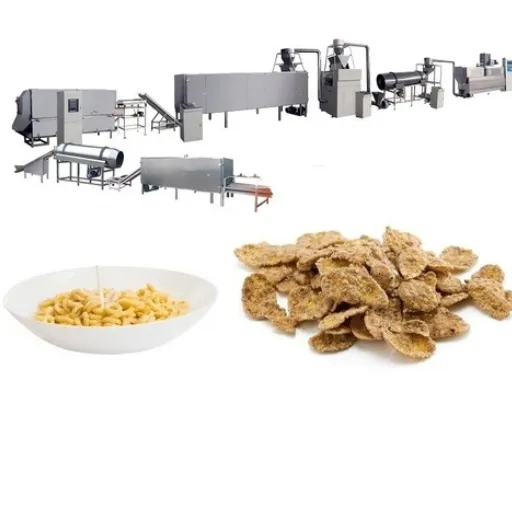
In traditional production, corn grits are pressure-cooked with water, sugar, malt, and salt. In modern lines, a twin-screw extruder cooks and shapes the dough in one continuous step. Either way, the critical controls are:
- Temperature and pressure profiles.
- Cooking time.
- Moisture content after cooking.
- Starch gelatinization degree.
Proper cooking ensures the flakes will toast evenly and develop the right texture.
Drying, Tempering, and Flaking Control
After cooking, the corn is dried to 10–12% moisture and tempered so moisture distributes evenly. Then flaking rollers press the kernels into thin flakes. Controls here include:
- Dryer temperature, airflow, and residence time.
- Tempering time and temperature.
- Roller gap and pressure.
- Flake thickness uniformity.
A snack food production line uses similar extrusion and drying controls, so many of the same QC principles apply across cereal and snack plants.
Toasting and Final Moisture Control
Toasting develops color, flavor, and crunch while driving final moisture down to 1.5–3.0%. This stage needs precise control of:
- Oven temperature (often 200–250°C for rotary ovens).
- Residence time (usually 1–2 minutes).
- Airflow and humidity.
- Inline moisture measurement at the oven exit.
Coating, Fortification, and Flavoring Control
When sugar, honey, chocolate, vitamins, or minerals are added, the system must apply them evenly. Key checks include:
- Spray or coating rate.
- Coating weight per batch.
- Vitamin stability after heat exposure.
- Even distribution across the flake surface.
Cooling and Packaging Control
Hot flakes must cool to room temperature before packaging to prevent condensation inside the bag. Packaging checks include:
- Fill weight accuracy.
- Seal integrity and leak testing.
- Metal detection and X-ray inspection.
- Nitrogen flushing to displace oxygen.
- Label accuracy and lot coding.
Essential Testing Methods and Equipment
Moisture Analyzers and NIR Spectroscopy
Near-infrared (NIR) sensors can measure moisture, fat, protein, and sugar in real time at the dryer or oven exit. Halogen moisture analyzers provide precise lab verification in 5–10 minutes. Together, they form a closed-loop control system that keeps moisture within target ranges.
Texture Analyzers for Crunch and Fracturability
A texture analyzer presses a probe against a flake and records the force needed to break it. This gives objective data on crispness and hardness. Mettler Toledo explains how calibrated texture analysis helps cereal manufacturers maintain consistent crunch from batch to batch.
Colorimeters and Visual Inspection
Colorimeters measure Lab* values to track browning and uniformity. Machine vision systems can detect off-color flakes, foreign material, and shape defects faster than human inspectors.
Metal Detectors and X-Ray Inspection Systems
Metal detectors catch ferrous, non-ferrous, and stainless-steel contaminants. X-ray systems go further, detecting glass, stone, dense plastic, and bone fragments. These are essential safeguards before packaging.
Microbiological Testing Lab Setup
A basic cereal QC lab should be able to perform:
- Total plate count.
- Yeast and mold counts.
- Coliform and Salmonella testing.
- Mycotoxin analysis using ELISA or chromatography.
Sieves and Automated Sorting Systems
Vibrating sieves remove fines and broken flakes. Optical sorters and air classifiers separate acceptable product from defects based on size, color, and density.
HACCP Critical Control Points for Corn Flakes
CCP 1, Raw Material Acceptance
Hazards: mycotoxins, pesticides, foreign bodies, allergens.
Control: incoming inspection, supplier audits, certificates of analysis.
Critical limit: mycotoxin levels within regulatory limits; moisture 12–14%.
CCP 2, Cooking / Extrusion
Hazards: surviving pathogens, undercooked starch.
Control: time and temperature monitoring.
Critical limit: minimum cooking temperature and residence time validated for pathogen kill.
CCP 3, Metal and Foreign Body Detection
Hazards: metal fragments from mills, rollers, or conveyors.
Control: metal detector or X-ray system after toasting and before packaging.
Critical limit: no detectable metal above a defined size threshold.
CCP 4, Final Product Microbiological Safety
Hazards: post-process contamination with pathogens or molds.
Control: environmental monitoring, packaging integrity, and finished product testing.
Critical limit: pathogen-negative results and total plate count within specification.
Regulatory Standards and Certifications
ISO 22000 and HACCP
ISO 22000 combines prerequisite programs, HACCP principles, and management system requirements. It is the gold standard for food safety management in cereal manufacturing.
GMP and Good Hygienic Practices
Good Manufacturing Practices (GMP) cover facility design, sanitation, personnel hygiene, pest control, and equipment maintenance. These prerequisites make HACCP effective.
Regional Standards
| Region/Standard | Key Requirements |
|---|---|
| FDA (USA) | Nutritional labeling, allergen controls, GRAS ingredients, FSMA preventive controls |
| EFSA / EU | Contaminant limits, fortification rules, organic/non-GMO claims |
| FSSAI (India) | Food safety registration, ingredient disclosure, labeling rules |
| IS 1158:1973 | Moisture max 7.5%, total ash max 1.0%, acid insoluble ash max 0.05%, crude fibre max 0.75% |
| Codex Alimentarius | International export standards for cereal products |
These standards are not just paperwork. They determine which markets you can enter and how retail buyers evaluate your facility. The Cereals & Grains Association publishes detailed guidance on breakfast cereal manufacturing standards and food quality control practices that many global auditors reference.
Common Corn Flakes Defects and Troubleshooting
Soggy or Soft Flakes
Likely causes: final moisture too high, poor packaging barrier, or condensation during cooling.
Fix: check dryer/toaster settings, verify NIR calibration, improve cooling airflow, and test packaging seal integrity.
Burnt or Over-Toasted Flakes
Likely causes: oven temperature too high, residence time too long, or uneven airflow.
Fix: reduce temperature or line speed, clean burner nozzles, and balance airflow across the oven.
Uneven Color or Size
Likely causes: inconsistent raw material, uneven roller gap, or temperature hot spots.
Fix: standardize corn grits, calibrate rollers, and inspect oven temperature distribution.
Excessive Breakage
Likely causes: over-drying, improper tempering, rough handling on conveyors, or overly thin flakes.
Fix: optimize moisture before flaking, reduce drop heights, and adjust roller gap.
Off-Flavors and Rancidity
Likely causes: stale or contaminated raw corn, overheating, or oxygen exposure in packaging.
Fix: improve raw material storage, control toasting temperature, and use nitrogen flushing with high-barrier film.
Mini-story: A cereal startup in Eastern Europe shipped its first export order with pride. Two weeks later, the distributor complained that flakes had turned soft and tasted stale. Lab tests showed final moisture at 4.7% and packaging with inadequate oxygen barrier. The company switched to a multi-zone dryer with inline NIR feedback and metallized film pouches. The next batch stayed crisp for nine months, and the distributor doubled its order.
How Automation Improves Corn Flakes Quality Control
Inline Sensors and Real-Time Monitoring
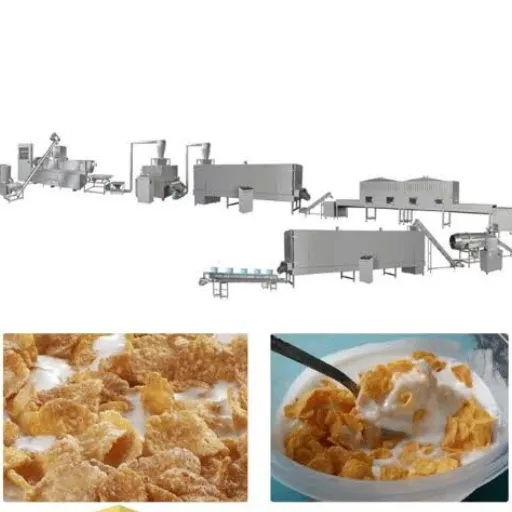
Modern corn flakes lines use temperature, pressure, moisture, and color sensors that feed data to a PLC or SCADA system. When a reading drifts outside the target range, the system adjusts the process automatically. Quality assurance is part of the procedure and not an end-point check.
Machine Vision and Optical Sorting
Cameras and laser sorters inspect every flake for size, shape, color, and foreign material. Defective flakes are removed in milliseconds. This level of consistency is impossible with manual sorting alone.
Predictive Quality Analytics and IoT
Connected equipment can predict quality trends before they become defects. For example, if roller pressure begins to drift slowly, IoT analytics can flag maintenance needs before flake thickness goes out of spec. Industry estimates suggest AI-powered quality control and predictive maintenance can reduce human error by ~30% and manufacturing waste by ~15%.
Automation does not replace QA teams. It gives them better data, faster alerts, and more time to focus on root-cause improvements.
Frequently Asked Questions
What is the most important quality parameter in corn flakes?
Moisture content is the most critical parameter. Final product moisture should be between 1.5% and 3.0%. Higher moisture causes sogginess, mold growth, and shorter shelf life, while too little moisture increases breakage.
How do manufacturers test corn flakes texture?
Manufacturers use texture analyzers to measure hardness and fracturability objectively. Trained sensory panels also evaluate crunch, mouthfeel, and flavor. These methods together ensure consistent eating quality.
What are HACCP critical control points for corn flakes?
The main CCPs are raw material acceptance, cooking or extrusion time and temperature, metal detection, and final microbiological safety. Each CCP has defined critical limits and monitoring procedures.
What certifications do corn flakes manufacturers need?
Common certifications include ISO 22000, HACCP, GMP, and regional requirements such as FDA compliance, EFSA rules, or FSSAI registration. Export markets may also require Codex Alimentarius alignment.
How can automation improve corn flakes quality control?
Automation through inline NIR sensors, machine vision, and IoT analytics enables real-time monitoring, faster defect removal, and predictive maintenance. It minimizes delays and mistakes. It minimizes waste, mistakes, and variations in quality.
Conclusion
Corn flakes quality control is the difference between a trusted breakfast brand and a product that sits on shelves untouched. The best manufacturers treat quality as a continuous process, not a final checkbox. They monitor moisture at every stage, verify flake thickness and color, test texture and nutrition, and build HACCP controls into the line itself.
As the global corn flakes market grows at roughly 12.9% CAGR, quality consistency will only become more important. Plants that invest in the right industrial food processing equipment, automation, and trained QA teams will win the contracts, retail listings, and repeat customers that drive long-term growth.
At Shandong Loyal Industrial Co., Ltd., we design corn flakes production line solutions with integrated QC stations, food-grade SUS304 construction, PLC automation, and global certification support. Whether you are upgrading an existing line or building a new plant, contact us today for a customized quote and process review.