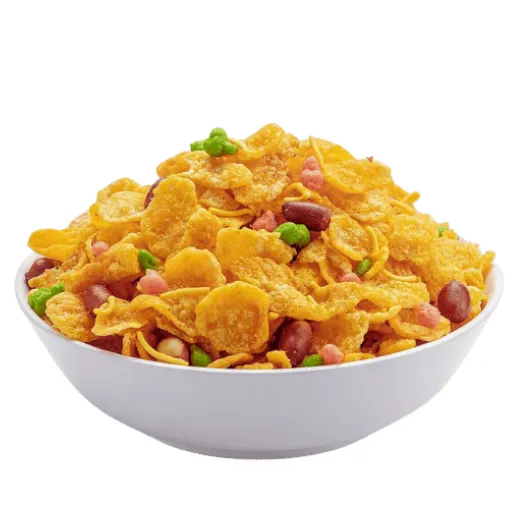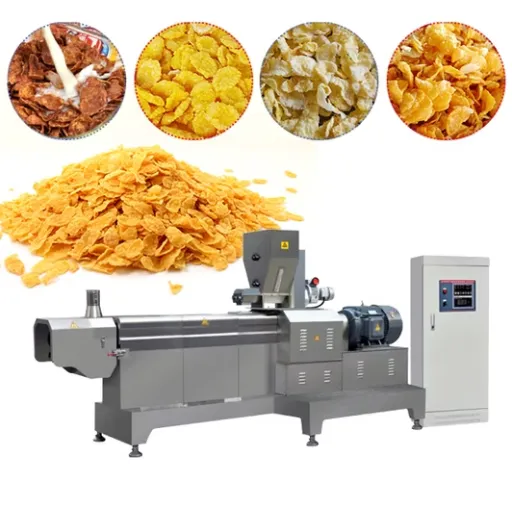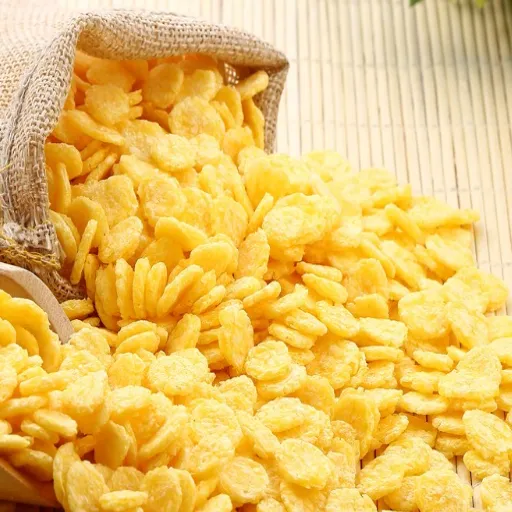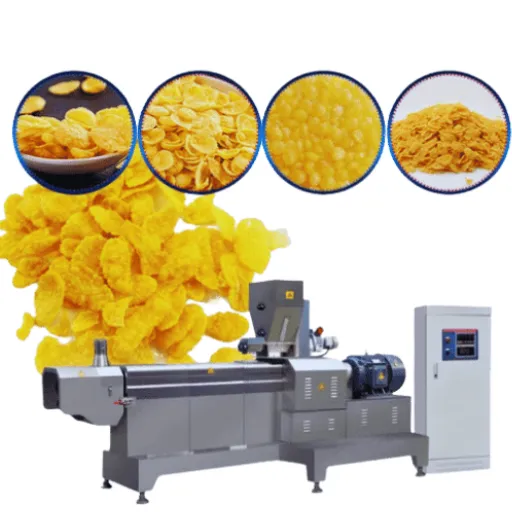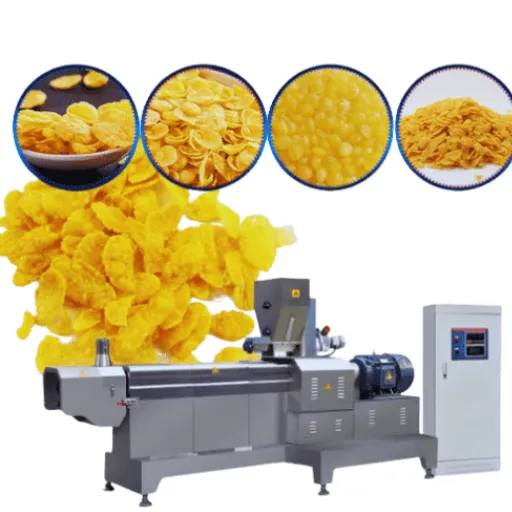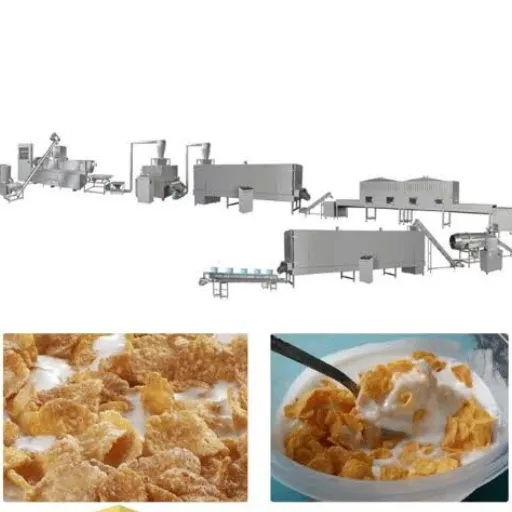
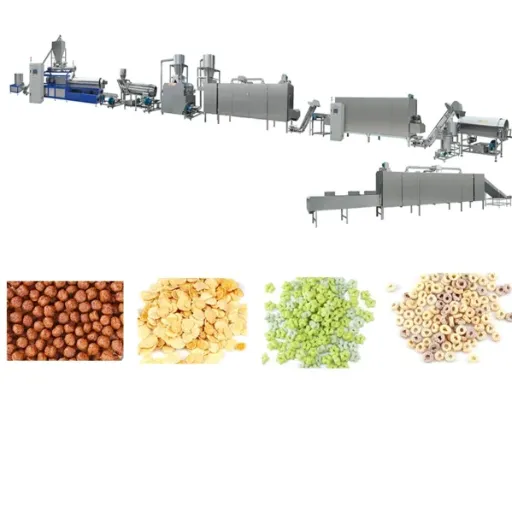
A breakfast cereal production line is a connected system of mixers, extruders, dryers, coaters, and packaging machines that turns grain flour into ready-to-eat cereal products at scale. The right line can produce anything from corn flakes and puffed rice to granola clusters and filled cereal pillows — but only if you match the equipment to your recipe, output goals, and budget.
The global breakfast cereal market is projected to reach $44.35 billion in 2026, according to Precedence Research. That growth sounds exciting until you are the one staring at a supplier catalog full of twin-screw extruders, flaking machines, and coating drums, wondering which configuration will actually make money for your business.
We get it. Buying a breakfast cereal production line is a major decision. This guide walks you through the full manufacturing process, the equipment you need, what it costs, and how to choose a capacity that fits your operation. Whether you are launching a new cereal brand or upgrading an existing plant, you will leave with a clear action plan.
Key Takeaways
- A complete breakfast cereal production line includes mixing, extrusion, flaking or puffing, drying, coating, cooling, and packaging stations.
- Capacity usually ranges from 100 kg/h pilot lines to 3,000+ kg/h industrial systems, with turnkey equipment starting around 20,000–20,000–120,000.
- Twin-screw extrusion has largely replaced traditional batch cooking because it delivers consistent texture, faster changeovers, and higher yields.
- Total plant setup costs typically fall between 350,000and350,000and750,000 when you include building, utilities, labor, and raw materials.
- Working with an experienced manufacturer reduces risk through recipe support, installation training, and spare-parts planning.
What Is a Breakfast Cereal Production Line?
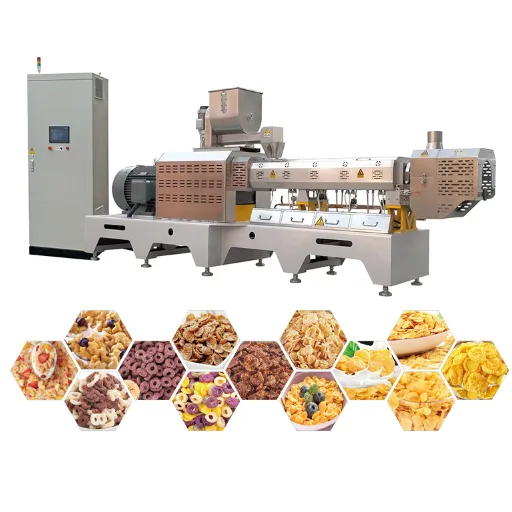
A breakfast cereal production line is an integrated set of food processing machines designed to convert raw grains into packaged, shelf-stable cereal. Most lines are built around one of two core technologies: extrusion for puffed and shaped cereals, or flaking for flat cereals like corn flakes and wheat flakes.
Turnkey lines arrive pre-engineered. You supply power, water, compressed air, and raw materials; the supplier handles layout design, installation, commissioning, and operator training. Modular lines let you add stations later — a useful option if you plan to expand from corn flakes into coated puffs or granola.
Common end products include:
- Flaked cereals: corn flakes, wheat flakes, bran flakes
- Puffed and extruded cereals: puffed rice, cereal balls, rings, loops, stars
- Shredded cereals: shredded wheat biscuits
- Granola and muesli: baked oat clusters with nuts, seeds, and dried fruit
- Filled cereals: pillow-shaped pieces with chocolate, cream, or fruit centers
The best line for you depends on your target product, daily output, automation level, and whether you plan to run one recipe or switch between several. Before we dive into equipment, it helps to understand how the actual process works.
How Breakfast Cereal Is Made: Step-by-Step Process
Every cereal type has its own variations, but most modern breakfast cereal manufacturing follows the same general flow. Here is what happens from grain to package.
1. Raw Material Preparation
Grains such as corn, wheat, rice, oats, and barley arrive at the plant as flour, grits, or whole kernels. The first step is cleaning — removing stones, dust, husks, and metal fragments — then milling to the correct particle size. Consistent flour quality matters because uneven particles create uneven hydration during extrusion.
2. Mixing and Conditioning
The milled grain is blended with water, sugar, salt, malt syrup, and sometimes oil or flavorings in a batch or continuous mixer. The goal is uniform hydration. For extruded cereals, moisture content typically lands between 20% and 30% before cooking.
Heat-stable vitamins and minerals can be added here, but sensitive nutrients like vitamin C are usually sprayed on later to prevent degradation.
3. Extrusion Cooking
This is where the magic happens. The conditioned dough enters a twin-screw extruder, a heated barrel with two intermeshing screws that cook the mixture under pressure. As the screws rotate, friction and injected steam raise the temperature, causing starch gelatinization. The dough becomes a pliable, homogeneous mass that can be shaped through a die.
Twin-screw extrusion has largely replaced traditional batch cookers because it offers tighter temperature control, shorter cooking times, and easy recipe changeovers. A well-tuned extruder also reduces waste and keeps product density consistent. If you want to learn more about how extrusion fits into broader snack manufacturing, see our guide to snack food production lines.
4. Flaking, Puffing, or Shaping
After extrusion, the product takes shape based on the cereal type:
- Flaked cereals: Cooked pellets pass between heavy water-cooled rollers that flatten them into thin flakes.
- Puffed cereals: High heat and pressure cause rapid steam expansion, creating light, airy pieces.
- Extruded shapes: A rotating knife cuts the dough as it exits the die, forming rings, balls, loops, or letters.
- Shredded cereals: Cooked wheat is pressed between grooved rollers; the shreds are layered and cut into biscuits.
- Filled cereals: Co-extrusion forms an outer cereal shell around a center filling, then a crimper seals each pillow.
5. Drying and Toasting
Freshly shaped cereal carries too much moisture for shelf stability. Dryers reduce moisture from 20–30% down to roughly 1–3%. After drying, a high-temperature toaster or oven bakes the cereal at 270–320°C for one to three minutes. This step triggers the Maillard reaction, which develops golden color, toasted flavor, and the crispy texture consumers expect.
Some producers use industrial microwave ovens for drying or sterilization because microwave energy heats the product volumetrically and can cut energy use compared with conventional hot-air systems.
6. Coating and Flavoring
Once the cereal is dry and toasted, it moves to a coating drum or spray system. Sugar syrup, honey, chocolate, yogurt, or savory seasonings are applied evenly. Heat-sensitive vitamins are often sprayed on at this stage to preserve potency.
Coating uniformity is critical. Too much syrup creates clumps; too little leaves the product bland. Modern systems use controlled spray nozzles, heated melting tanks, and rotating drums to distribute flavor consistently.
7. Cooling and Packaging
Hot cereal needs to cool before packaging. A cooling conveyor brings the product close to ambient temperature, which prevents condensation inside the bag and preserves crunch. Finally, automated packaging machines weigh, fill, and seal bags or boxes, often with nitrogen flushing to extend shelf life.
That is the full journey — from grain flour to a sealed box on a supermarket shelf. Now let us look at the actual machines that make it possible.
Essential Equipment in a Breakfast Cereal Production Line
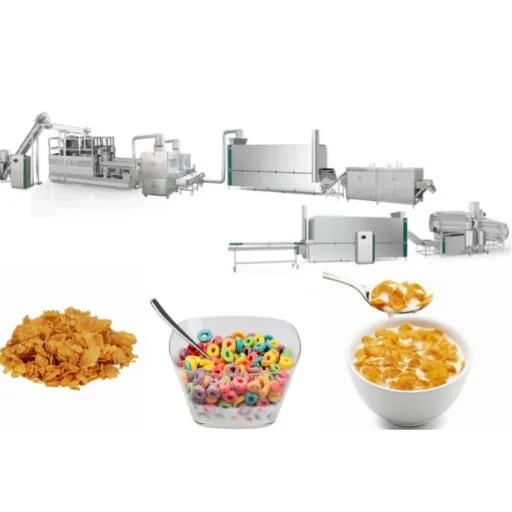
A complete breakfast cereal production line is a chain of specialized machines. Skimp on one station and the whole line suffers. Here is what each component does and why it matters.
| Equipment | Function | What to Look For |
|---|---|---|
| Mixer / Blender | Blends grain flour, water, and additives into uniform dough | Consistent batch size, easy cleaning, food-grade stainless steel |
| Screw Conveyor | Moves mixed dough to the extruder without bridging or separation | Gentle handling, adjustable speed, sealed design |
| Twin-Screw Extruder | Cooks and forms cereal under heat and pressure | Self-cleaning screws, precise temperature zones, interchangeable dies |
| Flaking Machine | Compresses pellets into thin flakes | Hydraulic roller pressure, water-cooled rollers, thickness adjustment |
| Dryer / Oven | Removes moisture before toasting | Even airflow, adjustable temperature, energy-efficient insulation |
| High-Temperature Toaster | Bakes cereal for color, flavor, and crispiness | Rapid heat transfer, consistent temperature, easy access for cleaning |
| Coating System | Applies sugar, flavor, vitamins, or oil | Controlled spray nozzles, heated syrup tank, even drum rotation |
| Cooling Conveyor | Brings cereal to ambient temperature before packaging | Adequate length, gentle handling, sanitary belt material |
| Packaging Machine | Weighs, fills, and seals finished product | Multi-head weigher, nitrogen flushing, compatible bag sizes |
Capacity and power vary widely. A small pilot line might run 100–150 kg/h on 75–95 kW, while an industrial corn flakes production line can reach 1,000 kg/h or more. For buyers focused specifically on corn flakes, our dedicated corn flakes production line page covers model-specific specifications.
When evaluating equipment, ask suppliers these questions:
- What is the real output at your target recipe and moisture level?
- Is the line built from food-grade 304 stainless steel?
- What voltage, frequency, and control language options are available?
- Does the quoted price include installation, training, and commissioning?
- How quickly can you change dies or recipes for different products?
Maria, a food entrepreneur in São Paulo, learned this the hard way. She bought a low-cost 100 kg/h line from a general trading company, only to discover the extruder could not maintain temperature for whole-grain dough. After six months of inconsistent product and angry retailers, she replaced the extruder with a purpose-built cereal extruder. Her rejection rate dropped from 12% to under 3%, and she finally hit her target texture.
Breakfast Cereal Production Line Cost Analysis
Cost is usually the first question buyers ask, and also the hardest to answer without knowing capacity, product type, and automation level. Here is a realistic breakdown.
Equipment Cost by Capacity
| Capacity Range | Typical Output | Equipment Price (USD) | Power |
|---|---|---|---|
| Pilot / small | 100–150 kg/h | 20,000–20,000–40,000 | 75–95 kW |
| Medium | 200–300 kg/h | 28,000–28,000–80,000 | 95–140 kW |
| Large | 400–600 kg/h | 80,000–80,000–150,000 | 130–200 kW |
| Industrial | 800–1,200+ kg/h | 150,000–150,000–500,000+ | 180–300 kW |
Prices depend on heating method (electric, gas, diesel, or steam), level of automation, brand of electrical components, and certifications such as CE or ISO. A line with Siemens motors and Schneider controls will cost more upfront but often runs longer with fewer electrical issues.
Complete Plant Setup Investment
Equipment is only part of the total. A medium-scale breakfast cereal manufacturing plant typically requires:
- Land and building: 100,000–100,000–250,000
- Machinery and equipment: 150,000–150,000–400,000
- Raw materials (monthly): 30,000–30,000–60,000
- Labor and wages (monthly): 15,000–15,000–30,000
- Utilities and overheads (monthly): 5,000–5,000–10,000
- Licensing and permits: 3,000–3,000–5,000
- Marketing and distribution: 10,000–10,000–20,000
Total initial investment: roughly 350,000–350,000–750,000 for a mid-sized operation.
Operating Cost Breakdown
Raw materials usually represent the largest ongoing expense — around 60–70% of production cost. Utilities run 15–20%, with drying and toasting being the most energy-intensive steps. Packaging, labor, maintenance, and transportation make up the rest.
Factors That Affect Total Price
- Heating source: Electric lines cost less to buy but may cost more to run than gas or steam.
- Automation: Fully automatic PLC systems reduce labor but raise capital cost.
- Customization: Special molds, coatings, or multilingual interfaces add cost.
- Certifications: CE, ISO, or FDA-ready designs typically add 10–30%.
- After-sales support: On-site installation and training are sometimes included, sometimes extra.
If you are unsure which capacity fits your budget, start with the equipment section above and work backward from your target daily output. Better yet, request a quote from a manufacturer who can model capex and operating cost together.
Ready to compare options for your project? Contact our engineering team for a tailored breakfast cereal production line quote and layout drawing.
How to Choose the Right Production Line Capacity
Capacity planning is where many buyers make expensive mistakes. Buying too small means you cannot meet demand; buying too large means you are paying for idle equipment and wasted energy. Use this framework to match output to equipment size.
Startup / Pilot Scale: 100–150 kg/h
Best for recipe development, market testing, or small regional brands. A 150 kg/h line running 16 hours per day produces about 2.4 metric tons daily. That is enough for a boutique brand selling through local retailers or direct-to-consumer channels.
Small Commercial Scale: 200–300 kg/h
A 250 kg/h line running two shifts can produce 6–8 metric tons per day. This is the sweet spot for emerging brands that have proven product-market fit and are scaling into regional distribution.
Industrial Scale: 500–1,000+ kg/h
Large brands, co-manufacturers, and private-label producers typically need 500 kg/h or more. A 1,000 kg/h line running 20 hours per day delivers 20 metric tons daily. At this scale, automation, fast recipe changeovers, and remote monitoring become essential.
Capacity Selection Checklist
- What is your target daily and annual output?
- How many shifts will you run?
- Do you plan to produce one cereal or multiple SKUs?
- What is your available floor space and ceiling height?
- What is your budget for equipment, installation, and working capital?
Chen runs a co-manufacturing facility in Southeast Asia that produces private-label cereals for three different brands. He chose a 500 kg/h modular line because it lets him switch dies and coatings within two hours. That flexibility let him win contracts that competitors could not serve profitably.
Maintenance, Troubleshooting, and Reliability Tips
Even the best breakfast cereal production line will fail if you neglect maintenance. Downtime in a cereal plant is expensive — lost product, missed deadlines, and frustrated customers. A simple preventive schedule keeps equipment running and product consistent.
Daily and Weekly Maintenance Checklist
Daily tasks
- Inspect belts, bearings, and motors for unusual noise or vibration.
- Clean flour and fines from motors, electrical panels, and conveyors.
- Check oil levels and lubrication points.
- Verify temperature and pressure readings against setpoints.
Weekly tasks
- Inspect extruder screws and barrel for wear.
- Check alignment of rollers, knives, and conveyors.
- Clean spray nozzles and coating drums.
- Test safety interlocks and emergency stops.
Common Problems and Solutions
| Problem | Likely Cause | Solution |
|---|---|---|
| Uneven flake thickness | Worn rollers or inconsistent feeding | Adjust hydraulic pressure; check feeder calibration |
| Product too soft or chewy | Insufficient drying or toasting | Raise dryer temperature or extend residence time |
| Extruder blockage | Too much moisture or foreign material | Adjust recipe; install magnetic separator upstream |
| Uneven coating | Clogged nozzles or uneven drum rotation | Clean nozzles; check drum drive and baffles |
| High breakage rate | Rough handling or over-toasting | Reduce drop heights; lower toaster temperature |
Spare Parts Strategy
Stock critical wear parts locally: extruder screws and barrels, roller bearings, seals, heater bands, and cutting blades. Waiting two weeks for a spare part from overseas can cost far more than keeping a small inventory on hand.
Predictive Maintenance Benefits
Modern lines can include vibration sensors, temperature probes, and motor current monitors. These feed data to a PLC or cloud dashboard so you can spot bearing wear, belt slippage, or heater failure before it causes a shutdown. The upfront investment in sensors usually pays back within the first avoided breakdown.
Breakfast Cereal Market Trends Shaping Production in 2026
Consumer preferences are changing, and equipment buyers need to keep up. Here are the trends most likely to affect your production decisions.
Health and wellness — Low-sugar, high-fiber, gluten-free, and protein-enriched cereals are growing. According to Fortune Business Insights, health-focused formulations are driving innovation across the category.
Clean label and plant-based — Buyers want short ingredient lists and recognizable ingredients. Some producers are adding pulses, quinoa, or ancient grains to improve nutrition.
Sustainable production — Energy-efficient extruders, waste-reduction systems, and recyclable packaging are becoming selling points. Advanced lines can achieve yields above 95% with energy consumption around 60 kWh per 100 kg.
Automation and IoT — PLCs with touch-screen HMIs, remote monitoring, and automated recipe management reduce labor and improve consistency. Plants that still rely on manual adjustments are losing ground to competitors that can run unattended overnight.
If your goal is to enter or grow in this market, your equipment should be flexible enough to handle reformulation without a complete line rebuild.
Why Work With an Experienced Breakfast Cereal Equipment Manufacturer
Buying from a catalog is risky. Breakfast cereal production involves precise control of moisture, temperature, expansion, and coating. A supplier that understands the process can help you avoid expensive trial-and-error.
Here is what experienced manufacturers bring to the table:
- Recipe and trial production support: They test your formula on their equipment before you commit.
- Custom engineering: Layout design, voltage adaptation, and mold design for your specific products.
- Installation and training: On-site commissioning so your team can operate the line safely.
- After-sales service: Spare parts, remote diagnostics, and process optimization visits.
- Global export experience: Documentation, shipping, and local voltage standards handled for you.
Shandong Loyal Industrial Co., Ltd. designs food processing machines for manufacturers worldwide. Our breakfast cereal lines range from compact pilot systems to high-capacity industrial installations, with food-grade stainless steel construction, PLC automation, and recipe support built in. Whether you need a standard food production line equipment package or a fully customized solution, we engineer the system around your product goals.
Acme Cereals, a regional brand in the Middle East, replaced three older batch cookers with a single 1,000 kg/h automated line from Loyal. Their labor cost per ton dropped 22%, energy use fell 18%, and product consistency improved enough to win a two-year private-label contract. That is the kind of operational edge the right equipment partner can deliver.
Conclusion
A breakfast cereal production line is more than a collection of machines. It is the engine that turns grain into a branded product consumers reach for every morning. The right line gives you consistent quality, scalable output, and the flexibility to follow market trends.
To make a smart investment, focus on four things: the product you want to make, the capacity you need, the total cost of ownership, and the experience of your equipment partner. Start with a clear output target, compare realistic equipment and operating costs, and do not underestimate the value of recipe support and after-sales service.
If you are ready to explore options for your project, request a customized breakfast cereal production line quote from our engineering team. We will help you size the right system, plan your layout, and estimate your return on investment.