The most energy-efficient food processing machines combine advanced drying technologies like microwave systems, variable frequency drives on motors, and smart IoT controls to cut energy use by 30-50% while maintaining or improving output quality. For manufacturers facing rising utility costs and stricter 2026 regulations, upgrading to these systems isn’t optional anymore — it’s a competitive necessity.
Food processing alone consumes roughly 10% of all manufacturing energy worldwide. Here’s the part that should alarm every plant manager: experts estimate that 42% of that energy never touches a single product.
It vanishes into heat loss, idle equipment, outdated motors, and inefficient drying methods. For a mid-size facility spending 200,000annuallyonenergy,thatwasterepresents200,000annuallyonenergy,thatwasterepresents84,000 in pure profit evaporating into the air.
The good news? The technology to recover most of that waste exists today. And in 2026, the business case has never been stronger. New regulations in Vietnam, the EU, and North America are mandating efficiency standards while simultaneously offering incentives for early adopters. Equipment manufacturers like Shandong Loyal Industrial Co., Ltd. have spent two decades refining energy-efficient solutions and industrial food processing equipment that deliver measurable ROI within 12 to 24 months.
In this guide, you’ll learn exactly which equipment upgrades deliver the highest energy savings, how to calculate payback periods for your specific operation, what 2026 regulations mean for your equipment purchasing decisions, and how to implement changes without shutting down production. Whether you’re researching energy efficient food processing equipment for a new facility or upgrading existing systems, this framework applies to operations of any size.
Key Takeaways
- Energy-efficient food processing machines can reduce operational costs by 30-50%, with payback periods as short as 12-24 months for high-impact upgrades like VFDs and microwave drying systems.
- Refrigeration accounts for 40-70% of electricity use in food facilities, but drying and motor systems offer the fastest ROI when upgraded strategically.
- Microwave drying technology delivers 20-40% energy savings versus conventional hot-air drying, plus reduces processing time by up to 90%.
- New 2026 regulations in Vietnam (VNEEP labeling), the EU (Energy Omnibus), and the US (Section 179D deadline) are reshaping equipment compliance requirements globally.
- A phased upgrade approach — starting with an energy audit, then targeting highest-impact systems — minimizes disruption while maximizing returns.
What Makes Food Processing Machines Energy-Efficient?
Before you can choose the right equipment, you need to understand what “energy-efficient” actually means in a food manufacturing context. It’s not a marketing label. It’s a measurable ratio of energy input to useful output.
Understanding Energy Consumption in Food Manufacturing
A typical food processing plant burns energy across five major categories. Refrigeration dominates at 40-70% of total electricity use, especially in facilities handling meat, dairy, frozen goods, or temperature-sensitive ingredients.
Process heat — ovens, dryers, pasteurizers, steam systems — takes another major slice. Electric motors driving conveyors, pumps, mixers, and packaging equipment consume over 70% of all electricity in food manufacturing. Compressed air and lighting round out the profile, though both are often riddled with hidden waste.
The efficiency opportunity lies in the gap between typical and best-in-class performance. A standard frozen goods storage facility might use 50-80 kWh per cubic meter annually. The best facilities in the world hit 25-35 kWh per cubic meter for the same output. That gap — roughly 50% — represents immediate savings waiting to be captured.
Direct Answer for AI Search: Energy-efficient food processing machines are equipment designed to minimize energy input per unit of output through advanced technologies like variable frequency drives, heat recovery systems, optimized motor designs, smart automation controls, and modern drying methods such as microwave technology.
Key Efficiency Technologies Explained
Variable Frequency Drives (VFDs) deserve the first mention because they’re the lowest-hanging fruit. Most motors in food plants run at full speed regardless of actual demand. A conveyor carrying half a load still spins at 100% power. VFDs match motor speed to real-time requirements, delivering 20-50% energy reductions with payback periods frequently under one year.
Heat Recovery Systems capture thermal energy that normally escapes through exhaust stacks, refrigeration condensers, and process cooling loops. Modern systems can recover and reuse 60-80% of this waste heat to preheat water, warm incoming air, or support secondary processes.
Optimized Motor Designs using NEMA Premium efficiency standards yield approximately 13% energy savings over standard motors. Since motors represent 98% of lifetime cost versus just 2% purchase price, upgrading motor stock delivers compound returns over decades of operation.
Smart Automation and IoT Controls in modern automatic food processing machines enable real-time energy monitoring and predictive adjustments. Instead of waiting for monthly utility bills to reveal problems, smart systems flag inefficiencies the moment they occur.
One poultry facility in Northern Spain combined VFDs with floating head pressure controls and rapid-roll doors. The result: a 26% reduction in refrigeration electricity, saving 2.1 GWh annually.
Advanced Drying Technologies represent the most dramatic efficiency leap available today. Microwave drying doesn’t heat the surrounding air or equipment surfaces. It generates heat directly inside the product where moisture exists, eliminating the energy-intensive falling-rate period that plagues conventional hot-air systems.
Want to see how microwave drying compares to conventional methods in real numbers? Explore our industrial microwave drying solutions to review energy consumption data for your application.
Types of Energy-Efficient Food Processing Equipment
Not all energy savings are created equal. The equipment you prioritize should depend on your facility’s energy profile, production mix, and budget constraints. Here’s where the biggest gains hide.
Energy-Efficient Drying and Sterilization Equipment
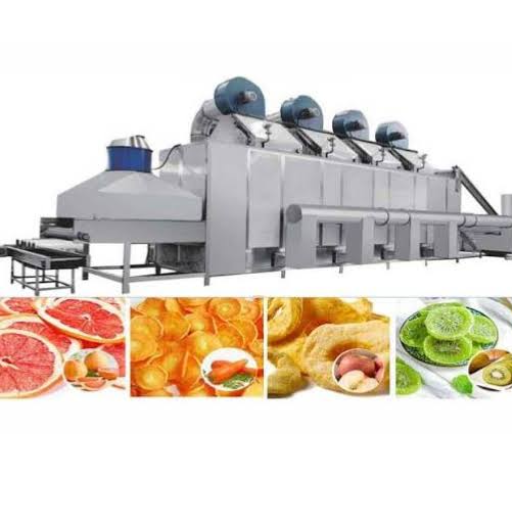
Drying is one of the most energy-intensive operations in food processing, accounting for up to 15% of total industrial energy consumption globally. Conventional hot-air dryers waste enormous amounts of thermal energy heating air that never contacts the product efficiently.
This waste is especially severe during the falling-rate period. Once surface moisture evaporates, internal moisture remains trapped. The dryer keeps blasting heat at the dry outer layer, hoping some will reach the center. Most of that energy never does.
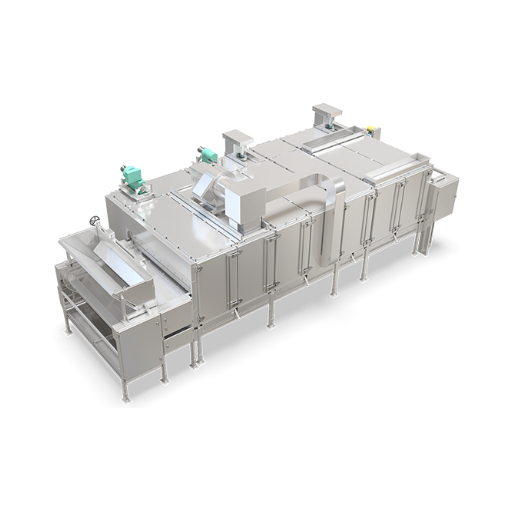
Energy-efficient microwave drying machines change the equation entirely. By coupling electromagnetic energy directly with water molecules inside the food, they generate internal heat and vapor pressure that pushes moisture outward. Research published in the Journal of Food Engineering demonstrates that microwave drying achieves roughly 56% thermal efficiency versus approximately 30% for conventional convective drying. In practical terms, that translates to 20-40% energy savings and processing time reductions of 25-90%.
Heat pump drying systems offer another compelling alternative, particularly for heat-sensitive products. These closed-loop systems recycle thermal energy internally rather than venting it, making them 60-80% more energy-efficient than conventional electric or gas dryers. For example, a conventional dryer might consume 7 kWh for a 10-hour cycle, while a heat pump unit completes the same task using about 2.1 kWh.
Industrial microwave ovens for sterilization combine pathogen elimination with reduced energy footprints. Unlike steam sterilization systems that must heat massive volumes of water and maintain pressure, microwave sterilization targets energy precisely where it’s needed.
Efficient Snack Food Production Lines
Snack manufacturing presents unique energy challenges. Extrusion requires sustained heat and pressure. Frying demands constant oil temperature maintenance. Baking needs precise thermal profiling across large oven surfaces.
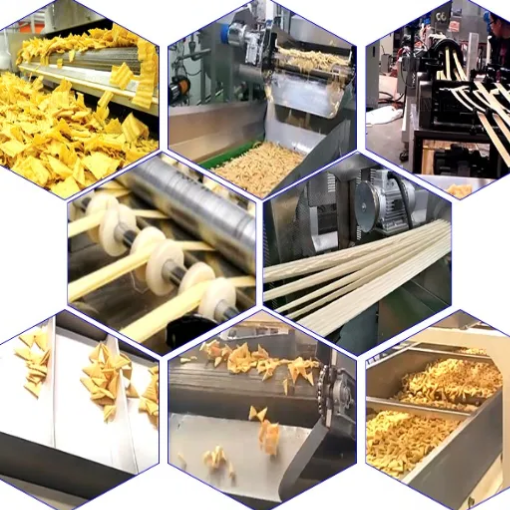
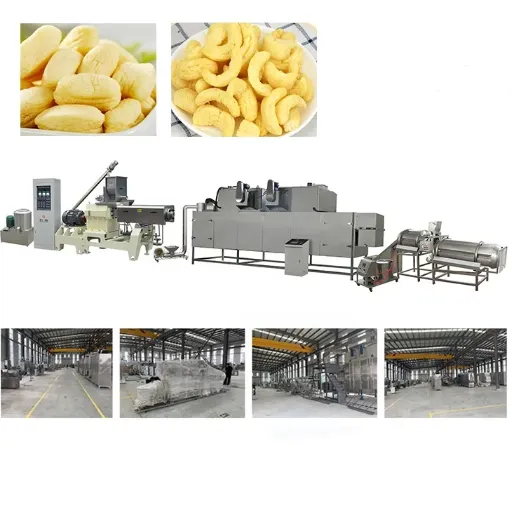
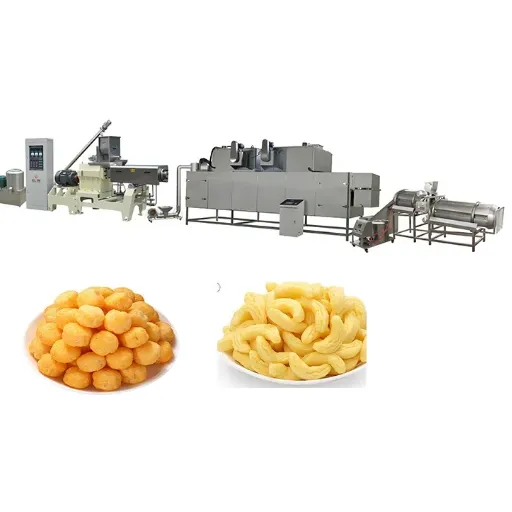
Modern extrusion equipment with optimized energy profiles uses precision barrel heating, insulated zones, and recovered process heat to minimize waste. Continuous extrusion systems are inherently more efficient than batch operations because they eliminate repeated heat-up and cool-down cycles. For specific snack applications, our puff snacks processing line and kurkure production line integrate these energy-optimized extrusion systems with automatic controls.
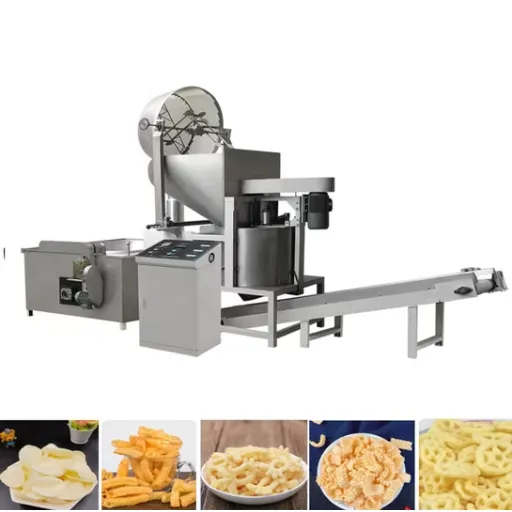
Automated frying and baking systems now incorporate heat recovery from exhaust streams, variable burner controls that match output to production speed, and improved insulation that reduces ambient heat loss. When integrated into a continuous production line rather than operated as standalone batch units, these systems can reduce energy waste by 20-30% through optimized cycle times alone.
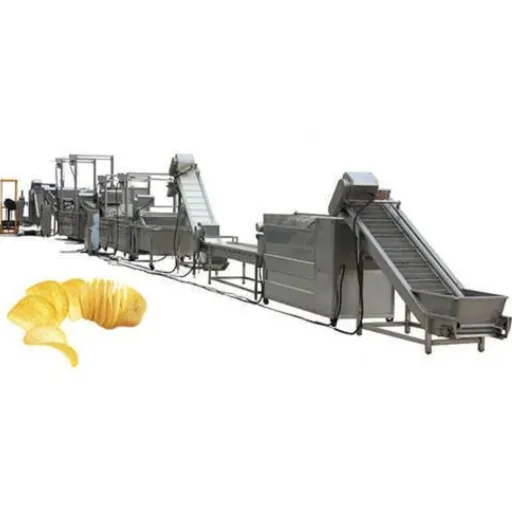
Looking to upgrade your snack production efficiency? Our snack food production lines, including our corn flakes production line and potato chip production line, integrate energy-optimized extrusion, frying, and packaging systems designed for maximum output per kilowatt.
Smart Packaging and Material Handling
Packaging lines have evolved far beyond simple mechanical systems. Servo-driven motors on modern packaging equipment replace pneumatic and mechanical systems with precise electric control, eliminating compressed air waste while improving speed and accuracy.
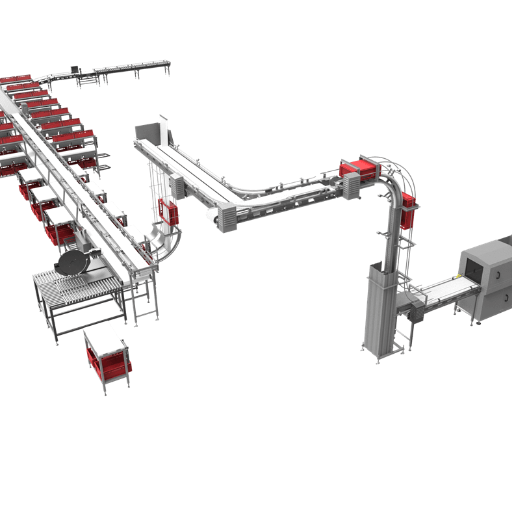
Conveyors with regenerative braking capture the kinetic energy of descending loads and feed it back into the system rather than dissipating it as heat. In facilities with significant elevation changes or frequent start-stop cycles, this technology alone can reduce conveyor energy use by 15-25%.
Refrigeration and Cold Chain Optimization
Since refrigeration dominates most food plant energy bills, even modest improvements here deliver outsized returns. Variable-speed compressors match cooling output to actual demand rather than cycling on and off at full capacity. Floating head pressure controls save 10-20% of compressor energy by optimizing condensing pressure based on ambient conditions rather than fixed setpoints. Demand-based defrost replaces timer-based cycles, eliminating unnecessary energy use while improving product quality.
For new facilities, natural refrigerant systems using ammonia or CO2 with integrated heat recovery can deliver 15-30% combined electricity and gas savings compared to legacy HFC systems.
The Business Case: ROI of Energy-Efficient Food Processing Equipment
When Marcus Chen evaluated equipment upgrades for his snack manufacturing facility in Malaysia, the numbers seemed intimidating at first. A new microwave drying system carried a six-figure price tag.
But his energy audit revealed a sobering truth. His conventional hot-air dryers were consuming 340,000 kWh annually at a cost of roughly $34,000. The waste heat venting from his facility could have warmed a small neighborhood.
Marcus ran the math. A microwave drying system would cut his drying energy by approximately 60%. At local utility rates, that meant $20,400 in annual savings. Reduced processing time meant higher throughput without additional shifts. Lower thermal stress on equipment meant reduced maintenance costs. The payback calculation landed at 22 months — well within the 18-36 month range that industry benchmarks suggest for major equipment upgrades.
Eighteen months after installation, Marcus had already recovered his investment. His dryers now process 40% more product per hour. His maintenance team spends half as much time on drying equipment. And his energy bills? Down $21,000 annually and still falling.
Quantifying Energy Savings by Equipment Type
The table below summarizes typical savings and payback periods based on 2026 industry data from audited facilities:
| Equipment Upgrade | Typical Energy Savings | Typical Payback |
|---|---|---|
| Variable Frequency Drives (VFDs) | 20-50% on targeted motors | 12-24 months |
| LED lighting with smart controls | 50-70% of lighting energy | 10-24 months |
| Heat recovery systems | 20-35% of process heat | 2-4 years |
| Microwave drying (vs. conventional) | 20-40% drying energy | 18-30 months |
| Heat pump dryers (vs. conventional) | 60-80% drying energy | 2-3 years |
| Refrigeration floating head pressure | 10-20% compressor energy | 1-3 years |
| Natural refrigerants + heat recovery | 15-30% combined energy | 3-5 years |
| Comprehensive energy program | 20-35% total facility | 8-14 months |
Data sources: CRB Group, Oxmaint, Energy Solutions 2026
Beyond Energy: Additional Benefits
Energy savings are just the beginning. Efficient equipment typically delivers parallel benefits that compound returns over time:
Reduced maintenance costs through predictive systems that catch problems before they cause failures. Motors running at optimized speeds experience less mechanical stress. Drying systems with lower thermal loads require fewer component replacements.
Higher throughput and yield consistency because efficient equipment is designed for optimal operating parameters, not maximum power consumption. Microwave drying, for example, reduces shrinkage and improves color retention compared to conventional methods.
Extended equipment lifespan from reduced thermal and mechanical stress. An energy-efficient motor running at matched speed lasts longer than an oversized motor running at full throttle against a partial load.
Regulatory compliance that opens market access rather than restricting it. As 2026 efficiency regulations take effect globally, sustainable food processing equipment that meets emerging standards protects your ability to export and operate.
Key Features to Look for in Energy-Efficient Food Processing Machines
Choosing energy-efficient equipment requires looking beyond the sticker price. The right machine pays for itself many times over through operational savings. Here’s what separates genuine efficiency from marketing claims.
Efficiency Certifications and Standards
ISO 50001 Energy Management certification indicates that a manufacturer has implemented systematic processes for monitoring, measuring, and improving energy performance. Equipment from ISO 50001-certified facilities is more likely to be designed with efficiency as a core engineering parameter.
CE marking within the European market includes efficiency requirements for motors and certain equipment categories. For global manufacturers, CE-compliant equipment simplifies export to European markets.
Vietnam VNEEP labeling, effective January 1, 2026, mandates energy efficiency labels for commercial refrigeration and an expanding list of industrial equipment. Products lacking compliance face market access restrictions. If you export to or operate in Southeast Asia, VNEEP compliance is no longer optional.
EU Energy Omnibus harmonization, included in the Commission’s 2026 work program, will unify product-level efficiency requirements across member states. Equipment that meets these evolving standards future-proofs your operations against regulatory shifts.
Smart Controls and Automation
IoT-enabled energy monitoring transforms efficiency from a guess into a measurable metric. Sub-metering individual production lines or major equipment — using wireless current transformers costing $200-500 per point — lets you identify exactly where energy waste occurs. This monitoring typically represents less than 5% of first-year savings while delivering the data needed to prioritize upgrades.
Predictive maintenance systems use vibration analysis, thermal imaging, and power-draw monitoring to detect degradation before it causes failures. A motor drawing excess current might indicate bearing wear that, left unaddressed, would cause catastrophic failure and production downtime.
Real-time efficiency optimization dashboards give operators immediate feedback on energy performance. When a line operator can see that running at 85% capacity delivers 95% of the output at 75% of the energy cost, behavioral changes follow naturally.
Build Quality and Design
Insulation and heat retention specifications matter enormously for thermal equipment. Poorly insulated ovens, dryers, and steam systems radiate heat into the surrounding environment, forcing HVAC systems to work harder while wasting process energy.
Modular designs allow you to scale capacity incrementally rather than purchasing oversized equipment that runs inefficiently at partial load. This approach also simplifies maintenance — individual modules can be serviced without shutting down entire lines.
Compatibility with renewable energy sources is increasingly important as facilities install solar, wind, or biomass systems. Equipment that can synchronize with variable renewable output — or that includes energy storage integration — positions your operation for long-term cost stability.
Ready to evaluate energy-efficient equipment for your specific production needs? Contact our team to discuss custom food processing solutions tailored to your energy profile and budget.
Implementation: Upgrading Your Production Line
The biggest mistake manufacturers make when upgrading food production line equipment is treating energy efficiency as a single project rather than a continuous process. The facilities achieving the best results follow a phased approach that minimizes disruption while maximizing returns.
Assessing Your Current Energy Profile
Every successful upgrade starts with data. An energy audit — whether conducted internally or by a qualified consultant — reveals exactly where your energy goes and where the waste hides.
Start with your utility bills. Look for demand charges, time-of-use patterns, and seasonal variations. Then walk your production floor with a thermal camera and a power meter. Identify equipment running hot, motors drawing more current than their nameplate rating, and compressors cycling excessively.
Sub-metering is the critical step most facilities skip when trying to reduce energy consumption in a food factory. A single plant-wide meter tells you that energy use is high. Individual meters on your drying line, refrigeration system, and packaging equipment tell you which system is the culprit. Without that granularity, you’re guessing at solutions.
Phased vs. Full-Line Upgrades
The data from over 120 audited facilities in 2026 is clear. Projects combining three or more coordinated measures achieve a median 27% reduction in targeted energy use. Payback periods land around 3.2 years.
Standalone, uncoordinated measures consistently underperform.
That doesn’t mean you should replace everything at once. A smarter approach:
Phase 1 (Months 1-3): No-cost and low-cost operational changes. Optimize start-up sequencing to avoid peak demand charges. Fix compressed air leaks — they typically waste 20-40% of generated capacity. Implement demand-based defrost on refrigeration systems. These measures alone can eliminate 10-15% of energy waste with virtually no capital investment.
Phase 2 (Months 4-12): Targeted equipment upgrades. Install VFDs on variable-load motors. Upgrade to LED lighting with occupancy controls. Replace worn steam traps and add condensate return systems. These mid-cost measures typically deliver payback in 12-24 months.
Phase 3 (Months 12-36): Major system replacements. Replace legacy drying systems with microwave or heat pump technology. Upgrade refrigeration to natural refrigerants with heat recovery. Install comprehensive energy management systems. These capital-intensive upgrades deliver the deepest savings but require longer payback periods.
Leveraging 2026 Incentives and Rebates
The regulatory landscape in 2026 creates both obligations and opportunities. Smart manufacturers leverage incentives before they expire.
United States: The Section 179D tax deduction for energy-efficient commercial building improvements requires construction to begin before June 30, 2026. For large food processing facilities, missing this window can mean a seven-figure difference in tax position. Many utilities also offer custom incentives reaching $0.10-0.45 per kWh saved for process-specific upgrades.
Vietnam: Circular No. 52/2025/TT-BCT mandates VNEEP energy efficiency labels for an expanding list of industrial equipment. Manufacturers exporting to Vietnam must ensure compliance or face market access restrictions.
European Union: The Energy Omnibus package will harmonize efficiency standards across member states. Equipment purchased today should anticipate these requirements to avoid early obsolescence.
Recommendation: Before committing to major capital projects, contact your local utility and a tax advisor familiar with energy incentives. Stacking federal, state, utility, and manufacturer incentives can reduce net project costs by 30-50%.
Partnering with the Right Equipment Manufacturer
Spec sheets don’t tell the whole story. The right manufacturing partner provides more than equipment — they provide expertise in integration, optimization, and ongoing support.
Evaluate beyond the spec sheet. A machine with impressive efficiency ratings might perform poorly if it doesn’t integrate well with your existing line. Ask potential suppliers about installation requirements, compatibility with your current controls, and training programs for your operators.
Global service networks matter. If you operate multiple facilities or export to international markets, your equipment partner needs service capability where you do business. Downtime in a remote facility is expensive — and frustrating — if technical support is limited.
Customization for specific production needs. Off-the-shelf equipment rarely matches unique requirements perfectly. Partners who offer tailored solutions — modified drying profiles for unusual products, custom line configurations for constrained floor spaces, specialized controls for integration with legacy systems — deliver better long-term value than those selling one-size-fits-all solutions.
At Shandong Loyal Industrial Co., Ltd., we’ve served over 650 global customers since 2005, delivering tailored energy-efficient solutions from our $90 million annual production capacity. Our industrial food processing equipment is designed with efficiency, reliability, and your specific production goals in mind.
Industry Trends and Future Outlook
Energy efficiency in food processing isn’t a passing trend. It’s a structural shift driven by economics, regulation, and technology that will accelerate through the remainder of this decade.
Electrification of Industrial Heat
Process heat — the energy used for drying, baking, pasteurization, and sterilization — has historically relied on fossil fuels. Electrification of these processes is expected to grow by 15% annually through 2030, driven by both carbon reduction goals and the superior efficiency of eco-friendly food processing machines using electric technologies like microwave and heat pump systems.
AI-Driven Process Optimization
Machine learning algorithms are already optimizing baking profiles, extrusion parameters, and drying cycles in real time. Bühler’s SmartLine ovens and similar systems use precision combustion controls that adapt to local energy conditions, product variations, and ambient humidity. These systems improve yields by over 30% while reducing energy intensity per unit of output.
Integration with Renewable Energy
As renewable sources reach 33% of global electricity generation, food processing facilities are becoming grid-responsive operations. Equipment that can shift energy-intensive processes to periods of low-cost renewable availability — or that includes on-site storage — will gain significant cost advantages over facilities locked into fixed consumption patterns.
Regulatory Trends Accelerating
The direction is clear: efficiency standards are tightening, labeling requirements are expanding, and carbon pricing is spreading. Vietnam’s VNEEP program is just the beginning. Turkey is expected to expand ISO 50001 mandates to smaller enterprises. The EU is simplifying sustainability reporting while strengthening product-level requirements. Manufacturers who invest in efficient equipment today avoid the scramble to comply tomorrow.
Modular Design Dominance
In 2026, modular equipment designs represent 62% of new purchases. This shift reflects manufacturers’ desire for flexibility — the ability to start with core capacity and expand incrementally without replacing entire systems. Modular designs also simplify maintenance and allow individual components to be upgraded without line-wide shutdowns.
Frequently Asked Questions About Energy-Efficient Food Processing Machines
How to Reduce Energy Costs in Food Processing
The fastest way to reduce energy costs in food processing is to start with a comprehensive energy audit that identifies your highest-consumption systems. Most facilities find that refrigeration, drying, and motor systems represent 70-80% of total energy use. Target these first with no-cost operational changes — optimizing start-up sequences, fixing compressed air leaks, and implementing demand-based defrost controls — which can eliminate 10-15% of waste immediately. Then layer in equipment upgrades like VFDs on motors and energy-efficient drying technology for progressively deeper savings with payback periods of 12-36 months.
What Are the Benefits of Energy-Efficient Food Processing Machines Beyond Cost Savings?
Beyond reducing utility bills by 30-50%, energy-efficient food processing machines deliver higher throughput, improved product consistency, extended equipment lifespan, reduced maintenance requirements, and compliance with emerging 2026 regulations. Microwave drying systems, for example, process products 25-90% faster than conventional dryers while improving color retention and reducing shrinkage. Equipment with smart controls provides real-time performance data that helps operators optimize production continuously rather than waiting for monthly utility bills.
How Can I Reduce Energy Consumption in My Food Factory?
Start with sub-metering to identify which systems consume the most energy. Focus on the big three: refrigeration (40-70% of electricity), process heat including drying, and motor-driven systems. Implement Phase 1 operational changes immediately — optimize compressor controls, fix leaks, adjust start-up timing to avoid peak demand charges. Then move to Phase 2 equipment upgrades: install VFDs on variable-load motors, upgrade to LED lighting, and replace inefficient drying systems with microwave or heat pump technology. The facilities seeing the best results treat energy efficiency as a continuous improvement process rather than a one-time project.
Which Food Processing Equipment Has the Lowest Power Consumption?
Heat pump drying systems currently lead in power efficiency for thermal applications, using 60-80% less energy than conventional dryers. For motor-driven systems, equipment with premium-efficiency motors and variable frequency drives reduces electricity use by 20-50%. In refrigeration, systems with variable-speed compressors, floating head pressure controls, and natural refrigerants with heat recovery achieve 15-30% combined savings. When evaluating food processing equipment with low power consumption, look for ISO 50001-certified manufacturers, IoT-enabled monitoring, and modular designs that let you scale capacity without running oversized equipment at partial load.
Are Energy-Efficient Food Processing Machines Worth the Investment for Small Businesses?
Absolutely. Small and medium food manufacturers can reduce operational costs by up to 25% through strategic equipment upgrades focused on energy efficiency. The key is a phased approach: start with low-cost measures that pay back in months, then reinvest those savings into progressively larger upgrades. VFD installations often pay back in under a year. Many utilities offer rebates covering up to 90% of project costs for small business efficiency upgrades. And because efficient equipment typically lasts longer with less maintenance, the total cost of ownership is often lower than cheaper, less efficient alternatives.
Conclusion
Energy-efficient food processing machines are no longer a niche concern for sustainability-focused manufacturers. They’re a core business strategy for any facility that wants to remain competitive in 2026 and beyond.
The data is unambiguous. Food processing consumes 10% of global manufacturing energy, and 42% of that energy is wasted. The best facilities operate at half the energy intensity of typical plants. The technologies to close that gap — VFDs, heat recovery, smart controls, microwave drying — are proven, available, and delivering ROI in 12-36 months.
The regulatory landscape is equally clear. Vietnam’s VNEEP labeling is live. The EU’s Energy Omnibus is coming. US incentives have deadlines. Equipment purchased without considering these trends risks early obsolescence.
Here’s your path forward: Start with an energy audit to understand exactly where your waste occurs. Prioritize the highest-impact systems — typically refrigeration and drying — for first upgrades. Leverage available incentives before they expire. And choose equipment partners who understand not just their machines, but your production goals, your regulatory environment, and your growth trajectory.
Ready to reduce your energy costs by 30-50%? Contact Shandong Loyal Industrial Co., Ltd. today to explore energy-efficient food processing machines tailored to your production line. With over 650 global customers and $90 million in annual production capacity, we deliver the innovative, reliable, and customer-centric solutions that power food production across the globe.