Maria’s dried mango operation was losing money. The traditional hot-air dryers operated for 14 hours daily which resulted in electricity usage that matched the needs of a small village. The dryers produced products which had different moisture levels that resulted in spoilage during delivery.
She decided to buy a microwave drying machine. The new system reduced the drying process time to 90 minutes. The system now consumes 40% less power than before. The European distributor signed a three-year supply contract because her rehydration quality reached new high standards.
Food processing operations create two main challenges for you to handle. Your business requires you to maintain slim profit margins. The expense of energy consumption continues to increase. Customers expect businesses to provide them with products that maintain quality standards while offering safe ingredients and short delivery times. Your business needs equipment which provides three essential functions and enables users who lack advanced education to handle its operation.
The guide explains how microwave drying machines function and compares their performance to traditional methods using actual production statistics and provides guidance on selecting the appropriate system for your particular products and production requirements. The criteria you need to implement today will help you process fruit and herbs and snacks and new functional ingredients.
Want to see how the numbers work for your product line? Explore our microwave drying solutions and request a tailored throughput estimate.
What Is a Microwave Drying Machine and How Does It Work?
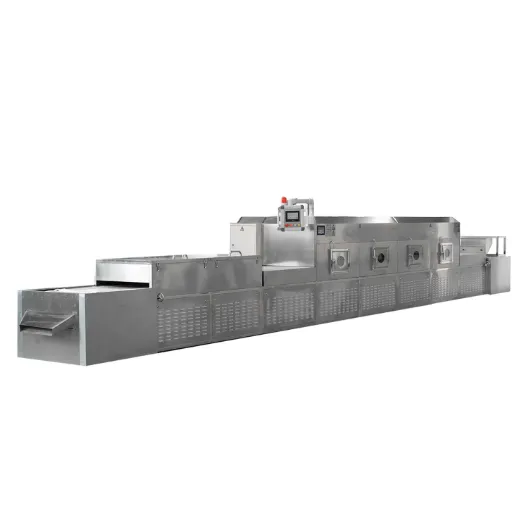
The microwave drying machine operates by using microwave electromagnetic energy which operates at 2450 megahertz (MHz) frequency to eliminate moisture from various food products. The process of microwaving works because microwaves penetrate through the product instead of heating the surrounding air which requires time to reach the inner parts of the material.
The food contains water molecules which vibrate at high speed to create heat through their internal movements. This process is known as dielectric heating. The method of microwave drying shows better results than traditional thermal drying techniques because this process serves as its primary mechanism.
The process begins when raw materials are sent into the drying chamber or tunnel. The magnetron produces microwave energy, which travels through waveguides into the chamber. The microwaves penetrate the food, exciting polar molecules, primarily water. The water molecules create heat when they vibrate.
The system generates heat to create moisture which evaporates from both the surface and the inside of the material. The exhaust system serves as a passage for vapor to exit the building. The system uses sensors to observe temperature and moisture levels throughout the day. The system uses a programmable logic controller (PLC) to automatically manage three functions by adjusting power output and belt speed and temperature until it reaches overheating limits.
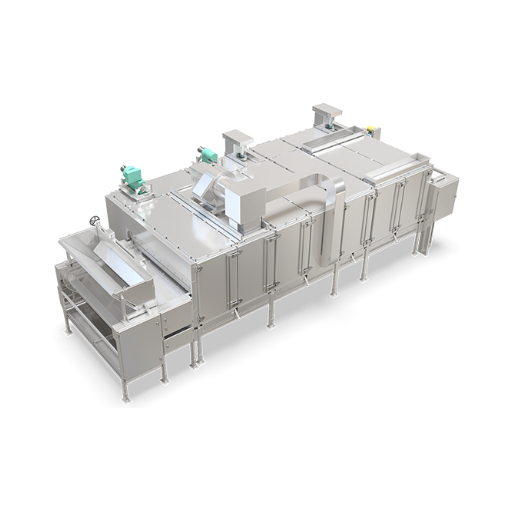
Industrial systems exist in three primary system designs. Tunnel microwave dryers operate by continuously moving products on a conveyor system, which makes them suitable for facilities that handle large quantities of products. The cabinet and batch dryer system operates by processing limited quantities of materials that need to be dried within a sealed chamber, which makes this system suitable for research and development laboratories as well as specialized manufacturing facilities.
The process of vacuum microwave dryers operates because they use microwave energy under conditions of reduced pressure. The system enables moisture to leave the material at temperatures starting from 40 degrees Celsius. The heat-sensitive nutrients and colors and flavors maintain their original state.
The first step for success requires people to learn about the technology. The actual assessment method needs to determine how effectively a microwave drying machine competes with your current equipment.
Microwave Drying vs. Traditional Drying: What the Data Shows
Food manufacturers have relied on hot-air drying, freeze drying, and sun drying for decades. But the data increasingly favors microwave technology across speed, efficiency, and quality metrics.
Speed and Throughput
Microwave drying reduces processing time by 50 to 90 percent compared with conventional hot-air methods. Research published in Applied Sciences shows carrot slices dried 25 to 90 percent faster, bananas 64.3 percent faster, and garlic up to 80 percent faster. At industrial scale, a tunnel microwave drying machine running at 60 to 200 kilowatts processes 100 to 500 kilograms per hour. A batch that once took an entire shift now finishes before the morning coffee cools.
Energy Efficiency
The energy efficiency of microwave systems increases by more than 30 percent because they heat food directly without heating the surrounding air or chamber walls. Hot-air and steam systems operate with 30 to 50 percent lower energy consumption compared to these systems. The difference between these two systems generates annual utility savings which reach tens of thousands of dollars for a mid-sized processor that operates two shifts each day.
Product Quality
Traditional drying methods use external heat sources to deliver warmth into products from their outer surfaces toward their inner areas. The surface becomes dry first because a hard shell develops which prevents moisture from escaping. The case-hardening process destroys texture while it creates danger of spoilage.
The microwave drying method resolves this issue because it produces heat that spreads evenly throughout the entire material. The process delivers improved color retention along with enhanced flavor preservation and superior rehydration rates when compared to air-drying methods.
The ascorbic acid and carotenoid content in carrots reaches 89 percent or higher which provides 20 percent more retention than traditional air drying methods. The color stability of bananas garlic and collard greens demonstrates measurable improvement.
Cost Profile
The upfront capital expense for a microwave drying machine is higher than a basic hot-air system. But the total cost of ownership tells a different story. Lower energy bills, reduced labor from faster batch cycles, less product waste from uneven drying, and higher market prices for premium-quality output combine to produce payback periods often measured in months rather than years.
| Metric | Microwave Drying | Traditional Hot-Air Drying |
|---|---|---|
| Drying time | 50-90% shorter | Baseline |
| Energy use | 30-50% lower | Baseline |
| Nutrient retention | 89%+ (carrots) | 60-70% (carrots) |
| Case hardening | Minimal | Common |
| Rehydration capacity | High | Moderate to low |
| Initial equipment cost | Higher | Lower |
| Operating cost | Lower | Higher |
The first person needs to choose between two options because his Sichuan facility requires a new hot-air system after utility rates increased by 22 percent during the past two years. The first person needs to choose between two options because his Sichuan facility requires a new hot-air system after utility rates increased by 22 percent during the past two years.
He ran the numbers. A continuous tunnel microwave drying machine would cost more upfront. The energy savings would pay for the extra cost within 18 months. The decision became obvious because the brighter and more aromatic spices he could sell at a higher price when he added the premium.
Eighteen months later, his energy costs were down 42 percent. His wholesale price per kilogram had risen 15 percent because buyers could see and smell the quality difference.
5 Benefits That Transform Food Processing Operations
1. Dramatic Production Speed
Time is the one resource you cannot scale. A microwave drying machine compresses drying cycles from hours to minutes. That means more batches per shift, faster order fulfillment, and the ability to respond to rush orders without overtime. For seasonal processors handling harvest surges, this capacity flexibility is transformative.
2. Lower Energy and Operating Costs
With energy prices volatile across global markets, direct volumetric heating offers a hedge. You are not paying to heat metal walls, conveyor belts, and exhaust air. You are paying to heat only the product. Over a five-year horizon, the energy savings from a microwave drying machine typically exceed the initial equipment premium.
3. Superior Product Quality and Market Positioning
Better color, stronger flavor, and higher nutrient retention are not just technical metrics. They are marketing advantages. Clean-label consumers read ingredient lists, but they also judge with their eyes. A brighter dried strawberry or a more vibrant herb commands shelf attention and premium pricing. Microwave drying gives you that edge.
4. Integrated Sterilization for Food Safety
The rapid heating generated by microwave energy does more than remove moisture. It also reduces microbial loads, including bacteria and mold spores. This dual-action drying and sterilization extends shelf life without chemical preservatives, aligning perfectly with clean-label trends and export safety standards.
5. Scalability from Startup to Enterprise
Whether you need a compact batch unit for product development or a fully automated tunnel system feeding a continuous production line, microwave drying equipment scales with your business. Modular power configurations let you start conservative and expand capacity without replacing the entire system.
Ready to calculate the ROI for your specific product and volume? Contact our engineering team for a customized equipment recommendation and payback analysis.
Choosing the Right Microwave Drying Machine for Your Business
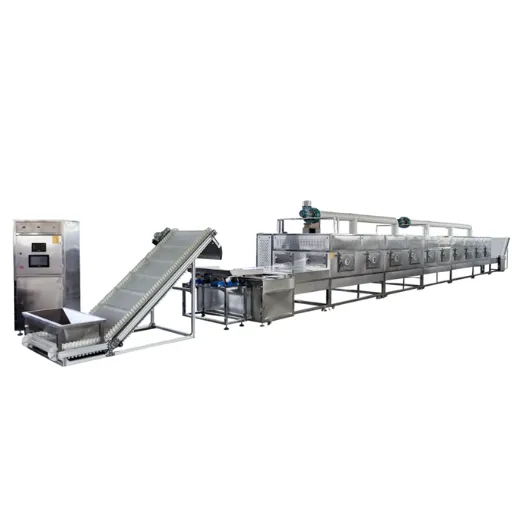
Selecting equipment starts with honest answers about your product, volume, and growth trajectory. The wrong machine wastes capital. The right one becomes a profit engine.
Step 1: Define Your Processing Mode
The R&D environment requires batch processing because it needs to handle small product variations which occur frequently. The cabinet-style microwave drying equipment operates with a simple loading and unloading system which handles 10 to 100 kilograms of material per batch. The continuous tunnel systems operate conveyor systems that automatically deliver products while processing more than 60000 grams every hour with reduced human work requirements. The continuous processing option becomes your better choice when your organization produces more than 500 kilograms of dried product every day.
Step 2: Match Power and Frequency to Your Product
The food industry mostly operates at 2450 MHz which serves as the standard industrial frequency. The 915 MHz frequency allows deep penetration into thick product layers which makes it suitable for processing high-volume bulk materials. The power ratings for equipment range between 10 kilowatts and 200 kilowatts which applies to small batch units and large tunnel systems respectively. Your supplier should model heat distribution for your specific product density and moisture content before recommending a configuration.
Step 3: Evaluate Control and Automation Features
Modern microwave drying machines use PLC-based control systems with touchscreen interfaces. The system should provide programmable recipes which include real-time moisture feedback and automatic power modulation together with data logging for traceability. The system implements features that decrease staff mistakes while it maintains product quality between different batches and makes it easier to meet food safety certification standards.
Step 4: Plan for Integration and Space
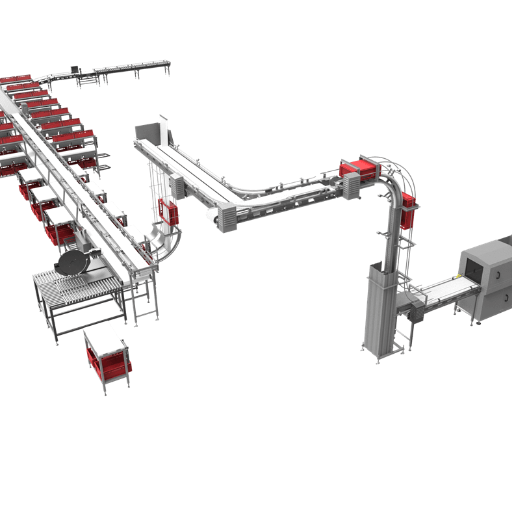
The tunnel microwave dryer needs space to receive products and send them out, as well as additional area for its exhaust ducting and electrical panels. The cabinet units require less space than standard equipment but need manual loading systems to function properly. You should create a map of your current production process before making a decision. Your production line needs to match the equipment requirements because it does not work the other way around.
Step 5: Calculate Total Cost of Ownership
The purchase price functions as an initial cost. You need to account for energy use and maintenance schedules together with magnetron replacement expenses and labor needs and anticipated product yield enhancements. The TCO analysis shows that the higher-capital choice produces better returns within the initial two-year period.
| Factor | Questions to Ask |
|---|---|
| Throughput | How many kg/hour do I need at peak? |
| Moisture target | What is my starting and ending moisture percentage? |
| Product sensitivity | Are my products heat-sensitive or fragile? |
| Automation level | Do I need full PLC control or manual operation? |
| Future growth | Will I expand volume or add product lines? |
Industrial Applications from Fruit to Functional Foods
Fruits and Vegetables
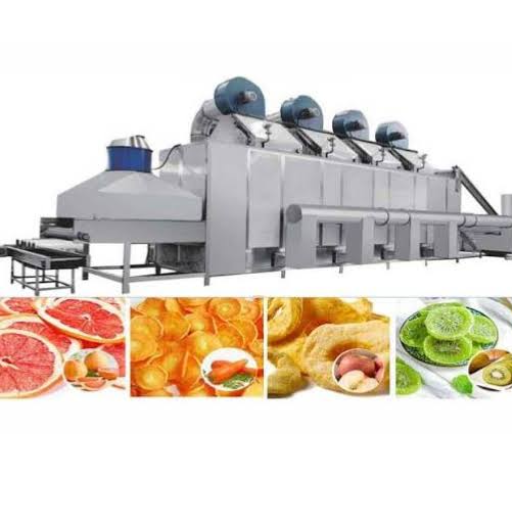
The most established application for microwave drying technology. Sliced apples, mango strips, carrot chips, and kiwifruit all dry rapidly while retaining vivid color and firm texture. The uniform heating prevents the sticky, leathery surfaces common in air-dried fruit.
Herbs and Spices
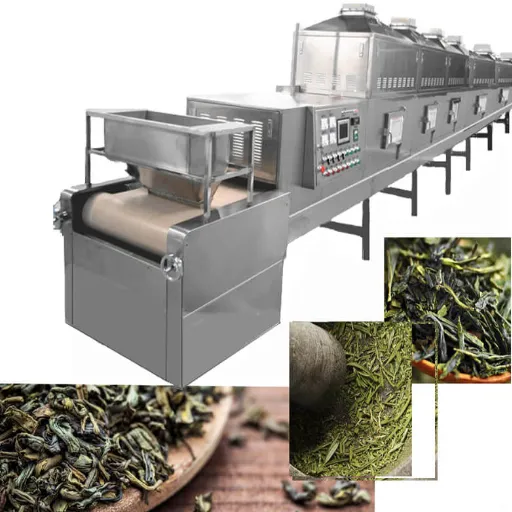
Basil, oregano, chili flakes, and ginger powder lose volatile oils when exposed to prolonged heat. A microwave drying machine preserves these aromatic compounds because the process finishes in minutes rather than hours. The result is a more potent, flavorful end product that commands premium pricing in both retail and food-service markets.
Snack Foods and Puffed Products
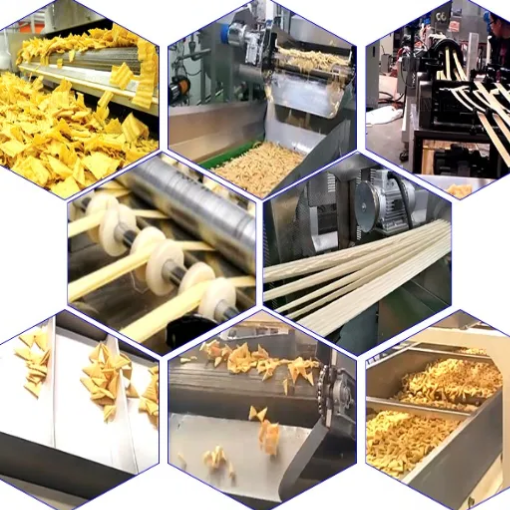
Microwave energy creates a controlled puffing effect in certain starchy materials. This opens opportunities for expanded snack textures without frying. When integrated with a snack food production line, microwave drying becomes a value-add step that differentiates your product from commodity competitors.
Grains, Seeds, and Cereals
The drying process for grains and seeds and cereal ingredients after harvesting gains from microwave technology which delivers fast and uniform moisture elimination. The rapid drying process decreases the chances of mold development during storage while it delivers steady results for milling and extrusion activities.
Emerging Applications
The greatest development potential exists in areas which extend beyond established market segments. The drying process for textured vegetable protein, functional mushroom powders, alternative meat ingredients, and nutraceutical extracts needs to employ gentle techniques which can quickly dry materials without destroying their bioactive properties. The field of vacuum microwave drying methods has emerged as a popular solution because it uses low temperature conditions which safeguard delicate proteins and enzymes.
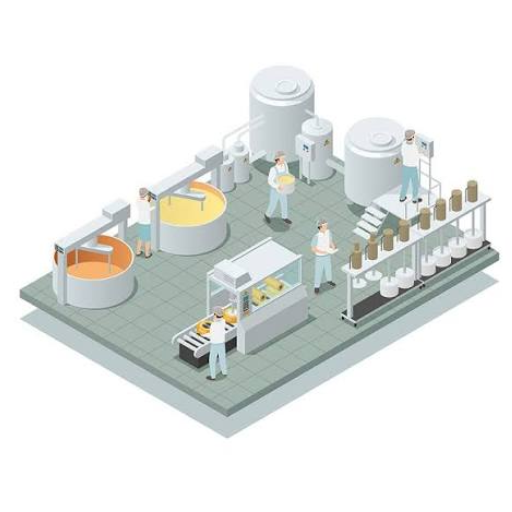
The NutraDried team required a drying technique which would enable them to extract moisture from Moon Cheese products without damaging their cheese structure and flavor. The solution provided by vacuum-microwave technology achieved the desired results. The product expanded to 25,000 retail stores and generated approximately $29 million in annual revenue at peak. The correct drying technology enables businesses to develop new products which standard methods cannot produce at profitable rates although not all processes achieve that same capacity.
Operating Best Practices and Maintenance Essentials
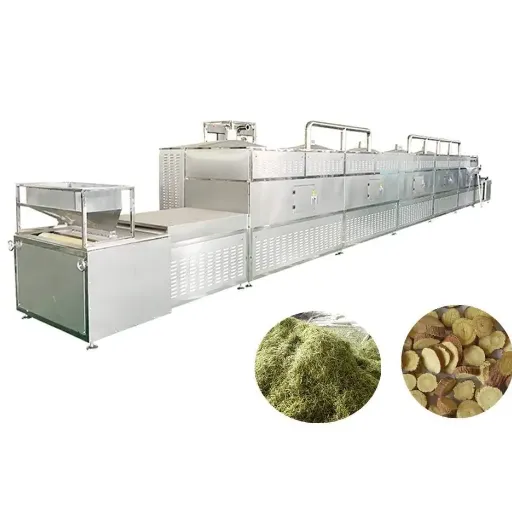
Even the most advanced microwave drying machine performs poorly without proper operation and care. These guidelines protect your investment and your product quality.
Daily Operations
Distribute product evenly across the conveyor or trays. Uneven loading creates hot spots that scorch some material while leaving other portions under-dried. Calibrate temperature and power settings to your product’s moisture profile rather than running at maximum output. Higher power is not always better; matching power to the material’s dielectric properties produces cleaner results.
Safety Protocols
Industrial microwave systems include multiple safety interlocks, shielding, and leakage detectors. Never bypass these systems. Inspect door seals and access panels weekly for damage that could allow microwave leakage. Train all operators on emergency shutdown procedures and material-specific power limits.
Maintenance Schedule
The staff members need to perform their duties by cleaning all outside areas and examining the condition of conveyor belts each day. The staff needs to clean internal chamber walls and waveguides and exhaust filters every week to stop residue accumulation which results in energy waste. Monthly inspections will take place to check electrical connections and door seals and safety interlocks. The team will perform testing of magnetron output and temperature and moisture sensor calibration and mechanical part lubrication every three to six months.
The most important maintenance tasks for microwave drying systems protect the magnetron which represents their highest replacement expense. A properly maintained unit needs between five and seven years before it requires major magnetron replacement but a poorly maintained system needs half that time to replace its components.
The Future of Microwave Drying Technology
The industry is experiencing rapid transformation. Three trends deserve attention if you are planning capital investments over the next three to five years.
Artificial intelligence and machine learning systems have started to enter process control operations. The system utilizes real-time moisture sensors and infrared thermal imaging to create a thermal distribution map which shows how heat spreads throughout the product bed. The system uses algorithms which automatically control power delivery to stop hot spot development while achieving optimal energy efficiency at every second. Smarter control solutions help early adopters achieve yield improvements which range from 5 percent to 10 percent.
The market for hybrid systems which use microwave energy together with hot air and infrared and vacuum technologies experiences annual growth of 10.2 percent. These configurations handle high-moisture products that pure microwave systems struggle with, and they offer processors more flexibility across product portfolios.
Equipment designers are creating new designs which meet sustainability requirements. Manufacturers are integrating heat recovery systems and renewable energy compatibility into new microwave drying equipment. The industry will shift towards low-energy drying technology because carbon accounting has become standard for supply chain audits.
Conclusion
The microwave drying machine functions as a drying system that operates at greater speed than traditional dryers. This system provides an entirely new method for extracting moisture which creates changes in your expenses and product excellence and your ability to run your business. The data demonstrates that processing speed increases by 50 to 90 percent while energy use decreases by 30 to 50 percent and the resulting improvements in quality produce higher market value. For food manufacturers ready to modernize their operations, investing in the right microwave drying machine delivers returns that compound year after year.
Food manufacturers face tight profit margins while customers demand better products, so they must determine whether microwave drying technology is effective. The question is how quickly you can integrate it into your operation and capture the competitive advantage it delivers.
Ready to transform your drying operation? Contact Shandong Loyal Industrial today for a tailored equipment assessment, throughput modeling, and a clear ROI projection based on your products and production goals. Our engineering team has designed microwave drying solutions for operations across Asia, Europe, and the Americas, and we are ready to build one for you.