The pet food market entry by a Polish family-operated business began through their usage of one extruder and their rented warehouse in 2019. The company faced a demand for their grain-free kibble which exceeded their production ability by 400% within three years. The company experienced a problem because their production line functioned as their main operational issue. The company achieved cost savings through their new automated pet food production system which decreased their expenses by 22% and enabled them to create three new product lines within 18 months.
If you are exploring how to manufacture pet food at scale, you already know the opportunity is massive. The global pet food market is projected to reach approximately $144.5 billion in 2026, according to Future Market Insights. But opportunity without the right equipment creates risk. A poorly configured pet food production line leads to inconsistent batches, regulatory headaches, and runaway operating costs.
The guide presents the operational process of contemporary pet food production systems and the essential equipment required for proper installation and investment optimization. The guide provides practical solutions that you can implement without delay whether you are starting your first facility or your existing manufacturing operations need to increase production capacity.
Want to explore equipment options before you read on? Browse our customizable pet food production solutions to see capacity ranges and configurations.
What Is a Pet Food Production Line?
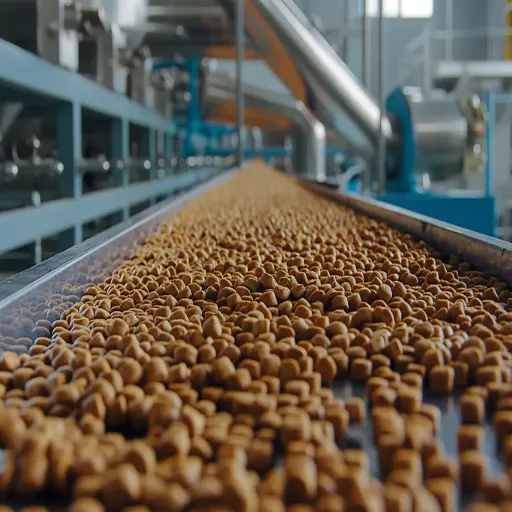
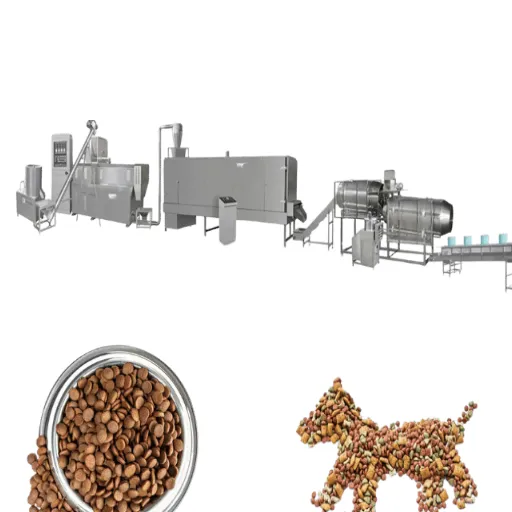
A pet food production line is an integrated system of machinery designed to transform raw ingredients into finished pet food products. These lines automate every stage of manufacturing, from ingredient handling and mixing through cooking, shaping, drying, coating, and packaging.
Most lines are built around one of three product formats:
- Dry kibble: The largest segment globally, valued at roughly $67.7 billion in 2024. Extrusion is the dominant processing method.
- Wet or canned food: Higher moisture content, cooked and sterilized before sealing in cans or pouches.
- Treats and specialty snacks: Includes baked biscuits, dehydrated jerky, and extruded functional treats.
A turnkey pet food production line matters because integration ensures consistency. When mixers, extruders, dryers, and packaging machines are engineered to work together, batch variation drops, throughput rises, and compliance becomes far easier to maintain.
Core Equipment in a Dry Pet Food Production Line
New producers usually start their operations by making dry pet food. The standard procedure requires operation of six essential machine types. You must learn each equipment function because it enables you to choose suitable machines which meet your production goals and financial limits.
Raw Material Handling and Milling
The process of cooking begins after all ingredients reach their desired particle size. The arrival of grains and proteins and additives occurs with different moisture content and particle size characteristics. A milling machine or grinder reduces these materials to a consistent size which is essential for stable extrusion and even nutrient distribution.
The extruder needs proper milling to achieve uniform cooking results. The process results in heavy kibble which does not expand properly and contains unacceptable quality for pet consumption.
Mixing and Formulation
The mixer combines all ground materials to create a uniform dough mixture. The most frequently used mixer designs include ribbon mixers and paddle mixers and twin-shaft batch mixers. The goal is complete uniformity. Every kilogram of output must contain the same protein, fat, vitamin, and mineral ratios.
Contemporary mixers use load cells together with automated dosing systems. Human error reduction and faster recipe transition are achieved through these system capabilities. The ability to quickly switch between multiple SKUs gives manufacturers a significant advantage over their competitors.
Extrusion: The Heart of the Line
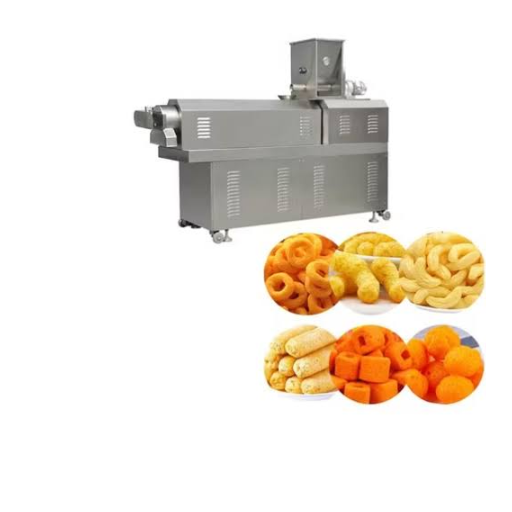
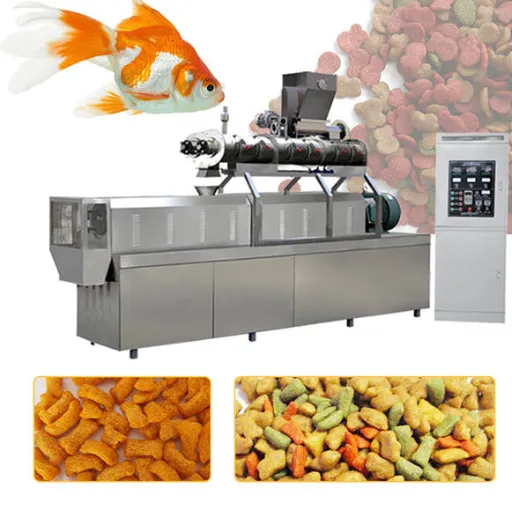
The extruder functions as the main component of every dry pet food manufacturing facility. The process begins with raw materials which undergo cooking through high-temperature and mechanical shear before they get processed into kibble through a shaped die. The rotary cutter cuts the extruded rope into identical segments.
Twin-screw extruders dominate the premium segment because they offer superior control over starch gelatinization, density, and shape complexity. Single-screw extruders are simpler and less expensive, making them popular for entry-level operations.
Here is a representative capacity range for industrial extruders:
| Model Class | Output Range | Installed Power | Best For |
|---|---|---|---|
| Entry-level | 100–300 kg/h | 50–90 kW | Startups, pilot plants |
| Mid-scale | 300–1,000 kg/h | 100–180 kW | Regional producers, growing brands |
| Industrial | 1,000–3,500 kg/h | 200–300 kW | Large-scale commercial plants |
| Heavy-duty | 3,500+ kg/h | 300+ kW | Enterprise operations, co-manufacturers |
Note: Exact specifications vary by manufacturer and raw material profile.
Drying, Cooling, and Coating
Freshly made kibble which has been newly extruded contains moisture levels between 20 percent and 25 percent. The product requires drying until it reaches approximately 8 percent to 10 percent moisture content because this process protects its shelf life and stops mold development. The industry standard uses multi-pass dryers which maintain exact temperature control through their multiple heating zones. The energy-efficient designs of modern systems achieve gas or electricity savings between 15 percent and 25 percent when compared to earlier single-zone oven models.
The product moves through a cooling system after it goes through the drying process. The process of fast cooling stops moisture from forming inside the packaging which helps maintain both fat content and texture. A coating drum applies fats and oils and flavors and nutritional enhancers through spraying onto the surface of the kibble. This process makes the food much more appealing to eat.
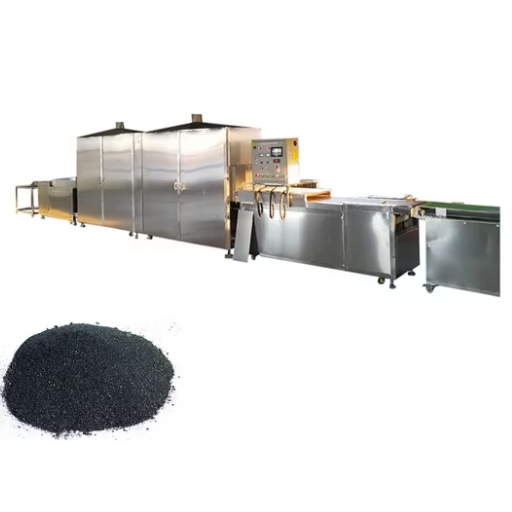
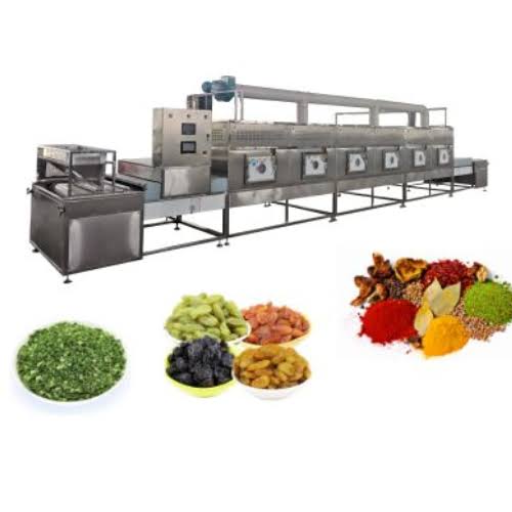
Looking to cut energy costs in your drying stage? Our energy-efficient microwave drying machines offer precision control and reduced utility bills for food producers worldwide.
Packaging and Quality Control
The final stage of the process involves automated packaging. The dry pet food industry depends on vertical form-fill-seal (VFFS) machines because these machines can operate at high speeds while processing different bag sizes. The system employs weighing systems and metal detectors and checkweighers to identify out-of-spec products before they reach the pallet.
Retailers and regulators now require complete lot traceability as a standard practice. Modern packaging lines implement barcode or RFID tracking systems which enable complete traceability of each bag back to its ingredient batch.
How the Pet Food Manufacturing Process Works
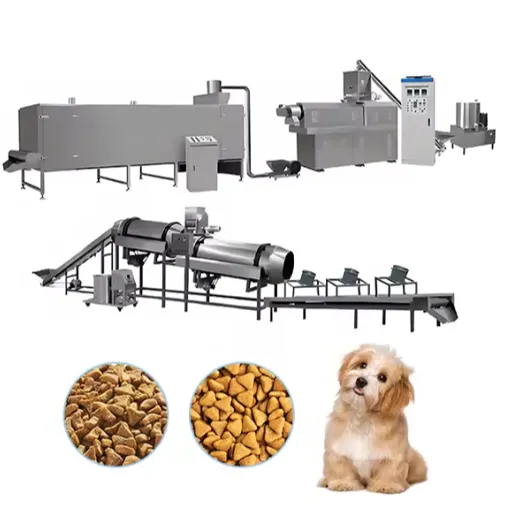
Understanding the equipment is important. Understanding how the pieces fit together is critical. Here is the standard process flow for a dry pet food production line.
Step 1: Ingredient receiving and preparation. Raw materials are inspected, weighed, and stored in silos or bins. Grinding reduces particle size to specification.
Step 2: Mixing and dough formation. Ground ingredients are loaded into the mixer along with liquids such as water, fat, or molasses. The result is a uniform dough ready for extrusion.
Step 3: Extrusion and shaping. The dough enters the extruder barrel, where it is cooked under heat and pressure. It is forced through a die plate with shaped openings, then cut by a rotary blade into precise lengths.
Step 4: Drying and cooling. Hot air removes moisture in the dryer. Ambient air or conditioned cooling brings the kibble to room temperature.
Step 5: Coating and flavoring. A coating drum applies oils, fats, or savory sprays. Some lines include vacuum coaters for deeper fat penetration.
Step 6: Packaging and quality assurance. Automated bagging, sealing, and palletizing complete the line. Laboratory testing verifies moisture, density, protein, and microbiological safety.
When Chen, a operations director at a Thai pet food co-manufacturer, mapped his existing process against this flow, he discovered a 12-minute bottleneck between drying and cooling. Upgrading to a continuous-flow cooler eliminated that delay and increased his daily output by 8% without adding extruder capacity.
Choosing the Right Pet Food Production Line for Your Business
Not every manufacturer needs the same configuration. The right pet food production line depends on your target market, budget, and growth plan. Here is how to think about sizing and specifications for three common scenarios.
Startup and Small-Batch Operations
If you are launching a new brand or testing recipes, start with a compact, modular line. Entry-level extruders starting at 100–300 kg/h are affordable and fit into smaller facilities. Look for equipment that allows quick die changes and recipe adjustments. This flexibility lets you experiment with shapes, sizes, and formulations without committing to massive volumes.
Key priorities for startups:
- Low capital investment with upgrade paths
- Easy cleaning and changeover
- Recipe flexibility and small-batch capability
- Basic automation with room to add sensors later
Mid-Scale Regional Producers
At this stage, consistency and efficiency matter more than experimentation. A mid-scale pet food production line in the 500–1,500 kg/h range balances output with manageable operating costs. Automation levels should include automated dosing, PLC control panels, and integrated quality checks.
Key priorities for mid-scale producers:
- Reliable throughput for multi-shift operations
- HACCP- and ISO-compliant stainless steel construction
- Energy-efficient dryers and coolers
- Strong after-sales support and spare parts availability
Large-Scale Industrial Plants
Enterprise manufacturers need heavy-duty systems designed for 24/7 operation. Industrial extruders exceeding 3,000 kg/h require robust pre-conditioning, precise temperature control, and redundant systems to minimize downtime. Full automation, IoT monitoring, and predictive maintenance become essential at this scale.
Key priorities for large plants:
- Maximum uptime and minimal batch variation
- Advanced process control and data logging
- Integration with ERP and traceability systems
- Turnkey installation and comprehensive training
Installation, Commissioning, and Training
Buying the equipment is only half the battle. A successful installation follows a clear sequence. Skipping steps here leads to calibration errors, safety issues, and delayed production starts.
Site preparation. Ensure your facility has adequate floor space, ceiling height, power supply, ventilation, and drainage. Food-grade flooring and one-way material flow are non-negotiable for regulatory compliance.
Equipment delivery and positioning. Inspect every component upon arrival. Position machinery according to the approved layout plan, leaving enough space for cleaning, maintenance, and operator access.
System integration. Connect electrical panels, pneumatic lines, water supplies, and central control systems. Modern lines use a single human-machine interface (HMI) to monitor and adjust the entire process.
Dry runs and trial production. Run each machine empty to verify mechanical movement and safety interlocks. Then introduce small test batches to calibrate extruder speed, dryer temperature, and cutter timing.
Operator training. Your team needs hands-on instruction covering startup and shutdown procedures, routine maintenance, troubleshooting, and sanitation protocols. The best suppliers include training as part of their commissioning package.
At Shandong Loyal Industrial Co., Ltd., we provide on-site installation, commissioning, and operator training for every pet food production line we deliver. Our engineers ensure your team is confident before the first commercial batch runs.
Regulatory Compliance and Food Safety
Pet food is feed, but it is regulated almost as strictly as human food in major markets. Your production line must support compliance from the ground up.
North America: AAFCO and FDA
In the United States, the Food and Drug Administration (FDA) regulates pet food under the Federal Food, Drug, and Cosmetic Act. The Association of American Feed Control Officials (AAFCO) establishes nutritional adequacy standards and ingredient definitions. Your facility needs a HACCP plan, Good Manufacturing Practices (GMP), and lot traceability systems.
Europe: FEDIAF and EU Regulation 767/2009
European producers must follow EU Regulation (EC) No 767/2009 on the marketing and use of feed. The European Pet Food Industry Federation (FEDIAF) publishes nutritional guidelines and safety codes. Equipment must support one-way flow, environmental monitoring, and full batch records.
Global Best Practices
Regardless of market, these principles apply:
- Use 304 or 316 stainless steel for all food-contact surfaces.
- Install metal detection and X-ray inspection systems.
- Maintain temperature and humidity logs.
- Separate raw and finished goods zones physically.
- Document every batch from ingredient receipt to finished product shipment.
Equipment design can make or break your audit. Smooth welds, sloped surfaces, and clean-in-place (CIP) systems simplify sanitation and reduce contamination risk.
Maximizing ROI: Costs, Efficiency, and Scaling
Let us talk about the numbers that matter. A pet food production line is a capital investment, but the real cost over a 10-year lifespan includes energy, labor, maintenance, and downtime.
Capital Investment by Scale
While prices vary by supplier and configuration, here is a general framework:
- Entry-level lines (100–300 kg/h): Typically the most accessible capital range, suitable for startups and pilot facilities.
- Mid-scale lines (500–1,500 kg/h): Moderate investment with strong payback potential for established regional brands.
- Industrial lines (3,000+ kg/h): Significant upfront cost, but per-unit production costs drop dramatically at volume.
Operating Cost Drivers
Energy is often the second-largest expense after raw materials. Drying accounts for 40–60% of total energy use in a dry pet food production line. Upgrading to energy-efficient dryers or adding heat recovery systems can reduce utility bills by 15–25%.
Labor costs fall as automation rises. Automated dosing, packaging, and quality control reduce headcount while improving consistency.
Maintenance is predictable if you follow the manufacturer’s schedule. Budget for annual wear parts such as extruder screws, dies, and cutter blades. A well-maintained line lasts 15–20 years.
ROI Multipliers
Three decisions accelerate payback:
- Modular design: Scale output by upgrading individual machines rather than replacing the entire line.
- Energy efficiency: Lower gas and electricity consumption directly improve margins.
- Automation: Reduce labor, minimize human error, and increase throughput per shift.
A Brazilian manufacturer we worked with replaced an aging dryer with an energy-efficient model and added automated packaging. Their utility costs dropped 18% and labor hours per ton fell by 12%. The upgrades paid for themselves in under three years.
Emerging Trends in Pet Food Manufacturing
The pet food industry is evolving fast. The production line design and manufacturing practices of pet food manufacturers will be determined by four key trends which emerge in 2026 and beyond.
Automation and IoT Monitoring
Smart sensors now track temperature and moisture and motor vibration and energy use in real time. The predictive maintenance algorithms create alerts which inform operators about upcoming bearing failures and upcoming dryer burner deviations from proper specifications. This technology reduces unplanned downtime by 20 to 30 percent in well-run facilities.
Personalization and Small-Batch Flexibility
Pet owners want their pets to follow diets which match their breed and age and health needs. The production lines enable manufacturers to deliver customer demands through their quick die changes and their recipe libraries and their ability to produce different batch sizes.
Sustainability and Energy Efficiency
Retailers and consumers now consider sustainability as a purchasing factor which includes products that use low-energy dryers and recyclable packaging films. Companies which spend money on environmentally friendly machinery can obtain tax benefits and become top suppliers for large retail chains.
Alternative Proteins
The pet food industry now includes plant-based proteins and insect meal and fermentation-derived ingredients in its standard product recipes. The extruders and mixers must process these materials without creating clogging problems or uneven cooking or off-flavors. The equipment needs to be adaptable because the ingredient range will expand.
These shifts align with the broader emerging trends in pet food manufacturing we have tracked over the past year.
Conclusion
A well-designed pet food production line is the foundation of profitable, scalable pet food manufacturing. The right equipment ensures consistent quality, keeps you compliant with global regulations, and positions you to capture growing demand in a $144 billion market.
Here are the key takeaways:
- Start with a clear product strategy. Dry kibble, wet food, and treats require different core equipment.
- Invest in integration. A turnkey line where every machine communicates reduces waste and batch variation.
- Plan for scale. Modular designs and automation protect your investment as demand grows.
- Prioritize compliance. Stainless steel construction, traceability systems, and HACCP planning are non-negotiable.
- Focus on total cost of ownership. Energy efficiency and reliable after-sales support often matter more than the lowest purchase price.
Ready to build or upgrade your pet food production line? Contact Shandong Loyal Industrial Co., Ltd. for a tailored consultation. Our team will help you select the right capacity, configuration, and automation level for your specific goals. We have delivered advanced food processing equipment to more than 650 customers worldwide since 2005, and we are ready to help you succeed.
Want to dive deeper into extrusion technology? Read our ultimate guide to food extrusion technology to understand how twin-screw extruders create the perfect kibble every time.