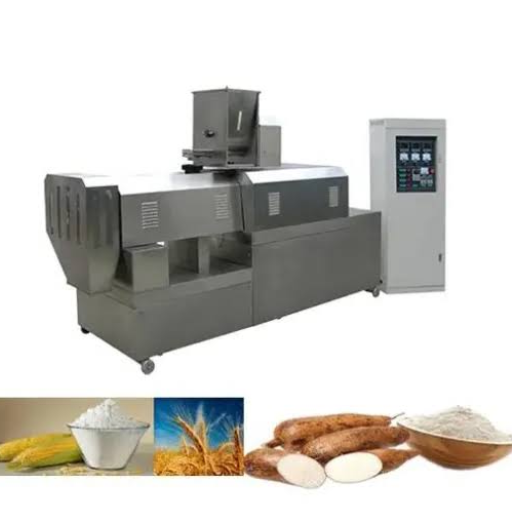
Modified starch quality control is the system of tests, process checks, and standards that ensures every batch of modified starch meets target viscosity, moisture, degree of substitution, purity, and safety requirements. Without it, even a small shift in reaction temperature or drying time can turn a profitable run into scrap, rework, or a customer complaint.
Last quarter, a snack manufacturer in Vietnam rejected a 2-ton modified starch shipment because the viscosity was 15% below specification. The supplier had skipped inline sampling during drying. The result was a three-day production delay, $12,000 in rework costs, and a strained customer relationship.
You already know that consistency matters in food manufacturing. This guide will show you how to build a practical modified starch quality control program. You will learn the key parameters to test, the methods and equipment to use, the standards that apply to food-grade production, and how the right production line equipment makes QC easier to manage at scale.
Key Takeaways
- Modified starch quality control covers raw-material checks, in-process monitoring, finished-product testing, and documentation.
- The most important parameters are moisture, viscosity, degree of substitution (DS), WAI/WSI, particle size, pH/residual reagents, microbiology, and appearance.
- Food-grade modified starch must comply with FDA, EU, and FAO/JECFA standards, plus certifications such as ISO 22000, HACCP, and HALAL/KOSHER.
- Inline sensors, automated extruders, and precision dryers reduce batch-to-batch variation and cut rework costs.
- A simple QC checklist tied to SOPs and batch records is the fastest way to close gaps that competitors overlook.
What Is Modified Starch Quality Control?
Modified starch quality control is the end-to-end discipline of making sure that chemically, physically, enzymatically, or composite-modified starch performs exactly as intended. It starts when raw starch enters the plant and continues through every reaction, wash, dry, grind, and pack step until the product leaves the warehouse.
The goal is simple: deliver the same functional properties batch after batch. Those properties include thickening power, gel strength, freeze-thaw stability, solubility, and mouthfeel. Each application demands a different profile. A starch that works in instant soup may fail in a gluten-free bread or a puffed snack.
That is why modified starch quality control is not only a lab activity. It is a production-line activity. The best programs combine real-time equipment data (temperature, pH, moisture, residence time) with laboratory confirmation (viscosity, DS, microbiology). When the two systems agree, you get predictable quality. When they disagree, you catch problems before they reach the customer.
Want to see how the right equipment makes QC easier to manage? Explore our full range of food processing equipment.
Key Quality Control Parameters for Modified Starch
Every QC program needs a clear target list. The exact parameters depend on the modification method and the end use, but most food-grade modified starch programs track the following.
Moisture Content
Moisture directly affects shelf life, flowability, microbial risk, and reaction behavior. Finished modified starch usually targets 8–14% moisture. Too high, and the product clumps or grows mold. Too low, and dusting, static, and handling problems increase.
Viscosity and Pasting Profile
Viscosity is often the first test a customer runs. It is measured with a Rapid Visco Analyzer (RVA) or Brabender viscometer. The pasting profile shows peak viscosity, hot-paste stability, breakdown, and setback. These values predict how the starch will behave in sauces, soups, dairy desserts, and bakery fillings.
Degree of Substitution (DS)
DS tells you how many hydroxyl groups on the starch molecule have been replaced by functional groups. It matters most for etherified and esterified starches. A DS that is too low gives weak functionality; too high can push the product outside regulatory limits. Many producers control DS within ±0.02.
Water Absorption Index (WAI) and Water Solubility Index (WSI)
WAI measures how much water the starch absorbs under controlled heating. WSI measures how much solid material leaches into the water. These two indexes are critical for extruded and pregelatinized starches used in snacks, instant foods, and binders.
Particle Size Distribution
Particle size affects dissolution rate, texture, and how evenly the starch disperses in a batter or sauce. Sieving and laser diffraction are common methods. Consistent particle size also improves packaging density and flow.
pH and Residual Reagents
After chemical modification, the starch must be washed and neutralized. pH checks confirm the wash step worked. Residual reagent testing (for example, vinyl acetate or propylene chlorohydrin) ensures the product meets food-safety limits set by FAO/JECFA and regional regulators.
Microbiological Safety
Food-grade starch must meet limits for total plate count, yeasts, molds, coliforms, and pathogens. Microbial failures usually trace back to water quality, airborne contamination, or poor drying control.
Physical Appearance and Color
A quick visual check catches overheating, burnt particles, foreign matter, and color drift. White to cream-colored, free-flowing powder is the typical target for most food-grade modified starches.
Testing Methods and Equipment for Modified Starch QC
Choosing the right test method is as important as choosing the right parameter. Below are the most common approaches used in food-grade modified starch labs and production lines.
Rapid Visco Analyzer (RVA) and Brabender Viscometry
The RVA is the workhorse of starch QC. It cooks a small sample under a controlled temperature and shear program and records the full pasting curve. Brabender units do similar work and are still common in older labs. Both methods replace slow, subjective cooking tests.
Moisture Analyzers and Inline Sensors
Lab moisture analyzers use infrared or halogen heating to report moisture in minutes. Inline NIR (near-infrared) sensors on the dryer discharge give real-time moisture readings. That feedback loop lets operators adjust dryer temperature or feed rate before a batch goes off spec.
Anita, a QA manager at a mid-sized starch plant in India, used to test moisture only at the end of each shift. After installing inline NIR moisture sensors on her dryer, catch-rate for off-spec batches rose from 60% to 94%, and customer complaints dropped by half within six months.
Titration and Spectroscopy for DS and Residues
Degree of substitution is often found by acid-base titration or potentiometric titration. Residual reagents and heavy metals may be measured by gas chromatography, atomic absorption, or HPLC. These tests usually go to a central lab or third-party service, but the results should feed back into process-control setpoints.
Microscopy and Particle Size Analysis
Polarized light microscopy checks granular structure and can help distinguish native from modified starch. Scanning electron microscopy (SEM) reveals surface changes caused by physical or chemical treatment. Laser diffraction particle-size analyzers give fast, repeatable particle-size distributions.
Microbiological Testing
Standard methods include plate counts for total aerobic microbes, yeasts, and molds, plus tests for coliforms and Salmonella. Sampling plans should follow ISO or regional food-safety guidelines, and labs should run positive and negative controls.
In-Process Quality Control: From Raw Material to Packaging
Testing finished starch is necessary, but it is not enough. The best manufacturers build modified starch quality control into every stage of the line.
Raw Material Incoming Inspection
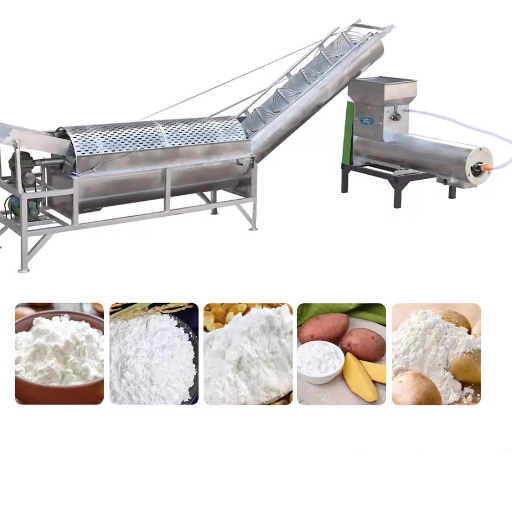
Start with clean, dry native starch from a qualified supplier. Incoming checks should cover moisture, purity, particle size, microbial load, and a Certificate of Analysis (CoA). Rejecting poor raw material upstream prevents expensive failures downstream.
Modification Reaction Monitoring
During physical modification, watch extruder barrel temperature, screw speed, feed rate, and specific mechanical energy. During chemical modification, control temperature, pH, reagent concentration, and reaction time. Small deviations cause under-modified or over-modified starch, which shows up later as off-target viscosity or poor gel strength.
Neutralization, Washing, and Purification Checks
After chemical modification, the starch slurry must be neutralized and washed to remove salts, residual reagents, and by-products. pH and conductivity checks confirm the wash is complete. Incomplete washing leads to off-flavors, color problems, and regulatory failures.
Drying and Moisture Control
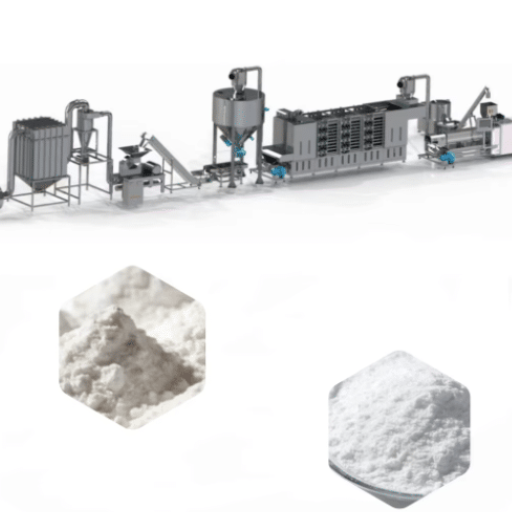
Drying sets the final moisture and preserves functional properties. Whether you use a flash dryer, spray dryer, drum dryer, or industrial microwave dryer, uniform airflow and temperature are essential. Hot spots over-dry some particles while leaving others wet. Inline moisture sensors and automated damper controls solve this problem.
Grinding, Screening, and Final Packaging QA
The dried starch is milled and screened to the target particle size. Final QA checks usually include moisture, appearance, particle size, viscosity, DS (if applicable), and microbiology. Only then should the batch be released, labeled with a lot number, and packed in moisture-proof, food-grade bags.
Food-Grade vs Industrial-Grade Modified Starch Standards
Not all modified starch is produced to the same standard. Food-grade production has stricter equipment, residue, and documentation requirements than industrial-grade production.
| Requirement | Food-Grade Modified Starch | Industrial-Grade Modified Starch |
|---|---|---|
| Contact surfaces | SUS 304/316 stainless steel, hygienic design | Corrosion-resistant materials acceptable |
| Residue limits | Strict (FDA, EU, FAO/JECFA) | Higher tolerances often acceptable |
| Cleaning | Clean-in-place (CIP) and sanitation protocols | Standard cleaning |
| Traceability | Lot tracking for raw materials and finished goods | Less stringent |
| Lubricants | Food-approved only | Industrial grade |
| Certifications | ISO 22000, HACCP, GMP, BRC, HALAL, KOSHER | ISO 9001 often sufficient |
Food-grade modified starch sold in the United States must comply with FDA 21 CFR 172.892, which lists permitted modification agents and use levels. In the European Union, modified starches carry E-numbers such as E1412 (distarch phosphate) and must meet purity and labeling rules. Internationally, the FAO/JECFA monograph on modified starches sets widely accepted identification tests and purity specifications.
Ready to build a QC-focused starch line that meets food-grade standards? Contact us for a tailored modified starch production line quote.
Common Modified Starch Quality Issues and Troubleshooting
Even well-run plants encounter problems. A troubleshooting matrix helps operators respond quickly instead of guessing.
| Issue | Likely Cause | Corrective Action |
|---|---|---|
| Off-target viscosity | Wrong reaction temperature, time, or reagent dose | Recalibrate sensors; adjust recipe setpoints |
| Inconsistent moisture | Uneven dryer airflow or feed rate | Balance dryer load; check inline moisture sensor |
| Residual reagent odor or color | Incomplete washing or neutralization | Extend wash cycle; verify pH and conductivity |
| Microbial contamination | High moisture, poor sanitation, or contaminated water | Improve CIP; verify dryer performance; retest water |
| Particle agglomeration | Over-drying or high humidity during packaging | Adjust dryer setpoint; improve packaging seals |
| Low WAI or high WSI | Over-shear or excessive heat during extrusion | Reduce screw speed or barrel temperature |
One of the fastest ways to reduce these issues is to connect lab results back to equipment settings. When a viscosity test drifts, the operator should know whether to adjust reactor temperature, reagent feed, or dryer moisture. That feedback loop turns QC from a reporting function into a control function.
Building a Modified Starch QC Program: Checklist & Best Practices
A strong QC program does not have to be complicated. It needs clear standards, trained people, reliable equipment, and good records.
Modified Starch QC Checklist
Raw material stage
- Verify supplier CoA for moisture, purity, and microbiology
- Inspect for foreign matter, odor, and color
- Label and quarantine lots until cleared
In-process stage
- Record temperature, pH, pressure, and flow rate each batch
- Sample and test at reaction midpoint and discharge
- Confirm neutralization and wash completion with pH/conductivity
- Monitor dryer outlet moisture in real time
Finished-product stage
- Test moisture, viscosity, DS, WAI/WSI, particle size, pH, appearance
- Run microbiological tests per schedule
- Compare results to release specifications
- Assign lot number and prepare CoA
Documentation and maintenance
- Maintain batch records and traceability for at least one year
- Calibrate lab and inline instruments on schedule
- Conduct internal audits twice per year
- Review supplier performance annually
Supplier and CoA Management
Require a Certificate of Analysis for every incoming lot. The CoA should list the test method, result, specification limit, and signature. Keep a supplier scorecard that tracks on-time delivery, CoA accuracy, and complaint history. Backup suppliers reduce risk if a primary source fails.
Calibration and Preventive Maintenance
An uncalibrated moisture meter can ship bad product for days before anyone notices. Build a calibration schedule for viscometers, moisture analyzers, pH probes, temperature sensors, and scales. Tie preventive maintenance for extruders, dryers, and reactors to batch-record reviews so wear is caught before it affects quality.
How Equipment Selection Impacts Quality Control

The right equipment does not replace a QC program, but it makes the program far more effective. Here is how key machines influence modified starch quality.
Twin-Screw Extruders
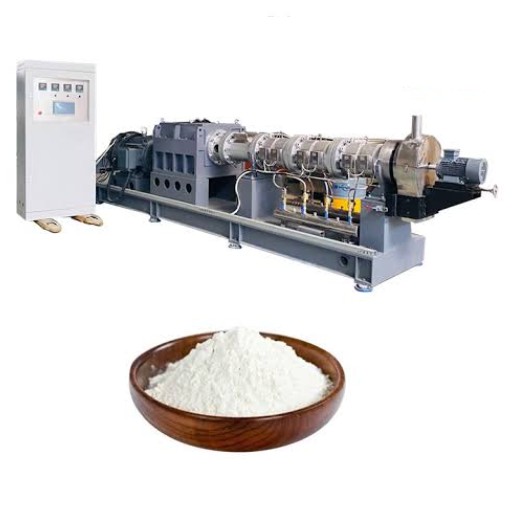
Twin-screw extruders give precise control over shear, temperature, and residence time. That control is essential for physical modification and pregelatinized starch. Stable screw speed and barrel temperature reduce WAI/WSI variation and improve snack texture.
When Marcus upgraded to a twin-screw extruder with automated temperature and screw-speed control, his WAI and WSI variance fell by 30%. Consistent pregelatinized starch allowed him to win a two-year contract with a ready-to-eat soup brand.
Industrial Dryers
Dryer uniformity determines final moisture and functional properties. Flash dryers, spray dryers, and industrial microwave dryers each suit different products. The key is to match the dryer to the product and to install sensors that close the control loop.
Chemical Reactors
For chemically modified starch, reactors must hold temperature and pH within tight windows. Automated reagent dosing and jacketed heating reduce human error. Batch reactors are common for small volumes; continuous reactors improve consistency at scale.
Inline Sensors and Automation
Inline moisture, temperature, pH, and viscosity sensors give operators immediate feedback. When paired with a programmable logic controller (PLC) or manufacturing execution system (MES), they can trigger alarms or automatic adjustments. That level of automation is what separates reactive QC from predictive QC.
If you are planning a snack food production line or expanding your starch capacity, equipment choices made today will shape your QC costs for years. Our team can help you map machine parameters directly to your quality targets.
Conclusion
Modified starch quality control is the bridge between a good recipe and a reliable product. When you control moisture, viscosity, degree of substitution, WAI/WSI, particle size, residual reagents, and microbiology, you protect both your customers and your margins.
The most important takeaways are:
- Build QC into every process stage, not just the final test.
- Use the right lab methods and inline sensors for your product.
- Follow food-grade standards and keep complete batch records.
- Connect equipment settings to quality outcomes so operators can act fast.
- Review suppliers, calibrations, and maintenance schedules on a regular cadence.
A strong QC program also makes your plant more attractive to global buyers who demand ISO 22000, HACCP, HALAL, or KOSHER documentation. If you are ready to improve consistency and reduce rework, contact Shandong Loyal Industrial Co., Ltd. today for a customized modified starch production line and quality-control consultation.