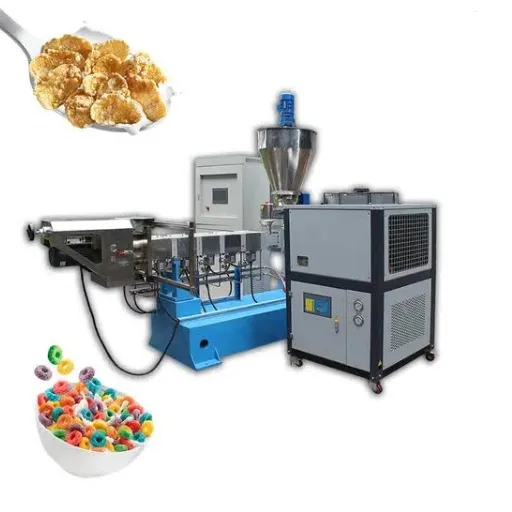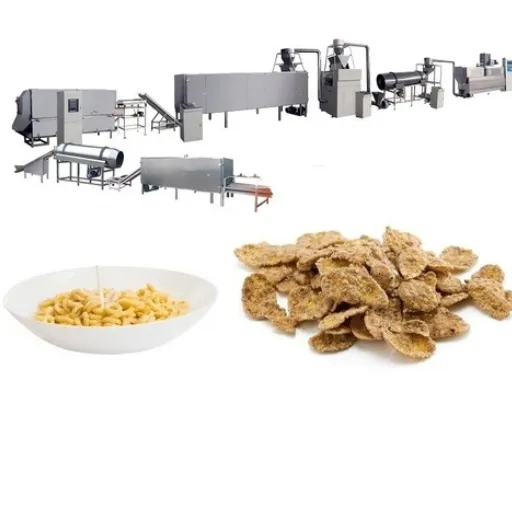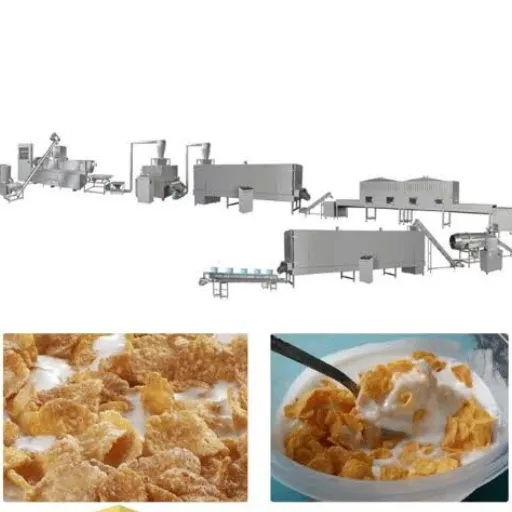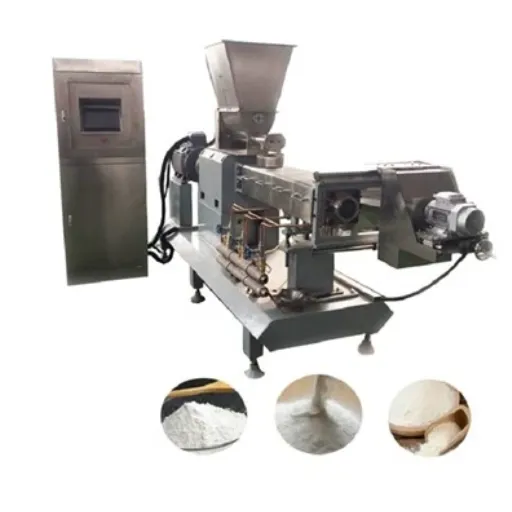
A modified starch production line is an integrated manufacturing system that transforms native starch into modified starch through physical, chemical, or enzymatic treatment. These lines typically include mixing, extrusion or reaction, cooling, drying, milling, and packaging equipment arranged in a continuous workflow.
The global modified starch market is already worth more than 9.8billionin2026,anditisontracktoreach9.8billionin2026,anditisontracktoreach14.2 billion by 2036. That growth is not happening in a few isolated industries. Food processors, paper mills, oil drilling operators, textile manufacturers, and pharmaceutical companies all buy modified starch every day. Yet most buyers searching for a modified starch production line land on thin manufacturer catalog pages that list machines without explaining how the system actually works, what it costs, or how to match a line to a specific end product.
In this guide, you will learn exactly how a modified starch production line is configured, how each process stage works, what equipment you need, how to choose raw materials, and how to estimate investment and ROI. Whether you are a plant manager expanding capacity, an entrepreneur entering the starch business, or an engineer comparing extrusion against chemical modification, this article gives you a practical roadmap.
Key Takeaways
- A modified starch production line combines mixing, extrusion or chemical reaction, drying, milling, and packaging into one continuous workflow.
- The most common physical modification method uses a twin-screw extruder to pre-gelatinize starch at 120–180°C with controlled moisture and shear.
- Corn starch dominates raw material supply (~46% of market share), but cassava, potato, and wheat starches each suit specific applications.
- Major applications include food thickening, paper sizing, textile warp sizing, oil drilling fluid loss control, construction adhesives, and pharmaceutical binders.
- Equipment investment ranges from roughly 8,000forsmallpilotlines∗∗to∗∗8,000forsmallpilotlines∗∗to∗∗1 million or more for large turnkey plants.
What Is a Modified Starch Production Line?
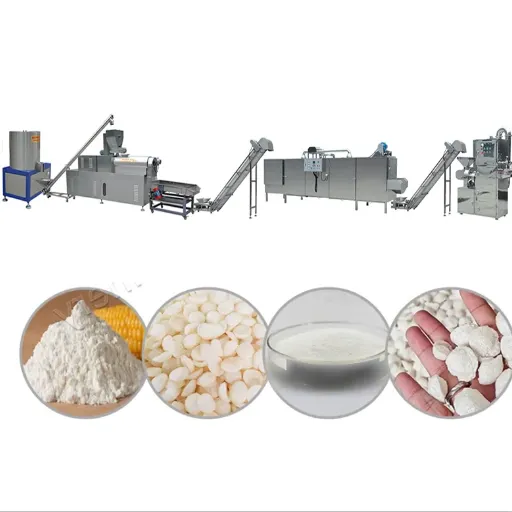
A modified starch production line is a coordinated set of machines that takes native starch powder and changes its physical or chemical structure so it performs better in a target application. Native starch swells in hot water, retrogrades when cooled, and breaks down under acid or shear. Modification corrects those limitations.
The line can produce:
- Pre-gelatinized starch, starch that thickens in cold water
- Oxidized starch, lower viscosity, better film formation for paper and textile sizing
- Cationic starch, positively charged starch for paper wet-end retention
- Carboxymethyl starch (CMS), water-soluble starch for oil drilling and pharmaceuticals
- Cross-linked starch, heat, acid, and shear stable for canned and frozen foods
- Enzyme-converted starch, specific dextrose equivalent for syrups or specialty ingredients
Most extrusion-based modified starch processing lines follow the same basic path: raw starch is mixed with water and additives, cooked under heat and pressure, cooled, dried, ground to size, and packaged. Chemical modification lines add reaction tanks, washing, and drying stages. Enzymatic lines add controlled holding tanks and enzyme dosing systems.
Raj Patel, operations director at a mid-sized food ingredient company near Mumbai, spent three months comparing modified starch manufacturing equipment. He soon realized that not every supplier defines “modified starch” the same way.
One vendor quoted him an extrusion line for pre-gelatinized starch. Another quoted a batch reactor system for cationic starch. The equipment looked completely different because the products were completely different. Once Raj clarified that his customers needed cold-water-soluble thickener for instant soup powders, the right choice, a twin-screw extrusion line, became obvious.
Types of Starch Modification
Before you choose a modified starch production line, you need to decide which of the main starch modification methods matches your product. Each method changes starch structure in a different way and requires different equipment.
Physical Modification: Pre-gelatinization and Extrusion
Physical modification uses heat, moisture, and mechanical shear without adding chemicals. The most common physical process is pre-gelatinization, where starch is cooked above its gelatinization temperature and then dried quickly so it stays soluble in cold water.
A twin-screw extruder is the core machine. Inside the barrel, starch encounters:
- Temperature: 120–180°C in the final cooking zones
- Moisture: 18–35%, depending on product target
- Shear: controlled by screw speed, screw profile, and die design
- Pressure: 2–10 MPa at the die
The sudden pressure drop when the starch exits the die causes flash evaporation. The product expands, cools, and can then be dried and ground.
Physical modification is popular because it is continuous, energy efficient, and does not require chemical handling permits. It is the right choice for pre-gelatinized food starch, oil drilling starch, and some adhesive applications. A dedicated pregelatinized starch production line uses the same twin-screw extrusion platform with screw and die settings tuned for high cold-water solubility.
Chemical Modification
Chemical modification introduces reagents that create new bonds or functional groups on the starch molecule. Common reactions include:
- Oxidation with sodium hypochlorite to reduce viscosity and improve whiteness
- Esterification with acetic anhydride or octenyl succinic anhydride for emulsion stability
- Etherification with propylene oxide or monochloroacetic acid for water solubility and freeze-thaw stability
- Cationization with quaternary ammonium compounds for paper retention
- Cross-linking with phosphorus oxychloride or adipic acid for heat and shear resistance
Chemical modified starch manufacturing equipment includes reaction tanks, pH control systems, washing and filtration equipment, dryers, and effluent treatment. These lines produce higher-value specialty starches but require stricter safety, environmental, and quality controls.
Enzymatic Modification
Enzymes such as alpha-amylase, beta-amylase, glucoamylase, and cyclodextrin glycosyltransferase break specific bonds in the starch molecule. Enzymatic lines are common for producing maltodextrins, glucose syrups, cyclodextrins, and reduced-viscosity starches. The equipment is simpler than chemical lines but requires precise temperature, pH, and time control.
Composite Modification
Some products use two or more methods. For example, a starch might be cross-linked and then acetylated to create a thickener that survives both retort sterilization and freeze-thaw cycles. Composite modified starch production lines need flexible equipment that can run multiple process steps in sequence.
Complete Modified Starch Production Process
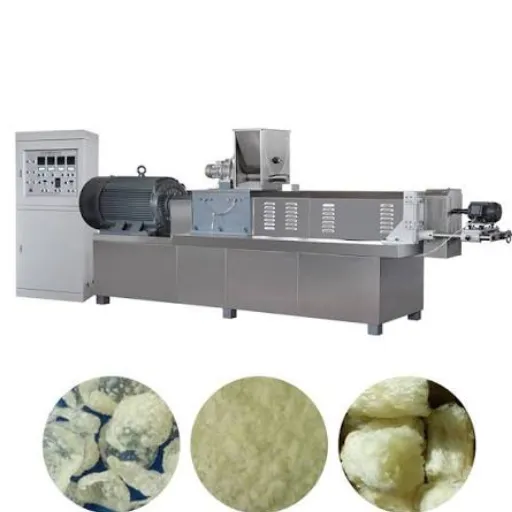
Every modified starch processing line follows a logical sequence. The exact steps depend on the modification method, but the overall modified starch manufacturing process is consistent: pretreat, react or extrude, cool, dry, mill, and package.
Step 1: Pretreatment and Mixing
Native starch powder is fed from a storage silo or bag dump station into a mixer. Water and any additives are added in a controlled ratio. For extrusion, moisture content is typically 18–35%. For chemical modification, starch is often slurried in water at 30–40% solids.
Uniform mixing matters. Uneven moisture creates lumps, uneven cooking, and quality variation.
Step 2: Extrusion or Chemical Reaction
In a physical modified starch production line, the mixed starch enters a twin-screw extruder. The screws convey, compress, shear, and cook the material. Barrel zones are heated electrically, by steam, or by induction. The product exits through a die plate.
In a chemical line, the starch slurry enters a reactor. Reagents are added, pH and temperature are controlled, and the reaction proceeds for a set time. After reaction, the starch is washed to remove by-products and neutralized.
Step 3: Cooling and Conveying
Extruded starch is hot and plastic. It passes through a cooling conveyor or air conveyor to bring the temperature down and stabilize the structure. Rapid cooling helps lock in the pre-gelatinized, amorphous state.
Step 4: Drying
Moisture must be reduced to a stable level, usually 10–14% for most applications and lower for long shelf-life products. Common dryers include:
- Multi-layer belt dryers, continuous, adjustable temperature, good for extruded products
- Fluidized bed dryers, fast, uniform drying for small particles
- Drum dryers, used for high-viscosity pre-gelatinized starch pastes
- Spray dryers, used for enzyme-converted or chemically modified slurries
- Microwave dryers, rapid, energy-efficient option for heat-sensitive products; see our microwave drying machine range for specifications
If you are comparing drying technologies, our guide to industrial food processing equipment explains how to match dryer type to product characteristics.
Step 5: Milling, Screening, and Packaging
Dried starch is ground to the required particle size. A typical system uses a hammer mill or ultrafine pulverizer with a dust collector. The ground product is screened to remove oversize particles, then conveyed to a packaging machine. Common package sizes are 25 kg bags, 50 kg bags, or bulk containers.
Core Equipment Configuration
A complete modified starch production line includes several standard machines. The exact model and size depend on capacity, but the function of each machine stays the same.
| Equipment | Function | Key Selection Criteria |
|---|---|---|
| Mixer / Pre-conditioner | Blends starch with water and additives | Batch or continuous, mixing uniformity, residence time |
| Screw conveyor | Transfers material between machines | Stainless steel construction, variable speed, sealed design |
| Twin-screw extruder | Cooks and modifies starch physically | Screw diameter, L/D ratio, motor power, barrel heating zones |
| Cooling conveyor | Cools extruded product | Belt length, air flow, cooling rate |
| Air conveyor | Moves product pneumatically | Capacity, filtration, pressure rating |
| Dryer | Reduces moisture to stable level | Heating source, capacity, temperature control, energy efficiency |
| Pulverizer / grinder | Reduces particle size | Fineness range, throughput, dust control |
| Packaging machine | Bags finished product | Bag size range, accuracy, sealing method |
| PLC control cabinet | Automates and monitors the line | Number of control points, HMI interface, data logging |
Twin-Screw Extruder Selection
The extruder is the heart of most physical modified starch manufacturing equipment. When comparing extruders, look at:
- Screw diameter: common sizes are 65 mm, 70 mm, 75 mm, 85 mm, and larger
- L/D ratio: typically 20:1 to 40:1; longer barrels allow more cooking time
- Motor power: ranges from 22 kW on pilot lines to 200+ kW on industrial lines
- Barrel zones: more zones mean better temperature control
- Screw profile: modular screws let you change kneading, conveying, and compression sections
- Die design: die shape and number of holes affect expansion and throughput
For buyers who already produce snacks or cereals, the good news is that extrusion technology overlaps heavily with snack food production line equipment. The same twin-screw platform can often be reconfigured for puff snacks, breakfast cereals, or modified starch by changing screws, dies, and process parameters.
Dryer Selection
Dryer choice affects final product quality and operating cost. Belt dryers are the most common choice for extruded modified starch because they handle large volumes continuously. Fluidized bed dryers work well for fine particles. Microwave dryers offer fast drying with lower thermal degradation, which is valuable for heat-sensitive modified starches.
Raw Material Selection
The raw starch you feed into your modified starch production line determines product performance, yield, and cost. The four main commercial sources are corn, cassava, potato, and wheat.
Corn Starch
Corn starch is the most widely used raw material, accounting for roughly 46% of the modified starch market. It has a neutral flavor, good gel strength, and consistent supply. Corn starch is ideal for food thickeners, paper sizing, and many industrial applications.
Cassava / Tapioca Starch
Cassava starch forms clear gels with low syneresis, making it popular in food applications where transparency and freeze-thaw stability matter. It is also widely used in Southeast Asia and Africa where cassava is grown locally.
Potato Starch
Potato starch has large granules, high swelling power, and excellent binding. It produces very clear, elastic gels. Potato-based modified starch is common in premium food products, meat binders, and some paper coatings.
Wheat Starch
Wheat starch is often a by-product of gluten production. It is used in food, paper, and textile applications. Wheat starch can contain residual protein, which may need to be removed for high-purity applications.
| Starch Source | Gel Clarity | Freeze-Thaw Stability | Typical Applications |
|---|---|---|---|
| Corn | Moderate | Good | Food, paper, textiles |
| Cassava | High | Excellent | Sauces, frozen foods, adhesives |
| Potato | Very high | Good | Premium foods, meat binders |
| Wheat | Moderate | Moderate | Food, paper, bioplastics |
Maria Santos runs a sauce manufacturing business in São Paulo. Her customers wanted a ready-to-use white sauce that stayed smooth after freezing and thawing.
She tested corn-based and cassava-based pre-gelatinized starches on the same modified starch production line. The cassava starch gave a clearer, more stable sauce with less syneresis. Switching raw materials improved her product so much that she was able to supply two new retail chains within a year.
Applications Across Industries
Modified starch is not a single product. It is a family of ingredients tuned for specific functions. Understanding end-use requirements helps you design the right modified starch manufacturing equipment and process.
Food and Beverage
In food, modified starch works as a thickener, stabilizer, gelling agent, emulsifier, and fat replacer. Common uses include:
- Instant soups and sauces that thicken in hot or cold water
- Frozen meals that survive freeze-thaw cycles
- Canned and retorted products that hold viscosity after sterilization
- Bakery fillings and glazes with glossy appearance
- Dairy alternatives with creamy mouthfeel
Food-grade modified starch production lines must use food-safe materials, typically 304 or 316 stainless steel, and meet hygiene standards such as HACCP and FDA or EU food contact regulations.
Paper and Packaging
The paper industry is one of the largest non-food users of modified starch. Cationic starches improve wet-end retention and dry strength. Oxidized and depolymerized starches are used for surface sizing and coating binders. Modified starch helps paper hold ink better, resist water, and stay strong under stress.
Textile Sizing
Textile manufacturers apply modified starch to warp yarns before weaving. The starch film reduces yarn breakage, improves weaving efficiency, and washes out easily after weaving. Oxidized and esterified starches are common choices.
Oil Drilling
In oil and gas drilling, modified starch controls fluid loss in drilling muds. Pre-gelatinized starch and carboxymethyl starch form filter cakes on borehole walls, preventing drilling fluid from leaking into formations. Oil drilling starches must resist high temperatures and salt contamination, so thermal stability is critical.
Construction and Adhesives
Modified starch improves the workability of putty, mortar, gypsum board, and wallpaper paste. Pre-gelatinized starch acts as a binder and water retention agent. Construction applications often prioritize low cost and easy cold-water solubility.
Pharmaceuticals
In pharmaceuticals, modified starch is used as a tablet binder, disintegrant, excipient, and plasma expander. Quality and regulatory requirements are strict, often requiring GMP-compliant modified starch manufacturing equipment.
Capacity, Scale, and Layout Options
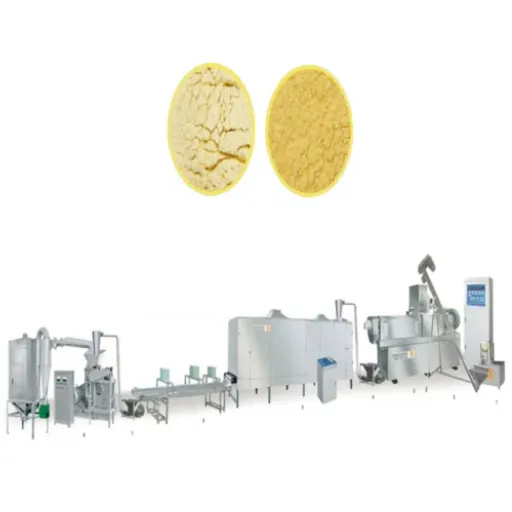
Modified starch production lines come in many sizes. Choosing the right scale depends on your target market, available capital, raw material supply, and labor cost.
Small-Scale and Pilot Lines
Pilot lines typically produce 50–200 kg/h. They are used for product development, small batches, and market testing. These systems may be semi-automatic with manual packaging. Investment usually starts around 8,000–8,000–55,000.
Mid-Scale Industrial Lines
Mid-scale lines produce 200–1,000 kg/h. They are fully continuous with automatic feeding, extrusion, drying, grinding, and packaging. These are the most common choice for established food ingredient manufacturers entering the modified starch market. Typical investment ranges from 100,000to100,000to500,000.
Large Turnkey Plants
Large plants produce 1,000 kg/h or more, often integrated with upstream starch extraction or downstream formulation. Turnkey projects can range from 500,000toover500,000toover5 million. These facilities include utilities, automation, quality labs, and environmental controls.
| Scale | Typical Capacity | Investment Range | Best For |
|---|---|---|---|
| Pilot / small scale | 50–200 kg/h | 8,000–8,000–55,000 | R&D, niche products, startups |
| Mid-scale industrial | 200–1,000 kg/h | 100,000–100,000–500,000 | Ingredient suppliers, regional producers |
| Large turnkey plant | 1,000+ kg/h | 500,000–500,000–5M+ | Major processors, integrated facilities |
Layout is also important. A typical modified starch processing line needs 100–300 square meters for mid-scale equipment, plus space for raw material storage, finished goods, utility room, and quality control lab. Ceiling height should accommodate conveyors and dryers, often 4–6 meters.
Investment and ROI Considerations
Buying a modified starch production line is a capital decision. Understanding the full cost picture helps you build a realistic business case.
Equipment Cost
Equipment cost depends on capacity, automation level, material quality, and supplier. Based on current market data:
- Small-scale machines: 8,000–8,000–55,000
- Standard extrusion lines: 17,000–17,000–20,000 for entry models
- Mid-range industrial lines: 34,000–34,000–55,000
- Full turnkey plants: 347,000–347,000–1,581,000
- Large industrial installations: 1millionto1millionto5 million or more
Operating Costs
Beyond equipment, budget for:
- Raw materials: starch typically represents 50–70% of variable cost
- Energy: extrusion and drying are the largest consumers
- Labor: automation reduces headcount but increases upfront cost
- Maintenance: extruder screws, barrels, and dies wear over time
- Quality testing: viscosity, moisture, particle size, microbiological tests
- Packaging: bags, labels, pallets
- Compliance: permits, certifications, environmental controls
Revenue Drivers
Profitability depends on product choice. Commodity pre-gelatinized starch has thinner margins but large volumes. Specialty chemical starches command higher prices but require more complex equipment and quality systems. Key revenue drivers include:
- Stable raw material supply and price
- High line utilization
- Consistent product quality
- Strong customer relationships in target industries
- Value-added products such as organic, non-GMO, or clean-label modified starch
Chen Wei started with a single DSE65 extruder producing pre-gelatinized starch for local construction adhesive makers in Shandong province. His first-year revenue was modest, but the line ran only one shift.
After proving quality consistency, he added a second shift and won contracts with two paper mills for cationic starch. By year three, Chen had expanded to a second modified starch production line and doubled his gross margin by moving up the value chain from commodity to specialty grades.
Want to see how the right line fits your budget? Contact our team for a capacity-matched quotation and layout drawing.
Quality Control and Standards
Consistent quality is what separates a reliable supplier from a commodity trader. A good modified starch production line includes quality control checkpoints at every stage.
Key Quality Tests
| Test | Purpose | Typical Target |
|---|---|---|
| Moisture content | Shelf stability and accurate pricing | 10–14% |
| Viscosity | Functional performance in end use | Varies by grade and customer spec |
| Particle size | Solubility, mouthfeel, dispersion | 80–200 mesh typical |
| Whiteness | Appearance for food and paper | Customer-specific |
| pH | Chemical stability and safety | 5.0–7.5 typical |
| Degree of substitution (DS) | Confirms chemical modification level | Varies by product |
| Microbiology | Food and pharma safety | Meets FDA / EU / customer limits |
| Water solubility / absorption index | Functional behavior | Application-specific |
Standards and Certifications
Depending on your market, your modified starch manufacturing equipment and facility may need to comply with:
- FDA 21 CFR for food-grade starch in the United States
- EU Regulation 1333/2008 and food additive specifications
- ISO 22000 / HACCP for food safety management
- GMP for pharmaceutical applications
- CE marking for equipment sold in Europe
- Halal and Kosher certifications for specific markets
Quality control should not be an afterthought. Build testing capacity into your layout from the start.
Troubleshooting and Maintenance
Even a well-designed modified starch production line needs attention. Preventive maintenance reduces downtime and extends equipment life.
Common Production Challenges
| Problem | Likely Cause | Solution |
|---|---|---|
| Uneven cooking | Moisture variation or worn screw profile | Check mixing uniformity; inspect screws and barrel |
| Low viscosity | Over-shear or excessive temperature | Reduce screw speed or lower final zone temperature |
| High moisture in final product | Insufficient drying | Increase dryer temperature or residence time |
| Excessive dust during grinding | Worn pulverizer screen or poor dust collection | Replace screen; check dust collector filters |
| Product contamination | Material buildup in dead zones | Improve cleanability; schedule CIP or manual cleaning |
| Inconsistent color | Raw material variation or overheating | Standardize raw starch; optimize temperature profile |
Preventive Maintenance Schedule
- Daily: inspect feeders, check lubrication, clean product contact surfaces
- Weekly: check belt tension, inspect seals and gaskets, verify temperature sensors
- Monthly: measure screw and barrel wear, replace worn dies, calibrate scales
- Quarterly: service gearboxes, inspect electrical panels, review PLC programs
- Annually: full line audit, replace high-wear components, update preventive maintenance plan
Extruder screws and barrels are the highest-wear items. Monitor clearance over time. Excessive clearance reduces shear, cooking efficiency, and product consistency.
Modified Starch Production Line in Action
Seeing the process helps buyers understand how integrated the system really is. The video below shows a typical extrusion-based modified starch line from raw material feeding through final packaging.
If you do not have video content yet, a process animation or equipment walkthrough video is one of the highest-ROI assets for this page. Video content helps buyers visualize capacity, layout, and operation before they request a quote.
FAQ: Modified Starch Production Line
What is the difference between modified starch and pregelatinized starch?
Pregelatinized starch is one type of physically modified starch. A modified starch production line can produce pregelatinized starch, but it can also produce chemically or enzymatically modified starches with very different properties.
How much does a modified starch production line cost?
Small-scale lines start around 8,000.Mid−scaleindustriallinestypicallyrangefrom8,000.Mid−scaleindustriallinestypicallyrangefrom100,000 to 500,000.Largeturnkeyplantscanexceed500,000.Largeturnkeyplantscanexceed1 million. Final cost depends on capacity, automation, material quality, and included services such as installation and training.
What raw material is best for modified starch production?
Corn starch is the most common because of supply and cost. Cassava starch is best for clear gels and freeze-thaw stability. Potato starch offers high binding and clarity. Wheat starch works well where gluten separation is already part of the operation.
Can one production line make multiple types of modified starch?
A twin-screw extrusion line can produce many physically modified starches by changing raw materials, moisture, temperature, and screw configuration. Chemical and enzymatic modifications require additional reactors, dosing systems, and washing equipment.
What industries use modified starch?
Major industries include food and beverage, paper and packaging, textiles, oil drilling, construction, adhesives, and pharmaceuticals. Each industry has specific viscosity, solubility, and purity requirements.
How do I choose between batch and continuous modified starch production?
Continuous extrusion is best for high-volume physical modification with consistent product. Batch reactors are better for chemical modification, small specialty batches, and products that need precise reaction control.
Conclusion
A modified starch production line is more than a collection of machines. It is a system that turns raw starch into a functional ingredient used in food, paper, textiles, oil drilling, construction, and pharmaceuticals around the world. The right line depends on your product type, target capacity, raw material, and budget.
To compete in today’s market, your content and your equipment both need depth. Most SERP competitors publish thin catalog pages. This guide gives you the technical foundation to stand out: clear process explanation, equipment selection criteria, application mapping, cost ranges, and quality control checkpoints.
If you are ready to move from research to specification, start by answering three questions:
- What type of modified starch will you produce, physical, chemical, enzymatic, or composite?
- What capacity do you need now, and how much do you expect to grow in three years?
- Which industries will you serve, and what quality standards must you meet?
With those answers, you can configure a modified starch production line that matches your product, your market, and your return-on-investment goals.
Ready to configure your line? Explore our full range of food processing machinery or contact us for a customized quotation, layout drawing, and process consultation.