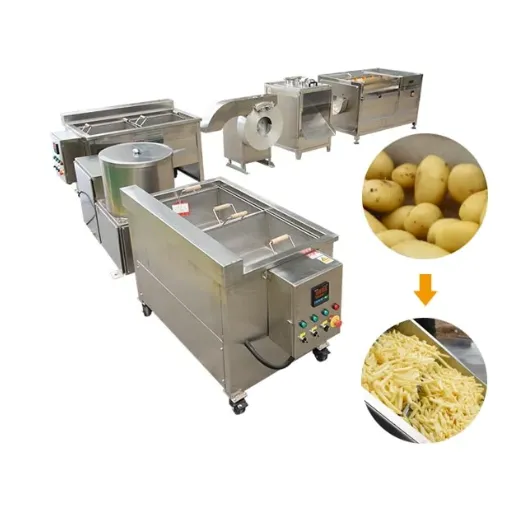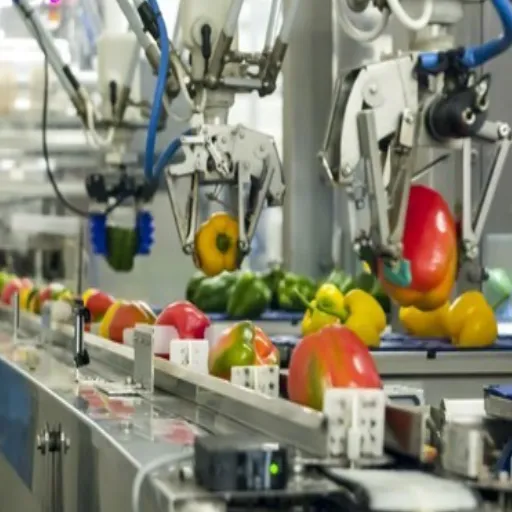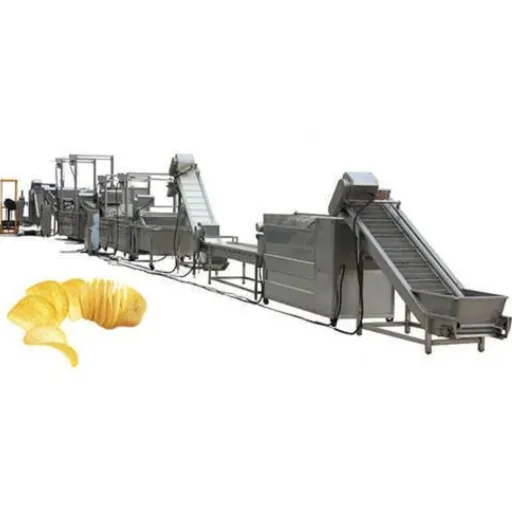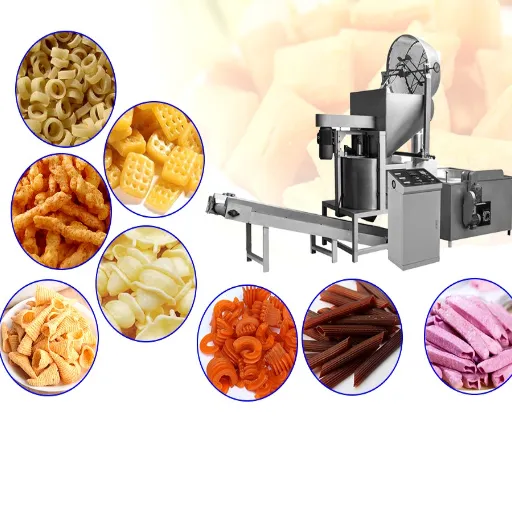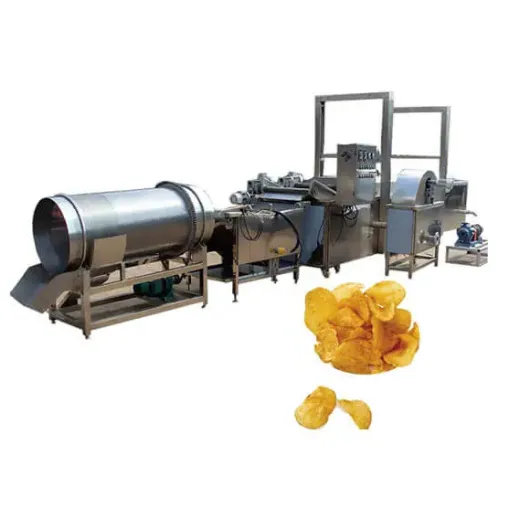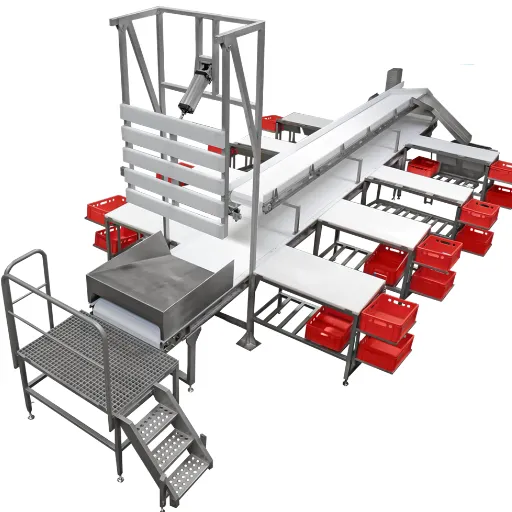
Food processing machines with high hygiene standards are equipment engineered and certified to prevent contamination through features like stainless steel 316L construction, smooth surface finishes below 0.8 micrometers, self-draining designs, and compliance with international standards such as EHEDG and 3-A Sanitary. These machines are not simply “food-grade.” They represent a fundamentally different approach to design, where cleanability and contamination prevention are built into every weld, joint, and surface from the ground up.
Here is a number that should stop every food manufacturer in their tracks. Foodborne illness costs the United States an estimated 55.5to55.5to93.2 billion every single year. Behind those staggering figures are facility shutdowns, product recalls, regulatory fines, and shattered consumer trust. Much of this damage traces back to one overlooked factor: equipment that was never designed to stay truly clean.
You already know that hygiene matters in food production. You have heard the standards, seen the audits, and felt the pressure from regulators and customers alike. By the end of this guide, you will have a clear, actionable framework for evaluating hygienic design when you purchase food processing machines. We will cover the essential standards that separate truly hygienic equipment from marketing claims, the design features you should demand from any supplier, the hidden costs of cutting corners, and how to verify that a manufacturer can actually deliver what they promise. Whether you are upgrading an existing line or building a facility from scratch, this guide gives you the confidence to make the right choice.
Key Takeaways
- Food processing machines with high hygiene standards must meet certifications like EHEDG, 3-A Sanitary, FDA 21 CFR, and NSF/ANSI standards, not just carry a “food-grade” label.
- Critical design features include 316L stainless steel, surface roughness of Ra less than or equal to 0.8 micrometers, crevice-free welds, self-draining geometry, and integrated Clean-in-Place (CIP) systems.
- Non-compliance costs far exceed the purchase price of hygienic equipment, with fines ranging from 5,000to5,000to500,000 and equipment replacement costing up to $1 million in some markets.
- The global market for hygienic easy-to-clean food processing equipment reached $59.94 billion in 2026 and is projected to grow at 7.4% CAGR through 2035.
- Emerging trends include AI-driven sanitation monitoring, cloud-based food safety platforms, and predictive maintenance that prevents contamination before it happens.
What Are Food Processing Machines with High Hygiene Standards?
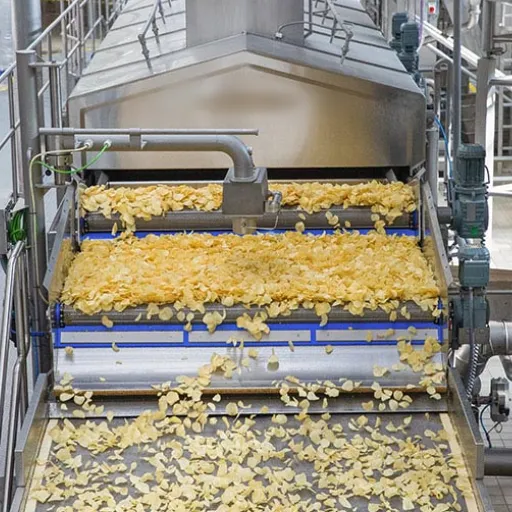
At its core, a hygienic food processing machine is equipment designed so that it can be thoroughly cleaned and sanitized without disassembly, and so that food residue, bacteria, and moisture cannot hide in crevices, hollow spaces, or poorly finished surfaces. This goes far beyond using “food-safe” materials. It demands a systematic engineering approach where every component, from the frame to the smallest fastener, is evaluated for its impact on food safety.
The difference between “food-grade” and “hygienically designed” is the difference between acceptable and excellent. A machine built with food-grade materials might use stainless steel and food-safe lubricants. But if that machine has threaded fasteners in the product zone, unsealed hollow legs that trap moisture, or horizontal flat surfaces where water pools, it fails the test of hygienic design. True hygienic equipment eliminates these risk points at the design stage.
Consider the story of Marcus, who runs a mid-sized snack manufacturing facility in Southeast Asia. In 2024, Marcus purchased a seasoning drum that was advertised as “food-grade stainless steel.” The price was attractive, and the supplier assured him it met all local requirements. Within eight months, his quality team detected elevated microbial counts in finished product testing. The investigation revealed that the drum’s internal welds were rough and porous, creating microscopic harborage points where seasoning residue accumulated. The threaded bolts inside the drum trapped oils that standard cleaning could not reach. Marcus faced a partial production shutdown, a $40,000 equipment replacement, and weeks of lost revenue. The “savings” from choosing a cheaper, non-hygienic machine cost him more than five times the price difference.
This is why hygiene training programs that teach proper equipment evaluation have been shown to reduce microbial load by 80%. The knowledge of what to look for transforms purchasing from a cost decision into a risk management strategy.
Core Hygiene Standards Every Buyer Must Know
Navigating the landscape of hygiene certifications can feel overwhelming. Standards overlap, regions differ in requirements, and some certifications carry more weight than others depending on your market. Here are the standards that matter most when evaluating food processing machines with high hygiene standards.
EHEDG Certification (European)
The European Hygienic Engineering and Design Group, or EHEDG, sets the global benchmark for hygienic equipment design. Unlike standards that focus on prescriptive dimensions, EHEDG emphasizes test-based certification. Equipment must pass rigorous cleanability and sterilizability testing to earn certification. EHEDG classifies equipment into categories such as EL Class I for closed process applications, EL Class I AUX for open process auxiliary components, and EL Aseptic Class I for sterile applications. For any manufacturer exporting to Europe, EHEDG certification is often a non-negotiable expectation.
3-A Sanitary Standards (North America)
3-A Sanitary Standards Inc. governs hygienic design primarily for dairy and liquid food processing in North America. Where EHEDG tells engineers how to design and test, 3-A tells them exactly what to build. Standards like 74-07 for sensor fittings specify precise dimensional requirements, material grades, and surface finishes. Products that meet 3-A standards carry the 3-A symbol after third-party inspection. In early 2026, 3-A released critical updates including enhanced sealing requirements, CIP gasket joint specifications, and mandatory leak detection protocols for farm milk cooling systems.
FDA and NSF Compliance (United States)
The U. S. Food and Drug Administration’s 21 CFR regulations govern materials that come into contact with food. NSF International complements this with ANSI standards: NSF/ANSI 2 for commercial food equipment and NSF/ANSI 51 for food equipment materials. The FDA’s 2026 Human Foods Program focuses on three pillars: microbiological food safety, nutrition, and food chemical safety. Equipment purchased for the U. S. market must demonstrate compliance with both FDA material requirements and applicable NSF standards.
HACCP and GFSI Alignment
Hazard Analysis Critical Control Points, or HACCP, is not an equipment standard but a management system. However, equipment design directly supports HACCP implementation. Machines with integrated sensors for monitoring critical control points, data logging capabilities, and accessible cleaning validation points make HACCP compliance far easier. Global Food Safety Initiative schemes like SQF, FSSC 22000, and BRC increasingly expect equipment to demonstrate hygienic design principles that support preventive controls.
EU EC 1935/2004
For European markets, Regulation EC 1935/2004 mandates that materials and articles intended to come into contact with food must be sufficiently inert to not endanger human health or bring about unacceptable changes in food composition. This regulation underpins material traceability requirements and drives demand for EN 10204 material certificates.
| Standard | Region | Focus | Key Requirement |
|---|---|---|---|
| EHEDG | Global/Europe | Test-based cleanability | Pass cleanability/sterilizability testing |
| 3-A SSI | North America | Prescriptive design | Meet specific dimensional and material criteria |
| FDA 21 CFR | United States | Material safety | Food-contact materials must be safe |
| NSF/ANSI 2, 51 | North America | Equipment and materials | Third-party verified commercial food equipment |
| HACCP | Global | Risk management | Equipment supports critical control point monitoring |
| EU EC 1935/2004 | European Union | Material inertness | Traceability via EN 10204 certificates |
Want to see how these standards apply to real production scenarios? Explore our range of compliant food processing machines designed for global export markets.
Essential Hygienic Design Features to Demand
Knowing the standards is only half the battle. The real test comes when you inspect equipment in person or evaluate technical documentation. Here are the design features that separate truly hygienic food processing machines from equipment that merely claims to be clean.
Material Selection: 304 versus 316L Stainless Steel
Stainless steel is the foundation of hygienic equipment, but not all grades perform equally. AISI 304, containing 18% chromium and 8% nickel, works well for non-contact structures and low-risk applications. AISI 316L, with added molybdenum, delivers superior corrosion resistance against chlorinated sanitizers, acidic foods, and high-salinity environments. In spice processing facilities, 304-grade steel can show degradation within two to five years. In coastal facilities with high humidity, corrosion accelerates even faster. For product contact surfaces, CIP systems using chlorinated sanitizers, and steam sterilization applications, 316L is the only responsible choice.
Surface Finish Requirements
Bacterial adhesion is directly related to surface roughness. Product contact surfaces must achieve a surface roughness of Ra less than or equal to 0.8 micrometers. For high-hygiene applications, electropolishing can achieve Ra less than or equal to 0.4 micrometers, creating a passive chromium oxide layer that resists bacterial colonization. When evaluating equipment, always request surface finish reports. A supplier who cannot provide documented proof of surface roughness testing should raise immediate concerns.
Weld Quality and Construction
Poor welding is one of the most common sources of contamination in food processing equipment. Product contact joints should use TIG, also known as GTAW, welding performed by qualified welders. All welds must be ground flush and passivated using citric or nitric acid to restore the chromium oxide layer. The documentation you should demand includes Welding Procedure Qualification Records, or WPQR, and material traceability certificates per EN 10204 3.1 or 3.2 for high-value contracts. Orbital welding, which produces consistent, repeatable joints, is preferred for high-hygiene piping and vessel connections.
Self-Draining and Dead-Leg-Free Design
Standing water is a contamination risk. Every surface in the product zone must be self-draining, with slopes designed to prevent pooling. Dead legs, those short sections of pipe or geometry where product stagnates, must be eliminated. EHEDG guidelines specify maximum dead leg ratios relative to pipe diameter. When inspecting equipment, look for horizontal flat surfaces, unsealed hollow frames, and any geometry where water or product could accumulate. These are red flags that indicate the designer prioritized cost over hygiene.
Clean-in-Place Integration
Clean-in-Place, or CIP, systems allow equipment to be cleaned without disassembly. Effective CIP depends on four pillars: chemical action using appropriate caustic, acid, and sanitizer solutions; temperature control for optimal cleaning efficiency; mechanical action through turbulent flow at minimum velocities of 1.5 meters per second; and sufficient contact time for chemicals to act on soils. Modern food processing machines should integrate CIP spray devices, dedicated drain connections, and separation between product and cleaning circuits. Recovery CIP systems, which reuse caustic and acid solutions, can reduce water and chemical consumption by 30 to 40 percent.
Seals, Gaskets, and Fasteners
Threaded fasteners in the product zone are a design failure. Threads trap residue that CIP systems cannot reach. Hygienic equipment uses smooth-head fasteners, hygienic clamp unions, or welded joints instead. Gaskets must be food-grade, properly seated, and easily accessible for inspection and replacement. Over-tightened or extruded gaskets create crevices where bacteria colonize. Ask suppliers about gasket materials, replacement schedules, and whether gasket joints are designed for CIP compatibility.
The Hidden Costs of Cutting Corners on Hygiene
The upfront price difference between basic equipment and hygienically designed machines can seem significant. But focusing only on purchase price ignores the far larger costs that accumulate over the equipment lifecycle. Understanding the true cost of non-compliance changes how you evaluate every quote.
In India’s food processing sector, non-compliance fines typically range from 500,000 to 2.5 million rupees. Equipment replacement for failed machines can cost between 2 million and 10 million rupees. Those numbers do not include production downtime, lost contracts, or the reputational damage that follows a food safety incident. In the United States, the USDA FSIS has tightened compliance thresholds for fiscal year 2026, with processing-only establishments now facing Public Health Risk Evaluation at violation rates above 3.41 percent.
Then there is the cost of cleaning itself. Equipment that is not designed for CIP requires manual disassembly and cleaning. Each cleaning cycle takes longer, uses more water and chemicals, and increases labor costs. Over a five-year equipment lifecycle, the cumulative cost of inefficient cleaning often exceeds the original purchase price difference between hygienic and non-hygienic machines.
Elena, operations director at a dairy processing plant in Eastern Europe, learned this lesson firsthand. Her facility ran three production shifts with a two-hour cleaning window between each. Their older equipment required partial disassembly for effective cleaning, consuming 90 minutes of that window. After upgrading to EHEDG-certified machines with integrated CIP systems, cleaning time dropped to 35 minutes. The extra 55 minutes per shift translated to an additional production batch daily. Within fourteen months, the increased output had fully offset the higher equipment purchase price. Elena now says the real question is not whether you can afford hygienic equipment, but whether you can afford not to have it.
Ready to calculate the real return on investment for your facility? Contact our team for a customized equipment assessment that factors in your cleaning schedules, production targets, and compliance requirements.
How to Evaluate a Manufacturer’s Hygiene Credentials
Certifications and design features matter only if the manufacturer can prove they deliver them consistently. Here is a practical framework for evaluating any equipment supplier’s hygiene credentials before you sign a purchase order.
Documentation Checklist
Request these documents before committing to any purchase: material test certificates per EN 10204 3.1 or 3.2, welding procedure qualification records, surface finish reports with Ra measurements, passivation protocol records, and third-party certification documents for EHEDG or 3-A compliance. A supplier who has invested in hygienic design will have these documents ready. Suppliers who hesitate or offer vague assurances should be viewed with caution.
Certification Verification
Certification is product-specific, not company-wide. A manufacturer may have one EHEDG-certified mixer but sell ten other products without certification. Verify that the specific model you are purchasing carries the certification claimed. For 3-A symbol authorization, check the 3-A SSI website database. For EHEDG, request the certification type and certificate number, then cross-reference with EHEDG’s published lists.
Factory Audit Red Flags
If you can visit the manufacturing facility, watch for these warning signs: welding stations without qualified welder certification displays, grinding and polishing areas separated from fabrication by inadequate barriers, lack of surface roughness measurement equipment, absence of material segregation systems, and equipment stored outdoors where contamination occurs before delivery. A facility that takes hygiene seriously invests in the environment where equipment is built, not just the equipment itself.
Sample Testing and Validation
Before full-scale deployment, request a sample unit or prototype for cleaning validation testing. Dye tests can verify CIP spray coverage in vessels. Swab testing can confirm that surfaces achieve the microbial cleanliness levels required for your application. This validation step is particularly important for custom-designed equipment where standard certifications may not fully address your specific process requirements.
Industry-Specific Hygiene Requirements
Different food sectors face different contamination risks, and hygienic equipment must be matched to the specific challenges of each application.
Dairy Processing
Dairy represents over 40 percent of hygienic equipment adoption and is the fastest-growing sector for advanced hygiene technology. The combination of high moisture, protein-rich soils, and strict pathogen controls makes dairy one of the most demanding applications. Equipment must handle CIP cycles with caustic and acid phases, tolerate steam sterilization, and prevent biofilm formation on heat exchange surfaces. GEA Group’s 2026 launch of easy-clean dairy processing equipment reflects this sector’s leadership in hygienic innovation.
Meat and Poultry
Meat and poultry processing holds the largest market share for hygienic equipment by application volume. Pathogens like Salmonella and Listeria demand equipment that eliminates all harborage points. USDA FSIS oversight requires strict sanitation controls, and 2026 compliance thresholds have tightened significantly. Equipment must withstand aggressive cleaning chemicals, frequent high-pressure washdowns, and rapid turnaround between species or product types.
Snack Food Production
Cross-contamination between flavors is a unique hygiene challenge in snack manufacturing. A production line that runs barbecue-flavored chips in the morning and plain salted chips in the afternoon must achieve complete flavor removal during cleaning. This demands smooth internal surfaces, effective CIP integration, and quick-disassembly features for components that need manual cleaning. At Shandong Loyal Industrial, our snack food production lines and puff snacks processing equipment are engineered with these exact challenges in mind.
Beverage Processing
Beverage applications, particularly those involving aseptic filling, require the highest levels of hygienic design. Equipment must support sterilization-in-place, or SIP, protocols and maintain sterility during operation. The integration of CIP systems is non-negotiable, and all product contact surfaces must meet pharmaceutical-grade surface finish requirements.
Future Trends in Hygienic Food Processing
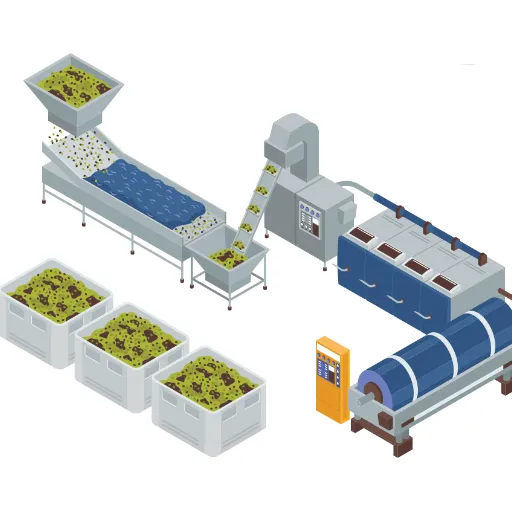
The hygienic equipment landscape is evolving rapidly. Manufacturers who stay ahead of these trends gain competitive advantages in efficiency, compliance, and product quality.
Automation and AI-Driven Monitoring
Cloud-based food safety platforms now integrate directly with processing equipment. Sensors monitor critical control points in real time, automatically flagging deviations and triggering corrective actions. AI vision systems detect non-metallic foreign objects like wood, paper, and soft plastics that traditional metal detectors miss. These technologies do not replace hygienic design, but they add a layer of intelligent oversight that prevents contamination before it reaches finished product.
Predictive Maintenance Integration
Equipment failures in hygienic applications carry food safety risks. A leaking seal or worn gasket can introduce contamination long before it becomes visible. Predictive maintenance systems use vibration analysis, temperature monitoring, and oil analysis to identify wear patterns before they cause failures. This shifts maintenance from reactive to proactive, reducing both downtime and contamination risk.
Sustainability in Cleaning Operations
Water and chemical usage in CIP systems face increasing scrutiny. Recovery CIP systems that recirculate cleaning solutions are becoming standard rather than optional. Some facilities now achieve 30 to 40 percent reductions in water consumption through optimized spray patterns, shorter piping runs, and automated chemical dosing. Equipment designed with sustainability in mind often delivers better hygiene outcomes as well, since efficient cleaning uses fewer resources to achieve the same microbial standards.
When Chen launched his baby food startup in 2025, he built sustainability into his facility design from day one. He chose equipment with integrated recovery CIP, 316L stainless steel for all product contact surfaces, and predictive maintenance sensors on critical components. Eighteen months later, his water usage per production kilogram was 45 percent below industry average. His cleaning chemical costs had dropped by a third. And his facility passed every audit on the first visit. Chen’s competitors, who had prioritized lowest purchase price, were now facing equipment replacement and retrofitting costs that dwarfed his initial investment.
Conclusion
Food processing machines with high hygiene standards are not a luxury. They are a fundamental requirement for any manufacturer serious about food safety, regulatory compliance, and long-term profitability. The difference between equipment that claims to be clean and equipment that is truly hygienic lies in the details: 316L stainless steel with documented surface finishes, crevice-free welds performed by certified welders, self-draining geometry, integrated CIP systems, and third-party certifications from bodies like EHEDG and 3-A SSI.
The global market for hygienic easy-to-clean food processing equipment has reached $59.94 billion in 2026, growing at 7.4 percent annually. That growth reflects a simple truth. Manufacturers worldwide are recognizing that hygienic design is not a cost center. It is a competitive advantage that reduces downtime, prevents costly recalls, and builds the consumer trust that sustains brands over decades.
As you evaluate your next equipment purchase, remember the lessons from Marcus, Elena, and Chen. The cheapest option often carries the highest hidden costs. The right equipment, designed with hygiene as a core principle rather than an afterthought, pays for itself many times over.
Take the next step toward contamination-free production. Contact Shandong Loyal Industrial today to discuss your specific requirements. Our team of engineers will help you select food processing machines with high hygiene standards that match your products, your compliance needs, and your production goals. From initial consultation to installation and ongoing support, we are your partner in building a safer, more efficient food processing operation.