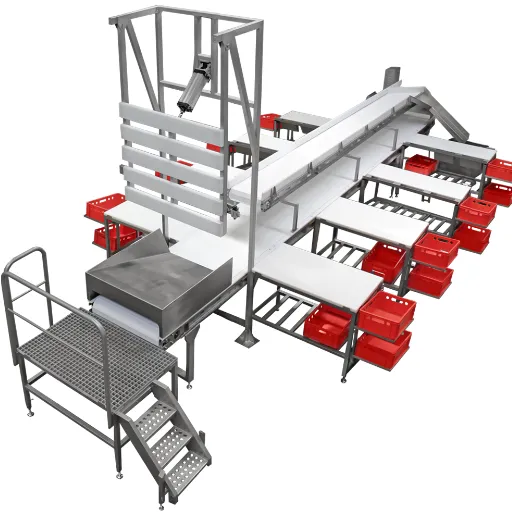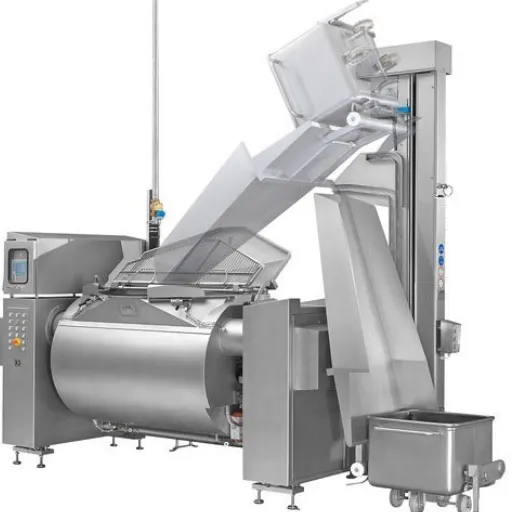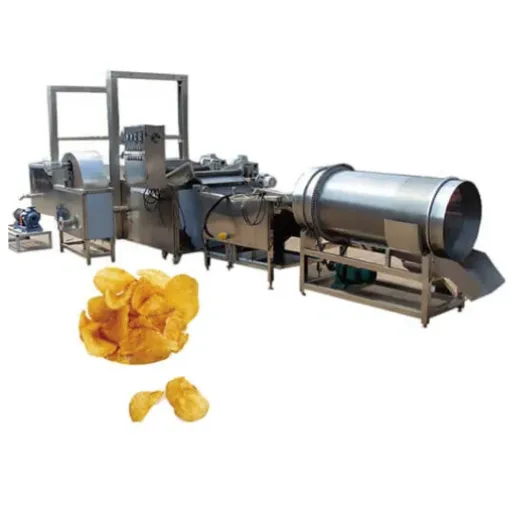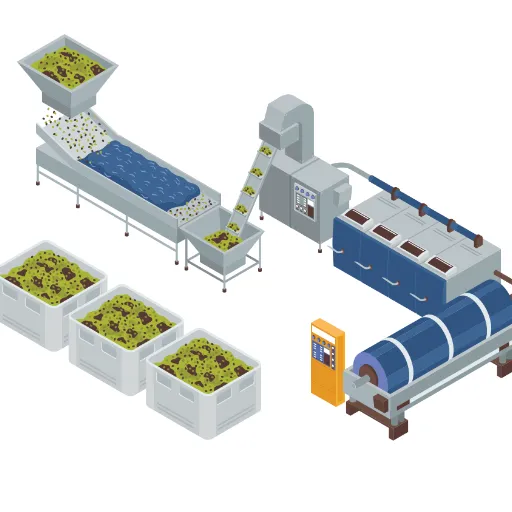
Turnkey food processing solutions deliver complete, ready-to-operate production lines from a single equipment supplier, covering everything from process design and machinery manufacturing to installation, commissioning, and operator training. You handle all system integration with one vendor who provides complete machine solutions instead of managing multiple vendors for separate machines.
Carlos thought he had saved 28,000. The Mexican City snack producer spent six months acquiring an extruder from one supplier and a dryer from another supplier and a seasoning line from a third supplier. The control systems of the machines created operational problems because they used different communication standards. The conveyor heights did not match. The drying output exceeded theseasoningline′sinputcapacityby4034,000 in retrofit costs later, Carlos wished he had chosen a turnkey food production line from the start.
You have probably felt the same tension. Buying equipment piece by piece seems flexible. It feels like you are getting the best machine for each step. But the hidden costs of integration, coordination, and troubleshooting usually erase those perceived savings. The global food processing equipment market is projected to reach approximately $62.97 billion in 2026, and the turnkey system integrator channel is the fastest-growing segment at 7.6% annually. Buyers are voting with their budgets.
This guide shows you exactly what turnkey food processing solutions include, how the implementation process works, what you should expect to pay at different production scales, and how to evaluate a supplier who can actually deliver a fully integrated line. You will learn the six phases every turnkey project follows, how turnkey compares to buying machines separately, the benefits most buyers underestimate, and the seven criteria that separate reliable turnkey partners from equipment resellers.
Key Takeaways
- Turnkey food processing solutions deliver complete, integrated production lines from a single supplier, covering design, manufacturing, installation, commissioning, and training.
- The turnkey system integrator channel is the fastest-growing distribution segment in food processing equipment, growing at 7.6% CAGR.
- Buying machines from multiple vendors typically adds 15-25% in hidden integration costs compared to a turnkey approach.
- A typical turnkey production line project takes 4 to 12 months from consultation to commissioning, depending on scale and complexity.
- Small-scale modular turnkey lines can start from 50,000,whilelargeindustrialintegratedsystemscanexceed50,000,whilelargeindustrialintegratedsystemscanexceed500,000.
What Are Turnkey Food Processing Solutions?
Turnkey food processing solutions provide complete production line systems which a single company develops through its entire process of equipment creation to equipment installation and operational testing of food production systems. The system provides you with an operational production line which you can immediately utilize. The system begins operations when you turn the key.
The food industry uses the term “turnkey” to describe two distinct concepts. The distinction is important because it identifies your conversation partner while showing your actual purchasing intent.
The Single-Source Equipment Model
Through its equipment model system a manufacturer delivers an entire processing line to customers. This equipment package contains all necessary machines which operate from the point of raw material intake until the final product reaches its packaging stage. The supplier handles process engineering, equipment manufacturing, control system integration, installation supervision, commissioning, and training. Most food manufacturers who look for turnkey food processing solutions use this definition.
Your factory construction responsibility does not belong to the equipment manufacturer. Your factory construction responsibility does not belong to them because they do not construct your building. The company provides production equipment which they install before they give customers operational production systems.
What’s Included in a Turnkey Production Line
The equipment manufacturer provides a complete food processing system which consists of six essential parts.
Process engineering and line design. Engineers analyze your product, target capacity, and facility constraints. The team develops process flow diagrams and equipment layouts and utility requirement specifications.
Equipment manufacturing and procurement. All machines are manufactured or sourced to work together. The control systems function as a single unit. The system requires all mechanical elements to function together. The system provides you with complete operational equipment instead of separate machines.
Shipping and logistics coordination. The supplier handles all aspects of packaging and freight and customs documentation and delivery scheduling. This service proves especially useful for international projects because inexperienced buyers face delays at ports.
Installation supervision and integration. The technicians assist your team with mechanical installation and utility connections and control system programming. The technicians confirm that each machine can establish communication with all other machines.
Commissioning and trial production. The line is tested with actual product or representative material. The system verifies throughput and quality and energy consumption and safety systems according to the established specifications.
Operator training and documentation. Your staff learns normal operation, cleaning protocols, changeover procedures, basic troubleshooting, and preventive maintenance. You receive operation manuals, spare parts lists, and technical drawings.
Explore our complete range of food processing machines available as standalone units or integrated turnkey production lines.
Equipment Turnkey vs. Facility Construction Turnkey
Facility construction turnkey providers, like design-build contractors, deliver entire buildings or factory fit-outs. They handle architecture, construction, plumbing, electrical infrastructure, and equipment installation. Companies like Oakley Food Projects or CRB operate in this space.
Equipment turnkey providers, like Shandong Loyal Industrial Co., Ltd., deliver production line equipment. They do not build factories. They build the machinery that goes inside factories. If you already have a facility or are working with a local contractor on construction, an equipment turnkey supplier is what you need.
Browse our industrial food processing equipment designed for integration into turnkey production lines.
The 6 Phases of a Turnkey Production Line Project
Every turnkey food processing plant follows a predictable lifecycle. Understanding these phases helps you set realistic expectations, plan your internal resources, and hold your supplier accountable.
Phase 1: Needs Assessment and Feasibility Study
The manufacturer reviews your product specifications, target throughput, quality standards, facility dimensions, utility availability, and budget range. You share product samples, production targets, and any regulatory requirements. This phase typically takes one to three weeks. The output is a technical brief that defines exactly what the line must achieve.
Phase 2: Process Engineering and Line Design
Engineers create process flow diagrams together with equipment specifications and 3D layout drawings. The system establishes binding rules for its control system design. The utility needs for power and water and compressed air and steam systems are determined through calculations. You analyze designs to request changes before you give your consent to the completed design. The typical duration of this stage requires a period between two weeks and four weeks.
Phase 3: Equipment Manufacturing and Quality Control
Production begins according to approved designs. The manufacturers who excel in their field provide progress updates while they conduct factory acceptance testing which occurs before product shipment. The FAT procedure enables you to confirm that the equipment functions according to specifications by testing it with either your actual product or an equivalent substitute. This particular step should never be omitted. It helps you identify problems which can be remedied with minimal effort during this initial stage of detection.
Phase 4: Shipping, Installation, and Integration
The equipment undergoes packaging before it gets shipped to your location. The technicians handle the installation process while establishing utility connections and implementing control system integration. The operational phase shows how much value turnkey projects produce. The installation process runs more efficiently because the sole supplier developed all system interfaces which reduces the need for on-site compatibility testing between different vendor machines.
Phase 5: Commissioning and Trial Runs
The line undergoes activation followed by operational tests. The system tests each individual machine. The system tests its complete integrated operation. The product samples undergo testing throughout every step of the process. The team modifies the temperature profiles and conveyor speeds and control parameters. The team evaluates throughput and quality metrics by comparing them to the established specifications.
Phase 6: Handover, Training, and Ongoing Support
The formal handover process begins after performance verification. The training program for operators includes instruction about standard operations and equipment cleaning and process switching and essential upkeep procedures. The package includes technical documentation together with recommendations for spare parts and the process for warranty activation. Your investment remains secure when trusted suppliers deliver preventive maintenance services and remote diagnostic capabilities and spare parts distribution.
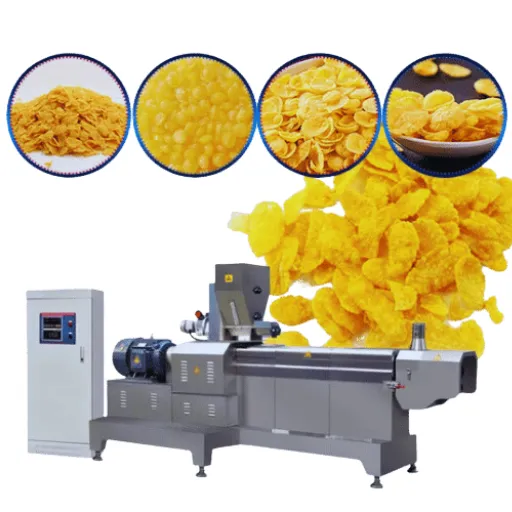
Marina used this six-phase equipment supplier process to expand her corn flakes production business. The needs assessment revealed that her local power supply fluctuated more than standard European equipment was designed to handle.
The engineering team specified voltage stabilizers and hardened motor controls as part of the turnkey package. They conducted an eight-hour test to evaluate her operational capacity during factory acceptance testing. A minor conveyor alignment issue emerged and the team resolved the problem before shipping.
Her line started producing saleable product three days after the commissioning process began. Her production reached 12% above specification requirements two months after system start-up. The single-source accountability meant one phone call fixed any issue. The vendors did not engage in blame shifting. The extruder manufacturer and dryer supplier maintained direct coordination without assigning responsibility to each other.
Learn more about our corn flakes production line delivered as a fully integrated turnkey solution.
Turnkey vs. Traditional Multi-Vendor Procurement
Most buyers initially assume that sourcing machines separately gives them better control and lower costs. The reality is usually the opposite.
Cost Comparison: Hidden Expenses Add Up
On paper, individual machines from separate vendors often look cheaper than a turnkey package. But the total cost of ownership tells a different story.
| Cost Factor | Multi-Vendor Procurement | Turnkey Solution |
|---|---|---|
| Equipment purchase | Often lower per machine | Bundled pricing |
| Integration engineering | 8,000−8,000−25,000 (often unbudgeted) | Included in package |
| Control system integration | 5,000−5,000−15,000 | Included in package |
| Installation coordination | Multiple site visits, scheduling conflicts | Single coordinated team |
| Downtime during commissioning | 2-6 weeks longer | Streamlined, predictable |
| Spare parts logistics | Multiple suppliers, multiple contacts | Single parts program |
| Training | Fragmented, vendor-specific | Unified, line-wide |
The integration engineering alone often adds 15-25% to the nominal equipment cost. When Carlos in Mexico City added up his true spend, his “savings” had actually cost him 22% more than a turnkey quote he had rejected six months earlier.
Timeline Comparison: Single Accountability Accelerates Delivery
The duration of a turnkey project extends between four to twelve months starting from the initial consultation until the final commissioning phase. The duration of multi-vendor projects with identical requirements extends between six to eighteen months. The difference exists in two separate time periods. The manufacturing process requires identical time intervals as the production process.
You assume the role of project manager because multiple vendors are involved. You create the schedule for delivery times. You handle the resolution of interface problems. You investigate the reasons behind the output discrepancies from Machine A which do not match the input from Machine B. The turnkey supplier handling the project takes charge of all internal operations.
Risk Comparison: Who Owns the Problems?
The primary factor which determines results remains. The vendors involved in a multi-vendor line failure event assign blame to each other. The extruder maker claims that the dryer operates at excessive temperatures. The dryer manufacturer asserts that the extruder operates with inconsistent feeding. You have to pay consultants because the design flaws which should have been eliminated during the process are still present in the system.
One supplier takes complete responsibility for the food processing system performance in a turnkey solution. The operational performance of the line needs to exceed its specifications because there exists only one point of contact for accountability. The way problems get resolved changes completely because of the established responsibility.
When Multi-Vendor Might Still Make Sense
Legitimate exceptions exist to this rule. Organizations which possess extensive in-house engineering capabilities and prefer to oversee complex integration projects can succeed with multi-vendor procurement. You must obtain the specific machine that no turnkey supplier provides when you require one particular specialized machine. The existing production line only requires a single machine addition which makes turnkey integration unnecessary.
The majority of situations for new production lines capacity improvements and system upgrades which need multiple machines to work together establish turnkey solutions as the superior choice.
Request a consultation to compare turnkey and multi-vendor approaches for your specific project.
Key Benefits of Turnkey Food Processing Equipment
The benefits of turnkey food processing solutions extend far beyond convenience. They reshape your project’s risk profile, timeline, and ultimate success.
Reduced Integration Risk
Integration is where most equipment projects fail. A study by Mordor Intelligence found that equipment integration issues account for 34% of commissioning delays in food processing projects. Turnkey suppliers eliminate this risk by designing integration into every machine from the first sketch.
Predictable Budget and Timeline
Turnkey proposals typically include fixed pricing for the complete scope. Change orders are rare because the supplier understands every interface before manufacturing begins. Your finance team can budget with confidence. Your operations team can plan production launch dates with certainty.
Optimized Process Flow and Efficiency
When one engineering team designs the entire line, they optimize the handoffs between process steps. Heat from one stage can pre-warm the next. Conveyor speeds are synchronized precisely. Control systems share data across the line for real-time quality monitoring. These optimizations are impossible when machines are designed in isolation.
New turnkey systems can achieve energy savings of up to 30% through improved heat recovery, synchronized controls, and smart automation.
Single Point of Accountability
One contract. One project manager. One warranty. One spare parts source. One support hotline. The administrative simplicity of turnkey procurement is worth more than most buyers calculate.
Faster Time to Market
Every week of delayed commissioning is a week of lost revenue. For a mid-scale snack operation producing 500 kg per hour, a four-week commissioning delay costs approximately 80,000−80,000−120,000 in lost production value. Turnkey projects typically commission 30-50% faster than equivalent multi-vendor installations.
Explore our snack food production lines delivered as fully integrated turnkey solutions with synchronized controls and optimized process flows.
What to Look for in a Turnkey Equipment Supplier
Not every manufacturer can deliver a true turnkey solution. Some assemble equipment from subcontractors and call it turnkey. Here is how to separate real integrators from resellers.
Manufacturing Capability and Experience
You need to find out from the supplier whether they produce core equipment through their own manufacturing or because they depend on subcontractors for all their products. In-house manufacturing enables companies to control product quality directly while they maintain complete responsibility for production timelines and they can adapt designs as needed. Suppliers who depend on subcontractors create the same coordination problems which you try to eliminate by selecting turnkey solutions.
The requester needs to schedule a facility tour which can be conducted through virtual means if needed. You should examine the facility for CNC machining centers and welding bays and assembly floors and test stations. A real manufacturer has them. A reseller has a showroom.
Customization and Flexibility
Turnkey lines require customization work to function properly. Your product is not identical to every other product. Your facility has limitations which restrict its operations. The supplier needs to demonstrate their process for managing custom projects. Do they have an in-house engineering team? Can they change the dimensions of machines and their tooling and control systems? The designed system prevents your product from using its own design because it forces you to match their pre-established design.
Quality Certifications and Compliance
The supplier needs to demonstrate that their equipment complies with all applicable food safety regulations. You should find both CE marking and ISO 22000 certification together with food-grade material certifications which typically use 304 or 316 stainless steel for product contact surfaces. The export process needs to show FDA HALAL and any other needed certifications for specific marketplaces.
Installation and Commissioning Expertise
The company needs to tell you about their completed turnkey installations which they finished during the last two years. You should ask for references from projects which match your project requirements regarding both project size and product type. The company provides both on-site technicians who perform installation and commissioning tasks and remote support services.
After-Sales Support and Spare Parts Availability
A turnkey line without spare parts support is a single point of failure. Confirm typical spare parts lead times. Ask whether remote diagnostics are available. Verify that they stock wear parts for the complete line, not just individual machines.
Global Export and Logistics Experience
If you are buying internationally, export experience matters enormously. Ask about packing standards, Incoterms familiarity, customs documentation, and port clearance support. A supplier with 50+ export countries handles logistics as a routine. A domestic-only supplier may struggle with international complexity.
At Shandong Loyal Industrial Co., Ltd., we have designed, manufactured, and exported turnkey food processing lines to over 650 customers across 80 countries since 2005. Our in-house engineering team, manufacturing facility, and global logistics network let us control every phase from concept to commissioning.
Contact our turnkey project team to discuss your production goals and review relevant case studies from our global installations.
Turnkey Solutions for Different Production Scales
Turnkey is not exclusive to large enterprises. The right approach makes integrated lines accessible at every scale.
Small-Scale and Startup Lines (50,000−50,000−150,000)
Small businesses can use modular turnkey production lines to begin manufacturing operations without needing to make large financial commitments. The systems of these systems combine essential processing machinery with fundamental automated systems and provide two types of packaging operations which include manual and semi-automatic methods. The equipment operates at different capacity levels which range from 50 to 200 kg per hour based on the type of product being handled.
Li Wei started his puff snack business in Hanoi during 2025 with a budget of $75000 and a production space of 200 square meters. Standard industrial production lines would have surpassed all established boundaries. He collaborated with a manufacturing company to develop a modular turnkey system which contained an extruder and a small-scale dryer and a system for automatic seasoning applications.
The system functioned properly within his area requirements without needing any building work. The system created 80 kg of output every hour which provided sufficient volume to meet his initial business requirements. The system had its main feature that allowed it to grow in capacity. He installed a second extruder system and switched to automatic packaging operation during his second year after his sales performance had doubled. His business operations expanded from his initial turnkey solution.
Mid-Scale Commercial Lines (150,000−150,000−500,000)
Established businesses which need to expand their operations or start new product lines utilize mid-scale production lines. The systems operate through complete automation which combines various control systems and packaging machines into one unified system. The system operates at a capacity of 200 to 800 kilograms per hour.
Turnkey solutions reach their maximum value at this scale. The system requires multiple machines because it needs to use different interfaces which creates real difficulties when managing multiple vendors. A single supplier who optimizes the complete flow delivers measurable efficiency gains.
Large-Scale Industrial Lines ($500,000+)
Enterprise-scale turnkey systems include multiple production lines, centralized control rooms, advanced SCADA systems, and comprehensive safety interlocks. The projects require project teams who will work through the factory acceptance testing process which lasts until the commissioning phase completes.
The turnkey principle maintains its validity throughout this entire scale. One integrator who handles all system components provides better performance results than any potential cost advantages from buying separate machines through competitive channels.
Browse our food production line equipment ranging from compact startup modules to large-scale industrial systems.
Industry Applications for Turnkey Processing Lines
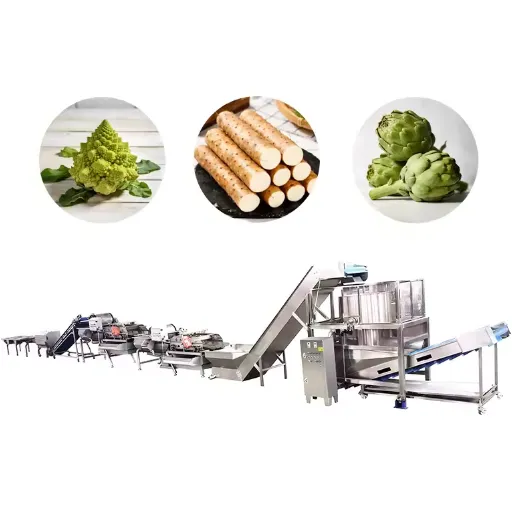
Turnkey food processing solutions adapt to virtually any food category. Here are the applications where integrated lines deliver the strongest returns.
Snack Food Production
Snack lines are among the most complex turnkey applications because they combine extrusion, drying, seasoning, and packaging in a tightly synchronized flow. A typical turnkey snack line includes raw material handling, mixing and conditioning, extrusion, drying or frying, seasoning, and packaging.
Extruded snacks like puff snacks, kurkure, and 3D pellets require precise control of moisture, temperature, and pressure throughout the process. Turnkey integration ensures that the extruder, dryer, and seasoning system are calibrated to work as a unified process.
Explore our complete snack food production line solutions including puff snacks, kurkure, potato chips, and cereal bars.
Microwave Drying and Sterilization Systems
Industrial microwave drying represents a specialized turnkey category where equipment integration directly determines performance. A turnkey microwave drying line includes feed systems, microwave generators, conveyor tunnels, cooling sections, and control systems.
Microwave technology reduces drying time by 50-75% compared to conventional hot-air drying while preserving color, flavor, and nutritional content. Energy consumption drops by 20-30%. But these benefits only materialize when the feed rate, microwave power distribution, and conveyor speed are precisely synchronized. Turnkey integration makes that synchronization possible.
Learn more about our industrial microwave drying machines available as standalone units or integrated turnkey drying lines.
Grain and Cereal Processing
Breakfast cereal lines, corn flakes production, and cereal bar manufacturing require consistent processing of heat-sensitive grains. Turnkey lines integrate cooking, flaking, toasting, and coating in a temperature-controlled sequence that preserves product quality.
Custom Applications for Niche Products
Specialty products like pet food, baby food, pasta, or plant-based meat alternatives often require custom process sequences. A turnkey supplier with in-house engineering can design lines around your specific recipe rather than forcing your product to fit a standard template.
View our pet food production line and other specialty turnkey solutions engineered for niche applications.
Cost Considerations and ROI for Turnkey Processing Lines
Understanding total cost of ownership is essential for making an informed turnkey investment.
Understanding Total Cost of Ownership
The purchase price of equipment is only part of the story. Total cost of ownership includes equipment cost, shipping and customs, installation labor, utility connections, commissioning, training, spare parts inventory, and ongoing maintenance.
Turnkey packages typically consolidate most of these costs into a single quotation. Multi-vendor procurement fragments them across multiple suppliers and often omits integration costs entirely.
Equipment vs. Installation vs. Training Costs
For a typical mid-scale turnkey snack line, cost breakdown usually follows this pattern:
- Equipment manufacturing: 65-75% of total project cost
- Shipping and logistics: 5-10%
- Installation and integration: 10-15%
- Commissioning and training: 5-8%
- Spare parts package: 3-5%
Calculating Payback Period
The payback period calculation requires three factors, which include the product margin and capacity utilization rate and efficiency improvement achievements. A typical mid-scale turnkey snack line processing 500 kg per hour, 16 hours per day, 250 days per year, produces 2,000 metric tons annually.
At a conservative product margin of 0.50perkg,annualgrossmarginis0.50perkg,annualgrossmarginis1,000,000. The turnkey line requires 300000 to operate, which generates 150000 in annual revenue. The system generates enough revenue to recover its total expenses within two years.
The operational efficiency of various products creates differences in these outcomes. The principle remains unchanged. Well-designed turnkey lines generate returns faster than fragmented installations because they spend less time broken, less time being adjusted, and more time producing saleable product.
Frequently Asked Questions
What is included in a turnkey food processing solution?
A comprehensive turnkey solution includes process engineering, equipment manufacturing, shipping logistics, installation supervision, commissioning, operator training, and technical documentation. Some suppliers also include spare parts packages, preventive maintenance programs, and remote diagnostics support. Always confirm the exact scope in your contract.
How much does a turnkey food processing plant cost?
Small-scale modular lines typically start from 50,000to50,000to150,000. Mid-scale commercial lines range from 150,000to150,000to500,000. Large industrial integrated systems can exceed $500,000 depending on automation level, capacity, and product complexity. The exact cost depends on your product, throughput target, and facility constraints.
How long does it take to install a turnkey production line?
A typical turnkey project takes 4 to 12 months from initial consultation to final commissioning. Simple lines with standard configurations may complete in 4 to 6 months. Complex custom systems with full automation may extend to 10 to 12 months. Installation and commissioning on-site usually requires 2 to 6 weeks depending on line complexity.
What is the difference between turnkey and tolling in food manufacturing?
Turnkey means the equipment supplier delivers a complete production line that you operate in your own facility. Tolling means a contract manufacturer produces your product using their equipment and facility. Turnkey gives you ownership and control of production. Tolling outsources production entirely.
Can turnkey food processing lines be customized?
Yes. Reputable turnkey suppliers offer customization of machine dimensions, tooling, control programming, and process parameters. The turnkey approach does not mean one-size-fits-all. It means one supplier is accountable for delivering a line that matches your specific requirements.
Are turnkey solutions suitable for small food businesses?
Absolutely. Modular turnkey lines let small businesses start with compact, affordable systems and expand capacity by adding modules. Small-scale turnkey snack lines or drying systems can start from $50,000, making integrated production accessible to startups and small enterprises.
What certifications should turnkey food equipment meet?
Look for CE marking, ISO 22000 alignment, and food-grade material certifications. Product contact surfaces should use 304 or 316 stainless steel. If you export to specific markets, confirm FDA, HALAL, KOSHER, or other relevant certifications. Request material certificates and welding documentation.
Explore our industrial microwave ovens and other turnkey equipment designed for global compliance standards.
Conclusion
Turnkey food processing solutions create a controlled system for equipment investment which typically brings companies their highest stress level because they need to combine equipment from various manufacturers. The system provides you with one contact person who takes responsibility for everything. Your business will achieve its maximum operational efficiency. The system enables you to establish operational procedures at a faster pace while minimizing unexpected issues.
The market for food processing equipment throughout the world experiences consistent growth, yet the turnkey segment expands at the highest rate of 7.6 percent per year. Buyers across every region and every scale are recognizing that the hidden costs of multi-vendor procurement, integration engineering, coordination delays, and commissioning conflicts, usually exceed any perceived savings from shopping machines individually.
The decision framework is straightforward. The implementation of turnkey brings superior risk-adjusted returns whenever you need to launch a new process or expand capacity or upgrade multiple process steps. The multi-vendor approach is suitable for your organization if your business possesses strong engineering expertise and you want to handle difficult projects. The most efficient solution for all users is turnkey because it offers better results.
We have delivered our complete package of turnkey food processing line solutions to more than 650 clients from 80 countries since 2005 at Shandong Loyal Industrial Co. Ltd. We provide complete solutions for production which include design, manufacturing, shipping, installation and operational support for snack foods, microwave drying, cereals, pet food and custom applications. Our manufacturing facility and in-house engineering team give us complete power to manage product quality and project completion times and product adjustments.
Ready to explore turnkey food processing solutions for your operation? Contact our team today to discuss your product, capacity targets, and facility constraints. Our engineers will outline exactly what your turnkey project would include, how long it would take, and what it would cost.