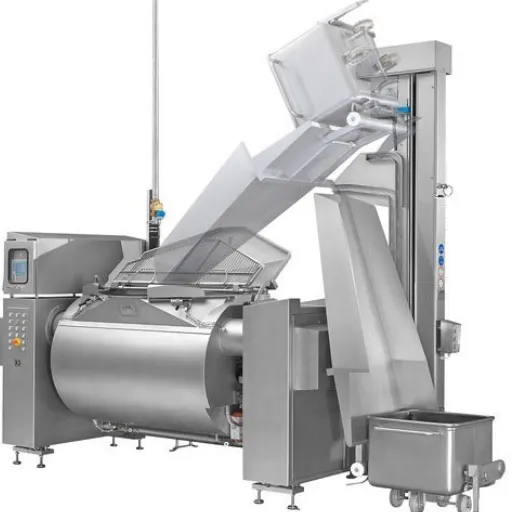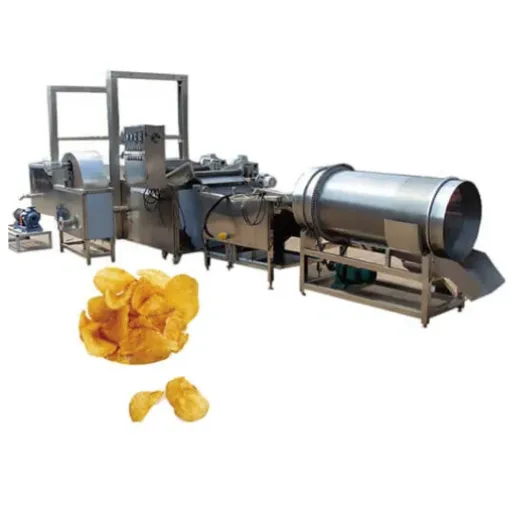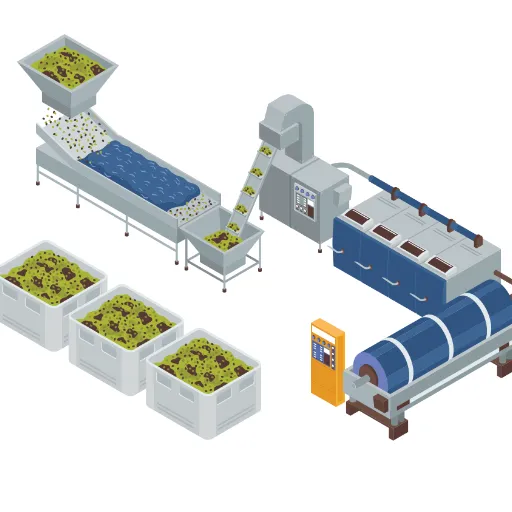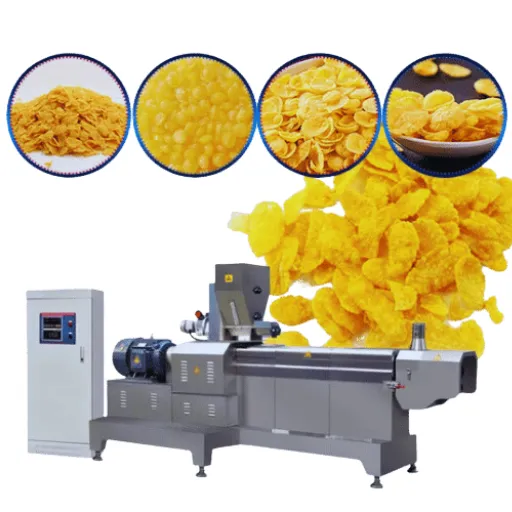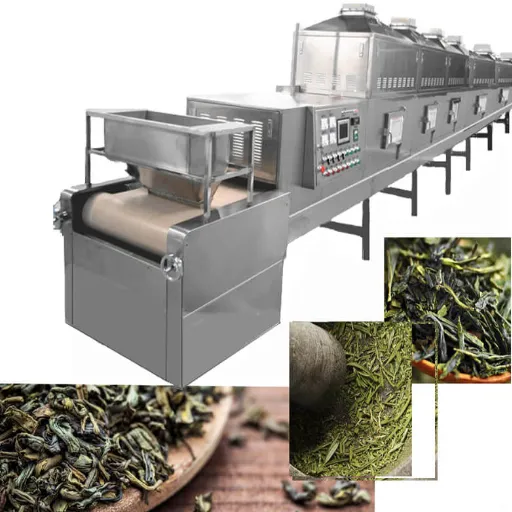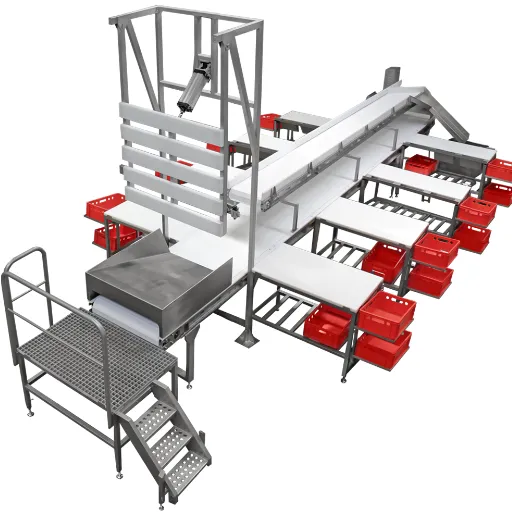
Custom food processing solutions are equipment designed or modified to match your specific product recipe, facility layout, throughput goals, and regulatory requirements rather than forcing your operation to adapt to generic machinery. Over 60% of food manufacturers report needing some level of equipment customization to meet unique production demands, yet many buyers avoid exploring tailored options because they assume the process is complex, expensive, or reserved for large enterprises.
That assumption costs more than you might think. The global food processing equipment market is projected to reach approximately $62.97 billion in 2026. Within that massive market, the custom and specialized equipment segment is growing at 6.2% annually, outpacing standard equipment growth.
Businesses that invest in properly customized equipment report 23% higher throughput and 18% lower waste than those running mismatched standard machinery. The gap between tailored and generic is not marginal. It creates a fundamental shift in operations.
You already know that the right equipment drives efficiency. Most buyers assume that custom food processing solutions are less available and more expensive than they actually are. This guide explains the whole process in simple terms.
You will learn exactly how customization works, what it costs, how to decide between custom and standard equipment, and how to choose a manufacturer who delivers real value. The presentation will show a definition of custom food processing solutions andfive concrete benefits and a decision framework for custom versus standard equipment and a six-step process from concept to commissioning and realistic cost guidance and manufacturer evaluation criteria and common mistakes to avoid and business access to tailored equipment.
Key Takeaways
- Custom food processing solutions match your specific recipe, facility, and throughput rather than forcing your product to fit generic machinery.
- Buyers who invest in properly customized equipment report 23% higher throughput and 18% lower waste compared to mismatched standard machines.
- Customization typically adds 15-40% to base equipment cost, with lead times of 12-24 weeks versus 4-8 weeks for standard equipment.
- A transparent six-step process, needs assessment, concept design, proposal, manufacturing, installation, and commissioning, keeps projects on track.
- Small businesses can access custom solutions through phased customization, modular designs, and standard bases with targeted modifications.
What Are Custom Food Processing Solutions?
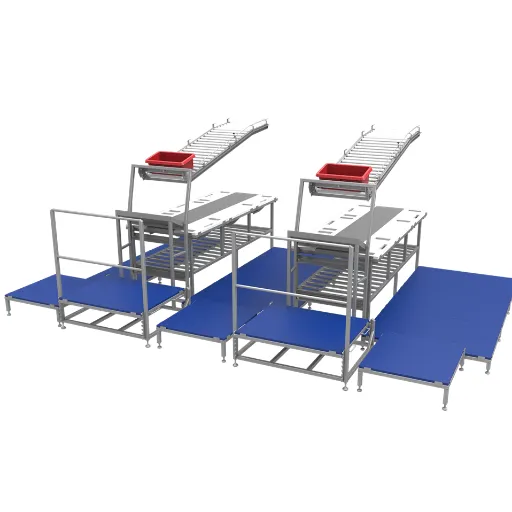
Custom food processing solutions encompass any equipment that is designed, engineered, or modified to meet client-specific requirements rather than sold as an off-the-shelf standard product. The scope ranges from simple dimensional adjustments, a conveyor lengthened to fit your facility, to fully engineered production lines built around your unique recipe and quality standards.
Types of Customization
Mechanical modifications include changes to dimensions, tooling, die shapes, conveyor configurations, and material specifications. Control system customization covers recipe-driven automation, programmable temperature profiles, and integration with your existing supervisory systems. Line integration involves connecting new equipment to your current production flow, including upstream and downstream material handling. Process optimization adjusts parameters like drying curves, extrusion pressures, or cutting speeds to match your product characteristics precisely.
Who Needs Custom Solutions?
Niche products with unique textures, shapes, or ingredient profiles often require tailored processing parameters. Facility constraints, low ceilings, limited floor space, or unusual utility access, demand equipment that fits your building rather than forcing expensive renovations. The transition from pilot production to commercial production reveals production capacity gaps which need to be filled. The ability to create distinctive mouthfeel and color and shelf life qualities which competitors are unable to match depends on process precision that generic equipment cannot deliver.
Explore our complete range of food processing machines to see standard capabilities and customization options.
5 Benefits of Custom Food Processing Solutions
The case for customization goes beyond convenience. Properly tailored equipment delivers measurable competitive advantages that standard machinery cannot match.
Perfect Product Match
Ahmed started his date-processing business in Cairo during 2024 when he acquired a standard drying line which operates at a capacity suitable for fruit processing. The machine operated normally. The sticky date pulp created blockages in the conveyors which had been designed to carry firmer fruit products. His rejection rate reached 14%.
He achieved a waste reduction of 3% after he worked with a manufacturer to develop a custom belt material which included a new airflow pattern and specific temperature control for different recipes. His energy consumption fell too because the machine no longer over-dried product because of improper material handling. The business achieved profitable results because they customized their production line which had initially faced difficulties.
Optimized Floor Space
Your operation needs to adjust according to the use of standard equipment. Your operation needs to adjust according to the use of custom equipment. A conveyor system permits turning at any location which you require. The existing platform will accommodate the mixer because it can fit underneath.
A packaging line can thread through columns that would block standard layouts. Space optimization often eliminates the need for costly building modifications.
Future Scalability
Your business will expand through modular custom designs. You can start with a single extruder configuration and add die sets later. A drying line installation with expansion ports enables future capacity increases through the addition of new modules. The system design which offers expandable capacity enables capital protection through incremental investments instead of complete system replacements.
Waste and Energy Reduction
Custom equipment designed for specific products uses an average of 12-18% less energy than standard equipment forced to handle incompatible recipes or batch sizes. Precision engineering eliminates over-processing, reduces giveaway, and cuts rejects. Over a five-year period, those savings often exceed the initial customization premium.
Competitive Differentiation
When your equipment can produce a texture, shape, or shelf life that standard machinery cannot replicate, you create a genuine moat. Competitors using generic lines cannot easily copy your product characteristics without investing in similar custom engineering.
Learn more about tailored microwave drying solutions designed around your specific product and energy targets.
Custom vs. Standard Equipment: How to Decide
Not every operation needs fully custom machinery. The right choice depends on your product, volume, facility, and growth plans.
| Factor | Standard Equipment | Custom Food Processing Solutions |
|---|---|---|
| Initial Investment | Lower base cost | 15-40% premium over standard |
| Lead Time | 4-8 weeks | 12-24 weeks |
| Product Match | Good for common products | Ideal for unique recipes or specs |
| Scalability | Fixed capacity | Modular and expandable |
| Facility Fit | May require building modifications | Designed to fit existing space |
| Best For | High-volume commodity products | Specialty, niche, or growing operations |
| Energy Efficiency | Generalized design | Optimized for specific product |
| Changeover Flexibility | Limited | Tool-less or programmable options |
When Standard Equipment Makes Sense
If you produce a high-volume commodity product with well-established processing parameters, standard equipment usually delivers the best return. Common snacks, plain pasta, or standard breakfast cereals often process beautifully on proven machines without customization. Tight budgets and immediate timelines also favor standard options.
When Customization Delivers ROI
The decision needs custom food processing solutions because five factors drive the decision process. Your product needs customizations because standard equipment cannot meet your requirements for moisture content and texture profile and shape specifications. Custom dimensions help your facility which has columns and low ceilings and limited floor space because they remove retrofit expenses. Phased customization enables you to scale from pilot to commercial production by providing precise control over capacity without excessive spending.
Contact us to discuss whether standard or customized food processing equipment fits your current production goals.
The Custom Equipment Process: From Concept to Commissioning
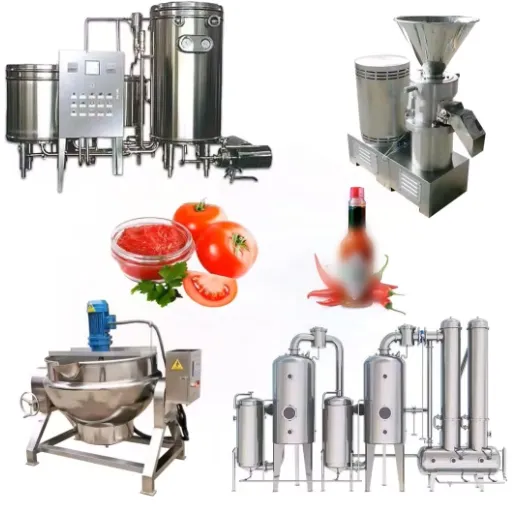
The biggest barrier to exploring custom food processing solutions is uncertainty about the process itself. Here is exactly what happens, step by step, when you work with an experienced manufacturer.
Step 1: Needs Assessment and Product Analysis
The manufacturer reviews your product recipe, target throughput, quality standards, and regulatory requirements. You share samples, production targets, facility drawings, and any constraints. This phase typically takes one to two weeks. The goal is to build a complete technical brief before any engineering begins.
Step 2: Concept Design and Engineering
Engineers create 3D models, process flow diagrams, and material specifications based on your brief. You review concepts, request revisions, and approve the final design. For complex projects, this phase may include computational modeling of heat transfer, airflow, or mechanical stress. Expect two to four weeks depending on complexity.
Step 3: Proposal and Cost Approval
The manufacturer delivers a detailed quotation covering equipment cost, engineering fees, timeline, payment milestones, and warranty terms. A transparent proposal breaks down base equipment, customization engineering, installation support, and spare parts.
Review every line. Ask questions. Confirm that scope is clearly defined before you commit.
Step 4: Manufacturing and Quality Control
Production begins according to the approved design. Reputable manufacturers provide production updates and invite factory acceptance testing, or FAT, before shipment.
FAT lets you verify that the equipment meets specifications using your actual product or a close equivalent. Never skip this step. It catches issues while they are still easy and inexpensive to fix.
Step 5: Installation and Integration
Equipment arrives at your facility. Technicians handle setup, connection to utilities, and integration with existing lines. Operator training happens during this phase. Good training covers normal operation, cleaning protocols, changeover procedures, and basic troubleshooting.
Step 6: Commissioning and After-Sales Support
The commissioning process measures system performance against established system requirements. The system checks throughput values together with quality assessment metrics and energy usage data and safety protection mechanisms. The project reaches completion through three elements which include warranty activation and spare parts planning and prearranged maintenance contracts. Your custom investment maintains its value through our comprehensive post-sales support services.
Lina used the same process to expand her snack factory from one product line to three product lines in Sao Paulo when she expanded her business in 2025. She began with the needs assessment which included her tapioca-based recipe because it produced different results than traditional corn or potato recipes.
The engineering team modified the extruder screw profiles and die temperatures to match the specific requirements of tapioca starch processing. The factory acceptance tests identified a minor airflow problem which existed in the drying section. The problem would have required three weeks to resolve if it had been found during an on-site inspection.
Her custom line achieved its designated production target on the second day of commissioning work. Her energy expenses decreased by 16 percent during the third month when she compared her current standard line with her previous standard line operating costs.
Read our guide on choosing the right food machinery manufacturer for deeper insight into evaluating suppliers for custom projects.
What Does Custom Food Processing Equipment Cost?
Cost transparency is the most requested and least delivered information in custom equipment sourcing. Here is a realistic framework.
Cost Components
The total project expenses divide into four distinct categories. The base equipment cost refers to the standard machine platform expense. The engineering and design fees charge 10-20% of the base cost for customization work that needs to be done.
Most projects experience an increase of 15-40% to their base costs because of the customization premium along with mechanical modifications and special materials and control programming. Projects that involve complex integrated systems can expect to pay 60-100% additional costs. The installation and integration service includes shipping and on-site setup and training and line connection, which typically costs 5-15% of equipment expenses.
Ballpark Investment Ranges
A belt extension, custom die set, or control tweak together with simple modifications to standard equipment, typically runs 5,000to5,000to15,000 above the base machine. Semi-custom adaptations, which involve major mechanical modifications and common automation customization, typically cost between 20,000and20,000and75,000. Fully custom production lines, designed from scratch for your product and facility, start around 100,000andcanexceed100,000andcanexceed500,000 for large integrated systems.
Hidden Costs to Budget For
Training for operators and maintenance staff often gets overlooked. The required utility upgrades which include three-phase power and compressed air and drainage modifications, will cost several thousand dollars. The facility needs to undergo modifications that require reinforced floors and ventilation upgrades. The spare parts inventory for custom components should be established from the initial planning stage.
How to Control Costs
Phased customization lets you start with a standard base and add capabilities as budget allows. Modular design spreads investment across multiple expansion phases. Clear scope definition prevents expensive change orders during manufacturing. Working with manufacturers who combine design and production in-house eliminates markup from outsourced engineering.
Request a tailored quote for food production line equipment designed around your specific product and budget.
How to Choose the Right Custom Equipment Manufacturer
Not every manufacturer excels at customization. The right partner combines engineering depth, manufacturing control, and responsive communication.
Evaluate Technical Capability
Ask about the size and experience of the engineering team. Do they use modern CAD and simulation tools? Have they completed projects similar to yours? Request case studies or references from comparable applications.
Verify Manufacturing Capacity
In-house manufacturing gives the manufacturer direct control over quality and schedule. Outsourced production introduces coordination risk. Ask which components are made internally and which are subcontracted.
Check Communication and Project Management
Language support matters, especially for overseas projects. Confirm that you will have a dedicated project contact who provides regular updates. Milestone clarity, design review schedules, production photos, and shipping notifications, keeps you informed and prevents surprises.
Assess After-Sales Commitment
Custom equipment deserves stronger support than standard products. Confirm spare parts availability, typical lead times for wear components, and whether remote diagnostics are available. Ask about on-site service capability and response time commitments.
Review References and Case Studies
Speak with two or three past clients who ordered custom equipment in similar categories. Ask whether the machine performs as specified, how responsive support has been, and whether they would order from the same manufacturer again.
Contact our engineering team to discuss your custom project and review relevant case studies from our 650+ global installations.
Common Mistakes to Avoid When Ordering Custom Equipment
Custom projects result in expensive mistakes for all buyers who lack experience. Here is how to avoid the most common pitfalls.
All product specifications must meet their required level of detail because manufacturers depend on product specifications to create their required product. The manufacturer can only engineer what you describe. Incomplete recipe data and unclear quality targets and missing regulatory requirements lead to designs that miss the mark. You should invest time to create an accurate technical brief.
All facility infrastructure requirements must be considered because they need operation the facility needs to function. Custom dimensions do not eliminate utility needs. The design process needs validation of power requirements along with water and drainage and compressed air and ventilation needs.
The design phase gets rushed because people underestimate how long engineering requires. A rushed design phase creates problems that surface during manufacturing or commissioning. You need to establish sufficient time for reviewing and updating your concepts.
The decision process for selecting products depends on their price rather than their engineering capabilities. The lowest quotation often comes from the manufacturer who underestimates complexity. The initial savings get destroyed through implementation of change orders and project delays.
Operators need training and procedures for equipment handling and operational transformation. Custom equipment requires tailored training. You need to allocate both time and resources to provide practical training alongside written standard operating procedures.
The factory acceptance testing process must not be skipped. FAT is your last chance to catch issues before shipment. The decision to skip it for time saving purposes results in a false economy.
People do not allocate budget funds for maintenance and spare parts expenses. Custom wear parts may have longer lead times than standard components. You should determine your spare parts needs before you start the commissioning process.
People create excessive engineering work to meet simple requirements. Not every challenge requires a fully custom solution. The best value solution involves using a standard machine which needs only one specific change to meet requirements.
Custom Solutions for Different Business Sizes
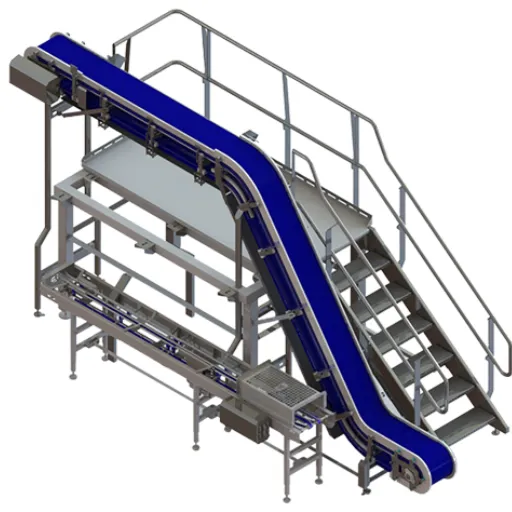
Customization is not exclusive to large enterprises. The right approach makes tailored equipment accessible at every scale.
Startups and Small Businesses
The system enables organizations to begin with a basic solution which allows them to expand functionality according to their business revenue. The targeted modifications which include one custom die and a specific temperature profile and a resized conveyor system provide valuable system enhancements that do not require customers to pay for complete custom development. Some manufacturers provide equipment leasing options together with payment plans that enable customers to acquire their products without making large upfront payments.
Priya established her spice processing business in Mumbai during 2025 because she believed that custom equipment development costs would exceed her budget. Her production area had limited width . The required standard drying machines needed a design that would obstruct her space used for packaging.
Her project involved developing a standard microwave drying machine together with a custom conveyor system which occupied less space. The base cost experienced an 18% increase from the modification. The upgraded system removed the necessity to spend $12,000 on facility redesign work. Her total project cost was lower than buying standard equipment and renovating her building.
Mid-Sized Manufacturers
Semi-automatic custom lines, retrofitting existing equipment, and modular expansion strategies typically serve mid-sized operations best. These businesses have enough volume to justify customization and enough growth to benefit from scalable designs.
Large Enterprises
Fully integrated turnkey systems, multi-line coordination, and global compliance requirements drive enterprise customization. Large operations benefit from dedicated project teams, comprehensive factory acceptance testing, and detailed commissioning protocols.
Explore industrial food processing equipment with customization options for operations of every size.
Future Trends in Custom Food Processing Equipment
The customization landscape is evolving rapidly. Smart buyers align their investments with emerging capabilities.
Modular and Reconfigurable Systems
Equipment that adapts to new products without full replacement is becoming the norm. Interchangeable tooling, programmable process parameters, and expandable architectures let manufacturers pivot quickly when market demands shift.
Smart Customization with IoT
Sensor-integrated equipment provides real-time data on temperature, throughput, energy use, and wear. This visibility enables predictive maintenance, reduces downtime, and supports continuous process improvement.
Sustainable Design
Energy-efficient custom engineering, reduced water usage, and waste minimization are no longer optional. Regulations tighten annually. Equipment that already meets high sustainability standards avoids future retrofit costs and appeals to environmentally conscious retailers.
Rapid Prototyping
Digital twin technology and advanced simulation tools let manufacturers validate custom designs before cutting metal. Prototyping accelerates development, reduces risk, and improves first-time-right performance.
Frequently Asked Questions
How long does it take to get custom food processing equipment?
Average lead time for fully custom food processing equipment ranges from 12 to 24 weeks, compared to 4 to 8 weeks for standard equipment. Simple modifications may add only two to four weeks. Complex integrated systems can extend beyond 24 weeks. The design and approval phase typically consumes one-third of the total timeline.
Can small businesses afford custom food processing solutions?
Yes. Phased customization, standard bases with targeted modifications, and modular designs make custom solutions accessible to small businesses. A single targeted modification often costs 5,000to5,000to15,000 above the base machine price. That investment frequently eliminates more expensive facility modifications or waste problems that standard equipment creates.
What information do I need to provide for a custom equipment quote?
Provide your product recipe and target specifications, desired throughput, facility dimensions and utility details, quality standards and regulatory requirements, and budget range. Photos or samples of your product help enormously. The more complete your brief, the more accurate the quotation.
Can existing equipment be modified instead of buying new?
Yes. The food equipment retrofit and modification market is growing at 7.1% annually. Retrofitting is often the most cost-effective path when your existing line is fundamentally sound but needs updated capabilities.
Common retrofits include control system upgrades, additional heating or cooling zones, conveyor modifications, and integration with new upstream or downstream equipment.
How do I ensure custom equipment meets food safety standards?
Verify that your manufacturer uses food-grade materials, typically 304 or 316 stainless steel for contact surfaces. Request certifications like CE marking, NSF registration, or ISO 22000 alignment. Include hygiene requirements in your technical brief. Schedule factory acceptance testing to verify cleanability and sanitation access before shipment.
What is the difference between OEM and fully custom equipment?
OEM, original equipment manufacturer, equipment is produced by the brand that designs it and is typically sold as standard catalog items. Fully custom equipment is engineered specifically for your requirements. Some manufacturers offer both, standard OEM catalog products plus custom engineering services. The key distinction is whether the design starts from your specifications or from a pre-existing model.
Browse our snack food production line solutions available with full customization for recipes, capacities, and facility layouts.
Conclusion
Custom food processing solutions are not a luxury reserved for multinational corporations. Food manufacturers can use this solution to better their operations through increased production efficiency while decreasing their operational waste and bettering their facility utilization and developing products that their competitors will find hard to duplicate.
The selection process between custom equipment and standard equipment requires evaluation of product requirements and operational limitations and future development requirements and available financial resources. When organizations determine the need for customization they should follow a transparent six-step process which includes needs assessment and concept design and proposal and manufacturing and installation and commissioning to maintain project progress according to budget specifications. The combination of accurate cost estimation and effective manufacturer assessment and strict project execution procedures enables transformation of complicated matters into reliable financial commitments.
Shandong Loyal Industrial Co., Ltd. has designed and manufactured custom food processing solutions which we have implemented for more than 650 clients in 80 different countries since 2005. We have discovered that successful projects depend on a buyer who understands the process and selects a manufacturer who prioritizes transparent operations as much as technical competence.
Ready to explore custom food processing solutions for your operation? Contact our team today to discuss your product, facility, and production goals. Our engineers will help you determine whether customization is the right path and outline exactly what your project would involve.