The corn flakes manufacturing process transforms raw corn grits into the crispy, golden breakfast cereal found in kitchens worldwide. The process begins with grain cleaning and conditioning, then proceeds to cooking or extrusion to create dough, followed by flaking the dough into thin sheets, which undergo drying and toasting to produce the distinctive crunch, and ends with coating and packaging for distribution. The time needed for this process varies depending on the selected method, which ranges from modern extrusion systems taking less than 30 minutes to traditional steam-cooking and flaking processes requiring multiple hours to complete.
Raj Patel established his breakfast cereal startup in Mumbai during 2023, but he believed that making corn flakes required only the steps of flattening corn and toasting it. He discovered six months later that three equipment failures were causing his problems because consistent flake thickness and moisture control and toasting temperature were essential factors that no enthusiasm could substitute. His initial batches contained three defects because the product either became too brittle or too soggy or developed inconsistent browning. The problem was not his recipe. The problem arose from his partial knowledge of the three processes required to operate the equipment at full production capacity.
This guide provides you with complete understanding of corn flakes production methods which you need for your business research, product expansion efforts and equipment research purposes. The study teaches you about the complete corn flakes manufacturing process and the essential machines used in production along with the quality control measures used at each production stage and the criteria needed to choose a production line for your business.
Ready to see what a complete production line looks like? Explore our corn flakes production line to discover equipment designed for consistent quality and scalable output.
Key Takeaways
- The corn flakes manufacturing process follows seven core stages: raw material preparation, conditioning, cooking or extrusion, flaking, drying and toasting, coating, and packaging.
- Modern extrusion systems can produce corn flakes in under 30 minutes, while traditional steam-cooking methods take several hours but deliver a different texture profile.
- A complete corn flakes production line includes a mixer, extruder or cooker, flaking mill, rotary dryer or toaster, coating drum, cooling conveyor, and packaging machine.
- Moisture control is the single most critical variable: grits enter at 12-14% moisture, reach 28-32% after cooking, and must exit toasting at 1-3% for proper shelf stability.
- Breakage rates, flake uniformity, and color consistency are the top quality metrics that separate commercial-grade output from amateur results.
What Are Corn Flakes? A Quick Overview
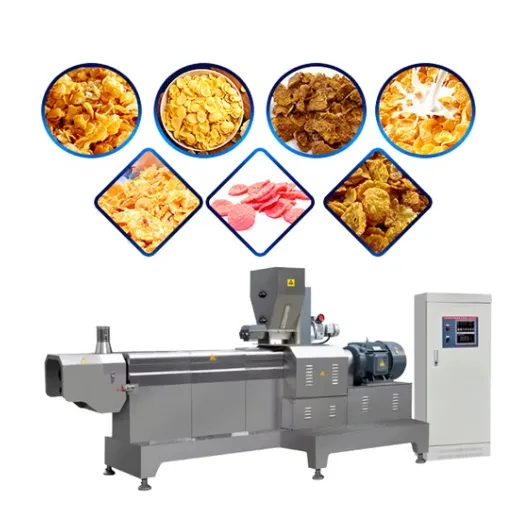
Corn flakes are a toasted, flat breakfast cereal made primarily from milled corn, or maize. They were first produced in the late 19th century and have since become a staple in the global breakfast cereal market. The product consists of thin, crispy flakes that are typically consumed with milk and may be coated with sugar, malt, or vitamins to enhance flavor and nutritional value.
The global breakfast cereal market was valued at approximately USD 62.5 billion in 2024 and is projected to reach USD 89.2 billion by 2033, according to Statista. Corn flakes represent roughly 25-30% of this total segment, making them one of the most significant product categories in the industry. Demand is particularly strong in Asia-Pacific, Latin America, and Africa, where urbanization and changing breakfast habits are driving rapid market expansion.
Extruded Corn Flakes vs. Traditional Flaked Corn Flakes
Two separate methods exist to produce breakfast cereal products, which must be learned by you before you start purchasing production machinery.
The production process for extruded corn flakes begins with a high-temperature process that uses a dual-screw extruder to transform corn grits into finished products. A twin-screw extruder receives corn grits as input to produce gelatinized starch through its mechanical shear and heat process which takes only two seconds. The process includes shaping the extruded dough into its final form, followed by flaking, drying, and toast drying stages. The method requires less floor space while it operates at a faster speed and higher energy efficiency.
The traditional process for producing flaked corn flakes depends on large batch cookers which steam whole or coarse corn grits for a cooking duration between 90 and 120 minutes. The process starts with cooled cooked grits, which undergo partial drying before they reach the tempering stage and pass through flaking rolls and finally undergo toasting. The method creates traditional flake products that have a denser texture which premium brands prefer because of its unique mouthfeel.
The method you select will control all subsequent choices about your facility design which includes your building dimensions and energy consumption and your business objectives.
Step-by-Step Corn Flakes Manufacturing Process
Understanding the corn flakes manufacturing process step by step helps you identify where quality is won or lost. Each stage builds on the previous one, and small errors early compound into major defects later.
Step 1: Raw Material Preparation and Cleaning
The process begins with corn grits, which are milled corn particles that have a size range between 3 and 6 millimeters. The grits arrive at the facility with multiple moisture levels and different types of debris and foreign material. The first task is cleaning.
Raw grits pass through vibratory sieves, magnetic separators, and destoners to remove dust, metal fragments, stones, and broken kernels. This is not optional. The presence of contaminants at this point will result in two outcomes. The first outcome results in extruder screw damage. The second outcome results in contamination of the final product which leads to food safety violations that will suspend your business operations.
After cleaning, the grits are stored in silos with controlled temperature and humidity. The ideal starting moisture content is 12-14%. Grits require a specific moisture level between 12% and 14% to achieve proper gelatinization during cooking. Grits require a specific moisture level between 12% and 14% to achieve proper gelatinization during cooking. The moisture content of the material needs to stay within specific limits because it affects the extrusion process.
Step 2: Conditioning and Moisture Control
The conditioning of cleaned grits happens before their cooking or extrusion process. The process combines accurate water measurement with malt extract and sugar and salt addition to create desired moisture levels and flavor characteristics.
Conditioning typically takes place in a rotating drum or mixer where steam and water are injected under controlled conditions. The grits are heated to 60-70 degrees Celsius and held until moisture penetrates evenly throughout each particle. For traditional steam-cooking, the target moisture after conditioning is 28-32%. The extruder produces higher temperatures together with additional moisture through its mechanical friction which leads to a moisture requirement of 24-28% for extrusion.
The recipe creation process starts at this particular phase. The final taste and color and texture of your corn flakes depend on three factors. These factors include the water to grits ratio and the malt syrup addition and the specific temperature used in the process.
Step 3: Cooking or Extrusion
The corn flakes manufacturing process reaches its highest level of complexity during this particular stage.
The large pressure cookers receive the conditioned grits which undergo traditional flaking process. The grits undergo cooking when steam enters the system at 1.5 to 2 bar pressure for 90 to 120 minutes. The starch reaches complete gelatinization after the extended cooking period thus changing the grits from their original hard state into a soft translucent substance. The grits undergo cooking before they enter the dryer-cooler system which removes excess surface moisture and decreases their temperature to 40-50 degrees Celsius. The cooked grits require multiple hours of rest in tempering bins which enables moisture to reach equilibrium before the flaking process begins.
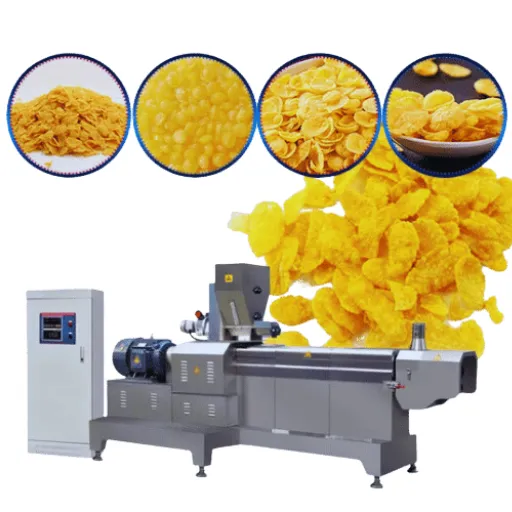
The twin-screw extruder receives conditioned grits which enter the system through continuous feeding. The barrel contains rotating screws which apply compression and shearing forces to the material while it moves against the heated walls of the barrel. The system reaches temperatures between 120 and 150 degrees Celsius while pressure develops from 20 to 40 bar. The starch achieves complete gelatinization within 30 to 60 seconds. The dough exits through a die plate that shapes it into a continuous ribbon or individual pellets. The rotating knife functions to cut the extrudate into specific lengths. The extruded products proceed to a cooling conveyor which maintains their structural integrity until the flaking process begins.
Step 4: Flaking
Flaking transforms cooked grits and extruded pellets into the flat form which consumers identify as their final product.
The material enters processing through two large cylindrical rolls which have diameters of 400 to 600 millimeters while they move in opposite directions. The operators of the machine set the roll gap to 0.3-0.8 millimeters which they can modify throughout the operation. The cooked grits transform into thin translucent flakes after they pass through the processing system. The operators use chilled water to cool the rolls because this method keeps the flakes from adhering to the equipment.
The flaking process for extruded products uses the same methods as flaking for other products but the starting material shows more uniformity which results in uniform flake thickness. Roll gap control is critical here. The operation of the machine fails when its gap size exceeds the acceptable range because it creates weak flakes which break during the drying and packaging processes. The operation of the machine fails when its gap size exceeds the acceptable range because it creates thick chewy flakes which fail to achieve proper toasting.
Step 5: Drying and Toasting
The product becomes unsuitable for storage because its moisture content exceeds acceptable limits after the flaking process. The product requires drying through either single-pass or multi-pass rotary drying or fluidized bed toasting methods.
The flakes enter the dryer at roughly 30-35% moisture and exit at 1-3%. The process needs exact temperature management because of its substantial temperature decrease. The system operates between 200 to 300 degrees Celsius for incoming air while maintaining 100-120 degrees Celsius for outgoing air to avoid burning the material. The time required for drying ranges between 3 to 6 minutes because it depends on the flake thickness and their moisture level.
Toasting is not just about removing water. The Maillard reaction initiates during this process which produces the golden-brown color and roasted flavor that characterize corn flakes. Inadequate toasting produces pale, bland flakes. Excessive toasting produces dark, bitter flakes with reduced nutritional value because heat-sensitive vitamins degrade.
Modern food production line equipment uses zoned temperature control and variable-speed conveyors to give operators fine-tuned control over this delicate balance.
Step 6: Coating and Flavoring
Many commercial products use coating but not all corn flakes receive this treatment. The process establishes additional sweetness together with flavor improvements and vitamin content plus visual enhancements.
The process starts with toasted flakes which go to a rotating coating drum where workers spray a fine mist of sugar syrup and malt extract and honey and flavoring onto the tumbling flakes. Some manufacturers also dust the flakes with powdered sugar, cocoa, or salt at this stage. The base of fortified cereals receives a suspension application of vitamins together with minerals.
The problem requires achieving even coating results without creating clumps. The operation needs to combine four elements which include drum angle and rotation speed together with spray pressure and liquid temperature. The flakes go to a brief drying section which maintains their coating while stopping them from sticking together in the package.
Step 7: Cooling and Packaging
The final stage brings the corn flakes down to ambient temperature and seals them in moisture-barrier packaging.
The cooling conveyor or fluidized bed cooler receives hot flakes that come from either the toaster or coating drum. The product undergoes rapid cooling because warm flakes maintain their moisture loss until they become completely dry, which causes condensation to form inside the package, resulting in sogginess and mold development. The target temperature before packaging is 30-35 degrees Celsius.
The flakes proceed to automatic packaging machines after workers weigh them following the cooling process. The common package formats include pillow bags and stand-up pouches and cartons that have inner liners. The packaging material must provide an oxygen and moisture barrier to maintain crispness throughout the product’s shelf life, which is typically 6 to 12 months.
A snack manufacturer in Vietnam, Linh Nguyen, already operated a successful puff snacks processing line. When she decided to add corn flakes to her portfolio, she initially considered buying a standalone flaking mill and retrofitting her existing extruder. After consulting with equipment specialists, she realized a purpose-built corn flakes production line would integrate her mixing, extrusion, drying, and packaging into one seamless workflow. The result was a 60% reduction in changeover time and breakage rates that dropped from 18% to under 5%.
Key Equipment in a Corn Flakes Production Line
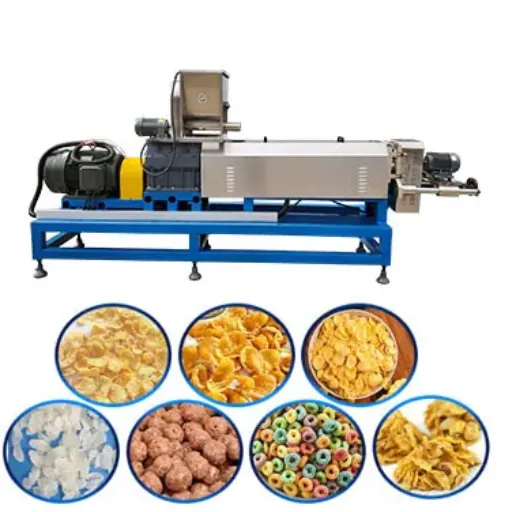
Each stage of the corn flakes manufacturing process requires specialized machinery. Understanding what each machine does helps you evaluate quotes, compare suppliers, and plan your facility layout.
Mixing and Conditioning Equipment
The mixer or conditioner combines raw grits with water and steam and various additives. Batch mixers permit multiple recipes for smaller loads while continuous mixers provide direct feed to extruders which operate at high production speeds. You should select equipment that features jacketed construction for steam injection and temperature management purposes together with variable-speed drives which enable testing of different retention durations.
Extruder or Cooking System
The extruder serves as the core component needed to produce extruded corn flakes. Twin-screw extruders provide better mixing and heat transfer capacity and process control than single-screw extruder systems. The main parameters for assessment include screw diameter which describes the width of the screw and the length-to-diameter ratio and maximum rotation speed and motor power and die configuration options. The traditional flaking process requires large-capacity pressure cookers which include automated steam injection and discharge capabilities.
Flaking Mill
The flaking mill operates through two hydraulic rolls which enable precise gap control for determining flake size. The Rolls should use chilled cast iron or alloy steel materials which have hardened surfaces to create resistance against wear. The hydraulic loading system maintains equal pressure distribution throughout the roll face, which results in consistent flake size production. The rolls contain cooling channels which stop thermal expansion from occurring because thermal expansion would cause the operating gap to increase.
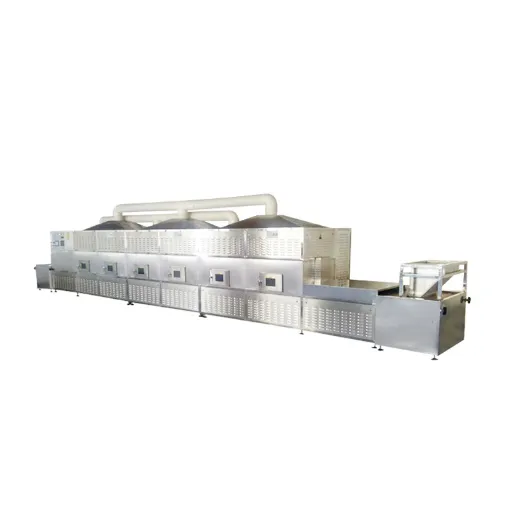
Rotary Dryer or Toaster
This machine operates as the biggest equipment piece which consumes the highest energy resources within the production facility. The rotary dryers use a rotating drum which contains internal flights to move flakes through a stream of heated air. The fluidized bed toasters use a hot air cushion to keep flakes suspended which enables them to heat up faster and achieve more consistent results. Different designs exhibit substantial differences in energy efficiency. Suppliers need to provide fuel consumption details and power consumption data which shows the consumption for each kilogram of product produced.
Coating Drum
The coating drum is a rotating, slightly inclined cylinder with internal baffles that create a gentle tumbling action. Spray nozzles are mounted inside or at the feed end. Stainless steel construction is essential for food safety, and the drum should be designed for quick cleaning between product changeovers.
Cooling Conveyor
Cooling conveyors use ambient or refrigerated air to bring product temperature down before packaging. Belt width and length must match your line speed. Insufficient cooling capacity creates a bottleneck that forces you to slow the entire line.
Packaging Machine
Vertical form-fill-seal machines are the most common choice for cereal packaging. They create bags from a roll of film, fill them with weighed product, and seal them in one continuous operation. Multi-head weighers provide accurate portioning at high speeds. For premium products, pre-made pouch machines or cartoners may be preferred.
Interested in how these machines work together as an integrated system? View our snack food production line solutions to see complete workflows designed for breakfast cereal and snack manufacturers.
Quality Control at Every Stage
Quality in corn flakes manufacturing is not achieved by inspection at the end. It is built through controlled parameters at every stage.
Moisture Content Monitoring
Moisture is measured at least four times: incoming grits, after conditioning, after cooking or extrusion, and after drying. Inline near-infrared sensors provide real-time readings without stopping the line. Manual oven-drying tests are used for calibration. The target range after toasting is 1-3%. Exceeding 4% creates shelf-stability problems. Dropping below 1% produces excessively brittle flakes that shatter during handling.
Flake Thickness and Uniformity
Flake thickness is checked using micrometers or optical scanners on samples taken every 30 minutes. Target thickness is 0.4-0.6 millimeters for standard corn flakes. Thinner flakes toast too quickly and burn. Thicker flakes remain chewy and under-toasted. Uniformity is measured by calculating the coefficient of variation across a 100-gram sample. A well-tuned line keeps this below 10%.
Color and Toast Level Consistency
Color is measured using a spectrophotometer against a standard reference. The Lab* color space is commonly used, with the L* value (lightness) being the most critical parameter for corn flakes. Operators adjust toaster temperature and residence time to maintain consistent color batch after batch.
Breakage Rate Management
Breakage is measured by screening a 500-gram sample through standard mesh sieves. Anything passing through a 3-millimeter sieve is classified as breakage. Commercial targets are 3-5% breakage. Higher rates indicate problems in flaking roll gap, excessive dryer temperature, or rough handling on conveyors.
Food Safety and Hygiene Standards
All equipment in contact with product must be constructed from food-grade stainless steel with smooth welds and no crevices where bacteria can harbor. The facility should implement HACCP principles, with critical control points at cooking temperature, metal detection, and packaging seal integrity. The FAO and WHO Codex Alimentarius provides internationally recognized standards for breakfast cereal production and food safety management.
Common Production Issues and How to Solve Them
- Uneven flaking: Check roll gap alignment and hydraulic pressure. Worn roll surfaces may need re-grinding or replacement.
- Soggy flakes after packaging: Verify moisture content at dryer exit and check packaging seal integrity and film barrier properties.
- Excessive breakage: Reduce drop heights between conveyors, check for sharp edges on transfer chutes, and verify that flakes are adequately cooled before handling.
- Inconsistent color: Clean burner nozzles, verify air-fuel ratio, and check for uneven air distribution in the toaster.
Choosing the Right Corn Flakes Production Line for Your Business
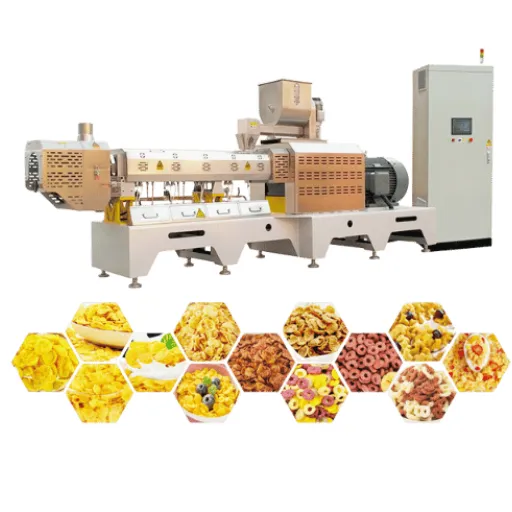
Selecting equipment is where strategic planning meets technical reality. The right corn flakes processing equipment for your business depends on your budget, target market, facility size, and growth plans.
Small-Scale vs. Industrial Production Lines
Small-scale production lines operate at a rate of 50 to 150 kilograms per hour while needing between 200 and 400 square meters of space. The system works best for startup companies, regional brands, and businesses that need to test their market demand. The lines use semi-automatic control systems which enable operators to control multiple machine functions through one device which provides both drying and toasting capabilities.
Industrial lines process 500-2,000 kilograms per hour and require 800-2,000 square meters. The system operates through automatic controls which enable constant production while different machines handle each stage of the processing. Large enterprises and export-oriented manufacturers need this level of throughput and consistency.
Fully Automatic vs. Semi-Automatic Systems
Automatic corn flakes production lines use programmable logic controllers and human-machine interfaces to manage recipe parameters, line speed, and quality checks with minimal operator intervention. The system reduces labor expenses by 30 to 40 percent while it decreases human mistakes and it records data for tracking purposes.
Operators must use semi-automatic systems to manually insert components, keep track of temperature levels, and modify operational parameters. The system requires lower initial investment while it provides users with better operational flexibility during research projects and product development. Your selection should rely on the current expenses of your workforce plus the level of your technical capabilities and the variety of products you offer.
Key Factors When Selecting Equipment
When evaluating food processing machines for corn flakes production, prioritize these factors:
- Throughput match: Buy for your realistic 3-year volume, not your 10-year dream. Over-sized equipment wastes energy and complicates operation.
- Energy efficiency: Ask for specific consumption figures. A 20% reduction in fuel use per ton can save thousands of dollars annually.
- Footprint and layout: Consider material flow, cleaning access, and expansion space. A poorly laid line creates bottlenecks that no amount of automation can fix.
- After-sales support: Verify spare parts availability, technical documentation quality, and whether the supplier offers remote diagnostics or on-site service.
- Certification alignment: Ensure the equipment meets the standards required for your target markets, whether that is CE for Europe, UL for North America, or local equivalents.
In 2024, a mid-size food processor in Kenya named Daniel Ochieng faced a classic scaling dilemma. His manual corn flakes operation could barely keep up with supermarket demand, and inconsistent product quality was costing him shelf space. By upgrading to a semi-automatic production line with integrated moisture sensors and temperature-controlled toasting, he tripled daily output within six months. More importantly, he achieved the uniform golden color and crunch that retail buyers demanded, which opened doors to two additional distribution contracts.
Conclusion
The corn flakes manufacturing process is a precise sequence of stages which transforms raw corn grits into a shelf-stable breakfast cereal through its process of cleaning, conditioning, cooking or extrusion, flaking, drying, toasting, and packaging. The complete mastery of each stage requires the learner to understand gelatinization and moisture control and the Maillard reaction while they must choose equipment which provides dependable results throughout different work shifts.
Here are the key points to remember:
- The corn flakes manufacturing process follows seven stages, and quality at each stage depends on controlling moisture, temperature, and mechanical parameters.
- Extrusion offers speed and efficiency for modern commercial production, while traditional steam-cooking and flaking produces a denser, more heritage-style flake.
- A complete corn flakes production line requires seven types of specialized equipment, and integration between them determines your overall efficiency and product consistency.
- Quality control must be built into every stage, not just inspected at the end. Moisture content, flake thickness, color, and breakage rate are your four critical metrics.
- Equipment selection should be based on realistic throughput needs, energy efficiency, facility layout, and the supplier’s ability to support your operation long-term.
Whether you are launching a new cereal brand or expanding an existing snack operation into breakfast products, the right production equipment makes the difference between struggling with inconsistency and building a brand known for quality.
Ready to take the next step? Contact Shandong Loyal Industrial Co., Ltd. to discuss your corn flakes production goals. Our team will help you evaluate your requirements and design a tailored production line that fits your budget, facility, and growth plans.
Shandong Loyal Industrial Co., Ltd. has been designing and manufacturing food processing equipment since 2005. With over 650 global customers and annual sales exceeding $90 million, we specialize in extrusion technology, snack production lines, and breakfast cereal manufacturing solutions exported worldwide.