A microwave sterilization machine uses electromagnetic waves to eliminate pathogens in food, pharmaceuticals, and packaging materials faster and more efficiently than traditional steam or chemical methods. These systems reduce processing time by up to 72% while cutting energy consumption by 30-50%, making them one of the fastest-growing technologies in industrial sterilization.
The global food sterilization equipment market hit 986millionin2025andisclimbingtoward986millionin2025andisclimbingtoward1.78 billion by 2034. Industrial microwave heating alone, which includes sterilization, drying, and pasteurization, represents a $1.84 billion market today. Food and beverage processors account for roughly 40% of that demand. The technology is no longer experimental. It is the new standard for manufacturers who refuse to choose between safety and quality.
Key Takeaways
- Microwave sterilization machines process products in 3-15 minutes versus 60-120 minutes for steam retorts, delivering up to 72% faster cycle times.
- Energy savings range from 30-50% compared to conventional methods, with some operations reporting 60-75% reductions versus autoclaves.
- Water consumption drops by 98% because microwave systems do not rely on steam generation.
- Carbon emissions fall by approximately 50-65% per cycle compared to traditional autoclaves.
- The technology preserves heat-sensitive nutrients, colors, and flavors better than retort or steam sterilization.
What Is a Microwave Sterilization Machine?
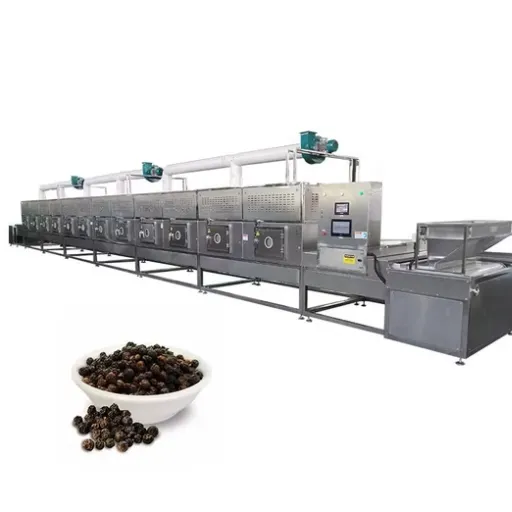
A microwave sterilization machine is industrial equipment that uses high-frequency electromagnetic waves, typically at 2450 MHz or 915 MHz, to generate heat inside food products through dielectric heating. Unlike conventional methods that transfer heat from the outside in, these machines heat food volumetrically. That means the interior and exterior reach sterilization temperature simultaneously.
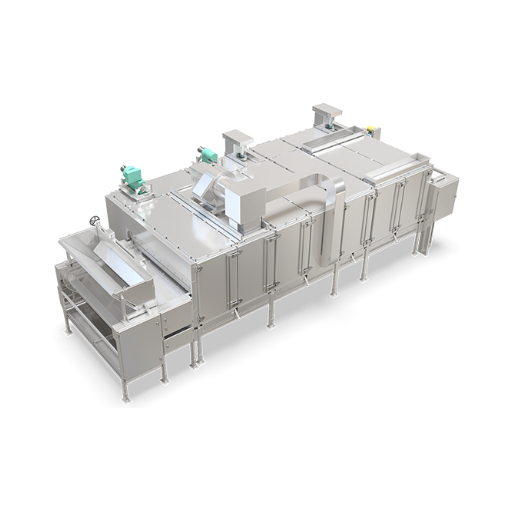
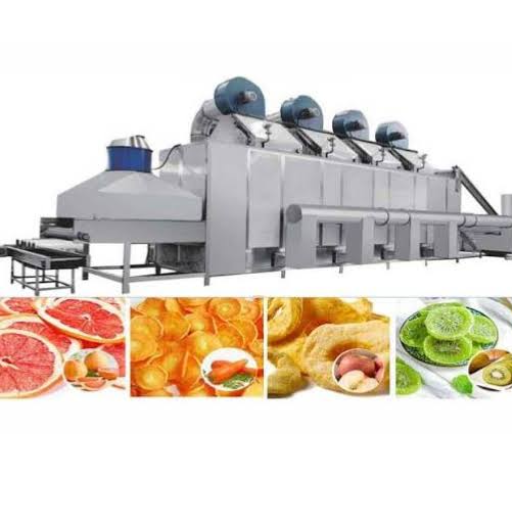
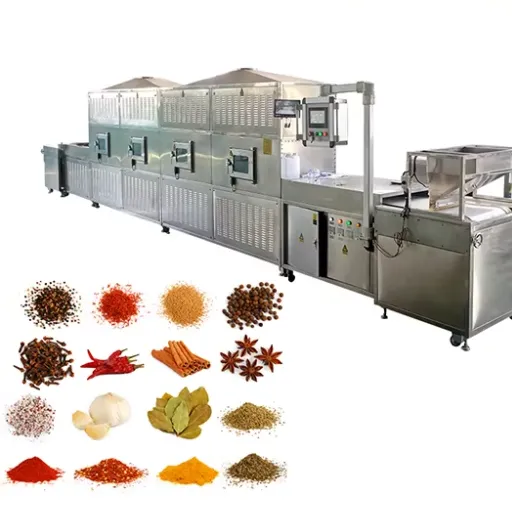
The core components include a magnetron that generates microwaves, a waveguide that directs the energy, a stainless steel processing chamber, and a conveyor system for continuous operation. A PLC control system with HMI touch-screen interface manages power levels, conveyor speed, and temperature monitoring in real time. Many manufacturers pair sterilization with microwave drying equipment in integrated production lines that handle both processes in a single pass.
When Chen Wei, a spice processor in Henan province, first heard about microwave sterilization, he was skeptical. His facility had used steam autoclaves for fifteen years. The idea that electromagnetic waves could sterilize chili powder faster than pressurized steam seemed too good to be true. After visiting a demonstration facility and seeing 500 kg of paprika processed in under eight minutes with no flavor degradation, he requested a sample test. Six months later, his energy bills had dropped 35% and his export rejection rate due to microbial counts fell to zero.
How Microwave Sterilization Works
The Science of Dielectric Heating
Microwave sterilization relies on a phenomenon called dielectric heating. When electromagnetic waves penetrate food material, they cause polar molecules, primarily water, to rotate rapidly. This molecular friction generates heat instantly throughout the product rather than conducting from the surface inward.
The heating rate depends on the dielectric properties of the food. Materials with higher moisture content absorb more energy and heat faster. This creates a self-leveling effect where wetter regions dry and sterilize in balance with drier areas.
Thermal and Non-Thermal Effects
The sterilization mechanism combines two effects. First, the thermal effect raises the temperature high enough to denature proteins in microbial cells, destroying bacteria, yeasts, molds, and spores. Second, some research suggests non-thermal effects from the electromagnetic field itself may disrupt cell membrane permeability, though the primary lethal mechanism remains thermal.
Temperature and Time Profiles
Most microwave sterilization processes operate between 70°C and 130°C, depending on the product and target organisms. A typical spice sterilization cycle runs at 85-95°C for 3-5 minutes. Ready-to-eat meals processed through Microwave-Assisted Thermal Sterilization (MATS) systems reach 121°C under pressure, matching retort lethality but in a fraction of the time.
The key metric for validation is the F0 value, which measures the cumulative lethal effect of heat on Clostridium botulinum spores. A properly validated microwave process delivers the same F0 value as conventional retort processing, typically 3-8 minutes at 121°C equivalent.
Microwave Sterilization vs Traditional Methods
Understanding how microwave systems compare to retort, autoclave, and hot-air sterilization helps you evaluate the true value for your operation.
| Feature | Microwave Sterilization | Retort Sterilization | Ethylene Oxide |
|---|---|---|---|
| Processing Time | 3-15 minutes | 30-60+ minutes | 4-12 hours |
| Temperature Range | 70-130°C | 121-135°C | 30-60°C |
| Heating Method | Volumetric (inside-out) | Conduction (outside-in) | Chemical |
| Energy Efficiency | 70-80% conversion | ~44% thermal efficiency | Medium |
| Water Usage | 800 mL-1 L per cycle | 20-50 gallons per cycle | Low |
| Carbon Footprint | 50-65% lower | Higher baseline | Medium |
| Product Quality | Excellent retention | Risk of overcooking | Chemical residue risk |
| Nutrient Retention | 60-90% Vitamin C | 46-50% Vitamin C | N/A |
| Labor Requirements | 1-3 operators | 3-5 operators | Specialized handling |
| Footprint | Compact tunnel design | Large boiler systems | Moderate |
| Chemical Use | None | None | Yes (toxic) |
Why Retort Falls Short
Retort sterilization has been the industry standard for decades, and it works. But it works slowly. Because heat must conduct from the package surface to the coldest point in the center, the outer layers are exposed to high temperatures long after they have reached sterility. This overprocessing degrades texture, dulls color, and destroys heat-sensitive nutrients.
Consumer taste panels consistently prefer microwave-sterilized products. In one study, participants chose microwave-pasteurized meals over retort alternatives by a margin of 59% to 25%. The reason is simple. Shorter heating times preserve the fresh-cooked character that retort processing cannot match.
The water difference is equally stark. Steam autoclaves consume 20 to 50 gallons per cycle. Microwave systems use 800 milliliters to 1 liter. That 98% reduction matters in drought-prone regions and in facilities where water treatment adds cost. Carbon emissions drop by 50-65% per cycle. For manufacturers with sustainability commitments or carbon accounting requirements, this is not a nice-to-have. It is a measurable operational advantage.
The Energy Equation
Traditional steam systems waste enormous energy heating water, pipes, and vessel walls before the food itself reaches temperature. Microwave energy converts directly to heat within the product at 70-80% efficiency. Industrial users consistently report electricity savings of 30-50% after switching from conventional electric or steam-based systems. Compared to autoclaves specifically, some healthcare studies document savings of 60-75%.
For a mid-sized facility running two shifts, that difference can mean tens of thousands of dollars in annual energy savings alone.
Want to see how much you could save? Contact our engineers for a free energy comparison based on your current setup.
Microwave-Assisted Thermal Sterilization (MATS)
Microwave assisted thermal sterilization, or MATS, represents the most advanced commercial application of microwave sterilization technology. Developed by Dr. Juming Tang at Washington State University and exclusively commercialized by 915 Labs, MATS combines 915 MHz microwave heating with pressurized hot water immersion.
Why 915 MHz Matters
The 915 MHz frequency provides approximately three times the penetration depth of the 2450 MHz used in standard industrial and domestic systems. This deeper penetration ensures uniform heating through thick packaged meals, eliminating cold spots that could harbor surviving pathogens.
A 2025 study published in the Journal of Food Science compared 915 MHz and 2450 MHz systems for large-scale peanut butter processing. The 915 MHz system achieved pathogen reduction of 3.73-4.95 log CFU/g in just 90 seconds. The 2450 MHz system required 160 seconds to reach 1.59-3.24 log reduction. For dense, viscous products, the lower frequency wins decisively.
FDA Approval Milestones
MATS technology has earned significant regulatory validation:
- October 2009: FDA accepted MATS for homogeneous foods (mashed potatoes in trays and pouches)
- September 2010: FDA accepted MATS for non-homogeneous foods (salmon fillet in Alfredo sauce)
- 2012: FDA accepted MATS for chicken dumplings in pouches
These approvals confirmed that MATS achieves commercial sterility equivalent to conventional retort processing.
Commercial Applications
Tata SmartFoodz in India operates the first industrial-scale MATS system for commercial shelf-stable meals. The technology enables premium ready-to-eat products with shelf lives of 12-18 months while maintaining the sensory quality of freshly prepared food. This opens entirely new product categories that were previously impossible with retort processing.
Key Applications in Food Processing
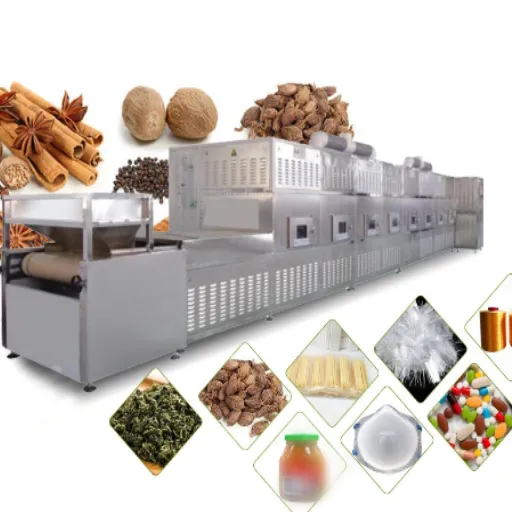
Spices and Seasonings
Spices present a unique sterilization challenge. They are dry, making steam penetration difficult. They contain volatile aromatic compounds that degrade under prolonged heat. And they often carry high microbial loads from growing and harvesting conditions.
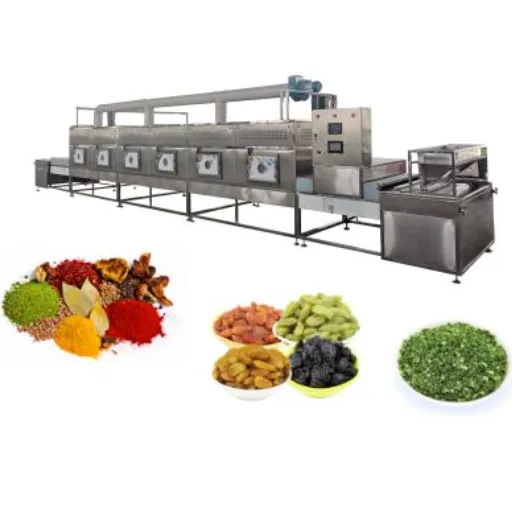
Microwave food sterilization excels here. The volumetric heating reaches the interior of dense spice powders without the surface overcooking that ruins flavor. Chili powder, paprika, cumin, turmeric, and blended seasonings all process effectively in 3-8 minutes at 85-95°C. The result is a commercially sterile product with aroma and color intact.
Nuts, Grains, and Pulses
Walnuts, pistachios, peanuts, rice, and lentils benefit from microwave treatment that simultaneously sterilizes and reduces moisture to optimal storage levels. The selective heating effect targets higher-moisture areas first, creating uniform final moisture content without case hardening.
Ready-to-Eat Meals and Sauces
The fastest-growing application for microwave food sterilization is pre-packaged meals. Soups, sauces, curries, and complete entrees in flexible pouches or trays process through continuous tunnel systems. MATS technology handles the most demanding low-acid products that require full commercial sterility.
Pet Food and Animal Feed
Protein-rich pet foods and animal feeds are highly susceptible to Salmonella and other pathogens. Microwave sterilization achieves the required pathogen reduction without the nutrient degradation that reduces protein digestibility. Export markets increasingly require documented sterilization processes, and microwave systems provide consistent, verifiable results.
Dairy Powders and Nutraceuticals
Milk powder, whey protein, and functional food ingredients require gentle processing to preserve nutritional value. The lower temperature capability of microwave sterilization protects heat-sensitive proteins and vitamins while achieving the microbial safety standards required for infant nutrition and pharmaceutical applications.
Pharmaceutical and Medical Applications
While most equipment guides focus exclusively on food, microwave sterilization technology serves a growing and highly regulated pharmaceutical market.
Active Pharmaceutical Ingredients (APIs)
Heat-sensitive APIs like paracetamol granules and probiotic powders require terminal sterilization without degradation. Microwave systems maintain greater than 98.5% potency by dissolution testing, often using nitrogen purging to prevent oxidation. The lower operating temperatures protect molecular structures that steam would damage.
Herbal Extracts and Traditional Medicines
Medicinal herbs and biological products sterilize effectively while preserving bioactive compounds. GMP compliance documentation supports regulatory submissions across major markets. The technology is particularly valuable for traditional Chinese medicine exports, where microbial standards must be met without compromising therapeutic efficacy.
Medical Device Packaging
Vials, disposable equipment, and drug packaging materials sterilize without the chemical residues associated with ethylene oxide. This is increasingly important as regulators tighten EtO exposure limits. Microwave sterilization offers a viable alternative that meets sterility assurance levels without toxic byproducts.
Pharmaceutical Powders and Supplements
Rapid processing times protect sensitive active ingredients in nutraceutical and supplement manufacturing. Systems meet stringent sterility and traceability requirements that FDA and EU regulators enforce. For contract manufacturers serving multiple clients, the recipe flexibility of PLC-controlled systems allows rapid changeover between products.
Technical Specifications and Selection Guide
Power Ratings
Industrial microwave sterilization equipment ranges from 20kW entry-level units to 300kW+ tunnel microwave sterilizer systems. Power selection depends on throughput requirements:
- 20-30kW: Small batch or pilot-scale operations, 100-300 kg/hour
- 50-80kW: Medium production facilities, 300-800 kg/hour
- 100-200kW: Large continuous operations, 800-2,000 kg/hour
- 200kW+: Industrial-scale integrated lines, 2,000+ kg/hour
Frequency: 2450 MHz vs 915 MHz
| Specification | 2450 MHz | 915 MHz |
|---|---|---|
| Penetration Depth | 2-3 cm | 8-12 cm |
| Power per Source | ~1 kW | 75-100 kW |
| Energy Efficiency | 50-60% | 70-90% |
| Best For | Powders, spices, thin products | Thick meals, dense materials |
| Equipment Cost | Lower | Higher |
| Common Applications | Spices, nuts, grains, pet food | RTE meals, MATS systems, large packages |
For most spice, powder, and grain applications, 2450 MHz systems provide excellent results at lower capital cost. For thick packaged meals, dense protein products, or any application requiring deep penetration, 915 MHz is the superior choice.
Construction and Materials
Food-grade stainless steel 304 or 316 construction is essential for compliance with GMP, FDA, and HACCP standards. The processing chamber must feature smooth, welded seams with no crevices where product residue can accumulate. Conveyor belts are typically PTFE-coated fiberglass or food-grade mesh stainless steel.
Control Systems
Modern systems use PLC control with HMI touch-screen interfaces. Look for these capabilities:
- Real-time temperature monitoring via infrared sensors
- Variable frequency drive for conveyor speed control
- Automatic power adjustment based on product load
- Data logging and batch traceability
- Recipe storage for different products
- Alarm systems for over-temperature or equipment faults
Not sure which specifications fit your product? Request a free sample test and we’ll process your material in our demo facility.
Buyer’s Guide: How to Choose the Right Microwave Sterilization Machine
Step 1: Define Your Product and Volume
Start with the basics. What are you sterilizing? What is your target throughput in kilograms per hour? What microbial standard must you meet? Powdered products, whole nuts, and packaged meals each require different equipment configurations.
Step 2: Match Frequency to Product
Thin, dry products process well at 2450 MHz. Thick, moist, or dense products need 915 MHz. If you process multiple product types, discuss hybrid or modular systems with your supplier.
Step 3: Verify Certifications
Demand CE marking, ISO 9001 quality management certification, and GMP compliance documentation. For food contact surfaces, verify FDA 21 CFR compliance. If you export to specific markets, confirm the equipment meets local electrical and safety standards.
Step 4: Calculate Total Cost of Ownership
The purchase price is only part of the equation. Factor in:
- Energy consumption per kilogram of product
- Magnetron replacement costs (typically every 4,000-6,000 hours)
- Labor requirements
- Maintenance schedule and spare parts availability
- Installation and commissioning costs
A machine with a higher upfront price but 40% lower operating costs often pays back the difference within 18-24 months.
Step 5: Request Sample Testing
Reputable manufacturers offer free or low-cost sample testing. Send them 50-100 kg of your actual product. They should provide a detailed report showing temperature profiles, microbial test results, and sensory evaluation. This eliminates guesswork and proves the equipment works for your specific application.
When the team at GreenLeaf Nutraceuticals was evaluating sterilization options for their mushroom powder line, they sent samples to three manufacturers. Only one returned comprehensive lab data showing not just microbial reduction but also particle size distribution and moisture content before and after processing. That level of technical rigor became their primary selection criterion.
Benefits of Microwave Sterilization Equipment
Dramatic Speed Increases
Processing times drop from 30-60 minutes to 3-15 minutes. This means higher throughput from continuous processing in the same floor space, or the ability to meet demand with smaller equipment.
Superior Product Quality
Shorter heating times and lower peak temperatures preserve sensory qualities. Color stays vibrant. Texture remains intact. Flavor compounds that volatilize under prolonged heat are retained.
Significant Energy Savings
Direct energy transfer to the product eliminates the waste of heating water, air, and vessel walls. Typical savings range from 30-50% compared to conventional electric or steam heating.
Reduced Labor Costs
Automated continuous systems require only 1-3 operators per shift. The PLC controls handle temperature, speed, and power adjustments automatically.
Chemical-Free Processing
No preservatives, no ethylene oxide, no chemical residues. This supports clean-label product positioning that consumers increasingly demand.
Safety, Compliance, and Maintenance
Microwave Leakage Standards
Industrial microwave equipment must comply with international safety standards limiting leakage to 5 mW/cm² or less at 5 cm from any surface. Quality systems incorporate multiple safety interlocks that cut power immediately if doors open or faults occur.
Process Validation
Every sterilization process must be validated to demonstrate consistent lethality. This involves:
- Mapping temperature distribution throughout the product using fiber-optic sensors
- Identifying the coldest spot in the package or product bed
- Confirming the minimum F0 value is achieved at that coldest spot
- Using biological indicators (typically Geobacillus stearothermophilus spores) to verify microbial kill rates
- Documenting the validation protocol for regulatory inspection
Routine Maintenance
A well-maintained microwave sterilization machine delivers consistent performance for years. The standard maintenance schedule includes:
- Daily: Clean processing chamber and conveyor, inspect door seals
- Weekly: Check waveguide connections, clean exhaust filters
- Monthly: Inspect magnetron cooling systems, verify temperature sensor calibration
- Quarterly: Full system performance check, replace worn conveyor components
- Annually: Comprehensive safety inspection, magnetron efficiency test
Magnetrons typically last 4,000-6,000 operating hours. At two-shift operation, that translates to roughly 2-3 years of service. Replacement is straightforward and can be completed in a few hours.
Market Trends and Industry Growth
The global food sterilization equipment market reached 986.19millionin2025andisprojectedtogrowto986.19millionin2025andisprojectedtogrowto1.78 billion by 2034, according to Straits Research. That 6.8% compound annual growth rate reflects sustained demand across Asia-Pacific, Europe, and North America.
The broader industrial microwave heating market, which includes sterilization, drying, and pasteurization, tells an even larger story. Valued at 1.84billionin2025,itisprojectedtoreach1.84billionin2025,itisprojectedtoreach4.12 billion by 2035 at a 7.6% CAGR. Food and beverage processors account for roughly 40% of that demand, approximately $736 million in 2025.
Several trends are accelerating adoption of microwave sterilization technology:
Clean-Label Movement: Consumers want fewer preservatives and additives. Microwave sterilization achieves shelf stability without chemical intervention.
Energy Costs: Rising electricity and fuel prices make the 30-50% energy savings of microwave systems increasingly attractive. For facilities running two shifts, annual savings can reach tens of thousands of dollars.
Premium Ready Meals: The growth of high-quality, shelf-stable ready-to-eat products depends on MATS technology to deliver fresh-cooked quality with 12-18 month shelf life.
Export Requirements: Stricter microbial standards in import markets push processors toward validated, documented sterilization processes. Microwave systems provide the traceability that regulators demand.
Pharmaceutical EtO Replacement: As regulators tighten ethylene oxide exposure limits, pharmaceutical and medical device manufacturers are actively seeking chemical-free alternatives. Microwave sterilization of packaging materials and APIs is gaining traction as a viable substitute.
Sustainability Mandates: Carbon emissions reduction of 50-65% per cycle aligns with corporate ESG targets and regulatory carbon accounting requirements in the EU and other markets.
Asia-Pacific leads regional demand by volume, driven by the massive food processing sectors in China, India, and Southeast Asia. North America generates the highest revenue per unit, supported by strict FDA and USDA enforcement. Europe shows the fastest growth rate as regulators and consumers push for more sustainable processing methods.
Frequently Asked Questions
How does a microwave sterilization machine differ from a household microwave?
Industrial microwave sterilization machines operate at much higher power levels, use 2450 MHz or 915 MHz frequencies selected for the application, and include continuous conveyor systems, PLC controls, and safety interlocks designed for commercial production. They are engineered for 24/7 operation with consistent, validated results.
Can microwave sterilization achieve the same safety standards as retort processing?
Yes. When properly validated using F0 values and biological indicators, microwave sterilization achieves commercial sterility equivalent to retort processing. FDA has accepted MATS technology as achieving equivalent lethality for multiple food categories.
What packaging materials work with microwave sterilization?
Microwave-transparent packaging is required. Suitable materials include polypropylene (PP), polyethylene terephthalate (PET), polycarbonate (PC), ABS, and nylon. Glass containers must use quartz or soda-lime glass. Metal packaging cannot be used. MATS systems use pressurized water immersion to prevent package deformation during heating.
How much does an industrial microwave sterilization machine cost?
Entry-level batch units start around 880−880−6,000. Mid-range industrial tunnel systems with 30-60kW power range from 9,000−9,000−34,000. Heavy-duty continuous lines for large-scale production cost 32,000−32,000−46,000. Fully customized integrated systems can exceed $100,000 depending on automation and throughput requirements.
Is microwave sterilization safe for operators?
Yes. Modern industrial systems incorporate multiple safety features including automatic power cutoff when doors open, microwave leakage detection, over-temperature protection, and emergency stop systems. Leakage levels are maintained well below international safety limits of 5 mW/cm².
Conclusion
Microwave sterilization technology has moved from experimental curiosity to proven industrial solution. For food and pharmaceutical manufacturers who demand both safety and quality, it offers a rare combination: commercial sterility achieved faster, with less energy and water, and with better product retention than conventional methods.
The market data confirms what early adopters already know. The food sterilization equipment market grows at 6.8% annually toward 1.78billionby2034.Thebroaderindustrialmicrowaveheatingmarket,at1.78billionby2034.Thebroaderindustrialmicrowaveheatingmarket,at1.84 billion today, accelerates even faster at 7.6% CAGR. Applications now span spices, ready meals, pet food, nutraceuticals, APIs, herbal medicines, and medical packaging. Microwave sterilization is not a niche technology. It is becoming the standard for manufacturers who refuse to compromise.
Whether you are replacing aging retort equipment, expanding into pharmaceutical markets, or building a facility from the ground up, the selection criteria in this guide give you a framework for evaluation. Define your product. Match the frequency. Verify the certifications. Test your materials. Calculate total cost of ownership across the full equipment lifecycle, not just the purchase price.
At Shandong Loyal Industrial Co., Ltd., we have designed and manufactured microwave sterilization machine systems since 2005. Our systems operate in facilities across Asia, Europe, Africa, and the Americas, processing everything from chili powder to pharmaceutical granules. We are a standing director of the China Food and Drying Equipment Industry Association, with over 650 global customers and $90 million in annual sales. We offer free sample testing, custom engineering for unique applications, and full installation support with on-site training.
Ready to explore what microwave sterilization can do for your operation? Contact our engineering team today for a free consultation and sample test.