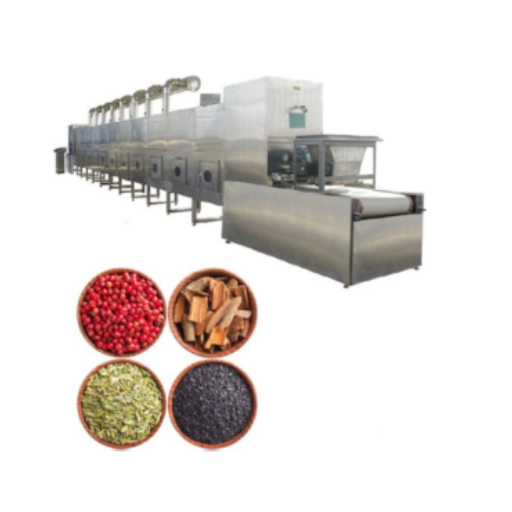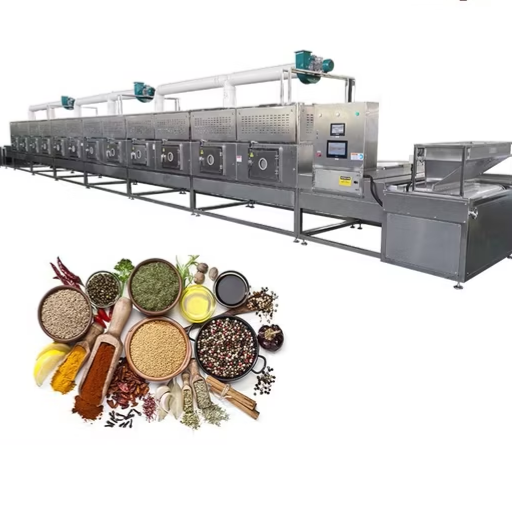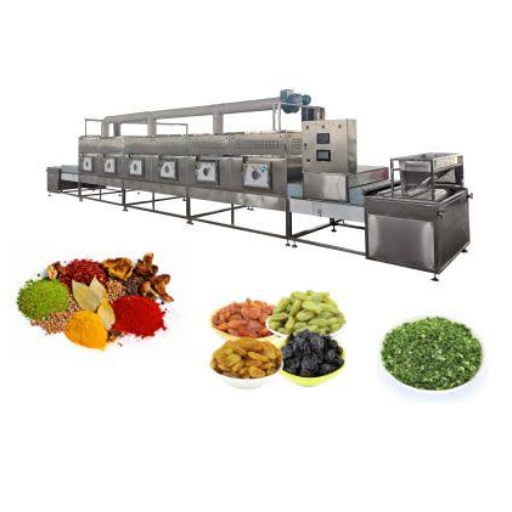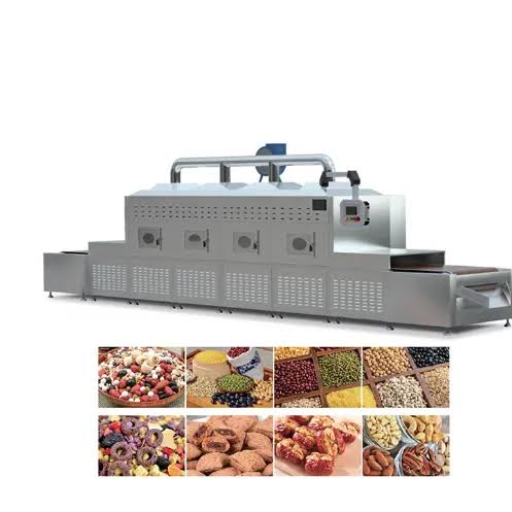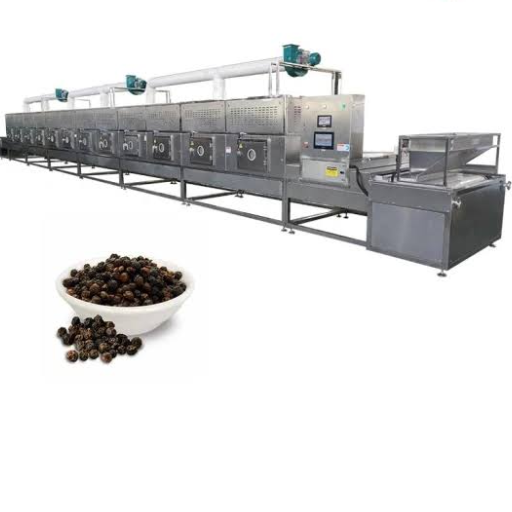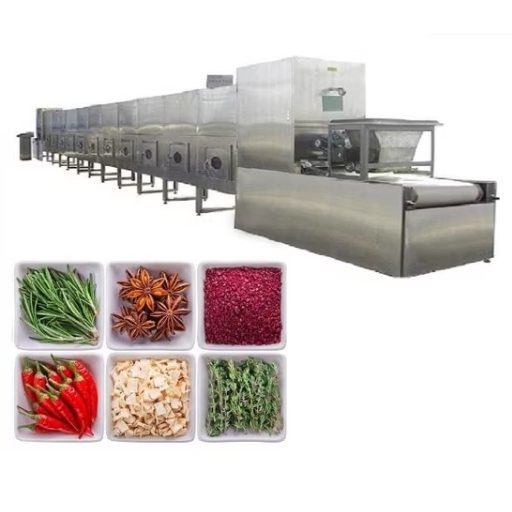
A continuous microwave sterilization machine is an industrial tunnel or conveyor system that moves food products through a controlled microwave field to reduce microbial load in a steady, high-volume flow. Some buyers also call it a tunnel microwave sterilizer or conveyor microwave sterilizer when they want to emphasize the belt format. Unlike batch cabinets that process one load at a time, these machines keep production moving – spices, grains, prepared meals, or powders enter one end, pass through heated zones, and exit ready for packaging minutes later.
That speed sounds ideal, but it also creates the most common mistake buyers make. They choose the continuous format for throughput alone and skip the process decisions that determine whether the product is actually safe.
When Ravi, a procurement manager in Mumbai, bought a 40 kW tunnel for chili powder in 2024, he assumed the conveyor would solve his bottleneck. The machine ran fast, but the 80 mm bed depth left the center under-processed. Microbiology tests failed twice before his supplier added a second microwave zone and real-time temperature mapping. The fix worked, but it added six weeks and 18% to the project cost.
This guide walks you through what a continuous microwave sterilization machine really is, how it works, when it is the right choice, and what technical and validation questions to ask before you buy. By the end, you will know how to match tunnel configuration to your product and avoid the specification gaps that derail projects like Ravi’s.
Key Takeaways
- A continuous microwave sterilization machine uses a conveyor belt to move product through a controlled microwave tunnel, delivering faster cycles than batch steam or retort systems.
- Continuous tunnels work best for high-volume, relatively uniform products such as spices, grains, nuts, and dry powders; batch cabinets or vacuum systems are better for R&D, small lots, or heat-sensitive ingredients.
- Frequency choice matters: 2,450 MHz is common for thin layers, while 915 MHz penetrates deeper but must be matched to product dielectric properties, moisture, and salt content.
- Buyers should demand validation data: cold-spot mapping, biological indicator studies, and documented critical limits for belt speed, power, and temperature.
- Shandong Loyal Industrial designs industrial microwave drying and sterilization systems with PLC-controlled conveyor operation, food-grade stainless-steel construction, and customization for global food processors.
What Is a Continuous Microwave Sterilization Machine?
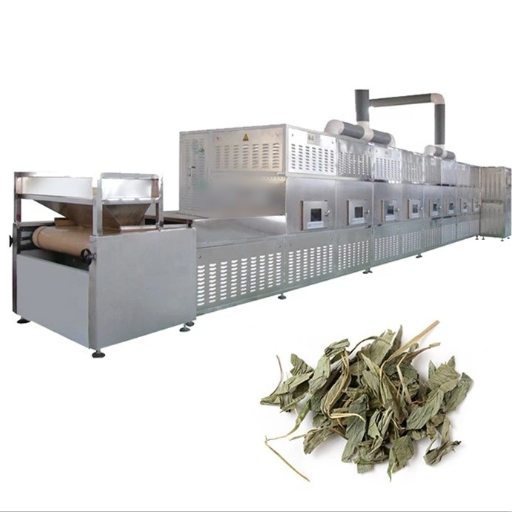
A continuous microwave sterilization machine is industrial equipment that transports food or agricultural products on a conveyor belt through a microwave field inside a sealed tunnel. Magnetrons generate electromagnetic energy at 2,450 MHz or 915 MHz. Water molecules and ions inside the product absorb that energy and heat the material from the inside out. This volumetric heating raises temperature quickly. It does not rely on hot air or pressurized steam.
In practice, “sterilization” is often used loosely. Many continuous microwave systems actually deliver continuous microwave pasteurization. That means a validated reduction of target pathogens such as Salmonella, Listeria, or E. coli – not commercial sterility, which destroys all microorganisms including spores.
True commercial sterility for low-acid packaged foods requires a scheduled process filed with FDA. This distinction matters for both regulatory compliance and search trustworthiness, so we will use each term carefully.
Three machine formats dominate the market:
- Batch cabinet systems load product into a chamber, run a cycle, then unload. They suit R&D, pilot trials, and low-volume specialty runs.
- Continuous tunnel systems move product on a belt at controlled speed. They suit high-volume lines where throughput and repeatability matter most.
- Vacuum microwave dryers operate at reduced pressure and lower temperature. They protect heat-sensitive, high-value ingredients such as certain herbs, probiotics, or pharmaceutical intermediates.
For food manufacturers running hundreds of kilograms per hour of a stable product, the continuous tunnel is usually the logical next step after batch trials prove the process.
How Continuous Microwave Sterilization Works
Understanding the flow helps you spot weak points before purchase. A typical continuous microwave sterilization machine follows five stages:
- Feeding. Product spreads evenly onto a microwave-transparent conveyor belt – PTFE mesh, ceramic, or similar material – at a controlled bed depth, usually 20-80 mm.
- Microwave exposure. Magnetrons emit electromagnetic waves into the tunnel through waveguides. Water molecules and polar compounds vibrate, generating heat from the inside out.
- Temperature control. Fiber-optic or infrared sensors feed real-time temperature data to a PLC or HMI. The controller adjusts microwave power and belt speed to hold the target temperature.
- Holding and validation. The product remains at temperature long enough to achieve the required log reduction. Biological indicators validate the kill step.
- Cooling and discharge. Treated product moves to a cooling zone before packaging, preventing condensation and recontamination.
The entire cycle often takes 3-5 minutes. Traditional steam retort systems take 15-60 minutes. Microwave energy heats the product throughout. It does not wait for heat to move from the surface to the core.
Mini-story: When Maria took over quality at a California almond roasting facility, her hot-air roaster plus separate pasteurizer created uneven color and required rework on almost every third lot. After installing a continuous microwave sterilizer with fiber-optic temperature mapping, every batch hit a 5-log Salmonella reduction on the first pass. The belt speed and power were locked into a validated recipe, and rework virtually disappeared.
Batch vs Continuous vs Vacuum Microwave Systems
Not every product belongs in a continuous tunnel. The right format depends on volume, product uniformity, heat sensitivity, and validation budget.
| Factor | Batch Cabinet | Continuous Tunnel | Vacuum Microwave |
|---|---|---|---|
| Throughput | 50-500 kg/cycle | 200-3,000+ kg/hour | 50-500 kg/batch |
| Best for | R&D, small lots, multi-SKU | High-volume single or similar SKUs | Heat-sensitive, high-value ingredients |
| Temperature | 70-120°C | 70-120°C | 30-70°C |
| Validation complexity | Lower | Higher | Moderate |
| Labor per unit | Higher | Lower | Higher |
| Capital cost | 5,000−5,000−15,000+ | 15,000−15,000−120,000+ | 50,000−50,000−250,000+ |
| Energy profile | Moderate | Most efficient at scale | Higher vacuum cost |
Continuous tunnels win when the product and package stay consistent and the line runs long shifts. They work well when the goal is to replace slower batch sterilization. They lose flexibility when you switch products often or run tiny test lots. Vacuum systems are the right call when heat damage – color loss, volatile oil evaporation, or nutrient degradation – is a bigger risk than throughput.
Want to compare formats for your product? Explore our microwave drying machine technology and see how continuous tunnels integrate with complete food processing lines.
915 MHz vs 2,450 MHz: Frequency and Penetration Trade-Offs
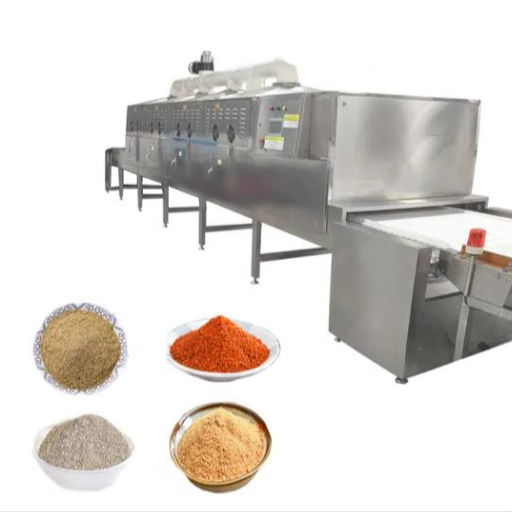
Frequency is one of the most misunderstood specification points in microwave sterilization. Most food systems use the 2,450 MHz industrial, scientific, and medical band because magnetrons are compact, affordable, and effective for thin layers. The 915 MHz band has a longer wavelength and generally penetrates deeper into high-moisture foods. That is why some 915 MHz food sterilization and microwave-assisted thermal sterilization (MATS) systems for packaged meals use it.
Penetration depth depends on more than frequency. Moisture, salt level, density, and package shape also affect how energy spreads inside the product. A 915 MHz system is not automatically better for every thick product. In some low-moisture powders, 2,450 MHz may heat faster and more evenly.
The practical rule is simpler than the physics: match the frequency and power density to your actual product through pilot testing. Ask suppliers for temperature-mapping data at multiple bed depths and moisture levels before you commit.
Key Technical Parameters for Continuous Systems
Before you compare quotes, focus on these measurable specifications:
- Microwave power output. Industrial tunnels range from roughly 20 kW to 200+ kW. A common rule of thumb is that 1 kW of microwave power evaporates about 0.8-1.0 kg of water per hour.
- Conveyor dimensions. Belt width, tunnel length, and speed range must match your throughput. Belt speeds of 0.1-10 m/min are typical; slower speeds mean longer exposure and higher final temperatures.
- Bed depth and loading. Thin, even layers heat more uniformly. Bed depths of 20-80 mm are common, depending on product density and frequency.
- Temperature uniformity and cold-spot control. Look for mode stirrers, multiple magnetron feeds, and real-time temperature sensors. Ask for a coefficient of variation target – below 20% is a reasonable benchmark.
- Leakage suppression and interlocks. Industrial systems should keep electromagnetic leakage well below occupational exposure limits. Doors must be interlocked; emergency stops must be accessible.
- Construction material. Food-grade stainless steel, typically SUS304 or higher, is standard for the tunnel and contact surfaces.
- PLC/HMI control. Recipe storage, alarm logging, remote monitoring, and data export simplify validation and repeatable production.
- Certifications. Request CE, ISO, and any market-specific documentation such as FDA compliance support for scheduled processes.
Note that sterilization loads usually need less energy than drying. The goal is temperature rise, not moisture removal.
These parameters matter more than headline throughput numbers. A 100 kW tunnel with poor uniformity will under-process parts of every batch. A lower-power system with better field distribution can waste less.
Process Validation and Food Safety Essentials
This is where most product pages go silent and where serious buyers should dig deepest. A continuous microwave sterilization machine must demonstrate that the coldest spot in the product reaches the required time-temperature combination for the required kill.
Validation typically includes four core steps:
- Temperature mapping. Mobile sensors or chemical markers locate cold spots across the belt and through the product bed.
- Biological indicator studies. Inoculated packs with target organisms measure actual log reductions under production conditions.
- Critical limit documentation. Belt speed, microwave power, initial product temperature, and bed depth become measurable critical control points.
- HACCP integration. The hazard analysis must link critical limits to preventive controls and deviation procedures.
For low-acid canned foods – finished pH above 4.6 and water activity above 0.85 – FDA also requires a scheduled process. It must be filed by a competent processing authority no later than 60 days after registration and before packing a new product.
Do not assume a machine “validates” a product. The equipment supplies controlled energy. The process authority validates that the product, package, and line together achieve the required lethality.
Top Applications for Continuous Microwave Sterilization
Spices, Seasonings, and Powdered Foods
Chili powder, turmeric, black pepper, garlic powder, and seasoning blends are ideal candidates. Microwave tunnels reduce total plate count quickly without adding steam or moisture that darkens color or clumps powder.
Grains, Nuts, and Seeds
Almonds, sesame, sunflower seeds, and grain flours need pathogen reduction without soaking. Continuous tunnels deliver even heating and preserve natural oils and crunch.
Prepared Meals and Packaged Foods
Airline meals, fast-food trays, and vacuum-packed ready-to-eat products can use microwave-assisted thermal sterilization (MATS) for shorter cycle times and better texture than long retort runs. This is the most common MATS food processing application for continuous tunnels.
Pet Food and Animal Feed
Dog food, pet treats, and insect protein such as black soldier fly larvae dry and sterilize efficiently in microwave tunnels. The fast process preserves nutritional value while controlling microbes.
Tea, Herbs, and Botanicals
Green tea fixation and sterilization in one step reduce enzymatic browning. Herbs and botanicals benefit from short exposure times that protect volatile oils.
For a deeper look at spice-specific applications, see our guide to microwave spice sterilization selection and operation.
Cost, ROI, and Total Cost of Ownership
Price ranges in 2026 depend heavily on capacity, automation, and construction:
- Small batch or cabinet units: 5,000−5,000−15,000
- Mid-range continuous tunnels: 15,000−15,000−50,000
- Large industrial lines: 50,000−50,000−120,000+
- Heavy-duty or custom systems: 120,000−120,000−250,000+
Hidden costs can add 15-30% to the purchase price. Budget for shipping, installation, electrical infrastructure, commissioning, spare magnetrons, training, and validation documentation.
The operating case is where continuous microwave systems often pay back. Energy consumption commonly runs 0.3-0.6 kWh per kg of product versus 1.2-2.0 kWh/kg for retort. Water use can fall by more than 90%.
For a high-volume line, vendor case studies suggest annual savings of 25,000−25,000−60,000 and payback periods of roughly 18-26 months. Treat those figures as directional and verify them with your own utility rates, throughput, and product data.
How to Choose the Right Continuous Microwave Sterilization Machine
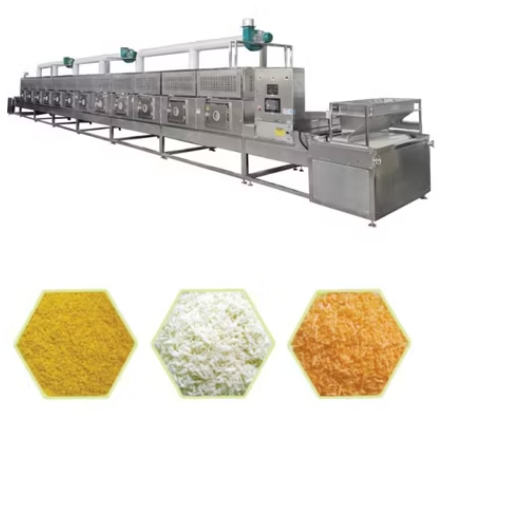
Use this framework to narrow the field:
First, define the product. Note moisture content, bulk density, heat sensitivity, target microorganisms, and required log reduction.
Second, set throughput targets. Calculate current and projected kg/hour. Size the tunnel for future capacity, not just today’s volume.
Third, match frequency and penetration. Run pilot trials at the bed depth and moisture level you will use in production.
Fourth, demand validation support. Ask for temperature mapping, biological indicator data, and references from similar installations.
Fifth, evaluate supplier support. Commissioning, training, spare-part availability, and documentation quality matter as much as the machine itself.
Sixth, model total cost of ownership. Include energy, water, labor, maintenance, and yield improvement over five years.
A good supplier will not just quote power and belt width. They will ask about your product, propose a test plan, and explain how they will help you validate the process.
Common Challenges and How to Solve Them
Uneven heating and cold spots. Poor load arrangement or weak chamber design can leave some areas under-processed. Solve this with mode stirrers, multi-magnetron arrays, and real-time temperature feedback.
Packaging constraints. Metal containers, aluminum foil, and some metallized films cannot go into a microwave tunnel. Use microwave-compatible, high-barrier packaging for ready-to-eat meals and liquids.
High upfront capital cost. Continuous tunnels usually cost more than batch steam units initially. Offset this with lower energy, water, and labor costs over a 5-year TCO analysis.
Maintenance and magnetron replacement. Magnetrons wear out over time. Choose a supplier with documented spare-part availability and train an in-house technician on routine inspections.
Regulatory validation. Some markets require documented kill-step validation. Work with a supplier that provides engineering data and supports your process authority.
Ready to explore a continuous sterilization line for your product? Contact our team to discuss your throughput, product characteristics, and integration requirements.
Conclusion
A continuous microwave sterilization machine can transform high-volume food processing by cutting cycle times, reducing energy and water use, and preserving product quality. For the right application – spices, grains, nuts, meals, pet food, or botanicals – it replaces slow batch processes with a steady, validated flow.
The key is choosing the continuous format for the right reasons. Throughput matters, but so do frequency selection, bed depth, temperature uniformity, and process validation. Buyers who skip those details risk cold spots, failed microbiology tests, and expensive retrofits.
At Shandong Loyal Industrial, we design industrial microwave drying and sterilization equipment for global food processors. Our industrial microwave oven systems include continuous tunnel options with PLC-controlled conveyor operation, food-grade stainless-steel construction, and customizable power and tunnel dimensions. If you are evaluating a continuous microwave sterilization machine for your line, contact us today to discuss your product, throughput, and process requirements.
Frequently Asked Questions
What is a continuous microwave sterilization machine?
A continuous microwave sterilization machine is industrial equipment that moves food or agricultural products on a conveyor belt through a microwave tunnel. The system heats product volumetrically to reduce microbial load in a steady, high-volume flow.
How fast is continuous microwave sterilization?
A typical cycle takes 3-5 minutes from infeed to discharge. Traditional steam retort systems usually take 15-60 minutes for a comparable thermal process.
What products work best in a continuous microwave tunnel?
Spices, grains, nuts, seeds, dry powders, prepared meals, pet food, and tea or herbs all process well. The product should be relatively uniform in moisture, size, and density to avoid cold spots.
Is continuous microwave sterilization the same as pasteurization?
Not always. Many systems deliver pasteurization, which targets specific pathogens. True commercial sterility, which destroys all microorganisms including spores, requires a validated scheduled process for low-acid packaged foods.
Which frequency is better, 915 MHz or 2,450 MHz?
It depends on the product. The 2,450 MHz band is common for thin layers and powders. The 915 MHz band penetrates deeper into high-moisture foods. Pilot testing at production bed depth is the only reliable way to choose.
What should I ask a supplier before buying?
Request temperature-mapping data, biological indicator studies, spare-part availability, commissioning support, and references from installations running similar products at similar scale.