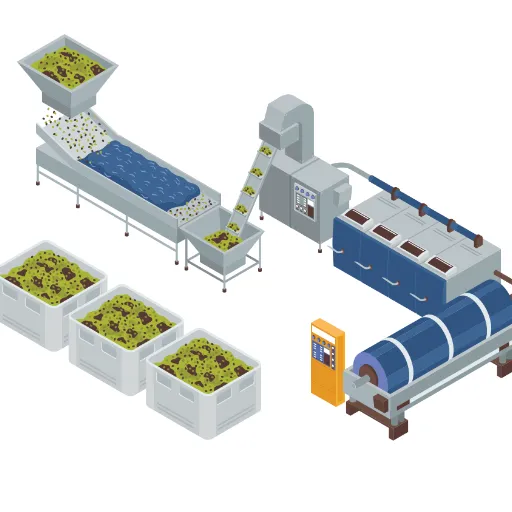
In realistic terms, food processing equipment certifications consist of five major sections: approval for use in the European Economic Area (CE) American food and drug administration (FDA) clean and sanitary design in industrial food and beverage preparation, EHEDG or 3-A the control of food safety by standards, for instance, ISO 22000 and HACCP and for specific areas like EAC or Halal. Which combination of these is necessary is determined by the place of sale, the product, and the customer. A misstep with this or in this area will restrict entry, cause fruitless audits or even involve costly re-engineering.
In the month of March in the previous year, Marcus Chen was on the receiving end of a bitter lesson. Marcus owns a snack producing workshop in Hamburg. He had spent two hundred and fifteen grend towards a new extrusion line. The equipment looked decent. The supplier said it was “completely certified.”
Things started falling apart when Marcus’s EU retail auditor knocked and asked for the CE technical file. There was a demand for the Declaration of Conformity with regard to the Machinery Directive 2006/42/EC. The vendor in question simply provided a certificate printed on some blank paper in a crude fashion. Immediately, the auditor raised a red flag.
Marcus lurched to and fro for six weeks non-stop. He paid an extra $18,000 for independent evaluations. It was the only way to enable operations in his business to continue.
Certificates ought to be the reason multiple doors can be opened, rather than closed. Still, a lot of buyers only care about them when it is already too late. Words of suppliers are taken on trust. Numbers of standards are cited inappropriately. There are certificates of expiration attached to emails which are not seen by anyone.
This just depersonalizes everything. You will be able to distinguish between relevant and irrelevant food processing equipment certifications for your area. You will be able to do this before you even consider a contract with a supplier. How does 2026 affect your investment? What does that mean for compliance and preparation? That is what we will brief you on next.
Want to skip ahead? Explore our certified food processing machines or read on for the complete breakdown.
Key Takeaways
- Food processing equipment certifications fall into five essential categories: CE marking, FDA compliance, hygienic design standards, food safety management systems, and regional specialized approvals.
- CE marking is mandatory for EU market access and requires compliance with Machinery Directive 2006/42/EC plus food contact material regulations.
- US buyers should require NSF/ANSI or 3-A Sanitary Standards alongside FDA facility registration and food contact material compliance.
- 2026 brings critical regulatory shifts: an EU PFAS ban in August, BPA restrictions in July, and the new 3-A SSI General Requirements 00-02 3rd Edition.
- Always verify certification claims by requesting the Declaration of Conformity, checking standard numbers, and confirming the issuing body’s legitimacy.
- Budget 15,000−15,000−25,000 for CE marking and 8,000−8,000−15,000 for FDA compliance; dual certification for both markets runs 35,000−35,000−55,000.
What Are Food Processing Equipment Certifications and Why Do They Matter?

Food processing equipment certifications are formal declarations that machinery meets specific safety, hygiene, and material standards set by regulatory bodies or industry organizations. They are not quality awards. They are legal and technical gatekeepers that determine whether your equipment can enter a market, pass a customer audit, or satisfy your insurance provider.
The global food processing equipment market reached $62.97 billion in 2026, according to Fortune Business Insights. That growth is tightly linked to rising regulatory pressure. Buyers expect proof. Auditors demand documentation. One missing certificate can stall an entire production line.
Equipment Certifications vs. Food Safety Management Systems
This is one point that even the most seasoned buyers tend to ignore while discussing this topic. food processing equipment certifications are about the equipment itself. In connection with CE marking, it shows that the blending device(mixers), or an extrusion device in question satisfies a specific function in relation to EU safety and hygiene of machines as per specific requirements. Some food safety measures like the 22000 ISO standards or HACCP food safety standards apply in the processing area. Those standards address the operation of the equipment.
Now here comes the reason for bears. The machinery may be compliant with the CE marking system and flunk HACCP inspection due to some design defect which renders it a haven for pathogenic bacteria. Double standards. That is firms ISO 22000 conformity, for example, but as soon as you are about to get clearance Black smoke and customs. Wise buyers know how to drive both. They seek technologies that align with their food safety strategy, and also make sure that the equipment is sufficiently certified for the regional market.
The Essential Certifications Every Buyer Should Know
Not every certification applies to every buyer. But understanding the full landscape helps you ask sharper questions and avoid costly assumptions. Below are the five categories that cover virtually every major market and application.
CE Marking for EU Market Access
CE marking is mandatory for food processing machinery sold in the European Economic Area. It is not optional. It is not a quality stamp. It is a legal declaration that the manufacturer has assessed the equipment against EU directives and harmonized standards.
For food processing equipment, the primary framework is the Machinery Directive 2006/42/EC. This directive covers mechanical safety, guarding, emergency stops, and risk assessment. But it does not stop there. Food processing machines must also comply with:
- Regulation (EC) No 1935/2004 for food contact materials
- EN 1672-2 for hygiene requirements in machinery design
- EN 60204-1 for electrical safety
- EN ISO 12100 for risk assessment
The EN 1672-2 standard is especially critical for food buyers. It defines risk zones such as food contact areas, splash areas, and non-food areas. It sets cleanability requirements, material specifications, and drainage standards. If your equipment supplier cannot reference this standard number in their technical file, that is a red flag.
CE conformity assessment works in two tiers. Most standard food machinery falls under self-certification. The manufacturer prepares a technical file, conducts a risk assessment, and issues a Declaration of Conformity. No third party is required. However, Annex IV machinery, which includes certain high-risk equipment, demands intervention from a Notified Body. Always ask which route your supplier used.
Want equipment built for EU compliance from day one? Contact us to discuss CE-marked food production line equipment tailored to your market.
FDA Compliance for the US Market
The United States does not use a single equipment certification mark like CE. Instead, FDA compliance operates through a framework of regulations, voluntary consensus standards, and facility requirements.
The foundation is 21 CFR Part 117, the Current Good Manufacturing Practice and Preventive Controls rule under FSMA. While this rule targets food facilities, it directly impacts equipment design. Your preventive control plan must address sanitation, allergen control, and contamination prevention. Equipment that cannot be properly cleaned becomes a documented hazard.
For equipment-specific standards, US buyers should look for:
- NSF/ANSI 2: Food handling equipment design and construction
- NSF/ANSI 4: Commercial cooking and hot-holding equipment
- NSF/ANSI 51: Food equipment materials
- 3-A Sanitary Standards: Dairy and high-hygiene liquid processing
3-A SSI in February 2026 had issued its third edition of General Requirements Standard 00-02. The alterations provide laws on the application of seals for both dynamic and static situations. It has incorporated standard Clean-in-Place gland end connection dimensions. The revision also specifies leak detection requirement for sealed system. Minimum acceptable surface roughness specification inside the product zones remains at a value of Ra < = 0.8 microns.
All food production plants are required to register with the US Food and Drug Administration. The registration fee for FY2026 facilities is $11,423. Food processing equipment certifications required that components which contact food should meet requirements under 21 CFR or should usually be generally accepted as safe materials.
Food Safety Management Certifications
In classical terms, these are not food processing equipment certifications, but they shape the perception of your customers towards your equipment and hence the importance of control. In case you are exporting a facility, that is ISO 22000 of FSSC certified, then equipment sellers will assess whether your machine can fit in their food safety management system.
ISO 22000 combines HACCP Exploit and Process Management with Preliminary Programs. The standard is voluntary however it is highly demanded by TJL and other multinational buyers. Version 07 of FSSC standard incorporates HACCP Version 9 is planned to come out in either the first or second quarter of 2025 with a twelve month switch. Changes in the standard will strengthen the risk based perspective on hazards, food fraud, allergen management and environmental impact.
Under EC Regulation 852/2004, HACCP (Hazard Analysis and Critical Control Point) is applicable for all food business operators of European Union. The concept of HACCP in the United States is only applicable to the processors of such products as fish, seafood, beverages, juice, egg products and meat. Don’t forget that any piece of equipment will be included in your hazard analysis. When a piece of equipment poses a possibility of physical contamination or has spaces that allow for the survival of bacteria, it becomes such a Critical Control Point. This is the last thing you want to be included on your HACCP plan. To understand more about this, we can look at a few food processing equipment certifications.
Hygienic Design Certifications
Hygienic design is where food safety meets engineering. Two bodies dominate this space: EHEDG and 3-A SSI.
EHEDG, the European Hygienic Engineering and Design Group, offers three certification levels:
- EL Class I: Product contact zones with the highest hygiene requirements
- EL Class II: Splash zones with moderate requirements
- EL Class I AUX: Auxiliary components
In contrast to the 3-A standard, which is based on only theoretical appreciation of design, the EHEDG takes into account a design appraisal together with product laboratory tests aiming to evaluate cleanliness of the design and resistance to bacteria build-up. Such a requirement boost the level of EHEDG tokens as compared to its 3-A counterpart and in most cases forces security adherence of multi-national food processors.
There is also ISO 14159 which covers equipment design and sanitation requirements. As alluded to previously, EN 1672-2 has its roots in CE marking; it is the European standard. Both standards focus on providing a seamless finish. They demand joining surfaces be free of crevices. They call for a minimum of three-degree sloped self-drained design. And they mention using food-grade stainless steel in the areas of products that are in contact with the products.
Regional and Specialized Certifications
International buyers need to go beyond just the European and North American markets.
Russia and the economic partners in the Eurasian economic union shall require compliance with the EAC certification system. Food processing machinery is encased in the TR CU 010/2011, which is the safety standard for machinery. From now on, eac declarations should be entered into the central eaeu database accompanied by a qr code.
By 2026 all production instruments in Indonesia will have to be halal commissioned. For food production equipment, such as the mixing tanks, conveyors and packing lines, they must be certified that they do not come into contact with any non-Halal substances.
A new standard known as the NSF P525 was launched back in September 2025 that certifies the elimination of both PFAS and BPA in food contact and packaging materials. With the uwe has it from August 2026, that the EU shall stop the use of PFAS in food contact materials, this sort certificate is already being put on the list of requirements by people who want to be always one step ahead.
2026 Regulatory Updates You Can’t Ignore
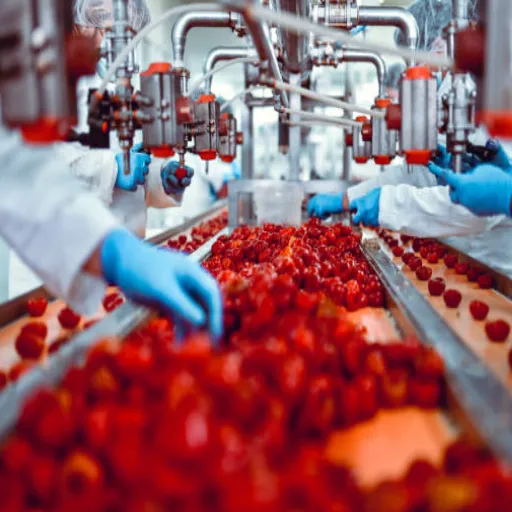
This is due to the fact that food processing equipment certifications are getting more regulated. And listed below are the points which every person involved in procurement processes needs to consider when reviewing their procurement checklists this year.
European Union PFAS Ban (August 2026): The Packaging and Packaging Waste Directive, where an important piece of legislation – the prohibition of per- and polyfluoroalkyl substances in food contact materials has been issued, has set the limit at 25 ppq for each particular PFA, 250 ppq in total for all the substances, and 50 ppm for total fluorine. Included are those particular gaskets, nonstick coatings and seals, and some engineered plastics used in the fabrication of equipment. And that includes flammable materials such as the gaskets in non-wets transporting and the bits that include gaskets with mixers or warmers. Such materials are pending compliance at less than four months in cases where supplies are still with such components with PFAs.
Limitations on BPA (July 2026): The EU has fabricated safeguards for legal limits of bisphenol A in materials that come into contact with food. For example, polycarbonate sight glasses, epoxy sealing and certain seal materials may be used in equipment and all these types of equipment may require substitution of certain materials.
3-A SSI General Requirements 00-02 3rd Edition (February 2026): The updated standard introduces mandatory leak detection for closed systems, clarified seal requirements for dynamic and static applications, and standardized CIP gasket joint specifications. Equipment designed before this update may not meet current buyer expectations.
FSSC 22000 Version 7 (Expected Q1-Q2 2026): All certified organizations must transition within twelve months of publication. The new version places stronger emphasis on leadership engagement. It adds food fraud mitigation requirements. It also integrates environmental sustainability goals. Equipment suppliers serving FSSC-certified customers should prepare to show how their machines support these expanded requirements.
FSMA Rule 204 Traceability Extension (July 2028): Although the timeframe to meet compliance for food products on FDA’s food list has been done away with, the workstations still need to allow traceability. Facilities which have devices that can do computerized carton filling and in turn record and store all relevant environmental and traceability information will be superior.
Sarah Okafor who is the head of quality control of a third party manufacturer and works in Lagos within her specialization. In the West African and European Market, the company provides snacks brands. Come January 2026, one such equipment supplier residing in Asia was visited by her. A three paged list of regulatory requirements present in 2026 was carried by her.
However, only a standard CE certificate from 2019 was all the sales representatives at the supplier’s location could provide. No declaration of absence of PFAS. No updated documentation for 3-A. No statement of conformance to FSSC. Sarah kept moving.
After waiting for exactly two months, she finally got a supplier that presented full 2026 documents. she plugged that supplier who now has a three-year $1.2m worth exclusive deal with them.
Being prepared for regulation is a competitive asset. Only those suppliers that are up-to-date receive contract awards. Buyers who check dates avert catastrophes.
How to Verify Manufacturer Certification Claims
Verification of supplier claims is only effective if all the paperwork supports the claims. If sifting through the certifications sounds like a hassle, follow these steps to determine the merit of the documents presented.
Declaration of Conformity is the first document you need to identify. For CE marked equipment, the DoC must have the list of directives and standards that are complied with by the equipment. Suspension of disbelief in a document containing any and all numbers helps in random checks. General statements like “complies with all relevant directives” are all suffices. The document should mention the manufacturer and its contact details and there should be a short description of the equipment and a sign with a date.
The numbers relating to the standards should be checked. For example, doctors can scratch the legitimacy of CE Declaration of Conformity for a food processing machine if EN 1672-1 and EN 1672-2 are not written there. Only EN ISO 12100 is not enough for any purpose. In the case of 3A certification, the concerned party requires the submission of the precise number and edition of the standard. For instance, request for 3-A 00-02 3rd Edition. Statements that are general in nature and don’t state food processing equipment certifications, are not of much use.
Ensure the validity of the issuing authority. In case of need for a Notified Body, the EU NANDO database should be at one’s disposal to lookup the body’s four-digit ID number. Geared towards NSF certification, consult the NSF database to locate the certificates. Check the 3-A Symbol Authorization directory to locate the certificate for 3-A. Do not trust the supplier if they are unable to give any search results that can be looked for.
Be on alert for counterfeit CE marks. Only one typographic style can be used for a CE mark. Some suppliers use a China Export mark that looks similar but is not legally valid in Europe. This is called China Export; theirs is very close. When in doubt, always ask for the complete technical file which will contain all the details.
Provision of material certificates plus others should be negotiated. In food contact areas, provide mill test certificates. Manufacturer should confirm grade 304 or 316 stainless steel. Declarations of compliance in pursuance to Regulation 1935/2004 should be provided. These include plastics, coatings as well as elastomers. The migration test results should be indicated on these documents. Additionally, the documents should demonstrate adherence to particular food contact laws.
Documentation Checklist for Buyers
Before finalizing any equipment purchase, request the following:
- Declaration of Conformity with specific standard numbers
- Technical file or design dossier summary
- Risk assessment report
- Material certificates for food contact surfaces
- Declaration of Compliance for food contact materials
- Electrical safety test reports (LVD/EMC)
- Surface finish verification (Ra measurement)
- Welding qualification records
- Calibration certificates for critical measuring devices
- Warranty and after-sales service agreement
Keep these documents in your quality management system. Auditors will ask for them. Customers may request copies. Insurance claims can depend on them.
Certification Costs and ROI: What to Budget
Certifications cost money. But the cost of non-compliance is almost always higher. Here is a realistic breakdown.
| Certification Level | Estimated Cost (USD) | Best For |
|---|---|---|
| CE self-certification | 3,000−3,000−10,000 | Standard food machinery entering the EU |
| CE with Notified Body | 15,000−15,000−25,000 | Complex or Annex IV machinery |
| FDA facility registration | ~$11,423 annually | All US food facilities |
| NSF/ANSI certification | 3,000−3,000−15,000 | US commercial buyers |
| 3-A Sanitary certification | 5,000−5,000−20,000 | Dairy and high-hygiene applications |
| EHEDG certification | 8,000−8,000−30,000 | EU multinational processors |
| Dual CE + FDA + NSF | 35,000−35,000−55,000 | Global market access |
| Full premium package | 50,000−50,000−80,000+ | Tier-1 enterprise contracts |
David Park started a modest dairy business in Seoul in 2024. To avoid paying an additional $12,000, he thought about purchasing a non-approved mixing tank. However, his expert pointed out that, without 3-A or EHEDG certificates, no major supermarket chain would accept his products.
David opted for the certified option. Half a year passed and he made a deal with national supply company. The company demanded documentation of hygienic design. It was worth $340,000 per year. The added price of certification was recuperated in the first three months.
There are also other expenses to consider. FDA facility registration must be renewed every year. CE audits where a Notified Body is involved cost between 5,000 and 15,000 annually. The ISO 22000 maintenance audits range from $2,000 to $20,000 again based on size of the facility. Every important design alteration would require amending the technical files.
Certified equipment pays off, and helps in minimizing a company’s audit risk as well as makes it easier for a company to receive their license plate customers. It provides a basis for insurance claims. It safeguards against product liability. The development of food processing equipment certifications and hygiene standards is projected to continue at the level of 10.3% every year. The estimated size of this market is expected to be $ 13.64 billion by the year 2026. There is no cost centre called compliance. This is the cost of entering the market.
Looking for industrial food processing equipment with full certification support? Browse our range of industrial food processing equipment designed for global compliance.
How to Choose the Right Certifications for Your Operation
You do not need every certification on the market. You need the right combination for your specific situation. Use this framework to decide.
By target market:
- Selling to the EU? CE marking is mandatory. Add EHEDG if supplying multinational processors.
- Selling to the US? Require NSF/ANSI or 3-A. Ensure FDA facility registration.
- Selling globally? Budget for dual CE plus FDA compliance.
- Targeting Halal markets? Add Halal equipment certification, especially for Indonesia from 2026 onward.
By product type:
- Dairy and liquid foods? 3-A Sanitary Standards or EHEDG Class I are practically mandatory.
- Meat and poultry? These sectors drive 36% of food safety certification demand. Expect stricter hygienic design requirements.
- Snacks and dry goods? Basic CE or FDA compliance plus food contact material certification usually suffices.
- Baby food? Cleanroom-compatible design and enhanced material traceability are essential.
By buyer size and stage:
- Startups should prioritize core market access certifications. Do not over-invest in premium certifications before securing your first major customer.
- Small and medium enterprises should add one hygienic design certification to differentiate against uncertified competitors.
- Enterprises and co-manufacturers should maintain full certification portfolios. Your customers will audit you. Incomplete documentation kills deals.
When to upgrade from basic to premium:
- Basic CE self-certification works for simple machinery in non-critical applications.
- Upgrade to Notified Body CE when equipment includes complex electronics, high-risk components, or when your customer specifically requests it.
- Upgrade to EHEDG when supplying multinational brands with internal hygienic design standards.
- Upgrade to 3-A when entering the North American dairy market.
Conclusion
The use of food processing equipment certifications is not some ceremonial ornament. They are a market access determinant, ensure food safety and foster buyers trust. The relevant requirements which are in 2026 can be consolidated into these five categories: CE marking, FDA requirements, hygienic design requirements, food safety systems or management, and regional certifications.
There are key changes this year. August will see turning on of the EU’s ban on PFAS. July will be when the restrictions on BPA increase. The 3-A SSI 00-02 3rd Edition will up the game when it comes to hygienic engineering. FSSC 22000 Version 7 will change the way food safety management systems need to be implemented. Sellers or buyers who act on the understanding of these changes will not be the losers. The suppliers who move ahead of them will achieve the most contracts.
Take the underlying principles into account. Make sure everything you hear is true. Insist on the listing of the exact standard numbers. Confirm the details of the issuing authorities on official resource centers. Demand the certificates pertaining to the materials’ composition. Ensure documents are properly filed. Do all requirements for certification, starting with the market you offer your product.
At Shandong Loyal Industrial Co., Ltd., we design our food processing machines with global compliance in mind. From CE-marked extrusion lines to microwave drying equipment built for hygienic design standards, we support buyers with the documentation and technical transparency they need to pass audits and enter new markets.
Ready to equip your facility with certified, compliant machinery? Contact our team today to discuss your certification requirements and get a tailored quote. From Asia to Europe and beyond, we help food manufacturers turn compliance into competitive advantage.