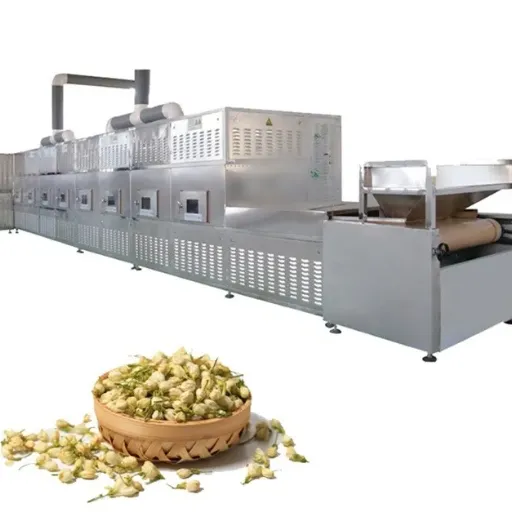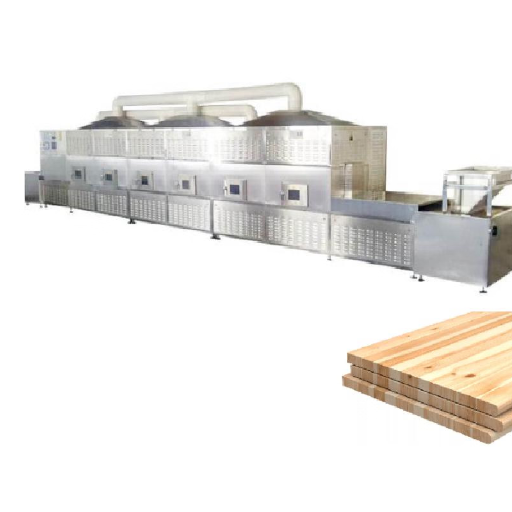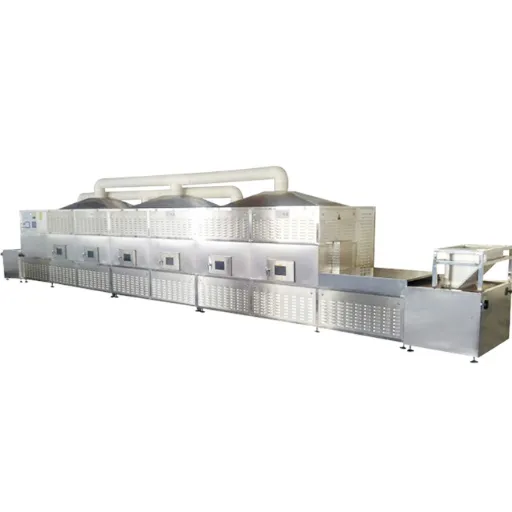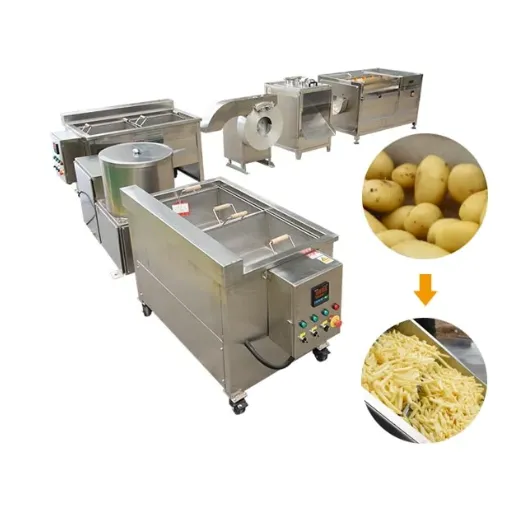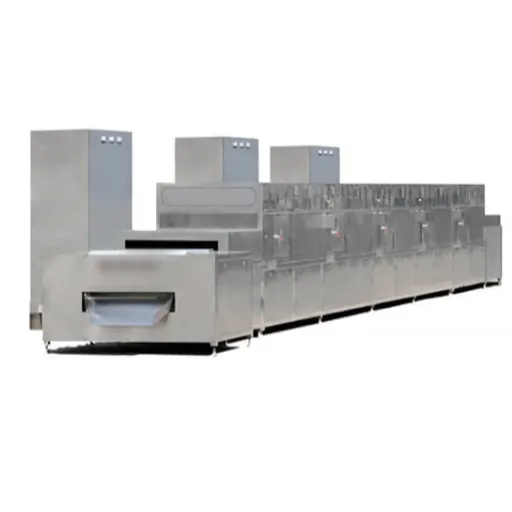
The best way to choose microwave drying equipment is to match the system type to your product characteristics, throughput needs, and quality requirements, not simply to buy the most powerful or expensive unit on the market. Start by defining your moisture removal targets, product heat sensitivity, and daily production volume, then evaluate equipment types (batch, continuous tunnel, or vacuum), technical specs, safety compliance, and total cost of ownership before selecting a manufacturer.
After helping food processors across 50+ countries select the right drying equipment, we have learned one truth: the wrong microwave dryer can cost you months of production delays and hundreds of thousands in wasted investment. Yet most buyer’s guides focus on marketing specs rather than the practical decision framework you actually need.
This guide cuts through the noise with a 7-step process that has helped manufacturers from small startups to global enterprises choose microwave drying equipment that delivers real ROI. Whether you are drying snack products, herbs, grains, or ready-to-eat meals, you will finish this article with a clear action plan.
Key Takeaways
- Match the equipment type to your scale: batch for R&D and small runs, continuous tunnel for high-volume production, vacuum for heat-sensitive products.
- Budget 150K−150K−300K for entry systems, 500K−500K−1.5M for mid-range production lines, and $3M+ for large continuous installations.
- Calculate power needs using the 1-1.5 kW per kg of water removed per hour rule of thumb.
- Always request pilot testing with your actual product before committing to a purchase.
- Factor in total cost of ownership, not just purchase price, to achieve typical payback within 12-36 months.
What Is Industrial Microwave Drying?
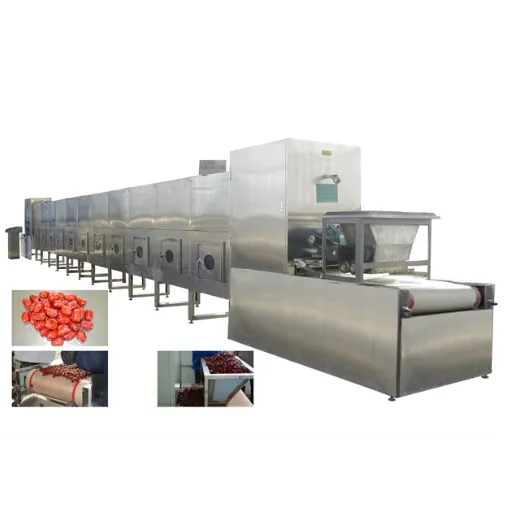
Industrial microwave drying uses electromagnetic energy at 915 MHz or 2,450 MHz to heat water molecules throughout a material simultaneously. Unlike conventional hot-air drying, which heats from the outside in, microwave drying generates heat volumetrically. Water molecules absorb the energy directly, converting it to heat that drives moisture out from within.
This fundamental difference reduces cycle times by 50-80% and eliminates “case hardening”, a common problem where the outer surface dries and seals, trapping moisture inside. The result is better texture, more uniform moisture, and preserved color and nutrients.
Key advantages at a glance:
- Speed: 20-90 minute cycles versus 6-24 hours for conventional methods.
- Energy efficiency: 1-1.5 kWh per kg of water removed (vs. 10-15 kWh for freeze drying).
- Quality: No case hardening, better nutrient retention, consistent final moisture.
- Space: Smaller footprint than hot-air systems, no ductwork or combustion chambers needed.
For a deeper technical explanation, see our guide to microwave drying technology.
Step 1: Define Your Drying Objectives
Before you compare a single spec sheet, get crystal clear on what you need the equipment to achieve. Vague goals lead to mismatched purchases.
Start with these four questions:
What is your target moisture content?
Snack products might need 8-12% final moisture, while powdered ingredients could require less than 5%. The greater the moisture reduction, the more power and dwell time you need.
What is your required throughput?
Calculate your current and projected daily production in kg per hour. A startup testing recipes needs a completely different system than a facility processing 5,000 kg of snacks daily.
What quality standards must you meet?
Herb processors often need to preserve essential oils and color. Fruit dryers might prioritize texture and shape retention. Ready-to-eat meal producers may need simultaneous sterilization. Each goal points to different equipment configurations.
Do you have secondary processing goals?
Some microwave systems can dry and sterilize in one pass. Others can pasteurize or defrost. If multi-functionality matters, build it into your requirements from the start.
When the team at Sunherb Botanicals in Vietnam approached us, they initially asked for a high-capacity continuous dryer. But after walking through these four questions, we discovered their real priority was preserving volatile oils in dried lemongrass at temperatures below 50 degrees Celsius. That shifted the recommendation entirely to a vacuum microwave batch system, a very different investment, but one that protected the product quality their customers paid a premium for.
Step 2: Match Equipment Type to Your Operation
Not all microwave dryers work the same way. Choosing the wrong configuration is one of the most expensive mistakes a buyer can make. Here are the four main types and when each makes sense.
Batch Microwave Dryers
Batch systems process product in discrete loads, typically 10-50 kg per cycle. The operator loads trays, sets the drying program, and unloads when the cycle completes.
Best for:
- R&D and recipe development
- Small production runs under 500 kg per day
- Frequent product changeovers
- Specialty or seasonal products
Typical specs:
- Power: 4-50 kW
- Capacity: 10-50 kg per batch
- Cycle time: 20-90 minutes
Pros: Maximum flexibility, lower initial investment, ideal for testing.
Cons: Labor-intensive, inconsistent throughput, limited scalability.
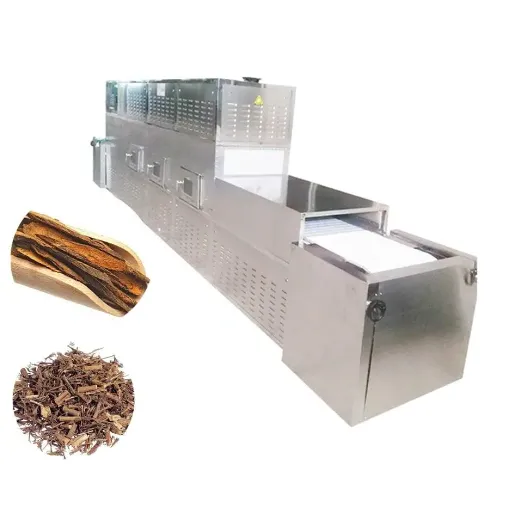
Continuous Tunnel Dryers
Continuous systems move product through a microwave tunnel on a conveyor belt, enabling non-stop processing at rates from 50 kg/hour to over 8,000 kg/hour.
Best for:
- High-volume operations processing more than 500 kg per day
- Single-product lines running 24/7
- Integration with upstream and downstream production equipment
Typical specs:
- Power: 50-300+ kW
- Throughput: 50-8,000+ kg/hour
- Belt width: 300 mm to 1,500 mm
- Tunnel length: 7-20 meters
Pros: Highest throughput, lowest per-unit drying cost, consistent quality at scale.
Cons: Higher capital investment, less flexible for product changes, requires significant floor space and electrical infrastructure.
Vacuum Microwave Dryers
Vacuum systems combine microwave energy with reduced chamber pressure, lowering water’s boiling point to 30-50 degrees Celsius. This enables rapid drying without heat damage.
Best for:
- Heat-sensitive products: herbs, spices, fruits, probiotics, pharmaceuticals
- High-value ingredients where nutrient retention justifies higher equipment cost
- Products prone to oxidation or color degradation
Typical specs:
- Vacuum level: 10-100 mbar
- Drying temperature: 30-50 degrees Celsius
- Power: 10-100 kW
Pros: Preserves bioactive compounds, excellent color and aroma retention, handles sticky or sugary products well.
Cons: Higher capital cost, slower throughput than atmospheric systems, requires vacuum pump infrastructure.
Hybrid Systems
Hybrid dryers combine microwave energy with hot air, infrared, or convection heating. These systems use each method where it performs best.
Best for:
- Transitioning from conventional drying without full line replacement
- Products with uneven moisture distribution
- Operations seeking to balance capital cost with energy savings
Pros: Lower capital cost than full microwave lines, familiar technology integration, flexible energy sourcing.
Cons: More complex controls, potential hot-spot issues if not well-engineered, moderate efficiency gains.
| Feature | Batch Dryer | Continuous Tunnel | Vacuum Batch | Hybrid System |
|---|---|---|---|---|
| Best For | R&D, small runs | High-volume production | Heat-sensitive products | Transitioning from conventional |
| Power Range | 4-50 kW | 50-300+ kW | 10-100 kW | 20-150 kW |
| Throughput | 10-50 kg/cycle | 50-8,000+ kg/h | 10-50 kg/cycle | Variable |
| Drying Temp | 40-100 degrees C | 40-100 degrees C | 30-50 degrees C | 40-90 degrees C |
| Initial Cost | 30K−30K−150K | 500K−500K−3M+ | 150K−150K−500K | 200K−200K−1M |
| Flexibility | High | Low | Medium | Medium |
Step 3: Evaluate Technical Specifications
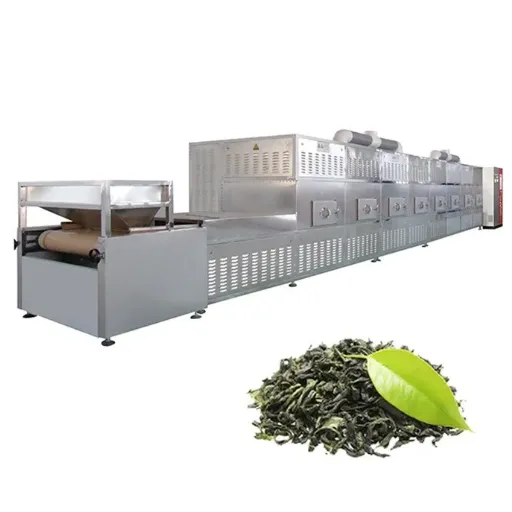
Once you know the equipment type, focus on the technical details that separate adequate machines from excellent ones.
Microwave Frequency: 915 MHz vs. 2,450 MHz
915 MHz penetrates deeper into dense, high-moisture materials. It is ideal for bulky products like thick vegetable slices, grains, and meat. This frequency commands roughly 58% of the industrial market.
2,450 MHz offers more precise surface heating control. It is the standard for vacuum systems, smaller applications, and products where surface texture matters.
Rule of thumb: Dense products over 25 mm thick need 915 MHz. Thin layers, powders, or vacuum applications typically work best at 2,450 MHz.
Power Density and Capacity
What matters is power density, watts per kilogram of product, not just total kilowatts.
The industry rule: allocate 1-1.5 kW per kilogram of water removed per hour. Removing 50 kg of water per hour requires roughly 50-75 kW of installed power.
To calculate: determine your wet feed rate, initial and target moisture content, then compute water to remove and multiply by 1-1.5.
Temperature Control and Monitoring
Look for fiber-optic temperature sensors (accuracy within plus or minus 0.5 degrees Celsius), multiple sensor zones, PLC-based controls with recipe storage, and remote monitoring capability.
Uniformity and Hot-Spot Prevention
Quality manufacturers prevent uneven heating through mode stirrers, multiple magnetron feed points, and 3D electromagnetic simulation during design. Ask suppliers for their coefficient of variation (CV) for power density, a CV below 15% indicates acceptable uniformity.
Step 4: Consider Your Product Characteristics
Your product’s physical and chemical properties should drive equipment selection, not the other way around.
Initial moisture content determines power needs and cycle time. High-moisture products (60-80% water) may benefit from a two-stage approach: bulk removal followed by precision finishing.
Dielectric properties dictate how readily your material absorbs microwave energy. Products high in sugar or fat can experience “thermal runaway,” where hot spots get progressively hotter. Vacuum systems or pulsed power control manage this risk.
Heat sensitivity determines whether you need vacuum drying. Products containing vitamins, enzymes, or volatile flavor compounds typically require vacuum microwave dryers at 30-50 degrees Celsius.
Physical form matters too:
- Powders need controlled power to prevent clumping.
- Sticky products need vacuum systems or specialized belts.
- Fragile products need gentle power ramping.
Food-grade construction is mandatory: 304 or 316 stainless steel, smooth welds, radiused corners, and HACCP-compliant design.
Step 5: Assess Safety and Compliance Requirements
Industrial microwave equipment involves high-power electromagnetic energy, high temperatures, and sometimes vacuum pressure. Safety and compliance are non-negotiable.
Microwave Leakage Standards
International standards limit microwave leakage to less than 5 mW per square centimeter at 5 cm from the equipment surface. Quality manufacturers design well below this limit. Verify factory acceptance testing with calibrated leakage meters.
Certifications by Market
| Certification | Region | What It Covers |
|---|---|---|
| CE | European Union | Safety, electromagnetic compatibility, machinery directive compliance |
| FDA | United States | Food contact materials, food safety compliance |
| GMP | Global | Good Manufacturing Practice for food and pharmaceutical production |
| HACCP | Global | Hazard analysis and critical control points for food safety |
| ATEX | European Union | Equipment for explosive atmospheres (relevant for solvent drying) |
| UL | North America | Electrical safety certification |
If you export to multiple regions, confirm that equipment meets all applicable standards. Some manufacturers offer modular certification packages.
Fire and Explosion Prevention
Microwave dryers cannot process metal-containing materials or sealed items like shell-on eggs, which can cause arcing or explosions. Your supplier should provide clear material restriction lists and appropriate detection systems.
Operator Safety Features
Look for automatic door interlocks, emergency stop buttons, temperature alarms, and visible status indicators. Training programs should cover safe operation and alarm response procedures.
Step 6: Calculate Total Cost of Ownership
The sticker price is just the beginning. Smart buyers evaluate the full financial picture over the equipment’s useful life.
Initial Investment Tiers
| System Type | Price Range | Best For |
|---|---|---|
| Entry-level batch / pilot | 30,000−30,000−150,000 | R&D, small startups, recipe testing |
| Mid-range batch / small continuous | 150,000−150,000−500,000 | Growing operations, multiple product lines |
| Production continuous lines | 500,000−500,000−1.5M | Established manufacturers, single-product high volume |
| Large custom continuous lines | $3M+ | Major enterprises, fully integrated production |
Add 15-25% for installation, electrical work, cooling systems, and commissioning.
Operating Costs
Energy: At 1-1.5 kWh per kg of water removed, microwave drying costs 50-70% less than hot-air and 80-90% less than freeze drying. A facility removing 1,000 kg of water daily can save tens of thousands annually.
Maintenance: Budget 3-5% of equipment cost annually. Magnetrons last 8,000-10,000 hours. Water-cooled systems need periodic treatment.
Spare parts: Ask suppliers about lead times for critical components and regional stocking.
ROI Calculation
Most installations achieve payback within 12-36 months through energy savings (30-50%), increased throughput, reduced rejection rates, and lower labor costs per unit.
Simple formula: Annual Savings / Total Investment = Years to Payback
When FullCrunch Snacks in Indonesia replaced their hot-air line with a continuous microwave tunnel, drying time dropped from 8 hours to 90 minutes, energy costs fell 42%, and rejection rates went from 6% to under 2%. The $680,000 system paid for itself in 22 months, and they gained capacity for a major export contract.
Step 7: Evaluate Manufacturer Support
The equipment is only as good as the company behind it. Vet these areas before signing:
Customization capability: Can they adapt tunnel dimensions, conveyor materials, and control interfaces to your facility? A supplier willing to conduct on-site assessments and propose custom engineering is worth more than one offering a catalog model.
Pilot testing: Reputable manufacturers offer lab-scale testing with your actual product before full-scale commitment. Demand documented results showing drying curves, moisture uniformity, energy consumption, and quality metrics.
Scale-up documentation: Ask how pilot parameters translate to production scale. Will power density, belt speed, and temperature profiles scale linearly? A supplier with documented methodologies reduces your technical risk.
After-sales support: Verify installation services, operator training, technical support availability, remote diagnostics, and field service response times in your region.
Spare parts and warranty: Ask about warranty periods for magnetrons and controls, local parts stocking, replacement lead times, and preventive maintenance contracts.
At Shandong Loyal, we have seen too many buyers learn the hard way that a cheap machine with no local support becomes very expensive when a critical component fails during peak season. Our global service network stocks magnetrons, waveguides, and control modules regionally so our customers minimize downtime.
Ready to discuss your specific drying requirements? Contact our engineering team for a customized recommendation and pilot testing schedule.
5 Common Mistakes Buyers Make
Learning from others’ errors saves you time, money, and frustration. These are the mistakes we see most often.
Mistake 1: Focusing Only on Purchase Price
The lowest capital cost often becomes the most expensive long-term investment. A 100,000machinethatconsumes40100,000machinethatconsumes40200,000 system that runs efficiently for a decade. Always calculate total cost of ownership over 5-7 years.
Mistake 2: Skipping Pilot Testing
A supplier’s demo with generic material proves nothing about your specific product. Different moisture contents, densities, and compositions behave very differently under microwave energy. Never commit without testing your actual formulation.
Mistake 3: Underestimating Infrastructure Needs
High-power continuous systems need three-phase power, cooling water, ventilation, and sufficient floor space. Buyers who discover these requirements after purchase face expensive retrofits. Get a facility requirements checklist during the quoting phase.
Mistake 4: Ignoring the Scale-Up Pathway
If you start with a batch system, will the same supplier offer a continuous line later? Modular, scalable systems protect your long-term investment.
Mistake 5: Falling for “Universal” Claims
No single microwave dryer handles every material optimally. When a manufacturer claims their machine “processes everything,” that is a red flag. A trustworthy supplier will tell you when their standard model is not the right fit.
Red Flags When Evaluating Suppliers
Watch for these warning signs during the vendor selection process:
- “Our machine processes every material”, No single configuration is optimal for all products.
- No pilot testing offered, Reputable manufacturers welcome the chance to prove their equipment with your product.
- Vague or missing certifications, CE, FDA, GMP, and HACCP documentation should be readily available.
- No application-specific case studies, Generic claims without documented results are just marketing.
- Unclear service infrastructure, If the supplier cannot name a local service technician or spare parts depot, expect long downtimes.
- No customization capability, Complex industrial equipment rarely fits off-the-shelf.
- Missing scale-up documentation, A supplier that cannot explain how pilot results translate to production volume lacks engineering depth.
- Warranty exclusions buried in fine print, Read warranty terms carefully. Some exclude magnetrons, which are among the most expensive components to replace.
When Microwave Drying Is NOT the Right Choice
We believe in honest recommendations, not pushing equipment where it does not fit. Microwave drying is not the best solution in these situations:
- Low-value bulk commodities: If you are drying simple grains where some quality variation is acceptable and capital is tight, conventional hot-air drying may be more economical.
- Materials with only surface water: Extremely thin materials or products where moisture sits only on the surface may not benefit enough from volumetric heating to justify the investment.
- Metal-containing materials: Any product containing metal fragments, foil, or certain minerals can cause dangerous arcing in microwave chambers.
- Very limited budgets with simple needs: If your drying volume is small and your quality requirements are basic, a 5,000hot−aircabinetmayserveyoubetterthana5,000hot−aircabinetmayserveyoubetterthana150,000 microwave system.
- Sealed or pressurized containers: Never process sealed items like shell-on eggs in microwave dryers. Pressure buildup can cause explosions.
If you are unsure whether microwave drying fits your application, reach out for a free technical assessment. We will tell you honestly if another technology makes more sense for your situation.
Your Microwave Drying Equipment Selection Checklist
Use this checklist to guide your evaluation and capture the key decisions:
- Product defined: moisture content, heat sensitivity, physical form, quality targets
- Throughput calculated: current and projected kg/hour requirements
- Equipment type selected: batch, continuous, vacuum, or hybrid
- Frequency chosen: 915 MHz for dense/thick products, 2,450 MHz for thinner layers
- Power calculated: 1-1.5 kW per kg of water removed per hour
- Temperature control verified: precision sensors, PLC automation, recipe storage
- Uniformity confirmed: CV below 15%, mode stirrers, multiple feed points
- Safety certified: CE, FDA, GMP, HACCP as required for your markets
- Infrastructure ready: three-phase power, cooling, ventilation, floor space
- Budget complete: equipment + installation (15-25%) + spare parts inventory
- Pilot test scheduled: using your actual product formulation
- Supplier vetted: customization, support network, training, warranty terms reviewed
- Scale-up pathway mapped: modular growth from current to future volumes
Conclusion
Choosing microwave drying equipment is a significant investment that can transform your production efficiency and product quality, but only if you select the right system for your specific needs. The buyers who get the best results follow a structured process: define objectives, match equipment type, evaluate technical specs, assess compliance, calculate total cost of ownership, and thoroughly vet the manufacturer.
The global microwave drying market is growing at over 7% annually because the technology delivers real, measurable benefits. Food processors who make informed choices typically see payback within 12-36 months through energy savings, higher throughput, and reduced product rejection.
If you are ready to explore how microwave drying could work for your operation, contact the Shandong Loyal team for a free consultation. We offer pilot testing, customized equipment design, and full installation support, and we will tell you honestly if microwave drying is the right fit for your product.