The best industrial microwave sterilizer for your operation depends on your product, throughput, and budget: batch cabinets work for R&D and small volumes, while continuous tunnel systems handle 200–3,000 kg/hour for high-volume food processing. In this guide, you will learn how to match machine specifications to your application, evaluate suppliers, calculate total cost of ownership, and avoid the most common procurement mistakes.
Marcus, a procurement manager at a mid-sized spice company, learned this the hard way. He requested quotes from five suppliers and picked the lowest bid. Six months later, he discovered a serious problem.
The 2450 MHz tunnel could not penetrate his 8 cm product bed. Output was inconsistent. Microbiology tests failed. He spent another $28,000 on modifications.
His story is more common than you might think. Buying an industrial microwave sterilizer is a capital decision. It affects food safety, throughput, and operating costs for years. This guide gives you a practical framework to make that decision with confidence.
Key Takeaways
- Match microwave frequency to product layer thickness: 2450 MHz for 2–5 cm layers, 915 MHz for 8–12 cm layers.
- Budget 15–30% above the machine price for shipping, installation, commissioning, and spare magnetrons.
- Most continuous operations recover their investment in 18–26 months through energy, water, and labor savings.
- Always request sample testing with your actual product before signing a purchase order.
- Use a supplier scorecard covering certifications, reference installations, spare-part availability, and commissioning support.
What Is an Industrial Microwave Sterilizer?
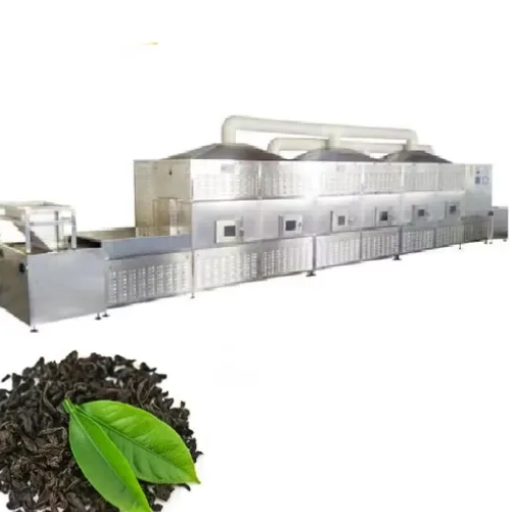
An industrial microwave sterilizer is a commercial-scale machine. It uses electromagnetic energy to heat food and other materials from the inside out. Most systems run at 915 MHz or 2450 MHz.
Conventional heating warms products from the outside in. Microwave energy excites water molecules throughout the load. This creates fast, even heating that kills bacteria, molds, yeasts, and spores.
These systems fall into three main formats:
- Batch cabinet sterilizers, Closed chambers that process 50–500 kg per cycle, ideal for R&D, pilot plants, and small-batch production.
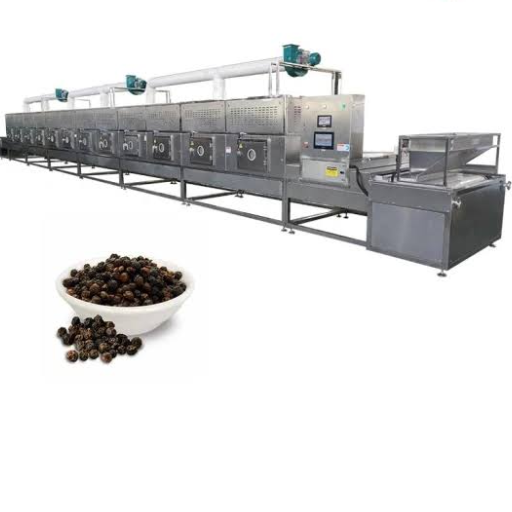
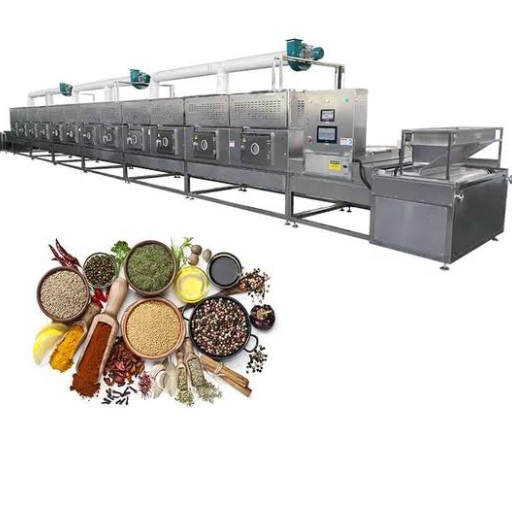
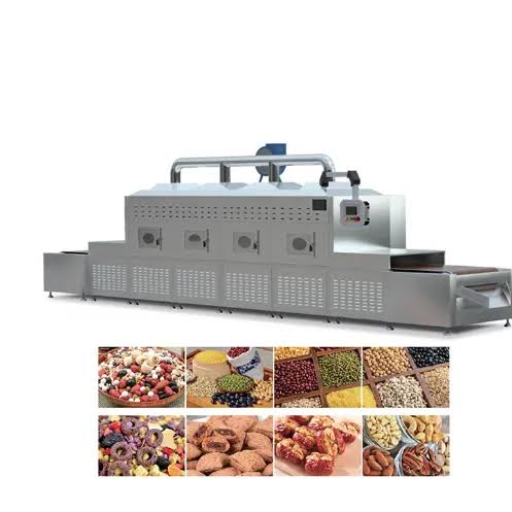
- Continuous tunnel sterilizers, Conveyor-belt systems that move product through a microwave field, with throughputs from 200 kg/hour up to 3,000 kg/hour.
- Vacuum-assisted microwave systems, Lower-temperature operation for heat-sensitive powders, nutraceuticals, and botanicals.
For food manufacturers, the technology sits at the intersection of safety and quality. It can achieve the microbial reductions required for export markets while preserving color, flavor, and nutrients better than retort or autoclave methods. If you are also exploring drying applications, our overview of microwave drying machine technology explains how the same principles apply across sterilization and drying lines.
Who Should Buy an Industrial Microwave Sterilizer?
This equipment is not for every operation. It is a strong fit for several growing segments.
Spice, herb, and seasoning exporters face increasingly strict microbiology limits in the EU, North America, and the Middle East. Steam sterilization can darken powders and drive off volatile oils. Microwave sterilization reduces microbial load while preserving the aroma and color buyers expect.
Ready-meal and packaged-food producers benefit from faster cycle times. A retort line might need 30–60 minutes per batch. A continuous microwave sterilizer can cut that to under 10 minutes, freeing floor space and reducing water use.
Nut, grain, and seed processors use microwave systems to control Salmonella and E. coli without the long roasting times that degrade fats and create off-flavors.
Pet food and animal feed manufacturers need pathogen control that does not destroy palatability or nutritional value. Microwave sterilization handles dry kibble, treats, and raw-material conditioning well.
Powder and nutraceutical producers choose vacuum microwave options to reduce heat exposure while still meeting microbial specifications.
If your operation fits one of these profiles, the next step is understanding how microwave sterilization compares to the methods you may already use.
Industrial Microwave Sterilizer vs. Retort and Autoclave
Choosing between a microwave sterilizer and a traditional retort or autoclave comes down to speed, energy, water, and product compatibility. Here is how they compare.
| Factor | Industrial Microwave Sterilizer | Retort / Autoclave |
|---|---|---|
| Heating method | Volumetric electromagnetic heating | Saturated steam under pressure |
| Typical cycle time | 3–10 minutes | 30–60 minutes |
| Energy use | 0.3–0.6 kWh/kg of product | 1.2–2.0 kWh/kg of product |
| Water use | Minimal | High |
| Pressure | Near atmospheric | 15–30 psi or more |
| Product quality | Better color, flavor, nutrient retention | Some heat degradation |
| Best for | Powders, spices, nuts, ready meals, pet food | Metal cans, low-acid shelf-stable goods |
According to comparative studies, microwave sterilization can be 2.37–3.20 times faster than retort, reducing processing time by up to 72.45%. Energy savings typically fall between 30% and 50%, and water use drops by more than 90%.
That does not mean microwave is always the right choice. Retort and autoclave still win for sealed metal cans, low-acid shelf-stable products, and applications requiring pharma-grade validation. The key is matching the method to the product.
Ready to see how microwave sterilization fits your product line? Contact our team for a free sample test and a tailored equipment recommendation.
How to Choose the Right Machine Configuration
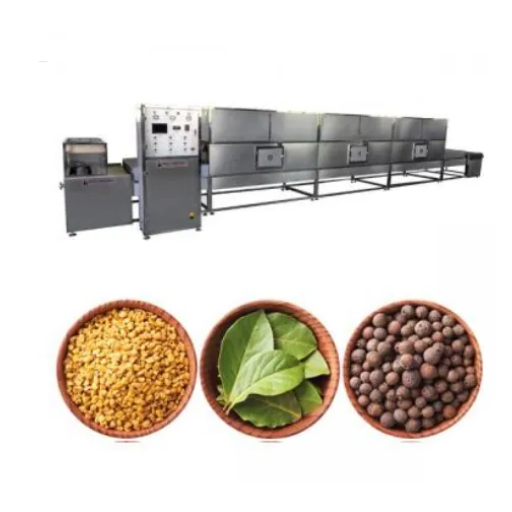
Selecting the right configuration starts with your product, not a catalog. Here are the decisions that matter most.
Batch Cabinet vs. Continuous Tunnel
Batch cabinets suit R&D, new product development, and low-volume specialty runs. They are lower cost, flexible, and easier to validate for small lots. Continuous tunnels are the right choice when you process hundreds of kilograms per hour and need consistent, repeatable results.
2450 MHz vs. 915 MHz Frequency Selection
Frequency determines penetration depth. The 2450 MHz band penetrates 2–5 cm into moist foods. It works well for powders, thin layers, and small packages.
The 915 MHz band penetrates 8–12 cm. It is the better choice for bulk products, thick packaged meals, and large nuts. Mismatched frequency is one of the most expensive mistakes buyers make.
Power Output and Throughput Matching
Power density, measured in kW per cubic meter of treatment zone, should generally fall between 5 and 15 kW/m³. A 500 kg/hour spice sterilization line typically needs around 40 kW of microwave power and a 6-meter tunnel. Buying too little power creates bottlenecks; buying too much wastes capital and energy.
Temperature Uniformity and Cold-Spot Prevention
Look for mode stirrers, multiple magnetron feeds, conveyor motion, and real-time temperature sensors. A uniformity coefficient of variation below 20% is a good target. Fiber-optic or fluoroptic sensors are preferred because metal thermocouples can spark inside the microwave field.
Vacuum Microwave Options for Heat-Sensitive Products
For botanicals, nutraceuticals, and certain dairy powders, vacuum microwave systems reduce boiling point and limit thermal damage. They cost more but preserve active compounds that standard hot-air or steam methods destroy.
Key Technical Specifications to Demand
When you review quotations, demand clear answers on these specifications. Vague proposals are a red flag.
- Microwave frequency and penetration depth, Confirm 2450 MHz or 915 MHz based on your product bed thickness.
- Power density and uniformity, Target 5–15 kW/m³ with a coefficient of variation under 20%.
- Temperature control, Fiber-optic or fluoroptic sensors with ±0.3°C accuracy and ±2°C setpoint stability.
- Construction material, Food-grade SUS304 stainless steel for product-contact surfaces.
- Conveyor dimensions, Belt width, tunnel length, and speed range matched to your throughput.
- Certifications, CE, FDA 21 CFR 1030.10, ISO, HACCP, and IEC 60519-6 where applicable.
- Leakage limit, Less than 1 mW/cm² at 5 cm from any surface.
- Control system, PLC/HMI with data logging, recipe storage, and multi-language support if you operate globally.
NASAN’s technical guide on seven parameters for industrial microwave sterilization machine selection provides a deeper engineering breakdown of these points.
How to Evaluate and Shortlist Suppliers
Price matters, but supplier capability matters more. A lower quote can become the most expensive option if the machine fails validation or spare parts take months to arrive.
Use this scorecard to compare vendors:
| Criteria | What to Ask | Weight |
|---|---|---|
| Manufacturing experience | How many years have you built microwave sterilizers? How many installations? | High |
| Certifications | Can you provide CE, FDA, ISO, and third-party test reports? | High |
| Sample testing | Will you run a free trial with my product and share microbiology results? | High |
| Engineering support | Do you provide layout drawings, foundation plans, and commissioning? | Medium |
| Spare parts | What is the typical lead time for magnetrons and waveguides? | High |
| After-sales service | Do you offer remote diagnostics, on-site training, and warranty terms? | Medium |
| Documentation | Can you supply IQ/OQ/PQ validation support and operation manuals? | Medium |
Sarah, a quality manager at a green tea export company, used a similar scorecard. One supplier offered a price 12% lower but could not provide temperature-mapping data or reference installations in her region. She chose a slightly higher bid that included on-site commissioning and a 12-month warranty. Her line passed third-party validation on the first attempt and has run with 98% uptime since startup.
At Shandong Loyal Industrial, we provide sample testing, detailed layout drawings, and global spare-part support for our industrial microwave oven and sterilization systems.
Industrial Microwave Sterilizer Cost and Total Cost of Ownership
Purchase price is only part of the story. Here is what to budget for.
Purchase Price Ranges by Equipment Type
| Equipment Type | Typical Price Range | Typical Capacity |
|---|---|---|
| Small batch cabinet | 5,000–5,000–15,000 | 6–20 kW, 50–500 kg/cycle |
| Mid-range continuous tunnel | 15,000–15,000–50,000 | 20–60 kW, 200–800 kg/hour |
| Large industrial line | 50,000–50,000–120,000+ | 80–150 kW, 800–2,000+ kg/hour |
Hidden Costs to Budget
Plan for 15–30% above the machine price to cover shipping, customs, installation, electrical work, and commissioning. Magnetrons, the heart of the system, cost 800–800–2,000 each and typically need replacement every 8,000 operating hours. If your facility lacks adequate electrical capacity, panel upgrades can add several thousand dollars more.
Operating Savings and Payback
The operating case is where microwave sterilizers often shine. Energy consumption runs 0.3–0.6 kWh per kg of product compared with 1.2–2.0 kWh/kg for retort. Water use falls by over 90%. For a 1,000 kg/hour continuous line, annual savings can reach 25,000–25,000–60,000. Most buyers recover their investment in 18–26 months.
When you model total cost of ownership, include purchase price, installation, energy, water, labor, maintenance, magnetron replacement, and downtime. The machine with the lowest quote is rarely the one with the lowest five-year cost.
Want a customized TCO estimate for your line? Request a quote and we will model payback based on your product, volume, and local utility rates.
Common Buying Mistakes to Avoid
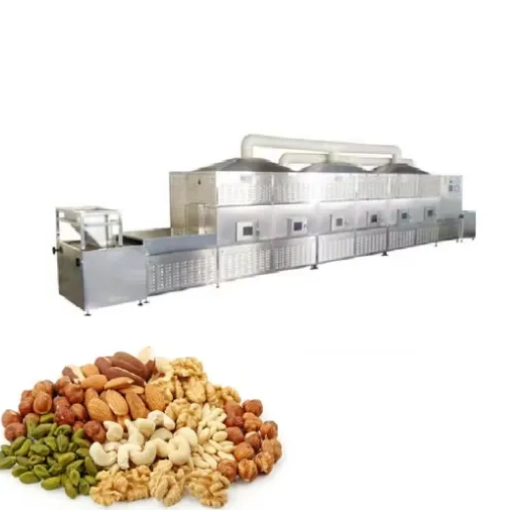
Even experienced procurement teams make these errors. Avoid them and you will save money and time.
- Buying on price alone, The lowest bid often hides weak support, missing certifications, or undersized power.
- Mismatched frequency, A 2450 MHz system cannot properly sterilize a 10 cm product bed. Match frequency to penetration depth.
- Skipping sample trials, Lab results on a similar product are not enough. Test your product with your packaging.
- Underestimating infrastructure, Check electrical capacity, floor loading, exhaust, and water supply before ordering.
- Ignoring spare-part lead times, A broken magnetron should not stop production for three months. Confirm local stock or fast shipping.
- Neglecting validation documentation, Export customers and regulators may require temperature mapping, biological indicator studies, and compliance certificates.
The global market for industrial microwave heating equipment, which includes sterilizers, is projected to grow from 1.82billionin2024to1.82billionin2024to3.52 billion by 2033, according to SkyQuest. As demand rises, supplier quality will vary more. Due diligence protects your investment.
Pre-Purchase Checklist and Next Steps
Before you sign a purchase order, run through this checklist.
Product definition
- Product name and form (powder, granule, nut, meal, liquid)
- Target throughput in kg/hour
- Product layer thickness or package dimensions
- Moisture content and dielectric properties
- Target log reduction and regulatory requirements
Specification confirmation
- Frequency chosen (2450 MHz or 915 MHz)
- Power output and tunnel dimensions
- Temperature sensors and control accuracy
- Material grade (SUS304 minimum)
- Certifications for target markets
Supplier vetting
- Reference installations in your industry
- Sample test report with your product
- Spare-part availability and lead time
- Warranty and after-sales support terms
- Commissioning and training included
Acceptance criteria
- Microbial validation protocol agreed
- Temperature mapping plan signed off
- Performance guarantee defined in contract
- Payment terms and delivery schedule clear
Acme Foods, a ready-meal producer in Southeast Asia, used this exact checklist. They tested three suppliers, selected a 915 MHz tunnel with PLC control and SUS304 construction, and negotiated a contract that included commissioning and a 12-month warranty. Within 20 months, energy and water savings had covered the machine’s full cost.
If you are ready to move forward, start by defining your product specs and requesting sample trials from two or three qualified suppliers. For a full range of food processing machines and integrated food production line equipment, Shandong Loyal Industrial can support your project from feasibility study through commissioning.
Conclusion
Buying an industrial microwave sterilizer is a decision that touches food safety, product quality, operating cost, and production capacity. The right machine is not the cheapest one. It is the one whose frequency, power, configuration, and supplier support match your product and your growth plans.
Start by defining your application. Match microwave frequency to product layer thickness. Model total cost of ownership over five years, not just purchase price.
Demand sample testing with your actual product. Choose a supplier with proven installations, clear certifications, and responsive after-sales support.
The food industry is moving toward faster, cleaner, and more energy-efficient sterilization. An industrial microwave sterilizer can put your operation ahead of that curve. Contact Shandong Loyal Industrial today for a free sample test, a detailed quotation, and a TCO analysis tailored to your production line.