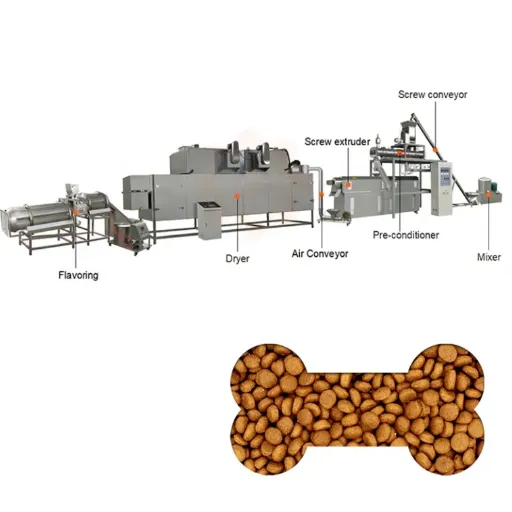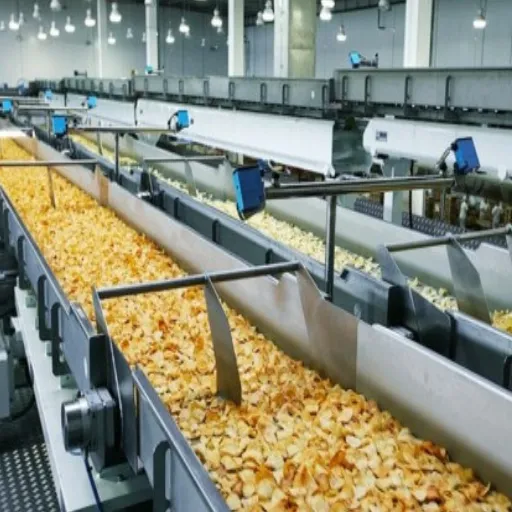
All potato chip manufacturing operations must decide between fried chips and baked chips as their essential processing method. The distinct features of each production line system create specific operational advantages and operational difficulties which determine the resulting product texture and flavor together with nutritional content and production efficiency. Snack producers must learn about these manufacturing differences to achieve successful production matching between their manufacturing capabilities and consumer market requirements.
Introduction to Potato Chip Manufacturing Process
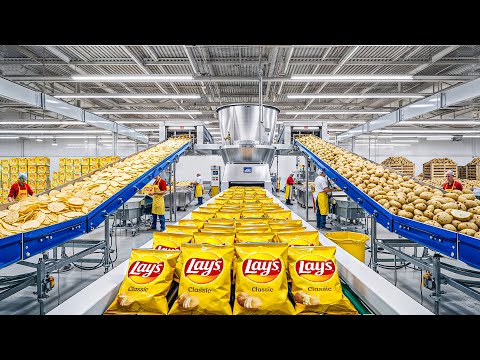
Overview of Potato Chips Production
The production of potato chips involves several key stages, from raw material preparation to packaging. The process begins with sourcing high-quality potatoes that meet industry standards for size, starch content, and texture. The potatoes undergo thorough washing to remove all dirt and debris before workers proceed to peel and slice them into thin uniform pieces which will cook evenly. Proper slicing is critical to achieving the desired texture and quality in the final product.
The slices undergo cooking after their preparation through two different methods which include frying and baking. The frying process uses hot oil at controlled temperatures to create crispy chips which have a unique taste. The baking process requires heating the slices in an oven without adding any fat which leads to a healthier product with reduced oil content. The two methods require exact measurements and strict oversight because both methods need to produce the same texture and color and flavor which customers expect to receive.
The chips receive their flavors through multiple seasoning options which include basic salt and secret flavor formulas. The product undergoes packaging through automated systems which help keep the product fresh for extended periods. The establishment of quality control procedures throughout the entire process enables the organization to achieve both food safety standards and product quality requirements. The simplified production system enables manufacturers to produce large quantities of chips while satisfying customer demands.
Difference Between Fried and Baked Chips
Key Insight
Fried chips are crispier and richer in fat, while baked chips are lower in fat but may contain added ingredients like starch and sugar.
| Key Point | Fried Chips | Baked Chips |
|---|---|---|
| Texture | Crispier | Less crispy |
| Fat Content | Higher | Lower |
| Calories | Higher | Slightly lower |
| Ingredients | Simple (potatoes, oil) | Added starch, sugar |
| Health | More fat, vitamins | Fewer fats, more carbs |
Importance of Quality in Chip Manufacturing
The manufacturing process used to create chips must maintain its quality standards because this requirement protects product safety and consistency and guarantees customer satisfaction. The chip quality assessment includes measurement of flavor and mouthfeel while evaluating the selection of materials and production methods and end product distribution. The manufacturing process requires high-quality raw materials which include fresh potatoes and other essential ingredients that must follow strict standards to decrease contamination risks and produce consistent output throughout the manufacturing process.
The entire production process needs quality assurance from ingredient selection until product packaging to achieve food safety certification and industry standard compliance. The implementation of strict quality control procedures enables manufacturers to detect operational problems during their production process which leads to decreased waste and prevents defective items from entering the market. The process requires monitoring of fry temperatures and oil levels and seasoning application while following established guidelines which aim to prevent spoilage and contamination.
Companies should direct their resources toward quality control because this strategy helps maintain their brand image and strengthens customer relationships. A single instance of quality failure, such as improper seasoning or contamination, can lead to widespread product recalls, financial losses, and long-term damage to consumer trust. Manufacturers who prioritize quality throughout their operations will protect their products while maintaining their market advantage because consumers trust reliable products and exceptional performance.
Processing Steps in Potato Chip Manufacturing
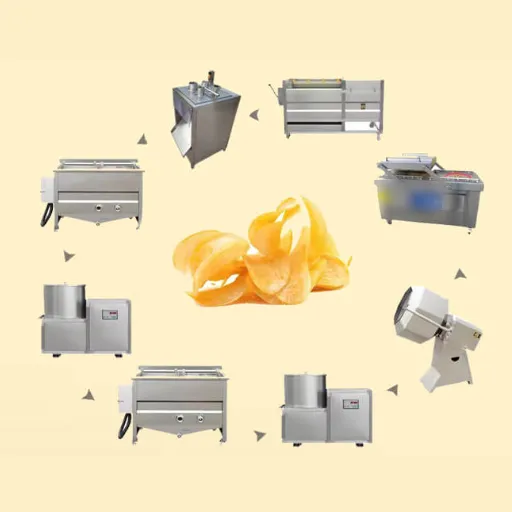
Washing and Peeling Potatoes
In the potato chip manufacturing process, cleaning and peeling are very crucial processes at the beginning – the aim is to eliminate any traces of dirt or waste as well as to get rid of the skin of the potato for preparation reasons. The first and foremost steps are carried out, and high-pressure automatic washes are adopted to clear off the soil, rocks among several other common contaminants. Such machines have the capacity to handle vast amounts of potatoes and remain efficient at producing nearly similar results hour after hour.
After washing, the potatoes move to the peeling stage of processing, which is commonly done by employing abrasive or steam peelers or both. Abrasive peelers have cylinders, the internal sides of which contain abrasive linings that ensure skin removal. In contrast, steam peelers tend to use hot pressure to remove the skin, which is later physically extracted. Steam peeling is very appropriate and has no unnecessary processes; therefore, it is preferred especially when loads are large. This step calls for precision because over-peeling results in high wastage of raw materials, whereas less peeling affects the quality of the product up the production chain.
Advancements in sensor technology and automation ensure this step is executed and enhanced efficiently while conforming to standard operating procedures. This allows for accuracy, minimal wastage and maximisation of performance, including accelerating productions. The adoption of these modern techniques shows that the industry takes the promise of a high-end product that adheres to the hygiene principles modeled by the industry seriously.
Slicing Techniques for Consistent Chips
Within the potato chip manufacturing process, achieving thin and evenly sliced potato is essential for consistent cooking, texture, and taste. Among the numerous slicing techniques, the most efficient is the one that utilizes mechanical slicers which have sharp and precision blades. These machines are able to maintain constant blade inclination and distance between the blade and the product to be sliced. Thickness of the slices can be adjusted according to the product being processed since these settings can be fixed on the machine. For instance, a crisp or chips call for thin slices whereas chunkier slices are preferred in the manufacturing of premium products.
In the modern era, slicing technologies have come up with sensor-mediated and feedback control systems which further better the accuracy. For example, laser cutting employs certain optical sensors to assess the various dimensions of the raw product prior to making any successful cuts. Such adjustments are automatic in state-of-the-art slicers, so that they match the set specifications for every individual slice. Such accuracy in cutting reduces excess wastage of the material thereby increasing productivity and reducing manufacturing expenses.
Sanitation and operational upkeep are as well essential for efficient slicing techniques. The cleanliness of the blade affects directly the quality of slices as it does not allow any residue which would result in uneven cuts or contamination. Most modern systems incorporate either self-cleaning or easily retrieved cleaning options. Moreover, servicing the slicer at specific times prolongs its use and keeps it operating optimally. With the use of precision tools, the incorporation of real-time data and the strict adherence to maintenance procedures, it is possible to continuously produce standard chips that will satisfy consumers and the authorities.
Blanching and Its Role in Processing
In almost every other food processing procedure, particularly in the potato chip manufacturing process and other snack manufacturing procedures, blanching plays a preparatory role. In this procedure that involves the use of heat in cooking, raw materials such as potatoes are scalded briefly in boiling water or steam after which they are quickly cooled either by using ice or cold air. The main advantage of blanching is the elimination of such enzymes that might otherwise cause browning or softening and reduce the nutritional qualities during further processing or storage.
Among the many enzymes that are prone to such hinderance are the polyphenol oxidase and peroxidase which are responsible for aspects such as discoloration in products within which they act if no intervention is taken. This inhibition of the activity permits the standard of the product including the appearance as well as the texture, to be characteristic of contemporary industrial food industry.
To perform blanching of most vegetables in the food processing industry has become quite normal. It works so good in situations where oil is used for the purposes of frying chips and the like. As such, a practice in chip making has emerged that involves neutralizing sugars through this process prior to frying chips as sugar presence is detrimental as it results in products that have dark bitter crusts after baking. The same practice is done to destroy extra build up of starch as this reduces the stickiness of the surfaces during frying and ensures the final product remains crispy.
Blanching involves uniform temperature upgrading which means the heat can be equally distributed at rendering or frying stage and leads to improved results especially in fast food products. Highly efficient systems that incorporate state-of-the-art blanchers in the processing facilities have been designed to allow efficient operation with due consideration to time for operation, temperature and water consumption.
Frying Process in Potato Chip Production
Frying Techniques for Optimal Texture
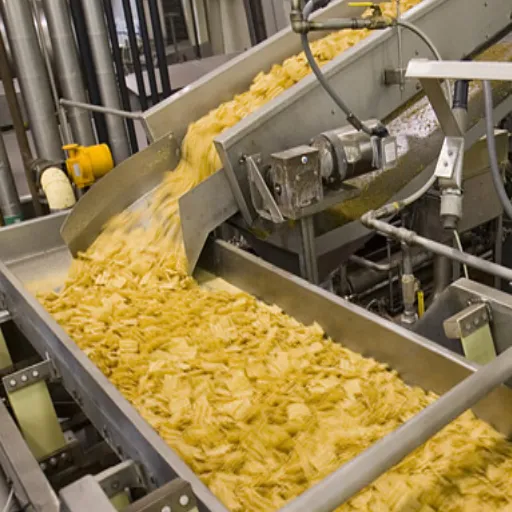
In order to create a nice structure during the frying stage of production of potato chips, there are several parameters, i.e. time, temperature and oil composition that have to be considered. The process involves the pre-treatment by blanching of potato slices and deep frying them, mostly done at 160 to 190°C (320 to 375°F) which is referred to as the deep fat frying process. At these temperatures, the water contained in the potato slices becomes steam that quickly evaporates, so an alluringly crunchy coating is produced without adversely affecting the soft air spaces in the chip, which makes it crisp.
Advances in frying techniques have overcome this challenge. Continuous frying systems are fitted with programmable logic controllers which enables even batch to batch frying. Another technique that is more useful is when frying in specific oils which include sunflower oil rich in oleic acid or canola oil as they oxidize slower and have less trans fat content and usually taste good.
Studies have demonstrated that ensuring a consistent oil flow and distribution around the product is of utmost importance to avoid uneven color or defects in texture and flavor of the final snack. The latest generations of frying systems integrate creative oil treatment techniques to discard the escalated amount of suspended particles produced throughout the process of frying so as to check oil deterioration and prolong the shelf life of the final product while it is being manufactured for sustained periods.
Temperature Control and Its Impact on Quality
Accurate temperature control during the frying process is of utmost importance when it comes to maintaining a particular standard of the product, safety, and quality. To be specific, the moisture content, oil uptake and the changes involved in cooking, including the Maillard reaction which is responsible for flavor and browning, are all influenced to a large extent, by the particular temperature at which frying is done. Most often, the frying temperatures that yield the best results are in the range of 320°F to 375°F (160°C to 190°C), depending on the food product that is being carried out.
Deviations from these levels cause issues of insufficient cooking, high oil uptake, and the presence of undesirable compound such as acrylamide. Modern industrial systems employ high-tech temperature measuring equipment such as infrared sensors or thermal imaging cameras to guarantee that heat is evenly distributed throughout the oil. Such systems may also be fitted with fully automatic temperature control devices, which allow the heating elements to be tuned very fast to maintain the temperature regardless of the changes of the load of the product to be fried, or the structure of oil.
Proper control of frying temperature will eventually influence the shelf life of the product as well as the acceptability of the product through control of oxidative rancidity and the desired textural properties of the product. Effective temperature control mechanisms combined with appropriate quality checks enables producers to maintain high production levels yet comply with the law and the customer.
Comparison of Frying vs. Baking Methods
Processing Comparison
Frying is faster and results in a crispier texture with higher fat content, while baking is healthier with lower fat but takes longer and may dry out food.
| Key Point | Frying | Baking |
|---|---|---|
| Speed | Faster | Slower |
| Texture | Crispier | Less crispy |
| Fat Content | Higher | Lower |
| Health | Less healthy | Healthier |
| Moisture | Retains moisture | May dry out food |
| Convenience | Messy, oil required | Cleaner, no oil needed |
Quality Control in Potato Chip Manufacturing
Standards for Quality Assurance
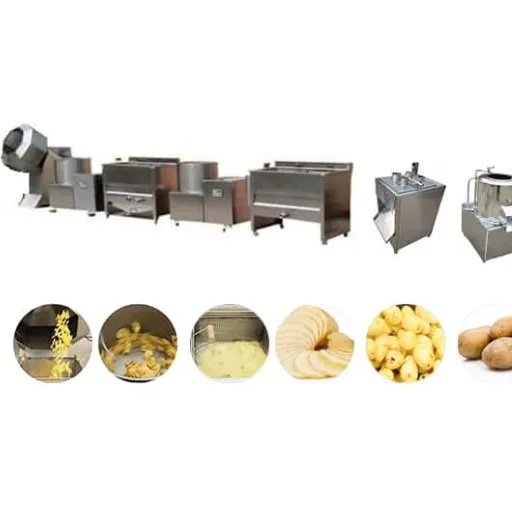
The potato chip manufacturing process is performed under well-defined organizational procedures to provide a customer acceptable product. Understanding standards include, ensuring accurate raw material discretion, careful process undertaking, and inspections regularly conducted. The factors shall include:
- Examination of Raw Materials: The potatoes meant for the production of chips should be standardized into certain specifications such as size dimension, sugar content and also shape. Excess sugar is contraindicated because it browns the fry too much while at the same time destroying taste and look.
- Checking of Oil Contents: Temperature maintenance of frying oil should be done within the boiling range of 325-375°F as appropriate for the cooking procedure to avoid formation of a carcinogenic element called acrylamide. Frequent filtration of oil or changing the oil is necessary to address deterioration that comes with the use of oil for prolonged periods of time.
- Measuring the Moisture Content: End-point products must be dried in such a way that their moisture contents are less than 2%, hence making them crunchy and able to resist spoilage or stay long on shelves. This is done by using moisture analysis equipment.
- Color and Consistency Examination: All the fried chips undergo color and texture inspection through visual systems to ensure that the finished product does not differ from the rest. In case there are deviations from the normal standards such as presence of defects or abnormalities they must be noted and countermeasures taken.
- Seal Quality: Properly closed food packaging with nitrogen inside helps to maintain the chips in fresh state for as long as possible. Among the quality assurance activities performed are testing the seals if they are intact, inspection of leaks, and most importantly reading a label to ascertain if the package adheres to the requirements in question.
- Testing for Bacteria: Microbiological testing is performed on a routine basis at different stages of processing to recognize and control any contamination in the food product for safe consumption of the product.
- Consumer Complaint Management: Bringing in consumers’ complaints and suggestions during quality assurance practices enables manufacturers to make the necessary adjustments to the process so as to be in position to comply with the requirements of the market.
Adopting and implementing these standards in the production will help in minimizing the amount of wasted products, improving on the quality of the products made and compliance with other certification bodies such as food safety under ISO 22000. This can be achieved by manufacturers who employ contemporary practices such as introducing proactive tendencies into their operations through the aid of real-time monitoring tools and other technology based quality controls in place all for better satisfaction of the consumers for premium products available in the market.
Testing and Monitoring Procedures
It is essential to ensure the quality and safety of a product, as well as the adherence to manufacturing regulations, and that is achieved through the application of testing and monitoring. These procedures commonly involve a variety of tests ranging from physical, chemical to microbiological depending on the industry where these procedures are tracked. Nowadays, techniques such as sophisticated spectroscopic systems, ultra-performance liquid chromatography (UPLC), and cell culture methods are frequently used to identify and quantitate contaminants, validate processes, or assess any breaches to regulatory limits.
Moreover, the production industry has witnessed the seamless integration of real-time monitoring systems. These monitoring systems operate with the Internet of Things (IoT) on the production line. They continuously and sometimes with very short intervals provide essential parameters, such as temperature or humidity, or how well the production efficiency is within the tolerance. Such systems allow adjustments to be done without much delay in order to avoid the impact of any problems. The process has advanced to the extent that with automated alerts and dashboards, for instance, enhanced by predictive analytics, operators have the capacity to identify the risks and determine the factors underpinning the downtimes and address the issues effortlessly.
In order to overcome challenges and enhance product sustainability, manufacturers have included blockchain systems or digital twins that assist in the keeping and assessment of supply chain information. These solutions are characterized by a high level of transparency and accountability, thanks to the detailed documentation of each phase of production processes. In these scenarios, comprehensive testing and monitoring frameworks are deployed to focus on securing the product quality while meeting customer expectations and enhancing consumer confidence and compliance with high industrial norms.
Addressing Common Defects in Chips
The potato chip manufacturing process consists of innumerable procedures of precision and complexity which are going to bring about defects that are many and varied. These are mainly divided in three broad headings, that is functional defects, parametric defects and systemic defects. Functional defects result from the failure of the chip to function as expected and are usually from such causes as bridging faults, open circuits, or improper photolithography. Parametric defects arise when there is an abnormality based on the range of electrical parameters which include threshold voltage, current leakage, etc. which is a resultant from issues like non-uniformity in processing and other fabrication aspects.
To ensure that these defects are properly addressed, scanning electron microscopy (SEM), transmission electron microscopy (TEM), and electrical probing, all advanced methodologies for failure analysis, are used to determine possible causes of defects. Machine learning algorithms are also emerging into the systems of defect detection. These algorithms work over data sets that are huge from the inspections and make predictions about the areas which may get affected by the defects, making it possible to partition the areas for intervention in advance.
Through the use of automated optical inspection (AOI) systems, inline metrology tools, and other useful systems, manufacturers greatly lower the amount of defects while maintaining the manufacturing output rate. Statistical Process Control (SPC) comes as an equally momentous factor in controlling defects. Defects can be controlled through the realistic acts of parameter monitoring specifically deposition evenness or etching speed or the alignment which all aid in preventing variations from meeting a major increment.
Technological Advancements in Potato Chip Manufacturing
Automation in Production Lines
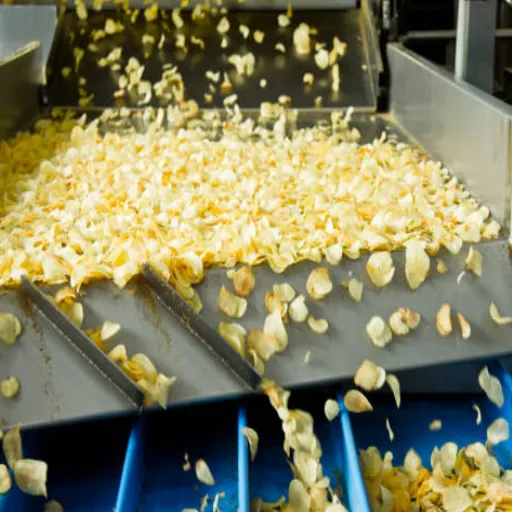
There has been significant improvement in potato chip production due to the adoption of automation processes that has improved the rate, scope and accuracy of production. In this day and age, programmable logic controllers (PLCs), robots and sensors enhance activities in processing plants mainly with activities like peeling, cutting, cooking, flavoring and packing with ease since they do away with most manual operations. This means there is less handling and interaction, hence, eliminating the issue of human factors not meeting the standards that are expected.
Potato chip manufacturing processes saw the development of certain technology and products in the production line. For instance, cameras and learning devices aided inspection of products. It is for this reason that high technology is used to sort out defective products, either because of inconsistent color which is a sign of burning, or inappropriate size which is weak and frail. This accuracy helps in many ways which include producing better quality products and at the same time minimizes the wasting of resources.
More so, the use of data driven automation facilitates current time performance analysis. More often than not, sophisticated or intelligent machines routinely check and actively track oil temperature, conveyor belt velocity or seasoning level and once there are high deviations and limit exceeds, interventions are adjusted swiftly to restoration limits. Probabilistic optimization and predictive maintenance using IoT sensors and AI analytics solidify the reliability of the production line further by forecasting and pre-empting the breakdown of the equipment.
Incorporating all these automated processes leads to efficient operation, reduction of production expenses and most importantly satisfying the increased consumption without compromising on quality in the food processing industry that firmly controls and observes the hygiene and safety regulations.
Innovations in Processing Equipment
The recent evolution of processing equipment incorporates novel technologies which in turn enhances the productivity, accuracy, and eco-friendliness of any food manufacturing facility. For instance, there are high-speed processing systems facilitated by advanced robot technology and vision assistance which allow higher productivity but not at the cost of quality due to strict adherence to the product specifications. Further, the modularity in equipment improves the versatility of the machinery enabling the manufacturer to respond swiftly to the changes in the market or even the introduction of new products within a short period of time.
Modern automation solutions mostly incorporate built-in online monitoring of process equipment. Advanced sensors enabled by the Internet of Things generate the required sensory input, for instance, temperature, pressure, moisture, and transfer this information to AI-powered analytics tools. This allows forecasts to be made based on historical data, assisting manufacturers in avoiding future repairs of the equipment and correcting the deteriorated operation conditions. It also addresses food safety where the equipment has been used in production even prior to the introduction of the clean in place (CIP) technology and subsequent processes of washing and sterilizing the equipment in between production runs.
Another aspect that is also engaged by current food equipment processing is sustainability. This is where energy-efficient motors, lowering water and cleaning agents during production, introducing recyclable or compostable materials, come in. Such improvements not only support environmental sustainability but also reduce the operational costs in the long run. New designs enable industry players to comply with legislative requirements and incorporate the demands of customers for a better quality and environment-friendly food.
The Future of Potato Chip Manufacturing
Automation and data-based modeling is the vision of the upcoming potato chip manufacturing process and this will change the meaning of what it means when someone says that a factor is efficient or a product is of high quality. Cutting edge robotic technology is being employed in intricate operations such as slicing or frying with very high accuracy. This minimizes the amount of raw materials used, reduces the influence of human variation, and enhances the overall uniformity of the product.
In addition to this, the use of smart technologies in devices and equipment with suitable adaptations of sensors and IoT device utilization is more clearly visible at production lines in the form of complete management of the process parameters such as temperature of frying or oil in use. It is this kind of precision that eliminates the possibility of errors in manufacturing and always provides products with optimum quality.
The importance of artificial intelligence (AI) and machine learning (ML) tools for maintenance purposes and predictive maintenance, in particular, is increasing daily. This trend is paving the way for machinery to become prognostic and suddenly shut down breakdowns go away even before they arise. These tools offer methods that optimize inventory by understanding market behavior and calculating considerations concerning potential developments. This principle is economically advantageous; moreover, it supports sustainable development as it controls excess production and waste of resources.
Automation is also gathering pace while clean-label trends are also becoming pervasive. Manufacturers are aggressively marketing foods and beverages which only contain clean natural ingredients with minimum additives and even claim that there are new alternative oils, like avocados and sunflowers, that are meeting the healthy chip requirements for consumers. And when coupled with increased regulation, there is hope for an inventive equilibrium where people’s cravings do not conflict with enhanced health measures.
References
- Potato Chips Processing Flow Chart – A detailed academic resource on the flow chart and steps involved in potato chip processing.
- Methods of Manufacturing Potato Chips – A historical and technical overview from the Library of Congress on potato chip manufacturing methods.
- Click here to read more.
Frequently Asked Questions (FAQ)
Could you define the primary stages of potato chips production?
Potato chip manufacturing process takes in a defined sequence; We understand the importance of sourcing for the best quality potatoes to suit each requirement; different varieties of potatoes are available but the special ones for this purpose are selected in terms of starch sugar ratio. Potatoes are cleaned, de-skinned and chopped in appropriate equipment that produces thin or ridged potato chips. The water content in the product may be reduced by blanching to inhibit browning of the pieces. Thereafter, the chips are cooked in heated oil, followed by cooling, applying spices, weighing, and filling of the potato chips in a package to be sold. This is how the production of chips is guaranteed to be safe and up to the required standards.
In the course of producing potato chips, how do you flavor them?
Potato chips are seasoned after frying and cooling. The seasoning is applied on warm chips, however, the chips are cooled slightly so that they don’t steam powders and stick. Ingredients are taken up for even coating of a product primarily on the powder drums or tumblers that are specially designed for such cases and contain the shape and weight of the chips within certain limits. This helps produce mixtures of different flavors in order to make the potato chips taste like salt only or barbecue or sour cream or any other mix of flavor desired.
What is the purpose of blanching the potato after slicing it?
Blanching is done to achieve chips with an even color and crispy texture throughout each chip. This process removes the outermost starch layer from the potato and aids in the prevention of browning by inhibiting discoloring enzymes, and helps in providing a clean look and feel to the product. Thus, this procedure helps produce chips that fall within the range of the allowable chip colors and as well adds more quality to the chips.
What device cooks and cools potato chips?
Fryers are professional food grade machines used in both small and large scale establishments that produce chips with minimal moisture content. These chips are cooked and transferred to cooling systems, either conveyors or bins in this case, which cool the chips to prevent overcooking, and also improve affinity for toppings. This technology offers a wide range of production facilities from the small fryers to the large factories, which will ensure that the hot chips are converted into packable quality ones without damage to the crispness.
What do manufacturers do to adhere to a specific weight of the chips?
Potato chips processing weight projection is a crucial factor in the potato chip manufacturing process. This includes the use of automatic systems that weigh particular portions of chips dispensed into each bag. The technique assumes adjustment of the process and many bags of potato chips have the right amount of chips stated on the label as required.
In the potato chips industry, what are the key procedures that must be followed in the production of safe potato chips?
The potato chips industry adheres to hygienic and safety protocols during all stages of production: potatoes are first subjected to incoming inspection, washing to remove dirt and debris, blanching, frying at controlled conditions to destroy pathogens, presence of oil filtration units, potato chips are cooled hygienically, and packaged into properly sealed packets. And eventually, the quality control of the chips ensures that those produced fulfill the sensory, as well as microbiological specifications that they are intended for.
Can manufacturers make potato chips that have ridges or those that are very thin?
It is known that the potato chips production line is capable of producing a wide range of types. Ridged potato chips, kettle chips, crispy thin chips – whatever shape of potato chips is requested by the market can be achieved, because it is only a matter of changing the slicing skills, frying period, or even the addition of the seasonings. Designers make these kinds of chips and can make any other shapes provided by the customers in the proper sizes and textures and in the form of the potato chips that are liked and desired by the market.
How does the packaging for one chip bag get completed?
The next step after seasoning and cooling the chips is to transport them to the packing machines where the bags of chips are filled and sealed. These packing supplies are oxygen and moisture proof. Inside, moisture and oxygen inhibitors are included so that the chips do not lose freshness and crunch. These processed potato chips are put in a packaging bag which in turn is checked for quality. The package includes inside a quality control team who checks whether the chips that have been sent inside have been packed properly and the bag has the correct weight inside and the description of the correct chips.
Final Thoughts
The potato chip manufacturing industry continues to evolve through technological innovation and quality control improvements. Understanding the differences between fried and baked production methods enables manufacturers to optimize their processes while meeting consumer demands for both traditional and healthier snack options.