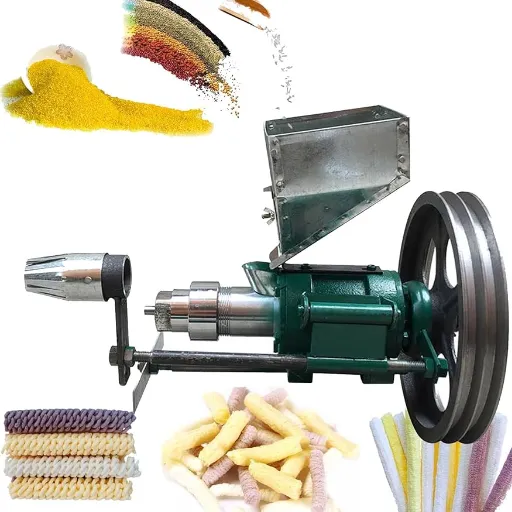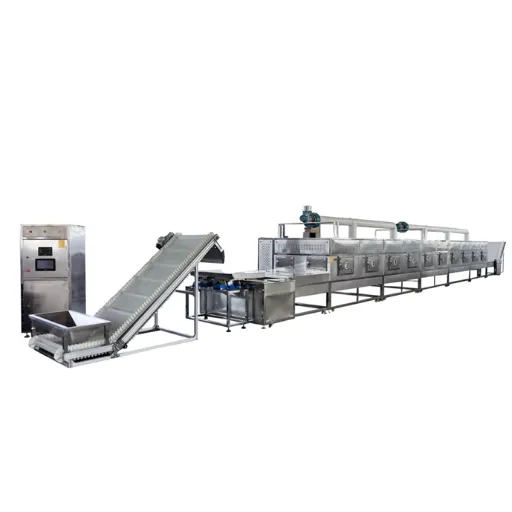
The production of high-quality pet food requires efficient moisture control as its primary requirement. The optimal moisture level needs to be achieved because it provides product protection through its preservation of essential nutritional elements and taste which customers demand while maintaining pet health. The method of microwave drying provides precise moisture control through its energy-efficient operation that outperforms conventional drying methods. This article explains the scientific principles of microwave drying technology while showing how it affects moisture control and detailing the methods manufacturers should use to enhance their operational efficiency. This guide provides complete information about moisture control methods used in pet food manufacturing because it covers product consistency problems and production efficiency improvements.
Introduction to Microwave Drying
What is Microwave Drying?
Microwave drying is a modern innovative drying method which uses microwave rays energy to rapidly dehydrate substances. Unlike conventional methods where heat is applied on the surface of the material, with microwave drying, the heat is generated inside the material making it a volumetric heating method. This is so since microwaves, allow the water molecules contained in the material to rotate vigorously in an effort dissipate heat through friction and consequently dry.
The main advantage of microwave drying is that it is very rapid. Unlike in traditional drying where the external heat takes a longer time before it penetrates to the interior of the material, unlike in the case of microwave where heat is generated inside the material, hence a short drying time. This ultra-fast operation translates to better utilization of energy as in any case, it will take much less energy to achieve the same level of drying. It helps to eliminate the thermal gradient through the bulk of the sample during the drying thus improving the uniformity of drying and preventing the so called surface over drying.
Advanced control made possible with microwaves has found favor in food, pharmacy and chemical engineering sectors. Pet food production in particular benefits critical drying of ingredients using microwave because it provides a homogenous level of moisture which is essential for the durability, lifespan, and nutritional value of the products. By refining this stage of the process, businesses can attain better levels of production at cheaper costs and within set legislative norms.
Importance of Moisture Control in Pet Food
The control of moisture is an important consideration in manufacturing and storing pet food for it determines not only the quality and safety of the product but also, most importantly, its shelf life. Optimal standards of moisture level assure the quality of pet food’s texture and taste as well as its nutritional value. When excess moisture happens the danger is in spoilage of the food due to microorganisms’ proliferation like bacteria and fungi, whilst too little moisture causes brittleness and hampers palatability, which in the end affects consumers’ perception and health of the pets.
From a health point of view, adequate control of the moisture content reduces the likelihood of infection by ensuring the environment does not permit the growth of harmful pathogens. This is important because all pet foods are required to adhere to certain standards that guarantee the safety of both the pets and their owners. Effective moisture determination and drying technologies are important, just like the Microwave Drying Machine, to ensure that the product of interest is within the specified moisture content ranges.
It is also noted that good moisture control saves manufacturing costs. Excessive drying of pet food leads to energy costs and production loss, whereas inadequate drying can cause losses in form of product recall or spoilage. By incorporating the most sophisticated methods of moisture monitoring and control, plants can improve the production effectiveness itself, provide the requirements in this respect and, of course, ensure customer and market reliability owing to the strictly high product quality of pet foods.
Overview of Microwave Drying Machines
Curing devices such as a Microwave Drying Machine is generally aimed at removing moisture content out of a product using electromagnetic energy. This technology should not be confused with the conventional drying as it does not heat the surface of the material and allow the moisture to diffuse to the surface gradually. Interior phenomenon heat is generated within the body of the material itself, A novel heat transferring in and out behavior associated with the use of microwaves for rapid microwave drying. Such an application, in the case of non stationary target material, decreases the time spent for drying and the energy required. Therefore, it helps particularly in industries where good moisture content control is a critical factor.
One of the main pluses of a Microwave Drying Machine is even heating inside. One similarity with classical thermal methods is that the structure inside and outside is evenly heated or humidified after using the devices. This evenness in drying is especially important in applications such as food, pharmaceutical, and pet food industries that are sensitive to moisture content. In addition, in microwave drying systems, power and frequency can be adjusted depending on the requirements of the production process tailored.
Another key benefit is energy conservation. The Microwave Drying Machine system transforms basically electrical energy into microwave heating without emitting heat to the environment. This efficiency is also necessary for the cost control of the company since the energy bills are minimized and also the burning of fossil fuels is reduced. Moreover, the shorter turnaround time not only enhances productivity but also allows for the maintenance of functional and sensory quality of fragile materials such as food nutrients or pharmaceutical preparations. Due to these advantages the use of microwave drying is an important step into the future of industrial sectors that demand fast and effective methods of drying.
Advantages of Microwave Drying Technology
Efficiency and Speed of Microwave Dryers
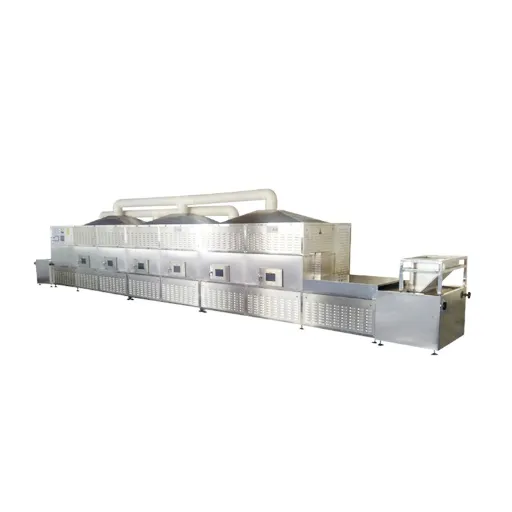
One thing that is clear about drying technology in the microwave is that it has many benefits and is one of the best ways to dry something faster. This is because of the process by which heat energy from a microwave is directly sent to water in a substance and none other, thereby fast-tracking the drying process while it removes water uniformly. Five issues that arise in regards to how fast and how efficient microwave dryer can be include the following:
- Short Time Spent: It is a well-known fact that traditional methods of drying moisture out involve hot or ambient air over quite a few hours in most circumstances. Nevertheless, the inventive microwave dryers let you make drying time shorter by 50-80% apart from the material, which helps to increase the overall efficiency in front.
- Even Heat Distribution: The energy microwaves emit helps in heating all parts of a material uniformly. As a result, problems of burning out and uneven drying, which are a characteristic of traditional methods, will be avoided in this case.
- Economical Use of Power: Processing a material in a microwave implies that water alone is activated, whereas the rest of the medium suffers minor heat loses. Research has proved that the energy consumed in a microwave dryer could be as low as 30-50% of that in typical dryers.
- Enhanced Quality of Product: The speedy even dissipation of heat removes the possibility of any thermal denaturation and helps in retaining the shapes of structures, preserves colors and flavors, together with the food values of any allergens for food and drug industries, respectively.
- Application Flexibility: Microwave dryers can be used to process the various types of materials to include biomass fabrics ceramics and polymer composites. This makes the microwave vessels applicable in many industries.
Thus, for high-speed, low-energy, and high-quality drying requirements, microwave drying, in particular, fits the goal perfectly.
Energy Savings Compared to Traditional Drying Systems
During the drying procedure, less energy is used by a Microwave Drying Machine than is required by any other method of drying available in the market at present including convection drying methods, or dryography, infrared or vacuum freeze drying. This is because the substrate absorbs exactly as is necessary for drying purposes, minimizing any energy dimensional loss in order to heat the material. Listed below are 5 chunks of energy efficiency which cannot be achieved using conventional methods, but achieved through microwave drying:
- Direct or Indirect Heating: The reason is that in the process of microwave drying, heat is transferred to the material instead of the neighbor air or any other surface of the system which as a result increases the amount of wasted heat reduced by 30 or 50 percent even in convection drying systems.
- Active heating: The source of heat for microwaves in inwards rather than outward from the material itself, and thus there is significantly less heat lost and lower operator temperatures in comparison. This contributes to the increased energy efficiency because the process equipment does not have to be heated to an undesirable extent.
- Time Efficiency: Drying rate is significantly improved in Microwave Drying Systems due to its advantage of volumetric heating. This means that heating is even all around within the material. This also means that the energy efficient nature of the process is enhanced as less time is taken for each batch with enabling energy use saving by up to 40% compared to the infrared drying.
- Reduced Requirement for Preheating: In many conventional methods of drying, there is a lengthy and energy consuming preheating process before any drying is done. The use of microwave systems allows avoidance of or a considerable reduction in the pre-heating which leads to an improved energy efficiency of the process.
- Enhanced Heating Management: Due to the nature of the microwave driers, it is possible to maintain an essentially constant temperature within a given range thereby reducing instances of overheating or licking of low temperature levels leading to more expenditure of energy. All these processes are particularly important when addressing the power usage in drying.
Such characteristics make microwave drying an energy-saving alternative to traditional methods, allowing for the reduction of industrial operating costs, while decreasing environmental footprint.
Enhanced Nutritional Retention in Pet Food
In microwave drying technologies, it is regarded as very effective in keeping the nutrient value of pet foods intact in the drying process. The mechanism making this possible is short processing times coupled with controlled temperatures mitigating the nutrient loss which is associated with long processes in traditional drying techniques that use high temperatures. Five examples explaining enhanced nutritional retention of pet foods through the microwave drying technology are shown in a paragraph below.
- Preserve the Retention of the Vitamins: There are also various vitamins very susceptible to heat, such as vitamin C and vitamin B-complex, and microwave drying limits the loss of these. Studies have been reported where changes in the combined vitamins retention efficiency rate show that it goes beyond 85% after applying microwave technology.
- Conserving Amino Acids:Some amino acids including lysine and methionine which are essential, are better saved since the drying period is shorter and energy is applied within limits. This enables production of pet foods with enhanced protein content that is possessed by the body systems of animals.
- Network Abaits: Typical drying processes make omega-3 and omega-6 fatty acids such as fish oil vulnerable to oxidation. On the other hand, the use of microwave drying processes ensures the reduction of oxidation risks by decreasing levels of oxygen to which the fat in pet foods is exposed.
- Enhanced Utilizability: The regulated heat energy applied in microwave drying prevents denaturation of carbohydrates and proteins which could otherwise render the end product less digestible due to extensive degradation of nutrition value.
- Preservation of Bioactive Additives: Application of prebiotics and probiotics into pet food is an approach for promoting gut health; such bioactive materials are better preserved through microwave drying. Sensitive components like these are easily destroyed in traditional methods, making the finished pet product less potent.
With these technological innovations, such as microwave drying, one can fabricate pet foods of a very high quality and nutritional standards that satisfy industrial as well as the pet owners’ expectations.
Industrial Microwave Drying Solutions
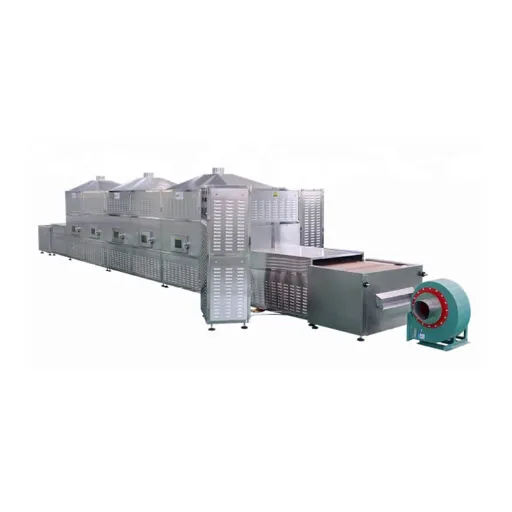
Types of Industrial Microwave Dryers
- Stations that Dry Using Microwave Technique: Stations that dry using microwave technique operate in fixed time frames, and are designed to process material in definite amounts, or “batches”. These are most useful for small- to medium- scale plants and for research and development purposes where accurate control of the drying variables is necessary. These machines offer the advantage of designing machines that can process varying sizes of product and moisture content. Furthermore, for some applications where high uniformity is needed, it is better to use batch dryers which permit experimentation with various settings without the constraints of continuous production.
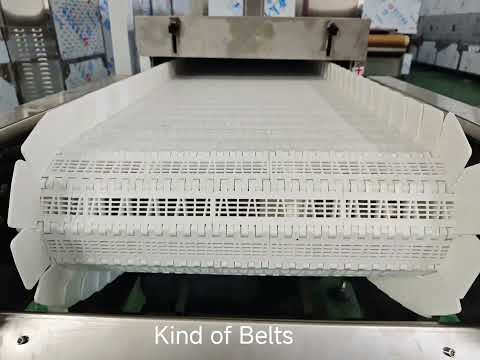
- Conti convectional drying Micros: Conveyor microwave dryers are rarely used in household appliances being mainly employed on the industrial scale where high outputs are needed. These appliances do have a conveyor belt installed along which material is transferred into the microwave drum for drying. A knowledgeable operator can set each dryer’s power and the speed of the conveyor independently to meet the energy saving objectives of the operator while attaining the drying objectives of the product. Scaling up operations is not sufficient, it also has to be efficient because of and especially for bulk products like grain, powder, animal feed etc.
- Microwave Drying Machine With A Vacuumccao: Vacuum microwave dryers combine the use of microwave energy with a vacuum surrounding. Such an arrangement decreases the water boiling point greatly and allows drying of sensitive to heat or expensive foods such as drugs at less elevated temperatures. Vacuum drying avoids the use of oxygen and thus fewer compounds of importance such as color, nutrients or bioactive compounds are destroyed. In these and similar cases, there is a clear advantage of using such systems to obtain better quality of the product.
- The Use of Hybrid Microwave Drying Machine: The hybrid microwave dryer technology involves the use of a microwave energy and other methods of heat transfer such as hot air and infrared drying. This, in turn, enhances the process of drying by addressing the weaknesses of each of the individual systems. Such dryers are especially suitable for the treatment of such substances that have a complex structure or an uneven moisture content. They incorporate several technologies so that drying rates and quality of product are regulated accurately without enhancement of energy demand.
Thanks to its outstanding capabilities, the Microwave Drying Machine encompasses a range of drying apparatus that enables producers to choose the appropriate machine for the application. Each version possesses advantages aimed at various capacities and characteristics of materials for drying, proving the diversity of using microwave drying in industrial processes.
Applications in Food Processing
- Food Drying: Among the many uses of microwave drying is the drying of fresh fruits and vegetables so that their health benefits, hue, and taste do not get lost. Research shows that, compared to traditional systems, microwave processing may cut the time needed by 50%, all while maximizing the retention of vitamin C and antioxidants.
- Dehydration of Herbal Products: In the case of dehydration, the use of microwaves in the drying system speeds up this process and ensures equal drying. The technique also lessens thermal damage to oils and thus maintains the fragrance and strength of examples like basil, oregano and turmeric.
- Snack Manufacturing: Chips, puffed cereals, and snack foods need to be dried using microwaves to attain the required texture and firmness. This procedure offers more precision in moisture management, which is beneficial in terms of the product’s durability + quality.
- Meats + Fish Processing + Usage: Meat that is dry for example jerky and such processes makes use of Microwaves in the drying of food that is rich in protein such as fish. This helps in even removal of moisture, inhibits microbial activity and saves the protein and the flavour of the foods.
- Types + Uses of Powdered Foods & Instant Food: All types of instant food and powders including instant soup, coffee, and milk powder need efficient and controlled microwave drying. With this, no clumps are formed during dry granulation.
All the aforementioned uses of microwave drying prove the utility and effectiveness of this equipment in the current food industry without compromising on the health and safety codes.
Choosing the Right Microwave Drying Machine
Before buying any Microwave Drying Machine, I make sure to ascertain all specifications related to application with the prospective machine. This is because factors such as different products, High or less moisture content, and the output, all or any will make muscles weight more than any others. For example, drying of bulk powders tends to require equipment with elaborate moisture removal controls, whereas gentle food products require mechanisms providing for the same drying levels without jeopardizing the state of the product or its nutritional content. Comprehending the nature of the process helps in minimizing the mismatch between tools of production and eventual customer satisfaction.
Once done with this, I begin assessing the capabilities and features of these machines. I design it paying close attention to multiple considerations such as power characteristics, functionality in terms of frequencies, and energy consumed among others, as these particular factors determine performance of the machine and its efficiency. When it comes to industrial work which demands high capacity functional machines, it is practical that every machine has the capability of adjusting the power and controlling temperatures at a high precision level in order to guarantee that there are no variations in the output. Moreover, it is also pertinent to note that the equipment should conform to the relevant regulations and standards on the safety and quality of the products for the benefit of adherence and consumer protection.
Finally, I place greater emphasis on factors such as reliability, noncomplex maintenance, and after-service in decision making process. When it comes to purchasing machinery, more often than not, the issue of after-sale amenities such as technical support and availability of machinery spares or enhancements is one of the issues from one’s perspective since opting for renowned machinery takes care of that aspect. In relation to these also, I evaluate the structure of a machine whether or not it can be operated and cleaned without much hustle and bustle which will be reduced as a low hanging fruit. With these aspects all together, my choice is much more constructive and helps to increase throughput keeping up the set quality.
Challenges and Solutions in Microwave Drying
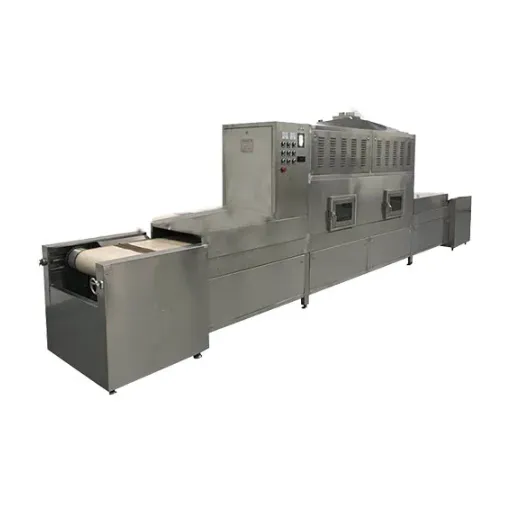
Innovative Solutions to Enhance Drying Efficiency
Recent trends in Microwave Drying Machine technology are mainly influenced by the solutions developed to resolve problems of non-uniform heating, energy shortcomings and final product moisture content. A concept that has been explored is the incorporation of hybrid systems where microwave technology is used in conjunction with traditional drying methods such as hot air or freeze drying. The premise of such hybrid technology is based on the inner heating advantages of microwaves and the drying ability of other methods to obtain products with a uniform moisture content without distorting the products. It helps minimize energy use by cutting down the drying period and enabling a better temperature gradient within the material.
One more essential upgrade associated with microwave drying controllers is forecast involve in system transforming intelligent, precise process in which all is dynamic – real-time or macro up to an algorithm allow the drying system to be exact.That saves such a system from over or under drying, which is usually happened with all relevant cases, and helps in maintaining the quality of products under control. These systems can nevertheless be monitored and switch on special dryings assigned to operator, as a result these machines fight-offs dogmatism and provide work space more freely.
New, existing studies, too, are dedicated to the material appropriate design of the microwave, particularly concentrating on the industries which deal with sensitive products like food and pharmaceuticals. These considerations are taken into account in the designs of the microwave cavities to incorporate changes such as tuning the frequency and dielectrics to match the materials’ absorption. Such systems allow for energy savings whilst avoiding overheating of the heat-sensitive products because the elecromagnetic field in those systems is adapted to the materials. Besides, improvements to the vacuum microwave drying technology for appropriate low temperatures location paired with these devices in no way stands still, and further enhances drying techniques thereby providing effective, green and quality drying techniques applicable in numerous industries.
Future Trends in Microwave Technology for Pet Food
Microwave technology is applied in the food industry, including pet foods as consumers increasingly ask for energy consumption precision, nutritional preservation, and of course, massification of production systems. It is very likely that adaptive controls with adaptive control strategies of drying and cooking operations with real-time sensors and machine learning algorithms will emerge as well. Therefore, every batch is prone to optimum working conditions in terms of quality control, and it minimizes the risk of potential deviations in the process, where even proteins and omega acids are less subjected to changes in their structure.
There’s yet another advancement that involves the integration of microwave technology with other types of processing called microwave applications. In other words, such a system makes use of both microwave energy as well as techniques such as infrared heating or convection. This combination of practices brings about improvement in warming respective areas of a food substance addressing, a historical concern, which is rout of reheating areas in high density materials. Additionally, as microwave fabrications become more powerful and added low frequency applications become possible, achievement is made in terms of penetration of materials, particularly pet foods in forms needed, such as extruded kibbles, while lessening the problem of burning upon surfaces.
Sustainability is also the direction where many changes are aimed towards. Food processing companies are making steps towards improving microwaves that use less energy and do not contribute to global warming. This is because they are able to recover wasted heat within the system. Changes in the shape of microwaves do not stop at these. Those in think tanks are even attempting to come up with plastic and other forms for wrapping microwavable products only that they are eco-friendly and biodegradable ensuringthatthegreenagenda doesnotstop at the production stage.
In general, these advances in technology highlight the industry’s efficiency, quality and sustainability in pet food processing, which goes in line with consumer demand as well as regulatory requirements.
Case Studies and Real-World Applications
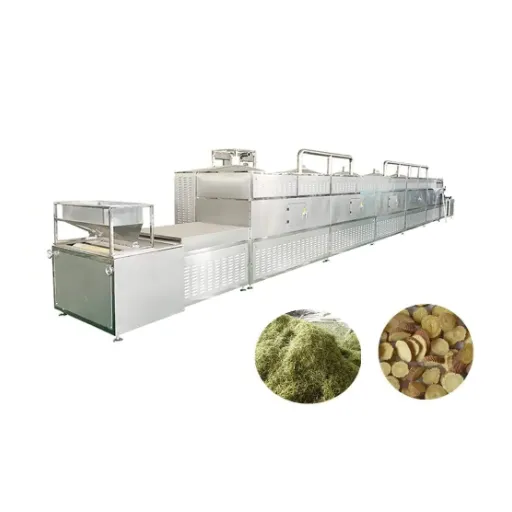
Successful Implementations of Microwave Drying
Microwave Drying Machine has remained a practical tool in several sectors because it is flexible, consumes less energy, and attains accurate moisture levels. A good example includes the pet’s food industry in which microwave technology has advanced to designing systems that are able to make use of the technology effectively for drying the animal food without compromising the nutritive value. It also saves the amount of production time that could have been used in conventional drying techniques thus speeding up the process and lowers the cost of production.
Just like the food industry, the pharmaceutical sector has also started using microwave drying in the manufacture of tablets and capsules, where moisture control has to be ensured with great precision. As a result, the pharmaceutical industry is able to maintain the structure and longevity of the products that are mostly humidity sensitive. Some pharmaceutical organizations for example, have stated that an improved batch consistency was noticed and as much as 25% decrease in energy use was achieved with the aid of a Microwave Drying Machine, while adhering to the very rigid manufacturing regulatory guidelines.
Another area of successful application has been observed within the scope of microwave drying in the sphere of foodstuff processing: fruit, vegetables and seasonings. Organizations which have adopted this technique encounter low nutrient deterioration, enhanced color retention, and reduced processing time. In other words, drying of spinach and carrots for instance has been demonstrated to hold 90% chlorophyll and beta carotene respectively hence why such practice is most suitable for high sierra health foods.
Such practical applications prove that microwave drying machine has an aspect of adaptability and a potential for a wider application within industrial practices aimed at effective and eco-friendly ways of producing high quality products.
Lessons Learned from Industry Leaders
The majority of industry leaders in microwave drying machine are teaching us one such lesson — process optimization. The pioneer companies, on the other hand, have shown that control of the power density, drying time, drying moistures, and levels of sanitation is important for improving the quality of the products and to optimize energy utilization. Lately, for instance, some of the extensive food processing units within the leading food manufacturing companies have embraced control systems that adaptively control the microwave energy supplied in real-time depending on available moisture sensors and reduced energy loss while ensuring even drying of the products. Burns make capitalize on the improvement of the technology driven by sensors and automation systems to support the changing competitive industrial practice.
There is also a lesson of including microwave drying into existing non-thermal and/or other thermal drying methods to form hybrid systems. Leaders in the industry have witnessed the episodes where infusion of microwave drying with such traditional processes like hot air and vacuum drying was more than the cumulative effect of the two technologies, improving drying characteristics as well as product properties. For example, it has been shown that hybrid systems can address such problems as non-uniform moisture content and excessive heating which are typical of microwave drying approaches. Gathering information from pilot experiments and full- and commercial-scale deployments, the resources suggest that hybrid approaches are scalable and flexible for a wide range of materials from crops to industrial plastics.
Finally, the industrial units deploying the microwave methods of drying stress an extraordinary significance of the environmental issues. They are well aware that the mode of drying using microwave does not augment the energy consumption and therefore it could be argued that the carbon emission reduction strategies will be met. With the use of alternative sources of electricity in running microwaves and focusing on adequately drying without wastage, the attention of the producers is now concentrated on ensuring their processes are entailing sustainability. More so, many entities have realized the essence in measuring and disclosing of improvement of environmental devaluation which is in enhancing public confidence and promoting the utility of microwave drying, as a development oriented economic and environmental practice. These lessons teach that with regards to the practice of microwave sublimation drying, such changes have to be approached in multiple ways with everybody striving to outdo the other through various innovation practices.
Statistical Insights into Performance Improvements
Over the years, Microwave Drying Machine has been associated with significant improvement in many performance parameters as compared with traditional methods and these include energy efficiency and drying rates. Studies have shown that microwave drying has the potential to reduce energy consumption by 30% to 50% compared with warm air drying. This energy saving, in turn, reduces the running cost of the system and contributes to the global goal of reducing emissions. In addition, some researchers have reported reduced drying times with moisture removal rates in microwave systems being as much as 5 times faster than the conventional drying mechanisms thus allowing factories to increase throughput and productivity.
The ability to manage moisture content during the entire operation is another huge plus as shown by the figures. Traditional ways of drying are often associated with variations in moisture content of the end product with some getting part of it rejected and then repackaged. This is unlike the drying method that employs the use of microwaves which is inherent ly more stable since all tests conducted on it show variations of one percent to two percent in moisture levels from one product to another—an important factor in the pharmaceutical, food manufacturing, and ceramic sectors. That precision means that products are thrown away far less often, making production more efficient whilst improving compliance with standards.
Additionally, research assessing the use of microwave drying systems underscores the advantages of their lifetime Value. Industrial several references tend to depict a Return of Investment after 1.5 – 3 years, with different attempts because of their capacities, different application and energy cost considerations. This investment opportunity becomes more attractive as operating expenses are minimized due to the simpler construction and less number of moving components of these dryers vis-a-vis the conventional ones. Microwave drying has also benefitted greatly from the introduction of sensors and systems capable of offering information regarding the process in place. This allows for a process of constant improvement as opposed to just using raw materials and processing them. This data has the potential to show how best these technologies can be used especially when drying materials and in the various industries practiced today.
References
-
Research Shows Promise for Microwave Rice Drying Systems
Arkansas Agricultural Experiment Station
This research discusses the application of microwave technology for faster and more efficient rice drying. -
New and Innovative Technologies for Firewood Sanitation
Michigan State University Extension
This source compares microwave kilns with infrared kilns, highlighting their efficiency in drying applications. -
MILDTECH – Low Cost, Low Temperature, Rapid and Energy Efficient Drying
USDA National Agricultural Library
This project focuses on microwave-assisted vacuum systems for food drying, emphasizing energy efficiency and rapid processing. -
The Use of Microwave Treatment as a Sustainable Drying Method
PubMed Central (PMC)
This study explores the effectiveness of microwave drying, providing detailed experimental results. - Click here to read more.
Frequently Asked Questions (FAQ)
Q: Could you please explain what a Microwave Drying Machine is and how it functions?
A: A Microwave Drying Machine is a device that makes use of electromagnetic radiation generated by a microwave source, and heats and evaporates water condensed in different materials. As opposed to the conventional microwave ovens, the industrial microwave drying machine design involves controlling microwave heating power, temperature regulation, and a conveyor or vacuum system for good and even drying of various products. The microwave energy is absorbed directly by the product, which leads to simultaneous heating throughout the product, thus enhancing the drying rate unlike some practice methods like hot air blow dryers or ovens.
Q: What is the difference between microwave drying and hot air drying?
A: In the process of food drying, In the process of food drying, Microwave Drying Machine has a faster drying effect as well as it better nutrients and flavors because of internal heating which means less exposure of food to high temperatures. It is also very interesting that in most cases, when people use microwave dryer machine rather than the traditional drying ways like using hot air or drying in the oven, they enjoy more uniform drying, less energy consumption as well as the ability to dry and disinfect at the same time, in case some of the drying machine’s design enables that.
Q: Is it possible to use a microwave to perform food drying for sterilization purposes?
A: Most, but not all, of the microwave drying apparatus includes both drying and sterilizing capabilities. It is possible to perform both functions using a single device as long as certain specification of that particular model of the machine for sterilization reasons contains heating water due to quick increases in the internal temperature leading to the described function of sterilization along with drying of animated objects or any other surfaces which cause the existence of germs. Industrial microwave drying apparatus incorporates functions of drying along with sterilization for some goods and such an equipment is called a sterilization and drying machine.
Q: What industries make use of industrial microwave drying systems?
A: Various industries, especially those that have industrial applications namely food and pharmaceutical productions, chemicals as well as wood, or textile industries appreciate the practical benefits of industrial microwave drying equipment. Industrial-Microwave-Systems, who house a wealth of experience and have adequate facilities, uses these, amongst others, employing and manufacture of equipment within microwaves that ensure increased drying rates, microwave vacuum drying for heat sensitive examples and uses in particular industrial drying of certain materials while preserving their character – unnecessary after the fuel costs.
Q: Is there a variation in applications of vacuum versus conventional drying, and what is its application?
A: The process of techniques in treating the vacuum beneath the home base with metals in a new generation of vacuum oven has always been very easy. It is suitable for any product which takes time during set up – in particular during food preparation where performance is essential. Especially in the case of food commodities, that have more prone to thermal damage, the microwave drying machine in combination with a pre vacuum is quite effective and even results in the structure being uniformly dried as compared to the conventional methods of blow air dryer.
Q: Are there any possible hazards, say leakage from a microwave, and what is the remedy to that?
A: Any problem linked to microwave leakage or cooking evenly is solved by putting in the right materials, using protection according to the rules, and servicing the machine regularly. Industrial microwaves have interlocks, shields, as well as other anti leakage systems installed, with the operatives expected to respect the medisoinal prescriptions. Also, The control of power, timers and other safety measures during the industrial operation is often done by PLC controls.
Q: Does the changing of the of microwave system;power level and temperature have any impact on the drying process quality?
A: Drying speed, drying uniformity, and the retention of nutritional quality and taste are enhanced by this control of power and accurate control of temperature. The microwave power must be adjusted to avoid the effect of overheating or hot spots, and it is the job of PLC and sensor to manage these changes. In particular, most materials reach this optimum power and duration of microwaving, which ensures that the drying process is completed faster and without compromising the quality that is normally witnessed in the case of very lengthy hot air drying.
Q: Is Microwave Drying a Cost Efficient Technique in Industries?
A: It is a time and time consumption efficient method because the process produces energy and that energy dries. Therefore, it takes operational time and heat efficiency time in the positive sense as opposed to the standard hot air drying method that takes hours and hours of preparation. For some, industrial microwave drying machines are more expensive in the beginning. However, they can process the products more quickly, with less manpower, or even combine sterilization with drying and helps to make the process more productive.
Q: What products and what kind of materials can be dried using a microwave?
A: As microwave dryers It can be used for several materials such as dried foods, flowers and spices, pharmaceutical materials, ceramics, or even some chemical intermediates. It all depends of what is desirable with the material in question, especially the moisture content, heat-sensitivity and dielectric properties. If the products are fragile, it would be better to dry them in the microwave in vacuum, but for large scale usage with robust products a large scale microwave with an industrial drying conveyor system can be used in order to reach the uniform dryness and efficient drying. Also, it is possible to resist industrial batches separated by the reinforcement of dispersed microwave action inside the product. Therefore, spore surface is achieved, allowing a good penetration of the spores and other pollutants (for some sensitive products).