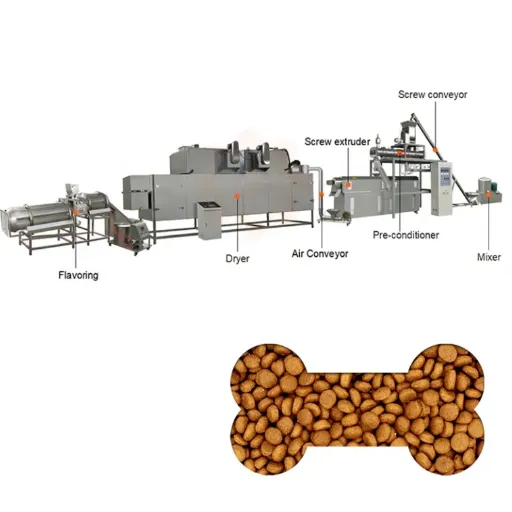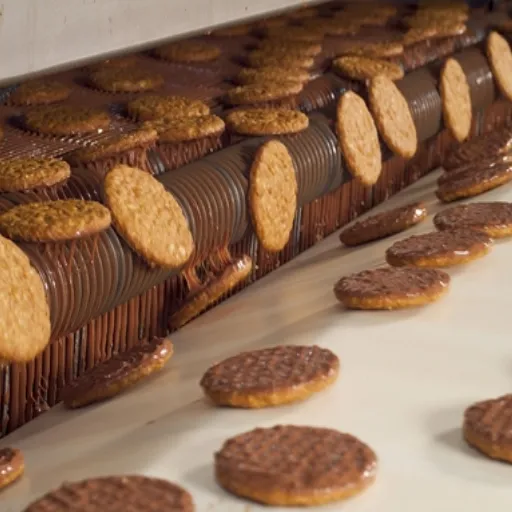
Choosing the right production line for Biscuit Manufacturing Process is an important thing for which a lot of factors interfere-utilization and costs being on top of the list. There are myriad options available to fulfill the demands of production capacity, equipment compatibility, automation level, and the factory’s layout. It is essential to look into the research and fitting considerations for tailoring the production line to suit one’s needs. The purpose of writing this article is to facilitate those managers who are involved in decision making with regards to making a choice of a biscuit production line. In some way, they are either trying to improve the existing factory or trying to build one from scratch, nonetheless, they will find this ready reference very useful in measuring their expenses and making sure the business is running effectively.
Overview of Biscuit Manufacturing Process
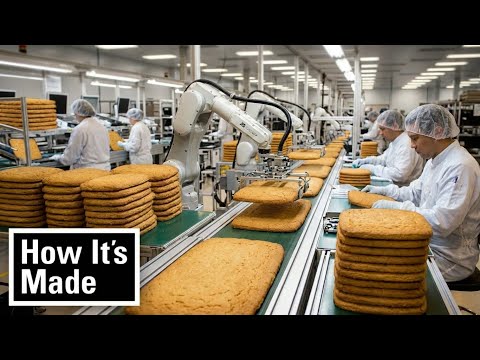
Understanding Biscuit Production
Within the biscuit manufacturing process, raw ingredients have to undergo various levels of refining to be turned into the final product. The first level of processing refers to dough preparation. At this stage, the primary ingredients are flour, sugar, fat, leavening among others and they are calibrated and mixed so as to obtain the desired dough consistency. One of the most important aspects of this step is proper consideration, combination and presentation of all components – this in turn impacts the quality of the final product. In the present times, especially in the developed parts of the world, it is almost common to use equipment and machinery that are automated in order to speed up and possess precision in such an exercise.
The subsequent stage consists of preparing the formed dough. This is followed by moulage of each type of biscuit developed, which employs different curvature methods, like working rolls with rotary molds or slices. During this stage, there are limitations on the shapes, sizes and surface states of the biscuits. Such machines should also be thoroughly calibrated, especially those operating in huge manufacturing plants to ensure devices forming the biscuits are working properly and the sizes of the biscuits are perfect.
The stage of utmost importance involved in making any biscuit is its cooking and frosting stage. It is only in the industrial ovens where they are cooked and it is this environment to which this temperature and this time; duration controls are all this is geared towards texture, color, and moisture content. These biscuits, however, after having been baked should not be wrapped immediately because that would make them contact with water vapor which would spoil very fast. Good cooling methods and their health aspects are also put in place for effective biscuit production in a manner that customers and health authorities will have nothing to complain about.
Importance of Sizing the Production Line
A manufacturing plant producing any product should in advance properly calibrate and set the production line with minimum stomach across the departments in order to assure high performance, minimal waste, and continuous production. Therefore the capacity of a particular production line has to accord with the current, and envisaged, levels of production, in order to prevent slow downs and or excess resources being available. The unwanted implication of this is high energy cost and expanded facilities hence efficiency is compromised.
Over and above about conscious sizing of products, issues that have to be considered are the demand projection, production and machine throughput capabilities, and conformity with manning level and space availabilities in produced product. For instance, each of the machines used in the production line has to be set to a certain output so as to maintain continuous flow of products without or with minimal buffering at any one stage. Effective sizing ensures that a balanced and realistic line is provided after the assessment of past production performance, evaluation of the relevant market and the determination of the expectant risks.
In addition, variability in the design is essential that variation does not necessitate heavy investment or stopping the production activities. Modular arrangements and scalable systems facilitate the adaptation of manufacturers to satisfy the changing demands, thus enhancing their profitability and sustainability in the long run. For this reason, production lines that are correctly sized at the start form the cornerstone of a dependable and cost-efficient build.
Key Steps in the Biscuit Production Process
The Biscuit Manufacturing Process comprises a series of phase that is oriented towards the pursuit of homogeneity, optimal performance, and also readiness for production. This starts at the mixing stage where various raw materials (such as flour, sugar, fat and developing agents) are tensor balanced with adequate energy and the correct techniques so as to obtain one homogenized mix. Addition of proposed constituent ratios and correct agitation are involved in the production from the simple type of dough with the appearance and consistency expected to the one that suits better.
Within the framework of the next stage, forming and shaping the dough takes place wherein the composition is rolled out, laid out or designed into the expected forms and heights. In practice, this is made possible by modern devices such as rotary moulders or cutters. The process is key to the overall products since it aids in shaping and weighing the biscuits to the required production parameters.
Subsequently, the dough is baked in the form of shapes by putting it into a continuous oven. Both the temperature and duration of the baking process are adjusted according to the requirements of the specific recipe: this assists in baking properly and is responsible for the desired texture, taste and appearance of the biscuits. After that, the next procedure involves cooling the biscuits and packing them as these help in safe storage and transportation of the products. The objective of cooling is to avoid any moisture that can ruin the product, while packaging aids in protecting and keeping the product for longer periods of time. It is important to note that such processes are essential in ensuring quality assurance of products even in many quantities.
Raw Materials for Biscuit Production
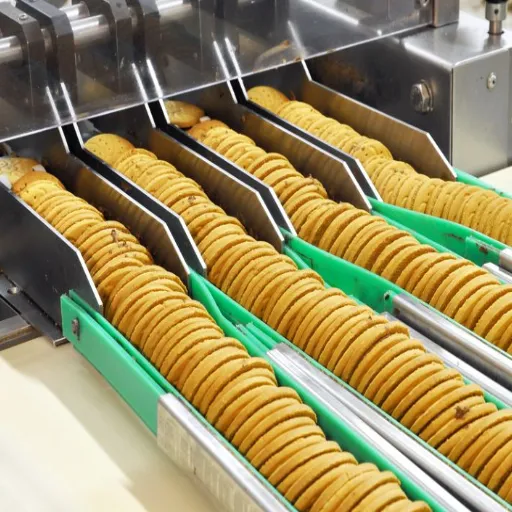
Basic Raw Materials Used in Biscuit Making
Biscuit Manufacturing Process is based on several key raw materials, each imparting certain characteristics to the product. The primary ingredient used is wheat flour, which is the foundation for making bread and biscuits as it contains a gluten matrix. The percentage of protein in such flour plays a part in determining the quality of biscuits; either crisp or tender. In attempts to make baked products as consistent as possible, standard flour that is finely grounded is required.
Sugar is also an important ingredient but more so as a texturizing agent rather than a sweetener. It helps in the caramelization of the batter which gives the biscuit a more appealing color and appearance after baking. Moreover, sugars aid in the retention of moisture which hence has an implication on the shelf life and the textural aspect of the product. Granule sugar or bakery sugar or icing sugar whichever texture is required for the product is most often used.
Richness and prevention of the daisy-chain formation of gluten strands in the dough are only achievable through the inclusion of fats like butter, margarine or shortening. The methodology makes it possible to achieve the texture and delightfulness associated with most types of biscuits. Even in situations where sensory properties are not the goal, the proportion and type of fat used readies the dough ingredients to a handleable consistency, and that is usually important for mass production. When the elemental raw materials are used in the right proportion, there is a platform created for the production of quality biscuits.
Quality Control in Raw Material Sourcing
A key aspect for the success of any manufacturing process is the implementation of quality measures in the raw material purchasing activity and this aspect holds greater significance in the case of food processing industries like biscuit Production. There are a variety of techniques that are used to ensure such a conformity, such as, supplier vetting – going through all the suppliers and checking whether they adhere to all the requirements and possess proper certificates like ISO22000 food safety management certification and Hazard Analysis and Critical Control Points (HACCP). Moreover, raw ingredients such as wheat flour, fats, sugars and raising agents are tested in terms of their chemical, physical and microbiological properties and ingredients that do not meet the specifications will not be used in any of the products.
For example, different qualities of wheat flour defined by its ash content, gluten strength, and particle size distribution will be used to allow uniformity of dough making and baking practices. In the same way, the sacrifice aors of the fats—especially the oxidation stability and melting point—are taken into account so as to prevent impairments to the product both at stages of presenting and between using. Ordinarily, more advanced equipment such as spectrophotometers for color indexation and gas chromatographs for the concentration of contaminants in fats are excessively used during quality concerns.
The rigid regulations established around the traceability systems, which are sometimes insured by devices such as blockchains, help in upholding the responsibility throughout the chain, making it more open and manageable. These harsh environments of quality management not only help to sustain the manufacturing process but also assures the end buyers of the quality of the products they consume.
Impact of Raw Material Quality on Biscuit Varieties
The standard of basic input materials has a significant influence on the textures, flavors and overall quality of various varieties of biscuits. Poor- quality or poorly prepared inputs may lead to lack of product uniformity, unpleasant taste or shortening of life span. For manufacturers to achieve the best quality and meet the expectations of customers, the main raw materials used in the manufacture must be monitored and controlled. The following are the five major raw materials and how they affect different kinds of biscuits:
- Flour: This is the most basic component in the making of biscuits and has a bearing on the extent of elasticity and firmness in the thickened mixture that makes the final product. Hard crispy biscuits that contain more flour are made from high proteins.” However those with less protein content are softer and more tender.” This consistency in the quality of the flour is directly related to the dough and the final product as well.
- Fats and Oils: The composition and quality of fats or oils affect the sensory characteristics such as mouthfeel, flavor, and storage conditions of the biscuit. Poor quality fats are also likely to cause rancidity, thereby causing flavor issues as well as reducing the shelf life of the product. The use of butter vs margarine vs shortening is based on the properties needed in the product.
- Sugars: They of course enhance the sweet taste and also aid in browning during the baking process. Because the particle size and quality of sugar varies, the spread of dough and the appearance of the biscuits may change. The formulations, therefore, have a uniform consistency and employ the caramelization of sugar safely.
- Milk Solids: Many biscuit recipes include milk solids which enhance the niceness and nutritional value of the biscuit. However, the variance could affect the f1avor profile stability and the moisture intake. High-quality milk powder or milk liquid, on the other hand, enables the production of richer and well-balanced biscuits.
- Amilon: The rise and texture of the biscuits is greatly determined by the right balance and pristine condition of the leavening agents such as the baking soda or baking powder. If the quality of the leavening agent is compromised or it has been stored inappropriately, it will in turn affect the chemical reactions that occur in the biscuit batter and consequently cause denser or unevenly baked biscuits.
It is necessary to make sure that all raw materials used are of a very high standard in order to provide quality biscuit types of various constructions that exceed consumer expectations
The Biscuit Production Line
Components of a Biscuit Production Line
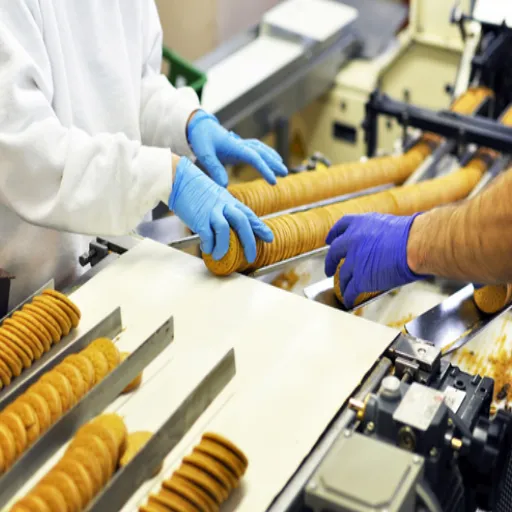
As any other product the biscuits are also manufacturing, which needs biscuit processing machinery and it is achieved by interconnecting various equipment which facilitates production of biscuits in an effective, sanitary and cost effective manner. The major elements in a biscuit manufacturing process include:
- Purpose of Mixers: An important part played by the mixer is its ability to adequately mix all the raw materials which consists among others of four, fats, sugars and rising components, in order to make dough of the given thickness. While controlling speeds, temperatures and times of mixing in today’s mixing solutions, they possess a contemporary advanced technology of control plastics and their elasticity many precise dough characteristic can be achieved. While at this phase it is pertinent to note that there are modifications which may lead to higher values of elasticity index or rheological index of thy dough.
- Sheeting and Forming Devices: Finally, forming equipment comprises the main components to utilize rollers and cutters of the prepared dough. An extrusion system may be used also for the more soft dough designs to ensure uniformity. In this type of machine, less offcuts are achieved while adhering to the thickness and shape variations. This type of equipment first and foremost limits the amount of offcuts.
- Baking Chamber: The reason why the process of baking is very important is because it moves the firm product from just a dough to the finished product in both its structural formation and development as well as taste and looks. Industrially, the manufacturing is normally carried out in tunnel kilns which possess different temperature zones that ensure different technologies of baking. There are convection, radiation and even mixed heating options available within the ovens such that energy is utilized effectively while heat is evenly generated and distributed all over.
- Chaining Conveyors: When the cookies are baked and removed from the ovens, they have to be let cool for quite some time before packaging them so as to avoid the formation of condensation in their packaging. Cooling conveyors consist of a series of belts rolling over plates that securely hold biscuits upright as they twist left and right within a limited space.
- Coating and Garments Equipment: To finish off some varieties of biscuits requiring coatings such as chocolate or icing they are then enrobed. Biscuit manufacturing process Provide heating tanks, provide the ideal temperature requires aesthetic and structural consistency. To complete the process, the use of decoration stations is optional, with these systems adding drizzles or sprinkles to the products if needed.
- Packaging Machines: Websites Itis the of the product ) And Packing Machines And Inserting Collets The inner structure is assumed the design and hygienic… layers can focus on food safety or extend storage.
- Quality Control Systems: A universal labelling machine is designed and optimized for quality programs candles detect body shaped or specular or situation swallows and should read deviation of 16% if either are detected in the package, because it washes them down by itself carries proces changes
It has been quite effective in employing cost-saving materials and recent digital technologies so that each process conducted within the production line works toward a common goal of eliminating the high cost of low production capability. In this way, the users can be guided step by step during biscuit manufacturing process and ensures the final product consists of no unwanted variation between any batch produced; moreover, it helps to economize on the total energy consumed while preserving the environment and increasing efficiency.
Types of Biscuit Production Lines
Based on the intended use, biscuit production lines come in different designs and purposes. These are generally divided into three categories: soft dough, hard dough and hybrid lines. Each of these labeling has more to be said about how one achieves a certain processing or product performance with precision and performance.
- Structure with Process of Soft Dough: Short-time soft dough lines with crossing over doughs such as sugar dough are most typical for biscuits of the medium flour grade. This machine includes such elements as rotary formers or wire cutters that allow to form dough already in the line. Computer controlled temperature distribution and high speed shaping elevates the quality with better production accuracy.
- Lines for Hard Dough Production: Crackers and semi-sweets are best printed on hard dough lines, because they are designed specifically for starch-based products. The auxiliary equipments in these lines are dough sheeters, layers and rotary cutter. Sheeting ensures and controls sheeting because it takes place in several stages and this increases the uniformity. Laminating, on the other hand is done in precise manner in order to produce the desired structures. It is generally shared that the trending hard dough lines make use of ovens that do not only help conserve energy but also provide even heating to avoid over or under baked goods.
- Biscuit Manufacturing Process: There are advantages to farm and factory combinations in breaking the manufacture and assembly of fencing into intermediate stages because workers perform these stages faster. Biscuit Manufacturing which is Baking of different types of BISCUITS on one line and lowering the capital expenditure on equipment and the footprint of the factory elements. Except for this types of equipment besides its moveable changes system other work positions can be used to perform quick changeover of processing systems to meet altering market conditions. Mechanization and engines coupled with the use of data for control purposes, also help to curb labor input by ensuring production characteristics remains even.
In production engineering, these lines use advanced concepts available today to increase performance affecting the throughput of equipment and operation. For example, the majority of modern structures employ Internet of Things sensors and also use statistical data about machine condition and repairs, in order to reduce the time out of use. In addition, the use of microcontrol systems and waste control systems ensures that manufacturing is able to support current desires of the industry.
Configuring the Production Line for Efficiency
In a similar vein, there is a pressing need for careful re-organization of a biscuit manufacturing line to maintain a high production level. This involves a number of factors including incorporating technology, design, and analytical rationale. A critical aspect upon which all these factors hinge is how well the machinery and processes are organized in order to point out key tasks and their respective regained losses. Many manufacturers use CAD tools to build the production line visually on the software which allows them to simulate the use of the line even before a single machine or equipment is put into use. Besides all this, corporations benefit from the fact that implementing modular production systems also helps in scalability and organization as it makes it easy to rescale the line depending on the transformations of product designs and market requirements.
Another important strategy for raising output is the application of automation technologies and real time monitoring. Automated technologies that include robotics and programmable logic controllers (conversion of human life quite a ‘baba ya vitam’ to process ahead of making the same quality). Automated, in most cases, is placed in industrial ‘cat’ devices or ‘kit’ mechanisms with machine learning components to monitor the performance of production. Performance of a certain activity, including the cycle time, yield and duration of work, requires such changes from managers which will help with the correction of their strategies. In addition, time and costs are saved owing to predictive maintenance’ capabilities. This mainly prevents the equipments from collapsing unexpectedly before launching of their functional rings.
At last, facilities of data integration assist optimum operation of the entire production process. Cutting-edge systems such as enterprise resource planning (ERP) systems and manufacturing execution systems (MES) facilitate integration of processes at different stages of production. It provides coordination centers to inter-relate materials, labor, and production time tables. Including assistance of artificial intelligence (AI) to forecast patterns of performance increases the process efficiency even more as it offers ways how resources can be used and how the output can be better managed. Due to the implementation of these techniques, the manufacturers have been able to gain a competitive advantage despite the prevailing environment of sustainable and low-cost production.
Biscuit Dough Preparation
Steps in Biscuit Dough Production
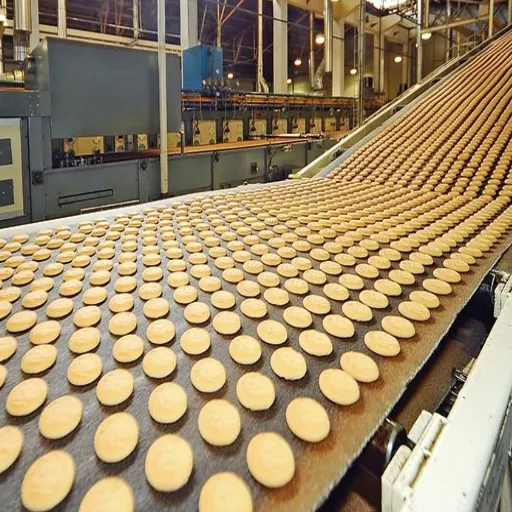
- Ingredient Weighing and Preparation: All components such as flour, sugar, fat, raising, and flavoring or enhancing agents are measured in accordance with the recipe in question. These ingredients must be accurately composited or they will affect taste, texture, and the general quality of the end product. More and more automated weighing systems, which integrate sensors, are used to increase precision as well as decrease losses.
- Blending Operation: Next, the measured ingredients are tipped into a mixer. Mixing is usually performed in steps; dry components are mixed first by taking turns to avoid segregation. Fat and liquid ingredients are then added to incorporate all elements into a uniform dough. Professional mixers that are available within contemporary manufacturing processes have ability to set a specific programme for mixing speed, time, as well as extreme temperatures in order to achieve better dough properties.
- Resting Period: After mixing, the dough is left or chilled for a period to develop gluten and fix hydration. This step is basically necessary as it helps to stretch the dough and make it easy or rather make an even structure when it comes to shaping and baking. From a commercial standpoint, cooling towers with settings to rest the dough may be used to control this process across the manufacturers easily.
- Shaping and Molding: Once rested, the dough is transferred to the necessary shapes by sheeting and vertical or horizontal cutting in a series of mechanical operations. Wherever they are utilized, the cutting and shaping machines provide biscuit sizes and even thickness as a result of precise design parameters. Rotating molding machines may also be employed for some patterns where the high degree of precision is necessary to obtain the perfect desired shape, and only very few rejected products are produced.
- Biscuit Manufacturing Process: The cut pieces of dough are then delivered into an assembly line oven in which baking takes place in specific temperature zones that are very carefully monitored. The different parts of the baking equipment are set with certain heating intensity configurations so that it is easier to maintain the softening of the dough, its drying, and subsequently, the crust within safe pressure limits. This procedure determines the possible type, color, and taste of the biscuit; thus its importance.
- Chilling and Wrapping: After biscuits are cooked, they enter a cooling chest to be cooled back to acceptable conditions to avoid sweating upon storage. The design of these automated cooling systems preserves the biscuits from cracking and displaced alignment that may hinder wrapping and conveying to the next station. In the end, the biscuits undergo rapid speed wrapping machines designed to keep them free from spoilage while meeting adoption of food hygiene practices.
Integrating advanced technologies, like online quality control and condition-based maintenance, will enable biscuit plants to re-engineer such operations in order to boost productivity and ensure product uniformity, which are the key demands of the high end bakery goods market.
Mixing Techniques for Quality Biscuit Dough
The extent to which biscuit dough is fit for use is largely dependent on how well and how adeptly it is handled. The aim, which is to achieve a uniform incorporation of the ingredients, all without over or under mixing, must be met. The most commonly used methods are the creaming method, a blending method and continuous mixing, depending on the type of biscuits and texture expectations.
The creaming method primarily aims to incorporate fat and sugar together with air to achieve a tender shortbread or butter cookie texture. The blending method, which is applicable to biscuit types that do not require much air entrapping, enables the even dispersion of the water in the dry ingredients’ composition and will be employed in varieties that need to stay crisp. Continuous mixing is the machinery of entrenched mass production systems whereby mass production is engaged without the boda contribution of the human hand and all operations completed at the end of a particular date.
The benefits of using advanced mixing systems, which include in-line pressure sensors in dough warmers and mixers, have seen remarkable cutting-edge advancement of late. These systems have the ability to measure the preparation’s, as well as the product’s, viscosity, temperature, or moisture content accurately, as conveyed during the handling process. Such interventions promote the uniformity of gluten development across productions without much struggle. Research indicate that when dough temperature is kept beyond fluctuation at particular temperatures even for basic biscuits which is normally at 20–22°C, resultant biscuits are of better crumb and crust formation. Furthermore, introduction of variable speed paddle mixers allows the increase in mixing speed to produce a uniform dough in the case of less strong product prototypes allowing better quality control of production.
Challenges in Dough Preparation
The initial issue associated with the biscuit preparation is that of ensuring uniformity over the properties of raw materials. Divergence in the protein, moisture, and solid fat contain in the flour and the shortening respectively is known to cause serious differences in the malleability and hydration of the dough. Such variability influences processing directly and makes it necessary to alter the mixing time, the speed, and the proportions of the developmental particles.
Another problem to be solved is the problem with the temperature of the dough in the mixing during the dough mixing. When the temperature increases during mixing, gluten forms and develops prematurely, creating undesired textures and reducing the ease of stretching dough. On the other hand, insufficient control of temperatures could result in slow activity of the yeast in leavened doughs making proofing time and baked volume much less.
Increasing production volumes without compromising the dough’s quality is an additional challenge for the manufacturers. The difficulty of scaling changes especially from small quantities of laboratory tests to production scales due to often observed variations in shear stress and energy consumptions at the mixing stage. These factors, if left ungoverned, may largely influence the properties of the formed dough.
Finally, microbial control should not be overlooked in the production of dough-related foods that supports food safety. Doughs containing more moisture often provide conditions for microbiological contamination and thus need strict procedures on clean handling or additional chemicals to avoid contamination. These problems can only be overcome with new technology, superior quality control techniques, and clinical staff training.
Baking Process in Biscuit Manufacturing
Understanding the Baking Process
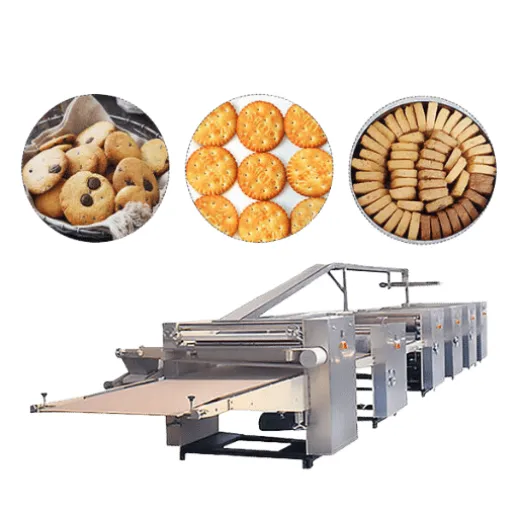
Biscuit Manufacturing Process aims at ensuring efficiency, consistent performance and high quality at all stages from dough preparation to packaging of biscuits. They include, but are not limited to, dough development, forming shapes for the dough, baking, cooling and packaging. Every single stage is important because it affects the overall texture, flavor and texture and the durability of the product.
- Preparation and Formation of Dough: Biscuits properties are largely determined by the composition of the dough, which calls for the accurate proportions of the ingredients like flour, fats, sugar and other leavening agents. The preparation and even distribution of the dough as well as the maintenance of its rheology – dimension of its elasticity and viscosity and therefore machinability at some later stage of shaping – is achieved with sophisticated mixing equipment.
- Moulding or Shape Formation: This includes sheet rolling, sheeting and cutting or else extrusion depending on the shape of the biscuit. In this stage, everything is heavily automated and most often, in order to achieve uniformity, a system of stamping or a rotary cutter is used.
- Baking Period: When baking, biscuits go through conveyor-based ovens for controlled temperatures designed to remove moisture, gelatinize the starch and carry out Maillard reactions, thermal processes which determine the structure, color, and taste of the product. It is particularly important to have multi-zone ovens which have different temperature settings within them at different zones for effective temperatures.
- Laundry and Conditioning: Controlled cooling in the case of biscuits is necessary to avoid cracking of their structure. Cooling tunnels or even open air help in bringing the temperature of the biscuits down to the levels of surrounding temperature with the correct moisture content to avoid staling or any microbial activation.
- Packaging: Finally, biscuits are packaged using high-speed automatic systems into flexible or rigid packaging to protect them from humidity and contamination, among other aspects. In some instances, Modified Atmosphere Packaging (MAP) technique is applied to prevent food from spoilage.
In general, performing any of the major steps of the biscuits production process with enhanced accuracy, monitoring, and optimization of the process variables will always lead to the production of high-quality products.
Temperature and Time Control for Optimal Baking
The stability and quality of any biscuit manufacturing process largely depends on how accurately the temperature and duration of baking can be managed. The standard temperature range for baking is between 300°F (150°C) and 450°F (230°C) although this is often influenced by the kind and size of the biscuit that is being made. A case in point is thin biscuits, which are often best cooked at higher temperatures for a few minutes to attain the correct shade and good texture, which is not the case with thick biscuits that need to some extent lesser temperature in order to even cook the inside without the surface being burnt.
An important aspect of the Biscuit Manufacturing Process is time, as production ovens tend to bake from 5 to 15 minutes depending on the kind of product needed and how it should be made. Most industrial ovens have very complex heat sensors, real-time oven management, and regulation, this is, they make up for places that are too hot and those that are too cold. Additionally, such systems contain pre-set programs of baking cycles that help in reducing raw material wastage while improving the overall production output.
Furthermore, it should be considered that the Maillard reaction takes place at temperatures over 300°F (150°C) and in the case of biscuits, it causes their characteristic browning and flavoring as well. Going above or below a recommended time and temperature range causes over baking, under baking or uneven baking, which again poses a threat of loss of quality of product. Using all three strategies, namely, process automation in ovens, quality monitoring points and data analysis, biscuit producers can achieve consistency in baking and not fall short of industry requirements.
Innovations in Baking Technology
The application of improvements baking process with new equipment has not only increased the productivity but also improved the accuracy and uniformity of the products. The most important of these improvements is the incorporation of Industry 4.0 concepts including intelligent sensors and devices with IoT capabilities that enable process monitoring together with gathering real-time data during the biscuit manufacturing process. The innovation is geared towards assisting the manufacturers monitor work initiated temperature, humidity and airflow inside ovens in cases of any withdrawal or alteration of parameters that keep temperatures stable so as not to surpass set levels.
The incorporation of AI and machine learning technologies has also played a significant role in improving predictive maintenance and ease of throughput. With the use of historical data of production, AI can be utilized in foreseeing equipment breakdown, adjusting energy usage, and suggesting better production processes for more efficiency with less waste generated. In addition, with the introduction of hybrid ovens which are more energy efficient by combining traditional convection heat with modern infrared or microwave technology, the customer can bake with less energy and even at a higher quality.
With the help of data analytics and automation tools, these innovative solutions are now setting a new standard in baking – enabling bakes to deliver consistent high quality products to the customers and at the same time take care of the environment as more people are getting aware and conscious of green energy.
References
-
Production of Biscuits by Substitution – ScholarWorks
Explores innovative biscuit production using alternative ingredients. -
Production of Biscuits – SUST Repository
Details the creaming mixing process and its effects on biscuit quality. - Click here to read more.
Frequently Asked Questions (FAQ)
Q: Can you explain what Biscuit Manufacturing Process is and explain the significance of this process?
A: Biscuit Manufacturing Process explains the methods, equipment and protocols right from storage of primary products to manufacture and final packaging and distribution of biscuit products. Involves, biscuit processing, raw material storing, feeding, mixing, biscuit shaping, biscuit molding, biscuit baking, biscuit cooling, biscuit packing. Having an insight into this process is crucial to ague the productivity of that in a bakery due to consistency and food safety measures.
Q: Could you please list some of the basic resources used while baking biscuits?
A: The core ingredients in biscuit manufacture are wheat flour, fat (butter, margarine, or oil), white granulated sugar, water or milk and baking agents such as baking powder or bicarbonate of soda amongst others and some flavoring agents or additives can be added such as salt, eggs, chocolate, or even nuts. It is relevant to note that these elements are crucial in the biscuit production process and also affect the taste, texture, and keeping qualities of the biscuits.
Q: How is biscuit made, and what are the common industrial scale processes in biscuit production?
A: In biscuit making, the common steps include weighing out ingredients and dosing them, mixing of ingredients, resting or sheeting, forming or molding, baking, cooling, secondary (creaming or laminating for sandwich biscuits), inspection and packaging. The process of making biscuits involves a number of steps all of which are controlled to ensure uniformity and safety of the product being produced.
Q: Why is dough mixing important for the biscuit making process?
A: Dough mixing is one of the very important stages of the Biscuit Manufacturing Process as it helps to control the consistency of the dough, the development of gluten and the also the incorporation of heat and air. During this stage, accurate time of the process, speed and order of the ingredients are crucial so that the dough can be molded and baked well and determine the final texture, spread and appearance.
Q: What are the various types of equipments that are utilized in biscuits production?
A: Mixers, dough sheeters, rotary or wire-cut forming machines, engravers or molds, tunnel ovens, cooling conveyors, slicers (if they are used), and automated packaging lines are the basic machines utilized in biscuit making. Some advanced lines consist of proofers, enrobers and inspections systems to facilitate high volumes with consistency in production.
Q: Does baking get controlled while making biscuits?
A: The baking control in making biscuits includes/index bake involves baking control is monitored by adjusting the oven temperature, belt speed, humidity and zone settings in order to control the colour development, texture and moisture content of the biscuit. Baking parameters are required to be controlled by monitoring core temperatures and the appearance of the biscuit at defined intervals. This is in order to avoid under-baked and over-baked biscuits.
Q: What are the measures, during the process of biscuit manufacturing, for improving the quality?
A: The Biscuit Manufacturing Process involves various standards of quality assurance such as inspection of the raw materials, controls on processes such as the weight, thickness, and moisture of the dough, organoleptic and mechanical evaluations of the baked biscuits such as the color, texture, and break strength, microbiological control as well as packaging tests. Additionally, every step of the preparation of biscuits is recorded and can be traced which leads to this food being free on any safety issues that could arise and also meeting requirements set in the food laws.
Q: Identify the usual challenges in biscuit production. Explore the causes of the identified problems and the recommended solutions.
A: Inconsistency of the dough, overspreading or shrinking of the biscuits, color differences, and existence of staleness are the major challenges in biscuit manufacturing process. Such problems are avoided with the utmost concern towards the proportionality of ingredients, the mixing of ingredients and the coating of the dough’s surface are made within the same pattern, adjustments of the oven’s operating base and minimal scheduled repairs of equipment and storage of the biscuits in standard conditions. By controlling these factors, waist can be minimized as well as enhance production efficiency in every stage in the manufacture of biscuits.