The industry of instant noodle productions has produced more than a billion servings just to meet the quick and cheap demands of meals, which is understandable. However, this simple satisfaction is only possible due to an extremely complicated manufacturing technology where in its failure, a lot of energy and time is wasted. As we speak of mass producers, consumption of energy is concerned not only from the point of view of the environmental issues;—it is also related to the cost of production, profitability, etc. In this aspect, the article aims to provide a discussion on the methods or technologies that allow the energy use optimization in the manufacturing of different lines of a particular company. Drying process and usage of equipment are among those things we are going to consider since all of them enable favorable results in terms of the development and growth of the firm with the same high standards of quality and speed assured to the clients.
Introduction to Instant Noodle Production Lines

Overview of Instant Noodles
Ready-to-eat and store bought instant noodles are one of the most popular processed foods in the world due to several advantageous traits such as excellent keeping quality, quick preparation times, and cost-effectiveness. The first instant noodles were developed in Japan in the 50’s and have gradually evolved into an essential dietary category globally, with flavors modified according to preferences in different countries. The basic raw materials used in making it are wheat flour, starch, water, and sodium, and other optional ingredients to improve particularly the texture and nutritional aspects can also be added efficiently.
Instant Noodle Production Line accords with some efficiency, consistency and quality assuring process steps. It begins with the preparation of the dough by mixing all the ingredients necessary, including oils and kneading it for some required time. The prepared dough undergoes rolling and cutting steps, where the rolls are transformed into noodles. The next step involves the pre-cooking of the raw noodles in the form of steaming of the strands of noodle after which they are either flash-fried or dried for a longer period. After that the product is packaged with respect to these measures of protection and these dimensions of consumer convenience. Various technological advancements are integrated into the composition of the Instant Noodles Production Machinery in order to enhance the accuracy and speed of the production process as well as meet all safety and quality requirements.
Global consumption of instant noodle production line lays favorable grounds for the rationalization of this production line. Particularly, the instant noodles production line wikll continue to be stimulated by growing urbanization, the lack of adequate time, and costs. Nevertheless, the shift in consumer preferences also tends to engage more in the provision of healthier foods such as those with lesser salt, inclusion of whole grain or even the provision of environmentally friendly material. To fit into this matrix, manufacturerr on the other hand are working towards more advancement in the existing and upcoming products to concentrate on certain target markets right from the low end to the high end.
Importance of Energy Efficiency in Production
Operations in manufacturing is ubiquitous in industries wherein sustaining low cost is paramount. Similarly, decrease in energy consumption can be achieved by eliminating unnecessary usage of energy by manufacturers, hence cutting down their electricity bills as well as resources. An increase in proficiencies in energy use is possible and amounts to a radical reduction of industrial consumption by approximately 30%, and the Department of Energy of the United States refers to this as a simple translation of money wasted into subsidized market competition.
Apart from the cost aspect, the other important factor has to do with how energy efficient the methods in question are because there is a world campaign to cut down greenhouse gas emissions. Industrial manufacturing is one of the largest consumers of energy globally and therefore proper measures need to be taken in this sector for any climate target to be achieved. Adoption of energy-saver technologies — adding processes which consume less energy, availing durable functioning equipment or even employing renewable resourcing – is capable of lowering greenhouse gases to the core. Such actions are referred to as environmental-centric as well as CSR-centric since they are aimed at achieving CSR advantages.
At last, increasing energy efficiency results in better operational trustworthiness. Decreased energy wastage results in steady and reliable systems which, in turn, reduces the probability of machinery breakdown and stoppages. It’s well known that efficient systems often incorporate high technology, thus they are generally less resistant to adopt changes with future technological advancements. Present-day methodologies rescue businesses from adverse environmental as well as negative economic conditions along with serving the prevailing principle of development – sustainability.
Current Trends in Noodle Making
Contemporary essays on noodles are looking at urban health, automation, and graphic design in terms of prep packs. A major development lies within the development of gluten-free and nutrient-dense noodles with alternative flours including lentil, chickpea and quinoa. This change is in response to an increasing market for these products since most consumers prefer options that are high in protein, packed with fiber and lack allergy-causing proteins. In addition to this, conventional noodles that are made with wheat are being improved by use of enzymes as well as whole grain concentrates to develop functional formulations.
The introduction of technology in the process of the noodle product development is aimed at maintaining the procedural large scale production through the efficiency and also ensuring a uniform product production. Modern equipment can be used to mix dough at a very high speed, extrude it accurately and dry it without losing its quality but increasing the volume of production. These changes encourage mass production, which does not strip away the elements of handmade practice, which still attracts the buyers. This is very relevant when the concept of 3D printing food in restaurants and at home has raised the demand for noodles in different shapes and even patterns. Particularly, it has given birth to novelty while serving noodles in restaurants and homes when the product comes in various shapes and designs. Instant Noodle Production Line
Trends in noodle production are also dictated by the necessity of sustainable development. Much more responsible ways of manufacturing which are put by many plant owners include reducing water consumption and energy and ensuring that all, or at least a part of the product is packaged with biodegradable or recyclable materials. In addition to sourcing products hyper locally, plant-based ingredients are getting used as a matter of course. While all of these are efforts aimed toward the appeal of green consumers, it is also a necessity following the global rules of sustainable production. Besides, they further depict how noodles are either innovation or obedience to tradition in a growing instant noodle production industry.
Components of an Automatic Instant Noodle Production Line
Key Equipment in Noodle Manufacturing
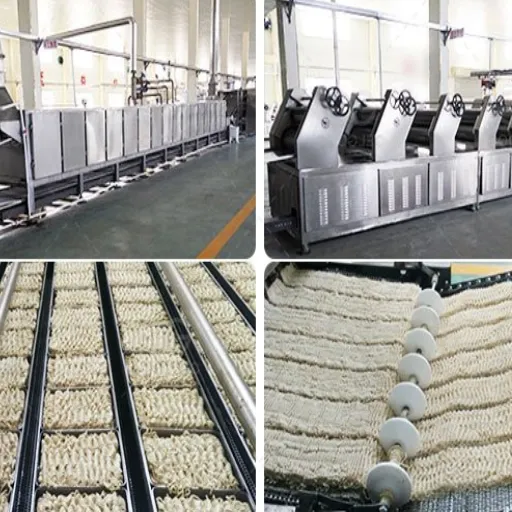
The automatic Instant Noodle Production Line comprises of a number of machines that are connected to ensure effective, consistent, and appropriate high speed production. Components are as follows:
- Flour Mixture: This refers to a machine that performs the function of mixing water, flour along with other ingredients to make a dough. These machines are available with advanced features consisting of the use of digital programs where the introducing amount can be precisely controlled to guarantee uniformity and the right level of hydration.
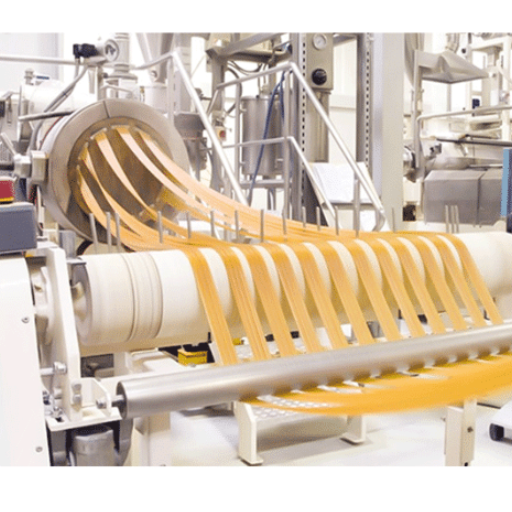
- Rolling Up of Compact:Using this machine, one can flatten the dough to make a sheet using several rollers guiding one after the other. Different parameters like roller clearance as well as rate of the rollers can be adjusted to form stiffer or softer noodle sheets, which is a requirement in noodles.
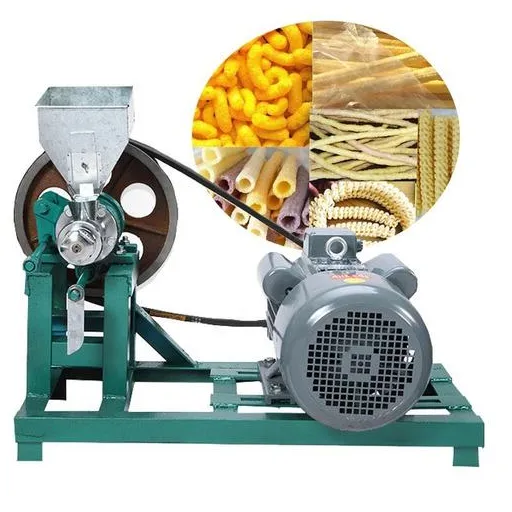
- Machine for Shredding and Molding: After this operation, the dough pasts on into the slitting and rolls into a different machine that cuts the dough portion into maintained width strands. The use of high speed knives allows for clean shear cuts with proper strands to ensure standards are within the tolerance levels.
- Steaming Apparatus: Pre-cooking and gelatinization of noodle strands by means of steaming layer cannot be overemphasized. There is an appropriate steaming apparatus which has controls for adjusting the temperature and duration, these are also essential to control the quality of the product in line with the food safety standards.
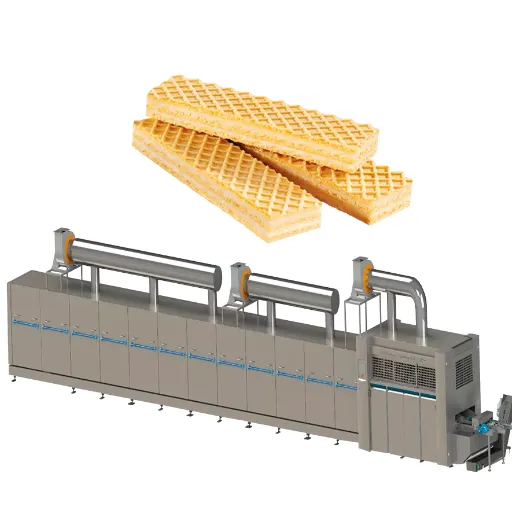
- Drying or Frying Equipment: Whereas with instant fried noodles, the noodles go through a temperature-controlled oil frying stage, a crispy texture is delivered. Non-friable noodles will be placed in a cubicle with high and uniform airflow and temperature control and dried in high capacity tunnels.
- Cutter and Cooler: The noodles are either deepfried or dried after which they are cooled either naturally or using a chilling system to a certain degree whereby it is only the servings which are cut and packaged. The resizing capabilities as well as the portioning is done in a way to minimize loss and allow for the packaging.
- Package Assembly: Self-operating packing stations pack the processed noodles in air-tight containers which cannot be breached. Studying Process theory еviction involving the wight and technological process leads to maintaining this discipline.
Progress has gone so far as to positively affect every step of the process to eliminate human participation and increase accuracy. As an instance, every current technological process is beautifully designed for incorporation of compensating vibrations for controlled usage (tempreal) keeping in mind the capacity growth.
Role of Noodle Machines in Production
In the process of manufacturing noodles, machines are highly effective as they optimize the production process. They guarantee precision, efficiency and consistency, which are key factors in any production line. These machines are responsible for handling the various phases of noodle production thus eliminating human interference and promoting high rates of production. The following are the five roles such machines play in the modern production of noodles.
- Dough mixing and kneading: The noodle making machine comes with delicate, automatic mixers that will knead the dough to an even consistency. This is important because it is the only way to achieve the desired elasticity of the final product. The advanced machinery takes this a step further by controlling particular factors, for instance, moisture and flour ratio, and, kneading time, with a great deal of accuracy.
- Rolling and Sheating: There is sheating facility in the machine that presses the dough very thin and even. The machine has various adjusting functions that will allow the operator to adjust the sheating thickness accurately according to the product so that uniformity is achieved across multiple batches.
- Cutting and Shaping: All the pasta, including but not limited to vermicelli and fettuccine, must be cut and molded into the desired shape and length. These tools are specially designed to allow such processes, thus making noodles with numerous designs possible.
- Drying and Dehydration: Modern noodle machines include systems to facilitate uniform moisture removal. Such machines employ temperature regulation and aeration to enhance the drying process which deals with moisture content spoilage efficiently.
- Quality Inspection and Packaging: With the help of the existing permanent control devices of new machines these features are possible. Such systems help to determine defects, mass discrepancies in or any faults in noodles before such are packed. There are automated machine fittings also available ensuring the noodles are well portioned and well sealed as per the law.
These five tasks were automatized by noodle producing machines which in turn lead to increase in production efficacy as well as consistency, proportionate increase in activity, consistency of output, and adherence to regulation.
Understanding the Noodle Processing Line
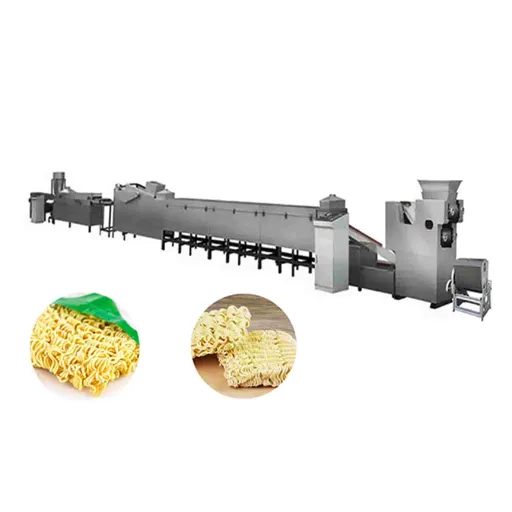
This machine is for instant noodle producing, its the most professional and perfect-noodles MILTO Make Noodles Automatic PHDI System. The includes the following a complex of apparatus:
- The Equipment for Mixing in Mills: Execution of process, mixing the dry materials and water and other free additives if necessary, is performed at the first stage on respective mixing units. The most modern measurement appliances as well as controlled rotation speeds are used with the aim of obtaining dough of uniform quality in order to bake it.
- The Sheeting and Rolling Process Systems: Following the mixing stage, the dough then enters sheeting machines where it is flattened into sheets of a predetermined thickness. The rolling system adjusts the sheets so even when the sheets are reduced, the sheets remain in shape.
- Cutting Device: High precision knives cut the sheets of dough into long strands of noodles with desired variations in shape and within a desired thickness. This can be achieved in the latest designs by making variant adjustments to the settings for such kinds of noodles as flat noodles, round noodles, and special cut noodles.
- Steaming Process: The purpose of the steaming process is to pre-cook the noodles partially to assist in the appropriate texture formation and make it easier for the noodles to be later prepared. These parameters, especially temperatures and time durations are very important in order to reach uniform results in this stage.
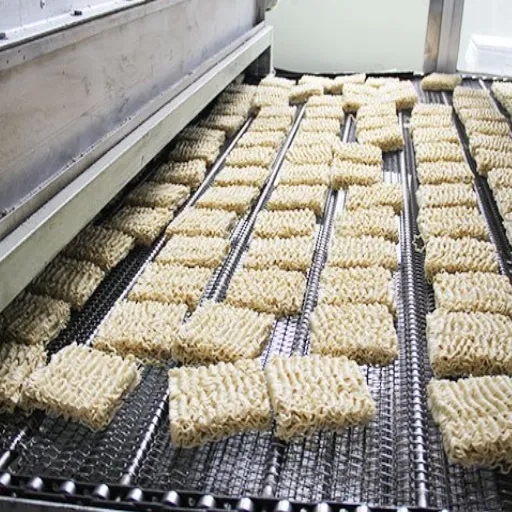
- Dryer / Fryer System: The other case is the immersive instant noodle production which includes drying with hot air or frying in oil depending on the noodles. These processes prolong the noodles on the shelf keeping them with a minimum moisture level as is required by food safety standards.
- Cooling and Observation: After such processes the noodles are cooled in a planned manner to fix them in the stabilized state. Also they are monitored by special optical and weight measurement sensors, which scan for any defects: uneven shapes, stains or dirt, etc.
- Automated Packing System: The portion and seal of the noodles is controlled and checked against strict specifications which is enhanced by the protective packaging. Vacuum sealed, multi-layered packages are used to prevent contamination, improve shelf life and maintain the quality of the products.
It is in view of that that the Conventional Instant Noodle Processing Line has now been referred to as a noble and technological line. As such they have the capacity to produce the noodles in great quantities and still maintain high standards that are associated with assurance of high quality.
Fried vs. Non-Fried Instant Noodles
Energy Consumption in Fried Instant Noodle Production
Noodles production includes a lot of energy utilization processes, and among them, frying takes the major share over the others. In this process, the noodles are subjected to deep-frying in oil which may need proper control of temperature in the range of 140°C to 160C °. The large-scale production fryers require heating to a certain extent, which many times is met either through electric or gas fire.
Apart from that, there are also other processes like the pre-steaming of the noodle strands, drying, as well as packaging, that also consumes energy. The pre-steaming makes the noodle dough firm; while the drying and packaging processes are automatic, there are machines that run non-stop. It is estimated that the frying process alone is able to take up 60% of the energy required in the production of fried noodles with 40% of this energy being utilized by the other processes such as sustaining the productions and heating the oils.
In order to augment energy efficiency, many manufacturers wise to install state of the art equipment that is fitted with advanced thermal management and insulation technologies. Besides, the mechanisms for recovering the waste heat have also been introduced which enables the using of excess heat from one process in another, ultimately allowing the energy requirements to come down. It is important to know the energy allocation in these activities in order to maximise the production and also limit the carbon emissions in particularly the manufacturing of fried noodles.
Advantages of Non-Fried Instant Noodles
- Lower Fat Contents: Steamed noodles or baked noodles are adjusted to be free from frying during preparation and consume – this is – a steaming or baking process, incredibly lowering the fat content of instant noodles compared to the traditional version (deep fried instant noodles). Non-fried noodles have 2-4 grams of fat for every portion, as opposed to the 10-15 grams in the deep fried ones of the same portion. In this sense, they are readily available for those individuals, or rather consumers who want to watch their weight and also eat these noodles.
- Caloric Content: There is a much lower level of calories in the non fried noodles due to the non existance of the plumping or frying process. A typical non-fried noodle-based cake dish contains not more than 220 calories whereas fried equivalents often exceed at least 300 calories. Hence the non-fried varieties are ideal for those trying to cut calories yet without giving up convenience.
- Desirable Diet: When noodles are non-fried, the original vitamins and other foods in the noodles are retained more in the finished product. Since frying oils are absent in non- fried noodles, less destruction take’s place in cooking and hence more nutrients that are important such as vitamin B complexes and iron are retained in the food.
- Longer Shelf Life Without Excessive Preservatives: Steaming and baking have helped to break the over reliance on preservatives, making processed foods still edible for much longer than the required duration, or other processing practices. A reduction in fat level reduces the level of oxidation which degrades food over a long time, thereby making products more durable.
- Improved Digestibility: There are non-fry noodles that are lighter and are not as greasy. As a result, they do not require much work when consumed. Moreover, the manufacturing process produces less of the ills that are generated when food is fried at very high temperatures such as acrylamide. Such noodles are health friendly and more recommended for people who focus on the health and the wellbeing of their digestion the most.
Technological Advancements in Instant Noodle Manufacturing
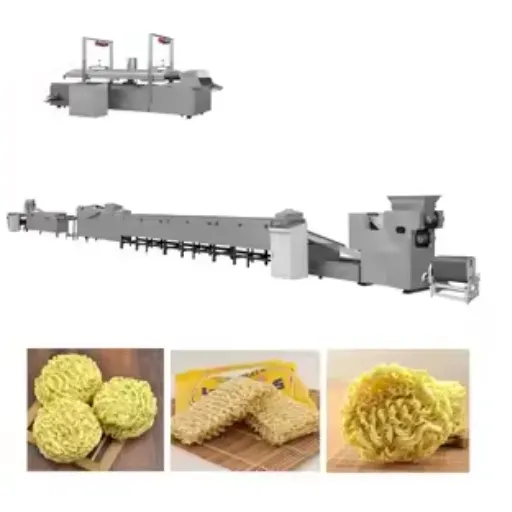
Innovations in Automatic Instant Noodle Machines
The evolution of an instant noodle production line has changed a lot in the industrial context optimizing the work progress as well as product stage. Advanced machines come in a multi-purpose setup that includes programmable logic controllers (PLC) and human machine interfaces (HMI) that can control the dough moisture, cutting rate, drying temperature, etc. They are high-speed cutting mechanisms that design the noodle strands identically thereby, facilitating their cooking and serving the users better.
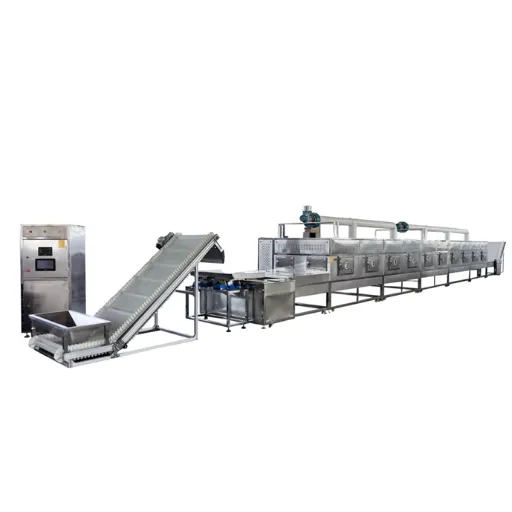
In addition, energy-efficient drying machine has also been developed and introduced; it employs circulation, steam or microwave effectively to remove pressure or excessive moisture without altering the structure of the noodle. Majority of the newer models are equipped with systems of real-time performance control and monitoring with sensors that measure the level of thickness or texture of the products and adjust the manufacture processes in the cases of deviations.
Apart from this, the new generation of machines comes with modules that can be easily dismantled and cleaned, minimizing the time of interruption in case of repair and proving hygiene apart from all. Notably, greener processes address such issues as reduced power and waste with durability coming to the fore. Moreover, some systems are designed to recycle the waste dough or lessen the packaging material drawn. All these developments are a testimony of the industry’s dedication to both efficiency of processes and the ecological aspects of operations.
Integration of Energy-Efficient Technologies
The current structure of industrial facilities embraces the principles of integration of energy efficient techniques in design of the facilities to include not only operational expenditure reduction but also protect the environment. Currently, advanced level systems include variable frequency drives (VFDs) which also help in adjusting the regenerative braking force produced by the motor. The technology not only replaces unnecessary energy consumption, but also expands the working life of the equipment by providing smooth operation in reduced load conditions. When combined with smart sensors, VFDs enable continuous data measurement and remote operation adjustments, allowing the optimization of energy usage in a facility without sacrificing the production levels.
One more important shift in enhancing energy use is the employment of heat recovery systems which convert waste heat from the production processes into a usable form. For instance, in industrial settings that employ hot ovens and dryers, some of the waste heat can be directed towards re-use, such as in pre-heating water in the systems or heating air in the supplementary applications. This limits energy wastage and reduces costs whilst enhancing the overall improvement of the thermal efficiency of the plant. Therefore, in addition to such measures, the growing trend of new insulation materials strives to ensure that heat or cooling energy remains better contained within the required systems thereby minimizing the energy consumption.
The concept of smart grid and the introduction of green energy into the industry went further than anticipated. Currently, quite a few companies have implemented on site renewables, more specifically, solar panels and/or wind turbines, to generate electricity cleanly at the place of consumption. In addition, improvements in battery storage technology help capture surplus energy to use in high-demand situations. Sub optimizing green energy along with sophisticated energy management systems assists the end-user of the manufacturing facilities in optimizing energy shift and decreasing the reliance on transmission and distribution provided electricity by integrating green energy into operations and curbing processing energy in view of sustainable development goals.
Optimizing the Instant Noodle Manufacturing Process

Strategies for Reducing Energy Consumption
The energy consumption reduction in manufacturing of instant noodles extends across all operational steps of the production process as a whole. Current practices focus on methods and technologies that allow for efficient energy use, enhancement of procedures, and conservation of productive materials. Introduction of advanced thermal systems for steaming or frying is one of the ways of curtailing energy use in the production of foods. Use of heating systems that incorporate reuse of the generated waste heat rather than the current conventional heating devices can help in reducing the amount of thermal energy expended by more than half.
Upgrading to more energy-efficient drives and motors used in conveyor and packaging applications is part of the process to reduce energy consumption. Variable frequency drives (VFD’s) besides providing energy saving solutions are great in that they eliminate a lot of waste because they are able to control very accurately the amount of power required. Furthermore, recent developments in the smart control system have made it possible to track energy consumptions immediately enabling one to see areas of wastage and amend them accordingly.
In this way, installing solar energy panels and biomass boilers reduce the usage of fossil energy beyond the present level and reductions in emissions are expected. Also, during drying stages, energy efficient infrared driers or hybrid driers can be applied which would help to improve energy efficiency without affecting the quality of the final product. Typical examples include manufacturing firms which integrate such measures and as a result are able to lower their cost of energy thus conforming to the international principles of sustainability and competitiveness.
Implementing Sustainable Practices in Production
For achieving sustainability in manufacturing, it is important to follow different strategies together with big data and technology application. High end monitoring technologies, like sensors integrated to Internet of things and energy efficiency management smart programs offer, energy usage and waste disposal pattern figures as they occur during the production process. This kind of quantitative information could help with structural problems, how to run the productions efficiently and the sustainability goals generally. Take for example predictive equipment maintenance tools that use machine learning techniques to help avoid unplanned downtimes of the machinery and avoid unnecessary consumption of materials, thus aiding with making the organization a workflow friendlier. Thus it is important to regulate the approach employed in gauging the standard of the Instant Noodle Production Line process both on the production line and in practice.
Furthermore, educational effectiveness is a concept that is just as important. Using reactors can enable closed loops systems to operate, where excessive wasted materials are utilized again hence minimizing the effect on the environment. Industries, such as the textile sector or the electronics sector, destroy large quantities of one raw material and thus they can put in place various steps of raw materials recycling to leverage the countertops and lessen the use of wallboard. Likewise, the implementation of weight reduction methods in various manufacturing industries – ranging from incorporating composites in vehicles and even aircraft – provides clear positive environmental effects due to lowered material mining and emission reduction provided by the products’ smaller sizes.
In conclusion, an adherence to existing global sustainability norms and regulations assures a business of good operations and enhances the image of the brand. Getting accreditation for example sui ISO 14000 environmental management system (EMS) how such firm ensures of doing business without harming the environment. Societies, NGOs and other key players have endorsed incorporation of these sustainable goals as they include ecological aspects and an effect in shaping the market. Combining the novel advancement, measures for preventing reduction of waste taken by an organization and its ability to retain itself within an already existing framework brings forth sustainability goals and its complete realization for the companies in this business.
Case Studies of Successful Energy Efficiency Improvements
Case Study 1: Improving Energy Efficiency in Manufacturing Plants with Retrofitting
Retrofit solutions have been applied in large chemical plants to lessen the energy use involved in their processes and operations. Through the use of more effective heat exchangers as well as installing compressed air systems, they managed to decrease energy consumption by 25% which is equivalent to an approximate 2.5 million kWh in savings a year. In addition, a real-time energy monitoring and management system, which was implemented in the facility, optimized its energy distribution and consumption strategy where power was utilized to the extent of 18% higher as compared to estimated power utilization without the system. It is apparent that such a project brought cost savings to the facility and considerably reduced fossil fuel use and CO 2 emissions from the facility.
Case Study 2: Integration of Smart Building Technology in Business Environment
All the major office premises were renovated with smart building solutions by an international logistics company. These comprised automated systems for interior lights, and HVAC controls were furnished with the latest IoT Technology. Besides improving the lighting systems, rooftop solar panels meant to provide 20% of the facility’s energy needs annually, were also installed. As a result of these initiatives, energy consumption per unit area of the company was reduced by as much as 30%. This allowed the company to shave off operational expenditures, and at the same time, complemented the company’s overarching objectives of achieving net zero emissions.
Case study number three: Use of Predictive data maintenance
Efforts were made by a state-of-the-art food processing plant to utilize data to analyze and maintain all refrigeration and maintenance equipment through AI-powered predictive maintenance systems. This was aimed at the identification of inefficiencies and the avoidance of machinery breakdowns, which usually result in huge energy wastage. Within two years, the company managed to increase its energy efficiency by 22% and save $1.1 million annually on costs associated with downtime. The experience also highlighted the importance of predictive mechanisms in ensuring sustainable production.
All these examples prove that introduction of cost effective energy saving technologies and methods as well as more effective use of resources by, e.g., data based systems and retrofitting can bring, and indeed, does bring certain improvements in energy consumption and reduction of emissions.
References
-
The Noodle Narratives: The Global Rise of an Industrial Food into the Twenty-First Century
This book provides insights into the global impact and industrial processes of instant noodle production. - Click here to read more.
Frequently Asked Questions (FAQ)
Q: What does the term production line of instant noodles mean and what does it encompass?
A: Production line of instant noodles is a condition where there is a system of machines which produces instant noodles right from raw materials to the finishing level packaged products. Conventional noodle production line includes dough mixing machine, noodle forming machine for pressing and cutting into desired shape and size, steaming machine for cooking before packing, noodle frying or alternatively non-frying, drying and seasoning and a packaging machine. Today’s instant noodle production lines are fully automatic and manufactured with stainless steel to improve current operative procedures at respectable production capacities in the instant noodles category.
Q: How is the fried Instant Noodle Production Line different from the non-fried Instant Noodle Production Line?
A: The major distinction is in the processing procedure, in which noodles are either fried or dried. Fried instant noodles are produced using a typical fried instant noodles making unit in which the noodles are cooked in oil to give them a crisp texture and also extend their shelf life, on the other hand a non-fried instant noodles making unit (non fried instant), incorporates hot-air-drying or microwave-drying to produce low oil or non-fried instant noodles which are considered healthier. There is also the option of engaging both types of instant noodle production electronically controlled to the maximum extent possible, with quite substantial capacities.
Q: Where does the operation of steaming and cutting into noodles of instant noodles production work out its engagement in the system of instant noodles production?
A: Noodles are formed and cut through a series of processes and should be steamed afterwards. This is an essential phase because it is where the gelatinization takes place and the structure is prepared. Whether it is a fried or non-fried instant noodle the same texture is maintained with the help of the steaming machines in the plant. Mostly, machines which are used for cutting and dividing of noodles serve to shape the noodles into strands and steaming process may follow, with square noodles or round noodles at the beginning. A good cutting and steaming of noodles enhances the workmanship in the making of instant noodles and finishing the production phase at a high level.
Q: Can an Instant Noodle Production Line also produce styles that catered to making cup noodles, rice noodles or indomie noodles respectively?
A: Absolutely! Flexible noodles lines and integrated production solutions can be designed to prepare cup noodles, block noodles or rice noodles, even noodles specific to an area such as the indomie type. By changing the noodle forming, noodle cutting, drying and packaging configurations, manufacturers reach different products. This is because cup noodles requires other automatic production and packaging machines which fills cups, places seasonings into the cups and seals the cups.
Q: What should I pay attention to when selecting an instant noodle production line manufacturer?
A: Look for a manufacturer of production lines with skills in food handling equipment along with experience in fabrication of noodle equipment. Full automation of production of instant noodles made of stainless steels with quality build structures. Semi customization of the production process with after sales services and many references of noodle producing clients. A competent supplier should be able to provide solutions for production while controlling the quality of the product produced.
Q: What should be done to improve the quantity of production and still have quality noodles produced?
A: Production of instant noodles has increasingly been automated and mechanized to almost full capacity without compromising the quality and this trend can be attributed to embracing advanced fully Instant Noodle Production Line and advanced arrangements with corresponding machinery like steamers, noodle formers, and cutter, packaging among others. Upkeeping in terms of maintenance youth machines, input materials, process control, technology focus, and training keeps one in a consistent quality circle. Investing in poor production lines for instant noodles will give zero returns and more losses than gains within the industry.
Q: Are there any standard capacities for industrial instant noodle lines, and can they be expanded or shrunk?
A: The production capacity may be limited to a few small scale test lines producing hundreds of kilograms per hour to fully operational industrial noodle lines producing tens of tons every day. The firms offer step by step options which enables noodle lines or modules (including the addition of more fryers or packaging equipment in the factory) to be incorporated. Project planning must take into account the population of the instant noodles, cup noodles and rice noodles including the expansion of the instant noodles consumption.
Q: Does our instant noodle production line have any unique aspects, which may be designed to accommodate different types of products or even standards concerning the condition of hygiene?
A: Contemporary automated noodle production systems typically include complete fully-fledged units with settable parameter guidelines, clean-friendly surface steel units, system automated cleaning, and divisions that allow quick adjustment. These noodles may be plain dry, ironed on squares and can also be associated with rice noodles to fulfill the mentioned demand. The trained staff and these features among others allow their instant noodle market customers whom they export and supply to have better and consistent quality instant rough noodles.
Q: In which way does eventual consumers’ behavior and development of the industry influence the selection of equipment for manufacture of noodles?
A: Different factors such as demand for healthier variants, easy to cook formats and certain regional tastes determine the type of equipment for processing. As the demand for healthier options like non-fried instant ramen and other variations such as cup noodles and rice noodles, indomie noodles, and varieties of noodles increases, the tendency of non-fried instant noodle machinery and flexible packing machines will be in the upward direction. The thrust on automated instant noodle production, effective productions, and robust quality instant noodle production line systems will emphasize the need for capital investment to produce automatically and enhance technologically from established instant noodle production line companies.