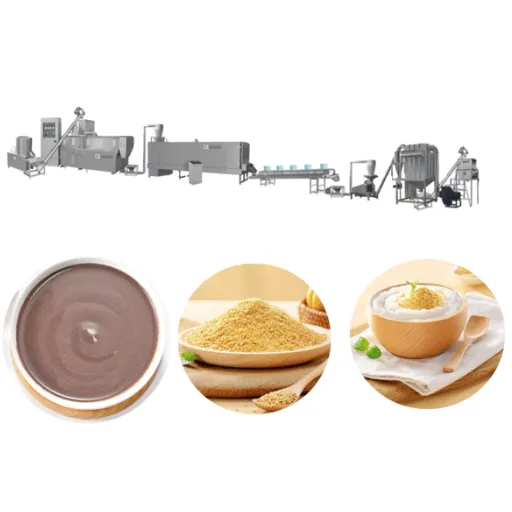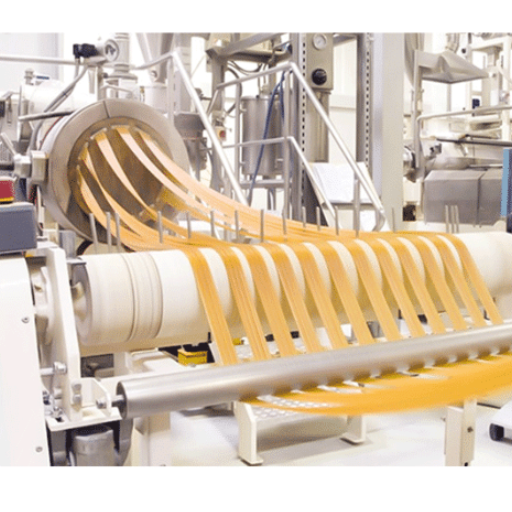
Pasta production requires advanced engineering methods together with culinary skills to create its final products. The manufacturing processes used for spaghetti and macaroni differ from each other because these two pasta types require distinct production methods which create their popularity among consumers. The production process needs different tools because both shapes and textures of the two kitchen staples create different requirements. This article presents an in-depth examination of the technical details necessary for making the two popular pasta types which includes information about the special equipment and methods that create perfect spaghetti strands and macaroni curves for each dish.
Pasta Manufacturing Process
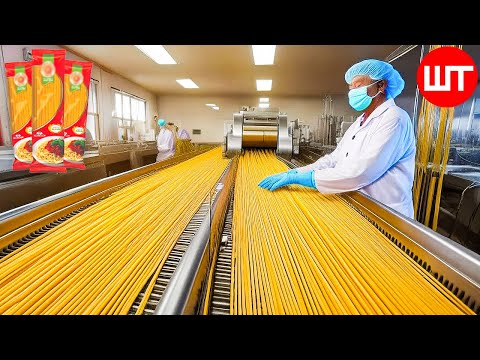
Overview of Pasta Production
To begin with, pasta is manufactured with a couple of things that are considered raw materials, and they include water and more importantly semolina obtained from durum wheat which is high in quality. The two ingredients are mixed together but in a very systematic and controlled way to form one single dough. As a suitable replacement, semolina from durum wheat is used due to its ability to develop firm and elastic structure caused by protein and gluten which makes the pasta retain its design when boiled. The cohesive mixture is now worked on to dry operation, at this stage there is activating of starch gluten which is to hold the final product resulted from the dough’s kneading.
Once the dough is made, it is time to shape it. This is done by forcing the pasta dough out of a special mold that can form different shapes, for example, long round spaghetti or twisted macaroni. Most of these molds, also known as dies, are made up of various materials such as bronze and sometimes stainless steel with a Teflon coating. This is so because die materials are a major factor in defining the texture of the pasta. Pasta made using bronze dies has a rough texture and can hold sauces better, while that made from Teflon dies has a smooth texture. The extrusion process includes strict observance of temperature and pressure levels, both of which are imperative in ensuring product consistency and preventing flaws in the product.
The ultimate part of manufacturing pasta is drying, which is one of the final processes aimed at keeping the product at a desirable quality for storage. Drying is basically the process of reducing the moisture of fresh pasta to about 12% so as to prevent the pasta from getting spoilage organisms, which increase with water activity. Such advanced drying technologies regulate temperature and relative air humidity of every particular aggressive step to eliminate structural cracks and curled ends. After pasta is made, it is cooled into a package and specific conditions are provided to preserve the pasta. All these processes ensure that the product is stable bacteriologically and survives shelf life without losing its sensory characteristic or tampering with its safety standards.
Differences Between Spaghetti and Macaroni Production
There are distinctive differences in the production of macroni and spaghetti particularly in the extrusion of pasta and the final shape of the processed product. As a long and slender pasta, spaghetti use specific dies with circular holes for development of the straight shape structure that characterizes it. The design of such devices shall ensure the same diameter and uniform surfaces. The pasta passes through the rollers and the long frames that dry equally well in order to keep it straight during the drying operation.
Macaron on the other hand presents a different dimensional structure: short, hollow and curves. It involves extrusion through special dies to form the tubes with such geometry. Also, the air pressure or vacuum process may be employed for forming the void in the center to provide its even distribution. Besides, use of some mechanisms is also advantageous to change the shape of the product to a curved one, e.g. macaroni shaped products.
The process of drying differs slightly for spaghetti and macaroni because of the shapes and sizes of these food items. Since spaghetti is relatively long, it pends mostly on drying systems where the product hangs vertically or lays on the especially prepared trays, which provide that they stay straight without buckling or bending. The fairly short and curved macaroni, on the other hand, is placed horizontally on trays and the room is elevated airflow thus seeing that the intention to dry them in such a form is achieved. However, each of these forms of pasta is subjected to strict temperature and humidity regimes to ensure their quality and firmness.
Key Raw Materials Used in Pasta Manufacturing
As a food product, pasta is made almost exclusively with a specific blend of flour and water, among other ingredients. Specifically, the flour in question is semolina, which is produced from some durum wheat. Durum wheat is ideal, since its protein and gluten structures provide the necessary strength and flexibility to maintain the pasta’s shape both in the production and the cooking processes. And the degree of fineness and evenness of milling plays an important role in the finished product, since such components are required for smooth thin layers of pasta.
Water is one more important ingredient in the production of pasta. The water is used to blend the semolina into a workable dough that can easily be molded. Such water must comply with stringent standards for food safety, as its negative impact on the pasta production process or contamination or even undesirable reactions during production cannot be allowed. In addition, the amount of water added to the pasta dough can spoil the texture and balance that is expected in the dough.
Moreover, apart from these main ingredients, different varieties of pasta sometimes employ other additional components like eggs, or vegetable purees in the form of spinach and tomato and/or flavoring agents to realize certain products. These components not only provide flavour, colour to the pasta but also the nutritional composition to accommodate the different bounds of consumers’ taste and preferences. The levels of such additions need to be appropriately controlled and prepared evenly within the raw materials of each product type for production effects to be consistent.
Spaghetti Production Line
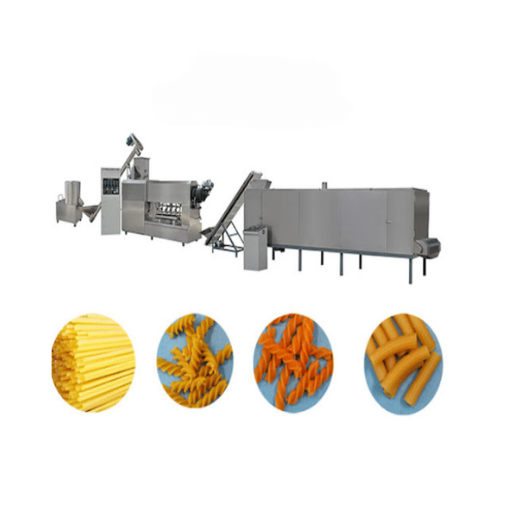
Components of a Spaghetti Pasta Production Line
- Spaghetti Production Line: The manufacturing procedure of the mentioned particular pasta follows and employs a series of advanced processes, techniques, and equipment to deliver high levels of productivity, uniformity, and quality for massive outputs. Among which are the following:
- Raw Materials Feeding Arrangement:This structure does the filling, storage and accuracy control of raw materials dosage semolina, flour and water in particular. The installment of automatic weighing and dosing devices also helps in mixing all ingredients of the dough in proportions and accordingly keeps the wastage less. That is to say, as the mixing form is in quantities proportional to one another.
- The Mixing and Total Kneading:The kneading equipment ensures uniform distribution of ingredients to form structured sticky dough. It’s equipped with kneading devices using kneading arms or continuous screws, to knead the dough thoroughly for the best possible condition in texture and hydration. This process is very critical since it determines the elasticity or the final spaghetti product if it joins most of the starch.
- The Extruder:In a production line, spaghetti is produced by shaping the dough using an extrusion machine. It is equipped with specifically designed dies that result in consistent diameters of spaghetti with consistent texture. Current extruders are designed for specific temperatures and pressures to avoid excessive heat that might damage the dough structure.
- Pre-Cutters And Pre-Dryers:Then, extruded spaghetti is sliced into required lengths with high velocity cutting blades which rotate. There are pre-dryers which control how much moisture the raw strands have at this stage so that they do not touch during this process leading to drying.
- The Drying System: There are dryers committed to reducing the moisture content of the spaghetti slowly to about 12 – 14% for effectiveness in achieving long shelf storage. The multi-stage drying procedure utilizes temperature and moisture control as a precaution against deformation or dry areas that may lower the quality.
- Cooling Conveyor: Once the dry spaghetti has been floated, the conveyors intakes ensure proper ambient reintegration once cooled. In this way, the pasta does not lose its strength when processed further or for storage.
- Quality Control Systems: Devices such as Optical sorting equipment and sensor devices check dimension, the contour as well as diameter, and length distortions, if any. Unfit products are taken away, facilitating the process and improving the morale of the consumer.
- Packaged Unit: At last, the spaghetti is loaded into automated boxing machines to be distributed in consumables. Vacuum seals, labels along, and barcodes are all according to the industry practice for traceability.
Such integration of advanced elements allows for present-day production lines Spaghetti Production Line high scale wastage less and under health and quality regulations.
Extrusion Process in Spaghetti Production
The process of manufacturing shapeless spaghetti is very interesting since it revolves around how the dough, which is a combination of durum dessert wheat and water, is given a shape. In respect of this process, the hydrated dough enters an extrusion device- that uses great force to direct the mixture through dies that have been specifically designed. This is because they help in controlling the spaghetti strands to a set shape and thickness with incredible accuracy, producing the same kind of spaghetti every time a batch is processed.
Temperatures in this role are critical, as most extrusions are done at various degrees of temperature; lower warm temperature or moderate heat extrusions in order to facilitate the structure and protein retention in the pasta. Extrusion of the state-of-the-art extrusion apparatus which comes with pre-installed and integrated control, also controls the limits of various parameters such as pressure in extrusion, temperature, and remaining amounts of water in admixes.
The extrusion performed at high pressures not only allows the pasta to take on the required shapes but also to reach a significant level of pasteurization, having a positive effect on the reduction of bacteria and the extension of the final product’s shelf life. New technological developments, for example, the use of vacuum extrusion, are widely applied nowadays in order to get rid of air bubbles from the dough, which then produces the more compact and better quality pasta with a polished finish. This is a production step where the fundamental aspect is engineering and science of food, which is quite purity, cooked, or processed food in a commercial and satisfactory manner.
Automation in Spaghetti Manufacturing
In modern production facilities, spaghetti production line has been restyled into one continuous system, which is very effective as it eliminates the need for stop-and-go operations. Almost all manufacturing activities, with very few exceptions, such as the storage of raw materials, are conducted within the confines of the machine, which decreases the amount of human activity required and also cuts down on errors. For example, the entire process of mixing wheat and water in the right quantities is controlled using programmable logic controllers and industrial sensors for this purpose. This technology enables the acquirement of information such as the temperature of the dough, mixing duration, and mechanical neurological levels, which help to identify the standards to be maintained.
Process of extrusion, which is an important process in manufacturing, including that of spaghetti, also did not escape automation. Modern, efficient extruders now include sophisticated controls that can accurately monitor the pressure, temperatures and the velocity of extrusion. The diameter as well as texture of spaghetti is the same for all pieces and less material is lost during production. The density and smoothness of the product has also been enhanced by vacuum extrusion and the use of automatic air removal. Moreover, the cutting machine is operated in line with the extrusion speed, thereby cutting the spaghetti in the same length without the need for any operator.
The automation process is advantageous in reducing resources used in packaging as well. To some extent, the procedure of packaging, as in injecting somy spaghetti into a container envelope and sealing it followed by outmartting it and coding the package is achieved more by robotic arms, vision guided systems and conveyors interface than by humans. New technology will support identification of defective pieces or contaminated products, and in addition to such traditional measures of screening, will allow elimination of non compliant products prior to their releases. In recent years, these systems have been viewed not only as a means of ensuring continuity of operations but also as platforms for operation of machine learning routines to improve efficiency, anticipate the need for maintenance and curtail breakdowns. In imaginary advancement, it is mechanization of how to make spaghetti fit for the requirements whilst meeting both the quantity and dimension related objectives of production that forms the greatest challenge in developing spaghetti production line techniques.
Macaroni Pasta Production Line
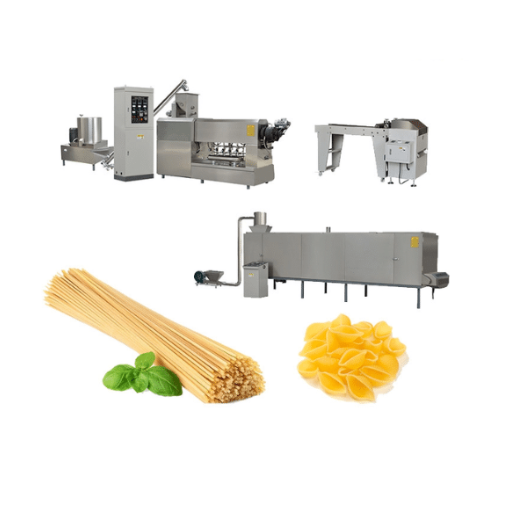
Machinery Used in Macaroni Production
A wide array of expertly designed machinery is used in the spaghetti production line, each machine meticulously constructed to carry out an assigned function for the achievement of efficacy, accuracy, and operational uniformity in the end product. The pasta extruder is among the key machines involved, which shapes the dough into the macaroni’s cylindrical pattern with the aid of a die. In addition, modern models also have temperature and pressure controls to ensure consistency of doughs and how well they are extruded or otherwise.
For instance, mixing and kneading machines and are essential at the beginning of the process when the aim is to make the dough from semolina flour and water in a uniform manner. Automated mechanisms found in these machines also ensure optimal consistencies of the dough by checking and adjusting hydration levels. Once extruded, the formed pasta then proceeds to cutters or portioning mechanisms that slice the driven dough to the appropriate length and width.
In order to maintain the quality of the product and promote longer shelf life, drying mechanisms are imperative for reducing the bulk of moisture. To achieve this, the drying systems have various stages of drying chambers, which are able to exert adequate control over the temperatures, the humidity levels, and duration of drying; hence avoiding alterations in the pasta’s texture and taste. Such advanced drying methods as vacuum reduction can also be employed in large production units to increase productivity.
Finally, the packaging machine makes it possible to pack the finished product in a hygienic, efficient and very attractive manner. Many of these machines are incorporated with several features like vacuum sealing, labels and even automatic weight control among others in order to help maintain the quality of the products as well as help in its distribution. The widespread use of control and monitoring systems within this group of machines makes the realization of such an operation possible and the accumulation of such data positively affects the productivity of a macaroni production plant.
Differences in Machinery Between Spaghetti and Macaroni
The two machineries have some differences when we talk about the purpose based extrusion dies and cutting systems in the context of each type of pasta respectively. For spaghetti; generally the circular shaped extrusion dies with smaller diameters are used in the production process for achieving the long hollow structures filled with unfinished spaghetti. In macaroni production; the machinery consists of extrusion dies with funny shapes, at times filled with a pin in a middle, which serves to produce the hollow tubes. And, the thickness and the diameter for every type of pasta show differences due to the well precision machining utilitized in the induction of these dies.
Added to that, there is a big difference in the cutting systems. For instance, for the spaghetti strings to be managed in an easier way between the strands, a continuous cutting action is required and this is often supplemented with the known drying belts to allow the strands to dry up without tangling. And macaroni that has extruding process dies as rotary type or the more common guillotine dies is used to cut off the tubular pasta lengths right immediately since it Is extruded.
Different drying designs are also available for each pasta variation. For example, the spaghetti production line places emphasis on stretched drying of monuments without stacking the statues on the trays or on the ground. On the other hand, production line of pasta such as macaronis is usually capable of placing thin sheets of pasta on the trays and mounting them in such a way that no pasta sheet shall touch another sheet of pasta thereby preventing their damage.
Despite the differences in design, production lines of short cut and long cut types can make use of common technologically advanced aspects such as IOT for enhanced monitoring, fingertip temperature adjustment, and power or weight assisted loading. But what makes clear the division of labor in regard to machines between the manufacture of spaghetti and macaroni is the very many specific tools and processes involved in each of the two production lines.
Quality Control in Macaroni Production
The process of ensuring quality control in the production of macaroni is a complex and step-by-step process which takes into account the physical and chemical characteristics of the product. There are key process variables which include moisture level, protein composition and surfaced smoothness which are being taken care of at all steps throughout the manufacturing process. Sophisticated machines including optical sorters are widely used to examine macaronis and check if they contain any undesired features such as uncooked shapes, flaws or color misbalances. The machine learning components of such systems increase their accuracy as well as eliminate the Sperry users. * Not a frozen phrase.
Furthermore, certain machines such as moisture analyzers or colorimeters are installed in the Spaghetti Production Line to check how high the water activity or the color deviation goes. For instance, the pressure inside the extruder and the temperature of the die should always be the same in order for the body to maintain the same shape without being deformed. Chemical safety tests are also performed to ensure food conditioning and safety levels such as the exclusion of heavy metals or microbes within the composition.
The use of control objectives including inline inspection and control measures enables the producers to ensure that the macaronies that are cut, dried, and packed meet the required standards. This extensive approach is consistent with the general aim of the industry – providing consumers with a win-win product.
Long Cut Pasta vs. Short Pasta
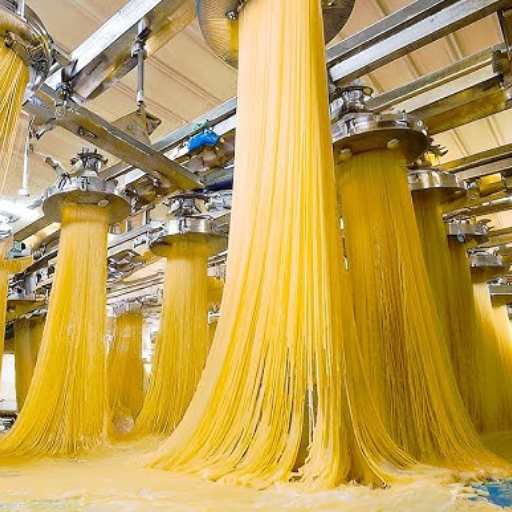
Characteristics of Long Cut Pasta
There are different kinds of long cut pasta, including spaghetti, fettuccine and linguine, which are identified by their elongated shape. They are defined by the length of the pasta, thus it is no surprise that such a pasta can be enjoyed with almost any, more specifically a light, or oil based, sauce. The longcut pasta also provides a wider cross section which helps hold the sauce efficiently, this means all the sauce is able to reach every section for optimal eating. This makes it ideal for dishes that indulge textures, aromas, and smoothness on plate presentation.
Cooking and producing long cut pasta involve a set of rules and principles. During the production of pasta, at the extrusion process, it is necessary to ensure that breakage is restricted while the thickness and shape remain uniform. Apart from this, the drying period is to be extended for the cooked pasta to have enough elasticity and hardness. There are also strict moisture contents that one has to adhere to, mostly around 13% and below in order to keep the pasta fresh. These factors explain the proficiency in manufacturing long cut pasta for consumption in commercial outlets and homes.
Length and shape differences in shorter and longer pastas affect how they cook in the case of consumption. Chefs as well as ordinary cooks should deal with this problem using large saucepans and plenty of boiling water to ensure that the pasta does not stick together and cooks evenly. Since pasta strands are easier to knead in the initial ‘raw’ hours, a recommended practice is to turn one or two dumplings with a wooden paddle or plastic handle in a pot during the first few minutes of boiling. In addition, the architecture of long pasta can be varied and enhanced to produce a more interesting design towards the end of the meal. A classic Italian preparation such as SPAGHETTI Carbonara may be added and the variations can even go into other local cultures, but more essentially the long cut pasta is ever in the equation balancing such modifications with core recipes.
Manufacturing Techniques for Short Pasta
Production of dry short pasta consists of a number of sequentially built processes in order to maintian the consistency of the goods in the factory condition and adequate quality at cooking. As a first step, durum wheat semolina which is known for its hard texture and high gluten levels is mixed with water in predetermined allocations to form dough. This mixture is then kneaded in vacuum where the air is sucked out eliminating possible inconsistencies in the structuring of the dough.
After the dough is obtained, it is extruded in prepared bronze or Teflon coated dies in the desired short pasta shapes such as penne, fusilli or even farfalle. The border of each of the cone die is of even thickness and completes the pattern enhancing the propensity of the pasta to retain the sauce. This extrusion is carried out under or above the threshold speeds and pressures since they can result in damaging of the pasta texture and/or nutrition if either or both are exceeded.
The process of drying the pasta after it has been extruded is one of the most important steps in regards to cooking quality and storage. For instance, short pasta can be dried using high or medium temperatures while modern methods include several drying chambers designed to manipulate humidity and air flow. Companies perform quality checks and control such aspects as moisture level in the product and ensure that the end product can stand the test of time in line with enacting standards.
Novel solutions have also been proposed in the construction of a Spaghetti Production Line, as well as the processes followed afterwards. All of this is now possible with the help of technological advancements providing optical sensors and even Machine Learning capabilities to identify the presence of such defects in the ‘resin’ so as to improve geometric accuracy. Such intelligent solutions blending age old practices with modern systems have now made the production of any product without any quality compromise due to the high demand of such production possible.
Adaptations in Equipment for Different Pasta Types
The making of various designs and dimensions of pasta obliges the incorporation of specific machines adequate to the demands of each category. The extrusion dies designed to form the tubular shapes are used to manufacture the short types of pasta such as rigatoni and penne, howbeit they come in different diameters and textures. The use of cutters fitted with adjustable blades also helps maintain a similar length and finely cut the edges of such products that require bevel cuts on the end cuts.
Moreover, flat pastas, e.g., lasagna and fettuccine use thin and thick rollers and compression equipment to keep the correct dimensions of the pastas with no damage at all. Furthermore, automated sheeting systems help improve productivity by ensuring that the thickness of the dough, as well as its percentage of moisture, remains uniform throughout the process.
To make these types of filled pasta, e.g., ravioli, tortellini, special molds and filling nozzles are used to make sure they are adequately portioned and contoured. The current technology even uses a vacuum to suck the air out while filling, reducing the probability of bursting while cooking. These improvements occur alongside high resolution imaging which can pick out defects in the pasta, be it filled or not; thereby, ensuring quality control.
Modern day equipment used in the manufacture of pasta is versatile and can be changed over from one product to the other without as much difficulty. Dies that can be changed quickly, Lego like assembly features and the use of control systems help to cut down the time it takes to change the processes to meet the customer demands in many flavors and variations. The use of precision mechanical parts together with the latest technology also enables the manufacturers to produce almost all types of pasta without reducing the quality and causing no expenditure of time.
Future of Pasta Manufacturing
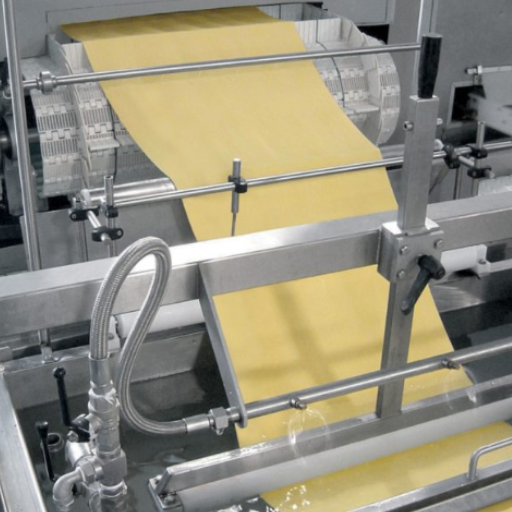
Trends in Pasta Production Technology
Spaghetti production is a process that evolves rapidly towards smart technology standards thanks to rapid development of automation, Digitalisierung and sustainability technologies. Over the recent years, one of the greatest changes that happened is the deployment of Industry 4.0 technologies including such tools as Internet of Things and enhanced data analytics. Devices which work based on IoT are allowed to keep a track on various production indicators such as, temperature and humidity levels and the speed of extrusion. The above explained immediate control of production parameters enables prognostic maintenance, thus decreasing the probability of machine breakdown and increasing the effectiveness of the production process. predictive maintenance, therefore in turn decrease the machine’s down time, making the production process more efficient. On the other hand, optimization of the usage of the produced materials through analysis and production processes is.. Do more with less wastage.
Another area of recent development in spaghetti production line technology has been to adopt green practices. With growing environmental regulations and pressures from consumers to decrease carbon emissions, businesses are looking to rely on energy saving and green energy system designs. As an example, thermal recovery systems can be incorporated to capture and recycle excess heat from the drying process, thereby reducing energy usage. Additionally, in order to satisfy the eco-sensitive clientele, there is an increase in the use of waste-reducing packaging and the appeal of using environmentally friendly raw materials. Such steps not only help to reduce the adverse effects on the environment but also support the globules agenda of sustainability.
The push towards diversifying products is significantly impacting the advancement of technology. Due to the increasing demand for healthy or particular diets, there has been an interest among producers for different species of flour, i.e., legume, quinoa, or lentil, for example, to adapt for gluten-free or high protein pasta, which is more oriented to niche markets. Extrusion and formulation technologies are being put to good use to render the desirable texture modification of the unconventional products. Moreover, the reconfigurable modular production systems are also allowing smaller batches to be produced conveniently and in response to changing market demands. All of these workings in effect (SH) propel the industry forward to adapting to the changes of what the consumer wants without compromising on quality and efficiency.
Challenges Facing the Pasta Industry
The problem which the spaghetti production line encounters on a daily occasion is varied but there will be a few outstanding problems worth discussing. One of the problems is the variances of raw material prices, most especially that of durum wheat, which is constantly under change given the weather pattern, politics and the dynamics of international trade. This forces the manufacturers to adjust their supply chains and consider international procurement as different alternatives to sustainable production.
Furthermore, there is an increased appetite for healthier and more sustainable options in the market, fueled by consumers who look for items other than the generic ones such as gluten-free, protein-rich, or vegan pasta. Satisfying these expectations necessitates innovation from companies vis-a-vis product taste, texture, and other qualities that customers enjoy. More often than not, this translates into heavy spending on research and innovation, among other things, as well as the use of ingredients in their composition such as pulses or many millennia-old grains, which also come along with production difficulties.
There are also additional stringent controls on the industry regarding food safety, labelling transparency, and sustainable practices towards the environment. Adhering to such stipulations is associated with enhanced monitoring systems and adoption of green mechanisms of production, which come along with a rise in operating expenditure.
References
-
Evaluation of Value Stream Mapping Application in Pasta Manufacturing
This case study focuses on the spaghetti production line, identifying value-added and non-value-added activities. - Click here to read more.
Frequently Asked Questions (FAQ)
Q: What does a Spaghetti Production Line entail, and what does it mean in reference to something non-restrictive in the context of the pasta production?
A: A Spaghetti Production Line refers to a plant, designed to produce long cut pasta such as spaghetti and many different types of long-cut pasta shapes. In contrast, a customized spaghetti production line is designed to incorporate many extrusion technology advancement, continuous operation, including precision temperature control to ensure consistent quality dried pasta supply at a high production level.
Q: List the three vital parts of a factory productionage for making spaghetti.
A: A standard industrial pasta machine or a spaghetti production line has, or comprises, a feeding system, a dough mixer, an extrusion system with dies for production of long-cut, a single screw or screw and n number of screws extruder, pre-drying and drying tunnels with ventilation, and a packaging machine. Many such lines are made of stainless steel and are fully automatic so as to meet both sanitation and food industry standards.
Q: What ingredients and recipes are used to manufacture dry pasta in a Spaghetti Production Line?
A: Spaghetti is usually a dry type of pasta, made out of, basically, durum wheat flour and water. Owing to custom, certain variations may require the addition of eggs or use of flours other than the usual. Correct moisture dough is processed by extrusion technology after being prepared in a proper mixer. It is because besides temperature control during kneading, high temperature drying also impacts quality and texture of reconstituted Italian pasta such as spaghetti.
Q: What is the contribution of extrusion technology to spaghetti and other long pasta?
A: The structure of the dough in extrusion technology with the aid of interrupting screw or screw extruder could be modified by displacement of the cut in specified directions of deformation. That depends on the extruder system and design of dies for extruder to change the surface or to create different geometries. Correct extrusion, appropriate pre-drying, and ventilating at a high speed prevents cracking as well as guarantees the homogeneity that is required in commercial pasta and industrial pasta processing.
Q: What benefits does a high degree of automation and Spaghetti Production Line has?
A: The introduction of fully automated production line significantly lowers the amount of personnel employed, enhances production capacity, and is capable of continuously producing with the same quality. Feeding systems equipped with advanced temperature control and high speed drying systems facilitate rising energy efficiency and hygiene, and the technological maxi-parameters of production of both long-cut and short-cut pasta are maintained thanks to automatic monitoring devices.
Q: What protective measures are employed in the production of dry pasta with regards to drying and making sure no defects are present?
A: for the purpose of achieving drying control, in between the process the material is pre-dried in the early stages of the processing of application, processed under high temperature and air in designed processing line. It is about gradual removal of the moisture and temperature control within the process; this is what helps to reduce the surface drama on the surface and internal tension. Most pasta modern pasta processing units have sensors and control systems which enable real time changes of the processing conditions to accommodate blended flour of durum and various shapes.
Q: Can a Spaghetti Production Line Make Other Types of Pasta Besides Spaghetti?
A: Yes, there are still a number of production lines which are modular and help in catering to the process of varying shapes. Dies on the extrusion system can be changed such that a pasta line can go from spaghetti or other long-cut pasta to short-cut pasta. This variable range is advantageous for commercial pasta producers for the reason that they are able to reduce processing lines by providing different pasta forms from the same line.
Q: In commercial spaghetti making machines, what sanitary and health standards are relevant?
A: To maintain food safety, all the equipment in the industry must be stainless steel and easy to clean and sanitize. This includes proper sanitation, hygienic feeding systems, sealed extrusion areas for the purpose of reducing contamination risk. These favorite food industry standards, and holes in the walls for wiring and light fixtures, as well as the energy saving and high speed aspic come together to prevent illegal production of pasta in the Spaghetti Production Line.