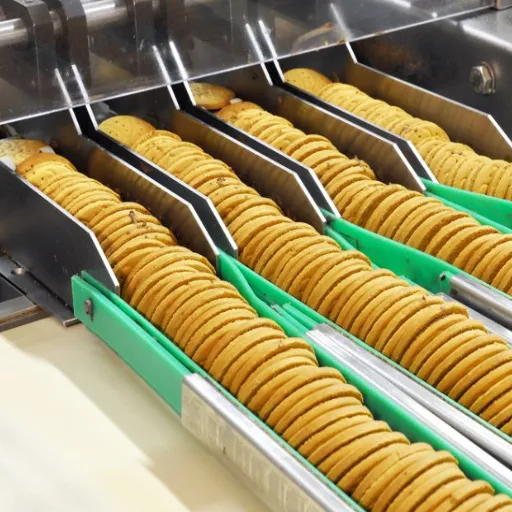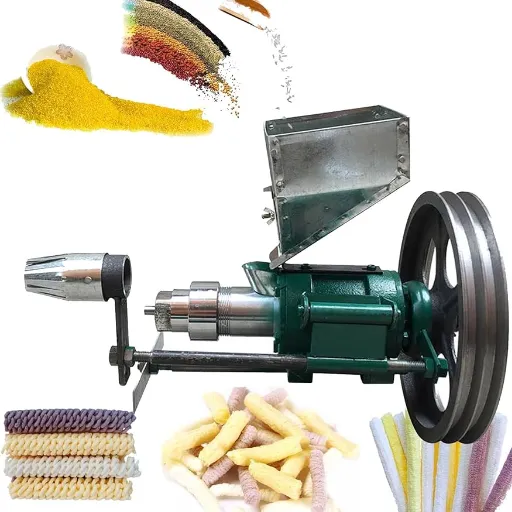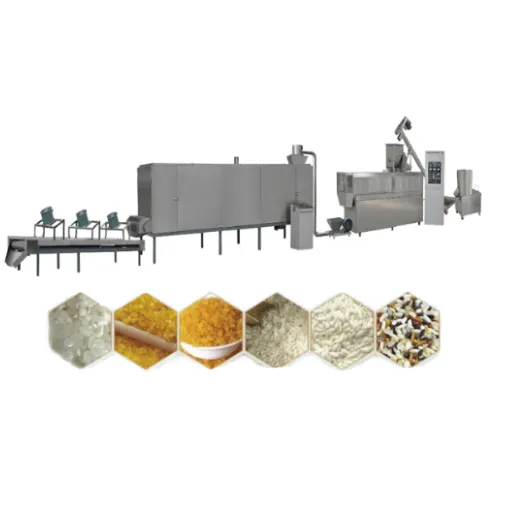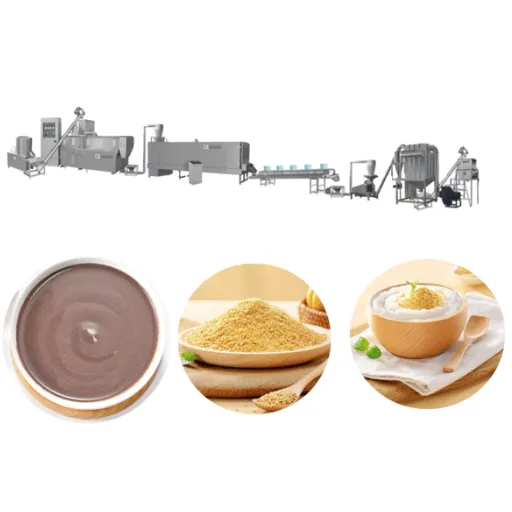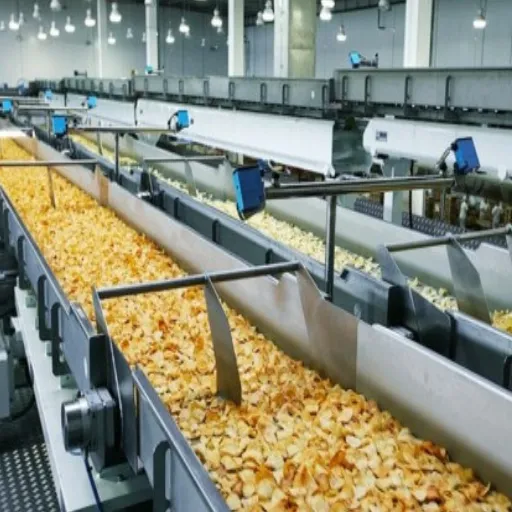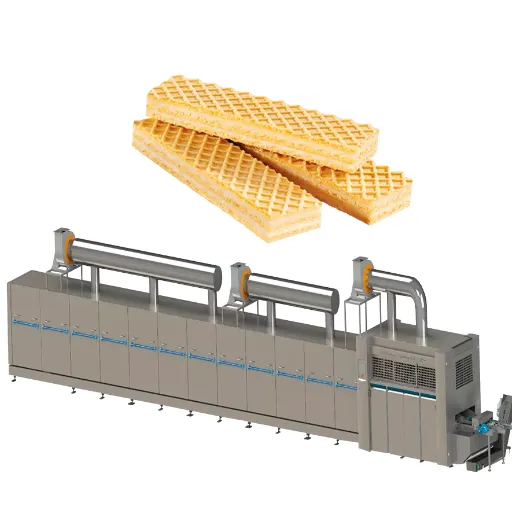
The production process for wafers and biscuits requires precise dough handling to achieve consistent product quality. The two baked goods appear alike to consumers yet require different equipment because their dough characteristics need specific processing methods. The article explores the technical details of dough handling systems used in wafer and biscuit production to show how different engineering designs create unique processing difficulties which affect final product quality.
Introduction to Wafer and Biscuit Production

Understanding Wafer and Biscuit
Processes for the production of wafer and biscuit differ in many aspects due to the differences in their compositions, architecture and results. Wafers are usually quite thin and brittle, a feature which is most prevalent due to the presence of a high water containing dough, which is cooked between two hot plates to form a thin layer on the surface. This necessitates the designing of a wafer production line that is capable of delivering heat very efficiently and controlling the exact temperature and thickness. Moreover, the added raising aids in the formation of wafers are either very much reduced or completely absent as the hard and dry structure is derived from the ingredients and their cooking rather than the development of a puffy dough.
While cookies are made with batter, biscuits are made of dough which is made with a thicker consistency and most of the time includes fat, sugar, and leavening agents making the structure solid. Several steps are involved in processing biscuit dough such as mixing, sheeting, cutting and final baking in tunnel ovens. This requires focusing on a different aspect of engineering, where the problems related to the handling of dough, cutting practices, and the model of the oven are relevant to the structures requiring more uniform heat conduction, in order to get even baking. The difference from the wafer is that crunchiness is often combined with softness in biscuits, hence dough’s elasticity and content of water in it become crucial.
The differences in the way these products are manufactured cause significant changes in equipment design and operation.” Wafer production systems focus on accuracy in batter deposition and its direct baking, and biscuit systems on processing of dough to be cut into pieces and the cutting units, which has stainless steel wall construction. As we have seen, these differences are important for the manufactures to consider, Highlighting the reasons for dissimilar designs employed for each of the types of baked products, as shown above.
Importance of Dough Handling Equipment
In recent years, dough handling equipment has become a principal feature in the baking industry. It allows for smoother, faster, and more predictable processing of the dough. The equipment is built to incorporate all the stages of dough making including mixing, cutting, rolling and proving and assuring rheological properties of the dough are maintained. These solutions paint out the best bakery configuration and reduce the operational costs of these bakeries by eliminating the inconsistencies in product shape and size or packing defects.
Dough handling equipment is advantageous to a large extent because it provides a wide range of uses or recipes and is mainly used at the inception of smaller and large bakeries. Take for example the preparation of sensitive doughs, such as the butter layered dough applied in croissants; a high level layer is essential to preserve the integrity of the butter layers that so characterizes the product. The equipment for handling the dough should be sturdy so as to minimize wear and provide efficient handling of the dough as used in the production of bread, which otherwise is very stiff.
In addition to this, turning to first-class resources for dough mixing eliminates the incidence of food poisoning by minimizing the involvement of workers in production, which in turn, means less exposure to bacteria. In some cases, the machines may have sophisticated features like control systems and microprocessors to allow efficiency in operations as well as meeting the required levels of production. Specific equipment for doughs helps maintain a perfect balance between manufacturing quality baked food and full utilization bench work.
Wafer Production Line: An In-Depth Look
Components of a Wafer Production Line
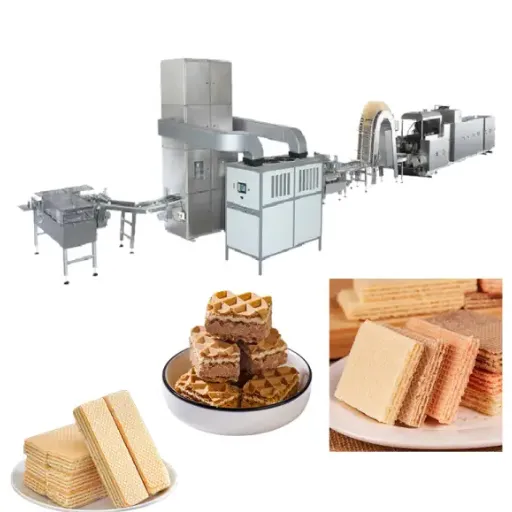
- Wafer Production Line: A wafer production line is one sophisticated mechanism that is used for producing thin and crispy wafers in a specified consistency and quality levels. And the production lines consist of many important parts in which each play a role as far as the process and final output are concerned.
- Batter Preparation: Batter preparation system is the one which mixes raw materials such as flour, water, sugar and other mixture ingredients to obtain when they are mixed a uniform mass called batter. In modern systems there is dosing automation and mixing technology incorporated so as to maintain the right amount and homogeneity of ingredients coachable for proper baking.
- Batter Deposition Unit: This unit precisely deposits the processed batter onto baking plates. These specific equipments are designed to handle set quantities, and produce the same dimension wafers all along which is an important factor vacating excess process uses and materials in a high speed production volume.
- Wafer Baking Ovens: The most important piece of equipment in the wafer production line is the wafer baking oven. This piece of equipment contains heated plates, which are cooled by thermal zones. This equipment uses either gas heating or electric heaters to bake the wafers, ensuring that their consistency and thinness are kept optimal. Recent versions use designs that reduce the amount of energy consumed.
- Cooling Unit: Once the baking is complete, wafers require a cooling system to allow the wafers to firm up for the next operations. Such cooling systems are created after the introduction of air flow or temperature control which rapidly decreases the temperature of a wafer without causing them to lose their structural integrity.
- Application of Cream: When producing filled wafers, a certain cream, or filling system is needed to cover the wafer plates with certain flavored creams, for example, a layer of chocolate, vanilla, and also hazelnut creams. The systems are installed with the precision pumps and spreaders that help in the application.
- Cutting and Shaping Segment: The sectional unit cuts the stack of filled wafers into preferred shapes and sizes of necessary wafers – rectangular or in bite size. Depending on the production requirements, either precision knives or ultrasonic knives are used.
- System for packaging: This is the final step of maintaining product freshness and having a longer shelf life since it involves packing the wafers. At high production speeds packing sealing labeling and stacking is done by automated machines and they cope with the throughput.
Today’s wafer production line incorporates control systems and managers and a planned maintenance policy aimed at avoiding excessive downtimes aimed at controlling the quality of the products. Such solutions contribute greatly towards helping producers achieving demanding requirements of the industry without any increase in the costs of management.
Wafer Biscuit Manufacturing Process
The wafer biscuit manufacturing process requires precision and attention to various details. For one, a range of additives needs to be included to stir the flour and water into a smooth batter. It is sincerely serious in wafer production that a batter is applied unto the baking plates mounted within a rotating wafer oven on which the batter is baked in the range of approximately 150 – 200° C. Even, the process time of baking is determined very precisely, which is around 2 to 3 minutes, so that thin crispy wafers could be produced and there would be no or less residual moisture in the wafers.
After baking, the wafer sheets have to be cooled then taken to the filling point. At the filling station, cream which contains fat, powdered sugar and flavorings is applied on the wafer sheets by automatic applicators in order to maintain an accurate thickness and weight. The filled sheets are overlapped with each other and compressed in order to form the wafer with multiple filling layers within. This helps in achieving an even bonding of each layer, and also avoids delamination during further cutting and packing operations.
The concluding stages encompass slicing the accumulated brick-shaped batter into a precise size with the aid of a cutter, before ensuring convenient and healthy storage for as long as possible. The processes are thus optimized through Industry 4.0 where every activity is fully monitored and allows instant solutions for any waste using wastage of raw materials to zero. The applications of these optimizations reach beyond auto industry requirements and include pop-up installations as well as product marketing.
Types of Wafer Production Lines
The construction of different Wafer Production Line consists of Fully-automatic, Semi-automatic, and Hybrid systems dependent on the manufacturer’s operational scope and scale of operations designs used for offering the applicable extent of the function of a particular manufacturer. The fully-automatic production lines make use of the robotic technology with accompanying automated systems which ensures the complete process right from the mixing of ingredients to the packaging processes. Such systems result in very high efficiency and uniformity. The systems also normally would contain additional functionality such as CIP (cleaning-in-process) automatic systems, breaking system installation into modules as per scale, and using IoT for advanced control and prognosis purposes.
A hybrid semi-automated line would have more automation than just a stand-alone line, but less than a comprehensive line. The stand-alone line relies heavily on the use of human labor as compared to the hybrid line, more so the comprehensive line. This is due to the fact that certain activities require human interaction, especially with aspects related to wafer production which are absent in more automated processes such as baking, cooling, and creaming.
The combination of both automatic and semi-automatic elements is referred to as a hybrid system. Wafer Production Line solutions with hybrid systems provide a lot of flexibilities so that the business unit operations can be crafted as per the batch sizes, the availability of capital and the varieties of products that are expected to be produced. Such lines are advantageous as well, for instance, in countries due to the changing labour cost or different production targets.
The advancement of technology in modern times have realized new technologies such as energy-saving baking ovens, machine precision cutting tools with learning capability, and environmentally friendly packaging, which are all in line with global changes targeting production process efficiency and cost saving. This is according to versatile manufacturers who claim that these systems enhance productivity by at least a quarter and substantially lower the level of material wastage by around 18% thus, contributing to overall enhancement of efficiency and sustainable operation.
Key Machinery in Wafer Biscuit Manufacturing

Wafer Baking Ovens
Among other things, Wafer Production Line employs wafer baking ovens, which are among the most important equipment. The ovens of this type enable precise heating up to the level that allows preparation of uniformly thick and textured wafer sheets. In general, baking comprises the correct temperatures which are normally in the range of 120°C to 180°C and distribution of the temperatures in various sections of the oven such that water evaporation is complete and the sheet is still not burnt. These ovens come in a range of varieties with sophisticated temperature monitoring, calculated heat intake and uniform dispersions across the plates to produce such volumes with consistency. As the ovens function as the main heat source, their ability influences the total output quantity and quality of the product.
The wafer production line advancements have brought in a few environmentally friendly designs that include an insulated baking chamber and reduced emissions burners to ensure no wasted heat and carbon emissions during the baking process. In addition to this, there are a few units, which have enhanced wireless access features that include internet-based devices, allowing operators to manage and control the baking process anywhere in the world. Such components aid in optimizing the workflow as well as reducing the risks of activities tied to human involvement. It has been proven that by using smart, internet-connected ovens, it is possible to increase the efficiency of the interruption time of the process, with increments reaching even 30%, which is a yet substantial improvement when working under the high demand circumstances.
Another important development that increases the production rate with minimized wastages entails the coating of wafer plates with non-stick elements. These coatings ensure no wafer sheets adhere to the plates, thus reducing the number of batches scrapped. Modern baking systems also allow rapid switching between products without extensive downtime, which is a factor directly affecting the manufacturing’s efficiency. For instance, fast moving high productivity baking systems with quick change closed two-piece systems enable the manufacturing of different types of wafer products in negligible time waiting. Manufacturers with diverse assortments and multi-variate operations need such flexibility to be cost-efficient.
Wafer Sheet Cooling Systems
Current systems designed for cooling of wafer sheets are designed in such a way as to maximize their capabilities and ensure consistent quality of the finished products. The cold air technologies used in these systems allow rapid cooling down of even the thickest of wafer sheets with no incidences of buckling or condensing that could lead to loss of fragile texture and noble structure designs. Many of the systems include high performance fans and also multiple cooling zones which allow for direct control of the temperatures for different Wafer Production Line recipes and types.
Some fresh paradigms of technology also involve embedded sensors for real-time temperature monitoring which allow plant operators to constantly monitor performance of the cooling plant and to adjust it accordingly. Such an approach helps to eliminate wasteful energy consumption while preserving the quality production levels. A good illustration is the multi-level cooling conveyor which is fitted with automatic sensors that ensure the right temperature profile is attained by the wafers for purposes of facilitating easy stack up and packaging.
To be precise, deployment of improved cooling systems has proved the ability to make the period of cooling phase under such conditions by as much as 20% shorter than it used to, hence improving throughput of production processes. These developments help to a large extent in achieving great operative advantages and introduce cooling systems for sheets of wafers in food industries of today as the necessary element of the process.
Packaging Machines for Wafer Biscuits
Wafer biscuit packaging machines are designed specifically to meet the needs of the food industry with high-quality, efficient, and safe processes. It is evident today that machines possess advanced automation systems such as programmable logic controllers (PLCs) and robotic arms that allow wrapping and sealing with precision. In that aspect, these machines boast their ability to suit different package formats such as flow packs, pouches, designs in form of trays thus satisfying needs and demands of the consumers and markets.
For the operations of packaging machines to be efficient, they have to have Key Performance indicators(KPIs) such as high output levels, low waste of materials and appropriate weight management. For example, ultra-modern machines have been designed and assembled to package over 600 biscuits every sixty seconds without compromising on quality. Furthermore, the addition of vacuum technology and gas flushing for that matter is useful and promotes longevity of wafer biscuits because it prohibits moisture and keeps oxygen out.
The previous developments also highlight the significance of sustainability as an essential design parameter. Adhering to the environmental regulations, manufacturers are increasingly providing systems that are able to use biodegradable films and recyclable materials. There is also an increasing trend towards predictive maintenance, as well as IoT driven analytics that allows monitoring of machine perfromance in real-time and giving early warnings of impending failure, thus minimizing downtime and costs. Such developments make packaging machines an essential tool in improving productivity and serving the needs of the highly competitive wafer market.
Biscuit Production Line Overview
Differences in Equipment and Machinery
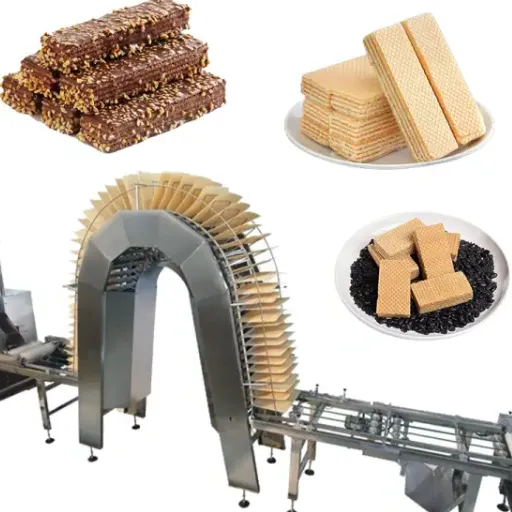
The selection of equipment and machinery employed in biscuit production lines usually correlates with the heat treatment capabilities, demographics and location of the plants and the purpose for which the lines have been constructed. As compared to this, where the production lines are more in number and utilize bigger ovens, the lines have rotary molders, raw dough sheeters, tunnel ovens, cooler conveyers, reheaters and coolers as these seem to be most economical solutions. In those systems emphasis is laid more on accuracy in the efficiency of one work unit with dough cutting process, maintaining baking temperatures and products cooling process backing up all the other processes.
On the other hand, production lines that are low or medium-caped and positioned somewhere in the middle for production scale, will use machinery that is either semi-automatic or manual. Such as that of wire cut machines and ovens that operate in batches and can giving great versatility in the production output or product specifications. These equipments include; precision dosing equipment, multihead weighers for example for the calculation of many ingredients which would minimize food wastes.
Modern-day machines which boast the integration of various servos and/or cameras are now more of a rule rather than an exception in both high scale and low scale productions. Wafer Production Line, for instance, benefits from these environmentally friendly solutions in terms of product quality uniformity, modularity, design aspects, as well as even production capacity and product safety in accordance with applicable regulations such as ISO 22000 or HACCP. All considered, the machine selection process is a matter of choosing the plant and equipment that provides the best economics of scale, volume and capability for the targeted end markets.
Types of Biscuit Production Lines
Biscuits’ production processes are various due to their special structure and end product into which they are turned. Mainly, the biscuit processing lines are divided into sheeting lines, rotary molding lines, and extrusion lines. It is essential to note that each line has been built to perform different purposes in accordance with the characteristics and requirements of the desired biscuit.
- Sheeting Lines: In most cases, sheeting lines are adopted to make layered or laminated crackers and biscuits. Usually, sheeting lines consist of stages of rollers with gradually decreasing clearances between them to achieve desired thickness in dough sheet. More complex sheeting systems with automatic dough thickness control are used as well. According to recent research from the industry, it is reported that automatic sheeting lines reduce waste in raw materials, efficiency can increase by 30%. Moreover, modern sheeting lines have modular structures, which allow the manufacturers to process biscuits of different shapes with shorter down time.
- Rotary Molding Lines: Rotary molding equipment is excellent in making biscuits of complex configurations such as beautiful shapes, patterns or embossments on a surface. This is done using a rotating drum equipped with molds that shape the dough as it is being fed in. Current innovations allow rotary systems to have variable tooling and adaptive molds thus enabling the expansion of differentiation options for the buyers. A 2023 paper noted that such enhanced functionality resulted in a 15% reduction in the changeover time for medium sized manufacturing companies on average.
- Extrusion Lines: An extrusion line is regarded as flexible because it can be used in production of different types of biscuits, including those that are filled or of unconventional shape. These lines shape the dough through the extruding die, and sometimes incorporate flavors and other elements with the dough. Advanced state of the art extruders have been developed that have monitoring capabilities in terms of the correct levels of the dough, for example, moisture contents or throughput rates. The development of extruders over years has played a significant role in increasing speeds by about 20% in comparison to older generation extruders while maintaining the quality.
Advantages vary for different lines and so do the types of products that they are designed to produce. Raw material composition, consumer habits and product output, among other things, are important considerations for the manufacturer aiming to meet the increasing product requirements and matching products with the appropriate line. Built‐in synergy of all those aspects with the present state of technology, backed up by optimal organization of processes, establishes manufacturing under tough conditions of competition z and quality requirements.
Unique Challenges in Biscuit Manufacturing
An assorted set of challenges exists in the biscuit manufacturing process, as it is heavily dependent on accuracy in the formula, processing, and control of quality. As an such, a major challenge that arises in this process is the maintenance of even dough consistency during the whole process as the change in the quality of ingredients, moisture levels and mixing stages can greatly affect the end product. Apart from that, it is important to maintain appropriate baking temperatures and duration to avoid problems like incomplete baking or excessive browning.
There is yet another problem of controlling the allergens and avoiding any cross contamination during the processing of different types of biscuits in the same Wafer Production Line. This entails thorough cleaning strategies and strict production line demarcation. Also, there is the complexity of complying with the directives of these different consumption zones as far as food hygiene, and product testing and information requirements is concerned.
Also, on consumer tastes that are not as positive as cookies mentioned earlier are those which involve low or no sugar, gluten-free, or nut-troublesome biscuits. Different products are constantly invented to address this issue but it is hard to produce such products mostly because of the problems connected with flavor, consistency and shelf life stability of such products.
Finally, concern about energy use and the sustainability of production has become more significant. Costumer demands for such machinery in the face of sustainable development require improvements such as energy efficient machinery and supply chains. Modern technology has also seen advancement with sophisticated process control systems and the use of artificial intelligence in inspection to counter these challenges and ensure production does not fall below parity.
Future Trends in Wafer and Biscuit Manufacturing

Innovations in Wafer Production Technology
The wafer industry – which is responsible for making wafers – has made great strides, owing to the desire for improvements in efficiency, sustainability, and accuracy. One such step is the introduction of fully automated production lines, consisting of robotics and programmable logic controllers (PLCs). These devices allow the baking, cooling, and cutting stages to be automated with precision levels that minimize people’s inefficiencies and product variability. Finally, in place, there are also high-capacity thermal baking ovens that improve energy consumption with no disadvantage to the quality of the baking.
Welcome to the new era of advanced wafer production control—where timely control and data processing become imperative. Wafer manufacturing plants operate new technologies like the Internet of things applications in tracking ambient conditions, and dough management technologies such as temperature, humidity, or dough viscosity. Through the application of machine learning, the above data is used in the day-to-day operation of the company in the prevention of defects, superior manufacture, and reduction in the material used. Moreover, filling, including creams can now be covered evenly onto products without excessive use of particular ingredients owing to such technologies.
Attention shifted also to sustainability concerned. Repackaging of supplies on the premise of utilizing more environmentally friendly materials than before or reduction of energy consumption even when heat recovery is applied. In baking for example, the heating energies surplus could be potentially applied for the heating of dough or in some other production process. Such innovations are not only enhancing production on the Wafer Production Line, they align with the larger vision of cleaner and more eco-friendly food production.
Sustainability in Biscuit Manufacturing
Foods in general and biscuits are aplenty being produced in the world’s factories today. Food industry companies have always incorporated innovation in production processes to make them sustainable and minimize adverse environmental impacts. One for example is the use of energy efficient ovens that are able to reduce energy requirements due to their insulation qualities while ensuring that this aspect does not rely on compromising the strict heat requirements for the success of the baking process. Wafer Production Line also involves foodprocessing equipment which includes metal detachable parts such as conveyors that eliminate material barrier.
It is noteworthy to mention that water management techniques have also changed in this ever-evolving process as well. Some plants have already started using the provision of a closed-loop system, which recycles water back into the production process and waste water becomes re-used. Most importantly it saves water and subsequent losses due to usage and costs involved in production are reduced. It is also worth mentioning that the chain of complementary industries engaged in supply and production of foods has been adjusted to enhance sourcing of raw materials such as grains rather than the chemically synthesized ingredients.
Solutions in data analytics as well as IoT (Internet of Things) are crucial in enhancing the production processes. Its main functions include energy monitoring, elimination of unnecessary waste, and optimization of output, with a view to achieving operational efficiency. On the other hand, the adoption of biopolymer packaging instead of plastics is on the rise, meeting the requests of consumers seeking more friendly products.
Leveraging the latest developments in this field of manufacturing has enabled such producers of biscuits who take responsibility for the environment to achieve not only reduction in their ‘carbon’ burden but also adherence to world – wide – applied guidelines and ‘environmentally safe’ products as requested by the users.
Market Trends and Consumer Preferences
Currently, the biscuit sector is characterized by staggering transformations due to numerous modifications in both the focus of consumers and the extent of the global market. Foremost, is the steadily rising demand for nutritious and functional snacks which are prepared using health promoting natural ingredients with less or no sugar and fortified with health benefits such as fiber, protein among others. There is also a tremendous increase in the demand for plant-based biscuits as well as gluten free biscuits, which is understandable since most people and most importantly women prefer such kind of diets.
Also, in due course, clean labelling is gaining momentum and consumers prefer less complex ingredients and production processes. Consumers are keen that the labels be free of artificial components, preservatives, and the likes for it appears there is a paradigm shift towards eating for the well-being of the body. The desire for transparency does not only end there, it goes as far as traceable ethical sourcing and production processes as well.
Emerging markets are enjoying strong advances, supported by urbanization, increasing incomes, and changing lifestyles. At the same time, premiumization trends in mature markets provide an occasion for noise-making, limited or artist-savoury editions of biscuit owings to high quality and exclusive taste, and penmanship.
Last not ignores, sustainability is still a spout in consumer circles in encouraging sales. Biscuits that are sold in environmentally friendly packaging or those that are made using sustainable practices are not only adding up to the order of popularity but many consumers with environmental concerns subscribe premium to those. These tendencies advance the demand on the part of producers to be innovative in terms of health, transparency, and sustainability dimensions in order to be successful in the transforming world.
References
-
Silicon Wafer Fabrication Process – Brigham Young University: This page explains the gradient freeze technique and other wafer fabrication processes.
-
Wafer Manufacturing and Shaping of Crystalline Wafers – University of North Texas: Discusses the processes involved in producing prime wafers for semiconductor fabrication.
-
A Distributed Supervisor Architecture for a General Wafer Production Line – NCBI: Explores trends in wafer production, including automation and robotics.
- Click here to read more.
Frequently Asked Questions (FAQ)
Q: Can you define a Wafer Production Line and list its types?
A: Wafer Production Line – this is an integrated production facility that is designed for the production of all kind of wafer biscuits and layered wafers. The production lines in the wafers industry, however, may be divided on several types, depending on their productivity and degree of automation. Thus, there exist lines for clonchitos, scale, semi-automatic, high-speed automated wafer lines with_plc control and particular wafer biscuit lines – that are designed to include the preparation of cream of different types, and include spreading devices, baking persons, performance of refrigerating or so called natural cooling.
Q: How does the wafer line deal with the spreading machines and cream spreading?
A: A very standard and basic machine which has a deposit system for cream layers or butter cream between the wafer layers to achieve a good looking division of wafer cakes. Spreaders which are of an advanced kind and are accustomed and fit in a waffer line has cream mixers and the PLC System can adjust the cream thickness, how many layer of cream has being filled, how they are placed inside etc, in order to make the dessert consistently pleasant both in taste and externally.
Q: Is it possible for a wafer production line to manufacture hollow wafer or type wafer products?
A: It is flexible to design wafer lines for producing crates as well as sheet wafers that could be filled by certain materials. All this is achieved by changing the molds, type of baking, and forming set up as necessary. It is possible for the manufacturers to extensively modify the dilemma to accommodate different wafer layers, formations and structures for hollow centers to be used in confectionery items like cakes and cookies.
Q: What is the importance of cooling in wafers processing and what cooling alternatives are provided in a growing market?
A: Cooling of wafer plates is essential to solidity and non-warping of the wafer plates. There are quite a few options available – the simplest and fastest is to use vertical tunnels while more advanced high speed cooling conveyor belts in clean air sections can be configured. Often, such constructions combine the refrigerated spans and air ducts that allow fast water cooling of wafers prior to their packing.
Q: What is the impact of automation and PLC controls on production and costs?
A: Programmable Logistic Controller-based automated wafer lines facilitate greater throughput, less manpower, a high level of consistency which in turn translates to operational and lower waste costs. The wafer making process involves a high degree of automation which allows efficient use of the ingredients and energy consumption through effective control of the cream spreading, belt speed and temperature.
Q: What health and safety regulations and food processing guidelines are available for the use of equipment for wafer production?
A: All equipment used in the wafer production process must conform to food processing standards in terms of hygiene: walls made of stainless steel, clear of any elements that are difficult to clean, gearbox and belts placed in sealed compartments and belts fitted with cream mixers that are hygienic. Such a design is considered hygienic because the cream layers and handling of the wafers during manufacturing are less prone to contamination.
Q : How is it possible to make wafer products of varying layers and textural features from one Wafer Production Line?
A: In wafer production line, belts and baking sheets can be different, and the recipes for cream mixers, number of spreading heads, and ways of cooling can be changed. These variables provide a possibility of controlling thickness of wafer layers and/ or cream layers as well as clubs members’ preference for crispy of other products; for example, thin brittle sheets in one case, or multiple layers with creams in another.
Q: What equipment is required for making speedy layer line poses from silt ceramics?
A: High speed production lines require continuous ovens, agitators and spreaders mounted on a table, cream mixer tanks, identical mobilizers including vertical freezers or chillers, auto slicing and piling, plc controllers and interfaces for packaging equipment. These combined pieces of technology allow producing large quantities of goods shaped in even repeatability and form,crisp.
Q: What Is the Role of Required Relative Humidity and Temperature in Proper Storage of Wafer Production Line Products?
A: The level of humidity of the wafer at the baking stage as well as after baking affects the crispness of the wafer. Excess moisture causes the wafer to become soft whilst low humidity levels lead to cracking. Use of refrigeration or controlled cooling instead of natural cooling to a particular degree maintains the cream and prevents the oil from migrating. Appropriate environmental temperature controls and lateral cooling enhance good crispness and increase shelf stability.