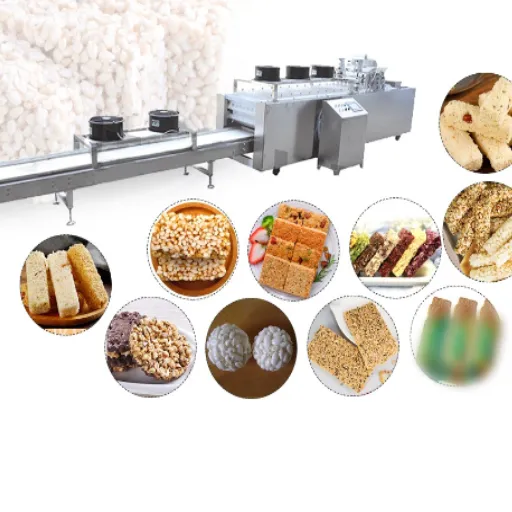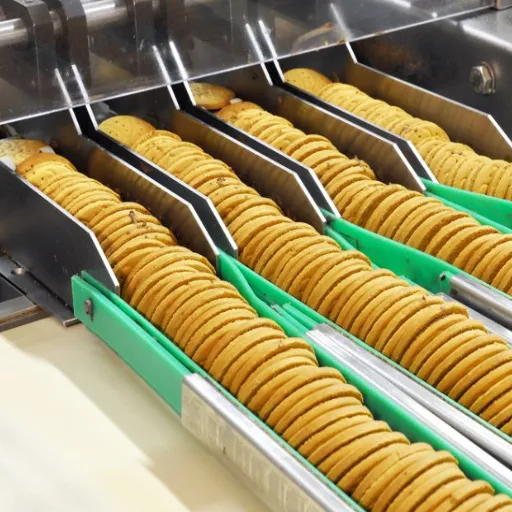
For manufacturers who seek high productivity outputs and best quality of biscuit products, making sure the biscuit production line will be effective and long-lasting requires immediate action. A broken production line such as this one is a certainty that there will not be any sudden idling time observed, thus ensuring that costs of operation remain lower and the equipment used can be operated for longer as well. In this article, you will be able to master the fundamentals of preventive, corrective maintained, and read on some very interesting ways to improve the overheads management of biscuit manufacturing. There is always a place for a few caveats – if you are an operations, people and production manager, the recommended practices should help you improve the efficiency of your production line for as long as possible.
Introduction to Biscuit Production Lines
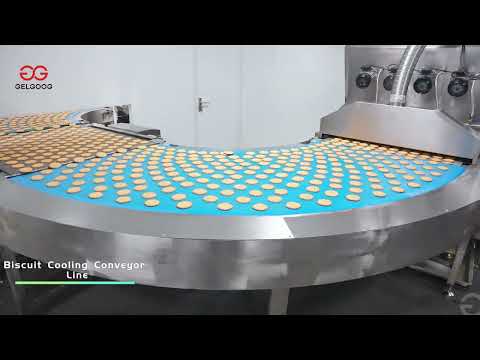
Overview of Biscuit Manufacturing
Biscuit Production Line is a method of producing a range of products of uniform quality for end-consumers made out of raw materials and this process is done mostly in a bakery. The operation can be described in several stages which include preparing the ingredients for mixing the dough, then the dough is made in a certain form, baked, cooled down and the finished product is packed. To protect the consumer product and the industries the processing conditions of the product is very important at every stage of processing.
Production starts with how the ingredients are prepared and without this step, it is impossible to assure the homogeneous proportions of the end product. Basic ingredients such as wheat (flour), fats, sugars among others are interspersed with particular chemicals which serve as components for aeration or enhance the taste. The formulation of dough is a very important phase that helps to hold and enhance the properties of the dough. With the help of recent technologies- such as rapid mixing emulsifiers, which are now available on the market, the mixer stage has become much more effective and there is little variance between batches.
By employing techniques such as sheeting, cutting, or molding, the dough is shaped so as to obtain the biscuit of interest. They are in the baking process, controlled heating, and moisture that affect the chemical and physical properties of the product. The product comes out of the oven and then undergoes cooling to avoid condensation occurrence during the packaging process. At this stage, all the biscuits are packed through the sealing machines in order to keep their shelf life and offer protection during distribution. In this manner, such quality of work and efficiency in manufacturing is achieved by biscuit production line companies by managing all stages carefully and ensuring all steps undertake the necessary adjustments.
Importance of Maintenance in Production Lines
Proper functioning of production lines requires maintenance, which is why it plays a significant role in productivity improvement. Unattended machines suffer wear and tear; the devices may break down in the middle of a process and take hours, even days to repair. Undertaking regular checks reduces the risk of malfunctions since they allow such flaws to be treated while any activity continues as normal. Such measures generally support the durability of the machinery and eliminate frequent replacements. This means that maintenance or repair costs are diminished in the long-run.
Using precise equipment maintains the quality of product at the same level. All production processes are organized taking into account the precise work of equipment to obtain identical results. Otherwise, the work will perform below the agreed level indicating the deficiencies of the machine, hence the problems, rework or scrap. The recommended practice of machine maintenance and calibration helps the manufacturers to manage the level of output and maintain the assured level of quality which is essential for customer levels and regulatory obligations.
The next point is that the problem with maintenance is the threat to cover up efficiency. Equipment that is not in good condition does not only lower the level of performance but can harm individuals to a greater extent. Regular monitoring, washing away of the systems, and modernization measures taken will also ensure that the systems and processes in place are safe and not defective. This is the issue of management and other engagements that call for the modulation of the production output and the aspect of operators’ health safety, and the assertion is that every factory should have maintenance programs.
Types of Biscuit Making Machines
Bakery equipment such as biscuit making machines are manufactured for mass production of biscuits of different varieties work with intelligence. The models as well as designs of these machines are different, pending on the demand of production and type of biscuits wished to be manufactured. The following are descriptions of the major biscuit making machines in the industry:
- Flour Mixers: Flour mixers play an important role in mixing the ingredients to make biscuit dough. It helps in ensuring that the dough suitable for rolling or baking is formed as required. Depending on the requirements, these are made in different sizes for both small and large scale operation.
- Rotary Moulders: Rotary moulders help in forming dough into specific shapes and sizes. Their working principle involves pressing the dough with moulds and they are appropriate for manufacturing soft dough like that used in short bread and digestive patterns and uniform ways.
- Wire-Cut Machines: Soft and medium consistency doughs are utilized in the biscuit forming process with wire cut mechanisms. The dough is cut into the desired shapes with a wire as it is being shaped by the die. Such machinery incorporates the idea of making different kinds of cookies or biscuits with intricate or fragile designs.
- Biscuit Baking Machines: As the name suggests, in biscuit production baking is an essential step. In this industry, tunnel ovens are used in mass-production because they distribute heat evenly and have variable temperatures, just to mention two of their numerous merits.
- Packing Equipment: Once baked and throw cooled biscuits go to packaging machines for wrapping and sealing them properly. The packaging machines maintain hygiene, increase product durability, and accommodate the process of rapid packing.
Utilizing the proper types of equipment for biscuit manufacturing increases productivity and keeps all parameters uniform as well as confirms that quality of the products is assured. These units fit effortlessly along a biscuit manufacturing line enabling the production of different varieties of biscuit in their masses and in order without any wastage or delays.
Key Components of a Biscuit Production Line
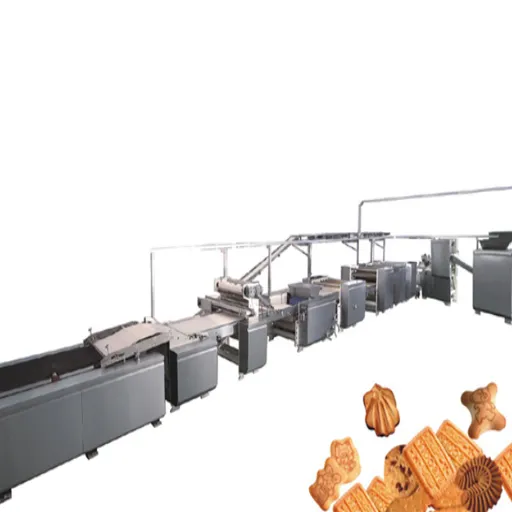
Biscuit Making Equipment
Contemporary biscuit production engineering follows many steps to make robust designs for maximum productivity tenancy. Modern biscuit factories make use of a wide range of machinery and equipment. These machines and tools perform separate functions during the production of biscuits. The following outlines the principal types of biscuit making equipment:
- Mixers: Mixers are essential in the Biscuit Production Line. These downhill machines working non-stop with all the raw materials of flour, water, sugar and fats blend them into these micro grains creating a certain qualitative texture of the dough. Different high-speed mixers are employed in operations where much greater capacities have to be handled faster.
- Cookie Forming Machines: These machines squeeze out dough shapes in biscuits with the desired patterns. Equipment for forming biscuits, which differ in design, within the product category can have rotary molders, and wire-cut machines, equipped luber systems providing layers for fudges. Proper design during formulating affects the successful analysis of the entire product depending on the desired size, weight and appearance of the products.
- Ovens: Baking is a crucial step, and biscuit ovens are designed to maintain even heat distribution for an even baking process. Tunnel ovens, especially convection or hybrid tunnel ovens, are manufactured in various designs and are popular in large and medium scale baking for their huge capacity, temperature and humidity levels all adjusted in the ovens.
- Cooling Devices: Once the biscuits have been baked, they need to cool down sloReturnsTo5 errors during request processing o avoid deformation and destruction of the shaft. Cooling carts that are mostly manufactured with use of non rust stainless steel and fanned cooling designs maintain the quality of the products and allow premature packaging of such biscuits.
- Packaging: Advanced packaging machines wrap biscuits in protective film to keep them fresh and clean. Sometimes such machines include automatic weight control, programming and heat sealing functions according to the norms.
- Fits Safety Standars: Inline quality control systems such as scanners, metal detectors and vision inspection tools are integrated in advanced production lines. These machines make sure that all biscuits placed in the tower are qualified and help in minimizing losses and safety concerns.
The use of other current progress carries over into biscuit technology, as it streamlines resources so as to improve the quality as well as quantity of output without necessarily enhancing machinery. The transformation supports the current advances in spheres where there is limited rise in resource consumption.
Understanding Biscuit Manufacturing Machines
The machinery that assists in the production of biscuits consists of high level innovations in its manufacturing. Such systems have integral components which are the mixers, the laminators, the rotary preparations and finishing units. When there is need to blend in the raw materials to attain some consistency, dough mixers are the required apparatus but in the case of preparing sheets of dough, it is laminators. The biscuits in question have dough to fill the rotary molders and their dough may be mechanism preformed sheet shapers and straight soded.
Malfunctioning of modern process machines and adjustments in the process or designs are managed by the utmost reliance on sensors drum and driven control systems which automatically audibles many things including temperature, pressure, time e t c. Even more, conveyor systems which are integrated, linear, continous and unavoidable help to transport the biscuits onsite through any hoes temperature controlled, incoming or outgoing polymer-based packets-including tube ovens and including tunnels for cooling the cuttings and also spraying and freezing; and drops. Such machines many times will be found to have the capability of capturing such details as they occur in a moment to enable a manufacturings to find any bottleneck, enhancer production levels and given or maintain particular quality levels in line with any available standards.
Incorporation of high end technology such as Arificial Intelligence along with Internet of Things enabled devices help companies to be well poised to reach high demads and frequent changes by re-setting the production line and/or change the formula very quickly. Such innovation does not only help in energy, resource and time management but is also in tandem with the current sentiments in the food production industry that seek to enhance the green technologies and partner in reducing waste particularly food wastage.
Role of Ovens in Biscuit Production
Oxy-fuel technologies are widely adopted in biscuit production ovens in order to adhere to the quality standards regarding the ‘end product’s’, thats being evenness, and flavor. In a production of large batches and following a scale-up process into commercial operations, this mechanism of heating needs to be incorporated to achieve consistent results. Let us now examine what are the five essential functions of an oven in a biscuit production line:
- Maintaining Heat Transfer for Effective Baking: Even distribution of heat which is essential in baking, is made possible by the ovens. Heat is convyed to the biscuits by conduction and convection, and in some cases, by radiation. If the heat is not evenly distributed, textures may appear inconsistent, and that can affect the quality of the product.
- Moisture Hybridization and Pre-conditioning: In the baking cycle, some water will need to be removed from the biscuit dough layer. This is because the lower the content of moisture the crispness the product the longer its shelf life.
- Secondary Metabolites through Maillard Reaction: At high temperatures, ovens enable the occurrence of the Maillard reaction, which chemically involves amino acids reacting with sugars. What most consumers usually expect when they claim a premium biscuit would have the distinctive golden hue and delectable flavour, is this particular phenomenon.
- Controlling Also Ultimate Baking Conditions: The present-day ovens are so enhanced that producers can set the temperatures or the level of moisture in the baking chamber at sophisticated levels. Waste control and efficiency principles will also add on top of sound baking assumptions in the production of several units as given parameters are strictly applied.
- Energy Use and Conservation: Efficient and innovative ovens are multidisciplinary, the machines are accompanied by heat recovery devices and temperature distribution zones. This includes constructing Regional and Strategic Biscuit Production Lines and Building Plants of a Global Scope, i.e. ERG focuses on research and development advances related to homogenization foam and concentrated phases of ceramic suspensions. According to ERG, this cuts down on the costs and the operational sustainability as far as large scale biscuit manufacturing is concerned, hence saving the environment.
Such functions, in turn, greatly contribute to consistency of quality, efficiency of operation and observance of safety requirements when it comes to biscuit production.
Common Maintenance Practices for Biscuit Manufacturing
Regular Inspection and Cleaning
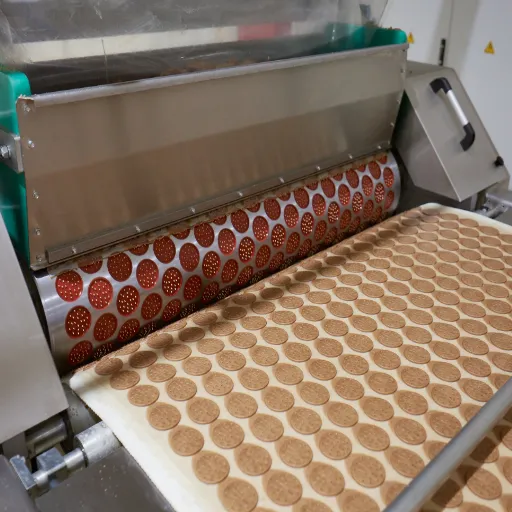
The biscuit production process involves regular maintenance in order to maintain product quality as well as efficiency of production. For biscuit manufacturing business, it is important to inspect machinery components such as oven belts, oven conveyors, burner assemblies etc in order to prevent wear, alignment issues or deposits of any materials. Such inspections are necessary to avoid unexpected breakdown of the equipment, which could lead to cost incurring downtime and delay in production. Structuring of inspection activities with adherence to manufacturers attained when preparing schedule and enforcing the schedule in order to address possible challenges and preserve high value assets risks is a useful strategy in this regard.
Cleaning routines must be equally systematic and all-encompassing; those areas which traditionally do accumulate debris, oil and flour dust in particular need some focus. Waste material deposited on the surface does more than just reduce the efficiency of ovens and equipment, it may introduce a cross contamination or micro-biologic growth – an undesirable prospect in food processing. Effective use of cleaning materials and equipment is crucial, to remain within the sanitary standards without leaving marks on components such as the stainless steel finish or sensor assembly respectively. Special care is needed in some places for the heating elements and conduction of air as their condition contributes and directly affects the temperature in the baking zone and products in and, respectively.
In addition, advancement in technologies such as automatic cleaning mechanisms into the systems of production causes the maintenance practices to become more efficient. A case in point is the usage of the Clean-In-Place (CIP) systems – simply put, the process involves cleaning tanks, pipelines, heat exchangers and other such equipment without physically dismantling them. Interest can also be generated by adding data – marketing maintenance techniques, for example, sensors or IoT monitoring, aimed for seeing the status of the equipment instantly and noting if there are any breaches of standard operation. Such action is crucial to preserve hygiene measures preventing contamination, since, and to increase Production Line performance as well and possible monetary losses too.
Lubrication of Moving Parts
Lubrication of moving components is very important for the optimal performance, as well as the durability of the machinery. Lubricant removes mechanical forces between parts which lead to wear, heat, and eventually, breakdown. Particularity is required in relation to lubricant selection, taking into account temperature, pressure and the exposure to the environment. Indeed, food processing and preparation industries must use food-grade lubricants to satisfy health and safety requirements, due to their Petroleum free nature among others, Biscuit Production Line.
Current lubrication techniques often make use of modern tools and technology in order to provide the best extension. Most prominently, there is the application of centralized lubrication systems which are designed to supply lubricant in measured amounts to predetermined areas. Such systems eliminate mistakes, save operational time, and may be set to distribute certain lubricants depending on the particular purposes of the machines. Further to this, lubrication systems that contain sensors and IoT enabled devices allow for tracking points such as the lubricant level, viscosity, and the optimal application, such that maintenance can be done in a predictive mode.
Results of research along with data-entry and collection practices underscore the role of testing and evaluation of lubricants from time to time in order to ensure that all lubricants retain their performance. Every good performance lubricant can be degraded by water, dirt and oxidized oil particles, resulting in premature wear of the machines. Contaminants such as these can be detected at an early stage using techniques like spectroscopic and particle count methods, which will avert the long hours of wear and tear cushioning from these machines. The application of predictive maintenance to these measures geared towards the usage of lubrication efficiencies helps the industry to maintain continuity while assuring compliance and also adding value by mitigating machinery stoppage and repair.Calibration of Biscuit Making Machines
Calibration of Biscuit Making Machines
It is very important to calibrate the biscuit making machines for uniform product quality and at maximum efficiency ensuring they are also compliant with the set standards of the industry. Accurate calibration means that some of the most essential parts of the machinery such as the dough feeders, dough cutters, and baking temperatures among others will require fine tuning to the desired levels. One example of this is the dough feeders which must deliver dough by weight evenly, so as to ensure ward of deformities in the dimensions of the biscuit sizes and the cutters must time perfectly to each dough location.
An improvement in the accuracy of the adjustment of these factors has been achieved with the help of advanced technologies such as automated calibration systems and real-time sensors. These planned adjustments have a predictive component that manages and monitors, such as ovens’ temperature gradients, and they anticipate the excluded variance, thus saving material. Industry statistics reveal that the degree of tolerance to error is very low where, as per industry, a slight drift in calibration can cause up to about 10% of extra material being waste, and this is why it is essential to validate the processes.
Additionally, keeping abreast with the Industry 4.0 trend implies incorporating IoT-based machine maintenance services and the like within the traditional calibration procedures. Trends in production data collected by these systems can be analyzed to provide useful information allowing for faster identification of root causes and improving the frequency of calibrations. Incorporating effective validation strategies for the equipment therefore not only maintains machine life but also prevents the negative implications of non-adherence to strict food hygiene and quality requirements.
Maintenance Tips for Specific Equipment
Tunnel Oven Maintenance
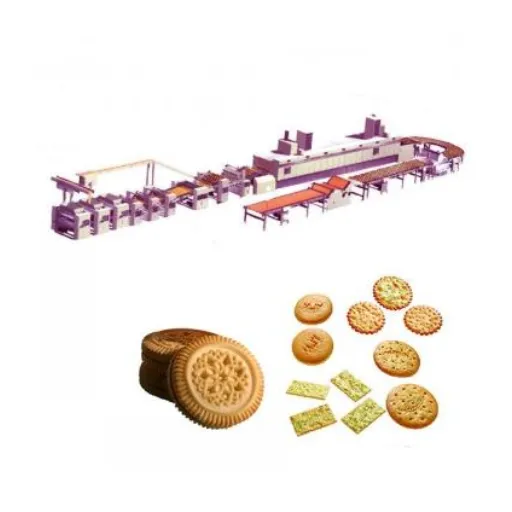
Tunnel ovens ought to be well maintained, so that they continue to function effectively, deliver quality products and reduce workload. One of the basic practices that enable one to run a baking oven for many years and still retain its good condition is to clean every part and element of the oven to prevent dirt which in most cases causes a baking problem and contamination, especially when dealing with food products. Since most impact damage and rust of ovens is caused by chemicals, it is important to note that only the detergents as specified by the producer should be used. It is also advisable to ensure that carbon deposits on the heating elements and oven belts are kept to the minimum level possible for better efficiency in heat transfer and air circulation.
All worn-out instruments, including conveyor belts, chains, losing devices and so forth in the relevant places have to be checked regularly. This is mainly because worn-out/stretched conveyors charcoal allows for enhancement of undesired issues such as the of the baking profiles or skewering issues although worn chains can result in the flow’s interruption. Similar to the above mentioned, in order to operate the system smoothly and prolong its life span, the mentioned moving elements should be lubricated with proper food grade greases regularly to reduce frictional wear. Further, to avoid stoppages in the system and keep goods flowing, belt uptake should be traced while ensuring that it is within the recommended dimensions.
Prior repair to the electrics, cables, switchboards and elements of heating should always be carried out routinely as it may be associated with the risk of a breakdown. Most of the latest tunnel ovens feature sensors and control modules which need to be properly tuned in order to provide equal temperatures throughout. Calibration of such systems is normally achieved by performing Diagnostic tests which grant the oven to work within a specified range. In addition, our organization employs IoT driven predictive maintenance techniques that collect, evaluate and act upon component performance data in real-time to avert catastrophic operational breakdowns. This helps in adjusting, protecting, and extending the life of the tunnel ovens respecting the rules of the industry.
Care for Biscuit Sandwiching Machines
Biscuit Production Line requires proper maintenance for optimum performance and aversion of production stoppages. All the surfaces that are in contact with any potential source of dust must be cleaned so that any particles or impurities do not cause dilution and eventually a drop in efficiency or quality of the product. All mechanical parts including bearings and conveyor roller mechanisms should have lubrication schedules as per the manufacturers so as to avoid the effects of friction which gets extremely aggressive on wear. At the same time, regular calibration of the alignment and dispensing mechanism to avoid loss of accuracy whilst forming sandwiches must be undertaken.
The incorporation of enhanced analytical systems which include but are not limited to sensors for temperature, pressure and motor torque facilitates elaborate diagnostics as well as preventive maintenances. Such systems allow operators to identify any changes in operating conditions of the machines such as when components are offset or the motor shows abnormal activity, thereby enabling them to tackle the situation well in advance before it progresses to an emergency. Machine makers usually advise the users to keep operation logs for purposes of performance metrics in particular, especially in relation to maintenance planning in order to avoid wear and tears.
In conclusion, more and more industries have been incorporating and employing, where it is appropriate, the novel technologies of sanitation which is able to do the sanitation chores without engaging most of the human work. Also, with these practices enforced, different technical installation documentation observed and Industry 4.0 being used in everyday life, it is possible to maintain high production efficiencies, minimize the rate of unexpected downtime as well as meet the tough regulations regarding food safety.
Maintaining Soft Biscuit Production Lines
In order to keep soft biscuit production pretty efficient, as well as parameters of its internal functionality, certain procedures must be followed. One of which is to provide constant lubrication or any form of greasing of those elements, which in this case will be conveyor belts and all those elements that form products. A lack of adequate lubrication can cause increased friction that is often destructive to delicate parts and can bring production to a halt. Also, temperature in oven belts ought to be checked frequently in order to make sure that the baking process is not disrupted, since that will signify, for instance, burnt edges or uncooked middle parts in the biscuit or cookies, which affects the homogeneity of products.
Yet another essential element is the provision of real-time quality control points at different stages of production in order to avoid any defects in production. High tech in-line inspection systems based on machine vision that employs machine vision components also precisely control parameters such as size, shape and color uniformity, to which all products should be manufactured. The use of predictive maintenance tools, that operate with the aid of machine learning and analyze performance indices to prevent mechanism’s failures while performing their intended function can enhance the reliability of the equipment further.
Waste management is crucial when we talk about production processes as well. By introduction of automatic dough handling systems in the production process companies are able to limit the amount of spillage of the dough during the mixing, shaping and cutting stages of the process. It helps in reducing unnecessary wastage which also leads to a reduction in the costs. On top of that, when CIP (Clean-In-Place) systems are in place, it is possible to clean surfaces where the food is prepared without stopping the production cycles and these help in the implementation of food safety measures such as FSMA and HACCP.
Finally as the biscuit industry loses weight, it is very important to keep up with process automation and integration with data. For instance, an enterprise can build capacity remotely besides installing smart machines in the production process, specifically when monitoring of production factors like energy use and production rates. Aplication of such nanotechnology into biscuit production lines enables the manufacturers to not only enhance the ramp up of production in these lines but also the prioritization of consumer satisfaction and efficiency respectively.
Optimizing Production Line Efficiency Through Maintenance
Impact of Maintenance on Production Equipment Lifespan
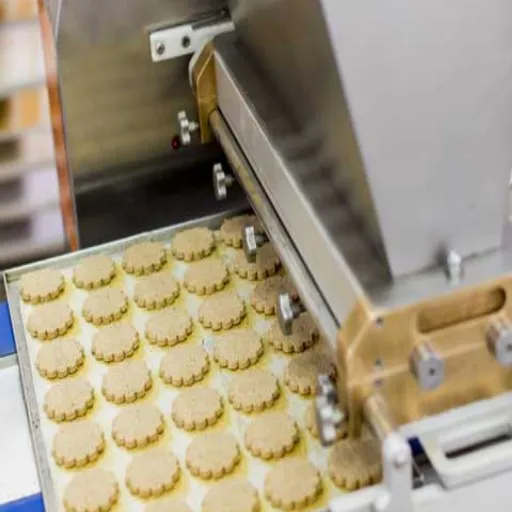
It is very important for the proprietors of machines to ensure that they are regularly serviced, poured, and all moving parts lubricated. The above mentioned routine helps in keeping the machine in good condition for a longer time. However, it also majorly reduces expensive repairs and or replacement of the equipment due to long downtime periods. Here below I have explained certain factors that provide the durability test on how beneficial enhances in decreasing maintenance cuts back on pictorial equipment:
- Reducing Component Damages:Components which move within an enclosure might face frictions in absence of proper maintenance measures. Under routine maintenance, all moving components are greased to eliminate any possibilities of premature bearing roller conveyors including the belt and roller components elongation systems lubrication.
- Lowering Probability of Failure:Preventive maintenance provides equipments a regular clean up service, calibration service and also replaces out moded parts that wearoff a machine unexpectedly minimizing the risks of equipment breakdown. Maintenance shuts an equipment down for as long as 30% of the entire time it would take for the machine to otherwise shutdown. This has been observed over time to be the case.
- Enhancing the Power Saving System: The better the machinery is kept up, the more efficient it runs, since energy consumed during operations is minimal. First of all, tasks like unclogging filters and straightening crooked parts which are asking for a fouling of the machine can result in 5-15% savings of energy hence most importantly help improve efficiency.
- Contamination Prevention: The regular checkups as well as maintenance procedures include the focused coating of above moisture and stype temperature exposure areas to eliminate the exposure include the necessary treatment measures against corrosion.
- Increment of Protection Levels: It is also critically important to keep machines continuous with the safety requirements in order to reduce chances of the occurrence of any workplace injuries. As evidenced by industry reports, about 70% of accidents arising from the use of machinery are ascribed to the very poor maintaining standards, hence underscoring the need for routines.
Development and the use of a maintenance strategy that includes timely and planned maintenance of production equipment helps in its proper utilization as well as increases productivity, which on the other hand cuts the costs in the long run.
Improving Output Quality with Regular Maintenance
Scheduled servicing remains a crucial mechanism of performance in the manufacturing industry. This can be further described in that, these activities are revisited, with some intervention to prevent the operational degradation and as a result, in most cases throwing output out of specifications. For example, alignment of the declared machines allows the very close tolerances of the cutting or moulding device to remain faithful to the quality control requirements in the described production. This practice helps in eliminating or lessening measures of deformation, hence, results in availing clients and enhancing the image of a company in situations of competition.
Furthermore, the aspect of preventive maintenance should not be ignored because it helps address the possible problems that might arise more dangerous concerns. Vibration analysis and thermal imaging, which are inexpensive, enable technicians to sense the tiny transient changes that indicate mechanical faults such as misalignments. In this way, cooling down these problems in advance will save the company from unpredicted breakdowns which happens to require much more money than the incurred costs due to planned maintenance activities id. In fact, according to the International Journal of Production Economics, predictive maintenance is said to reduce such downtime to up to vanishing local minima optimization called 30% and increasing reliability in the equipment to almost 25%.
Additionally, utilizing maintenance strategies adapted to Industry 4.0 concepts can improve the quality of performance by using data analysis for improvement. Such techniques involve the use of IoT sensors and cloud analytics to continuously monitor processes and allow managers to make necessary adjustments without disruption. It makes predictability possible that processes such as operating speed and material tolerances are in their proper zones. With time, there is incorporation of advanced maintenance methods into routine processes and this facilitates better attainment of production cycles, less defective products and more manageable wear and tear levels on equipment in such a way that maintenance is part and parcel of quality operations.
Cost-Effective Maintenance Strategies for Industrial Biscuit Lines
In order to ensure biscuit production line functions optimally and within budget, maintaining equipment should not be left to chance. There are afew things one might address beforehand due to the existing preventive measures unlike in the past. Other activities of wear control which help in maintenance include properly designing spares to make certain for all critical equipment and moving parts that undergo replacements, like conveyors, cutting units and ovens on wear and tear, are intact.
Another alternative is to implement Total Productive Maintenance (TPM) principles, which actively engage all stakeholders to sustain the equipment at its optimum state. Continuous maintenance and regular cleaning protocols ensure that the equipment wears off slow and thus remains functional as promised for a longer time. Additionally, installing automatic grease dispensers in critical motion enabling surfaces and joints saves the extra man hours spent on greasing and also limits the wear from excessive lubrication.
Energy-efficiency improvements, like increasing the efficiency of the oven insulation or replacing old, inefficient motors with new energy efficient ones, is also a common strategy used in prolonging the maintenance costs. Through data-driven models, such as evaluating energy consumption patterns or production cycles, management can make better decisions regarding efficient resource allocation for maintenance functions and planning.
By incorporating such approaches, biscuit production lines benefit from increased levels of production without interruptions for longer periods, while also extending the useful life of equipment. All this is made possible as maintenance practices become compliant with the strategic agenda of the business which focuses on costs cutting.
References
-
Fundamentals of In-Line Production – UC Berkeley Library
A comprehensive book on advancements in automated biscuit production. -
Process Improvement of Honeysuckle Biscuits – Kennesaw State University
A study on improving production flow and efficiency in biscuit manufacturing. -
Century Biscuit Company – IU Library Exhibit
Historical insights into a modern biscuit factory and its evolution. - Click here to read more.
Frequently Asked Questions (FAQ)
Q: What purposes does the Biscuit Production Line serve taking into consideration the whole biscuit production process including all the main steps?
A: Biscuit Production Line represents a coherent system of machines and facilities that are programmed to operate in a complete circle of biscuit manufacturing – from dough mixing, dough sheeting, cutting out shapes (molding), baking them in the ovens, cooling, and packing. A full-fledged biscuit production line can either be fully or semi-automatic and it’s designed with the purpose of manufacturing biscuits and Cookies such as: hard cookies, crackers, cake biscuits or any other kind of biscuits.
Q: What are the main machines and equipment in a complete biscuit production line?
A: A few of the common machines used in production are pigs’ carcasses little barrels (also called biscuit sheets for children), rolling mills for creating a direct dough product, machines for cutting biscuits, baking ovens, cooling lines with conveyor belts, and packaging machines. Manufacturers for reading bakery systems and other such lines have developed complete biscuit systems incorporating such modules for more efficient space management and for maintaining consistency in production capacity.
Q: What impact do biscuit forming machines have on the shapes of and types of biscuits?
A: Biscuit forming machines determine the shapes, thickness and surface decoration of biscuits thereby facilitating manufacturers to make and sell various soft and hard biscuits, cookies, crackers and even moulded biscuits. Modern biscuit molding machines are of central importance in biscuit manufacturing since they allow shaping individual pieces to be mass manufactured and this machinery is a necessity in the event of the facility’s increase in biscuit and cookie productivity and in the event of launching of new shapes of biscuits.
Q: What does the production line add to the manufacture of hard biscuits and the manufacture of soft biscuits?
A: It has the characteristic of a hard biscuit helping to promote product lines that specialize in dry doughs, which is usually composed of longer bake time biscuits and requires special cooling. This machinery would be used for crackers and hard cookies production. A moist dough and a soft delicacy in the form of biscuits are made in rigid walls which is a cake or muffin biscuit making. There are many manufacturers who understand that biscuit production and appreciate the systems at their disposal where the production systems have been adjusting that provided the making of different hard and soft biscuits within the same unit.
Q: What impacts do automatic Baseline Systems have on increasing production efficiency and the capacity of production?
A: Featuring mainly automated practices, such as fully automated production lines and biscuit equipment used in the process, systems boost speed and efficiency of production by emphasizing personnel substitution, constancy, faster production time and minimized wastages, and better production capabilities. Automating the firm’s biscuit making processes via fully automatic biscuit peeling operations or advanced biscuit machine, as an example, allows companies to achieve higher biscuit demands as well as throughput capability.
Q: What are the important factors that need to be addressed in-order for a bakery to select a line manufacturer or a supplier of biscuit equipment for the business?
A: It is advisable that the manufacture of these tools and machines is done by a high ranking line manufacturer who knows about ‘biscuit and cookies making’ and this should fit with your scale of production, and after sales structure and has spare parts. Furthermore, you should be able to buy the most advance full Biscuit production line that is flexible, take into consideration production capacity size, energy consumed, area taken, level of autmation and also fit with the lend of biscuits and machines you would use in making them.
Q: Is it feasible to produce cake biscuit, crackers and cookies in one biscuit production line or do they require separate lines?
A: A lot of biscuit production lines today have been built on modular principle for possibly cakes and soft biscuit and through all types of processing to crackers and hard biscuit with module elements such as laminators layer forming machines or cutters ovens etc. but, every product, of course, will have its own specificities. Separate equipment or lines for some products is not aimed because it over promotes the judging не quality brave efficiency in the manufacture of them.
Q: What is the effect of biscuit production line quality due to processing of biscuits and cereal products including the use of lamination in biscuit production?
A: Laminations serves to adjust various production aspects such as stages, shapes, air pockets, and thickness particularly with shaped biscuits. In this case, laminations and the production of biscuits need advanced procedures and equipment. Automated systems process the laminated and packed products ensuring all the processes within the biscuit production line are uniform. The biscuit production line here refers to the whole process that the art is bored through the circuit.